

Canary Wharf Group and The Felix Project, a food redistribution charity have agreed a long-term partnership that will see them join forces to tackle food poverty in London.
The two organisations aim to deliver long term social impact while prioritising sustainability as they tackle this urgent issue, which sees around 400,000 children in the capital going to bed without eating a proper evening meal.
The Felix Project, which has four depots across London, including one close to Canary Wharf in nearby Poplar, will benefit from the strength, vibrancy and scale of the Estate. Canary Wharf Groupwill facilitate access to its businesses, workers and residents while also providing facilities, logistics assistance and support in the form of volunteering and fundraising drives.
The first major initiative will be the launch of the new Canary Wharf Green Scheme, which involves volunteers from the Estate delivering surplus food from retailers directly to local charities, schools and community organisations. Several retailers on the Estate have already signed up to the scheme, including M&S, Joe Blake’s and Waitrose. With over 70 cafes, bars and restaurants and seven grocery stores on the Estate, the two organisations are aiming for many more to come on board over the coming months.
The Green Scheme will launch this week – at capacity this will provide over 1,000 meals each week, through around 10 different local community organisations, saving over 500 kilos of good food from going to waste. To make this happen, Canary Wharf Group and The Felix Project are aiming to recruit as many as 1,500 volunteers.
The next phase of the partnership will see surplus ingredients from Canary Wharf’s restaurants and office canteens rescued and cooked into hot meals at Felix Kitchen in nearby Poplar, which will be distributed to local community organisations.
Shobi Khan, CEO at Canary Wharf Group comments: “We are delighted to be partnering with The Felix Project. At Canary Wharf Group, we understand that we have a responsibility to create a positive and lasting impact that goes beyond the buildings and places we create.
“Our purpose is to bring people together to enhance lives now and, in the future, and we have always prided ourselves on our ability to create long-standing meaningful relationship with our communities based around Canary Wharf. Through partnerships like this we aim to ensure Canary Wharf is more than just a place to live or work, but a place where you can be connected to the local community and can have a positive social impact.
“The business community at Canary Wharf has a big part to play in making The Felix Project a success and indeed some of our local companies are already on board, including Morgan Stanley and Barclays. With such a concentration of retail and office businesses on the Estate, a key part of our role as partner will be to introduce the charity to our wider community and bring the scale that’s needed to have a real, lasting effect on local people’s lives.
“We have so many people who can play their part, whether they work, live or regularly visit here, and I urge anyone willing to spare a couple of hours to sign up to volunteer and help us get surplus food to those who need it the most.”
Charlotte Hill, CEO of The Felix Project comments: “In the UK, 4.7m people are struggling with the cost of food. This is an issue we cannot afford to ignore and the situation is critical as the cost-of-living crisis intensifies. Many Londoners are trying to feed themselves on less than £3 a day.
“We’re thrilled to partner with Canary Wharf Group as they’re in the unique position to be able to convene the hundreds of businesses, retailers, employees and residents on the Estate to tackle this issue together, meaning we’ll have a much greater social impact than we would otherwise. They have the access and logistics that we need to make the scheme a success at a time when the need is so high, and are committed to the same long lasting, sustainable and meaningful change that we built our charity for.”
Through the partnership, Canary Wharf Group will be hosting a number of fundraising opportunities including The Felix Project’s first flagship event in autumn, to be announced in the coming months.
Read more:
Canary Wharf joins forces with the Felix Project to tackle food poverty
Month: May 2023
100 jobs under threat at Grimsby-based smart home tech firm myenergi
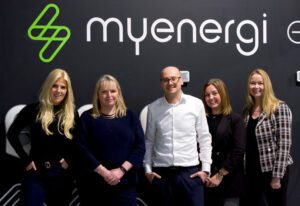
Almost 100 jobs are thought to be under threat at smart home energy technology manufacturer myenergi.
The Grimsby firm, named one of the UK’s fastest growing companies less than a year ago, has said that new orders of its staple Zappi electric vehicle charger and allied devices haven’t been maintained at anticipated levels, with the removal of consumer incentives also cited.
The business had been identified as one of the UK’s 10 fastest-growing private companies with an average annual turnover growth of more than 180% over the past three years.
Launched by Lee Sutton, chief executive, and Jordan Brompton, chief marketing officer in 2016, it attracted backing from investment house head Bill Currie and former Tesco CEO Sir Terry Leahy to help advance the required rapid scale-up.
However, according to GrimsbyLive, new orders of zappi haven’t kept pace with expectations and a 45-day consultation with staff has begun.
A spokesperson for Myenergi said: “Myenergi has experienced unrivalled levels of growth in one of the world’s fastest growing sectors, and has always aimed to scale its resources and teams to meet the needs of the market. However, challenges arising from the macro-economic environment, including the cost of living crisis; as well as lower than expected growth in our largest electric vehicle charge point markets – due to the removal of consumer incentives – means that growth is not forecast to be as high as expected.
“While overall demand for our products remains high, the level of recruitment undertaken to deliver a backlog in orders now appears to be too high relative to current demand, and we are having to adjust the scale of our resourcing accordingly.
“The current scale of the business is not at a level that we believe can be sustained in the short term, if we are to remain competitive and able to invest in the future. We have therefore had to take the enormously difficult decision to identify a number of roles that are at risk of redundancy and enter into a collective consultation period.
“This is not a decision that we ever envisaged or wanted to be making, but it is sadly one that we believe is necessary based on the reality of current market conditions. We remain confident about Myenergi’s future and committed to our role in the region, including manufacturing.”
As recently as April, myenergi landed a £30m funding package from HSBC UK to support the development and production of smart home energy products.
Read more:
100 jobs under threat at Grimsby-based smart home tech firm myenergi
New RMT walkout means three new train strikes in four days

RMT members are to stage a fresh strike on 2 June in a long-running dispute over pay, jobs and working conditions.
The strike will see 20,000 train managers, caterers and station staff all walk off the job.
There will be three rail strikes within four days with Aslef train drivers walking out on 31 May and 3 June, the day of the FA Cup final.
The government said the RMT had gone “out of their way” to make life difficult for thousands.
The stoppages are also likely to cause disruption for many during the half term school break.
The RMT said no new proposals had been put forward by the train companies since the union’s last strike action on 13 May.
General secretary Mick Lynch said the government was not allowing the Rail Delivery Group (RDG) to make an improved offer in the national dispute.
Industry negotiators were “blindsided” when the RMT turned down their latest offer in April. There was a war of words over whether the RDG had gone back on its proposals – something it strongly denied.
On Thursday, the train companies’ group said it had continued to stand by its “fair” proposal, and said the RMT leadership had chosen to “to prolong this dispute without ever giving their members a chance to have a say on their own offer”.
Aslef’s walkouts are now more disruptive than the RMT’s, because settling the separate Network Rail dispute in March means signalling staff are no longer involved.
However, RMT members have backed strike action potentially into the Autumn.
The government and industry argue the railway is financially unsustainable, and working practices need to change to enable a pay rise.
Unions argue jobs and conditions are being attacked and the wage increases on the table are far below inflation.
“Ministers cannot just wish this dispute away,” the RMT’s Mick Lynch said.
On Thursday the government called again for the union to allow its members to have a vote on what it described as the “fair and reasonable offer” tabled by the RDG.
A spokesperson for the Department for Transport also said: “It’s extremely disappointing that for the second time in a month, RMT has decided to call strikes on the same weekend as Aslef, going out of their way to make travelling by train to the FA Cup final, Epsom Derby and a number of music concerts more difficult for thousands of people.”
The 14 train companies affected by the RMT’s ongoing strike action are: Chiltern Railways, Cross Country Trains, Greater Anglia, LNER, East Midlands Railway, c2c, Great Western Railway, Northern Trains, South Eastern, South Western Railway, Transpennine Express, Avanti West Coast, West Midlands Trains and GTR (including Gatwick Express)
Read more:
New RMT walkout means three new train strikes in four days
Development Bank of Wales is feeling good with investment in Mallows B …

The Development Bank of Wales has confirmed its support for vegan beauty brand Mallows Beauty with a six-figure funding package including a mix of debt and equity that will help to fund product development and export growth.
It’s the second investment in the fast growth business by the Development Bank since 2021.
Based in Pontyclun, award-winning Mallows Beauty was founded by Laura Mallows and Ronnie Bourne in 2020. River Island and Oliver Bonas stock products and the brand has recently launched in 177 Urban Outfitters stores in the United States.
Laura Mallows said: “I founded Mallows Beauty in 2020 because, after battling with self-image, acne, and anxiety my whole life, it became clear that the industry needed a brand based on real babes, real skin and real bodies. The industry has historically contributed to damaging our body image, which is why I wanted a different approach. For us, promoting self-love and body positivity is not just a marketing tactic, it’s at the core of everything we do – from our product designs to our social media posts.
“We make sure that our messaging is inclusive and reflective of diverse body types. Every campaign and product is created with the intention of promoting body positivity and self-care. We’re on a mission to change the world one body scrub at a time. This investment will help us to reach our full potential – it’s also going to mean that we no longer continuously run out of stock. We are so grateful for our fantastic relationship with the Development Bank. They’ve been a long-standing supporter of the brand so they were our first port of call when planning our next growth chapter.”
Portfolio Executives Sam Macalister-Smith and Kelly Jones of the Development Bank of Wales are supporting the business. Sam said: “Mallows Beauty is a fun, innovative and down to earth ‘self-love’ brand focused on self-care and mental wellbeing, targeting Gen Z and young millennials. From a humble start, the team has demonstrated excellent revenue growth and now employs 14 with high ambitions to rapidly expand in the United States and Australia. Our funding is a really exciting opportunity to help scale the business in a fast growing global market and fits well with our commitment to incorporating ESG factors into investment, analysis and decision making.”
John Saunders is advising Mallows on corporate finance. He said: “I have worked closely with the proprietors and the Development Bank on this over the last six months to facilitate a funding package to suit their expansion in the marketplace.”
The investment in Mallows Beauty comes from the £500 million Wales Flexible Investment Fund. With loans, mezzanine finance and equity available from £25,000 to £10 million, the fund provides 15-year terms.
Read more:
Development Bank of Wales is feeling good with investment in Mallows Beauty
Online estate agent Purplebricks sold for £1, putting 750 jobs at ris …

Purplebricks, the once high-flying online estate agent that reached a peak valuation of more than £1.3bn, has been sold to Charles Dunstone-backed rival Strike for £1 with all of its more than 750 staff put at risk of redundancy.
The company, which had threatened to shake up the property market with its low-cost model, put itself up for sale in February after issuing a string of profit warnings that resulted in its market value plunging to just £30m.
Shares in Purplebricks plunged more than 40% on Wednesday, giving the company a market capitalisation of just over £2m, as the fire sale all but wiped out shareholders.
As part of the deal, Strike intends to embark on a cost-cutting drive that includes “reducing the employee base” at Purplebricks.
“While this will require comprehensive planning, Strike has indicated it would like to complete this planning and initiate a redundancy consultation process, with the company’s assistance, that would likely involve all of the company’s employees as soon as practicable and possibly prior to completion [of the deal],” Purplebricks said.
“Strike has however assured the board that its firm intention is to grow the business, which will require continued employee support and that any employees affected by redundancy will be treated fairly and equitably, consistent with Strike’s culture of respect.”
The company’s board said all of the advanced talks held with potential suitors involved “some proposals to reduce or otherwise change the company’s workforce”.
Purplebricks admitted it was “disappointed” with the value of the deal, which would result in Strike assuming most of its liabilities, but said no better offers emerged during the sale process.
Under the terms of the deal, Purplebricks will use about £5.5m in cash it has on its balance sheet to pay expenses and costs not covered by Strike, leaving shareholders around £2m in proceeds from the sale.
“I am disappointed with the financial value outcome, both as a 5% shareholder myself and for shareholders who have supported the company under my and the board’s stewardship,” the Purplebricks chair, Paul Pindar, said.
“However, there was no other proposal or offer which provided a better return for shareholders, with the same certainty of funding and speed of delivery necessary to provide the stability the company needs.”
The company’s five biggest shareholders are the German publisher Axel Springer, which holds a 26.5% stake, JNE Partners (11%), Momentum Global Investment Management (7%), Pindar (5%) and Hargreaves Lansdown Asset Management (5%).
Dunstone, who founded businesses including Carphone Warehouse and TalkTalk, said that the deal represented a “positive outcome” for homebuyers and sellers.
He is a partner at Freston Ventures, the joint main shareholder in Strike. He was worth an estimated £815m in 2022 as his wealth swelled by £40m, according to the Sunday Times.
The strategic review of Purplebricks kicked off in February – which included looking at an equity fund raise – reportedly sparked interest from the company’s co-founder Michael Bruce.
Bruce, who co-founded the business with brother Kenny in 2012, presides over the intellectual assets of Boomin, a property portal he founded after standing down as chief executive of Purplebricks in 2019. Boomin was forced into liquidation last year after failing to secure new funding.
Helena Marston, the chief executive of Purplebricks, said the deal has allowed the company to secure a “solvent outcome” that also “preserves” its consumer brand name in the market. She will resign after completion of the deal.
Dunstone said: “Purplebricks has dramatically changed the industry by driving down the cost of estate agency [fees] and we aim to combine its significant brand recognition with an even more disruptive model.
“In bringing together the two brands, we will supercharge Strike’s mission to democratise house selling by empowering customers.”
Purplebricks launched in 2014 and received early backing from Neil Woodford, the former star stockpicker. It floated on London’s junior market, Aim, in December 2015.
Read more:
Online estate agent Purplebricks sold for £1, putting 750 jobs at risk
Ford, Vauxhall owner and JLR call for UK to renegotiate Brexit deal

Three big global carmakers have called on the UK government to renegotiate the Brexit deal, saying rules on where parts are sourced from threaten the future of the British automotive industry.
Ford and Jaguar Land Rover have joined Stellantis, which owns the Vauxhall, Peugeot and Citroën brands, to warn the transition to electric vehicles will be knocked off course unless the UK and EU delay stricter “rules of origin”, due to kick in next year, that could add tariffs on car exports.
Current post-Brexit rules require 40% of an electric vehicle’s parts by value to be sourced in the UK or EU if it is to be sold on the other side of the Channel without a 10% trade tariff.
This proportion is due to rise to 45% next year, and because most electric vehicle batteries are still imported from Asia, and batteries make up a large part of the cost of building a car, vehicles made in the UK and the EU are likely to fall foul of the rules.
Stellantis said on Wednesday that without a rethink, it could be forced to shut some of its UK operations, putting jobs at risk in an industry that employs 800,000 people in Britain.
Ford, which makes electric cars in Germany and parts in the UK, said on Thursday the requirement would add “pointless cost to customers wanting to go green”. A spokesperson said: “Tariffs will hit both UK- and EU-based manufacturers, so it is vital that the UK and EU come to the table to agree a solution.”
Jaguar Land Rover, the UK’s largest automotive employer, joined the chorus, describing the current timing as “unrealistic and counterproductive”, and calling on the UK and EU to “quickly agree a better implementation solution to avoid destabilising the industry’s transition to clean mobility”.
It was the first time carmakers had explicitly urged a renegotiation of the Brexit deal.
Manufacturers are putting pressure on both the EU and the UK to come to the table, demanding the threshold increase be at least delayed until 2027 to allow time for European factories to start producing enough batteries to reduce reliance on Asia.
In a bid to reassure manufacturers, the chancellor, Jeremy Hunt, told business leaders at the British Chambers of Commerce annual conference on Wednesday: “Everyone is trying to develop supply of EV batteries, and so we need to have that supply here in the UK. The closer it’s located to the factories that are making the rest of the car, the better.
“And all I would say is, watch this space, because we are very focused on making sure the UK gets that EV manufacturing capacity.”
Stellantis has raised doubts about the viability of its plants at Ellesmere Port and Luton, saying tariffs will make it more expensive to produce cars in the UK than in Japan or South Korea. Its plant at Ellesmere Port, which is due to start electric vehicle production later this year, employs 1,000 workers, while 1,200 are employed in Luton making Vauxhall and Fiat vans. Thousands more people are employed in the UK in businesses that supply parts to the plants.
“To reinforce the sustainability of our manufacturing plants in the UK, the UK must consider its trading arrangements with Europe,” Stellantis said, in a submission to a House of Commons inquiry into electric car production first reported by the BBC. It cited extra costs for the UK if it were forced to import batteries, adding: “If the cost of EV manufacturing in the UK becomes uncompetitive and unsustainable operations will close.”
Bosses from the manufacturer met the business secretary, Kemi Badenoch, on Wednesday to discuss the problem. The company also wants arrangements for manufacturing parts in Serbia and Morocco to be reviewed.
The trade deal is due to be renegotiated in 2025 as part of the original pact between the UK and the EU signed by Lord Frost in December 2020.
The effect of the rules of origin changes varies between carmakers. One car industry expert said Stellantis’s problems may stem from its decision to source batteries initially from China’s CATL, the world’s largest battery maker. Stellantis’s submission noted that it planned to “source batteries from mainland Europe and China”.
A government spokesperson said Badenoch “has raised this with the EU”.
Read more:
Ford, Vauxhall owner and JLR call for UK to renegotiate Brexit deal
Technology and innovation creating workplace inequality post-Covid, su …

A new research report, Education for a World of Opportunity, reveals that over a third of British SMEs decision makers believe that technology and innovation have created fewer opportunities for unskilled workers to “learn on the job” and progress to higher paid roles.
The YouGov poll, conducted on behalf of ACS International Schools and IBSCA UK and Ireland, surveyed British Small and Medium Enterprises (SMEs) which, in 2022, accounted for 99 percent of UK businesses*. To gain a greater understanding of perspectives, qualitative research was also undertaken with representatives from companies including: the Royal College of Arts, Amazon Web Services and Pepsi Lipton.
The data shows that technology is playing a major role in modern workplaces – nearly a third (29 percent) of British SME decision makers reveal they feel the post-Covid impacts of innovation and technology have created greater inequality within their teams.
Senior decision makers were asked where they believe technical responsibilities lie. Over half (58 percent) believe that everyone, including the leadership team, needs to understand and be able to use the technology that is core to their organisation.
Integrating technology into schools
When asked about how technology should be integrated into schools, Teresa Carmona, Founder at Revive, said: “When I was starting my career, I had to self-teach myself to use Excel and formulas. So, I think schools should teach the basic tools that most workplaces will ask about. I think mimicking a work environment at school when it comes to the use of technology would be good, so it almost becomes second nature.”
Nearly three-quarters (73 percent) of SME senior decision makers agree that everyone needs basic IT skills such as Word, Excel, PowerPoint, and email to function in the workplace, and 60 percent expect new recruits, especially entry level candidates, to have these core IT skills.
Robert Harrison, Director of Education and Integrated Technology at ACS International Schools, said: “With ever-more sophisticated technology on the horizon, we cannot put the lid back on the Pandora’s box of big data and machine learning. For students to operate within a changing job landscape with the emergence of new, innovative industries, a unique set of employability skills are required. Applied digital skills – such as digital workflows, database management and data analytics– must not be overlooked by schools. Only by equipping this generation with rounded training in ‘all things technology’ can we ensure our young people are ready for the ever-changing world of work. At ACS International Schools, we use technology to enhance learning and teach students how to use all of the tools around them to the best versions of themselves and be ready to lead future industries.”
From interactive digital skill sessions that cover 3D printing, coding and robotics, to students undertaking on-screen examinations through the International Baccalaureate (IB) Middle Years Programme (MYP), ACS International Schools has embedded technology into daily learning and teaching, rather than isolating the use of technology to weekly ICT lessons.
Harrison explained: “Digital assessments present exciting and extended opportunities to assess what students have learned, in more meaningful ways, with greater student engagement, through contemporary technologies. Schools should function as hubs of extended learning that focus on more than reciting facts and working problem sets.”
Richard Markham, Chief Executive of IBSCA UK and Ireland, added: “Educational assessments do not measure what young people actually know; examinations need to go beyond knowledge recall and assess transferable understand and applied skills. The IB has been leading this space since 2016, when it introduced MYP eAssessment. The IB is also leading in the global education response to sophisticated technologies like generative AI, which offers educational opportunities for students and educators and could be a useful tool to support learning and teaching in many interesting ways.”
Professional empathy vs automation
The YouGov poll data also present concerns amongst employers about the social impacts of technology in workplaces. Almost a quarter of SME senior decision makers believe that greater technological developments will lead to less value being placed on human input and achievements. However, business leaders do think that technology can have positive impacts on working life. Two thirds (66 percent) believe that technology will allow for greater flexibility – therefore making the workplace more attractive to entry level workers.
Over two third of SME senior decision makers surveyed believe that professional empathy is important to job productivity and satisfaction when there is less human interaction.
Solene Adler, Global Senior Insights Manager, Pepsi Lipton said: “The constant need to be stimulated and consume content, due to technology, is impacting attention spans, which to me is a great concern. I don’t think it is conducive to thinking things through, absorbing knowledge, or letting the brain rest to think clearly.”
Harrison concluded: “Education must evolve to keep up with technological developments and teachers will need to be ever-more more creative in their assessments to truly capture young minds. But we must also impress upon students and teachers that technology is just one of the many tools they can use to enhance learning. In the real world, being a tech whizz is not more important than job satisfaction, professional empathy, or productivity – which is why technology integration must be part of a broad, varied and stimulating curriculum.”
Read more:
Technology and innovation creating workplace inequality post-Covid, survey reveals
Having a diverse workforce is not only right, but good for business

In recent years, more and more companies are realising that having a diverse workforce isn’t just the right thing to do, it’s good for business too.
Not only does the greater range of perspectives lead to more creative and innovative decision making, but the consultancy firm McKinsey & Company found that companies with gender-diverse leadership teams were 25% more likely to experience above-average profitability for their sector – which rose to 36% if their executive team was ethnically diverse too. And the more women and people from minority ethnic groups there were, the greater the likelihood of outperformance, with companies in the US earning 0.8% more for every 10% rise in racial and ethnic diversity among their senior management.
Dr Olivia Tomlinson, Associate at the Centre for Responsible Business, University of Birmingham, and Lecturer (Assistant Professor) in Strategy, Enterprise and Sustainability at Manchester Metropolitan University, explains that the importance of diversity goes beyond just the legally protected characteristics of race, gender, disability, age and sexual orientation, though. Less visible diversities, such as class, neurodivergence and parenthood, are often ignored, yet the skills, knowledge and experiences of people from a range of backgrounds all add value to a company. Time and time again, researchers have found that companies that go beyond diversity and actively encourage an agenda of inclusion – whereby every employee feels part of a safe and respectful workplace in which they can openly be themselves – attract the best talent, yield better employee satisfaction and perform better overall.
Unfortunately, a shocking survey by YouGov – commissioned by Business in the Community in 2021, in response to the Baroness McGregor-Smith Review into race in the workplace – shows many UK employers still have a very long way to go. Among the 24,600 people who responded to the Race at Work Survey, many reported widespread discrimination, racist harassment, bullying and inequality in their workplaces. Far from starting to move beyond just diversity to inclusion, it seems racism continues to be a persistent, routine and systematic feature of working life in Britain, contributing to the built-in disadvantage that ethnic minority workers face.
A consistent theme in the survey data is that workers from a Black, Asian, Mixed Race and ethnically diverse background feel that they need to “work twice as hard, to get half as far”, suggesting that even with an obvious business case for increasing diversity at the top level, workers are expected to contribute at least double the time and effort of white employees to even be considered for promotion. The survey also recorded the disturbingly wide range of different sources of racist harassment and bullying that minority ethnic workers regularly faced, including from customers, colleagues, the public and wider business networks. Worryingly, the most reported perpetrators were senior leaders.
The fallout from these personal experiences or witnesses of racism is, of course, hugely damaging. The respondents described the negative impacts on their mental health, emotional and psychological wellbeing, and career prospects, such as opportunities for training and career progression. Understandably, as a result, many viewed their employer’s diversity and inclusion initiatives as merely “lip service”, “done only for show”, “box- ticking exercises” and “PR stunts”. Instead, the respondents said they wanted their employers to be more accountable and transparent on pay gap reporting, decision-making, recruitment, progression and any interventions in response to incidences of harassment and bullying. Acknowledgement by the employer of their staff’s experiences of racism and discrimination was also seen as important, as was the increased allyship of non-marginalised colleagues.
These insights – while shocking – should be invaluable to any business leader concerned about these issues in their workplace and how best to mitigate them. But one strategy that’s been proven to be effective, particularly in terms of hiring and progression, is having dedicated (ideally senior) advocates within the company for diversity and inclusion. A 2006 study of 708 private sector companies showed that conventional diversity training and evaluations for managers were the least effective at bringing through more women and minority ethnic candidates into managerial roles. The best method was creating dedicated staff roles or committees that were held responsible for hitting diversity targets. It was also found to improve the efficacy of any diversity training, evaluation, networking and mentoring schemes the company ran too. Business in the Community’s ‘Race at Work Charter’ provides a good template for such an approach, as well as resources for creating diversity targets that are more likely to work.
However a company chooses to go about it, the outcome must be the proactive embedding of inclusivity in the daily operations of the business, from board-level commitments and HR metrics to individual managerial responsibilities and supply chain policy. Only then can the culture of a workplace be truly transformed, since the ingrained and often tacit norms of any organization’s culture have a habit of stubbornly reproducing themselves regardless of executive edicts from above. It will also have the added benefit of making the business more agile and responsive to the ever-changing and increasing expectations of wider society, avoiding potential controversies that can seriously impact on people’s trust in a company.
To echo the words of the McGregor-Smith Review: “Now is the time to act”. But action needs to be authentic and get to the root of the problem. It isn’t enough for a business to celebrate its diversity if their Black, Asian, Mixed Race and ethnically diverse employees are overlooked for promotion and senior roles in favour of their white colleagues. Employers have nothing to lose by making sure their diversity and inclusion programmes are creating meaningful change, but they do have everything to gain. Otherwise, as one of the survey respondents rightly warns, “If we keep doing the same thing we will end up with the same results”.
Read more:
Having a diverse workforce is not only right, but good for business
Treat investing in Cryptocurrency as gambling, MPs say

MPs have urged the government to treat retail investment in cryptocurrencies such as Bitcoin as a form of gambling.
Their value could change dramatically and consumers risked losing their entire investment, characteristics closely resembling gambling, the Treasury Select Committee found.
It also criticised abandoned plans for the Royal Mint to create a non-fungible token (NFT).
The Treasury told BBC News it did not support using gambling regulation.
The risks posed by crypto were “typical of those that exist in traditional financial services and it’s financial services regulation – rather than gambling regulation – that has the track record in mitigating them”, a Treasury official has said.
Trade association CryptoUK strongly rejected the committee’s findings, saying MPs’ observations about cryptocurrency were “unhelpful, false, fundamentally flawed and unsubstantiated”.
‘Lose everything’
The committee said “unbacked” crypto assets – typically cryptocurrencies with no fixed value – exposed “consumers to the potential for substantial gains or losses, while serving no useful social purpose”.
“These characteristics more closely resemble gambling than a financial service,” the MPs added.
Gambling helpline charity GamCare told the BBC that, in the past two years, it had heard from more than 300 people who said they were struggling with investing in cryptocurrency and other forms of online financial markets.
Research cited by MPs found 40% of new Bitcoin users were men under 35, commonly identified as the most risk-seeking segment of the population.
Castle Craig, a rehab clinic specialising in treating people with addictions, put us in touch with a young man who had lost heavily on crypto.
The former gambling addict told BBC News that, although he had given up gambling, he had turned to crypto.
“In my head, I just thought this isn’t gambling it’s just an investment, but clearly it wasn’t,” he said.
He said he had lost about £150,000 investing in crypto, including money he had borrowed, and that checking his phone to see how the market had moved had become an obsession. “There was no break at all, I was just I was on my phone constantly watching it and just couldn’t sleep,” he recalled.
He said he supported the approach of the committee. “Crypto stuff is gambling,” he said. “You can lose everything you’ve got.”
Former sports minister and gambling campaigner Conservative MP Tracey Crouch welcomed the report.
“At the moment, crypto feels like a Wild West town with no sheriff,” she said.
“However, I’m sure, if properly resourced, the Gambling Commission could bring some order into this complex, risky and often confusing area that has unwittingly sucked in consumers by marketing to them via sports such as football, giving a pretence to fans and others that they are safe and protected.”
Crypto sponsorship has been widespread among football clubs, but those in the Premier League recently agreed to end gambling sponsorship on the front of their shirts from the start of the 2026 season. This was a voluntary move and not required by regulation.
The report gives little detail on what gambling regulation applied to crypto might mean. MP Harriett Baldwin, chairwoman of the committee, said the report recommended “that the sort of speculative luring of people into buying particular cryptocurrencies” was treated like gambling.
She said the committee had heard a lot of evidence of how “football clubs are using this as a way of taking money off their loyal supporters”.
‘Fun investment’
In February, the government asked people to comment on proposals for the financial regulation of crypto assets.
But the committee said the government plans to regulate cryptocurrencies as financial services would create a false impression they were as secure as traditional investments – a “halo effect… that leads consumers to believe that this activity is safer than it is or protected when it is not”.
The committee’s report noted surveys suggesting about one in 10 people in the UK hold crypto assets, most investing in cryptocurrencies such as Bitcoin and Ethereum.
The most mentioned reason for holding crypto assets was they were a “fun investment”.
Read more:
Treat investing in Cryptocurrency as gambling, MPs say

