
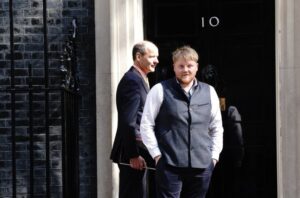
Rishi Sunak’s Downing Street food summit has been slammed as just full of “empty gestures and no more that an a PR stunt” by food and farming industry representatives, who rounded on the prime minister for failing to discuss soaring inflation or set out measures to safeguard British food production.
The Farm to Fork summit, the first meeting of its kind, brought together farmers, food producers and some of Britain’s largest supermarkets including farming advisor to Jeremy Clarkson Kaleb Cooper (pictured).
One representative of a trade body that attended the summit described it as an “empty meeting” with no action on price or inflation discussed. “It was there for the Tories to show they are supporting farmers,” they said.
Another attender said the summit elicited a “low-key response” from those present because it “did not touch the fundamental problems of food price inflation”.
“If you are not doing something about the cost of living, cost of production, access to labour and affordability of food then you are never going to fix the overall problem,” the attender said.
The summit had been expected to tackle topics such as food price inflation, fairness within the supply chain and helping farmers to invest in domestic production, but there was no subsequent announcement on those issues. Ministers offered no commitments in response to a call by the National Farmers’ Union (NFU) to stop Britain’s self-sufficiency in food slipping below its current level of 60%.
The summit took place against a backdrop of stubbornly high inflation, partly driven by food and drink prices, which rose 19.1% in the year to March, according to official figures.
In advance, consumer groups had called on ministers to ask grocery bosses to commit to holding down prices to help squeezed consumers, after an agreement by supermarkets in France to cap prices on key food items and a move by the French government to support food producers.
Hours before the meeting, Sunak published an open letter to farmers, promising to put UK farming at the heart of future trade deals and vowing that chlorinated chicken and hormone-fed beef would not be allowed on to the UK market.
Sunak’s pledges were welcomed by the NFU, which had repeatedly asked the prime minister to hold a food summit.
The union’s president has previously criticised the government for making farmers “a pawn in trade deals”, including those struck with Australia and New Zealand by Sunak’s predecessor, Liz Truss, during her time as international trade secretary.
Tom Bradshaw, the NFU’s deputy president, said the union believed the government had “put food security on a par with energy security” at the summit, which he called “a big step forwards”.
He added that farmers had battled to get ministers to “deliver resilience to the food supply chain”, which he hoped would help reverse recent falls in domestic production, as farmers have quit the industry amid soaring costs.
However, the government did not immediately answer the NFU’s calls to make the summit an annual event.
The meeting, which according to one person present was attended by between 60 and 70 people and lasted all morning, began with a welcome from the prime minister, before participants took part into four separate discussion groups.
Richard Griffiths, the chief executive of the British Poultry Council, who attended the summit, believed the meeting represented only “a little step forward” for the food industry.
He welcomed the government’s promises regarding future trade deals, but said “there needs to be more attention on how we and the government promote British food”.
He said promising to support producers in international trade deals without making plan on how to tackle food inflation “was like taking one corner of a big problem and trying to fix it without reference to the rest”.
Lee Stiles, the secretary of the Lea Valley Growers’ Association, a trade body for glasshouse growers, described the food summit as “no more than a PR stunt” with “nothing of substance” to help growers.
Stiles, who was not at the meeting, called on the government to take action to help with labour shortages.
He described the current seasonal agricultural workers scheme as “not fit for purpose” because it only enables holders to work for six months, although workers are needed for almost twice that period, meaning that multiple groups had to be trained each year to keep production flowing.
Stiles added: “The idea you can fill these roles with local workers is ridiculous and has been since the 1950s.”
Read more:
No 10 food summit ‘no more than a PR stunt and full of empty gestures’ failing to tackle key issues
Month: May 2023
Dragons Den entrepreneur smashes crowdfunding target after rejecting  …

‘Planet positive’ bedding brand, Ethical Bedding, has successfully exceeded its £100k crowdfunding target just 12 days after its first Seedrs campaign officially went live and is well on its way of reaching £150K.
Ethical Bedding Founder and young entrepreneur James Higgins made the decision to invite investors harnessing his same sustainable values to own part of the company after he respectfully declined an investment offer of £150k on BBC’s business reality TV show, Dragons’ Den, in January this year.
Now in its third year of trading, the certified BCorp has gained increasing recognition for its ethical and environmental approach to business, with this latest funding round allowing it to continue its mission to build an entire ‘Ethical Empire’ whilst inspiring other companies to champion sustainable practices.
Founder of Ethical Bedding, James Higgins, commented: “In life, you never know for certain whether a plan will come together – irrespective of how much hard work and preparation you put into it – so reaching our crowdfunding target within the space of just 10 days is monumental!
“The capital raised will be used to drive further growth by investing in three core focuses: people, products and brand, including a best-in-class website rebuild and creative content refresh, resulting in a truly immersive mobile-first and web experience for both new and existing customers.
“In addition to our successful funding round, we have experienced 700% organic growth over the past 12 months and record-breaking revenue figures – all whilst upholding our commitment to sustainable business practices and building a deeper connection with our existing customers. To fill the entire SEIS allocation, our next internal target is £250k… Watch this space.”
James founded the data-driven and digital-first D2C brand when he gave up his 10-year career in financial technology after realising that it was taking a toll on his health, and in particular his sleep.
Dedicated to maintaining a 100% ethical production and supply chain, Ethical Bedding offers a high-quality, premium range of sleep accessories including organic eucalyptus duvets, sheets and pillows, designed to provide maximum comfort whilst ensuring a minimal impact on the environment.
The brand’s primary focus for 2023 is to expand its national retail network into high street stores across the UK and Ireland, as well as increase organic social reach on multiple channels by offering genuine value-add in the sleep and wellness space.
Read more:
Dragons Den entrepreneur smashes crowdfunding target after rejecting £150K offer from Touker Suleyman
Living with long covid set to be improved with support from new networ …

Long Covid is a reminder for many people of the lingering after-effects of the pandemic.
The condition remains one that many healthcare practitioners find difficult to identify and treat, rendering sufferers to live with a condition that causes long-term side effects.
People affected by long COVID are now being offered an opportunity to share their experiences in the form of a new networking platform.
Biocomm.net is a free social community service and has developed ‘Social Beats’, a network for all people affected by long COVID. Social Beats provides the opportunity for users to interact with other people living with the condition, sharing personal experiences and exchanging health information from trusted sources. The platform is the brainchild of BiocommAI, sponsored by InnoMedica and Normax Biomed, the pharma business dedicated to becoming a global market leader in mRNA Vaccine R&D and distributed manufacturing- with the overall goal of emocratizing access to vaccinations globally.
The condition can be, for some, only mildly debilitating. Yet other people living with long Covid can experience anything from the loss of smell to breathlessness, organ damage as well as life-changing mental or emotional symptoms. With proof that networks and communities provide emotional and social support for those living with serious illnesses, Biocomm communities enables patients and their families to connect in a way like never before, to share their experience and knowledge of living with a long-term condition.
Peter A. Jensen, CEO and Chairman of Normax and driving force behind Biocomm.net said: “Community is key for anyone dealing with an illness or long-term condition. Biocomm.net is a safe space for people affected by long COVID – a platform designed to help people living with the condition to connect with others and to build a better life. We have recognised that long COVID has impacted people in many ways and now is the time to help them by enabling them to connect, learn and share knowledge.”
Read more:
Living with long covid set to be improved with support from new networking platform
IR35 win ‘turning point’ in proving that off-payroll rules are man …

One of the first HMRC checks to have been successfully closed down after the introduction of the off-payroll working rules is proof that these much-feared changes are manageable, particularly when the tax office takes a pragmatic approach to IR35 compliance.
The IR35 check, involving a global organisation engaging over 300 contractors, was successfully shut down with the support of specialist, Qdos, which described it as a “turning point” in making all businesses aware that contractors can be safely engaged outside the scope of the IR35 legislation.
The business, which has requested to remain anonymous, received a letter from HMRC in September 2021 containing numerous questions relating to the processes in place to ensure IR35 compliance under the off-payroll working rules – from how IR35 status is determined to how many contractors are engaged inside and outside of the legislation.
Following a rigorous review of the business’s IR35 compliance and with HMRC having been presented with the details of a robust compliance framework – achieved through Qdos’ Status Review facility – the tax office closed down this 18-month probe earlier this month.
Seb Maley, Qdos CEO, commented: “There has been so much concern surrounding the off-payroll working rules in recent years – to the point where businesses have forced contractors inside IR35 or stopped engaging them altogether for fear of falling foul of this complex legislation.
“Above all else, the successful closure of this IR35 check – where the majority of contractors were engaged outside IR35 – is proof that the off-payroll working rules can in fact be managed. For risk-averse businesses, this should be a turning point.
“The business subject to this IR35 enquiry provides the perfect blueprint for ensuring IR35 compliance. Along with having engaged an expert to carry out IR35 status determinations, a clear and comprehensive audit trail proved vital in evidencing compliance to HMRC.
“When it comes to IR35, in the past HMRC has been guilty of jumping to conclusions, accusing parties of non-compliance before having established the facts. The tax office’s pragmatic approach to this check was refreshing. Long may it continue.”
Read more:
IR35 win ‘turning point’ in proving that off-payroll rules are manageable
UK SMEs admit running their own business has negatively impacted their …

Almost half of small business owners state that running their own business has negatively impacted their physical and/or mental health – up slightly from 2022 at 44%.
That is according to new research from cloud accounting provider FreeAgent.
A survey of small business owners from across the UK, conducted by FreeAgent, has revealed the scale of the challenge facing the SME sector with regard to mental health, with findings showing more than a third (37%) have experienced burnout as a result of running a business.
According to respondents, many SMEs are working additional hours every week with overtime becoming commonplace, with two out of five (41%) business owners saying they work up to 48 hours a week on average, and a fifth (20%) working up to 64 hours a week. More than a third (36%) of business owners stated they often work in the evenings and two-fifths (41%) often or always work at the weekend.
The data shows that there is no rest when you own your own business. With over three-quarters (78%) of respondents working through an illness because they felt they couldn’t afford to take time off and the majority (84%) have no sick pay provision or business insurance to cover circumstances under which they fall ill, it’s clear that UK entrepreneurs are putting their hearts into their businesses.
However, despite this, two-thirds of small business owners (66%) feel they have a good work/life balance compared to just one quarter (27%) who feel they don’t.
Roan Lavery, CEO and co-founder of FreeAgent said: “Our research suggests that a significant number of SME owners in the UK are feeling the physical and mental health pressures of running a business. Many say they have experienced burnout as a result of working for themselves, while many more are spending long hours on their business ventures – including evenings and weekends.
“However, despite these challenges, it’s really positive to see that the majority of small business owners still feel they have a good work/life balance and say they would recommend self-employment as a career. That’s a great foundation to build upon as the UK continues to navigate the ongoing cost of living crisis.
“What I would like to see going forward, though, is more support for small business owners to manage these physical and mental health challenges. Whether it’s providing more funding for mental health support programs, increasing access to sick pay and health insurance, offering tax incentives for businesses that prioritise employee well-being, or simply increasing support for business education and training programs, there are plenty of opportunities for the government to step in and provide help where it is badly needed.
“By taking these steps, I believe the government could help to strengthen the SME sector and promote economic growth, while supporting the well-being of the UK’s five million small business owners.”
Read more:
UK SMEs admit running their own business has negatively impacted their mental and physical health
Royal Mail boss Simon Thompson to step down
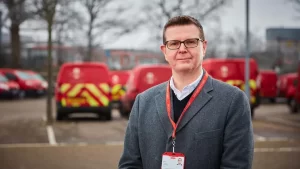
Royal Mail boss Simon Thompson is to step down from his role, the owner of the postal giant has said.
Mr Thompson said he believed it was the “right time” to go after Royal Mail and the main postal union struck a deal that could end a long-running dispute.
He has had a difficult two years in charge of the firm.
Mr Thompson had come under pressure after he was accused of misleading MPs when he denied Royal Mail tracked workers’ productivity.
He will remain in post until the end of October, and the board is in “advanced stages” of appointing a new chief executive, it said.
There were reports that Mr Thompson had become “increasingly disillusioned” during strike action by members of the Communication Workers Union (CWU).
It is believed leaders of Royal Mail’s parent company, International Distributions Services, also wanted fresh leadership at the firm after the dispute over pay and conditions.
Last month, union bosses recommended that workers accept the new deal which would end the bitter dispute. Union members will be balloted later this month.
The company had said that more industrial action, which had already cost it £200m, could lead to Royal Mail going bust.
Read more:
Royal Mail boss Simon Thompson to step down
Finance concerns have harmed the mental health of small business owner …

Half of UK small business owners believes their mental health has suffered from the stress of managing their business finances in the past year.
A new survey conducted to mark Mental Health Awareness Week has uncovered the emotional cost of being your own boss during the cost of living crisis.
The owners of smaller businesses which employ 2 to 10 people, have been in operation for 5-10 years and are solely responsible for the decisions of the business are most likely to have suffered higher levels of anxiety and stress over their business finances, according to the survey.
Mental health impacts are also more likely to be amongst those people that have taken on personal debt to fund their business in the past year.
Amongst the directors and owners who feel the financial aspect of running their business has impacted their mental health, 60% have taken on personal debt for their business while 69% have taken on or will need new finance in the next year. For 43% this will be for paying off outstanding debt. Furthermore, 65% are already personal guarantors or plan to become one for a business loan. This means that unless they have secured personal guarantee insurance, their home and savings would be at risk if their business fails.
The survey also found that when small business owners want financial advice and support, their accountant comes top of this list followed by their lender or bank manager. Family members are also called on by 1 in 5. Just 1 in 10 also sought advice from another small business owner.
Todd Davison, MD of Purbeck Personal Guarantee Insurance, who commissioned the research, said: “Financial worries can be a source of huge anxiety and we’ve had all the ingredients in the past year to increase stress levels for small business owners, as reflected in our survey. Often, the finances of a small business are linked to the personal finances of the owner – whether that’s because they have taken on a personal loan to help the business, borrowed from friends or family or they have signed a personal guarantee for a business loan. That just adds to the worry, creating a huge burden for the owner/manager.
“One way to tackle financial fears on a practical level is through Personal Guarantee Insurance. It exists to offer small business owners greater peace of mind and confidence when securing a personal guarantee backed loan. Purbeck also offers advice and mentoring support when a business gets into financial distress, including speaking to other businesses that have been through similar issues to learn what they did to solve them.
“On a more emotional level we also recommend checking out the Mental Health Awareness website which offers some fantastic tips for dealing with anxiety – the theme of this year’s Mental Health Awareness week. Tips include breathing techniques; exercise (outdoors ideally); keeping a diary; eating healthily; getting rest and sleep; and connecting with othersii. We know the connections we have facilitated for small businesses as part of our claims service have often made a big difference to the mental well-being of the owner as well as the financial standing of the business.”
Read more:
Finance concerns have harmed the mental health of small business owners
Nearly three quarters of SMEs owners feel isolated from friends and fa …

Nearly three quarters of small and medium-sized enterprise (SMEs) owners feel isolated from their friends and family as a result of the hours they work.
A study, of SME leaders and decision makers, found 59% can ‘never switch off’ from their job.
This has caused 75% to argue with their loved ones because they’ve spent too much time working – with one in 10 grafting for at least 50 hours in a typical week.
One of the main drivers to starting their own business venture was so they could set their own working hours, however, 44% admit they now work more than they should.
Steve Hackley, managing director for Sky Business, which commissioned the research, said: “It can be hard work being your own boss.
“There’s always a temptation to just do one more thing – and these long working hours can very easily lead to burnout.
“Almost everyone feels stress about their work, and we understand that this is exacerbated when your entire business performance is potentially on the line.
“But our results show SME owners are still satisfied with their decision to set up on their own, even if they end up working more than they’d like.
“And the resilience of this group remains impressively strong.”
The research found in the early days of their business, 84% worked or are working overly long hours, in the hope that in future they will be able to do less.
And despite knowing their work is taking over their lives – or perhaps because of it – 53% of SME owners and decision makers describe it as stressful.
Nearly two thirds (64%) also admitted to losing sleep at least sometimes as a result of stress from work.
Work worries are most likely to hit in bed at night (27%), just before work begins (24%) or when getting ready to go to sleep (24%
Another 23% of those who stress about work feel it from the moment they wake up, according to the OnePoll.com research.
But no matter how difficult work gets, 74% say they could never work for someone else – and 61%of SME owners and decision makers think their business will be in a better place in 12 months.
When asked what would ensure the smooth operation of their business in the coming year, a reliable internet connection was cited by 59% of respondents.
Steve Hackley, of Sky Business, added: “We conducted this research in order to better understand the challenges businesses in the UK are facing.
“We always want to know what businesses need, so we can continue to tailor our products and services to suit them – knowing the mindset of the marketplace allows us to be better providers.”
Read more:
Nearly three quarters of SMEs owners feel isolated from friends and family
eBay UK launches climate training scheme for SMEs
eBay UK is launching a climate training programme for the 200,000+ small businesses that sell goods on its platform.
Called the ‘carbon academy’, the programme is open to all eBay UK sellers and is being hosted as part of a partnership between eBay and Climate Partner. The aim is to equip SME decision-makers with the knowledge and skills they need to measure and reduce their emissions footprint.
The vast majority of businesses in the UK are SMEs – at least 90%. In climate terms, SMEs account for around half of the nation’s business-related emissions, with estimates varying from 45% to 53%.
Yet much research has been conducted recently concluding that SMEs are struggling to develop and deliver plans to cut emissions. Common barriers include a lack of budget or in-house expertise, plus the fact that some of the world’s most prominent schemes and resources for decarbonisation are aimed at corporations.
Through the carbon academy, SMEs will be able to have a baseline of their emissions footprint calculated by ClimatePartner at a discount. They will also have access to an online module on emissions accounting.
Six other online modules are also part of the programme. They will cover topics including carbon reduction, adopting circular economy principles and communicating climate action and sustainability. SMEs will additionally receive guidance on the role that carbon offsetting could play in their climate strategies.
Each module comes with its own checklist, with eBay placing emphasis on “bite-sized” resources and “practical” information.
“We all know that driving the change we need to see in our economy is going to take all of us and with over 200,000 small businesses using eBay in the UK alone, we can drive significant impact,” said eBay UK’s general manager Eve Williams.
Globally, eBay is notably working towards a verified 1.5C-aligned climate target. It has committed to reducing Scope 1 (direct) and Scope 2 (power-related) emissions by 90% by 2030, against a 2019 baseline. Within the same timeframe, it is aiming to reduce Scope 3 (indirect) emissions from downstream transportation and distribution by 20%.
Read more:
eBay UK launches climate training scheme for SMEs

