

Economists have warned that calls from Conservative MPs for Chancellor Jeremy Hunt to cut taxes after improved borrowing data emerged show “questionable judgement”.
Three backbench Conservatives piled the pressure on, according to the Financial Times, with calls for “personal tax reductions” to “stimulate the economy”.
The pleas came after figures from the Office for National Statistics (ONS) revealed on Tuesday that public sector borrowing for July amounted to £4.3bn – lower than the £6bn forecast by the Office for Budget Responsibility (OBR) in March.
But economists have warned against the move, suggesting the government is only just meeting its own fiscal rules, following months of gloomy news for UK plc.
Former Tory minister Sir John Redwood branded the OBR “ridiculously pessimistic” in its forecasts and called on ministers to take action on taxes and public spending, including by raising the VAT threshold for small firms, in a bid to fire up growth without risking inflation.
Sir Jacob Rees-Mogg, ex-business secretary, echoed his remarks on the OBR’s “continued failure” and said the size of its gap between forecasts and reality created space for tax cuts.
“This would pay for the total abolition of death duties and leave billions to spare – but more importantly it illustrates the mistake of setting policy based on the OBR’s auguries,” he said.
And David Jones, deputy chair of pro-Brexit European Research Group of Conservative MPs, said he thought there was “more fiscal headroom now”, linked to a “greater tax take”.
He urged: “That should be converted into personal tax reductions. The chancellor should also be looking to stimulate the economy by reviewing the rate of corporation tax.”
Aveek Bhattacharya, from the Social Market Foundation (SMF), said: “Rushing to cut taxes in response to the first piece of fiscal good news would show questionable judgement and priorities from the government.
“With inflation remaining stubbornly high, stoking demand through higher borrowing would be bad economic policy. It would also be bad social policy to raise less money through tax whilst NHS waiting lists lengthen, educational institutions are squeezed, and poverty and homelessness are at intolerable levels.”
And Carl Emmerson, of the Institute for Fiscal Studies, said: “Given the proximity of the general election I wouldn’t be surprised to hear talk about and even the possibility of tax cuts. But given the reality of the economic situation, even if they do happen it would not be surprising for bigger tax rises to be implemented once we’re on the other side.”
He added: “The government was only meeting its fiscal rules by the slimmest of margins back in March.
“While it is true that revenues have been stronger than expected since then, borrowing is still much higher than forecast just 18 months ago.”
Borrowing figures for last month were £3.4bn higher than in July 2022, but were also well below the £5bn predicted by economists, according to Reuters polling.
A Treasury spokesperson said: “Driving down inflation is the most effective tax cut we can deliver right now which is why we are sticking to our plan to halve it, rather than making it worse by borrowing money to fund tax cuts.
“We have taken 3m people out of paying tax altogether since 2010 through raising personal thresholds, and the Chancellor has said he wants to lower the tax burden further but sound money must come first.”
Read more:
MPs calling for tax cuts show ‘questionable judgement’, economists warn
Month: August 2023
How to plan for the death of a business partner.

It was Benjamin Franklin who once said “…nothing can be said to be certain, except death and taxes.”
Business owners know only too well the importance of dealing with taxes, but rarely think about or plan for how they will deal with the death of a business partner or shareholder.
As a nation, we’re not good at talking about death. So, it is hardly surprising that recent research shows that half of UK adults don’t even have a will. Yet, as Here Jen Goodwin, a solicitor in the corporate and commercial team at solicitors Jackson Lees explains as a business owner, failing to plan for death is a serious risk, not just to your family but also to your business.
As unpleasant as it is to think about, a responsible business owner needs to have considered what will happen to ownership of their business if they or a co-owner dies or becomes seriously ill while still active in the business. Indeed, it is healthy to include these issues as part of your business continuity and risk planning particularly when you consider a Legal & General survey which found that 59% of businesses believed that they would have to stop trading in less than a year after the death or critical illness of a key individual.
Aside from not wanting to think about the worst, one of the reasons more businesses don’t plan better around death or critical illness is because they wrongly assume that their families will automatically benefit from the value built up in the business in the event of their death, but that is not necessarily the case.
The default position is usually that shares in a company will pass to the estate of the deceased, leaving family members with shares and not cash, and surviving co-owners with new shareholders who often have little or no working knowledge of or interest in the company. It can be a less than ideal situation for both sides.
Yet, there is a simple solution to avoid this by having a cross-option agreement.
What are they?
A cross-option agreement is a contract between the shareholders of a private limited company and is a private document that does not need to be filed at Companies House. It gives the other shareholders the option to purchase the shares of a shareholder who is incapacitated or has passed away. This option allows the surviving shareholders to retain control of the business without having to introduce new shareholders.
The agreement will also provide the beneficiaries of a deceased shareholder (very often the spouse, children or other close family members) a similar option to require the surviving shareholders to purchase the deceased’s shares, just in case those surviving shareholders don’t exercise their own option to buy.
For those left behind, whether personally or professionally, it provides real peace of mind. For family members, it provides certainty that the demands of the business will not fall on them and for those left in the business, it provides clarity as to the business’s future.
Importantly, as the name suggests, cross-option agreements provide just that, options. The parties do not have to exercise their rights under the options. If neither the surviving shareholders nor the estate of the deceased exercise their rights then the shares will be inherited in accordance with the relevant will or intestacy rules and any applicable shareholders agreement, which might be particularly welcome in a family-run enterprise where one individual has been identified to take over from the deceased.
What is included?
The main elements of a cross-option agreement include the details of the shares eligible to be bought or sold, the rules around how the shares are to be valued (or if there is to be a fixed price) and a timescale as to when the transaction should take place and payments be made.
Valuing and paying for shares on death
Depending on the terms of the cross-option agreement, the shares may need to be independently valued. Some agreements contain a formula which might take into account market value and a multiple of profits. There will of course be tax implications for both sides in any sale and it is absolutely essential that both sides seek independent financial advice prior to entering into a cross-option and on exercising their option.
The cross-options are very often backed by an insurance policy taken out by each shareholder known as a shareholder protection policy. This is so that when an option is exercised, the purchasers have the cash available to buy the shares, otherwise they may need to fund the purchase price themselves or find a way for the business to fund it, which many will be unable to afford. This can leave a surviving shareholder in the very difficult position of being legally bound to purchase shares following exercise of an option by the estate, but without the money to be able to pay the purchase price.
These insurance policies are different to ‘key man’ or ‘key person’ insurance, which simply insure the business itself against the losses stemming directly from the absence of a critical person. Shareholder protection insurance pays out to the owners of the business for the sole purpose of acquiring the shares of the deceased or critically ill shareholder.
What else to think about?
At the same time as completing a cross-option agreement, you should also update your will to reflect what is in the agreement.
Just as important is to review and renew the cross-option agreement and any shareholder protection insurance every few years to make sure it still reflects the current business and value.
While you may not consider making such provisions for your business when you’re still young, fit and healthy a priority, considering a cross-option agreement could be a fundamental part of securing your businesses legacy.
Read more:
How to plan for the death of a business partner.
NatWest boss’s ‘£2.4m exit deal’ is a disgrace, says Nigel Fara …

Nigel Farage branded Dame Alison Rose’s NatWest exit an “absolute disgrace”, after it emerged she could be set to receive a pay package worth more than £2.4million.
The bank revealed on Wednesday that Rose was seeing out her 12-month notice period on her contract, one month after she resigned as chief executive.
She is due to receive £1.155 million in salary for the year, £1.155 million in NatWest shares — over a five-year period — and £115,566 in pension payments, NatWest said.
But it added that the board was yet to decide if it would attempt to claw back past bonus awards related to her performance, following an investigation into the Farage scandal, and added that the sums expected were not guaranteed.
NatWest said: “Like other employees where an investigation outcome is pending, Alison is currently receiving her fixed pay. This is in line with her contractual notice period and remains under continual review, as the independent investigation continues. As previously confirmed, no decision on her remuneration will be taken until the relevant investigations are complete.”
Rose, 54, quit as NatWest’s chief executive on July 25, after she admitted leaking confidential customer information about Farage to a BBC journalist at a charity dinner.
Her briefing to the BBC’s business editor resulted in an inaccurate story suggesting the Brexiteer had been debanked by Coutts — which NatWest owns — as he did not meet its wealth threshold.
Farage was later able to get hold of a 40-page dossier which revealed he had his accounts closed by the private bank because his views did not align with its inclusive values.
In a video posted on Twitter, the former Brexit Party leader said: “When I heard about it I thought perhaps it was a sick joke.”
The Conservative MP Sir Jake Berry called the amount a “disgraceful reward” for failure, and the former Brexit secretary David Davis urged the government to step in.
Ministers are understood to be waiting to see the result of the law firm Travers Smith’s investigation into the scandal, commissioned by NatWest. Harriett Baldwin, who chairs the Treasury select committee, said the bank should consider using claw-back rules to minimise the payout to Rose.
Farage said: “It’s an absolute disgrace. This is classic of the establishment — clubbing together and looking after their own. This is not just a reward for failure — it’s for breaking every rule in the book.
“Dame Alison Rose breached client confidentiality — far from receiving £2.4 million in compensation I think there should be serious questions asked about her damehood.”
Referring to Fred Goodwin, the former RBS chief executive, Farage added: “He lost his knighthood — he didn’t break the law as far as I’m aware.”
The politician-turned-broadcaster, currently in the US for the first Republican primary debate, also took aim at Sir Howard Davies, the NatWest chairman, for kicking the scandal “into the long grass”.
He said he is not due to receive a subject access request on him from the bank — to identify any further breaches — until the end of October. Farage added: “They’ve chosen a city law firm to investigate, headed up by a man who calls Brexiteers racists and xenophobes.”
Rose resigned in July after pressure from Downing Street and the Treasury over her position. NatWest Group is still part-owned by the taxpayer. She was followed out the door by Peter Flavel, Coutts’s chief executive.
After the scandal, Rishi Sunak, the prime minister, reaffirmed that banks should not restrict freedom of speech by shutting accounts of those with opposing views.
Andrew Griffith, the City minister, also hauled leading bankers into a meeting, as the government announced new requirements on banks to protect the freedom of expression of customers.
The Treasury said banks will be forced to explain and delay any decision to close an account under new rules, to combat account closures over political beliefs. The changes will increase the notice period banks have to offer to 90 days — giving customers more time to challenge a decision through the Financial Ombudsman Service.
NatWest said that it would review Rose’s planned pay and bonus payouts in relation to investigations into her actions in the Farage affair. It said: “Ms Rose’s notice period and the payments she will continue to receive for the notice period will be reviewed on a continuing basis, having regard to the internal and external investigations relating to the account closure arrangements at Coutts and associated events.
“Decisions on these awards, along with any decisions regarding other remuneration matters, will be made taking into account the findings of the investigations, as appropriate.”
It added that policies allowing the company to potentially “claw back” bonus payments will apply to the former boss.
Read more:
NatWest boss’s ‘£2.4m exit deal’ is a disgrace, says Nigel Farage
Jaguar to repurpose used EV batteries for Northamptonshire energy stor …
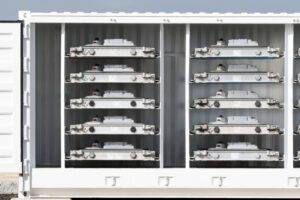
Jaguar Land Rover (JLR) and Wykes Engineering are teaming up to develop what they claim will be one of the UK’s largest energy storage systems made from old electric car batteries.
The two firms have announced today JLR is set to supply second-life batteries originally used for its Jaguar I-PACE electric vehicles (EVs) to renewables technology specialist Wykes Engineering, which then plans to slot these batteries into an energy storage system at a renewable energy part in Northamptonshire.
The battery storage system is to be spread across three locations at the Wykes-owned Chelveston renewable energy park, which boats over 85MW of installed wind and solar generation on site. The park is capable of producing 175,000MWh of electricity per year, which is enough to power more than 60,000 homes in the local area, according to JLR.
The batteries for the proposed facility have been taken from prototype and engineering test vehicles, with JLR hoping to supply enough batteries to store 7.5MWh of energy – enough to power 750 homes for a day – by the end of 2023.
According to JLR, batteries are simply removed from its Jaguar I-PACE and slotted into racks in containers on-site, with a single system housing 30 second-hand units and capable of storing up to 2.5MWh of energy at full capacity.
Moreover, each system is linked to an advanced inverter to maximise efficiency and manage energy, and is capable of supplying power direct to the grid during peak hours, in addition to drawing power out of the grid during off-peak hours to store for future use.
JLR said its second-life EV batteries were still able to be deployed in low-energy situations even after their performance falls below the stringent requirements of an electric vehicle, which typically still leaves a battery with as much as 80 per cent of its original capacity.
However, once the battery health falls below the required level for these second-life use cases, JLR said it planned to recycle the batteries to recover raw materials for re-use.
The partnership is designed to support JLR’s circular economy efforts as well as its ambition to achieve net zero emissions by 2039, according to François Dossa, executive director of strategy and sustainability at the automaker.
“Our sustainability approach addresses the entire value chain of our vehicles, including circularity of EV batteries,” Dossa explained. “Our EV batteries are engineered to the highest standards and this innovative project, in collaboration with Wykes Engineering, proves they can be safely reused for energy sector application to increase renewable energy opportunities. Using the 70 to 80 per cent residual capacity in EV batteries, before being recycled, demonstrates full adoption of circularity principles.
“Working together with industry-leading partners, we are developing a complete EV ecosystem, from batteries to charging, supporting our net-zero transformation.”
According to McKinsey & Company research, second-life battery supply for stationary applications, such as renewable energy storage, could exceed 200 gigawatt-hours per year by 2030, creating a over $30bn of economic value globally.
David Wykes, managing director of Wykes Engineering, added that the partnership with JLR could present a solution to potentially costly grid capacity issues.
“One of the major benefits of the system we’ve developed is that the containers are connected to the Grid in such a way that they can absorb solar energy, that could otherwise be lost when the grid reaches capacity,” he said. “This excess energy can now be stored in the second life I-PACE batteries and discharged later. This allows us to ‘overplant’ the solar park and maximise the amount of power we generate for the area of land we are using.”
The new follows last month’s announcement that JLR’s parent company Tata Group plans to build a flagship £4bn gigafactory in the UK – its first battery factory outside India – after months of negotiation with government to secure a major support package.
The new battery factory is reportedly earmarked for a site in Somerset and is expected to create around 4,000 UK jobs as well as thousands more across its supply chain, providing a major boost to the UK’s fledgling EV manufacturing industry.
The automaker has also recently set out plans to invest £15bn over the next five years in ramping up its electric vehicle offering, including through the production of its new all-electric Jaguar and Range Rover models at manufacturing sites in the UK.
Read more:
Jaguar to repurpose used EV batteries for Northamptonshire energy storage system
Getting To Know You: Jordan Fantaay, Founder, Pumpt

Pumpt is an electric vehicle (EV) charging startup founded by Jordan Fantaay, a serial technology entrepreneur. Jordan started his first company some 25 years ago while at university, developing a multi-room hi-fi and one of the world’s first DAB radios.
Early in his career, he worked with the likes of Sennheiser and Reebok on product development, before joining Dell as a startup advisor to the board. In 2016, Jordan presented to President Obama as part of Dell’s global entrepreneur summit.
What do you do at Pumpt?
Pumpt is an EV charging company committed to helping the UK’s transition to electric mobility and achieving its carbon emissions targets. We offer a range of electric vehicle chargers tailored for both residential and commercial use. Our platform aims to serve the needs of business and residential consumers alike. Residential owners can effortlessly procure fully installed individual chargers, while our corporate collaborations entail personalized packages aligned with specific business objectives.
Central to our ethos of making EV chargers accessible, empowering customers and taking care of the environment, all our chargers are intelligently designed, OZEV-approved, and affordably priced. Our all-in-one approach encompasses charger manufacturing, inclusive installation costs, and pioneering services such as financing, insurance coverage, maintenance services and cloud-based account management to ensure that you will be well taken care of for years to come, not just for now.
Who do you admire?
I admire my parents first, they gave me the space to be ambitious and strive to achieve whatever I wanted, it was the spark of my entrepreneurial journey. I admire Barack Obama! (Who doesn’t), a few and far between leader.
Looking back, is there anything you would have done differently?
I would have liked to have spent more time in my preparedness in bringing new products to market, I would have liked to have had more senior advisors involved in my business from the outset. Cant beat experience and even better having it on your side as you take a new venture to market in an industry you may not be familiar with.
What defines your way of doing business?
A good way to sum up my way of doing business would be: challenging the status quo and empowering consumers. When we started Pumpt, it was mainly to address issues faced by the average consumer in transitioning to EV. There was a lot of information out there, we’re so used to a system that relies on petrol, and the process to get a home EV charger was expensive and tedious. It was overwhelming. We wanted to undo all that, do right by the environment and our customers so we designed a process that was easy, convenient, and educational. We leveraged current technology so anyone looking to buy an EV can read all about it, buy it, have it installed and manage everything from a phone or computer. It was so important to make everything from information, installation, assistance and pricing accessible— which is why it was important that our entire process and platform is an all-in-one, multifunctional source so that our customers feel at ease and that we’re with them every step of the way.
What advice would you give to someone starting out?
There will always be basic, timeless pieces of advice so let’s get those out of the way! Don’t be afraid to take risks. Always be open to everything new or try to look at things from a different perspective. Once you are able to find something you are passionate about, take any opportunity to see where it goes. Make sure you also fine-tune your business philosophy and are doing things for the right reasons.
I’m sure people always say some version of that but you’re also going to need the support of a good team with you. You’ll always have some form of self-confidence if you believe in what you do and no business is without risks but with good people in your corner, you’ll always be set-up for success.
Read more:
Getting To Know You: Jordan Fantaay, Founder, Pumpt
Public finances hit by highest debt interest payments for any July

Government borrowing came in lower than expected last month despite a hit from the highest debt interest payments ever seen for the month of July.
The Office for National Statistics (ONS) said the interest payable on central government debt was £7.7bn while borrowing during the month was the fifth highest for the month of July on record.
That sum came in at £4.3bn – £700m lower, however, than economists polled by the Reuters news agency had expected.
It took borrowing over the first four months of the financial year to £56.6bn, almost £14bn up on the same period in the last financial year.
The public finances – soured initially by the effects of the COVID pandemic and government support for individuals and businesses – were later harmed further by the cost of living crisis.
Last year’s energy price surge gave rise to a £40bn bill to cover off the worst of the rises in household and corporate gas and electricity costs which were mostly a consequence of Russia’s invasion of Ukraine.
Microsoft in fresh bid to get Activision Blizzard takeover past UK regulator
The Treasury has responded to the pressure on the public purse by imposing a higher tax burden – a scenario it would look to partly reverse next year ahead of a general election.
While things like VAT receipts have been boosted due to higher inflation, the effects have had a negative impact on the public purse, too.
The interest bill of £7.7bn for July is a consequence of vast swathes of government debt being linked to the RPI measure of inflation.
The continued easing of inflation in recent months should reduce those payouts in the months ahead, the ONS said.
It said the public finances were boosted by inflows of self-assessment income tax receipts which are typically strong in July.
They came in at £11.8bn – £2.5bn up on the same month last year.
Another good piece of news for the chancellor, Jeremy Hunt, is that borrowing in the financial year to date is £11.3bn less than the amount forecast by the independent Office for Budget Responsibility (OBR).
The OBR said of the figure: “The downside surprise is more than explained by higher central government receipts, reflecting stronger nominal tax bases, alongside lower borrowing by local authorities and public corporations.
“This was partly offset by higher central government spending which was £8.0bn above profile in part reflecting higher-than-forecast public sector pay awards.”
The chancellor said of the ONS figures: “As inflation slows, it’s vital that we don’t alter our course and continue to act responsibly with the public finances.
“Only by sticking to our plan will we halve inflation, grow the economy and reduce debt.”
Ruth Gregory, deputy chief UK economist at Capital Economics, signalled the data did not change its view that Mr Hunt will have limited room for pre-election giveaways.
She said: “With interest rates still rising and a mild recession on its way, we continue to think the chancellor will struggle to unveil a large package of permanent tax cuts in the Autumn Statement while still adhering to his fiscal rules.”
Read more:
Public finances hit by highest debt interest payments for any July
UK firms asked to disclose China investments as Sunak mulls joining US …

A host of British firms have been asked by the government to hand over information on their investments in China, as the UK looks to take stock of its business ties to the state amid increasing geopolitical tensions.
The government confirmed today that a survey was sent to a number of UK firms last month seeking to understand firms’ investments across 17 sectors, including robotics, communications, transport and cryptography, the coding of messages.
China was not the only focus in the survey, which was first reported by Politico, as it also asked questions about investments in other countries including Australia, Canada and even the US.
The survey also follows US president Joe Biden’s new national executive order that looks to regulate US firms’ investments in Chinese tech sectors.
A spokesperson for the Department of Business and Trade said: “The Prime Minister and President Biden have rightly put our economic security at the forefront of UK-US cooperation, as seen at the signing of the Atlantic Declaration.
“This Executive Order on outward investment gives important clarity on the US approach. The UK will consider these new measures closely as we continue to assess potential national security risks attached to some investments.”
The ‘Atlantic Declaration’, inked by Biden and Prime Minister Rishi Sunak in June, commits the countries to stopping technology investments in “countries of concern”, and fuel advances in their military or intelligence departments.
However, some have criticized the declaration warning that broad restrictions could hinder the country’s economic growth and hurt the UK’s semiconductor sector.
Read more:
UK firms asked to disclose China investments as Sunak mulls joining US in trade bans
The rising trend of shoplifting epidemic is going unpunished

Shoplifting has long been a concern for retailers worldwide, but recent events in London have brought the issue to the forefront.
In a shocking turn of events, hundreds of teenagers gathered on Oxford Street, expecting to take part in a mass robbery. The incident, fueled by viral posts on TikTok and Snapchat, left shoppers, store owners, and law enforcement on high alert. This brazen attempt at theft highlights a worrying trend that is going largely unpunished.
The incident on Oxford Street served as a wake-up call for retailers and law enforcement agencies. Social media platforms like TikTok and Snapchat played a significant role in organising this event, with posts inviting participants to wear balaclavas and gloves to “rob JD Sports.” The replication of a successful looting spree in an American candy store the previous year added fuel to the fire.
However, this time, the authorities were prepared. Sadiq Khan, the mayor of London, issued a warning, and the Metropolitan Police announced a heavy presence, sending a clear message that anyone committing a crime would face robust action.
Social Media: Amplifying the Problem
Social media platforms have become powerful tools for organizing criminal activities, including shoplifting sprees. The viral nature of posts on TikTok and Snapchat can quickly mobilize a large number of individuals, facilitating the planning and execution of thefts. The anonymity provided by these platforms adds to the allure for potential participants, making it difficult for law enforcement to identify and apprehend the culprits. This incident on Oxford Street highlights the need for stricter regulations and monitoring of social media platforms to combat the rising trend of shoplifting.
Shoplifting not only results in immediate financial losses for retailers but also damages their reputation. The stolen merchandise represents a direct hit to their bottom line, leading to higher prices for honest customers to compensate for the losses. Moreover, incidents like the one on Oxford Street create a sense of insecurity among shoppers, impacting their trust in retailers and their willingness to visit physical stores. Retailers must invest in robust security measures, both physical and digital, to protect their assets and maintain customer confidence.
To combat the rising shoplifting epidemic, there is a pressing need for stricter enforcement and a comprehensive approach that focuses on deterrence and rehabilitation. While heavy police presence during high-risk periods can act as a deterrent, it is equally important to address the underlying causes that drive individuals to engage in such criminal acts. Education and outreach programs can play a crucial role in imparting a sense of responsibility and discouraging potential offenders. Additionally, rehabilitation programs can help reintegrate individuals into society, reducing the likelihood of repeat offences.
The battle against shoplifting requires a collaborative effort between retailers and law enforcement agencies. Retailers must invest in cutting-edge security systems, including surveillance cameras, alarms, and trained security personnel. Sharing information and best practices among retailers can also help identify emerging trends and prevent future incidents. Law enforcement agencies, on the other hand, need to allocate adequate resources and manpower to tackle this growing problem effectively. Close coordination and communication between retailers and law enforcement are crucial for the success of any anti-shoplifting initiatives.
Technological Solutions: Leveraging Innovation to Combat Shoplifting
As shoplifters become increasingly sophisticated, retailers must embrace technological solutions to stay one step ahead. Artificial intelligence (AI) and machine learning algorithms can analyze data and detect patterns that may indicate shoplifting activities. RFID (Radio Frequency Identification) tags can help track merchandise within the store, making it easier to identify any attempts at theft. Additionally, facial recognition technology can aid in the identification and apprehension of known shoplifters. Embracing these innovative solutions can significantly enhance the effectiveness of anti-shoplifting efforts.
Raising public awareness about the consequences of shoplifting is crucial in shaping a responsible and law-abiding society. Education campaigns targeting both potential offenders and the general public can help foster a sense of accountability and discourage participation in criminal activities. Public-private partnerships can play a vital role in funding and executing these awareness programs. By working together, we can create a society where shoplifting is seen as unacceptable, and the consequences are widely understood.
Legislation plays a significant role in addressing the shoplifting epidemic. Stricter penalties for offenders, especially repeat offenders, can act as a deterrent. Simultaneously, the legal framework should focus on rehabilitating individuals, providing them with the necessary support systems to overcome the root causes of their criminal behavior. It is essential to strike a balance between punishment and rehabilitation to ensure a fair and effective justice system that protects both retailers and potential offenders.
Shoplifting is a global issue that requires international cooperation to tackle effectively. Sharing best practices and learning from successful anti-shoplifting initiatives in other countries can provide valuable insights and strategies. International conferences and forums can serve as platforms for collaboration and knowledge exchange, fostering a global network committed to combating shoplifting and protecting the interests of retailers worldwide.
The incident on Oxford Street serves as a stark reminder of the growing shoplifting epidemic and the need for concerted action. Retailers, law enforcement agencies, and society as a whole must unite to combat this problem effectively. Stricter enforcement, technological innovation, public awareness campaigns, and international cooperation can all contribute to reducing shoplifting incidents and creating a safer retail environment. By working together, we can send a clear message that shoplifting will not be tolerated, and offenders will face the consequences of their actions. It is time to take a stand against shoplifting and protect the interests of retailers and communities worldwide.
Read more:
The rising trend of shoplifting epidemic is going unpunished
Ships Face Over 20-day Wait at Panama Canal Due to Drought Conditions

The Panama Canal, a vital trade route connecting the Pacific and Atlantic Oceans, is currently facing significant congestion and delays with more than 200 ships are stuck on both sides of the canal, with some waiting for weeks to cross.
This congestion is a result of authorities capping the number of crossings due to a serious drought in the region. In this article, we will explore the causes of the congestion, the impact on global trade, and the measures being taken to address the situation.
The ongoing drought in Panama has led to a severe reduction in water levels, affecting the operation of the Panama Canal. The canal uses three times as much water as New York City on a daily basis, and the lack of rainfall to replenish it has resulted in water conservation measures. The Panama Canal Authority (PCA) has capped the number of daily transits at 32 in an effort to conserve water, down from the usual 36 transits. This reduction in capacity has caused a backlog of ships waiting to cross, with some vessels waiting for more than 20 days.
Vessel-tracking data reveals the extent of the congestion at the entrances of the Panama Canal on both the Pacific and Atlantic oceans. Hundreds of ships, mainly bulk cargo or gas carriers, can be seen waiting near the canal entrances. The entrances on both sides of the canal are jammed, and the backlog of ships waiting to cross is causing a traffic jam. The congestion is particularly affecting large vessels that carry bulky items such as coal and iron ore. These vessels, usually owned by medium or small operators, do not receive priority and are stuck in the traffic jam.
The Economic Impact
The congestion at the Panama Canal is causing significant economic repercussions. Panama is set to lose $200 million in revenue due to the delays. The delays in shipping are also expected to cause a spike in global grocery and parcel prices as extra fees are added to shipping costs. The congestion is disrupting the supply chain and increasing transport costs for cargo owners, including American oil and Asian importers and gas exporters. The impact is not limited to Panama; it has global implications, affecting trade routes and causing delays in the delivery of goods.
Measures to Address the Congestion
The Panama Canal Authority is implementing various measures to address the congestion and alleviate the delays. The number of vessels allowed to pass through the canal each day has been reduced, and restrictions on the maximum depth of ships have been imposed. Additionally, the PCA has temporarily changed its reservation rules to allow more ships without bookings to travel through the canal. These measures aim to manage the backlog and reduce waiting times for vessels.
The drought conditions and resulting congestion at the Panama Canal present significant challenges and uncertainties. The severity of the drought has no historical precedent, even compared to the last drought in 2019-20. The Panama Canal Authority warned that the restrictions on vessel transits could remain in place until the end of the year if the low rainfall persists. The uncertainty surrounding the situation is causing concerns for shipowners and operators who have to make crucial decisions regarding their routes and schedules.
The congestion at the Panama Canal has implications for global trade, particularly for the movement of goods between Asia and the United States. The Panama Canal is a critical trade link for US shippers heading to Gulf and East Coast ports. The delays and extra fees associated with the congestion are increasing shipping costs and potentially leading to higher prices and less choice for American consumers. The situation is also prompting shippers to consider alternative routes, such as transiting the Suez Canal, which can add significant transit time and fuel costs.
The Role of Climate Change
The drought conditions and water scarcity at the Panama Canal can be attributed, at least in part, to climate change. The return of the El Niño weather pattern is making Panama and the surrounding region warmer and drier. Weather-related problems, such as droughts and low water levels, are becoming more frequent and impacting critical trade routes like the Panama Canal. The situation highlights the need for sustainable water management practices and adaptation strategies to mitigate the impact of climate change on global trade.
The Future of the Panama Canal
The Panama Canal Authority is facing unprecedented challenges in managing the congestion and water scarcity at the canal. The PCA is exploring long-term solutions, such as diverting additional rivers into the waterway to increase water supply. However, these solutions require significant investment and planning. In the meantime, the PCA continues to communicate with customers and stakeholders, providing real-time information to help them make informed decisions. The future of the Panama Canal relies on effective water management, adaptation to climate change, and collaboration between all stakeholders involved.
Read more:
Ships Face Over 20-day Wait at Panama Canal Due to Drought Conditions

