
September 2023 – Page 3 – AbellMoney

Set aside 5 minutes to check these 5 cybersecurity mistakes and secure …

Top 5 cybersecurity mistakes endangering your startup and how to resolve them
Simon Hughes – VP and General Manager for the UK arm of Cowbell, a leading cyber insurance provider for SMEs – runs through the most common cybersecurity mistakes startups make, revealing how to fix them before hackers catch on.
One of the most common misconceptions among small and medium-sized enterprises (SMEs) is that they are less vulnerable to cyberattacks than their larger counterparts. It’s a belief that most likely stems from the perception that cybercriminals primarily target high-profile organisations for larger financial gains or notoriety. However, this is not entirely true.
Granted, the likes of Microsoft, Google and other major tech companies have fallen victim to cyberattacks on multiple occasions. Google’s 2009 “Operation Aurora” cyberattacks and Microsoft’s 2017 “WannaCry” ransomware attack both come to mind. The reason they come to mind however, is not because the effects these attacks caused were any more damaging than those SMEs experience, but because of the extensive media coverage they received.
When an SME is targeted, it’s unlikely to make the news, but that doesn’t make the effects any less damaging. In fact, it’s often quite the reverse; the same events impacting an SME business – financial loss as a result of a cyber event, reputational damage, legal costs, business interruption – are all likely to be felt much more acutely by a small or medium-sized business compared to a larger and more established organisation.
Coupled with this is the likelihood that an SME organisation is spending considerably less on their IT security than a much larger organisation and therefore more likely to fall victim to a malicious cyber event in the first place. Criminal organisations are well aware of these facts too. Therefore, the key for SME businesses is to think not only about their own cyber exposure, but how they can lower the likelihood of an event happening in the first place. If an incident then does happen, it’s about ensuring effective risk transfer and access to the necessary incident response capability.
A recent case study shows that businesses whose risk factors, based on Cowbell’s proprietary risk model, were 8 points higher than the industry average have a 1% chance of suffering a cyber attack or event, while businesses whose risk factors were 7 points lower than the industry aggregate have close to a 16% chance of suffering an event. That means implementing good cyber hygiene can indeed lower the likelihood of cyber events from happening.
So just what are the most common cybersecurity mistakes SMEs make and what can they do to fix them?
Failing to implement Multifactor Authentication (MFA)
One of the biggest mistakes SMEs can make when it comes to cybersecurity is failing to implement Multifactor Authentication (MFA), also called 2-Factor Authentication (2FA).
MFA is an electronic authentication method that only grants users access to websites or software if they present two or more pieces of evidence to an authentication mechanism. This usually involves a password, push notification, and/or authentication code using an authenticator app like Google Authenticator, Okta, or similar. According to Microsoft, implementing MFA can block up to 99.9% of account compromise attacks.
The great news is that implementing MFA is easy and usually free for most commonly used software and Cloud applications (Google Drive, Zoom, payroll software, etc.), and it can usually be enforced company-wide by the software administrator. For payroll software such as QuickBooks or ADP, for example, you’d simply follow these steps:

Step 1: Log in to your payroll software account.
Step 2: Look for an option in your account settings or security settings related to two-factor authentication or multi-factor authentication.
Step 3: Follow the instructions to enable MFA. This typically involves setting up a second verification method, such as receiving a code via text message or email.

Data backup complacency
Once a bad actor (an individual, group, or organisation that engages in malicious or unauthorised activities in the digital realm) gains access to a system, frequent data backups can prevent a lengthy business shutdown or costly ransomware payment; yet, many small companies still don’t back up their data regularly and properly.
To ensure an efficient backup strategy, companies should follow the 3-2-1 rule:

Ensure that you have three copies of your data (your production data and two backup copies),
on two different media (disk and tape)
with one copy off-site and entirely segregated from the rest (meaning offline, using a hard drive or in the cloud) for disaster recovery.

Allowing employees to use public wifi without a virtual private network
Many companies allow at least partial remote work for their employees, which can present an increased risk of exposure if virtual private networks (VPNs) aren’t put into place. A VPN creates a secure connection between a computing device and a network, or two networks, and is necessary when using public Wifi. Without a VPN, bad actors can gain access to your device or network through the shared Wifi.
Public Wifi is any Wifi that a large group of people has access to, for example, in cafes, airports, or hotels. Non-password-protected Wifi is the most dangerous, but even password-protected Wifi should only be accessed using a VPN, if the password is easy to obtain.
Luckily, there are many VPN providers available, and implementation can be done company-wide by an administrator. A couple of examples include:

ExpressVPN, which offers a high level of security with strong encryption, a strict no-logs policy, and a wide range of server locations. It has user-friendly apps for various platforms, making it easy for employees to install and use, and works on Windows, macOS, iOS, Android, Linux, and even routers. ExpressVPN allows businesses to set up VPN protection for their entire workforce through a business-specific plan.

NordVPN is another great example. Its advanced security features include Double VPN, Onion Over VPN, and CyberSec, which blocks malicious websites. It boasts a large server network spanning multiple countries, ensuring good connection speeds and like ExpressVPN, offers user-friendly apps for various devices, making it accessible for all employees.

No incident response plan
Due to the misconception that smaller businesses don’t get targeted by bad actors, many do not have a plan in place on how to behave if their company does fall victim to an incident. An Incident Response Plan (IRP) is a detailed plan that goes over all the actions to take when companies experience an incident, and it should be put in place before ever falling victim, as well as revisited and updated at least yearly.
The goal of an IRP is to give businesses peace of mind that they are prepared for an incident. They will know exactly what they need to do if such an event occurs, which will ultimately help to reduce the time and money it takes to get business back up and running. It’s worth noting that a good quality cyber insurance provider will offer assistance in creating an IRP, tailored to your business, along with various other risk management tools and services that can help bolster security and awareness.
Standalone cyber insurance policy
Many small businesses are still under the dangerous assumption that standalone cyber insurance policies (specialised insurance products designed to provide comprehensive coverage for a business against various cyber-related risks and liabilities) are only necessary for large enterprises. However, more than half (54%) of SMEs in the UK have experienced some form of cyberattack in 2022, up from 39% in 2020, according to a recent Vodafone study.
For those businesses that attempt to bundle cyber coverage into their general business insurance policies instead, several challenges can arise from what is often a one-size-fits-all policy that fails to consider the unique cyber risks faced by individual SMEs. If you fall victim, these may include insufficient financial protection and risk transfer, delayed claims processing, and an inability to provide you with the necessary technical assistance and incident response capability that your business needs during a cyber event.
Additionally, many good quality cyber insurance providers offer risk management services without any extra charge as part of your policy. This can include cyber risk assessment services, educational material, and templates for things like Incident Response Plans and Disaster Recovery Plans, just to name a few.
Right now, not only are many SMEs unprepared for the effects of a cyber incident – 90% of SMEs that experienced a serious incident say the cyberattack costs them more than they thought it would – but cybercriminals are increasingly targeting SMEs over larger firms for a number of reasons. They typically have less robust cybersecurity measures in place, it’s a target-rich environment (there are 5.5 million SMEs in the UK) and their resources are limited – all of which make them easier targets.
With the cyber landscape evolving on a daily basis, there is no better time than now for SMEs to take the opportunity to improve their cyber security posture and prioritise their cyber resilience. With the right planning, preparedness and cyber risk transfer in place, the severity of cyber incidents can be dramatically decreased; an approach that is undoubtedly far more cost-effective than dealing with the aftermath of a cyber incident without help.
Read more:
Set aside 5 minutes to check these 5 cybersecurity mistakes and secure your business
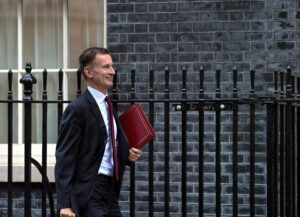

Bumper tax revenues resulted in UK public borrowing lower than expecte …

The government’s borrowing bill was lower than expected last month as falling inflation and bumper tax revenues helped improve public finances.
Figures from the Office for National Statistics showed that monthly public sector borrowing in August was £11.6 billion, below the £13 billion forecast by the government’s fiscal watchdog and just above the £11.1 billion expected by polled economists.
The figures are the latest undershoot in borrowing for the government. It has benefited from a rising tax take and falling inflation, which has reduced the Treasury’s bill for servicing debt.
Total borrowing is now £69.6 billion for the financial year that started in April, £11.4 billion lower than the Office for Budget Responsibility forecast in March.
The statistics office said the government was collecting more VAT and income tax, helping increase monthly tax receipts to £57.6 billion, up nearly £3 billion on August last year. High inflation has boosted public finances by dragging workers into higher tax brackets.
Recent falls in monthly inflation, as measured by the retail prices index, have helped cut the government’s debt interest bill on inflation-linked gilts by £3.1 billion, compared with August last year. Total debt servicing costs last month were £5.6 billion, undershooting the £7.9 billion projected by the OBR.
The figures are a boost for Jeremy Hunt, the chancellor, before his autumn statement in November. Treasury officials hope that an improvement in public finances will give the government room to announce a tax cut in the spring budget, before the general election next year.
The chancellor said: “These numbers show why, after helping families in the pandemic, we now need to balance the books. That becomes much easier when inflation is under control.”
The statistics office said the debt ratio, which measures government debt as a proportion of the economy, rose slightly to 98.8 per cent and is at its highest level since the 1960s.
Martin Beck, chief economic adviser to the EY Item Club forecaster, said that despite having extra billions in fiscal headroom, the chancellor was unlikely to spend his windfalls this autumn. “The fiscal rules around government borrowing and debt relate to a period five years out, so short-term developments in the fiscal numbers aren’t of much relevance,” Beck said.
Cara Pacitti, senior economist at the Resolution Foundation, said that despite the boost to tax revenues, high inflation also meant public spending was being squeezed in real terms, as the government’s departmental budgets were set before the inflationary surge.
“The chancellor may choose to bank the good borrowing news from higher inflation and ignore the public services pain it is causing in his upcoming autumn statement, but that challenge will need to be confronted by whoever wins the next election,” Pacitti said.
Read more:
Bumper tax revenues resulted in UK public borrowing lower than expected in August

Warner Bros confirms huge expansion of Watford studios

Watford is to become the unlikely new home for Batman and Superman after Warner Bros confirmed that it is to go ahead with a huge expansion of its Leavesden film studios.
The addition of ten new sound stages and 400,000 sq ft of production and support space will increase the filming capacity of the studios, where the Harry Potter films were shot, by 50 per cent.
Warners expects its investment to create 4,000 jobs directly and indirectly and contribute an extra £200 million each year to the UK economy. Building work is due to begin next spring and complete in 2027, after which Leavesden will become the main production hub for DC Studios, the Warners arm responsible for making the Superman, Batman and Wonder Woman films.
Jeremy Hunt, the chancellor, said: “Warner Bros Discovery’s ambitious plan to grow its Leavesden studio . . . means that British-made entertainment will continue to delight and entertain global audiences.” Hunt was in Los Angeles yesterday, meeting David Zaslav, chief executive of Warner Bros.
The expansion, planning permission for which was granted by Three Rivers district council and Watford borough council earlier this year, will cap the dramatic transformation of a site that in the mid-1990s was a disused airfield. The aircraft hangars and factories were first turned into filming space for the Bond film GoldenEye. Since then, a host of shows and movies have been filmed at Leavesden, including House of the Dragon, the Game of Thrones spin-off series, and, most recently, Barbie.
The UK has established itself as a filming hub for big production houses by offering generous tax breaks. Disney is reported to have earned upwards of £300 million in rebates for filming its Star Wars sequels in Britain.
Property investors more used to financing offices, flats and warehouses have been looking to add film studios to their portfolios to take advantage of the production boom.
Read more:
Warner Bros confirms huge expansion of Watford studios

HS2 Phase Two: Birmingham to Manchester expected to be cancelled withi …

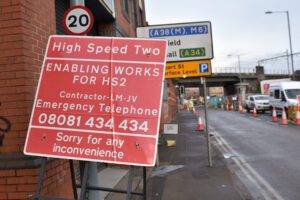
Insiders have revealed that the HS2 Phase Two project, the high-speed rail line from Birmingham to Manchester, is expected to be cancelled.
The announcement could be made as early as next week, marking a significant shift in the UK’s infrastructure plans.
The HS2 project, initially intended to link London, the Midlands, and the North of England, has been plagued by delays and escalating costs. The budget for the entire HS2 project was set at £55.7bn in 2015. However, the target cost, excluding the eastern leg of Phase 2b from the West Midlands to the East Midlands, has skyrocketed to between £53bn and £71bn in 2019 prices.
Despite £2.3bn already invested into the second stage of the national line, a leaked photograph obtained by The Independent suggests that ministers are considering scrapping the northern leg to save an estimated £35bn. This follows the controversial decision in 2021 to scrap the Leeds terminus and downgrade Northern Powerhouse Rail.
Senior Government sources have stated they were not aware of any final decision, with the ultimate call likely to rest with Prime Minister Rishi Sunak alongside Chancellor Jeremy Hunt. Mr Sunak has previously expressed the need to find a way of delivering infrastructure projects that don’t cost taxpayers billions of pounds.
The potential cancellation of the HS2 Phase Two project follows a series of setbacks. The eastern leg to Leeds was cancelled two years ago, and it was confirmed in March that construction between Birmingham and Crewe would be delayed by two years. Furthermore, services may not enter central London until the 2040s.
Transport Secretary Mark Harper announced a two-year pause on work at Euston due to costs forecasted to reach £4.8bn, nearly double the initial budget of £2.6bn. This means that Old Oak Common, in the capital’s western suburbs, will be the railway’s only London station when services to and from Birmingham Curzon Street begin between 2029 and 2033.
The cancellation of the HS2 Phase Two project could have significant implications for the UK’s infrastructure and economic development, particularly in the North of England. As the situation unfolds, all eyes will be on the government’s next steps in managing the country’s ambitious but troubled high-speed rail project.
Read more:
HS2 Phase Two: Birmingham to Manchester expected to be cancelled within days

Rupert Murdoch: A Titan of UK Media and Politics Bows Out

Rupert Murdoch, the Australian-born media mogul known for his towering influence over British media and politics, has announced his retirement, marking an end to a career that has shaped the UK’s media landscape for more than half a century.
Murdoch first ventured onto UK shores in 1969, acquiring the struggling tabloid News of the World. His purchase of The Sun the following year set a precedent for his business strategy—buy a struggling outlet, cut costs, and turn it into a profitable enterprise. With a keen instinct for the public’s desires, he transformed The Sun into the most widely read daily newspaper in the UK.
Taking on the Unions: The Wapping Dispute
One of Murdoch’s most significant achievements came in 1986 during the Wapping dispute. At the time, the print unions held a stranglehold on Fleet Street, demanding high wages and impeding technological advances. Murdoch’s decision to relocate his newspapers to a new, high-tech plant in Wapping, east London, triggered a bitter year-long confrontation with the unions. The outcome was a victory for Murdoch. His decisive action broke the power of the print unions, paving the way for a more technologically advanced and cost-effective UK newspaper industry.
A Player in Politics
His influence wasn’t just confined to the media. Murdoch’s relationships with successive UK Prime Ministers, from Margaret Thatcher to David Cameron, have been scrutinised and debated. His support for them via his newspapers, particularly The Sun, is often credited with swaying public opinion and election outcomes.
Murdoch’s close relationship with Thatcher was mutually beneficial. His newspapers supported her through her election campaigns, while she reportedly helped him expand his media empire, notably by not referring his bid for The Times and The Sunday Times to the Monopolies Commission.
Shaping the Media Landscape
Murdoch’s influence on the UK’s media industry extended beyond print media. In 1989, he launched Sky Television, an ambitious project that initially struggled but eventually revolutionised the UK’s television industry. By offering a broader range of channels and introducing pay-per-view services, Sky became a dominant player in the UK broadcasting sector.
Controversies and Legacy
Murdoch’s career has not been without controversy. The phone-hacking scandal at News of the World in 2011 led to the closure of the newspaper and a parliamentary inquiry into media ethics.
However, despite these controversies, Murdoch’s impact on the UK’s media landscape is undeniable. His bold business decisions, his technological innovations, and his political influence have indelibly shaped the industry. As he steps down, he leaves behind a media empire that has transformed the way Britons consume news, and a political legacy that has influenced the course of UK politics.
Rupert Murdoch’s retirement marks the end of an era. His influence, both lauded and criticised, has left an indelible mark on UK business and politics. As we turn the page, we can only wonder what the next chapter of UK media and politics will look like without him.
Read more:
Rupert Murdoch: A Titan of UK Media and Politics Bows Out

Bank of England maintains interest rate at 5.25%

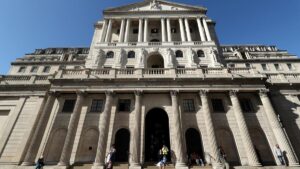
The Bank of England has left its interest rate unchanged at 5.25%, a day after inflation unexpectedly fell by more than expected.
The Bank’s monetary policy committee (MPC) voted 5-4 – the narrowest possible margin – to leave the cost of borrowing unchanged.
Up until the inflation data was released on Wednesday morning, markets had put an 80% probability on them raising the rate by a further quarter percentage point.
By this morning, that probability had sunk to just below 50%.
The decision brings to an end the longest successive period of “tightening” (a lift in the cost of borrowing) in recent Bank of England history – as the MPC raised rates in 14 successive meetings.
The last time the MPC voted to leave interest rates unchanged was in November 2021.
However, the fact that four members – Jon Cunliffe, Megan Greene, Jonathan Haskel and Catherine Mann – voted to raise the cost of borrowing might be seen as a signal that in the coming months the Bank may lift rates again.
The Bank also voted to continue its programme of reversing quantitative easing – the scheme whereby it creates money to buy government bonds and pump cash into the economy.
It said over the next year it will sell off a further £100bn of bonds, cutting its total asset pile down to £658bn.
The Bank of England governor, Andrew Bailey, said: “Inflation has fallen a lot in recent months, and we think it will continue to do so.
“That’s welcome news. But there is no room for complacency. We need to be sure inflation returns to normal and we will continue to take the decisions necessary to do just that.”
Ahead of the meeting, economists had been torn on whether the promise of falling inflation would outweigh the Bank’s concerns about rising wage inflation.
It has previously cited both of these statistics as key things to watch.
In the event, the five members who voted to leave rates unchanged judged that “the latest developments meant that the judgement to keep Bank Rate unchanged at this meeting rather than increase it was finely balanced.
“Conditions were likely to warrant a restrictive policy stance being maintained until material progress had been made in returning inflation to the 2 per cent target.”
That signals that there is still a significant chance that Bank rate rises again, and that even if they don’t, they are unlikely to come down very quickly.
Speaking about the announcement, Kevin Pratt, business expert at Forbes Advisor, said: “Businesses will be mightily relieved the Bank of England has decided that 14 Bank Rate increases on the bounce is enough – for now, at least. Another hike in the cost of borrowing would have been extremely damaging for firms battling high input costs – look at rising fuel prices, for example – and weak customer demand. Inflation edging down yesterday suggests the Bank’s sustained campaign against rapidly rising prices is already working.

“The question now is whether the 15th rise will happen in November, pushing the Bank Rate to 5.5%. But even if we’re already at the peak of the cycle, businesses need support to help them remain viable and secure a soft landing for the economy. The Chancellor is no doubt sketching out plans for his Autumn Statement on 22nd November, and it is to be hoped he is considering measures such as further subsidising business energy costs, particularly for intensive usage industries, targeting VAT relief for hard-pressed sectors, and overhauling the business rates system.
Read more:
Bank of England maintains interest rate at 5.25%

A dark day for British business: Unraveling the implications of UK’s …

As I watched Chancellor Rishi Sunak unveil the government’s new Net Zero targets, I couldn’t help but feel a pang of disappointment. It’s a day that will go down in history as a black mark against British business, and one we will rue for years to come.
Sunak’s announcement marks a disconcerting shift in priorities that could have catastrophic implications for British businesses. It’s a stark departure from the UK’s previous commitment to sustainability and the long-term benefits it brings, both economically and environmentally.
For many businesses, this new policy feels like a sudden pulling of the rug from under our feet. We’ve been striving hard to align our strategies with the initial Net Zero targets, investing significantly in greener and more sustainable practices. Now, the goalpost has been moved, and the consequences for businesses are grave.
With this change, businesses will face mounting challenges. The financial burden of adopting new practices to meet these new targets, combined with the uncertainty surrounding the specifics of the policy, will place enormous strain on SMEs. This could result in job losses, reduced competitiveness, and potential business closures.
The impact extends beyond the immediate business sphere. Consumers are increasingly demanding sustainable and ethical businesses. A shift away from our previous environmental commitments could potentially damage our reputation in the eyes of consumers, both domestically and internationally.
The Importance of Sustainability
What Sunak’s announcement overlooks is the long-term benefits of sustainability. Prioritising sustainability isn’t just about protecting the environment; it’s also about creating a resilient and future-proof economy.
Green practices stimulate innovation, create jobs, and open up new markets. They make us more competitive on a global scale. By turning our backs on these benefits, we are effectively sabotaging our own future.
A Call to Reconsider
This policy change is more than a mere adjustment of targets. It’s a clear message about where our government’s priorities lie. It’s a decision that underestimates the resilience and adaptability of British businesses, and one that sidelines the importance of sustainability.
As businesses, we must not let this announcement deter us from our commitment to sustainability. We must continue to innovate and find ways to reduce our carbon footprints. We need to keep reminding the government and the public why sustainability should be at the forefront of any economic strategy.
It’s a dark day for British business, but it’s also an opportunity. An opportunity to stand up for what we believe in and to show that we won’t be swayed by short-term political decisions.
Let’s use this as a catalyst to engage in deeper discussions about the kind of future we want for our businesses, our economy, and our planet. Today, more than ever, we must reaffirm our commitment to sustainability and the long-term benefits it brings. Only then can we hope to navigate the challenges that lie ahead and emerge stronger on the other side.
Read more:
A dark day for British business: Unraveling the implications of UK’s new Net Zero Targets

Secrets of Success: Marcus Brew, MD at UNTHA UK

Waste is a hot topic right now as companies battle to reach their ESG commitment
Enter UNTHA UK; working to supply innovative solutions to help the country’s waste operators effectively deal with some of the most complex material streams – spanning metals, plastics, and waste wood, to waste electrical and electronic equipment (WEEE), mattresses, tyres, municipal solid waste (MSW), and more. Once shredded, the resulting material can usually be reused, remanufactured, recycled, or sent for energy recovery.
Their aim is to promote a circular economy and encourage the ‘reduce, reuse, recycle’ mantra within the UK, but to also equip the country’s waste operators with the machinery and expertise to help make this a reality.
With a 25-year career working with technically complex capital equipment and being been involved in multi-million-pound blue-chip engineering projects around the world, Marcus Brew, MD at UNTHA UK for over ten years, shares some of his Secrets of Success with Business Matters.
What products or services do you provide?
UNTHA UK – part of Austrian-headquartered UNTHA Shredding Technology – is a globally renowned industrial waste shredder specialist.
We’re committed to getting to the heart of the UK’s waste agenda – delivering technology and advice that sees the UK satisfy stringent environmental targets. We help to facilitate a more circular economy for the country’s waste – maximising its resource potential – and ensure our clients achieve the greatest return on investment from their waste shredders.
What type of businesses do you work with?
We work with waste operators, recyclers, original equipment manufacturers (OEMs), production facilities and other environmental innovators across many sectors.
These organisations typically produce and/or handle ‘waste’ materials including – but not limited to – such as WEEE (redundant electrical equipment), MSW (aka general waste), bulky (everything from carpets, tyres, and mattresses to large domestic appliances), plastics, metals, hazardous (batteries and hospital waste), organic, confidential, waste wood, and many more!
What is your USP?
We are known throughout the world as ‘the reliable brand’. We’ve been around for over 50 years – and we’re proud to hold one of the most prestigious shredding heritages in the waste and recycling industry.
Also, for us, it’s never solely about the initial machine sale – we also truly care about our customers’ ongoing profitability. In the machinery industry, suppliers’ focus is often on the order and little else, but we’re as much an aftercare and aftersales brand as we are the manufacturer of the machines.
What are your company values? Have you ever had them challenged and if so how have you dealt with it?
Of course, there are many, but for us, innovation – in the truest sense – is a core part of our company values. It’s a word that’s often overused, but when it comes to life at UNTHA UK, we’re so close to customers and industry that we’re constantly working to understand which challenges the sector needs our help to solve – and how engineering by design can help. Our commitment to innovation means that materials which have previously been considered uneconomical to shred, can now be handled with ease and without costing the earth.
Also, we genuinely care about and are respectful of one another and our customers. This is a key principle of teamwork, which should be a given, but in many companies isn’t. This sees our colleagues committed to our customers for the long-term, being that true partner long after the initial sale.
How do you ensure that you recruit a team that reflects your company values?
From experienced engineers and shredding experts to those just starting out in their careers, we’re always keen to hear from people who are passionate about environmental projects, and this shines through in our recruitment process.
It’s not always about recruiting people from industry, however, it’s also important to find colleagues with the right core skills, values, mindset, and approach – who have the integrity and passion to uphold what UNTHA stands for. This means that we are willing to take a chance on employees, even if they don’t have the sector experience, as a lot of this can be taught – honesty and a strong moral compass can’t.
Are you happy to offer a hybrid working model of home/office post-covid?
Absolutely. The nature of UNTHA’s customer-facing business model means we’ve always adopted hybrid working – long before the pandemic.
We have clients in all corners of the UK and overseas, so it’s not a typical 9-5 job. Our sales colleagues are regularly out in the field, engineers are on the road daily, and our aftersales team works collaboratively with customers to deliver everything from operator training to ongoing shredder optimisation packages on client sites. Colleagues do also work from home, but hybridity is considered ‘business as usual’ for our team.
Earlier in 2022, we were acknowledged in the Digital Enterprise Top 100’s Top 10 performers – awarded ‘Leading Light’ status. We were granted the prestige due to our deeply ingrained technology infrastructure that runs throughout the company – allowing us to work in multiple locations with ease and remain ultra-connected to both staff and customers, regardless of location.
Do you have any tips for managing suppliers and customers effectively?
There are many tips but, ultimately, it comes down to being a decent human being – treating others how you would wish to be treated, having open communications at the earliest opportunity, and sticking to what you say you’re going to do as best you can. It sounds simple, but so many brands fall down in these areas.
Any finance or cash-flow tips for new businesses starting out?
We believe that all organisations – no matter their size – should have access to the most innovative and ROI-driven equipment. In its early stages, a company may struggle to raise the capital needed for such machinery, and our advice is to partner with a manufacturer that both understands this and offers support.
We offer a range of UNTHA Finance options that are tailored to meet the needs and objectives of the individual waste and recycling business – enabling positive outcomes not only for the firm but the UK’s wider waste management agenda too.
If you could ask one thing of the government to change for businesses what would it be?
Omit the unnecessary red tape. While legislation and targets are, of course, important – helping to drive innovation – what is often restrictive is overly laborious paperwork and rules that perhaps aren’t aligned with the wider agenda of making progress.
What is your attitude towards your competitors?
At UNTHA, we have a rich and well-respected heritage. While it’s not uncommon in competitive markets for it to be ‘dog eat dog’, this isn’t an approach we get involved in. We don’t partake in price wars, treat competitors and the wider industry with respect, and don’t go chasing after other companies’ business – there are enough opportunities out there for everyone, and we know where we can add value and what we’re good at. We try to always keep one step ahead of competitors too, by keeping in touch with customer and market requirements. And even though we have a well-established heritage, we never rest on our laurels or let innovation slip.
We’re constantly looking through a future-focused lens, at not only which new materials we can help customers shred, but how they can shred smarter with reduced energy costs, less maintenance and wear, and higher uptime and throughputs, too.
Any thoughts on the future of your company and your dreams?
We will certainly continue being visionary – pushing the boundaries of innovation and quality to meet clients’ ever-evolving industrial waste shredding requirements. We’ve created many effective processing solutions for materials that have previously been overlooked for their resource potential – due to being deemed too much of a headache to process – and this is something that will forever be in our DNA as a business.
Furthermore, it’s also vital for us to maintain our service levels. These can often slip when a company grows at pace and economic pressures ramp up, but it’s a non-negotiable to keep our eye on the ball.
Our unwavering commitment to upholding our professionalism extends across the entire organisation. We recently passed the rigorous on-site ISO recertification process for three standards – quality, environmental, and occupational health and safety. For us, this isn’t solely a tick-box exercise – they truly underpin our management system, which allows us to maintain standards across every department. And this will continue to be important as we grow.
Read more:
Secrets of Success: Marcus Brew, MD at UNTHA UK

Rishi Sunak announces controversial delays to UK’s net zero policies

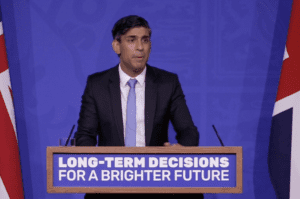
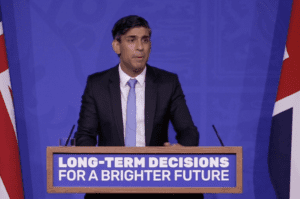
Rishi Sunak has outlined a series of measures to water down the government’s climate change commitments claiming that politicians had not been “honest with the public” about the cost of net zero.
In a press conference in Downing Street he said that the present approach would “impose unacceptable costs on hard-pressed British families” and risked a public backlash against net zero.
He announced that the ban on the sale of new petrol and diesel cars by 2030 would be pushed back to 2035.
He also announced changes to the government’s plan to phase out new boilers, suggesting that poorer households would never have to pay to install a new heat pump.
For those households that do make the switch Sunak said that government grants would increase from £5,000 to £7,500. He promised to speed up the building of clean energy infrastructure.
He said that the moves — which included a pledge not to increase taxes on flying or limiting what people could eat — would not affect Britain’s overall 2050 net zero pledge, which he insisted was still achievable.
Sunak said that both Conservative and Labour governments had hidden the costs of net zero from voters. “It cannot be right for Westminster to impose such significant costs on working people . . . without a properly informed national debate,” Sunak said.
He warned that unless this approach was changed politicians risked alienating the public and undermining the aim of net zero itself.
“There’s nothing ambitious about simply asserting a goal for a short-term headline without being honest with the public about the tough choices and sacrifices involved,” he said. “If we continue down this path, we risk losing the consent of the British people and the resulting backlash would not just be against specific policies, but against the wider mission itself.”
He added: “No one in Westminster politics has yet had the courage to look people in the eye and explain what’s really involved. That’s wrong. And it changes now.”
Commenting on the announcement, Andy Mayer, Energy Analyst at the free market think tank, the Institute of Economic Affairs, said: “Sunak’s Net Zero rebalance is a welcome step. Government policies like petrol and diesel car and gas boiler bans, have gone too far in hurting families and businesses for minimal environmental gain. Delaying these measures, ruling out costly new policies like a ‘meat tax,’ and speeding up planning for nationally significant projects are entirely sensible steps.
“Now Sunak must go further by abandoning the legally binding Net Zero target and ending costly subsidies for unproven ‘green’ technology. The solution to climate change is innovation and investment. This can be achieved by introducing carbon pricing, limiting regulatory interference and further removing planning barriers to deploying green technologies.”
Stephen Phipson, Chief Executive of Make UK, took the totally different side, saying: “The announcement that the Government will be watering down its net zero policies is a huge setback for manufacturers who require stability and confidence in order to invest. Many companies will have spent time and money planning on the basis of firm targets and we now run the risk of falling behind our international counterparts as a home for green technologies if we persist in frequently altering policies that impact businesses directly. This will hit SME businesses in the automotive supply chain particularly hard.
“This is a timely reminder that the UK also needs a long-term industrial strategy which encourages innovation in advanced, high value technologies such as net zero and AI to stimulate growth and skilled employment. This announcement sends entirely the wrong signal and suggests if we aren’t looking forward, we are simply going backwards.”
Steve Malkin, CEO and Founder of Planet Mark, added his comment, saying : “The Prime Minister’s net zero announcements are a disappointing setback for businesses that need certainty to unlock long-term productivity. Businesses across the UK, including our over 700 members, have been actively investing in low carbon solutions such as transitioning their fleets in line with the Government’s previous commitments. They have also been taking action to remain competitive within the global market as they respond to international supply chain demands to measure and reduce their emissions.
While this sharp u-turn erodes trust in the stability and reliability of government policy, and risks harming the UK’s competitiveness, Planet Mark will double down on continuing our trajectory of helping businesses transition to net zero in line with science. We are committed to maintaining the UK’s global climate leadership and to achieving a net zero economy and are excited to be working with like-minded organisations to drive impact, even in the face of government indecision.”
Read more:
Rishi Sunak announces controversial delays to UK’s net zero policies