

House prices are falling at their fastest rate since 2009, according to the latest poll of surveyors.
A net balance of 68 per cent of property professionals in August reported declining house prices, marking the most negative reading since the financial crisis, according to the Royal Institution of Chartered Surveyors, which cited the impact of high mortgage rates.
New buyer inquiries also fell during the month, with a net balance of 47 per cent of professionals reporting a drop, deteriorating from a balance of 45 per cent in July.
Simon Rubinsohn, chief economist at the trade body, warned that there was “little sign of any relief”. An overwhelming majority of those polled — a net 67 per cent — said that prices would fall further in the coming few months.
Looking ahead, a net balance of 48 per cent of estate agents and surveyors expected prices to be lower in a year’s time than they are now. The institution said that the results were “indicative of a sustained downward shift in house prices”.
Rubinsohn added: “The latest round of feedback from RICS members continues to point to a sluggish housing market. Critically, affordability metrics still remain stretched in many parts of the country.”
Prices have fallen due to a sharp drop in demand for homes as would-be buyers postponed their plans because of the rapid rise in the cost of mortgages.
The property market downturn began almost a year ago following the September mini-budget of the Liz Truss government. After a brief recovery in the spring, they began to drop again over the summer as interest rates continued to rise.
Reflecting the increased cost of borrowing, a net 47 per cent of those polled by the institution reported another decline in new buyer inquiries in August. A similar proportion said they agreed fewer sales last month than in July — the weakest reading since the early stages of the pandemic in 2020, when the industry was effectively closed.
“Once again, the downward trend in sales activity is evident right across the UK,” the organisation said. Most agents expected sales to fall further over the near term. In addition, the institution said a “yawning gap” between demand and supply in the rental sector had pushed up rents. The majority of letting agents reported an increase in inquiries from new tenants and a drop in landlord instructions. Due to the imbalance, a net 60 per cent expected that rents, already at record highs, would rise further over the next few months.
“Anecdotal comments from contributors that landlords are leaving the sector suggest the challenging environment for tenants is unlikely to improve any time soon,” Rubinsohn said.
A separate report from Zoopla, the online property site, has suggested that rental affordability is at its worst in more than a decade, with costs having increased by 10.5 per cent over the past 12 months. Richard Donnell, executive director at Zoopla, said: “Rents continue to rise faster than earnings, worsening rental affordability.”
Read more:
House price fall is worst in 14 years
Month: September 2023
UK Export Finance helps Surrey cleantech firm supply to 2.0 GW solar f …

A small cleantech firm in Surrey has secured a £4 million order to supply its technology to a projected 2.0 gigawatt solar facility in India, unlocking a major export opportunity with support from UK Export Finance (UKEF).
Gas Recovery and Recycle Limited (GR2L) is a micro-SME business which has developed, patented and exported cutting-edge technology to reduce the energy consumption, carbon footprint and cost of manufacturing solar panels.
Makers of solar panels use argon gas to purify silicon crystals which are then used in solar cells. This process requires vast amounts of argon, with some producers needing to ship in multiple tankers of the gas each day.
GR2L’s ArgonØ machinery is a world first which allows solar cell production – as well as other advanced manufacturing activities like microelectronics production, 3D metals printing and aerospace heat treatments – instead to recycle up to 95% of argon used.
GR2L had an opportunity to supply its argon recycling technology to Mundra Solar Technology Ltd to support a solar facility being built in Mundra, India.
At the same time, the Surrey SME needed to obtain payments in advance of making any deliveries to Mundra. To secure these payments, it had to issue a guarantee to assure the buyer that it could deliver, which would have meant making a cash deposit through its bank, Lloyds Bank. This however would have restricted the funds which the company needed for delivering the very same orders which it wanted to secure.
A £475,000 guarantee issued under UKEF’s Bond Support Scheme meant that GR2L could instead reclaim this portion of the cash deposit; this allowed GR2L to access crucial funds needed to deliver the Mundra contract and secure this major exporting opportunity.
Lisa Maddison-Brown, UKEF Export Finance Manager for Kent, East Sussex and West Sussex, said: “It is good news that GR2L, a micro-business which has the edge in international markets thanks to the strength of its patented UK technology, is now going even further with the backing of UK Export Finance.
“This announcement shows the value which we, working alongside financial institutions like Lloyds Bank, can bring to innovative companies – including small businesses like GR2L – to grow their global presence.”
Rob Grant, CEO and founder of GR2L, said: “With production of brand-new argon creating up to a tonne of carbon dioxide for every tonne of argon, our cutting-edge gas recycling technology helps solar facilities reduce their scope 3 CO2 emissions and produce solar fuel cells more efficiently.
“Building on our existing export successes, support from Lloyds Banks and UKEF helped us to secure this latest growth opportunity and further develop our established international presence. I look forward to commissioning our machinery by the end of 2023.”
Colin Walls, Regional Director, Trade & Working Capital and Lloyds Bank, said: “Gas Recovery and Recycling Ltd is exactly the type of business we want to see thriving. As a bank, we are committed to helping Britain prosper, so it’s fantastic to see the exporting ambitions of this firm grow with the support which we can offer alongside UKEF’s through our Working Capital facility. Their contract with Mundra Solar Technology Ltd is testament to that.”
UKEF’s role in unlocking this export opportunity delivers on the Prime Minister’s priority of growing the economy, supporting jobs in Surrey and helping expand opportunities for UK businesses.
GR2L’s export success story also underscores the value of the UK-India trading relationship and its role in promoting innovation – something which Prime Minister Rishi Sunk built on when he visited New Delhi for the G20 summit last week.
Read more:
UK Export Finance helps Surrey cleantech firm supply to 2.0 GW solar facility in India
101 new businesses were created every hour across the UK in first ha …

Despite a challenging economic environment, 101 new businesses were created every hour across the UK in the first half of 2023, according to new.
Analysis of Companies House data reveals that over 436,000 businesses were registered in the UK between January and June 2023, an increase of 8% from the 402,000 set up over the same time period in 2022.
London and North West top list of areas to start a business
The iwoca’s Business Hotspots 2023 report reveals London saw the highest rate of business creation in the first half of this year with 1,768 businesses being created per 100,000 people. This was followed by the North West with 612, climbing from third to second place. By contrast, last year’s runner-up in new business creation per capita – the West Midlands – fell to third place this year, with 574 businesses set up per 100,000 residents.
Scotland came bottom of the list with 365 companies set up for every 100,000 residents, with Wales in penultimate place with 371.
Camden tops the list of council areas as London dominates top 10
Camden saw the highest total number of businesses per capita out of all UK local authorities, with 13,646 new companies per 100,000 residents – nearly 3,500 more than were registered in the borough the year before. The second largest number of firms per capita were registered in Hackney followed by Islington. London’s local authorities make up all of the top 10.
The analysis reveals that Somerset West and Taunton saw the largest number of new businesses per capita outside of London, with 1,201 businesses created per 100,000. West Suffolk ranked second of all local authorities outside London at 1,187 per 100,000.
Self-employment makes a comeback
The high rate of business creation coincides with the highest self-employment levels since December 2020. ONS figures show the UK was home to 4.39 million self-employed individuals in Q1 2023 – an increase of 154,000 on Q1 2022.
While self-employment fell steadily over 2020 and 2021, levels have seen sustained increases since 2022, suggesting entrepreneurialism is on the uptick. ONS figures report 738,000 job moves in Q1 2023 – 43% of these moves were triggered by resignations. In 2022, resignations accounted for 40% of job-to-job moves, suggesting that more workers are deciding in 2023 to quit their jobs and set up new businesses.
Seema Desai, iwoca’s Chief Operating Officer said: “It is encouraging to see so many new businesses being created during the first half of this year, despite high inflation and economic uncertainty. iwoca’s Business Hotspots 2023 list shows that the spirit of entrepreneurship is strong across the whole country, with tens of thousands of businesses being created in each region. This will be vital for the country’s economic growth over the next few years, and is a huge vote of confidence in the UK as a place to do business.”
Read more:
101 new businesses were created every hour across the UK in first half of 2023
The Range buys collapsed Wilko’s brand in £5m deal
The Range, the value retail chain, has struck a deal to buy the Wilko brand from its collapsed rival’s administrators.
It is understood that The Range, founded and owned by Chris Dawson, has agreed to pay in the region of £5m for the Wilko name.
The deal is expected to be formally announced later today.
It will be the latest in a series of transactions signed by PricewaterhouseCoopers (PwC) as more than 10,000 job losses loom at Wilko.
While 120 stores – more than a quarter of Wilko’s estate – have been sold to B&M European Value Retail and Poundland’s owner, it remains unclear whether the staff working at those stores will be transferred to their new owners.
The gloom surrounding Wilko’s workforce deepened after Doug Putman, the HMV owner, pulled out of a deal to salvage as many as 300 shops after his financing was cancelled.
Prior to the collapse of that transaction, PwC had already announced about 1,600 redundancies since the family-owned chain crashed into insolvency last month.
Wilko – owned by the founding Wilkinson family for decades – had been seeking external investment for months, a search which acquired greater urgency four weeks ago when PwC was formally appointed as administrator.
Established by the Wilkinson family in 1930, the chain sells homewares and garden furniture at discounted prices.
Read more:
The Range buys collapsed Wilko’s brand in £5m deal
Four people face fraud charges over Patisserie Valerie collapse
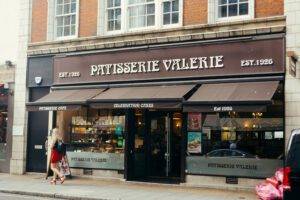
Four people have been charged in connection with the collapse of Patisserie Valerie – a bakery chain that once had almost 200 stores.
The Serious Fraud Office (SFO) said it related to an investigation that began in October 2018 – just two days after the company abruptly suspended trading, with more than 900 jobs and 70 sites subsequently lost.
Christopher Marsh, who formerly served as Patisserie Holdings’ chief financial officer, is among those facing charges.
His accountant wife Louise – as well as financial controller Pritesh Mistry and financial consultant Nileshkumar Lad – have also been charged.
“The SFO has charged all four suspects with conspiring to inflate the cash in Patisserie Holdings’ balance sheets and annual reports from 2015 to 2018, including by providing false documentation to the company’s auditors,” a statement said.
“During this time, the company also reported holding £28m in accounts, yet concealed £10m in debts from its investors and creditors.”
The four individuals are due to appear before Westminster Magistrates Court next month for the charges to be formally read.
Lisa Osofsky, director of the SFO, added: “Patisserie Valerie’s abrupt collapse rocked our high streets – leaving boarded-up shops, devastating job losses and significant investor losses in its wake.
“Today is a step forward in getting to the bottom of this scandal.”
The criminal case has run separate to wider investigations into failures associated with the company’s demise.
Accountancy firm Grant Thornton was fined £2.34m in 2021 by the industry’s watchdog.
The Financial Reporting Council’s conduct inquiry found “serious lack of competence” in its audits of the cake chain, declaring that “red flags” were missed.
Speaking about the charges, Richard Cannon, Partner at Stokoe Partnership Solicitors, commented: “The SFO case against former Patisserie Valerie executives will no doubt be touted by the organisation as a success, having dropped two high-profile cases into ENRC and Rio Tinto in recent weeks.
“Despite this, questions must be asked as to why it has taken the SFO five years to bring charges against these individuals, and whether the service is fit for purpose.
“As the SFO looks to new leadership under Nick Ephgrave, it is vital that the organisation address these concerns if it is to accomplish the Herculean task of trying to restore its credibility as a regulator.”
Read more:
Four people face fraud charges over Patisserie Valerie collapse
France tells Apple to halt iPhone 12 sales over radiation levels

France has ordered Apple to stop selling the iPhone 12 for emitting too much electromagnetic radiation.
On Tuesday, the French watchdog which governs radio frequencies also told the tech giant to fix existing phones.
The ANFR has advised Apple that if it cannot resolve the issue via a software update, it must recall every iPhone 12 ever sold in the country.
But the World Health Organization has previously sought to allay fears about radiation emitted by mobile phones.
It says on its website there is no evidence to conclude that exposure to low level electromagnetic fields is harmful to humans.
The iPhone 12 was first released in September 2020, and it is still sold worldwide.
Apple told the BBC it was contesting the ANFR’s review, and said it had provided the regulator with lab results from the tech giant itself and third parties which show the device is compliant with all the relevant rules.
It said the iPhone 12 was recognised as being compliant with regulations on radiation levels worldwide.France’s digital minister Jean-Noel Barrot told French newspaper Le Parisien the decision was due to radiation levels above the acceptable threshold, according to Reuters
He said the ANFR found the iPhone 12’s Specific Absorption Rate (SAR) was above what is legally allowed.
“Apple is expected to respond within two weeks,” he said.
“If they fail to do so, I am prepared to order a recall of all iPhones 12 in circulation. The rule is the same for everyone, including the digital giants.”
France will share its findings with other regulators across the trading bloc – which Barrot said could result in “a snowball effect”.
The ANFR requires the SAR of devices to be checked against two different ways a phone is used.
First there is a “membre” – or limb – check, for when a phone is in close contact with a person’s body, such as when it is held or placed in a trouser pocket. The SAR limit for this is four watts per kilogram.
The regulator said the device’s “membre” SAR was 5.74 watts per kilogram – higher than the limit.
There is also a check for when a phone is slightly further away, such as when it is in a bag or jacket pocket, but the iPhone 12’s SAR measure came in under this threshold.
The news first broke on Tuesday in France – the same day that Apple unveiled its new iPhone 15.
The new phone is the first since 2012 to feature an alternative charging port, and Apple says it will sell an adapter so people can use their existing cables.
It comes as the Chinese foreign ministry issued a rebuttal against media reports which claimed government agencies had told staff to stop using iPhones.
It said China has not issued any laws, regulations or policies blocking the use of Apple’s products.
Read more:
France tells Apple to halt iPhone 12 sales over radiation levels
Triple lock means state pension set to rise by 8.5% in April

The state pension is likely to rise by 8.5% in April after data crucial to the so-called triple lock was published.
The policy means the increase in the state pension is the highest of average earnings, inflation or 2.5%.
Those earnings – which are total pay, including bonuses – were recorded at 8.5%, and the inflation figure is unlikely to be higher.
That means the state pension is likely to rise by 8.5%, which would be a weekly increase of £13.30.
It means there is set to be an annual increase of £691.60 on the basic state pension – taking the total for the year to £8,814.
For those receiving the new flat-rate state pension, going to those who reached state pension age after April 2016, the rise is set to be £17.35 a week, or £902.20 a year – taking the total for the year to £11,502.
This is set to be the second significant increase in the state pension in two years, after a 10.1% increase in April of this year.
However, it is understood that the earnings figure which is normally used, which is total pay including bonuses, could be substituted for one slightly lower than 8.5%.
The latest earnings figures have been affected by one-off public sector bonus payments.
Downing Street said it remained “committed to the triple lock”. When asked if that meant it was guaranteeing an 8.5% state pension rise, the prime minister’s official spokesman said they could not get ahead of the “formal process”. Work and Pensions Secretary Mel Stride gave the same answer to media when questioned.
Heightened debate
The triple lock is designed to ensure pensioners, especially if they rely solely on the state pension, are able to afford rising prices, or keep pace with the increases in the working population’s wages.
Older people’s charity Independent Age said 20% of single pensioners and 13% of all pensioners relied solely on the state pension and benefits.
“For the millions of older people living in financial hardship, [the triple lock] is vital in protecting the value of their often dangerously low income, helping them cope with the elevated cost of living and getting them through another scary winter,” said John Palmer, from the charity.
However, there have been questions over whether the cost of funding the policy is too high, and whether the government could better spend the money elsewhere. Mr Stride said it was “not sustainable” in the “very long term”.
When it was first created in the June 2010 Budget, the triple lock was costed at £450m a year. Now it costs the government several billion a year and, according to the Office for Budget Responsibility, it could cost hundreds of billions a year in the future.
The debate over fairness in the shorter term may be heightened as benefits are not likely to rise quite as much, as these are generally pegged to the rate of inflation which is expected to be slightly lower.
Neither the Conservatives nor Labour have committed to maintaining the triple lock in their next manifesto.
Shadow deputy prime minister Angela Rayner repeatedly refused to say whether a Labour government would keep it, when asked on BBC Breakfast.
“We will have to see where we are when we get to a general election and see the finances. We will not make unfunded spending commitments,” she said.
These two significant increases are likely to drag hundreds of thousands more pensioners into paying income tax, the thresholds of which have not risen as fast.
Sir Steve Webb, a former pensions minister and now partner at consultants LCP, estimated that the number of taxpaying pensioners would rise by around 650,000 to 9.15 million. He described that as a stealth tax on many pensioners.
The Institute for Fiscal Studies, an economic think tank, said that the triple lock policy carried a danger that people would overestimate what would be provided under the state pension in the future.
It said the policy created some uncertainty as people might assume the policy will continue indefinitely, and that was impossible to predict.
Meanwhile Becky O’Connor, director of public affairs at pension platform PensionBee, said: “A state pension pay rise for pensioners next year will make the triple lock promise more costly than ever and call into question whether this mechanism of guaranteeing increases can continue.
“Any knee-jerk, poorly considered reaction by the government to deal with the rising state pension bill now risks harming pensioners for decades to come. Without increases in line with earnings or inflation, they would be at risk of real income falls in future.”
Read more:
Triple lock means state pension set to rise by 8.5% in April
UK’s biggest pub group to introduce surge pricing charging 20p more …
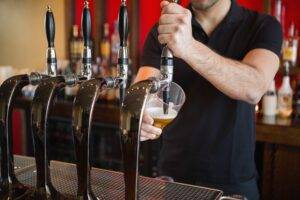
A pint of beer during the busiest periods will cost drinkers 20p more under a “dynamic pricing” system introduced by Britain’s largest pub group.
Stonegate Group, which owns chains including the Slug & Lettuce and Yates’s, said it was raising prices at 800 of its venues during peak times, such as weekends, to help cover soaring costs.
It has previously done so during one-off events, such as World Cups, but has now taken the decision to introduce price variance on a more regular basis.
Patrons have been informed of the change with a “polite notice” in Stonegate pubs, informing them of the need to raise prices to cover extra staffing costs, more bouncers at the door, extra cleaning, washing glasses and “complying with licensing requirements”.
Dynamic pricing, often known as surge pricing, is a common feature of other industries, such as aviation, where airlines charge more for tickets during the school holidays.
Uber uses the feature when demand is high, with prices rising automatically when more people are trying to hail a ride.
Dynamic pricing is also a common practice among big sports or gig ticket companies in the US, although it is more rare in the UK.
The practice has proved controversial at times, with some Bruce Springsteen fans reacting with dismay when The Boss applied dynamic pricing to some tickets on his latest tour.
A spokesperson for Stonegate, which has 4,500 venues, said the company “regularly reviews pricing to manage costs but also to ensure we offer great value for money to our guests”.
“Across the managed business our dynamic pricing encompasses the ability to offer guests a range of promotions including happy hours, two-for-one cocktails, and discounts on food and drink products at different times on different days throughout the week,” he told the Daily Telegraph, which first reported the strategy.
“This flexibility may mean that on occasions pricing may marginally increase in selective pubs and bars due to the increased cost demands on the business with additional staffing or licensing requirements such as additional door team members.”
The chief executive of another of Britain’s big pub chains, who asked not to be named, said the practice was not unusual and had been “going on for decades”, in the largest venues, during events and busy periods.
“They’re not the only ones doing it,” he said.
“To be honest, good for them that they’re telling people,” he said, adding that the transparency may have backfired amid dismay on social media and negative publicity.
Read more:
UK’s biggest pub group to introduce surge pricing charging 20p more a pint at busy times
Amazon to require self-publishers to declare if content sold on site i …

Amazon has introduced new rules and guidance for Kindle books generated by artificial intelligence tools, including the requirement that authors inform it when content is AI-generated.
The company announced the new rules on its Kindle Direct Publishing (KDP) forum on Wednesday. It said in a statement: “Beginning today, when you publish a new title or make edits to and republish an existing title through KDP, you will be asked whether your content is AI-generated.” KDP allows authors to self-publish their books and put them up for sale on Amazon’s site.
Amazon also added a new section to its content guidelines focused on AI, which now includes definitions of “AI-generated” and “AI-assisted” content and states that sellers are not required to disclose when content is AI-assisted.
AI-generated content is defined by the company as “text, images or translations created by an AI-based tool”, even if substantial edits are made afterwards. AI-assisted content is classified as that created by authors and sellers themselves but where AI tools are used to “edit, refine, error-check, or otherwise improve”.
The guidelines also state that AI-based tools can be used to “brainstorm and generate ideas” without disclosure, as long as the text or images were ultimately created by the human author.
The new rules come weeks after the site removed suspected AI-generated books that imitated the work of real authors. In August, the author Jane Friedman complained that several books, which she believed were created by AI tools, were falsely listed as being written by her. The books were subsequently removed by Amazon.
In Amazon’s forum announcement, the company wrote that it is “actively monitoring the rapid evolution of generative AI and the impact it is having on reading, writing, and publishing” and that it remains “committed to providing the best possible shopping, reading, and publishing experience for our authors and customers”.
It added: “We will continue to keep the interests of our authors, publishers, and readers at the forefront of our thinking and decision-making.”
The new guidelines state that sellers are responsible for reviewing and editing any AI output to “confirm an AI-based tool did not create content based on copyrighted works”.
Amazon did not say what it will do with the information about AI provided by sellers and whether it will disclose to buyers when Kindle books are AI-generated.
Nicola Solomon, the chief executive of the UK’s leading industry body for writers, the Society of Authors, said: “Readers deserve transparency when they purchase a copy of a creative work, so we have regularly highlighted the need for clear labelling of AI-generated content in our discussions with industry.” Solomon said she and her colleagues welcome Amazon’s announcement, as it “will ultimately benefit human authors and their readers”.
However, she added: “While this will apply to new and updated KDP publications, we would like to see Amazon ask the same question of all books published on KDP.” She continued: “The past year alone has seen a huge influx of poor-quality, rapidly generated titles in the KDP store alongside human-created works. We also look forward to understanding how readers will be able to filter out AI-generated content from search results when they browse for books.”
The society is “seeking guarantees from Amazon that, when it acts as a publisher or as a supplier of services to authors – whether via KDP, Amazon Crossing, Thomas & Mercer, or any other venture – it will respect our recommended contractual wording on AI and, ‘not allow access to the work (by the publisher, or by any sublicensee) in any manner which could help the learning or training of artificial intelligence technologies. In addition, it will not without the author’s consent use or allow the use of AI in association with the production of this work, including but not limited to AI for translating, narrating, design of the cover or other artwork.’”
Read more:
Amazon to require self-publishers to declare if content sold on site is AI-generated

