
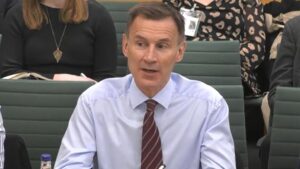
Jeremy Hunt has hinted that tax cuts are unlikely to be on offer before the next general election after warning that inflation had proved “stickier than was forecast”.
The Chancellor told Bloomberg that he did not expect to have more fiscal headroom at the Autumn Statement — compared with the spring Budget — and “debt interest payments are higher”.
Speaking to Bloomberg TV, Hunt said: “I think it’s unlikely because since the spring Budget, when the last numbers were published, we’ve seen inflation stickier than was forecast at the time and that means debt interest payments are higher.
“But we don’t have the numbers yet from the Office for Budget Responsibility [OBR] so this is speculation for you and me both.”
His comments come in the wake of reports that the Treasury is considering squeezing benefits in an attempt to pay for tax cuts in a boon to voters — set to spark a Tory row.
In a suggestion that tax cuts were unlikely, he added: “But our priority is bringing down inflation and when you’re trying to bring down inflation you have to be really careful not to pump extra money into the economy; much as you would like to, not to pump extra money into people’s pockets because that can push up prices and keep inflation higher for longer.
“The one thing I can absolutely say is that our focus at the Autumn Statement will be on bringing down inflation and delivering both the Prime Minister’s goal to halve inflation and the Bank of England’s target to bring it down to two per cent.”
Hunt also praised the Bank for being one of the first central banks globally to raise interest rates, saying: “In fairness to the bank, lots of central banks around the world underestimated the persistence of inflation.
“We brought inflation down from over 11 per cent to 6.8 per cent so we are making progress… but the long-term future of the economy depends on getting inflation down.”
Commenting on the prospects of a UK-India trade deal, the Chancellor said both sides were keen to “unlock more ability” for investment and cited a “real political momentum”. A deal could be done by the end of 2023, he said, but the next few weeks were critical.
He told Bloomberg that existing “significant” investment flows could be increased, and that pension funds and insurance asset managers in the Square Mile wanted to invest “trillions” in high-growth sectors domestically or overseas.
India’s plans for GIFT City (Gujarat International Finance Tec-City) and “India’s Silicon Valley” in Bangalore were key collaboration opportunities for the UK, Hunt added.
Read more:
Hunt rules out tax cuts before next general election
Month: September 2023
The TUC reports UK government to UN over new strike law

The Trades Union Congress (TUC) says it is reporting the UK government to the United Nations watchdog on workers’ rights over a new strikes law.
New rules on strikes will require some employees to work during industrial action – or face being sacked.
The TUC said the legislation fell short of international legal standards.
The government said the new rules “protect the lives and livelihoods of the general public” as well as access to public services.
Once implemented, the Strikes (Minimum Service Levels) Act will apply to a wide range of workers, including those in the rail industry and emergency services.
The TUC labelled them “anti-strike laws” and, as representatives from 48 unions gathered on Sunday, its general secretary, Paul Nowak said they’re “unworkable” – and may be illegal.
Speaking on the opening day of the TUC Congress in Liverpool, Mr Nowak said the union body will be lodging the case at the International Labour Organisation (ILO) because the new law “falls far short” of international legal standards.
The government took forward the legislation following a year of unprecedented industrial action by hundreds of thousands of workers, including nurses, teachers, civil servants and railway staff.
A spokeswoman for the government said: “The purpose of this legislation is to protect the lives and livelihoods of the general public and ensure they can continue to access vital public services during strikes.”
She added: “The legislation does not remove the ability to strike, but people expect the government to act in circumstances where their rights and freedoms are being disproportionately impacted, and that’s what we are doing with this Bill.”
The government pointed to research which suggested 600,000 medical appointments have been rescheduled over the past year, and £1.2bn in output has been lost, due to strikes.
A public consultation is under way into how the laws, which received Royal Assent in July, will be implemented by employers, but trade unions may well challenge them in the courts.
Under the new law, which will apply to England, Scotland and Wales, the government would set minimum service levels after a consultation.
Employers will then be able to issue a “work notice” to unions, setting out who is required to work during a strike.
Under the legislation, there would be no automatic protection from unfair dismissal for an employee who is told to work through a notice but chooses to strike.
If a strike is not conducted in accordance with the new rules, employers would be also be able to sue unions for losses.
Read more:
The TUC reports UK government to UN over new strike law
Yodel creates more than 2,000 roles as it ramps up activity ahead of t …

UK independent parcel carrier Yodel has announced that it is creating over 2,000 seasonal roles in a mix of functions in the business as it prepares for what is expected to be a busy peak season for the industry.
Roles are available across Yodel’s 50 locations nationwide.
The growth in e-commerce has continued across 2023 with demand for parcel delivery services following suit. The last year has seen a spike in people using online marketplaces such as eBay and Vinted for additional sources of income and to shop for secondhand bargains. As a result, Yodel’s consumer-to-consumer (C2C) operations have boomed with parcel volumes growing by 162% in just 12 months.
This latest recruitment drive also follows a series of infrastructure and fleet investments, including the opening of a new site in Coventry and a £14.5m spend on new tractor units and double decker trailers, boosting capacity to support the business as it scales up operations for the busy pre-Christmas period.
Mike Hancox, CEO of Yodel, commented: “Each year the industry looks to increase capacity in preparation for higher volumes over the Christmas peak, and with the continuing growth in the market we anticipate this festive season to be our busiest yet. Many of the roles available represent an opportunity to grow into long-term careers with progression into more senior positions. Working at Yodel gives you the flexibility to rk either full or part-time to suit your lifestyle and is an opportunity to join a nationwide network of dedicated and committed colleagues.”
Yodel has also launched a brand-new recruitment website to make discovering and securing new driver roles even easier for applicants.
Read more:
Yodel creates more than 2,000 roles as it ramps up activity ahead of the festive peak
No bids for offshore wind in government auction dealing critical blow …
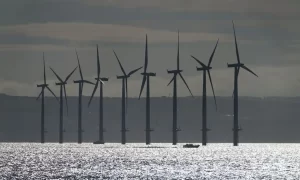
No new offshore wind project contracts have been bought by developers at a key government auction, dealing a blow to the UK’s renewable power strategy.
Results showed no bids for new offshore wind farms, but there were deals for solar, tidal and onshore wind projects.
Firms have argued the price set for electricity generated was too low to make offshore wind projects viable.
The government said a “global rise” in inflation impacting supply chains had “presented challenges for projects”.
It said while offshore and floating offshore wind projects did not feature on the agreed deals list, the outcome was “in line with similar results in countries including Germany and Spain”.
The Department for Energy Security and Net Zero said “significant numbers” of solar power, onshore wind, tidal energy schemes, and for the first time, geothermal projects, which use heat from the ground to generate power, had been awarded funding.
But the lack of offshore wind will be a blow to the pledge to deliver 50 gigawatts (GW) of offshore wind by 2030 compared with 14GW today.
Renewable energy groups have said that alternative renewable projects, such as solar, cannot do the heavy lifting in generating the power that offshore wind does.
The technology has been described as the “jewel in the UK’s renewable energy crown”, but firms have been hit by higher costs for building offshore farms, with materials such as steel and labour being more expensive.
The UK is a world leader in offshore wind and is home to the world’s four largest farms, supporting tens of thousands of jobs, which provided 13.8% of the UK’s electricity generation last year, according to government statistics.
The government’s annual auction invites companies to bid to develop renewable energy projects and contracts to supply the UK grid with electricity. The scheme ensures projects receive a guaranteed price from the government for the electricity they will generate, which it is hoped will enable companies to have the confidence to invest.
The deal, called a Contract for Difference (CFD), means if electricity prices are above the price set, the companies pay the excess back to energy suppliers, which should help to cut bills. If prices fall below the guaranteed price the energy suppliers – and customers – pay the company the difference.
It was hoped offshore wind in the latest round could have helped generate five gigawatts of power, enough to run five million homes, but wind farm builders had warned for months that the government was not taking into account how much the costs of developing them had soared.
Industry insiders have said that the £44 per megawatt hour price floor set for the latest auction failed to take account of higher costs.
‘Lost opportunity’
Keith Anderson, chief executive of Scottish Power, said the outcome of the auction was a “multi-billion pound lost opportunity to deliver low-cost energy for consumers and a wake-up call for government”.
He said the contracts had been “recognised globally as a lynchpin of the UK’s offshore success”, but said “the economics simply did not stand up this time around”.
“We need to get back on track and consider how we unlock the billions of investment in what is still one of the cheapest ways to generate power and meet the UK’s long-term offshore wind ambitions for the future,” he added.
Alistair Phillips-Davies, chief executive of SSE, which is currently building the world’s largest offshore wind farm, said offshore wind power was a much cheaper energy source and about half the price compared with other sources including fossil fuels.
But he told the BBC’s Today programme that while the UK needed to build more wind farms, “for this particular auction unfortunately the prices were just set too low” for electricity generated to make investment viable.
On Friday, wholesale gas prices in the UK rose by about 10% after strike action kicked off at two major liquefied natural gas (LNG) facilities in Australia.
Ed Miliband, Labour’s shadow energy security and net zero secretary, said the result of the auction was an “absolute disaster for Britain”, but should have been avoidable. He argued the government had been warned by the industry that “unless they adjusted the auction price this would happen”.
“They [the government] should be hanging their heads in shame,” he told the BBC’s Today programme.
While there were no bids for offshore contracts, the government said a total of 95 clean energy projects had secured funding of £227m, up from 93 in the previous auction, securing “enough to power the equivalent of two million homes”.
Energy and Climate Change Minister Graham Stuart said the government was “delighted” that the auction had “seen a record number of successful projects across solar, onshore wind, tidal power and, for the first time, geo-thermal”.
He added that offshore wind was “central to our ambitions to decarbonise our electricity supply”, and said the government would “work with industry to make sure we retain our global leadership in this vital technology”.
Read more:
No bids for offshore wind in government auction dealing critical blow to UK strategy
UK ‘flying blind’ on soaring levels of fraud which has quadrupled …
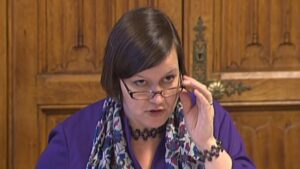
The government is “flying blind” on its exposure to fraud, which has quadrupled since the start of the Covid-19 pandemic, MPs have said.
The cross-party Public Accounts Committee (PAC) also said that while most of the £21bn of taxpayers’ money lost to fraud during the pandemic is unlikely to be recovered, the government should be doing more to recoup what it can.
In a report, the panel criticised the current system of fraud assessment for failing to reveal where the problems lie or which public bodies are most affected.
On top of around £16.4bn lost to tax and benefit fraud in the past year, the government could have lost up to £28.5bn to fraud and error – without knowing exactly where or how, the PAC said, citing estimates from the Public Sector Fraud Authority.
It also said the fourfold increase of public money paid out to fraudsters in the two years of the pandemic damaged public confidence in the integrity of government.
The UK slipped to 18th – from eighth – out of 180 countries in 2022 for perceived corruption levels, according to Transparency International.
To rebuild public trust, Whitehall officials must show they are serious about tackling the issue and embed counter-fraud measures into services, the MPs said.
They expressed concern that only six per cent of the UK’s public bodies can demonstrate that they are achieving the expected value for money from their counter-fraud work, and 27 per cent are not investing enough in it.
Chairwoman Dame Meg Hillier said: “The government is flying blind on the levels of fraud and corruption perpetrated against it, despite widespread awareness of the toxic threat posed by these despicable crimes.
“The Cabinet Office has blamed worsening public perceptions of the UK’s fraud and corruption on ‘noisy reporting’ from the media.
“It is time for some noisy reporting back from the most senior government officials on how seriously it is tackling this worsening problem, with examples of fraud not being allowed to go unpunished.
“If senior officials and politicians simply shrug their shoulders and look away in the face of these outrages, then malign actors will continue to pick away not just at the public purse, but at the bonds of trust that knit us together as a society.”
A government spokesman said: “We are overhauling the way we tackle public sector fraud to ensure we prevent more fraud and chase down public money stolen from taxpayers.
“Since 2021, we have invested more than £900 million in taking action on fraud, and have established the Public Sector Fraud Authority to bolster fraud defences across departments.
“In the last two years, the Government has recovered more than £3.1 billion of fraud losses, including within Covid-19 schemes, but we know there is more we can do.
“That is why we are expanding the Government’s counter-fraud profession, developing new technologies and boosting skills and training to further protect the public purse.”
Read more:
UK ‘flying blind’ on soaring levels of fraud which has quadrupled since pandemic
UK and India can ‘work through’ trade deal obstacles, PM says

Rishi Sunak has signalled there is optimism the UK can conclude a trade deal with India after saying the two countries can “work through” the final negotiation hurdles.
Statements made by the Prime Minister and No 10 following a meeting with Indian prime minister Narendra Modi on the fringes of the G20 summit suggested fresh trade terms could be in sight.
Mr Sunak, who described his conversation with Mr Modi as “warm and productive”, told broadcasters in New Delhi on Saturday: “There is a desire on both of our parts to see a successful trade deal concluded.
“The opportunities are there for both countries, but there is a lot of hard work that is still to go and we need to work through that, as we will do.”
Downing Street said the premiers signed off on ministers and negotiating teams continuing to work “at pace” towards a free trade deal.
A trade pact with India, an agreement that could grant more favourable access for British companies to a market of 1.4 billion people, is seen as a major post-Brexit prize by the Conservative UK Government.
The Prime Minister, who is the first British leader of Indian descent, told reporters during his flight from London to New Delhi on Thursday that an agreement was “not a given” but his comments have gradually become more positive since arriving at the G20.
On Friday, he told Indian broadcaster Asian News International that “enormous progress” had been made before going further with his most recent remarks, suggesting the final obstacles could be worked through.
The deal is reportedly being held up by a variety of issues, including a disagreement over the number of visas for Indians to work in the UK and differences over the level of access British car manufacturers should be given to India’s market.
Mr Sunak, unlike his predecessor Boris Johnson, who wanted to seal a deal in time for October 2022 Diwali celebrations, said he would not set “arbitrary deadlines” for finalising an agreement.
With reports suggesting he could return to India in the autumn, the Indian government’s aim of ratifying fresh trade terms by the end of the year could be met.
Where differences can be seen between London and New Delhi has been in their stance on Russia’s invasion of Ukraine.
Mr Sunak has been outspoken in condemning Russian president Vladimir Putin’s 19-month assault on Kyiv while India has kept ties open with the Kremlin since Moscow’s forces crossed the Ukrainian border in February 2022.
The Tory leader would not confirm whether he pressed his counterpart to take a firmer stance on Russia.
He told broadcasters he thought a “very strong” joint message about Moscow’s attack had been made “under Prime Minister Modi and India’s presidency” of the G20, a group of the world’s largest economies that includes Russia and China.
A communique published on Saturday said that while recognising there were “different views” among members, G20 leaders wanted to highlight the “human suffering” being caused by the decision of Mr Putin, who stayed away from the forum in India, to blockade Ukrainian grain.
The G20 called for the reimplementation of the Black Sea Grain Initiative, which allowed safe passage for cargo ships transporting food from Ukraine’s southern ports and which the Kremlin collapsed in July, to be re-established and urged for attacks on grain stores to cease.
The wording was described as a “good and strong outcome” by Mr Sunak but there was some concern among summit watchers that some of the language around the Ukraine conflict had been watered down, potentially in a move designed to appease China.
During their meeting, Mr Sunak and Mr Modi demonstrated their cordial relationship with a hug and back slapping before talking for at least 15 minutes.
Mr Sunak told the Hindu nationalist leader that his daughters had followed India’s moon landing and that “everyone was buzzing” about the mission’s success.
Following the talks, Mr Sunak confirmed, having been lobbied on the issue by MPs, that he raised the issue of detained Briton Jagtar Singh Johal, a Sikh blogger who is at risk of the death penalty in India.
The press had uncharacteristically restricted access to the opening exchanges of the bilateral between the premiers, with the summit being tightly controlled by its Indian hosts.
The area around the Bharat Mandapam venue has been largely locked down, with independent businesses told not to open and normally busy roads left empty of the usual noisy rickshaw, motorbike and car traffic.
The Prime Minister has enjoyed extensive media coverage in India about his return to the country of his heritage, with locals also keen for a photo opportunity with his wife Akshata Murty, the daughter of NR Narayana Murty, the billionaire co-founder of Indian IT giant Infosys.
No 10 confirmed the Prime Minister’s parents and his in-laws are currently on holiday together in Bangalore, a city in southern India, but said it was coincidental that it coincided with when their children were at the G20.
Read more:
UK and India can ‘work through’ trade deal obstacles, PM says
Lobby groups Make UK and CBI in possible merger talks

The self-styled “voice of British business” and the manufacturers’ group Make UK have confirmed they are in talks about areas of potential collaboration that could lead to a full-blown merger.
“Make UK and the CBI are in early-stage discussions to explore how the two parties might work closer together,” Make UK, which speaks for 20,000 companies and three million people in the manufacturing and engineering sectors, told Sky News. “These discussions are positive and constructive but remain at an early stage.”
The CBI issued a virtually identical statement.
The beleaguered business leaders lobby group considered winding itself up this year after being embroiled in allegations of sexual misconduct, a saga that led to the departure of Tony Danker, its director-general, and resignations in protest by members including Aviva, John Lewis and NatWest.
Rain Newton-Smith, 48, was appointed as Danker’s successor in April having previously been the CBI’s chief economist for nine years.
Members voted in June for the group to survive in a revamped form. While the cuts would affect fewer than ten jobs, the move was seen as being symbolic of the retrenchment taking place at what was for decades Britain’s foremost business representative group.
The employers’ body has confirmed it is closing offices in Washington, Beijing and Delhi, leaving it with only one overseas presence, in Brussels.
It was unclear last night how a formal merger would work, whether the CBI’s name would disappear in favour of Make UK’s or how a combined organisation would represent non-manufacturing businesses.
Founded in 1965, the CBI, previously known as the Confederation of British Industry, now claims to speak for 170,000 businesses, from 190,000 in April. In June members voted 93 per cent for the organisation to carry on with reformed governance and culture.
Fox Williams, a law firm, was appointed to carry out an independent investigation and several people were dismissed by the CBI.
Danker has said he will sue the organisation after being made the “fall guy” for serious misconduct allegations that pre-dated his tenure.
Read more:
Lobby groups Make UK and CBI in possible merger talks
Electric vans reenergise Ellesmere Port factory
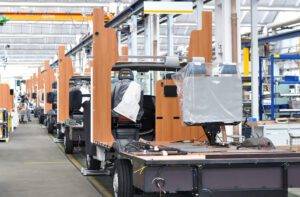
It is one of the greatest comebacks in the history of the British motor industry. Yesterday morning the first Vauxhall Combo Electric van rolled off the assembly line of the sprawling Ellesmere Port factory in Cheshire, the plant that 60 years ago gave the nation the best-selling Vauxhall Viva and for four decades from the 1980s was the self-proclaimed Home of the Astra.
Back in production after a two-year shutdown, Ellesmere Port has made history: it is Britain’s first all-electric vehicle manufacturing plant. It is also the first all-electric plant anywhere in the world for global giant Stellantis, the renamed Peugeot-Citroën French group whose marques after a bout of mergers and rescues include Vauxhall and its old German sister brand Opel, as well as Italy’s Fiat.
The resurrection of Ellesmere Port, however, raises immediate questions over another historic Vauxhall van factory, its plant at Luton, the home of the Vauxhall Vivaro, and whether ministers will step in, as they did in Cheshire, to secure an all-electric future.
The emergence of Ellesmere Port as a symbol of Britain’s attempts to keep up in the electrification of the automotive industry comes after a decade on death row. During the recession that followed the global financial crisis, its then owner, General Motors (GM) of the US, was within hours of pulling the plug before striking a deal with the workforce to cut pay and conditions. Even then uncertainties dogged the plant, first around the future in a post-Brexit world, and then its sale as part of GM’s withdrawal from Europe in a nominal €1 deal with Peugeot Citroën.
The Astra is long gone but Ellesmere Port is now producing small electric vans, the Vauxhall Combo Electric as well as the Peugeot e-Partner, the Citroën e-Berlingo and the Fiat e-Doblo. They are all essentially the same van with different finishes for different consumers in different markets.
From next year, passenger versions of those vans, people carriers badged Vauxhall Combo Life Electric and Peugeot e-Rifter, will also go into production aimed at larger families and the wheelchair-accessible market.
A shadow of the former heydays of the Viva and the Astra, the operational part of Ellesmere Port now takes up just a third of the plant compared with previously. The workforce stands at 1,000, all kept on and retrained during the run-off of the Astra and the transition to an all-electric plant. On two shifts they will be producing 50,000 vehicles a year, a fraction of the volumes in the 1970s but with the potential to add a third daily shift.
That the Ellesmere Port plant is back in production at all may come as a surprise after Stellantis’s global chief executive, the enigmatic Carlos Tavares, said bluntly that Brexit was a disaster and had led his board to completely reassess the group’s interests in the UK.
At the official reopening of production at Ellesmere Port, James Taylor, managing director of Vauxhall, indicated the decision to keep going was pragmatic. “Vauxhall has a 30 per cent share of the electric commercial vehicle market in the UK, a figure that goes up to 50 per cent if you include all the Stellantis brands,” he said. “Demand is strong and we need to keep up,”
The models coming out of Ellesmere Port are all made at the Stellantis factory at Vigo in Spain.
Brexit brings wrinkles, however. The battery cells for Ellesmere Port vans are from China. Rules of origin on car components are part of a trade and co-operation agreement between the UK and the EU and mean that Ellesmere Port vans for export to Europe could attract cross-border tariffs, making them 10 per cent more expensive. Ellesmere Port won’t get its own gigafactory but will depend on EU-based battery cell plants being developed by Stellantis.
The focus now moves on to Luton. Any van driver acquiring an electric Vivaro — and there are big fleet operators of the zero-emission vehicles like BT and British Gas — will know that they are not buying British, as the vans are assembled in France. To date Luton has been left building diesel Vivaros. But a crunch is coming as Stellantis has ruled that all Vauxhall models will be all-electric by 2028.
The company is understood to be pressing ministers to provide the sort of support for Luton that it did at Ellesmere Port, reckoned to be £30 million of taxpayers’ money out of a total £100 million refit. But Stellantis is being made all sorts of “green deal” offers to build the electric Vivaro in other European jurisdictions and the UK government will have to counter such moves.
Commenting on the reopening of Ellesmere Port, Kemi Badenoch, the business and trade secretary, said: “It is a very visible demonstration that this government has got the right plan for the UK’s automotive industry.”
Read more:
Electric vans reenergise Ellesmere Port factory
Triple lock could add £45bn a year to cost of state pensions finds ne …

Increases in the state pension will cost taxpayers up to £45 billion a year by 2050, a think tank has warned, adding pressure on ministers to raise the official retirement age.
New research by the Institute of Fiscal Studies (IFS) found that since the pensions “triple lock” was introduced in 2010, it had increased pensions by 60 per cent — 20 percentage points more than if pensions had increased by average earnings over the period.
It warned that such rises could become unsustainable in the longer term and force the government to increase the state pension age to control spending.
The triple lock was introduced by the coalition government and guaranteed that pensions would rise each year by the rate of average earnings, inflation or 2.5 per cent — whichever was higher.
The IFS research found that since then, this had resulted in the average state pension rising by 60 per cent since 2011. If pensions had only been linked to inflation they would have risen by 42 per cent and if they had been linked to earnings they would have risen by 40 per cent.
The think tank said this had resulted in the current £204 weekly pension payment being £24 more than it would have been if the triple lock did not exist.
The findings come ahead of new figures from the Office for National Statistics of earning growth for the three months to July 2023.
This is likely to show earnings outstripping inflation for the first time since 2020 and will be used to determine next April’s rise in payments for the UK’s 12 million pensioners.
The report said data covering April to June 2023 showed annual earnings growth of 8.2 per cent — higher than the current 6.8 per cent rate of inflation.
The IFS said that while the triple lock had been successful in restoring the value of pensions to around 25 per cent of average full-time earnings — a figure last reached in 1980 — it posed significant problems for the government in the longer term.
Its analysis found that the triple lock could potentially increase spending by anywhere between a further £5 billion and £45 billion per year, in today’s terms, by 2050.
The IFS warned that this could force future governments to raise the retirement age to curtail spending in a way that would discriminate against pensioners in poor health.
“The triple lock could lead to the state pension in its current form becoming sufficiently expensive that policymakers respond by implementing reforms that they would not otherwise have done, to reduce spending on the state pension,” it said.
Heidi Karjalainen, one of the authors of the report and a research economist at the IFS, said the triple lock also made it difficult for workers to predict how much they might receive from a state pension and how much it would cost the state in the future.
“An additional real risk is that retaining the triple lock for too long increases state-pension spending so significantly that it leads to insurmountable pressure for a much higher state pension age,” she said.
“This would particularly affect people with poorer health who struggle to remain in employment until they reach state pension age.”
The report comes after The Times revealed last month that the government would spend more on pensions in two years’ time than on education, policing and defence combined.
Last year, pension costs increased by £6 billion to £110 billion. By 2025 they are expected to have ballooned to £135 billion, a figure £2 billion more than the combined day-to-day budgets for the Department for Education, the Home Office and the Ministry of Defence.
Read more:
Triple lock could add £45bn a year to cost of state pensions finds new research

