September 2023 – Page 7 – AbellMoney

Lidl opens worlds largest warehouse in Bedfordshire

German supermarket Lidl has opened its largest warehouse in the world, in Bedfordshire.

The regional distribution centre at Houghton Regis near Luton is expected to service 150 stores and create up to 1,500 jobs, the company said.

The 1.2 million sq ft (111,000 sq metres), £300m site, includes solar panels which Lidl said could run the warehouse at certain times of the year.

All of its delivery fleet will be fuelled by biogas made from food waste.

The retailer said the warehouse was so large, it could “fit three of Lidl’s existing warehouses inside”.

It will be expected to move more than 9,400 pallets of goods each day, bound for its 150 stores.

Its existing distribution centres service approximately 60-80 stores.

The company said it would be the first Lidl GB warehouse to feature automation, “helping to store more goods and increase capacity at the distribution centre, which in turn is helping to create more jobs”.

Jeremy Hunt, Chancellor of the Exchequer, said: “It’s fantastic to see Lidl investing in the UK and creating thousands more well-paid jobs… businesses can be confident that investing in the UK is the right decision.”

Read more:
Lidl opens worlds largest warehouse in Bedfordshire

UK set to re-join Horizon science scheme

The UK has announced that it is to re-join the EU’s flagship research scheme, Horizon.
Talks on the UK becoming a fully-fledged member of the EU’s €100bn (£85bn) programme again began after a deal was cut on post-Brexit arrangements for Northern Ireland earlier this year.
The UK’s associate membership of Horizon was agreed in principle as part of the Brexit Trade and Co-operation Agreement, but the issue became bogged down in the dispute about the Northern Ireland Protocol.
The higher education sector is likely to give the news, first reported by Bloomberg, a big welcome.
Universities and researchers have repeatedly warned that the uncertainty over whether the UK would re-join was extremely damaging.
Sources within government have also indicated that the UK will re-join the EU’s space programme, Copernicus, but not its nuclear research scheme, Euratom.
Peter Kyle, the shadow science minister, said the country had “missed out on two years of innovation” whilst being outside of the Horizon programme.
Re-joining the scheme would allow the UK to start “unlocking all the potential we have in this country”, Mr Kyle said.
Ministers had drawn up a plan B, known as Pioneer, as an alternative.
The government always insisted it was deadly serious about the possibility of going it alone with the Pioneer programme, although it wasn’t their preferred option.
Figures within government have previously suggested that Prime Minister Rishi Sunak was genuinely torn.
On the one hand, re-joining Horizon would help repair EU-UK relations and potentially play well with those who deeply disliked Brexit.
On the other hand, Mr Sunak was said to be keen to get “value for money” as well as build credibility with Leave supporters who might favour a clean break.
The UK had been expected to remain associated with the scheme after Brexit but it soon became apparent that Brussels was blocking Britain’s return.
That’s because the EU was angry at the government’s failure to fully implement a deal on post-Brexit arrangements for Northern Ireland.
Until that issue was resolved, it was clear that Horizon association would not be possible.
Then, in February, Rishi Sunak signed a deal with the European Commission President Ursula von der Leyen – the Windsor Framework.
That paved the way for talks on Horizon, which look as though they’re finally reaching their culmination.
It’s a further moment of reconciliation between the UK and the EU following the bitter disputes over Brexit that followed the 2016 Leave vote.
Read more:
UK set to re-join Horizon science scheme

Google to face multibillion-pound lawsuit from UK consumers

Google faces a new multibillion-pound lawsuit from UK consumers accusing the company of contributing to cost-of-living price rises.
The lawsuit, on behalf of every consumer in the UK, says that Google has stifled competition in the search engine market, which caused prices to rise across the UK economy.
The lawsuit filed with the Competition Appeal Tribunal claims that Google has broken competition law and raised the cost of living for every UK consumer.
Google has been accused of shutting out competition in mobile searches, and using its market dominance to raise the prices paid by advertisers for their spot on the Google search page, according to the claim. These are then passed on to consumers.
The class action is funded by Hereford Litigation, a global commercial litigation funder. Nikki Stopford, co-founder of Consumer Voice, a consumer rights campaigner and the class representative in the action, said: “This action aims to redress the balance – not only by getting people back what they’re owed but also by holding Google to account for its actions.”
Estimated compensation of £7.3bn has been requested for about 65 million UK users over the age of 16, meaning at least £100 per person on average.
Earlier this year, the US justice department and eight states filed lawsuits against Google over allegations that the company abused its dominance of the digital advertising business.
The UK’s Competition and Markets Authority (CMA) has also launched an investigation into whether Google has abused its dominant position through its conduct in ad tech.
According to the CMA, in 2019, Google paid Apple approximately £1.2bn to ensure default status on Safari in the UK alone.
In the lawsuit, Google is accused of crowding its search pages with paid advertising – pressuring companies to pay more for “clicks”, rather than depending on consumers finding their sites themselves. The lawsuit claims that a more competitive search engine would select ads based more on relevance to the user than the price paid by the advertiser.
The lawsuit says that commercial agreements between Google and Apple to ensure Google was the default search engine for the Safari browser preinstalled with iOS, Apple’s iPhone operating system, contributed to allowing Google to maintain its dominant position on mobile.
Google Ads generated more than $224bn in revenue in 2022, accounting for almost 80% of parent company Alphabet’s revenue ($283bn in 2022).
Stopford said: “Google has fixed things, sometimes unlawfully, so it is the default search engine on practically all mobile phones in the UK. It abused its market dominance to charge advertisers more than if the market had been competitive – for example, for the sponsored links you see when you use Google to search for something. Advertisers have inevitably passed these higher costs on to shoppers.”
Luke Streatfeild, partner at legal firm Hausfeld, who is leading the litigation, said: “Google provides a great service, but it isn’t free. Instead, this claim says that Google has choked off competition in search engines for years, to the detriment of the businesses that use its services – and, ultimately, consumers. The lack of competition leads to higher prices and poorer quality, and the effects of this are felt throughout the UK economy.”
A Google spokesperson said: “This case is speculative and opportunistic – we will argue against it vigorously. People use Google because it is helpful. We only make money if ads are useful and relevant, as indicated by clicks – at a price that is set by a real-time auction.
“Advertising plays a crucial role in helping people discover new businesses, new causes and new products.”
Read more:
Google to face multibillion-pound lawsuit from UK consumers

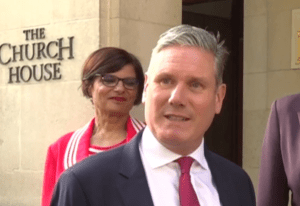
The Implications of Labour’s Shadow Cabinet Reshuffle for UK SMEs

Keir Starmer, the leader of the Labour Party, has made a significant reshuffle of his shadow cabinet. While some faces have been removed from the inner circle, others have been given new roles.
The reshuffle has sparked a wave of discussions across the UK, because on current polling data Keir Starmer could have the keys to No.10, so we examine what these changes could mean for UK’s SMEs and a recent survey suggested that if that were to happen there would be an exodus of UK SMEs leaving the UK.
The reshuffle has led to the emergence of several notable names in the shadow cabinet. Among them are Angela Rayner, Lisa Nandy, Shabana Mahmood, Liz Kendall, Jonathan Ashworth, Thangam Debbonaire, Steve Reed, Lucy Powell, Hillary Benn, Peter Kyle, Pat McFadden, Darren Jones, Nick Thomas-Symonds, and Ellie Reeves.
Angela Rayner
Angela Rayner, who would become the deputy prime minister should Labour win the next election, has been appointed as the Shadow Secretary of State for Levelling Up, Housing, and Communities. She has been an MP for Ashton-under-Lyne since 2015 and her new role is seen as critical to Labour’s new deal for working people.
Lisa Nandy
Lisa Nandy, once the Shadow Levelling Up Secretary, has been moved to the role of Shadow Cabinet Minister for International Development. Nandy, who has been an MP for Wigan since 2010, is one of the first Asian female MPs in Britain’s history.
Shabana Mahmood
Shabana Mahmood, an Oxford University law graduate and a qualified barrister, has been appointed Labour’s Shadow Secretary of State for Justice. She has been an MP for Birmingham Ladywood since 2010 and is one of the UK’s first female Muslim MPs.
Liz Kendall
Liz Kendall is now the Labour Party’s Shadow Work and Pensions Secretary, a role previously held by Jonathan Ashworth. Kendall, who has served Leicester West since 2010, previously worked as the Shadow Health Minister, focusing on social care.
Jonathan Ashworth
Jonathan Ashworth, the former Shadow Work and Pensions Secretary, has taken on the role of the party’s Shadow Paymaster General. Ashworth, who has served Leicester South since 2011, was formerly an adviser to Gordon Brown and the Head of Party Relations for Ed Miliband.
Thangam Debbonaire
Thangam Debbonaire, the MP for Bristol West since 2015, has been appointed Shadow Secretary of State for Culture, Media, and Sport. Debbonaire has a history of leadership roles within the Labour Party, having served as the Shadow Leader of the House of Commons and the Shadow Secretary of State for Housing.
Steve Reed
Steve Reed, the MP for Croydon North since a 2012 by-election, is the new Shadow Secretary of State for Environment, Food, and Rural Affairs. Reed has a background in education publishing, having studied English at Sheffield University.
Lucy Powell
Lucy Powell, the MP for Manchester Central since 2012, has been made the Shadow Leader of the House of Commons. Powell, who studied chemistry at Oxford University and King’s College London, has previously worked in PR.
Hillary Benn
Hillary Benn, a veteran parliamentarian who has represented Leeds Central since 1999, has been appointed the Shadow Secretary of State for Northern Ireland. Benn has served under two Labour prime ministers, Tony Blair and Gordon Brown.
Peter Kyle
Peter Kyle, the MP for Hove since 2015, has been appointed Shadow Minister for Science, Innovation, and Technology. He was previously the Shadow Northern Ireland Secretary.
What Does This Mean for UK SMEs?
The reshuffle of Labour’s shadow cabinet brings a new focus on sectors that are crucial for UK’s SMEs. These sectors include housing and communities, international development, justice, work and pensions, culture, media and sport, environment, food and rural affairs, and science, innovation and technology.
Angela Rayner’s new role as the Shadow Secretary of State for Levelling Up, Housing, and Communities implies a strong focus on community development and housing issues. This could be beneficial for SMEs involved in the construction, real estate, and community development sectors.
With Lisa Nandy taking over as the Shadow Cabinet Minister for International Development, there could be more opportunities for SMEs looking to expand their operations abroad or those involved in projects aimed at international development.
Shabana Mahmood’s appointment as Labour’s Shadow Secretary of State for Justice could mean a renewed focus on legal issues affecting SMEs. This includes matters related to contracts, business laws, and employment regulations.
Liz Kendall’s new role as the Shadow Work and Pensions Secretary could impact SMEs in terms of employment and pension policies. Changes in these areas could affect how SMEs manage their workforce and retirement plans.
With Thangam Debbonaire becoming the Shadow Secretary of State for Culture, Media, and Sport, SMEs in these industries may see new opportunities and challenges based on Labour’s policies in these areas.
Steve Reed’s role as the Shadow Secretary of State for Environment, Food, and Rural Affairs could signal new environmental regulations and rural development initiatives. SMEs in the agriculture, food, and environmental sectors need to stay informed about any changes in this landscape.
The appointment of Peter Kyle as the Shadow Minister for Science, Innovation, and Technology underscores Labour’s focus on these sectors. This could mean more support and opportunities for SMEs operating in technology and innovation-driven industries.
The Broader Economic Implications
While Labour is currently in opposition, the policies and positions put forward by the shadow cabinet can have a significant influence on the national conversation. Therefore, it’s essential for SMEs to keep abreast of these developments.
Labour’s reshuffle signals a commitment to economic growth and sustainability. A focus on sectors like housing, environment, food, and rural affairs, and science, innovation, and technology could drive sustainable growth, innovation, and job creation. This could be an opportunity for SMEs to align their business strategies with these areas.
The reshuffle also highlights Labour’s commitment to inclusivity and diversity, as evidenced by the appointments of Angela Rayner, Lisa Nandy, and Shabana Mahmood. This could inspire SMEs to embrace diversity and inclusivity in their workplaces.
International Outreach
With Lisa Nandy becoming the Shadow Cabinet Minister for International Development, Labour signals its intention to engage more actively on the international stage. This could create opportunities for SMEs to explore international markets and partnerships.
While the implications of Labour’s shadow cabinet reshuffle for UK SMEs are yet to fully unfold, it’s crucial for businesses to agile and prepare for the future, seizing opportunities, and mitigating challenges that arise, because
Read more:
The Implications of Labour’s Shadow Cabinet Reshuffle for UK SMEs


Healthy chef-made meal company Tastily welcomes internationally acclai …

Tastily, the leading provider of healthy, home delivered, chef-made meals, is thrilled to announce the addition of David Gandy, an internationally acclaimed supermodel as a brand ambassador and investor.
David, who is one of the most famous faces in the world of global fashion and the Founder and Creative Director of David Gandy Wellwear, has always been a strong advocate of healthy lifestyle and nutritiously balanced diet, making his appointment as Brand Ambassador for Tastily a natural fit with his personal ethos.
Renowned for his fashion career and dedication to fitness, David shared his enthusiasm for his collaboration with Tastily, stating, ““I got involved with Tastily because we need more delicious and convenient ways to eat food that is healthy, fresh and unprocessed.  The variety and quality of Tastily’s meals really sets them apart. I’m happy to help more people discover Tastily as a great option for midweek meals.”
In addition to his appointment as a Brand Ambassador, David joins other investors such as Perfect Redd, the investment vehicle for Samworth Brothers, a fourth-generation British family business and owner of Cornish pasty maker Ginsters in the latest funding round. Gandy’s involvement signifies an important milestone for Tastily and strengthens its position as a leader in the fresh chef-prepared meals space in the UK.
Will McDowell, the founder of Tastily, said: “We are very excited and honoured to have David join us as our brand ambassador and investor. His passion for health and great tasting food perfectly aligns with Tastily’s core values. David’s support and involvement will help us reach a wider audience of people looking for new ways to eat well.”
As the cost-of-living crisis has gripped the UK, consumers are eating more at home, with demand for convenient and cost-effective meals increasing. According to a recent report by Waitrose, searches for “microwave meals” were up 71% on its website compared with the same time last year, while sales of microwaves were up 13% at John Lewis.
This trend, combined with the growing demand for its healthy offerings created by Michelin-trained chefs places Tastily in a strong position to further increase its market share and establish itself as the innovator and key player in the growing healthy chef-prepared meals space.
Launched in 2020, Tastily has rapidly grown to become the ultimate choice amongst health-conscious, modern foodies who are short for time. Sales have more than doubled in the last year, with thousands of meals cooked and delivered every week.
Tastily offers a flexible subscription model, allowing customers to choose from over 70 meals. The menu rotates weekly to provide variety and seasonality. Every meal is expertly crafted by professional chefs and cooked fresh to order. The meals stay fresh for 7 days in the fridge and can be oven cooked as well as microwaved.
Read more:
Healthy chef-made meal company Tastily welcomes internationally acclaimed supermodel David Gandy as brand ambassador and investor

UK businesses are failing to measure their impact on diversity and inc …

73% of businesses in the UK do not have a measurement framework for diversity and inclusion, new research has found.
The survey of UK business leaders from organisational transformation consultancy Watch This Sp_ce found that 44% are assessing the impact of their inclusion efforts informally, and 56% are not measuring impact at all. 19% of the businesses surveyed didn’t have any kind of diversity and inclusion strategy whatsoever.
This is worrying news at a time when 62% of jobseekers would reject a job offer from an organisation without a good track record on diversity and inclusion, and 68% of staff would look for a job elsewhere if their organisation was not prioritising diversity and inclusion.
Diversity and inclusion roles have increased dramatically in the UK in recent years, and 72% of businesses(5) have a dedicated budget for inclusion activities. So why aren’t businesses measuring the impact of all this spending?
According to Allegra Chapman, Co-Creator of Watch This Sp_ce, the answer is fear. “Most businesses are going into diversity and inclusion in panic mode,” Chapman says. “They know that their staff want to see action in this area, or they might very well leave, or at least become disengaged. They also know that their customers and clients are demanding action, or they will take their money elsewhere. So leaders rush into doing something, anything, without thinking through what actions are really needed, or how they will know if those actions are working.”
The result is often performative activity that generates little result, which in the long run could actually damage the reputation of the business. “Staff and customers are very quick to spot businesses that are all talk and no action,” Mo Kanjilal, Co-Creator of Watch This Sp_ce, explains. “When they see an organisation posting about International Women’s Day, but paying their female staff less than the men, they instantly assume this is a company that doesn’t care about inclusion. Paying lip-service and just wanting to be seen to be doing something can do more harm than good. You need to be prepared to actually do the work.”
When businesses are engaged in diversity and inclusion efforts that aren’t strategic or measured, it can be hugely wasteful in terms of money and resources, and also highly demotivating for the team involved. This was the inspiration for the Watch This Sp_ce team to create their Inclusion Journey Tracker, a tool that enables businesses to benchmark their current situation, identify the actions needed to move forward, and measure and celebrate their progress.
“We want everyone to truly benefit from diversity and inclusion work – individuals and the wider business,” Allegra Chapman says. “By giving businesses the framework they need to assess and measure their efforts, we can ensure that time and resources are well spent, and staff and customers can see the progress being made.”
Level One of the Inclusion Journey Tracker is completely free to access, and businesses earn an accreditation at each level, which enables them to showcase their commitment to real action on diversity and inclusion.
“We hope to see genuine commitment and meaningful impact becoming standard for businesses,” Mo Kanjilal says. “That way, organisations can reap all the benefits for innovation, productivity, engagement and improved results, and individuals can unlock their full potential and excel in their career. It’s a win for everyone.”
Read more:
UK businesses are failing to measure their impact on diversity and inclusion

Port of Dover to reclaim land from sea to prevent queues when EU’s b …

The Port of Dover wants to build out into the sea to avoid delays when the EU’s planned biometric border controls system starts.
The Port’s boss, Doug Bannister, said reclaiming some land would create more space to process passengers.
He has previously warned the new system could cause long queues.
The new controls, known as the Entry Exit Scheme, were first slated for introduction in 2022, but are now expected to start in autumn 2024.
After their introduction people entering the EU will have to register their fingerprints and a photograph alongside their passport.
Over the past few years the Port of Dover has seen repeated incidents of queuing at its busiest times, with post-Brexit checks adding to waiting times. Mr Bannister has insisted everything possible has now been done to minimise delays. This summer, with traffic numbers nearly back to pre-Covid levels, there no prolonged problems at the port.
However, Mr Bannister has previously warned that under the Entry Exit Scheme (EES), the time taken for non-EU citizens to comply with the new requirements could create bottlenecks.
Mr Bannister has said that working with the authorities on both sides of the Channel over the past year had made him more confident.
An app may be developed to handle part of the registration process before people arrive at the port, he suggested. However, he said the port needed a solution to prevent “unacceptable” queues materialising at the border.
Mr Bannister told the BBC that plans already existed to reclaim land in the port’s western docks, for cargo use. Now, he is looking to speed up the project so the new area can be used to hold passengers when EES starts.
This acceleration would cost an extra £2m, with the aim of finalising the design by the end of the year, and starting work in the spring. The port is hoping the government may be able to contribute financially.
The Dover boss said decisions needed to be made “imminently”.
Dover is not alone in trying to avoid difficulties as a result of EES.
Yann Leriche, chief executive of Eurotunnel’s owner Getlink, said the change was something the business “cannot mismanage”, with problems “not an option”.
Getlink is spending £100m to create a new area, where people will be able to register their data at 75 stands.
Eurotunnel is also seeing traffic recover, although it is still short of pre-pandemic levels.
Getlink has developed technology to process customs controls digitally. It says this now allows goods to cross the Channel as quickly as before Brexit – something it hopes will attract customers.
The Port of Dover says it had its busiest day since before the pandemic on Saturday 29th July, with 800 cars arriving every hour at peak times.
The average wait time over the summer was 41 minutes during busy periods, it said.
Over the the summer the port handled 1.14 million passengers travelling over to France, close to the 1.19 million in 2019.
Read more:
Port of Dover to reclaim land from sea to prevent queues when EU’s biometric border controls system starts

B&M buys up to 51 stores from collapsed rival Wilko

Discount chain B&M has agreed to buy dozens of shops from the collapsed retailer Wilko, as talks over a bigger rescue deal hang in the balance.
B&M said it will take on up to 51 of Wilko’s 400 stores in a deal worth £13m.
Wilko fell into administration in August as it struggled with sharp losses and a cash shortage.
It is understood that a deal tabled by HMV’s owner has stalled over issues with suppliers and funding.
Wilko was founded in 1930 and by the 1990s became one of Britain’s fastest-growing retailers.
But the discount chain has faced strong competition from rivals including B&M, Poundland and Home Bargains, as the high cost of living has pushed shoppers to seek out bargains.
Wilko’s stores remain open for now as it seeks a buyer for a bigger chunk of the estate, but more than 12,500 jobs were put at risk by the collapse.
The first redundancies – 269 jobs at Wilko’s support centre in Worksop and 14 others at a subsidiary firm – started on Monday.
B&M has not confirmed which Wilko shops it has bought, or how many posts could be saved as a result of the deal.
The money raised by the sale will help recover funds for Wilko’s creditors, as administrators PwC oversee the running of the business with all of its associated costs such as employee wages.
Retail expert Catherine Shuttleworth said the deal would also allow B&M to attract more customers. The chain has stepped up its expansion plans in the wake of the pandemic, opening 21 new stores in the last financial year.
“This may also create local jobs for Wilko colleagues in the newly-owned stores,” Ms Shuttleworth said.
Several retailers and investors have reportedly been in talks with PwC about potentially buying Wilko’s shops or online brand.
At the end of last week, Canadian billionaire Doug Putman was thought to be edging closer to a deal to buy up to 300 shops. In 2019, his company Sunrise Records bought the collapsed music chain HMV and saved some 1,500 jobs and about 100 stores.
That takeover resulted in redundancies and shop closures, including the company’s flagship Oxford Street store in London – but following a major turnaround, plans are in place to reopen it later this year.
Mr Putman’s plan to buy Wilko is still “live”, a source familiar with the situation said, but the businessman is apparently struggling to nail down final funding for the deal.
Commenting on the news, Andy Prendergast, GMB National Secretary, said:  “Every single redundancy is a person who will wake up facing an uncertain future. This needs to be on the forefront of everyone’s minds.
“The reality is years of mismanagement have led us here.
“We are still doing everything we can secure a deal that would protect the majority of jobs and stores. But this will be of little comfort for those not knowing how they’ll pay their bills.”
Read more:
B&M buys up to 51 stores from collapsed rival Wilko

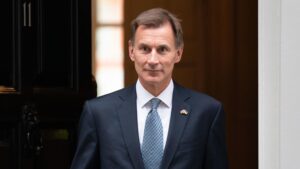
Chancellor to set out Autumn Statement on November 22

Jeremy Hunt will set out his Autumn Statement on November 22, the Chancellor has told MPs.
He has commissioned an Office for Budget Responsibility forecast, which will be presented alongside the statement.
The Prime Minister and Chancellor have spent recent months promising to halve inflation, amid a series of Bank of England interest rate rises designed to ease soaring prices.
Mr Hunt has also faced pressure from some Tory MPs for tax cuts ahead of the next general election, expected before January 2025.
But he and Rishi Sunak have so far resisted these calls, pointing to ongoing efforts to curb inflation and ensure financial stability.
Mr Hunt confirmed the date in a statement in the Commons.
“On Friday, the Office for National Statistics published an update to the UK’s GDP growth figures which shows the UK economy was 0.6 per cent larger than pre-pandemic levels by the fourth quarter of 2021.
“It means our economy had the fastest recovery from the pandemic of any large European economy, thanks to decisions such as furlough that protected millions of jobs.
“For that growth to continue we now need to halve inflation, which I am pleased to report is now nearly 40 per cent below its 11 per cent peak. I can also tell the House I will deliver the Autumn Statement on November 22,” he said.
The Treasury and new Defence Secretary Grant Shapps are also likely to come under pressure over defence funding.
Mr Shapps’ predecessor, Ben Wallace, who stepped down from the role last week, had long made clear his desire for greater spending on the UK armed forces.
Read more:
Chancellor to set out Autumn Statement on November 22