

UK house prices will continue to slide this year and in 2024 and will not start to recover until 2025, Lloyds Banking Group has forecast.
The lender, which owns Halifax and is Britain’s largest mortgage provider, said that by the end of 2023 house prices would have fallen 5% over the course of the year and were likely to decrease by another 2.4% in 2024.
The forecasts, which were released on Wednesday alongside the group’s third-quarter financial results, suggest an 11% decline in property prices from their peak last year, when the market was still being fuelled by a rush for larger homes after the coronavirus pandemic.
Santander is predicting a larger drop in UK house prices for the whole of 2023 of about 7%, followed by a smaller 2% fall in 2024.
Both lenders said the first signs of growth would start to emerge only in 2025, with Lloyds economists predicting a 2.3% increase in house prices that year and Santander expecting a 2% rise.
“The housing market in 2023 has been a little bit softer than we saw in previous years,” Lloyds’ chief financial officer, William Chalmers, said. “Having said that, as you know, there has been an increase generally in the housing market for a number of years to date, and so we’re retracing a part of those steps.”
Meanwhile, Lloyds said its own finances were being squeezed, as it started to pay out higher interest rates to its savers.
It said its net interest margin, which is a key driver of bank income and accounts for the difference between what is charged for mortgages and paid on savings, narrowed from 3.14% to 3.08% in the July to September period. Lloyds blamed that on “expected mortgage and deposit pricing headwinds” and Chalmers said the decline was expected to continue into the following quarter.
Similar trends have weighed on Barclays, which on Tuesday revealed that its net interest margin had dropped, and would fall further over final three months of the year. Barclays’ chief executive, CS Venkatakrishnan, said the bank had been “very disciplined and prudent and passed through interest rates to customers”.
Competition has forced lenders to start reducing costly mortgage rates while paying out more for deposits, as savers increasingly shop around for more lucrative returns.
It follows pressure from regulators and politicians, who this year accused banks of failing to pass on interest rate rises to their savings customers at the same speed they were increasing charges for borrowers.
Lloyds still managed to report a rise in pre-tax profits to £1.9bn for the three months to September, up from £576m a year earlier. However, that figure has been restated to align with new accounting rules.
Its profits were also flattered by a 72% decrease in the amount of money put aside for potential defaults, to £187m. That compares with the £668m put aside during the same period last year, when it frontloaded its cash cushion amid fears of an economic downturn that could hit the UK housing market.
Lloyds said the number of customers falling behind on mortgage payments was “broadly stable” in the third quarter, and that the growth in defaults had also slowed, but was still slightly above pre-pandemic levels.
Santander also said it had seen a “modest increase” in customers falling further behind on mortgage payments, but added that it expected higher-for-longer interest rates to have a “more pronounced impact on households and businesses” in future.
Chalmers said Lloyds was contacting customers to offer debt advice and shift some borrowers on to better rates. “It is a very extensive outreach programme that is adopted proactively by the bank to ensure that customers that need support get it,” he said.
Danni Hewson, head of financial analysis at the investment platform AJ Bell, said it was clear that Lloyds – at least for now – was “managing to keep bad debt under some kind of control”.
She said: “The key question for investors is how long the company can continue to enjoy some sort of benefit from the higher cost of borrowing and if – or when – the strain on household finances becomes so acute the level of loans gone bad starts to balloon.”
Read more:
UK house prices will not stop falling until 2025, Lloyds Bank data forecasts
Month: October 2023
Britain’s drivers demand ‘three factors’ from new Budget amid an …

Motoring experts have called on the Government to include vital information in the upcoming Autumn Budget to help hard-pressed drivers.
The Chancellor of the Exchequer Jeremy Hunt announced last month that the Autumn Statement would take place on November 22.
Many are expecting the Chancellor to unveil measures for first-time buyers, as well as tax cuts as the Government aims to help Britons with the cost of living crisis.
However, others will be wanting Hunt to clarify how drivers will be helped following the Government’s pledges to scrap anti-motorist laws.
Paul Holland, managing director for UK/ANZ Fleet, FLEETCOR, said the new budget would be a “transitional phase” for drivers and fleets across the UK.
He added that net zero had “slipped down the agenda” for Rishi Sunak and the Government, potentially dampening the mainstream rollout of electric vehicles.
While Rishi Sunak was optimistic about the future of electric car sales, he said more time was needed to lower costs for motorists before switching.
Paul Holland said: “Even if the Government has momentarily stalled in its drive towards an electric future, fleets themselves and road users in general have powerful incentives to switch away from fossil fuels.
“This is why we’re still seeing an increase in electric vehicle usage even after the grants for EVs have ceased.
“There are three factors driving the use of EVs, even when the Government is moving away from incentivising them: price, sustainability and flexibility.”
The expert highlighted how fuel prices needed to come down for all motorists to be able to continue driving comfortably, saying that the Government could be doing more to bring prices down.
Currently, the average price for a litre of petrol at the pumps is 155.49p, while diesel prices are almost 7p more expensive at 162.19p.
Prices for both petrol and diesel are cheaper at supermarkets as experts often urge drivers to check where they can fuel up for as cheap as possible.
The UK is on target to hit 100,000 chargers by 2025, although there are some fears over whether the Government is still planning on meeting its original target of 300,000 chargers by the end of the decade.
Some are even suggesting that the Government could bring back a form of incentive system to help motorists switch to cleaner vehicles.
Paul Holland concluded, saying: “While we await further details and the true impact of the Prime Minister’s delay to 2035 and net zero strategies, as well as what will be included in the Autumn statement, we know truly that it will not impact the progress made by all stakeholders as we all work towards sustainable mobility.”
Read more:
Britain’s drivers demand ‘three factors’ from new Budget amid anti-motorist purge
Bitcoin rises to 17-month high as ETF speculation mounts

Bitcoin reached a 17-month high on Tuesday amid rising speculation that US regulators will approve stock market funds that invest directly in cryptocurrency.
The price increased more than 10 per cent to $34,872 a token, pulling back the losses seen in last year’s crash.
The surge was driven by hopes that the Securities and Exchange Commission would approve an exchange-traded fund (ETF), abandoning its decade-long policy of refusing to approve spot ETFs.
It followed a 10 per cent surge on Monday, when bitcoin posted its best day in nearly a year.
An approval by the US SEC of an ETF that owns bitcoin on behalf of fund investors is expected to fuel demand.
It’s argued that a spot bitcoin ETF would allow investors who have been previously wary of crypto access to the asset via the stock market, bringing a new wave of capital to the sector.
Steen Jakobsen, chief investment officer at Saxo, said: “The value of … any asset, basically, is the amount of people using it.
“So the ETF would make a large audience and increase liquidity.”
Ilan Solot, co-head of digital assets at Marex, said: “The SEC accepting a spot bitcoin ETF application would validate bitcoin as an established asset class alongside all other asset classes.
“It could close the book on rogue and unregulated institutions leading the way on crypto.
“Major institutions would now have a buy-in into the sector.”
Antoni Trenchev, co-founder of digital asset firm Nexo, said: “A sense of excitement has erupted in the crypto market and now it’s just a case of waiting to see if and when something concrete emerges from the SEC.”
The price of bitcoin, a volatile asset, dropped below $16,000 in November 2022.
It came a year after it reached a record high of $69,000.
Read more:
Bitcoin rises to 17-month high as ETF speculation mounts
Cap on bankers’ bonuses to be scrapped within days

Britain’s financial regulators have confirmed that the cap on bankers’ bonuses will be scrapped from next week as part of a post-Brexit bid to boost the attractiveness of the City of London.
Since 2014, under rules inherited from the European Union, banks, building societies and investment firms have had to limit bonuses for employees to two times their base salary. The EU brought in the policy to try to deter bankers from the type of risky behaviour that caused the 2008 financial crisis.
But the Financial Conduct Authority (FCA) and the Prudential Regulation Authority (PRA), after almost a year of consultations, have now decided to get rid of the cap from October 31.
The regulators said they approved the changes to “strengthen the effectiveness of the remuneration regime” by allowing banks to increase how much of their staff’s pay is linked to performance.
They added that the changes should “also help remove unintended consequences of the cap”, with most lenders having had to increase the base pay for their workers to make sure they were not losing out because of the policy.
But fixed pay cannot be as easily tweaked in response to changes in the event of a downturn, for example; nor can it be so readily clawed back if poor performance or misconduct subsequently comes to light.
The cap on bonuses was never popular in either Westminster or the City of London. In the year the cap was introduced, George Osborne, who was then chancellor, described the measure as “entirely self-defeating” and tried unsuccessfully to overturn it. Andrew Bailey, who is now the Bank of England’s governor, led the central lender’s prudential regulation authority at the time and called the EU’s bonus regulations the “wrong policy”.
Politicians were worried that London was losing business and talent to rival financial centres such as New York and Hong Kong because of the cap. Banks were against it because it meant that they had to increase fixed salaries — although that was a boon for staff, who could be much more certain how much money they would be taking home each year.
The scrapping of the cap was first revealed last year by Kwasi Kwarteng when he was the chancellor. It was a key part of his plan to make post-Brexit Britain more competitive as a financial centre by taking advantage of the UK’s freedom to make its own rules after leaving the EU.
However, despite banks’ initial unhappiness when the cap was introduced, it remains to be seen whether many lenders will now want, or be able, to alter their pay structures once again.
“I very much doubt that there’ll be a dramatic shift back to the pre-financial crisis days of low base salaries and high bonuses,” Suzanne Horne, an employment lawyer at Paul Hastings, said.
Anne Sammon, a partner at Pinsent Masons, warned that the changes could lead to a “two-tier workforce”, where new employees are paid lower salaries but with higher bonuses than their colleagues.
“Firms will need to be mindful of flouting equal pay laws in these circumstances — where employees are doing similar roles but being paid lower salaries,” she added.
Commenting on the government’s decision, Julian Jessop, Economics Fellow at the free market think tank, the Institute of Economic Affairs, said: “Scrapping the bankers bonus cap is common sense. It is a clumsy rule whose costs far outweigh any potential benefits. Its removal will further strengthen the competitiveness of the UK financial sector and increase tax revenues, so it is not just bankers who will benefit.
“The cap has led firms to increase basic pay and made it harder for them to adjust variable pay. This has added to fixed costs and reduced the flexibility to respond to different financial conditions and to reward outstanding individuals appropriately.
“There are also now many more effective ways to prevent excessive risk-taking, including the ‘Senior Managers Regime’ (which makes top staff directly accountable to regulators) and deferred bonus schemes (which allow excessive payments to be clawed back later).”
Read more:
Cap on bankers’ bonuses to be scrapped within days
UK unemployment rate remains low at 4.2% as number of job vacancies fa …

The UK unemployment rate remains low, according to the latest official figures.
The figure stood at 4.2% in the three months to August this year, after changes to the Office for National Statistics (ONS) survey method.
Under the new means of assessing the labour market, there has been no change in the level of joblessness compared to the three months to July.
Despite the unemployment rate remaining static, the number of jobs on offer fell to under a million. A drop of 43,000 jobs was estimated by the ONS from its previous tally – with 988,000 vacancies available from July to September.
The number of vacancies fell across the economy – 14 of the 18 industries surveyed posted a reduced number of jobs. It was the 15th consecutive period of contraction in the labour market.
The country’s all-time lowest unemployment rate was 3.4%, recorded in December 1973 – while the highest rate was 11.9% in April 1984.
Since the pandemic years, there has been a high number of people neither in work nor looking for work – people who are classed as economically inactive. This can be because people are long-term sick.
Data from the ONS also shows there was a slight increase in the percentage of economic inactivity. The rate grew 0.1 percentage points to 20.9% from June to August compared to the three months from March to May.
A new way of crunching the labour market numbers is being adopted by the ONS in an effort to ensure accuracy, as the organisation found it harder to engage with enough people in certain groups.
The publication of unemployment data was delayed a week in an effort to produce the best estimates.
Some have been critical of the new process. The publication of experimental estimates of headline numbers raised “questions about the reliability of the data”, economics research firm Pantheon Macroeconomics said.
“The poor quality of this data will hamper key decisions, including the Bank of England’s on interest rates and the government’s on labour market inactivity,” the Resolution Foundation thinktank added.
Nevertheless, the figures demonstrated the labour market was loosening – with unemployment set to peak at 4.8% in the first three months of next year, Pantheon forecast.
As a result, it’s expected the Bank of England will keep interest rates at 5.25% next month.
Read more:
UK unemployment rate remains low at 4.2% as number of job vacancies falls
xtype hits $10.8 million In Funding, Amplifying Its Impact In The Ser …

xtype, the agile software delivery company, today announced that it has secured additional funding following a stellar year of growth in the business, having achieved 4x revenue growth over the last 14 months and a significantly increased market presence.
This round was led by Columbia Capital and Innerloop Capital, and saw participation from SaaS Ventures and other investors. Specializing in enterprise clients using ServiceNow, xtype will use the new funding to meet increased demand and expand product development.
With xtype, enterprises can supercharge its ServiceNow Center of Excellence and Innovation (CoEI), redefining the parameters for enterprises to accelerate their rate of innovation on the ServiceNow platform, and finally be able to meet and exceed enterprise demand for new digital transformation workflows and applications.
The funding comes at a time when large enterprises, who rely heavily on ServiceNow to drive digital transformation and business workflows, are turning to xtype to augment the built in capabilities of the platform with platform engineering capabilities to realize the full potential of the platform. Zurich Insurance and Heineken are two such organizations currently working with xtype to further develop their IT processes and applications in real time. While investors are continuing to tread cautiously in the current market, xtype’s fundraise highlights investor confidence in its product market fit and exceptional ability to achieve exactly what it sets out to do – solve the clear problem of its customers in unleashing the enormous capabilities of ServiceNow.
xtype’s latest funding round will provide fuel for the next stage of growth, enabling wider adoption of its technology in enterprise accounts, expanded technical support capabilities, and investment in additional product capabilities. With proven fit and momentum in the ServiceNow ecosystem, xtype is poised to further scale its business and team. The new capital will expand the startup’s ability to drive innovation and meet the needs of large global enterprises relying on ServiceNow. This also includes enhancing its core product and solving more of the unique pains of customers, such as growing backlogs of undeployed updates, off-hour work to meet deadlines, and an inability to innovate at the pace demanded by the business.
Ron Gidron, co-founder and CEO of xtype said: “We are thrilled to announce that xtype has secured additional funding, a resounding endorsement of our game-changing solutions in the ServiceNow ecosystem. This investment not only reaffirms our market leadership but also underlines the immense confidence our investor community places in us. As we continue to revolutionize enterprise software solutions, this financial backing empowers us to accelerate our innovation, scale our reach, and continue delivering unparalleled value to our clients.”
Justin Label, Managing Director of Innerloop Capital agreed, saying: “xtype has seen tremendous growth over the past year, and the expansion of its enterprise customer base to include industry leaders made us extremely confident in the trajectory they are taking. With this, we are eager to support the next stage of growth for the company and invest further into its unique product offering.”
Collin Gutman, Managing Partner of SaaS Ventures, said: “We saw that ServiceNow’s customers all have a large need, which xtype fills perfectly. The scope of the problem xtype solves is matched only by the quality of its team.”
The latest fundraising round will bring the total to $10.8 million. xtype is looking to take advantage of the significant potential for growth as the ServiceNow ecosystem has over 7,000 leading enterprises relying on the platform for their software deployments.
Read more:
xtype hits $10.8 million In Funding, Amplifying Its Impact In The ServiceNow Market Amidst Soaring Demand
Net zero projects in York and North Yorkshire have been approved for a …

A total of 23 schemes will receive a share of the York and North Yorkshire Net Zero Fund, investment which has been unlocked by the region’s proposed devolution deal and will be allocated by the Department of Levelling Up and Communities, subject to devolution progressing for York and North Yorkshire.
Parliamentary debates on devolution for the region are anticipated this autumn, with mayoral elections timetabled for May 2024.
The fund will invest in schemes that can deliver significant carbon reductions and contribute to York and North Yorkshire’s ambition to be net zero by 2034. Alongside carbon reduction, investment aims to create a pipeline of net zero projects that will drive economic growth, create jobs, reduce energy costs for businesses and leverage further investment for the region.
The approved projects cover a broad range of issues relating to net zero, such as decarbonisation of community buildings and transport, with schemes across York and North Yorkshire. Street and building LED lighting schemes in York are also approved, as well as innovations in energy generation, including The Electric Cow Project at Askham Bryan College in the city.
The farming focussed scheme will fund slurry-fuelled conversion equipment that can be introduced to dairy farms across the region to generate electricity from cow manure. Other projects approved aim to tackle a decline of biodiversity, such as the project at the Denton Park Estate, on the edge of the Yorkshire Dales, where funds will support moorland restoration.
Alongside £6 million to fund 12 capital projects, £1 million of the fund will be allocated to develop new net zero projects from “idea to investor ready”. There are 11 of these, including the development of full business cases for renewable energy schemes using Solar PV and onshore wind and the Harewood Whin Green Energy Park in York. A feasibility and business case development for shore-side power at Scarborough and Whitby harbours included on the shortlist could become an “exemplar study” for medium-to-small ports nationally.
Approvals for the broad range of projects was made by the York and North Yorkshire Joint Devolution Committee at a meeting in Northallerton on Monday 23rd October. The fund is part of the proposed York and North Yorkshire devolution deal, which would see the formation of a combined authority, election of a mayor and a transfer of powers and funding from national to local government.
North Yorkshire Council’s leader, Cllr Carl Les, said: “This is a significant step forward for projects which will be extremely important to help to achieve our aims of tackling the threat of climate change, while driving forward innovation and expertise in the green technology sector.
“This is a clear indication of the benefits that are already being realised ahead of the proposed devolution deal for York and North Yorkshire being introduced.
“These projects will provide more jobs and greater career opportunities, while developing what is such an important sector that will be recognised nationally and bring in more investment to York and North Yorkshire.”
City of York Council’s leader, Cllr Claire Douglas, said: “Our new council Plan – ‘One City, for all’ – has, in its four key commitments to improving Equality, Affordability, Climate and Heath, a clear ambition for York’s environment and net zero, including through work with our partners. This announcement represents a significant investment in the city and a significant step in delivering on the commitments we have made.
“This is the first win of what we hope will be many for the new combined authority, and it is good news for our economy, our Net Zero aspirations and for York’s communities.”
Projects approved will support the implementation of York and North Yorkshire’s Routemap to Carbon Negative, the North Yorkshire Council Climate Change Strategy and City of York’s Climate Change Strategy. Collectively, the 12 capital schemes alone are expected to result in more than 70,000 tonnes of carbon emissions saved between 2025 and 2029.
The full list of projects where funding was approved
The 12 capital projects, receiving a share of £6 million are:
Moorland Restoration Project, Denton Park Estate
REstore, North York Moors National Park Authority
Net Zero for Yorkshire North & East Methodist District
The Electric Cow Project, Askham Bryan College
Solar PV & Battery Storage installation on Council Commercial Assets, North Yorkshire Council
Kildwick to Silsden Active Travel Link, North Yorkshire Council
Community Transport Decarbonisation, North Yorkshire Council
Decarbonising Community Buildings, North Yorkshire Council
Renewable Heating Upgrade – Alex Lyon House, City of York Council
Honeysuckle House heat pump communal heating upgrade, City of York Council
Street Lighting LED Conversion, City of York Council
Commercial Buildings LED Lighting Renewal Project, City of York Council
The 11 revenue projects, receiving a share of £1 million are:
Shore Power at Scarborough and Whitby Harbours, North Yorkshire Council
Establishing a Baseline for Evidence and an Action Plan for Regenerative Farming in York & North Yorkshire, Yorkshire Dales National Park Authority
Lastingham Case Study, North York Moors National Park Authority
The Great Yorkshire Kelp Forest, East Riding of Yorkshire Council (Yorkshire Marine Nature Partnership)
Whitby and Scarborough Park and Ride EV Hyperhub Business Case Development, North Yorkshire Council
Electric Vehicle Public Charging Infrastructure Rollout Strategy Next Steps, North Yorkshire Council
District Heat Network – Potto, North Yorkshire Council
Elvington Lane Solar PV, City of York Council
Harewood Whin Green Energy Park, City of York Council
North Wigginton Onshore Wind – Project Development, City of York Council
Green Energy Park at Seamer Carr and Decarbonising Allerton Waste Recovery Park, North Yorkshire Council.
Read more:
Net zero projects in York and North Yorkshire have been approved for allocations from a £7M net zero fund
Government borrows less than expected in September
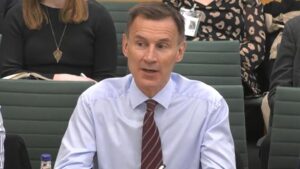
Government borrowing in September was lower than most economists had expected but remains high, figures show.
Borrowing – the difference between spending and tax income – was £14.3bn last month.
This was £1.6bn less than a year earlier, but the sixth highest in September since records began in 1993.
The statistics come ahead of the Autumn Statement in November, but so far the chancellor has downplayed the possibility of any tax cuts.
Economists had predicted government borrowing to be £18.3bn last month, while the Office for Budget Responsibility had forecast the level to be £20.5bn.
The better-than-expected numbers from the Office for National Statistics (ONS) have prompted some, such as the right-leaning Institute of Economic Affairs think tank, to suggest there is now room for “some well-targeted tax cuts” in the Autumn Statement.
Chancellor Jeremy Hunt is also under pressure from some Conservative MPs to announce plans to lower taxes before the next general election, calls which have increased following the party’s double by-election defeat on Friday.
Craig Tracey, MP for North Warwickshire, said cutting income tax or national insurance would be the best way to make voters feel better now. “The thing [voters] need to see is an immediate impact on their bottom line,” he said.
And former Tory minister John Redwood called for taxes on self-employed people to return to pre-2017 levels and for the VAT threshold to be raised for small businesses.
The Resolution Foundation, which campaigns on improving living standards for those on low to middle incomes, said high inflation had pushed up the nominal value of the government’s tax income, which had given a “short-term” boost for the chancellor ahead of his budget update.
But Cara Pacitti, senior economist at the think tank, said the short-term gain was “likely to be more than offset by longer-term pain” caused by higher interest rates.
“Together, this is likely to reduce the chancellor’s already limited room for manoeuvre,” she added.
Mr Hunt appears to have all but ruled out near-term tax cuts to date, saying they are “virtually impossible” and that the government needs to prioritise bringing down inflation.
Responding to the latest borrowing figures, Mr Hunt said the government’s spending on debt interest was twice the level it was last year and was “clearly not sustainable”.
But he said the government “had to borrow during the pandemic to protect lives and livelihoods” and blamed Russia’s invasion of Ukraine for having “pushed up inflation and interest rates”.
Read more:
Government borrows less than expected in September
Billionaires should face a minimum tax rate, report says

Billionaires should face a minimum tax rate, according to a report which found some of the world’s mega-wealthy are paying little to no tax.
The EU Tax Observatory said most people pay a higher rate than the super-rich, who, it said, are able to use complex business structures for avoidance.
It suggested a minimum 2% tax rate on billionaires’ global wealth would raise $250bn (£205bn) a year.
There are around 2,500 billionaires with a combined wealth of $13 trillion.
The report by EU Tax Observatory, part of the Paris School of Economics, examined how successful efforts to ensure individuals and companies pay their fair share have been over the past 10 years.
It said that the automatic sharing of the wealthy’s account information across more than 100 countries had significantly reduced offshore tax evasion.
However, billionaires are able to get away with paying tax rates equal to 0% or 0.5% of their wealth “due to the frequent use of shell companies to avoid income taxation”, it said.
Quentin Parrinello, a senior policy adviser at the EU Tax Observatory, said that global billionaires “structure their wealth so it does not generate a lot of taxable income”.
He acknowledged that countries implementing a 2% tax on billionaires may sound “utopian”, but “so was the idea of asking Swiss banks to exchange tax information with tax authorities 10 years ago and now this is a central provision of the fight against tax evasion”.
While the report commended an agreement in 2021 between 140 different countries to make sure companies pay at least 15% in corporation tax, it said that the plan had been “dramatically weakened” since then by a “growing list of loopholes”.
Joseph Stiglitz, the Nobel Prize-winning American economist, suggested in an introduction to the report that unfairness in taxation poses a risk to democracy.
“If citizens don’t believe that everyone is paying their fair share of taxes – and especially if they see the rich and rich corporations not paying their fair share – then they will begin to reject taxation.
“Why should they hand over their hard-earned money when the wealthy don’t? This glaring tax disparity undermines the proper functioning of our democracy; it deepens inequality, weakens trust in our institutions, and erodes the social contract.”
Mr Parrinello suggested that countries could use the next G20 summit, which takes place nearly a year from now in Brazil, to discuss a tax for the mega-wealthy.
He said that while international agreements are preferable, “we also need to be realistic” and said there are proposals outlined in the EU Tax Observatory report that countries can pursue unilaterally.
Some of the world’s richest people have pledged to give the majority of their wealth away. Microsoft co-founder Bill Gates, philanthropist Melinda French Gates and billionaire investor Warren Buffett set up the “Giving Pledge” in 2010 to “set a new standard of generosity among the ultra-wealthy”.
Following a series of tax changes in 2013, Mr Buffett conceded that even though his tax rate had risen he was still paying a lower percentage than his secretary.
“I’ll probably be the lowest paying taxpayer in the office,” he said at the time.
Mr Stiglitz said that addressing tax fairness and collecting revenues was “critical” for society, “as countries around the world face the challenges of climate change, pandemics and inequality, and as governments have to make essential investments in education, health, infrastructure and technology”.
One of the relatively recent signees to the Giving Pledge is MacKenzie Scott, an author and former wife of Amazon founder, Jeff Bezos.
As part of their divorce four years ago, she was handed a 4% stake in the online retailing giant. Ms Scott has since given away around $14bn and, according to Forbes magazine, is currently worth around $33.6bn.
Her former husband of 25 years, Mr Bezos is the world’s third richest man with a fortune of $148bn. Last year, he told CNN he wanted to give away the majority of his wealth.
Elon Musk, owner of X, formerly Twitter and co-founder and leader of Tesla and SpaceX, is currently the world’s richest man, according to Forbes, with a fortune of $225bn.
Read more:
Billionaires should face a minimum tax rate, report says

