

Formula One stars Mika Hakkinen and David Coulthard have teamed up with a pair of entrepreneurs to launch a stock market business that allows the public to invest in ultra-rare classic cars.
The duo, along with the Le Mans endurance-race winner Allan McNish, have joined the board of a start-up that will this week fire the starting gun on a £50 million fundraising through the broker Oberon Capital to start building up its collection.
Tertre Rouge Assets — named after a famous bend at Le Mans — has secured six rare cars for £30 million, including a 1963 Jaguar E Type Lightweight, a 1960 Formula 1 Ferrari and a 1958 Mercedes-Benz 300 SL, to start the business.
The rest of the £50 million will be spent on buying other car-related businesses, starting with the supercar events company The Run To, which organises luxury driving rallies to the Monaco Grand Prix for wealthy petrolheads.
The idea was dreamt up by Tertre Rouge chairman Steven Schapera, a wealthy cosmetics entrepreneur, and chief executive André Ahrlé, a racing driver turned classic car investor, after the pair successfully co-invested in buying and selling classic motorbikes and cars.
Schapera, who does not even own a car, said he started working with Ahrlé simply as a way of spreading his investments after receiving a windfall from the €400 million sale of Invincible Brands, in which he was an investor.
“I really don’t know much about cars. For me, it was just about diversifying my portfolio. I wanted to put maybe 3 to 5 per cent of my wealth into alternative assets other than art, or wine or whatever, that are not correlated to the stock market. I met André and we ended up making a whole lot of money in classic cars and bikes.”
The problem, he said, was that cars and bikes are illiquid — meaning you cannot buy and sell them quickly. So they came up with the idea of creating a stock market company to trade vehicles in which investors could buy shares.
The group is targeting 15 per cent annual returns from the portfolio, on which it will make money by renting out the vehicles for photoshoots, as well as by selling them at a profit.
Ahrlé, whose first business was providing security services for stars including Bruce Springsteen and The Rolling Stones, got into racing when he won the speed challenges during a Mercedes-Benz course on driving for bodyguards. He went on to become a professional racing driver, winning the Daytona 24 hours race twice, before spending more time buying and selling rare classic cars.
“My first investment was in 1993, when I bought a Ferrari 1963 250 GT Lusso for 130,000 deutschmarks (£325,000). I sold it for $1 million (£800,000),” he recalled. His second investment was equally successful, but could have been far better: he bought a 1961 Competizione Ferrari 250 GT SWB Daytona race winner for 1.3 million Swiss francs (£1.2 million), then sold it for a 250 per cent profit. The car sold a few years later for $25 million.
Investment companies have in the past set up funds to buy classic cars, but they have struggled to raise a diversified investor base or car portfolio.
Fund profits can be reduced by the cost of storage, maintenance and insurance, although Schapera said that would be offset by revenues from renting out the cars for photoshoots and videos.
For investors looking at investing in up and coming classics cars the investment company Car Crowd who boast F1 broadcast host Natalie Pinkham and her Capital FM brother as ambassadors, and car aficionado Jodie Kidd as and investor, and part owner in two cars, the ability to but a share in a private company which exclusively owns a car believed to up-and-coming classic value wise with an agreed period of ownership and exit strategy.
The Knight Frank Luxury Investment Index for the second quarter of this year shows that cars outperformed art, jewellery and handbags over a ten-year period, with a return of 118 per cent against 109 per cent, 39 per cent and 60 per cent respectively. However, rare whisky bottles had the highest return with a 322 per cent gain.
Read more:
Formula One stars team up to allow public to buy shares in multi-million pound classic cars
Month: November 2023
Totally Welsh Brings the Cream of the Crop to Cardiff: New Expansion P …
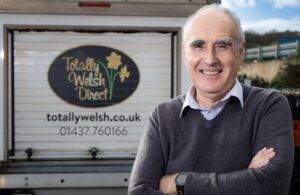
Haverfordwest-based dairy company announces a new distribution hub in Cardiff, bringing local, sustainable produce and employment to the city.
Totally Welsh, a leading Welsh dairy company, has announced it is opening a new distribution hub in Cardiff. The expansion, designed to meet growing customer demand, is set to create new jobs in the city while simultaneously supporting the company’s ambitious growth plans.
Founded in 1990, Totally Welsh has become a household name for quality locally sourced Welsh milk and other dairy products. With its roots in Haverfordwest, the company now employs around 110 people across three sites and achieved a turnover of £17 million in 2022.
The expansion to Cardiff represents an exciting new chapter in the company’s story, allowing it to scale up its direct-to-consumer and business-to-business services across Southeast Wales.
This new distribution hub, occupying 10,000 square feet off Penarth Road, will initially create five new roles. These will range from delivery drivers to customer service representatives, with further employment opportunities expected in the coming years.
“Totally Welsh has always been about more than just dairy for us. The brand embodies the Welsh community spirit,” says John Horsman, General Manager of Totally Welsh.
“This new hub isn’t merely an expansion; it’s a reinforcement of our ongoing commitment to bring high-quality, local produce to more people while championing job creation and sustainability.”
In addition to supplying supermarkets, hospitals, schools and independent retailers, Totally Welsh delivers bottled milk to over 7000 doorstep customers. Although its primary market is south Wales, it delivers three times a week into England, with delivery vehicles reaching as far as Southampton.
Its milk bottles are processed on the first new large-scale glass bottling line built in the UK in 40 years, representing an investment of over £1 million.
As well as using reusable materials and reducing food miles by sourcing locally, Totally Welsh takes pride in its commitment to sustainability and aims to achieve net zero carbon emissions by 2050.
A recent benchmarking exercise revealed that while the average carbon footprint in the dairy industry stands at 1200g CO2 per litre manufactured, Totally Welsh’s footprint is just 186g CO2 per litre manufactured, thanks to a meticulous approach to sourcing and operations.
“Our milk is locally sourced, drastically cutting down journey times to our plant,” explained Mark Hunter, Managing Director of Totally Welsh.
“Additionally, we’ve fitted solar panels on our factory roof as a backup to our main power supply, and we’re making strides in recycling – our poly bottles already include recycled content. We’re in the process of shifting our fleet to electric vehicles, especially for city-centre operations. It’s not just about meeting benchmarks, but about setting new, greener standards for the industry.”
The company’s engagement with the Business Wales Accelerated Growth Programme (AGP) has been instrumental in advancing these goals. The company has received tailored support with sustainability, workforce development, and market expansion. John Horsman explains:
“The support from AGP has been invaluable. From marketing insights to tactical business advice, their guidance has been a cornerstone of our expansion strategy and sustainability goals.
“This expansion aligns perfectly with our long-standing commitment to sustainability. We’re not just bringing jobs to Cardiff; we’re bringing a vision for a greener, more sustainable future,” he added.
Read more:
Totally Welsh Brings the Cream of the Crop to Cardiff: New Expansion Promises Fresh Opportunities and Jobs
Wowcher faces court threat over ‘misleading’ sales practices

Wowcher, the online retail and experiences platform, has been warned it could face court action unless it changes customer sales practices.
The Competition and Markets Authority (CMA) launched a review of its operations in March as part of a wider probe into pressure-selling tactics used by retailers online.
The investigation, the regulator said, had found several areas of concern including hidden charges and the use of a pre-ticked box to enrol consumers into VIP memberships on Wowcher’s site.
The main gripe, however, seems to centre on its use of timers.
“Wowcher’s website features extensive use of countdown clocks and marketing claims such as ‘Running out!’ or ‘In high demand!’ which create an impression of urgency and influence shoppers as they are making their purchasing decisions,” a statement said.
“The CMA has found evidence that these claims risk giving the misleading impression that products will increase in price or will not be available, when this is often not the case.
“Such claims, especially when used with countdown clocks, can put pressure on shoppers to buy quickly for fear of missing out, leading to rushed purchases.”
The watchdog said it had written to Wowcher to outline the ways in which it could formally address the findings.
“Wowcher now has the opportunity to respond and avoid court action by signing undertakings to change its online sales practices,” the regulator added.
The company responded: “Wowcher’s mission has always been to help save our customers money with the best, exclusive offers from thousands of our merchants across the UK.
“This has never been more important than in this challenging economic environment.
“The aim of our marketing claims is always to provide accurate and useful information to our customers when they are browsing our website.
“We look forward to continuing to engage with the CMA on this matter.”
Read more:
Wowcher faces court threat over ‘misleading’ sales practices
UK energy secretary could get power to fast-track vital grid connectio …

The UK energy secretary could be handed powers to fast-track connecting electricity-hungry projects, such as Jaguar Land Rover’s owner Tata’s planned electric battery factory, to the grid, under plans being discussed between government and regulators.
Amid concerns about delays of up to 15 years in hooking up large schemes, the Guardian understands the move would allow Claire Coutinho to request that energy network companies accelerate upgrades to substations and power lines to connect specific new developments.
It is understood that the government and the regulator Ofgem have told National Grid’s electricity systems operator that they are “minded” to adopt its proposals to change the model for connections, which now moves at a pace set by each network operator.
A source said: “Foreign investors need assurances that, if these things are going to be built, then they can be hooked up quickly. There are physical assets, like substations, which transmission companies will need to build or upgrade.”
The government is belatedly attempting to tackle a logjam that has resulted in some developments facing a 10- to 15-year wait for a connection to the grid. Ofgem announced on Monday plans to remove “zombie” projects from the queue to connect up to speed up those ready to produce renewable power for the grid.
Although no equivalent queue exists for those looking to take power from the grid, ministers and officials are concerned that large projects could struggle to secure final investment and proceed without guarantees over their connection to the electricity supply.
Sources said changes to the rules had been proposed with several big projects in mind: Tata’s new £4bn electric battery factory, expected to be built in Somerset; and the switch to electric arc furnaces at Britain’s biggest steelworks at Port Talbot in south Wales, also owned by the Indian group.
The £1.25bn plan from British Steel, which is owned by China’s Jingye, to replace two blast furnaces at Scunthorpe steelworks, with an electric arc furnace at the north Lincolnshire plant and another at a site in Teesside, North Yorkshire, has also formed part of the proposals. Negotiations over the closure of blast furnaces at Port Talbot and Scunthorpe are expected to lead to thousands of job losses.
All three projects are likely to involve significant investment from the UK government, alongside the companies’ overseas owners.
Britain has 10 distribution network operators, including National Grid and Northern Powergrid, which operate monopolies in their regions and handle transmission of power from the grid to end users.
Sources said the move could be announced as soon as this month, and may be included within the “connections action plan”, a broader overhaul of Britain’s network connections.
The plan, which is expected to be announced alongside the chancellor’s autumn statement next week, will rebalance the planning system to help speed up the connection of new solar and windfarms to the grid.
On Wednesday, Ofgem said it planned to create a network of 13 “regional energy strategic planners” to work with organisations, including local government and gas and electricity networks, to analyse what infrastructure was needed in different parts of the country and how to attract investment for projects.
Their efforts will be coordinated by the Future Systems Operator, the new authority that will be created when the ESO is nationalised.
A Department for Energy Security and Net Zero spokesperson said: “We want to go further and faster on grid connections – bringing even more capacity online, reducing timescales, and ensuring clean, affordable and secure energy sources reach more homes.
“Alongside Ofgem we will be publishing a joint action plan shortly, setting out how we will accelerate connections.”
Read more:
UK energy secretary could get power to fast-track vital grid connections
SSE to increase clean energy investment by £2.5bn after profits rise

SSE plans to grow its investment in clean energy by 14% to £20.5bn for its current budget after reporting better than expected profits for the first half of the financial year.
The FTSE 100 utility told investors it will add an extra £2.5bn to its spending plan for the five years to the 2023-2024 financial year, most of which will be used to invest in renewable energy and upgrading the UK’s energy grids.
SSE’s chief executive, Alistair Phillips-Davies, said the company was prepared to accelerate its green ambitions because it had increased confidence in its future earnings.
The company, which is based in Perth, Scotland, reported pre-tax profits of £565.2m for the first half of the year, up by 1% from the same months last year. SSE set out plans earlier this year to invest £40bn in clean energy over the next 10 years after almost doubling its full-year annual profits compared with the year before.
Phillips-Davies said the company’s earnings were likely to keep growing because of the “enduring broad political consensus behind the need to build the electricity infrastructure required for net zero”.
He added: “There remains strong underlying political consensus on the big drivers of energy security and decarbonisation – accelerating renewables, network investment and flexible power generation – and these are the growth engines powering SSE.”
SSE’s renewable energy portfolio earned adjusted profits of almost £87m for the first half of the year, up from £15m in the same months last year, even as milder weather led to lower output from its windfarms.
Aarin Chiekrie, an equity analyst at Hargreaves Lansdown, said SSE had been hoping for a return to “more normal weather in the second quarter, after a slow start to the year” for its renewable energy projects.
“But that didn’t materialise as unfavourable weather conditions have left renewables’ output 19% lower than planned. That means other parts of the business are having to pick up the slack, leaving little room for further slippage if full-year guidance is to be hit,” Chiekrie said.
The company’s fleet of gas-fired power plants, which are used to cover peaks in demand for electricity, reported adjusted profits of just over £226m for the first six months of the year, down slightly from £248.2m in the first half of last year.
SSE earned adjusted operating profit of £215.6m from running its high-voltage transmission cables in the first half of the year, up 3% from the year before. Its local power grids business, which has regulated earnings, reported a 31% drop in adjusted profits to £120.1m for the first half after rising costs in its supply chain.
Read more:
SSE to increase clean energy investment by £2.5bn after profits rise
Rail legislation ‘unlikely’ before general election, government ad …

The government has admitted it is “unlikely” that legislation for Great British Railways (GBR) will be passed before the next general election.
Comments made today by transport secretary Mark Harper has poured cold water on a key pillar of planned government reforms.
GBR, first put forward by Boris Johnson in 2021, proposes the creation of a state-owned ‘guiding mind’ for Britain’s struggling rail sector, reducing fragmentation and government oversight.
The project, which is backed by rail operators and Network Rail, was included in the King’s Speech last week as part of a draft Rail Reform Bill.
But Harper told a Transport Select Committee hearing today: “It’s unlikely that we’ll be able to proceed to full legislation this session.”
Harper faced a grilling from committee chair Iain Stewart, who argued the legislation is “fairly simple” and that there had “already been a consultation on it.”
“Given the debate over it, I don’t think it is [simple]” Harper said. “There’s still quite a bit of difference of opinion about what people are trying to achieve with the legislation and there are different views from different parts of the industry,” he said.
Harper’s reluctance to commit to legislation comes amid concerns in the sector over delays to GBR’s roll-out.
Rail companies view it as a critical fix for Britain’s long-troubled railway service, which has never really got back to its best following the pandemic and is struggling with debt and costs.
GBR was included in last springs’ Transport Bill, but was axed in October by the then-transport secretary Anne-Marie Trevelyan.
Labour back rail reform but are expected to announce plans for full nationalisation in the coming weeks, a policy opposed by rail operators.
A slew of key industry figures and infrastructure groups wrote to the Prime Minister in May, urging him to not delay the roll-out any further or else risk business confidence.
Read more:
Rail legislation ‘unlikely’ before general election, government admits
Independent Scottish organic whisky distillery Nc’nean secures new f …
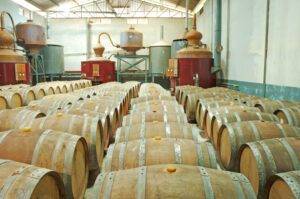
Nc’nean Distillery has secured a Virgin Money funding package with the backing of UK Government department UK Export Finance (UKEF) to help the independent distillery grow in North American markets and bring its vision for sustainable, organic Scottish whisky overseas.
Taking its name from Neachneohain – a Gaelic goddess known as the Queen of Spirits and as a fierce protector of nature – Nc’nean Distillery produces organic whisky which is making a big impression on overseas markets while making the smallest environmental footprint possible.
The distillery is known for its dedication to sustainability, as well as its experimentation with different strains of yeast. The team use 100% organic Scottish barley in a distillery powered by renewable energy from a wood-chip biomass boiler, recycle 99.97% of their waste, and bottle the whisky in 100% recycled glass.
As well as being crowned Craft Producer of the Year 2023 at the Icons of Whisky Scotland Awards, Nc’nean were recently recognised at no. 21 in the World’s Most Admired Whiskies. Their growing team of 19 now produce a number of different of whiskies from the distillery near Drimnin on the Morvern peninsula of Scotland’s west coast.
The funding package from Virgin Money will help Nc’nean as they continue to grow and move into new international markets. The US and Canada will continue to be a key growth area for the distillery as their Organic Single Malt becomes available in more and more states across both countries.
Virgin Money’s Strategic Finance and Trade Finance teams worked closely with UK Export Finance (UKEF) to structure a deal to help Nc’nean achieve their ambitions. UKEF supported Virgin Money in providing a tailored funding package, issuing a General Export Facility (GEF) loan guarantee which covered 80% of the financing and enabled Virgin Money to complete the transaction. The GEF product is a flexible government-supported scheme that helps UK export businesses – especially SMEs – to access working capital facilities, helping to improve cashflow or speed up international trade growth.
Annabel Thomas, CEO of Nc’nean Distillery said: “Our partnership with Virgin Money has been critical to Nc’nean as we develop and grow the business, and this recent funding package has been fantastic to support our expansion to new markets.”
Craig Wilson, head of FX sales & trade finance at Virgin Money said: “Nc’nean Distillery has entrepreneurship and sustainability at its heart, and this is embodied in the founder Annabel who we are delighted to have been able to support in the next step in her business growth journey. At Virgin Money we aim to ensure businesses have access to key specialists that can add value at the right time, and by bringing together the skills of our Trade Finance team, who are available to support internationally trading businesses, our Strategic Finance colleagues and UK Export Finance, we have delivered a winning package for the customer.”
Lara McGrath, UKEF Export Finance Manager, added: “UKEF is pleased to support Nc’nean Distillery, a small business in one of Scotland’s most iconic export markets, with its ambitious plans to accelerate its growth and export sustainable whisky to new overseas markets. We share Nc’nean’s passion and drive for bringing quality, sustainable Scottish produce to new markets, and we look forward to supporting more companies in the Scottish Food and Drink sector with our General Export Facility. This latest deal builds on £325 million in working capital which we unlocked for small businesses all over the UK with the General Export Facility last year.”
Read more:
Independent Scottish organic whisky distillery Nc’nean secures new funding package
High street beauty retailer The Body Shop with 250 stores is sold in  …
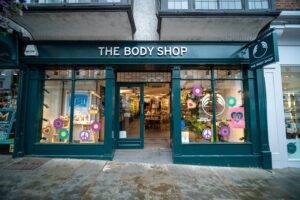
The high street beauty retailer Body Shop has agreed to sell its 250 stores in a £207million deal after struggling with profitability.
The retail outlets are being sold to a private equity group after owner Natura & Co reached a deal with Aurelius Group today.
The Brazilian cosmetics maker says the sale is set to be finalised by December 31. It is unclear if the sale will result in store closures or see staff made redundant.
Natura said the agreement includes a potential earn-out of £90million, adding that both the sale price and the earn-out would be paid within five years of the transaction closing.
The move represents the second major divestment by Natura this year as part of a broader organisational shakeup, following a deal announced in April to sell luxury brand Aesop to L’Oreal at an enterprise value of roughly £2billion.
Founded in 1976 by Anita Roddick in Brighton, the Body Shop has grown to have around 7,000 staff, and 900 stores in 20 different countries.
It also has around 1,600 franchised shops around the world.
Natura announced in August that its board of directors had authorised it to search for ‘strategic alternatives’ for The Body Shop, including a potential sale six years after buying it from L’Oreal.
The company entered into exclusive talks with Aurelius last month.
Natura’s Chief Executive Fabio Barbosa said the firm was ‘pleased to have found a strong home for The Body Shop to write the next chapter in its remarkable story’.
He said in a statement: ‘We extend our sincerest thanks to all The Body Shop’s associates, who contributed immensely to broadening Natura & Co’s horizons. We wish them continued success under the stewardship of Aurelius.’
The private equity buyer, Aurelius, said that it would have an opportunity to ‘re-energise’ the retailer.
‘We are delighted to be undertaking this acquisition of an iconic British brand, which pioneered the cruelty-free and natural ingredient movement in the health and beauty market,’ said Aurelius partner Tristan Nagler.
‘We look forward to working with CEO Ian Bickley and his team to drive operational improvements and re-energise the business, and help to deliver the next chapter of success.’
Body Shop chief executive Mr Bickley echoed: ‘The Body Shop is not only a beauty brand, but also an iconic social business that has captured hearts in nearly every corner of the world.
‘We are deeply grateful to Natura & Co for their unwavering support and I’m looking forward to working hand in hand with Aurelius as we adapt and flourish in new global retail environments, always with an eye on sustainable and profitable growth.’
Mr Barbosa added that the sale of The Body Shop would allow his company to refocus its business and concentrate on the Latin American markets.
Natura rapidly grew through high-profile acquisitions, including the purchases of The Body Shop, Aesop and Avon International, but ended up struggling with profitability.
That led it to launch a quest for ‘discipline’ and deleveraging last year in order to return to profit.
In the third quarter, Natura & Co reported a net profit of approximately £1.15billion, swinging back from a £450million-real loss a year earlier and boosted by the sale of Aesop.
Without that divestiture, Natura said, third quarter net profit would have been around £123million.
Read more:
High street beauty retailer The Body Shop with 250 stores is sold in £207M deal
Award-winning Birmingham Afro hair care solutions company secures £53 …

Award-winning Afro hair care company Nylah’s Naturals has raised a £530k seed round led by Midven.
The investment will come from both the Midlands Engine Investment Fund (MEIF) through the MEIF West Midlands Equity Fund and the West Midlands Co-Investment Fund, in addition to a syndicate of angel investors. Both funds are managed by Midven, part of the Future Planet Capital Group.
Nylah’s Naturals’ mission is to craft the future of purposeful hair care by creating high-performance solutions using non-toxic, naturally occurring ingredients – the key to which is a trade secret formulation. A 2020 study found that around 50% of products advertised to Black women contained toxic chemicals that were linked to serious health issues (Harvard, 2020). For Black women hair represents more than beauty; it also represents heritage, community and belonging. Currently there are no non-toxic hair care solutions available that address the physical and mental issues associated with hair loss, experienced by almost half of black women around the world. Nylah’s Naturals’ initial strategic focus is providing hair restorative solutions for Black women with Afro hair, with a long term vision to expand its global market presence to serve every demographic.
The company has a long-term product road map to continue addressing hair loss and hair care for the underserved Black community. Pivotal elements of this plan include a direct-to-consumer subscription proposition in the UK and international expansion which will include a strategic state-by-state launch in the US.
This round of investment will enable a number of key hires that are fundamental to Nyah’s Naturals’ road map. The first of these is Bob Holt OBE, former CEO of global cosmetics brand, Revolution Beauty PLC, who will be joining as executive chairman. Renowned dermatologist and specialist in hair loss disorders, Dr Sharon Wong, has been appointed as clinical adviser putting Nylah’s Naturals in a strong position to meet their global goals.
In the run-up to securing this seed round investment, Midven has provided strategic guidance to Nylah’s Naturals. It has also assisted substantially towards shaping the opportunity and improving the business’ investment readiness. Midven will continue to support the growth of the company including helping to build out the senior management team and helping to find new investors for this and future rounds. The current round remains open until April 2024, with hopes to raise an additional £500,000.
Celebrating the heritage and hair of the community the company serves, Nylah’s Naturals provides a positive solution whilst addressing the emotional and cultural discussions around hair and beauty in modern society.
Andy Street, Mayor of the West Midlands and WMCA Chair, said: “We set up the Co-Investment Fund to support great local entrepreneurs and businesses that had tremendous growth potential. Nylah’s Naturals is a wonderful example of that. That’s why I’m delighted that the company has become the second business to benefit from this new fund and I’m confident that this investment will help Kameese to go global.
SMEs are the lifeblood of our regional economy so it’s vital that we improve their access to the finance they need to advance. These local businesses will help power our region’s recovery and I cannot wait to see them succeed – along with the local people they employ – in the months and years ahead.”
Huw Sparkes, Investment Manager at Midven says, “This investment isn’t just about backing a brand. It’s about empowering a community, embracing diversity, and championing beauty in every curl and coil. Having known Kam for a few years I’m excited to be working with her, as well as Bob and Sharon, as the business scales into a global solution for Black women everywhere.”
Kameese Davis, CEO of Nylah’s Naturals says, “In a landscape where less than 1% of VC money in the UK is allocated to all-female teams and only 0.02% reaches Black women entrepreneurs, this investment from both the MEIF and the West Midlands Co-Investment Fund, and our esteemed angels takes on an even greater significance. It not only demonstrates Midven’s commitment to levelling the playing field for underestimated founders but also serves as an example of hope for those facing immense barriers in the world of entrepreneurship.
“With this support, Nylah’s is poised to redefine the hair care offering for Black women, and make a meaningful impact, not only for ourselves but for aspiring entrepreneurs who look up to us as well. The future holds incredible promise, and we’re eager to begin this journey.
Mark Wilcockson, Senior Investment Manager at the British Business Bank, says, “The Midlands Engine Investment Fund has been backing innovative solution focused businesses since its launch in 2017 and MEIF’s latest investment in Nylah’s Naturals is a great example of this. Having identified a gap in the hair care market, the funding secured will help the business to continue to grow and establish itself in international markets.”
The Midlands Engine Investment Fund project is supported financially by the European Union using funding from the European Regional Development Fund (ERDF) as part of the European Structural and Investment Funds Growth Programme 2014-2020 and the European Investment Bank.
Read more:
Award-winning Birmingham Afro hair care solutions company secures £530,000 investment

