

New research has revealed that an estimated 12 million UK consumers will turn to short term credit instalment plans this Christmas to afford presents and other essential items.
The research, which follows a survey of more than 1,000 consumers across the United Kingdom, finds that nearly half (43%) are concerned about making ends meet during the festive season.
Following months of cost of living worries exacerbated by high inflation which has seen over two-thirds (68%) of consumers change their day-to-day financial habits to cut spending, UK households are turning to short term credit options, such as Buy Now, Pay Later (BNPL) to increase payment flexibility and help manage their budgets.
The research by Marqeta, the global modern card issuing platform, shows that 47% of consumers have already used BNPL due to its attractive zero interest rates, with 42% doing so because of the flexibility it provides, and a further 45% stating that it helped them with budgeting.
Access to short term credit is increasingly important to shoppers as financial pressure mounts this Christmas, with 43% of respondents reporting that their spending usually increases during the holiday season compared to months prior. As a result, consumers are looking to spread the cost of the festive period, with 39% reporting that they would be using credit, such as BNPL solutions, to help make ends meet this holiday season.
“We are seeing a fundamental shift in how people approach their finances,” says Todd Pollak, Marqeta CRO. “Short term credit innovation is offering an increasingly feasible lifeline to consumers navigating the Christmas period. With accessible options now readily available, people are keen to have more control over their yearly budget, and the flexibility to buy Christmas now, ensuring they can still make ends meet, and pay later, in months following the holiday season where there is less financial pressure.”
Read more:
New research finds an estimated 12M Brits to buy Christmas now, pay later
Month: November 2023
Beauty company Avon set to open first UK stores in 137-year history

Avon, the beauty company famous for building a global business by making house-to-house visits, is to open its first physical UK stores in its 137-year history.
The company, which was founded in New York in 1886 by the travelling book salesman David H McConnell, has had to strategically rethink its business model after its 5 million door-to-door sales representatives had to stop making Avon house calls during the Covid pandemic.
The company said it would open its first stores in the UK under the Avon brand in the next two months, with its sales representatives running the “mini beauty boutiques” as franchisees.
“We are on the cusp of new frontiers for Avon,” said the Avon International global chief executive, Angela Cretu. “It is an exciting new chapter. Women like to touch and experience the product and have that joy of seeing all the colours available.”
The stores will feature about 150 products, although the full range will still only be available through its sales representatives.
The company has run a successful store programme in Turkey for the past three years, where it now has 63 branded outlets and says sales growth in the country has doubled.
Cretu said the move into bricks-and-mortar sales was in part because 80% of beauty purchases are made through retail.
Avon did not name the locations or the number of stores being opened in the initial launch phase, but said it would target “neighbourhood communities” and not just the usual high street locations.
“Many customers go to the stores for an opportunity to try many of the products, or simply to enjoy a pamper experience with a beauty adviser,” Cretu said. “We want to be as inclusive as possible. We want to give women the opportunity to open a business, especially in areas where it is not so easy for them to launch a startup.”
Avon has expanded its partnership with Superdrug after a deal in September to start stocking its products in 100 stores as well as sell online.
From 27 November the partnership will be expanded to hundreds more stores with plans to eventually make Avon products available through Superdrug’s entire chain of almost 800 outlets.
“Women stayed at home in the past, but now they are going out to work and we have to follow them wherever they spend their time and make the service as convenient as possible,” Cretu said.
In recent years Avon has increased its focus on selling online and through social media, such as through Facebook Live, a strategy that was accelerated during the pandemic.
Appeal to millennials, who are often concerned about environmental and social credentials of a brand, has been increased by Avon’s acquisition in 2019 by Natura, the Brazilian beauty group that also owns the UK’s Body Shop and Australia’s Aesop, and which has signed up Avon to a host of environmental and social commitments.
Read more:
Beauty company Avon set to open first UK stores in 137-year history
Ikea owner buys Brighton shopping mall, its second in the UK
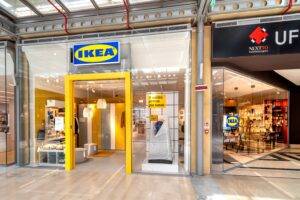
Ikea’s parent company has bought its second UK shopping mall, in Brighton, for an estimated £145m as part of efforts to bring its furniture stores into city centres.
The world’s largest furniture retailer plans to convert an empty Debenhams site in the south coast city’s Churchill Square centre, about a third of which sits empty, into a new Ikea store which is expected to open within two years.
The acquisition comes almost three years after Ingka Group’s Ingka Centres division bought the Kings Mall in Hammersmith, west London, where it installed an Ikea in a former Debenhams and brought in new tenants including the Library of Things and Lidl to help fill the site, which it renamed Livat.
Ikea is also converting the former Topshop flagship store on London’s Oxford Circus into an outlet. The opening date was recently delayed by a year until autumn 2024.
Hammersmith was the first of Ikea’s latest city store concept globally, after several attempts at developing small local outlets more convenient for those without a car.
It has tested but then closed smaller high street outlets, including one on Tottenham Court Road in central London, as well as large warehouse stores in Tottenham in north London and Coventry in 2020.
Ingka has begun buying up moribund shopping malls to develop city centre destinations as the value of those sites has fallen amid hefty competition from online shopping, which has driven many retailers to slim down the size of their chains. The post-Covid shift to working from home has also hit city centres.
Churchill Square’s owner, the fund manager Abrdn, had hoped to sell the centre for £250m when it was put on the market last year, but it agreed a deal with Ingka Centres for £145m, according to the property trade journal React News. Ingka did not comment on the price.
This summer Ikea reopened in San Francisco’s former 6X6 “ghost mall” which had lain empty since its completion in 2016. The group is also redeveloping Toronto’s Aura Podium, which formerly housed a branch of Bed, Bath & Beyond, and a complex of shopping centres and offices in Place d’Italie, Paris.
The Brighton site, which will continue trading while the department store is being revamped, includes the Chartwell Court residential tower block and three car parks, two of which are freeholds.
Other retailers already at the site include Apple, Next, H&M and Urban Outfitters.
Cindy Andersen, the managing director of Ingka Centres, said Churchill Square “fits perfectly into our global expansion strategy, allowing us to transform a traditional retail space to a meeting place that is much more than just a place to shop.
“We’ve proven in Hammersmith that traditional shopping centres have a strong future when they are adapted and constantly evolving to match the real needs of local communities.”
She said the group intended to bring together a range of “affordable and sustainable” outlets including retail, restaurants, services and amenities at the site.
Read more:
Ikea owner buys Brighton shopping mall, its second in the UK
Yorshire-built Twisted 4x4s head for Japan in new export deal

North Yorkshire-based Twisted Automotive has announced an agreement that will see the company’s bespoke modified Land Rover Defenders sold in Japan, under the new ‘Twisted Japan’ brand.
The exclusive deal with Yone Motors of Tokyo means Twisted’s classic Defenders will be imported for the next three years.
Twisted’s first vehicles built for the Japanese market, in petrol-engined TVS and TV8 specifications, will depart on their 6,000-mile journey to the port of Yokohama later this month.
Yone Motors has experience in selling and maintaining imported luxury vehicles, meaning Twisted’s converted Defenders will line up alongside high-end cars from McLaren, Rolls-Royce and Bentley.
Valuence Holdings, the owner of Yone Motors, is particularly focused on repurposing and reusing luxury goods to make them last longer. This fits with the Twisted approach to restoring and modifying the original Defender.
Twisted Automotive founder Charles Fawcett said: “To take the icon that is the classic Defender, re-engineer and upgrade it in Yorkshire, then send it to Japan is monumental for the team. The vehicles leaving the workshop have had over 1,200 hours each spent on them by the finest British technicians.”
Importing Twisted models to Japan is intended as the starting point for the project. Charles Fawcett added: “There is a significant volume of standard Defenders in the Japanese market, and longer-term these will be used as base models and assembled under licence in Japan by Twisted-trained technicians. This is the beginning of an exciting journey on the other side of the world.”
Kazuya Tanai of Valuence, responsible for the Twisted Japan project, said: “There’s a growing demand in Japan to buy and repurpose classic, quality products. It’s this circular economy ethos that’s at the core of what we do, so the partnership makes sense.”
The brand has already expanded significantly from its base in Thirsk, North Yorkshire, with showrooms in Kensington and Salcombe in Devon. The company has operations in North America and Dubai, too.
This year, Twisted also moved beyond Land Rover Defenders, launching a turbocharged version of the pint-sized Suzuki Jimny.
Read more:
Yorshire-built Twisted 4x4s head for Japan in new export deal
Action must be taken now on regulation of property agents
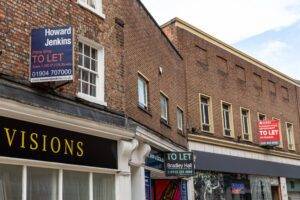
Propertymark has written to the Rt. Hon Michael Gove MP, to reiterate a longstanding call for regulation of property agents and outlined how this can support the delivery of the UK Government’s reforms.
Upcoming progress on both the Renters (Reform) Bill and the newly announced Freehold and Leasehold Reform Bill present ideal opportunities to legislate for the highest standards of practice in the sector, which will benefit both agents and consumers.
In February 2023, Mr Gove stated that all property managers in the social rented sector should be qualified, and Propertymark have urged him to extend this requirement to lettings, sales and managing agents in the private housing sector.
At the Labour Party Conference in October 2023, Matthew Pennycook MP, stated that if in government his party would introduce regulation as recommended by Lord Best in his 2019 report.
Timothy Douglas, Head of Policy and Campaigns at Propertymark, will again re-state the case for action when he gives evidence to the Renters Renters (Reform) Bill Committee on 14 November 2023.
Regulation offers huge potential to professionalise the sector. All property agents should be qualified to at least Level 3, carry out regular training, undertake Continuing Professional Development (CPD) each year, be members of a professional body and follow a code of practice.
Full mandatory government regulation of agents is the quickest and most effective method to eliminate unprofessional, unqualified, and unethical agents from the property sector.
Tenants should have parity of rights and protections and feel safe in the knowledge that their property manager is qualified and trained regardless of the tenure they rent.
Letting agents play a significant role in the private rented sector (PRS) – an estimated 46% of landlords use an agent who can carry out a variety of functions including inspections, notices, and the daily running and management of a property, as well as holding the vital relationship with the tenant. This could mean that potentially over two million households could be left uncovered by efforts to improve standards within the Private Rented Sector, if the focus on enforcement and new standards remains solely with landlords.
Currently, there are no barriers to entry to work within the property sector or even to belong to a professional membership body. This means varying levels of service, standards and application of new and existing laws and uncertainty amongst consumers about what they should expect from an agent.
With the introduction of the Building Safety Act 2022, and further reform expected from the Freehold and Leasehold Bill, homeowners living in a block of flats or purchasing a property to live in deserve to have access to qualified and trained estate and managing agents who can deliver the best standards of professional service.
Nathan Emerson, CEO of Propertymark comments: “Piecemeal legislation is unmanageable and unenforceable and there is no overarching regulation to ensure property agents meet basic competency standards.
The Renters (Reform) Bill provides an opportunity to introduce minimum qualification requirements and a statutory Code of Practices to be adhered to by all letting, managing and sales agents, professionalising the sector and giving consumers vital protections.”
Read more:
Action must be taken now on regulation of property agents
Natwest clears former chief Alison Rose of misconduct in Farage debank …

Natwest Group has cleared former chief executive of misconduct over the fallout of the Coutts debanking scandal.
Dame Alison Rose stood down as group chief executive in July after she admitted she was the source of a BBC story about Nigel Farage’s finances with Natwest-owned Coutts.
Earlier this week the UK’s data watchdog apologised to Rose for suggesting that she personally breached data rules in a “debanking” scandal involving Nigel Farage.
The board confirmed this morning that there will be no bonus or variable remuneration paid to her in respect of service during 2023.
The value of lapsed unvested share awards and the bonus or variable remuneration for 2023 which Rose will forego totals totals over £7.5m.
She will be paid over £1.7m for the remainder of the notice period which will end on 26 July 2024. These contractual elements comprise her salary, fixed share allowance and a pension allowance of 10 per cent of her salary.
The company will also pay her £454,000 plus VAT towards her legal fees and outplacement support.
It was reported in October that Rose was considering a challenge over the decision by the bank to cancel a multi-million pound payoff.
Commenting on the news, Rose said: “I am pleased that NatWest Group has confirmed that no findings of misconduct have been made against me. I can also confirm acceptance of the terms of the settlement agreement, which is in line with NatWest Group’s Remuneration Policy, bringing the matter to a close.”
Read more:
Natwest clears former chief Alison Rose of misconduct in Farage debanking row
Tom Kerridge leads calls on Jeremy Hunt to act as pubs and restaurants …

Tom Kerridge is leading calls from the hospitality industry for Jeremy Hunt to freeze taxes for pubs and restaurants, warning of mass closures without action.
The TV chef and more than 200 of Britain’s most senior hospitality chiefs have signed a letter to the Chancellor warning that businesses will close their doors for good if the Government does not call off a planned rise in business rates next year.
Mr Kerridge, who runs a string of pubs and restaurants across the UK, said: “The hospitality industry has taken a battering in recent years.
“The stark reality for many businesses is that with rising costs and ongoing challenges, time is running out and without further support from the Government they will shut their doors.”
Other signatories of the letter to Mr Hunt include fellow TV chefs Monica Galetti, who is a judge on MasterChef: The Professionals, and Tom Aitkens, a judge on the BBC’s Great British Menu.
The bosses of over 230 hospitality companies including Burger King, Fuller’s, Greene King and Mitchells & Butlers have also put their names to the letter ahead of the Autumn Statement next week.
Retail and hospitality businesses were given up to 75pc rate relief in 2022 to help with inflation. However, that is set to expire next April.
At the same time, business rates are expected to go up in line with September’s rate of inflation next year.
UK Hospitality said the sector would face a rise of almost £1bn if rates rise as planned.
The lobby group has warned that the sector will struggle to cope at a time when inflation means businesses are under immense pressure. The cost of everything from wages to energy and ingredients has soared, while visits to pubs and restaurants have declined as families manage tight budgets.
383 pubs closed in the first half of 2023, according to advisory firm Altus, compared with 386 that closed over the entire of 2022.
Around 8,500 night clubs and late-night bars also shut in the year to September, according to the Night Time Industries Association.
The letter to Mr Hunt warns: “Without action, we will see continued venue closures, job losses and cancelled investment that will harm our high streets and communities in every part of the country.”
Simon Emeny, the chief executive of pub company Fuller’s, told The Telegraph last month that the rate of closures would be “multiplied tenfold” without an extension to rate relief.
Mr Kerridge has previously said there is little money in the hospitality industry and called for the Government to create a minister for hospitality.
He told The Times in September: “Believe me, if there was a lot of money in hospitality you wouldn’t have 8,000 closures this year.”
Read more:
Tom Kerridge leads calls on Jeremy Hunt to act as pubs and restaurants will shut without tax freeze
Fuel prices still cause for concern, warns competition watchdog

Drivers are still not getting a fair price on fuel at the pumps, the UK’s competition watchdog has warned.
The Competition and Markets Authority (CMA) said prices had risen by as much as 13.9p per litre since the end of May, partly due to wholesale costs.
But it said, more recently, while those costs have fallen, the retail price for petrol and diesel has not.
CMA boss Sarah Cardell said there was “cause for concern” that competition is not working.
The findings are contained in the watchdog’s first report on fuel prices following an investigation into competition in the market, which recommended a body be created to monitor what retailers are charging drivers.
The CMA found that petrol prices had increased from 142.9p per litre at the end of May to 154p per litre at the end of October, up 11.1p.
For diesel, prices rose from 147.9p per litre to 161.8p per litre over the same period, an increase of 13.9p.
Wholesale oil prices rose between June, July and August, said the CMA, largely due to global pressures on the energy market.
But it said: “Wholesale prices then reduced in September and October while retail prices did not.
“While it is too early to draw definitive conclusions, this could indicate a lack of competitive response from fuel retailers if this trend continues.”
Higher food and fuel prices have been big drivers in the soaring cost of living and official figures also suggest that the price paid by drivers at the pump rose sharply in September.
The CMA examined the so-called “retail spread” – the difference between what retailers pay to buy fuel and the price consumers are charged – between May and last month.
It discovered that there had been “significant increases” in the retail spread for petrol and diesel.
‘Cause for concern’
“More recent trends give cause for concern that competition is still not working well in this market to hold down pump prices,” said the CMA’s Ms Cardell.
She cautioned, however, that the information contained in the report is based on voluntary information and is missing some big fuel retailers.
Off the back of its investigation into the fuel market in the UK, the watchdog is calling for a new monitoring body to be created, which would have powers to demand pricing information from all retailers.
The RAC said that the latest figures suggested that drivers were still “being taken advantage of at the pumps”.
The RAC’s Simon Williams said: “It’s very disappointing that the CMA has found that major fuel retailers are still taking far bigger margins than they have done in the past.
“We believe the situation is currently worse than ever as the wholesale fuel market is down significantly, yet forecourt prices are falling like the proverbial feather,” he said, adding that any new body responsible for tracking prices would need to have the power to take action against big retailers.
“We fear little will change even then,” he said.
Gordon Balmer, executive director of the Petrol Retailers’ Association, said that he would always encourage drivers to shop around to make sure they are getting the best deal.
“With the volatility of the global fuel market, it is important that motorists are given the opportunity to search for the cheapest prices available to them,” he said.
The trade association also said that it would work closely with the competition watchdog on developing the new scheme for monitoring prices.
Read more:
Fuel prices still cause for concern, warns competition watchdog
Mortgage arrears up sharply with landlords hardest hit

The number of people falling behind on their mortgage payments rose sharply over the summer months, figures from the banking sector show.
Rising interest rates have put pressure on homeowners, with 87,930 in arrears said UK Finance, up 18% compared with July to September last year.
Among landlords, the number in arrears doubled in a year.
Home repossessions are rare, but lenders and charities urge people to act early when facing trouble.
Despite the sharp rise in mortgages in arrears, the number where payments have fallen behind still represent just 1% of the 8.8 million outstanding mortgages, trade body UK Finance said.
That will come as a relief during a period of tough cost-of-living pressures and steadily rising interest rates.
However, homeowners tend to prioritise their mortgage repayments, sometimes leaving them unable to pay other bills. Such circumstances are masked by these figures.
But there has now been a relatively sharp rise in arrears, as the pressure gets more intense and fixed mortgage deals expire and are replaced by more expensive loans. An estimated 1.6 million deals will expire next year, with the vast majority rolling onto much higher rates of interest.
The number of homeowners in arrears was up 7% in July to September compared with the previous quarter, UK Finance said.
One 79-year-old homeowners said that he had cut back on other costs as much as he could, but was only able to pay part of his mortgage bill each month.
“The anxiety is affecting my health,” he said, claiming that he had received slow responses when highlighting the issue to his lender.
Read more:
Mortgage arrears up sharply with landlords hardest hit

