

Average office occupancy rates in the West End during the weekdays are close to pre-pandemic levels, and continuing to trump that of the City.
According to new research from Savills, occupancy rates in the area which spans from Oxford Street to Piccadilly Circus have risen to 62 per cent up from 50 per cent in the last six months.
The estate agent said that this can be credited to an increase in demand from finance companies – excluding insurance – who are recording a 63 per cent average occupancy rate, due to the sector largely favouring a four-days-a-week in the office.
Savills said: “As many organisations in the private equity and investment management space favour West End locations, this has contributed to the district’s rapid increase in occupancy.”
In the City, weekday occupancy levels are continuing to lag behind, sitting at 50 per cent in September up slightly 48 per cent in February and 36 per cent in June.
Andrew Barnes, head of central London tenant representation at Savills explained that the numbers in the West End have shot up faster compared to the City due to its more “diverse occupier mix”.
He said: “When you break London’s average occupancy rates down by sector, finance (excluding Insurance), is second at 63 per cent, and includes a lot of private equity and investment management employees which tend to have strong ‘in the office’ cultures.
“Many companies in these sectors have their homes in the traditional West End strongholds of Mayfair and St James, and their robust demand for prime space continues to apply upward pressure on rents in these prime locations.”
It comes as London has been adapting to a new hybrid working environment, with many employers allowing staff to split their time between work and the office.
However, in recent months, major employers such as Lloyds Bank have been tightening up on their home working policies.
HSBC also last month ordered its 18,500 UK staff back to the office for three days a week.
Rebecca Webb, director of EMEA cross-border tenant advisory at Savills, said: “What is key is how the space is designed to meet the diverse needs of employees, ensuring that they have alternate work settings within the office to suit various tasks throughout the day.
“This therefore places greater importance on the shared spaces of the office which employees are expecting much more from for greater productivity.”
She added: “Demand continues to intensify for well-connected, good-quality office space in mixed-use locations, and amid construction delays and a shortage of prime stock, occupiers will have to compete for the best space, supporting prime rental growth.”
Read more:
London office rates rise prompted by four-day work week
Month: November 2023
TikTok is shutting down its Creator Fund in favor of its newer Creativ …

TikTok has announced that it’s shutting down its original $1 billion Creator Fund and shifting the focus to its newer Creativity Program.
From December 16, the Creator Fund will be discontinued in the United States, United Kingdom, France and Germany.
Creators who are currently enrolled in the Creator Fund can switch to the Creativity Program.
The Creator Fund, which launched in 2020, has long been criticized by creators who have complained about low payouts, with some saying they earned a few dollars for videos that got millions of views.
In February, TikTok introduced the Creativity Program and said the fund would result in higher payouts for popular creators. TikTok has said the rewards formula for the Creativity Program has been formulated to offer a higher average gross revenue for qualified video views. Unlike the Creator Fund, which didn’t have a specific requirement on video length, the Creativity Program rewards creators who make videos longer than one minute.
To be eligible for the Creativity Program, creators must be at least 18 years of age and have at least 10,000 followers and at least 100,000 views in the last 30 days. Eligible creators who post high-quality, original content longer than one minute have the potential to earn up to 20 times the amount previously offered by the Creator Fund, according to TikTok.
“Our ultimate goal is to create the best experience possible on TikTok and provide a robust ecosystem of monetization offerings to creators,” TikTok spokesperson Maria Jung said in an email to TechCrunch. “Part of our efforts and ongoing commitment to provide requires us to evolve products and apply resources elsewhere to best support creators and explore new offerings. We developed the Creativity Program based on the learnings and feedback from the Creator Fund, and we’ll continue listening and learning from our community as we explore new features and enhance existing ones to further enrich the TikTok experience.”
The Creativity Program is part of TikTok’s suite of monetization tools, which includes LIVE subscriptions and TikTok Pulse. The company also has tips and gifts monetization features, along with a Series feature that allows eligible creators to post content behind a paywall.
Read more:
TikTok is shutting down its Creator Fund in favor of its newer Creativity Program
UK’s 1.6m temp workers to receive pay boost ‘worth thousands’

British businesses could save up to £1 billion a year as the Government confirms plans to remove unnecessary and outdated bureaucracy following our exit from the EU.
The Government has announced amendments to several retained EU laws to ensure UK regulations are brought up to date and tailored to the needs of businesses, freeing up firms to refocus their time and money elsewhere to help create jobs.
The reforms will see the reduction of time-consuming reporting requirements and the simplifying of annual leave and holiday pay calculations under the Working Time Regulations as well as the streamlining of regulations that apply when a business transfers to a new owner.
These proposals don’t change existing workers’ rights in the UK, which remain some of the best in the world, and instead remove unnecessary bureaucracy in the way those rights operate, allowing business to benefit from the additional freedoms we have through Brexit.
Business Minister, Kevin Hollinrake said: These reforms ensure our employment regulations are fit for purpose while maintaining our strong record on workers’ rights, which are some of the highest in the world.
Seizing these benefits of Brexit, including a saving of £1 billion for businesses, will support the private sector and workers alike and are vital to stimulating economic growth, innovation and job creation.
The reforms confirmed today follow both consultations and will address concerns from businesses by helping to simplify the calculation of holiday entitlement for employers and make entitlement clearer for all irregular hours and part-year workers.
FSB National Chair Martin McTague said: We welcome these sensible changes, striking a balance for workers while offering clarity for employers. It’s good to see the Government cutting through excessive burdens without losing the benefits of regulations.
We’re eager to see a system that’s clear-cut, cost-effective and easy for small businesses to roll out, so these announcements are a crucial step forward.
Umbrella company compliance specialist, PayePass, welcomed the news that the government will make ‘rolled-up holiday pay’ lawful for the UK’s 1.6m temporary workers – in turn, handing irregular-hour workers and part-year workers an earnings boost worth thousands.
By not rolling up holiday pay, thousands of temporary workers have their holiday pay unfairly withheld – meaning they lose out on potentially thousands of pounds every year.
PayePass CEO, Julia Kermode, commented: “This is huge news. By allowing rolled up holiday pay, the UK’s growing number of temps and irregular-hour workers will receive what’s legally theirs, which could be worth thousands for every worker.
“Temporary workers who qualify will receive holiday pay when they’re paid their wages, which means they’re guaranteed to receive it. All too often, these workers don’t claim holiday – partly due to the fact that they don’t know they’re entitled to it and partly due to the holiday pay being unfairly withheld from them. It’s no exaggeration to say that hundreds of millions of pounds of holiday pay have been left unclaimed over the years.
“But now there are no excuses for temps to receive what’s lawfully theirs. Rolled up holiday pay will help hundreds of thousands of workers pay their bills at a very difficult time. It goes without saying that the move to make this lawful will also stop those dodgy businesses from deliberately withholding it from their workers.
“The government has stopped short of announcing a timeline for the introduction of rolled up holiday pay – but it’s all eyes on the Budget this month, where we hope that the Chancellor will set a date in stone.”
Read more:
UK’s 1.6m temp workers to receive pay boost ‘worth thousands’
‘SMEs Navigate Unprecedented ‘Poly-Crisis’ as Business Confidenc …

SMEs worldwide are grappling with a multifaceted and unprecedented challenge, aptly named the “poly-crisis,” according to the latest SME Barometer from Prism, which launched at the W3B Club at Rise by Barclays, the home of Fintech at Old Street.
This complex and far-reaching conundrum is characterised by a series of high-impact risk events, including ongoing economic volatility, a rising cost of living, geopolitical turmoil, labor shortages, and extreme weather events driven by climate change. The ongoing war in Ukraine further compounds this multifaceted challenge, creating a significant and lasting impact on the SME sector.
The latest insights into this “poly-crisis” are brought to light through the release of the SME Barometer, supported by Prism. This invaluable resource provides comprehensive insights into the challenges faced by SMEs as they navigate the intricacies of the current economic landscape.
The Chartered Institute of Internal Auditors’ most recent “Risk in Focus” report for 2023, underscores the pressing need for SMEs to maintain a laser focus on organisational resilience. A staggering 45% of businesses acknowledge the war in Ukraine as one of the top five risks affecting their financial stability and increasing the risk of insolvency.
In addition to these challenges, SMEs are also adjusting to a rapidly evolving customer landscape following the global pandemic. Unfortunately, this transformation is occurring against the backdrop of the United Kingdom’s economic forecast, which predicts five years of lost economic growth. The triple supply shocks of Brexit, the COVID-19 pandemic, and the Russian invasion of Ukraine, along with the essential monetary tightening to combat inflation, have taken a toll on the UK economy.
The ripple effects of overseas geopolitical events are being felt by 81% of SMEs as they struggle to meet their long-term strategic goals of accessing global markets. The uncertainty surrounding international trade post-Brexit continues to obstruct the efforts of SMEs to develop overseas partnerships and expand their international reach.
Professor Stephen Millard, Deputy Director for Macroeconomic Modeling and Forecasting at NIESR, warns of the economic uncertainties ahead. “UK GDP is projected to grow by a mere 0.4% this year and 0.3% in 2024, with an outlook that remains highly uncertain,” says Professor Millard. “There is a roughly 60% risk of a recession at the end of 2024. While there is optimism for inflation to decline, the potential for higher-than-anticipated inflation remains.”
The future remains uncertain, and policy makers must address the challenge of restoring the UK’s growth performance. One ongoing concern is the controversy surrounding HS2, a high-speed rail project in progress for 14 years. The uncertainty surrounding the project’s final destinations threatens the government’s strategy for regional development.
According to Chris Fletcher, Policy Director at the Manchester Chamber of Commerce, “The delays, changes, and re-scoping of HS2 have incurred unnecessary costs. Scrapping the northern leg would be economically and politically unwise.”
SMEs play a pivotal role in ensuring future stability, and as the economy stabilizes, a supportive business environment will not only benefit the UK’s domestic companies but also attract international investors and foster international relations. Business support must take center stage, with policy development, investment, and regulations aimed at supporting business growth becoming more crucial than ever.
Steven Mooney, CEO of FundMyPitch, a social investment platform connecting investors with start-ups and established companies seeking funds, emphasizes the importance of business support during these turbulent times. “Seeing positive economic progress is crucial for businesses to operate and support the country’s growth mission,” Mooney says. “Government and investor support is key to business growth, development, and innovation, allowing the country to defy negative forecasts and unpredictable market conditions.”
Sridhar Iyengar, Managing Director at Zoho Europe, adds, “Investing in research and development can position businesses as trendsetters rather than followers. The recent economic turbulence underscores the importance of SMEs being prepared to navigate turbulent times and innovate to drive growth.”
As the Bank of England approaches the end of its hiking cycle, attention is now shifting toward the possibility of rate cuts. The International Monetary Fund (IMF) warns against “premature celebrations,” emphasizing the importance of consistently maintained tight monetary policies to address inflation.
Despite the challenges, there are signs of hope as the UK’s economy fights to maintain a positive index compared to the EU’s stagnation. SMEs, however, are dealing with a contraction in investment, spending, and waning confidence, further exacerbated by the rising cost of living and interest rate hikes by the Bank of England. The business community, though not disgruntled, seeks fiscal reform to ease the tightening financial burden.
In the midst of inflation and supply chain disruptions, SMEs find themselves under increasing pressure to contain costs while enhancing profit and growth. Sam Townsend, Head of Marketing for Northern Europe at Esker Ltd highlights exporting involves credit risk; credit risk affects collectability of sales; and delays cost dearly. Between order taking and cash receipt a raft of problems can arise. Across the entire supply chain, accuracy of data is paramount. Data is the lifeblood of the modern SME. Gathering real-time financial data from various sources across the chain and integrating it seamlessly into solutions for budgeting, forecasting, and variance analysis help accelerate the decision-making process for SMEs, and provide valuable insights for key stakeholders.
Read more:
‘SMEs Navigate Unprecedented ‘Poly-Crisis’ as Business Confidence Wavers’
Will our high streets crumble under the pressure of empty properties?

The overall vacancy rate across Britain rose by 13.9% in the second quarter of 2023, according to the British Retail Consortium (BRC).
They also found that around 6,000 retail outlets have closed their doors in the last five years. Increasing financial pressures – with everything from insurance to supply chain costs rising significantly – have been cited as the main reason for this exodus.
The success or failure of a high street right now very much depends on who is investing in these areas. Typically, high streets where local authorities are involved – such as they rent out commercial properties – are evolving quicker. Local authorities invest in these social spaces. For example, Warwickshire council are relaunching a Christmas campaign to encourage the public to shop locally by promoting independent retailers. Privately owned or rented commercial premises are less likely to have that sort of continuous investment.
In 2021, the Arcadia Group collapsed into administration.
This left around five hundred commercial premises empty. Many of which, still are. Empty units continue to be so as rents and business rates climb. Property managers or landlords simply cannot find people to occupy these spaces; and small independent retailers can’t be expected to take on the vast spaces left by the likes of Arcadia. Think Wilko’s. The chain itself can no longer operate as an in-person business, but the brand was bought out and taken online-only. High rents and high business rates will have had a major impact on that decision.
Helen Dickinson, CEO of the BRC, said in September: “The chancellor must freeze [business] rates to help keep a lid on retailers’ already high costs […] A £400m rates rise will also cost jobs, harm the economy, and damage the vibrancy of our town and city centres. While other business taxes, such as corporation tax and VAT, rise and fall with the movements in the economy, business rates must be paid in full whether firms are making a profit or a loss. This makes business rates the difference between retailers being forced to close existing stores rather than opening new ones.”
Those in sectors such as retail and hospitality are inundated with reliefs and schemes designed to help them. So why is this not working?
The Office of National Statistics has collated data that found for the 41st week (9th October to 15th October) of 2023, retail footfall remained relatively the same compared to the same period in 2022. However, overall, retail footfall decreased in six of the UK counties and regions in the 41st week of 2023. With the largest decreases occurring in Wales and the West Midlands.
Footfall – the amount of foot traffic a commercial premise is likely to achieve – can have a huge impact not only on the rent of a property, but also its business rates. A less accessible location is likely to see less footfall, though the rent and rates payable is likely to be lower.
Even with the lure of incentives and reliefs, retailers cannot offset the burden of increasing business rates or commercial property rent enough to return to the high street.
Anthony Hughes, Managing Director of RVA Surveyors, said: “Consumers and businesses are time poor. Online retailers offer greater convenience to consumers. This equals less foot traffic in shopping centres, and high streets. Big or small, if the audience is not there, businesses are going to struggle. Reliefs are designed to help offset the disadvantages, but with significant increases expected early next year, many may still face having to close their doors.”
Independent retailers – that is, businesses not part of a chain or franchise – tend to be hit hardest by loss of footfall. For bigger chains (who most likely have a greater online presence), it is the limitations on support that has a larger negative effect. Local authorities that run high streets and public spaces need to continue to adapt in order to encourage people to spend locally. From different types of businesses, to ensuring that independent retailers and larger chains sit side by side. Thereby offering the public a greater assortment, increasing foot traffic for all, and guaranteeing that appropriate commercial units are occupied or repurposed.
While some have recovered since the pandemic, many are still struggling. Habitat for Humanity (Great Britain) estimated that around 7,000 commercial properties owned by local authorities across England, Scotland, and Wales had been vacant for more than 12 months by 2020. Across the UK, 383 pubs closed before the end of June this year alone.
“Commercial premises aren’t empty because landlords want to keep it that way.” Hughes added. “They want people in there and, ideally, on long-term leases. Removing reliefs for landlords and empty properties isn’t going to help anyone in the long run; let alone our high streets.”
Read more:
Will our high streets crumble under the pressure of empty properties?
Hunt plans overhaul of pensions tax to boost investment
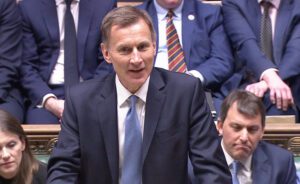
Jeremy Hunt is planning to overhaul a tax on company pensions in an effort to unlock tens of billions of pounds of investment in the UK economy.
The Telegraph understands that the Chancellor wants to use the Autumn Statement to slash a 35pc “penalty” tax rate that companies face when they withdraw cash surpluses from their pension schemes.
Companies currently enjoy corporation tax relief on contributions paid into defined benefit (DB) pension schemes, which promise a set retirement income to members.
However, withdrawing cash from pension schemes when they are in surplus currently incurs a 35pc tax charge.
The levy was first introduced in the 1980s to try to stop companies from building up surpluses to dodge tax. It has not changed since the start of the millennium.
Years of low interest rates have resulted in DB pension plans needing greater up-front contributions to meet their long-term obligations.
However, the recent surge in borrowing costs has had the opposite effect, leaving many schemes in surplus.
XPS, a pensions consultancy, believes around a quarter of operational DB pension schemes are currently running surpluses of around £10bn to £15bn.
Sir Steve Webb, a former pensions minister, said efforts to reform the 35pc tax and make it easier for companies to access surplus retirement fund cash would provide an immediate boost to investment.
He said: “If companies can take the money out, pay less tax on it when they do and take it out now, that’s the key thing. They don’t have to wait ten years to take a slice so you’re giving stimulus to the economy now.”
The so-called “authorised surplus payments charge” is also particularly onerous because it cannot be offset against a company’s tax bill, even if the employer receiving it is loss making.
One source suggested that reducing the charge to match the current level of corporation tax of 25pc would be a fairer approach.
However, government insiders said Mr Hunt may not need to slash the rate to 25pc to stimulate the economy and stressed that no final decisions had been made. Withdrawals would only be permitted for well-funded schemes. The Treasury declined to comment.
It came as separate research showed that recent bond market chaos has triggered the biggest exodus from stocks since the Liz Truss mini-Budget chaos. Rapidly rising bond yields triggered the biggest sell-off of equity funds since September 2022, according to global funds network Calastone.
Investors pulled £1.2bn from equity funds in October. This was the sixth month in a row of net selling and takes the total pulled from stocks so far this year to £2.88bn.
Edward Glyn, head of global markets at Calastone said: “Equity fund outflows are inevitable when bond markets are experiencing this wrenching repricing.”
Bond yields in the UK, the US and the Eurozone have rocketed to more than decade highs as markets price in the fact that interest rates will be higher for longer and amid fears about unsustainable levels of government debt.
Mr Glyn said: “The higher risk premium they demand in compensation is pushing bond yields up and prices down. And when longer-term market interest rates rise like this, asset prices of all kinds come under pressure.”
In October, investors pulled £739m from funds focused on UK stocks.
Funds focused on ethical, social and governance issues (ESG) also suffered their sixth consecutive month of net selling and their second worst on record as investors prioritised safer havens over social concerns. Investors have pulled a total of £3.14bn from the sector in six months.
Investors last month piled £586m of new cash into money market funds, which are considered a safe haven.
Read more:
Hunt plans overhaul of pensions tax to boost investment
Oil, smoking and driverless cars: 21 laws unveiled by King Charles in …

The King’s Speech contains 21 new pieces of legislation including proposals to introduce tougher sentencing laws, a ban on the sale of cigarettes and measures to increase oil production in the North Sea.
There will also be bills to reform the leasehold property system and introduce a new system of governance for football.
The address, written by the government, claimed the plans would “change this country and build a better future”.
King Charles has delivered the UK’s first King’s Speech in 70 years, setting out Rishi Sunak’s legislative plans for the upcoming year.
As part of the prime minister’s pledge to make “long-term decisions for a brighter future”, he set out plans to eventually ban cigarettes and new leaseholds, as well as to drill for fresh oil in the North Sea.
This King’s Speech – likely the last before a general election – is perhaps the prime minister’s biggest chance to win over voters before he and other party leaders publish their manifestos.
The King paid tribute to his mother the late Queen’s “legacy of service and devotion” as he conducted the state opening of Parliament for the first time as monarch.
The PM’s focus, according to the King, is on “increasing economic growth and safeguarding the health and security of the British people for generations to come”.
He said the government will “continue to take action to bring down inflation, to ease the cost of living for families and help businesses fund new jobs and investment”.
New oil and gas fields
Across the political spectrum, politicians wants to bring in policies which reduce the UK’s reliance on foreign regimes for energy, following the war between Russia and Ukraine, which has driven up the cost of oil and gas.
In a bid to “strengthen the United Kingdom’s energy security”, the government will bring in the Offshore Petroleum Licensing Bill, which will support the licensing of drilling new oil and gas fields in the North Sea.
It may have hurt the King to announce this policy, given his outspoken support for reducing the human impact on the planet and reducing climate change.
Prime Minister Sunak says new oil and gas drilling will help the country transition to net zero carbon emissions by 2050, without adding “undue financial burdens on households”.
This claim has been disputed by climate groups, including Greenpeace which draped the PM’s house in black fabric in protest at the announcement of new oil and gas fields.
Rail reforms
After controversially scrapping the northern leg of high speed rail (HS2), meaning the line will no longer go beyond Birmingham, the PM announced ‘Network North’ as its replacement.
King Charles said the plan will “deliver faster and more reliable journeys between, and within, the cities and towns of the North and Midlands, prioritising improving the journeys that people make most often”.
The prime minister has previously said £36 billion previously ring-fenced for HS2 from London to Manchester would instead be allocated to Network North.
He said that means “every region outside of London will receive the same or more government investment than they would have done under HS2”.
Educations reforms
The PM has long talked of plans to force youngsters to study mathematics until they are 18, and he hopes to achieve that by overhauling the post-16 education system.
He will scrap A-levels and swap them with a new qualification called the Advanced British Standard (ABS).
The ABS will be a qualification “that takes the best of A-levels and T Levels and brings them together into a single qualification”, the Department for Education (DfE) said, however it is not expected to be fully implemented for a decade.
Along with maths, pupils will be required to study four other subjects.
The King said it will “bring technical and academic routes into a single qualification, adding: “Proposals will be implemented to reduce the number of young people studying poor university degrees and increase the number undertaking high quality apprenticeships.
An eventual ban of cigarettes
The PM has previously announced plans to stop children who turn 14 this year – and those younger – from ever being able to legally buy cigarettes or tobacco in England.
Anyone born on or after January 1, 2009 – in effect anyone who is 14 or younger now – will not legally be able to buy cigarettes in England during their lives, as the smoking age is raised by one year every year, meaning they will never catch up.
Mr Sunak said the move would mean “a 14-year-old today will never legally be sold a cigarette and that they and their generation can grow up smoke-free”.
The government hopes it will lead to up to 1.7 million fewer people smoking by 2075, and has the potential for smoking to be phased out completely among young people as early as 2040.
Smoking will not be criminalised and the phased approach means anyone who can legally buy cigarettes now will not be prevented from doing so.
However, older people may have to carry ID if they want to buy cigarettes in the future.
Football regulation
Plans for a new independent football regulator were confirmed in February, with the body set to have “targeted powers” to step in and resolve how money flows from the Premier League down the pyramid.
King Charles said the Football Governance Bill will “safeguard the future of football clubs for the benefit of communities and fans”.
Law and order
The government, King Charles said, will introduce policies which “keep communities safe from crime, anti-social behaviour, terrorism and illegal migration”.
already-announced proposals to mean killers convicted of the most horrific murders should expect whole life orders, meaning they will never be released, while rapists and other serious sexual offenders will not be let out early from prison sentences.
Other measures include giving police the power to enter a property without a warrant to seize stolen goods, such as phones, when they have reasonable proof that a specific stolen item is inside.
The new Criminal Justice Bill will include widely trailed measures to ensure reasonable force can be used to make offenders appear in the dock to face their victims for sentencing, or risk having up to two years added to their jail term.
It will also make being in a grooming gang an aggravating feature for sentencing, meaning tougher punishments for ringleaders and members.
The Sentencing Bill will mean a whole life order will be handed down in the worst cases of murder, with judges having discretion to impose a shorter tariff only in exceptional circumstances.
The legislation will also ensure that rapists and serious sexual offenders serve the whole of their sentence behind bars, without being released early on licence.
A Victims and Prisoners Bill will give ministers the power to block parole for the worst offenders and ban them from marrying in prison.
All 21 laws announced in the King’s Speech
Offshore Petroleum Licensing Bill
Trade (Comprehensive and Progressive Agreement for Trans-Pacific Partnership) Bill
Automated Vehicles Bill
Digital Markets, Competition, and Consumers Bill
Data Protection and Digital Information Bill
Media Bill
Arbitration Bill
Draft Rail Reform Bill
Tobacco and Vapes Bill
Leasehold and Freehold Bill
Renters (Reform) Bill
Football Governance Bill
Pedicabs (London) Bill
Holocaust Memorial Bill
Animal Welfare (Livestock Exports) Bill
Economic Activities of Public Bodies (Overseas Matters) Bill
Sentencing Bill
Criminal Justice Bill
Investigatory Powers (Amendment) Bill
Terrorism (Protection of Premises) Bill
Victims and Prisoners Bill
Responding to the speech, Jamie Peters, climate coordinator at Friends of the Earth, said: “If there was a prize for political posturing, Rishi Sunak would win best in show. The King’s speech offered few surprises and very little of substance in yet another display of clickbait politics. His continued obsession with undermining green policies is out of step with voters of all stripes who want to protect the environment for future generations and left nothing to inspire hope among the millions of people facing another winter of sky-high energy bills.
“With the cost living crisis deepening and the climate and nature emergencies accelerating, Sunak could have used this moment to set out strong laws to boost the economy, cut harmful emissions and bring down our energy bills for good. Instead, the Prime Minister chose to side with the fossil fuel industry by offering more hand-outs – even if largely symbolic – at a time when so many people are struggling to make ends meet. The fact remains that more North Sea oil and gas will do nothing to reduce bills or improve energy security.
“Aside from this blatant injustice, recent polling tells us that delaying vital climate and environmental action remains deeply unpopular. The PM has preached pragmatism, but it’s his lack of long-term thinking and misjudgment of the public mood that could cost him dearly at next year’s election.”
Damon Anderson, UK MD at Employment Hero, added: “This King’s Speech was a huge missed opportunity to address the multiple crises facing the small business sector. There’s a reason small business confidence remains underwater and this speech will do little to change that.”
“Small firms across the board have a cash flow problem. Costs for energy, labour, and capital are up, while consumer spending has softened. We don’t expect the Government to fix all of these problems, but there are some practical steps it could take to keep the engine-room of the UK economy humming.”
“Late payments are a persistent issue for smaller firms, costing each firm £22,000 on average and the wider economy £2.5 billion. The Government says it wants to fix this, but action since it first called for submissions in 2018 has been minimal – legislation is needed, and it is needed in this Parliament, not the next one.”
“Another huge issue for smaller firms is attracting and retaining staff, with our recent survey showing 89% of SMEs unable to match salaries offered by larger organisations. There is no easy fix here but the Government could be doing more to make employing people at smaller firms as easy as possible.”
“Retailers will be pleased to see increased sentences for shoplifting, which has reached epidemic levels, but the Government could do far more to help the UK’s largest private employer. The continued refusal to consider VAT refunds for foreign tourists mean that stores in Paris and Milan are able to offer retail tourists far better deals than us. We’re hoping to see some movement on that in the Autumn Statement later this month.”
Also commenting on the King’s Speech, Mark Littlewood, Director General of the free market think tank, the Institute of Economic Affairs, said: “The King’s Speech was an opportunity to reset the agenda, yet has proven little more than heavy on intervention, light on liberalisation. While the government promised to ‘make long-term decisions to change this country for the better’, these announcements risk perpetuating Britain’s nit-picky overregulation, high tax, and low growth economic model.
“The new football regulator and digital markets interventions could repel investment into some of Britain’s most successful and innovative sectors. The phased smoking ban strips away personal choice while presenting an enticing business opportunity for black market sellers. The banning of so-called ‘drip pricing’ for airlines risks passengers paying more for services they do not need.
“New trade agreements, including joining CPTPP, will give consumers more choices and provide opportunities for British businesses. Expanding North Sea oil and gas licences is a welcome step towards lower energy costs, but it can only go so far. But without a fundamental shift in economic thinking, we are on the path to another lost decade of economic growth.”
Read more:
Oil, smoking and driverless cars: 21 laws unveiled by King Charles in historic speech
Elon Musk reinstates Katie Hopkins and Tommy Robinson to his social pl …

Elon Musk’s X has reinstated the accounts of far-Right influencers Katie Hopkins and Tommy Robinson, reversing lifetime bans on the pair imposed by the social network’s previous ownership.
Ms Hopkins and Mr Robinson, whose real name is Stephen Yaxley-Lennon, were reinstated after Mr Musk responded to a tweet which pointed that out they remained banned from the platform.
Mr Musk on Sunday said: “Why are their account handles on this platform? Free speech is allowed, provided laws are not broken.”
The decision comes days after Twitter chief Linda Yaccarino held meetings with advertising executives in London in an effort to lure them back to the platform. Companies have pulled advertising from Twitter over concerns about a roll-back of moderation policies and amid nervousness about Mr Musk’s mercurial management style.
Ms Hopkins was permanently suspended in 2020 for what Twitter said was a violation of its hateful conduct policy.
She previously posted claims that a photo showing the body of a Syrian child on a Turkish beach was staged and also tweeted “we need a final solution” after the Manchester bombings.
She left the radio station LBC shortly after the latter post in 2017 and also parted ways with Mail Online soon after.
Twitter did not say which posts triggered her ban.
Mr Robinson was banned from the platform in 2018 after tweeting “Islam promotes killing people”.
Mr Musk, who has described himself as a “free speech absolutist”, has reinstated many controversial accounts since buying Twitter for $44bn (£36bn) a year ago.
That includes Donald Trump, who had been permanently suspended after the US Capitol riots in January 2021, and the rapper Kanye West, who was suspended for antisemitic posts.
In response to a post which celebrated Ms Hopkins’ reinstatement and blamed her original ban on pressure from campaign group the Center for Countering Digital Hate (CCDH), Mr Musk tweeted “CCDH is an evil propaganda machine”.
Mr Musk has a long-running feud with the CCDH and Twitter, now called X, has sued the organisation over claims it embarked on a “scare campaign” to deter advertisers.
After her ban was lifted, Ms Hopkins tweeted: “Thank you @elonmusk. And thank you to all the Twitter family who have brought Tommy & I back to @X. Know this. You are not alone. We are many. And we are stronger together. The fight back for your freedom is on.”
Mr Robinson tweeted: “I am grateful to @elonmusk for giving me my voice back at such an important time. I’ve been censored, attacked, slandered & imprisoned for shining a light on uncomfortable truths that our government wish to hide, the public are now aware I was telling the truth. We have lots to do.”
Mr Robinson was jailed in 2019 after being found in contempt of court for livestreaming footage of defendants in a criminal trial despite a reporting ban.
Read more:
Elon Musk reinstates Katie Hopkins and Tommy Robinson to his social platform X
Allica bank launches £10m EV fund dedicated to supporting businesses …

Allica Bank is offering a 50-basis point discount against its standard rates for electric vehicles to make going green more affordable
Allica Bank, the challenger bank dedicated to serving Britain’s established small and medium businesses, has launched a new £10m fund to support businesses with the purchase of electric vehicles (EVs), part of a wider initiative to help businesses reduce their carbon footprint and achieve sustainability targets.
The new fund has been introduced following Allica’s latest broker survey of its asset finance brokers, in which more than half (54%) of respondents stated the main reason for their clients seeking sustainability-based finance was to purchase electric vehicles.
Allica has also discounted rates to fund electric vehicles, with the bank offering a 50-basis point (bps) reduction on its standard hard asset pricing, available for a limited time from the 1st of November through to the 31st of December this year.
Brandon Hall, Head of Sales – Asset Finance at Allica Bank, says forward-thinking banks need to place added emphasis on making sustainability targets an easier task to reach: “Our latest survey of the broker community highlighted the growing demand from UK businesses looking for funding support to help improve sustainability, with making the switch to EVs top of the agenda.
“We hope that the new fund and rate reduction on electric vehicles will give brokers and their clients more opportunities to do that, along with the support of our award-winning business development team.”
Read more:
Allica bank launches £10m EV fund dedicated to supporting businesses go electric

