

UK house prices rose for the second month in a row in November, according to a leading index, as a slight easing in mortgage rates helped coax more buyers into the market.
The average price of a UK property rose by £1,394 – or 0.5% – last month to £283,615, according to the mortgage lender Halifax.
It signals an uptick in activity across the housing market, where price growth has stalled over the past year because of an increase in interest rates and subsequent affordability pressures that have driven away otherwise eager buyers.
UK house prices have also been underpinned by a shortage of available properties over the past year, as many sellers wait for the market to normalise and prices to recover.
On an annual basis, prices are down 1%, although Halifax said this was a “relatively modest” drop given the economic headwinds that have weighed on consumers over the past 12 months. Average house prices are still £40,000 above pre-pandemic levels, having been skewed during the Covid crisis, when people scrambled to buy larger homes.
“Recent figures for mortgage approvals suggest a slight uptick in activity levels, which is likely as a result of an improving picture on affordability for homebuyers,” Kim Kinnaird, the director of Halifax Mortgages, said. “With mortgage rates starting to ease slightly, this may be leading to increased buyer confidence, seeing people more inclined to push ahead with their home purchases.”
However, Kinnaird said house prices were unlikely to continue their upward climb into the new year. “The economic conditions remain uncertain, making it hard to assess the extent to which market activity will be maintained. Other pressures – like inflation, the broader cost of living, overall employment rates and affordability – mean we expect to see downward pressure on house prices into next year.”
Northern Ireland has experienced the strongest rise in house prices over the past 12 months, with the average home costing £4,294 more compared with last year, at £184,684.
While London maintains the top spot for the highest average house prices in the UK, at £524,592, prices have fallen by 3.8% over the past year.
The Halifax findings chime with those of the rival Nationwide, which reported last Friday that house p
Read more:
UK house prices rise again as easing of mortgage rates tempts more buyers
Month: December 2023
Frasers Group CEO Michael Murray warns of ‘softening’ in global lu …

Mike Ashley’s Frasers Group has warned of “softening” in the global luxury market as underlying sales at its upmarket division, which includes the House of Fraser department stores and Flannels chain, dived more than 11%.
The fall, which does not take into account acquisitions, follows the closure of a further two House of Frasers stores in six months, taking the total to 29, half the number the group bought out of administration in 2018.
However, Frasers, which is controlled by the former Newcastle United owner Ashley, who owns more than 72% of its stock, also opened 18 more of its designer casual wear Flannels stores in the half-year, taking the total to 76.
Michael Murray, the chief executive of Frasers, which also includes Sports Direct, Evans Cycles and the video game retailer Game UK, said sales of luxury goods had been partly affected by the cost of living crisis but the group would “continue to invest with confidence … although it is likely that progress will remain subdued for the short to medium term in the face of a softer luxury market”.
While underlying sales in Frasers’ luxury division fell in the six months to 29 October, total sales – which include acquisitions and disposals – rose 3.1%, helped by the purchase of a suite of 15 brands, including the former Oasis singer Liam Gallagher’s Pretty Green and the 1980s brand Tessuti, from JD Sports a year ago. The group said it had experienced “positive demand due to our unique proposition” despite weakness in the luxury market.
Total retail sales for the group, including Sports Direct, rose 4% in the half-year to almost £2.7bn, behind inflation. However, pre-tax profits rose 8% as the company boosted profit margins at its Sports Direct chain as a result of better relationships with brands such as Nike, which are now providing the chain with more of their most sought-after products.
The group said it was on track to achieve full-year profit expectations as “strong trading momentum continued throughout the first half of [its financial year] and into the early recent weeks of the second half, especially at Sports Direct”.
Frasers said it had also made a £20m profit on the sale of the Missguided brand, which it bought in 2022, to the Chinese fast fashion group Shein.
Despite difficulties on the high street, Frasers has taken advantage of falling values to invest in physical retail property, acquiring shopping centres in Luton, Dundee and Castleford, which it said were “well positioned to unlock future growth opportunities in high-performing retail locations”. Frasers now has such a large suite of brands, from Jack Wills to Evans Cycles, that it is able to repopulate entire shopping centres.
Murray, the former club promoter and property adviser who took the reins from his father-in-law Ashley in May last year, said he was gaining further experience of working in retail by spending time serving at Sports Direct’s Oxford Street store in London – which is opposite the group’s base in the capital.
He said that in future all head office staff would spend at least two days a year working in stores or the group’s warehouse.
Meanwhile, the group is planning to shift its headquarters from Shirebrook in Derbyshire, which also houses the group’s main warehouse and distribution centre, to Rugby, Warwickshire.
Murray said the group had submitted planning for a “state-of-the-art campus which would give us the scale to grow” and “a world-class platform to further bolster our sector-leading ecosystem and gr
Read more:
Frasers Group CEO Michael Murray warns of ‘softening’ in global luxury market as sales fall
Next CEO Lord Wolfson says planning rules are stifling economy and soc …
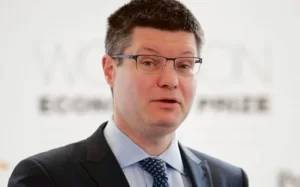
The chief executive of Next has called for an overhaul of Britain’s planning rules as he warned that the current system is “holding back industry and society”.
Lord Wolfson of Aspley Guise, 56, said that trying to build stores of the right size in the places where people want to shop has been a “constant battle” over the past 30 years and “that is replicated across the whole industry”.
“If you ask any type of business, whether it be energy infrastructure, warehousing, distribution or call centres, and ask them to name their biggest concerns, planning is going to be top on their list of issues,” he said. “The time it takes to get permission, the cost of getting it and the inability to build what you really need to build is holding back industry and society.”
Building Next’s warehouses could be quicker than the three or four years it takes to get planning permission, Wolfson said.
The businessman added that the current system, designed in 1947, also “slows down, prevents and increases the cost of building new homes. So there is a profound social impact as well as an economic impact from the way our planning system works.”
Wolfson, who has been a Tory peer since 2010, said the “unlocking” of planning and giving less power to land owners would be the “key to driving growth and productivity in the UK”.
“Rather than the government having to initiate and decide where people live, work, eat, sleep and take their leisure, have a system which starts with a free market, but a free market with rigorous controls and regulations,” he said. “While you can’t prevent other properties being built if you own a property, you can prevent the building of things that would damage the value of your property. You’d end up with a system that allows the market to decide where and how things are built.”
The retail chief, who studied law at Cambridge University, added that “you can see just how much potential is locked up in the planning system by looking at the difference in the value of an acre of land without planning permission versus an acre of land with”.
He explained that an acre of agricultural land was often worth about £15,000 and an acre of land with planning permission for housing would be worth about £1.5 million.
Wolfson is one of the longest serving chief executives in the FTSE 100. The Next boss was a prominent supporter of the Conservative Party leader David Cameron and took a high-profile role in the 2010 election campaign by organising the business rebellion against Labour’s planned rise in national insurance.
Read more:
Next CEO Lord Wolfson says planning rules are stifling economy and society
UK firms to deliver €415 million sustainable development scheme in c …

Support from UK Export Finance means that British firms have secured contracts to upgrade critical infrastructure in Benguela Province and protect the region against future flooding.
The UK government has issued guarantees which secure Standard Chartered Bank to arrange financing for a €415 million contract between exporter Innovo Group and Angola
The largest-ever sovereign transaction which UKEF has closed in Sub-Saharan Africa, this enables the delivery of critical infrastructure in Benguela Province, a coastal region of Angola vulnerable to flooding and poor drainage
Over a third of the contract – more than £140 million – will be spent on UK goods and services, with British and Angolan communities alike to benefit from the deal
The UK has issued loan guarantees which allow British exporter Innovo Group to secure a €415 million contract to deliver critical infrastructure projects in Benguela Province, a region in the west of Angola adjacent to the Atlantic Ocean.
The support has been issued through UK Export Finance (UKEF) – the government’s export credit agency – and means that projects will now go ahead to improve the region’s potable water supply, storm drainage, sanitation, roads, public lighting, and commercial infrastructure. This includes the municipalities of Benguela, Baía Farta, Catumbela and Lobito.
Comprising 23 individual projects, the programme is expected to support 11,000 local jobs across a range of sectors including construction over the next five years.
During the UN’s COP28 climate change summit, UKEF announces the deal as an example of the role played by international trade in supporting global adaptation against climate change and extreme weather.
Benguela Province is a coastal region vulnerable to flooding and poor drainage. UKEF’s support allows the Angolan government to finance Innovo Group’s contract using funds arranged by Standard Chartered Bank, as Structuring and Coordinating Bank, Bookrunner and Mandated Lead Arranger.
This allows the Benguela province to benefit from new water supplies, stormwater channels and drainage networks aimed at reducing the risk and impact of flooding and other climate related events.
The projects will generate a direct spend of over £140 million on UK exports which are expected to support a water supply and drainage projects, road rehabilitation and community facilities.
Andrew Mitchell, UK Minister for Development and Africa said: “This ground-breaking deal will provide critical infrastructure that will change lives and reaffirm our commitment to building mutually beneficial partnerships as we prepare for the UK-African Investment Summit next year.
“Our partnership with Angola is long-standing, and this funding will provide huge benefits to the people of Benguela province, including new water supplies and protection from the harsh impacts of climate related events including flooding.
“By teaming up to tackle climate change now, we are creating a more resilient and sustainable future – it is clear that we can go far when we go together.”
Paul Woodman, CEO of Innovo Projects, said: “We are delighted to have secured this most important project that will have a hugely positive impact for the people and communities of the Benguela province, as well as making the region more resilient to the impacts of climate change. This is the third contract we have secured in Angola with the support of UK Export Finance and we would like to thank all stakeholders, including the Ministry of Public Works & Housing, for their cooperation in bringing this project to fruition.”
Faruq Muhammad, Global Head of Structured Export Finance at Standard Chartered Bank, said: “We’re proud to be the Angolan government’s long-standing banking partner once more to bring about social, cultural and economic positive change for thousands of people in the Benguela Province, with improved infrastructure, water supply and building renovations.”
Innovo Group will also deliver projects which support the development of the local economy, including road rehabilitation works, renovation of historic buildings, andthe construction of a fish market in Benguela City for traders who currently work outdoors without refrigeration.
This follows the export credit agency’s announcement in January of support for Innovo (then trading as ASGC UK) to build a specialist burns hospital in Angola’s capital city, Luanda.
Read more:
UK firms to deliver €415 million sustainable development scheme in coastal Angola
Cybercrime and SME’s – why your business could be next

What do the terms ‘malware’ and ‘ransomware’ mean to you? Probably not very much given that they sound more like plot lines from an Ian Flemming novel rather than very real threats to the stability and viability of our businesses.
However, they are likely to become as familiar to small business owners as ‘profit’ and ‘invoice’ are to us now.
Why? Well according to recent government figures, some 53 per cent of SMEs were the targets of cyber crime in 2023. And ransomware (which is a type of malware) is the preferred method of attack used by cyber criminals. These figures are likely to be an underestimate as many SMEs prefer to ‘pay-up’ and say nothing rather than draw unwelcome attention to themselves.
Ransomware is a particularly vicious kind of cyber-attack where a piece of malicious software infiltrates a company’s IT network and renders it inaccessible until a ransom demand is paid.
So why should SMEs in particular be concerned about cyber-attacks? Many SMEs believe that they are too small or too niche to be attractive to ransomware criminals. That attitude is exactly why SMEs can find themselves in the crosshairs.
SMEs are easy picking for cyber criminals as they frequently have the weakest anti-virus software installed. Off-the-shelf antivirus protection packages are no match against sophisticated cyber criminals who will simply brush aside virus protection software. It’s like throwing a cup of water on a house-fire. Also, cyber criminals could well be targeting larger companies along your supply chain.
Small businesses find themselves victims of ransomware, not because they have been individually targeted by a criminal, but because of simple human error.
Believing that they are unlikely to fall victims to a cyber-attack, the majority of SMEs fail to adequately inform and educate staff about cybercrime and what to look out for, particularly with regard to ‘phishing’ assaults. This is where a perfectly normal looking email – perhaps from a supplier or government agency – is opened and instead of being legitimate, it is laced with ransomware and once unleashed onto an SMEs computer network it wreaks havoc.
Without comprehensive protection, and staff training too many SMEs will panic and simply give-in to a ransomware demand, hoping that cyber criminals will be honest enough to release the crucial data they have ring-fenced and encrypted – like bank account details or customer account information.
Why would a cyber criminal kill the goose that has just started to lay golden eggs?
One small business we know fell victim to a devastating ransomware assault. A member of staff at a dental practice in the Midlands received what looked like an invoice from a supplier. It wasn’t. Once opened, ransomware was released and the practice was unable to access patient records, appointment details and billing information. Then the demands for payment appeared. If they refused to pay, the data could be destroyed, or sold to the highest bidder on the dark web.
Another SME client of ours (well, they are now) watched helpless as, at exactly 08.00am, some 3000 emails left their servers and went to clients and suppliers. There was nothing they could do. A colleague had worked on a home computer at the weekend and saved the work onto a memory stick. Once plugged into the company’s network on Monday morning, the network was flooded with ransomware.
A client was attending a trade exhibition and was on an exhibitor’s chat room. Up popped an advertisement for exhibition furniture. It looked interesting, so they clicked on it to find out more. It was riddled with ransomware, and we were called in to clean up the mess and create the strongest malware identification, isolation and removal package.
These attacks on SMEs inevitably lead to huge disruption, significant cost, loss of business focus, loss of revenue, reputational damage and ultimately bankruptcy. Not to mention the legal consequences and non-compliance issues.
The recent trends toward working remotely, often from home, or storing data in the cloud, accepting on-line payments and conducting business online, all conspire to create a cyber criminal’s playground.
There are several actions that SMEs can take to minimise their exposure to criminality including:
Training employees to identify phishing attempts
Backing up data and keeping it offline
Keeping security patches up to date
Having robust anti-spam processes
Introducing multi-factor authentication
Configuring your firewall to repel invaders…and so on.
If all that sounds a bit overwhelming, then outsource all of it to a cyber security specialist company which has a commercial interest in keeping your business safe.
All the indicators are that 2024 will be the year that SMEs are confronted by wave after wave of catastrophic cyber-attacks. All the signs are there and in the realm of cyber criminality, prevention is far better than cure.
Read more:
Cybercrime and SME’s – why your business could be next
Boardroom veteran Rupert Soames to lead scandal-hit CBI
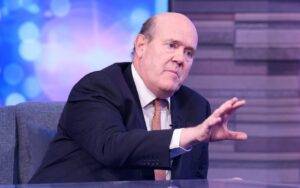
The boardroom veteran Rupert Soames is to become the next president of the CBI, the business lobby group that is trying to recover from an existential workplace misconduct scandal.
Soames, 64, will begin to take on the role early next year before formally replacing Brian McBride, 68, after members vote on the appointment at the CBI’s annual general meeting in June.
Soames has been one of the longest-serving public company chief executives in the UK, having led Aggreko, the temporary power supply company, for 11 years and overseen the turnaround of Serco, the outsourcer, for nine years.
He has been chairman of Smith & Nephew, the FTSE 100 medical equipment company, since September.
Smith & Nephew was among the companies to have left the CBI in the wake of the scandal, which brought the 58-year-old royal charter organisation to its knees this year, but plans to rejoin.
Soames, the grandson of Sir Winston Churchill and brother of Lord Soames of Fletching, the former Conservative minister, said that the “CBI is needed more now than at almost any time in its history, and it will be a privilege to lead the organisation in the coming years. After a decade of disruption and distraction due to Brexit, Covid, inflation and labour shortages, business and government need to work closely together to deliver a prosperous future where economic growth will lift living standards and sustainably fund the UK’s vital public services.”
His appointment comes before a general election with Labour ahead in the polls. Before leaving Serco at the end of last year following a painful restructuring, Soames had remarked in an interview that “I have a horrible habit of walking towards gunfire”.
The CBI has been fighting for survival since the scandal erupted, including allegations of sexual misconduct and rape.
The scandal, following revelations in The Guardian, led to an exodus of corporate members in April, including Aviva, KPMG and the John Lewis Partnership, and prompted the government and opposition to distance themselves from it.
Rain Newton-Smith replaced Tony Danker as director-general in April, and the CBI survived a membership vote on its future in June.
It overhauled its governance and finances, closed international offices in the US, India and China, cut about a third of its workforce and said it would choose a president to replace Brian McBride, the former boss of Amazon UK, as part of the changes.
McBride, who was elected president of the CBI only in June last year, less than a year before the crisis struck, said “there is no better person to pass the baton to. Rupert’s track record as one of the UK’s longest serving and most successful CEOs makes him the ideal choice.”
McBride appeared moved when he addressed CBI members at the end of its scaled-back annual conference last month, which was attended by Jeremy Hunt, the chancellor, and Jonathan Reynolds, Labour’s shadow business secretary.
He has faced criticism of his leadership during the crisis, with the boss of one corporate member questioning his empathy in April. Another City source had said at the time: “Brian has been shell-shocked by the extent of it.”
Soames will take charge next year with continued question marks about the CBI’s financial strength.
In its annual report before its delayed annual general meeting on Wednesday, the CBI’s board said there was “material uncertainty” hanging over its future after facing a “considerable level of financial stress” this year, but prepared its accounts on a going concern basis.
The CBI navigated the crisis this year “through the backing of key members, the use of reserves, support from creditors and with bank financing”. The financing is due to end in September and the CBI plans to renew the facility “if required”.
It has asked members to vote for a 5 per cent increase in its fees as part of the resolutions at the annual meeting.
The CBI said it had worked with Odgers Berndtson, the headhunters, on the search for a new president.
Read more:
Boardroom veteran Rupert Soames to lead scandal-hit CBI
Secrets of Success: Dr Ebraham Afshar, MD of Ahmad Tea

There’s more to providing the nation’s finest brew than you think …
A reminder that we should never take high quality tea for granted. This Southampton based company has been inspiring the love and appreciation of high quality tea since 1986. Determined never to compromise on quality, no matter what economic situation the country is facing, has been no mean feat to uphold. Dr Ebraham took some time out of his day to speak to Business Matters
What is the main problem you solve for your customers?
Our main day-to-day business is with our global network of distributors who sell our tea to shops, cafes, restaurants and workplaces in their countries. For these long-standing partners we solve various problems, such as, helping them when they are faced with economic turmoil in their country, or a lack of inventory or facing unforeseen circumstances. We like to think of our relationship with our distributors as a partnership and we work hard to help them grow their businesses as we are growing ours. It’s not a traditional buyer/seller relationship.
What made you start your business – did you want to rock the status quo, was it a challenge or a gap in the marketplace that you could fill?
In 1986 we spotted a gap in the market for the availability of high-quality teas. Once we entered the market, like lots of businesses, we realised that it was much more complicated than we first thought. After four years of hard work we finally turned a corner into profitability and our business has been growing every year since.
What are your brand values?
Wisdom, creativity (with our blends and our packaging) and humanity. Ahmad Tea was founded on a vision that business is an opportunity to give back and we have built a network of local charity partners all over the world who are able to take action where it is needed most. Sharing the fruits of our success with those in need is a big driver for us as a business.
Do your values define your decision-making process?
Yes, they have to. Our values are our blueprint for our business. Our charity work, wisdom and creativity are integrated into the very way we do business.
Is team culture integral to your business?
Yes, absolutely. Creating a team culture means that people work by the same values and also start to make similar decisions on company strategy. It’s more efficient for a business if many peoples’ decisions align.
So what do you do to go the extra mile to show your team you appreciate them?
I always make a conscious effort to thank people for their work. However, as a leader, I’m always thinking about other genuine and sincere ways I can show my appreciation to staff.
What’s your take on inflation and interest rates – are you going to pass that on to your customers or let your margins take a hit and reward customer loyalty in these tougher times?
We always try to minimise any price increases to the end consumer, even when we’re faced with higher costs. Two years ago, when transport costs started rising we decided to take a hit on the margin, hoping that the price rises would slow down. Last year when wages, raw materials and transport costs started rising by double digits, we had to pass on some of the costs. Double digit inflation isn’t great for anyone and we always try to act fairly.
What is your attitude to your fellow tea industry competitors?
Many years ago, I used to be quite conscious of our competitors. However, as I and the business have matured, I’ve come to the conclusion that it’s better to spend my time on what we do, and how to do it better, rather than the other way round.
Do you have any advice for anyone starting out in business?
Don’t put all your money into it. Be patient, pour your heart and time into it. Understand that it’s more than a 9-5 job. Surround yourself with good advisors and listen to their advice.
It can be a lonely and pressured place to be as the lead decision maker of the business. What do you do to relax, recharge and hone your focus?
My religion is very important to me and I pray regularly. This helps me not feel lonely and helps me to remain calm. I also meditate which helps.
Do you believe in the 12 week work method or do you make much longer planning strategies?
As we’re a tea business, we need to take into account the seasonality of tea and therefore we plan in 6–8-week cycles to take into account the latest harvest information. For HR and machinery decisions, we plan in 9–12-month cycles.
What is your company’s eco strategy?
Sustainability is now at the core of our business. We have recently received a gold accreditation from EcoVadis, the world’s largest and most trusted provider of business sustainability ratings. We’re continually investing in every area of production to improve our sustainability credentials and are looking to make small improvements that can make a monumental difference over time.
What three things do you hope to have in place within the next 12 months?
Firstly, I would like to feel on top of my work, I hope 2024 brings us a sense of calmness. Secondly, I would like our management team to have finished their management training programme. I’ve witnessed the positive impact that personal development and management training can have on businesses and at Ahmad Tea we’re committed to help our employees maximise their potential. Thirdly, I would like to have improved our IT capability for the business, to help us keep innovating, increase our performance and efficiency, and finally to improve the speed of business processes and operations.
Read more:
Secrets of Success: Dr Ebraham Afshar, MD of Ahmad Tea
Chancellor says UK economy has a ‘sprained ankle’

The UK Chancellor has disagreed with claims that the UK economy has a ‘broken leg’ but instead says is has a ‘sprained ankle’ as he blames Brexit for sparking half a decade of instability leading to ‘incredibly challenging times’, voiced at an event hosted by the Resolution Foundation thinktank and London School of Economics’ Centre for Economic Performance (CEP).
At the event, Jeremy Hunt has defended tax cuts while describing the UK as one of the world’s best and most brilliant countries making reference to strong industries such as the UK’s higher education system, its technology industry and its record on climate change.
The Resolution Foundation and CEP’s Economy 2030 Inquiry final report said British workers were missing out on £10,700 a year, however, Hunt defended last month’s autumn statement by arguing that £20bn of tax cuts could help boost economic growth by filling vacancies, promoting investment and improving productivity.
The Institute of Fiscal Studies had other ideas around the statement and said that spending plans for after the general election will set the country up for a painful period of austerity while Hunt believes the UK has one of the most untapped potential globally and has goals to unlock its potential offering “the most competitive business investment reliefs in the world”.
Khalid Talukder, Co-founder of DKK Partners commented: “Businesses have faced huge challenges over the past few years consisting of a toxic mix of rampant inflation, souring interest rates and broken supply chains. Catalysed by Brexit, the pandemic and various other socio-economic conditions, the UK is now attempting to recover from a period of turbulence and businesses must remain confident that brighter times are ahead.”
“As the country begins to stabilise, small and medium businesses will turbo charge the growth agenda and they must remain both robust and resilient as they acclimatise to the new normal. The government must support the businesses and industries that will help lead the UK to much desired Tech superpower status, such as the Fintech and payments industry that hold huge potential globally. They must also focus on capitalising upon our Brexit freedoms which will open up new business opportunities promoting both growth and international relations, helping to cement our position worldwide.”
Read more:
Chancellor says UK economy has a ‘sprained ankle’
UK is hub for innovation, but business still struggling to scale up, n …

New research shows that despite the fact that UK entrepreneurs generate £950bn in annual revenue, entrepreneurs in the most innovative regions are struggling to access the funding they need to grow.
The number of patents being granted by the UK Intellectual Property Office across the UK reflects the quantity of new and innovative products and technologies being developed across the country. The report found that the East of England was the most innovative region in the UK, with 15.4 patents granted per 100,000 adults in 2022. Other hotspots include London, the South West and the South East, with, 11.4, 11 and 10.5 patents granted per 100,000 adults respectively.
The research also revealed that entrepreneurs in the UK are already adopting breaking edge technologies, including AI. 35% of respondents to the survey stated that their business had already adopted AI in some capacity, while another 40% said that while they had not adopted AI yet, they are considering how to do so. The UK was recognised as a hotspot for innovation when the University of Oxford placed it fourth in the 2023 Global Innovation Index.
Innovative businesses struggling to scale up
Unfortunately, the regions where entrepreneurs are more likely to invest in innovation are also the regions where entrepreneurial businesses struggle to scale up. The research shows that while innovation in the East is thriving, the region also has the lowest survival rate: only 34% of businesses started in 2016 were found to be active 5 years later. Similarly, out of the 12 regions, London placed 8th for business survival and the South West placed 9th, despite ranking 2nd and 3rd for innovation respectively.
Allowing innovation to flourish
In order to address roadblocks to growth, we first need to recognise the barriers to, and drivers of, growth for UK start-ups. The report maps the UK entrepreneurial economy, defining its strengths and weaknesses, and highlighting potential areas for growth.
Access to funding could be a critical roadblock preventing innovative entrepreneurial businesses from scaling up, with one fifth of entrepreneurs citing it as a top barrier to growth. More worryingly, in businesses which are 2-3 years’ old, this number was 26%. The government and private equity industry need to work together to create an environment where entrepreneurs can more easily access funding for growth.
Beyond access to finance, growth limitations include the tax burden, which 24.25% of survey respondents said was likely to hold back growth, and recruiting and retaining staff. 13.75% of respondents said recruitment was a roadblock to growth, while 12.5% said keeping staff was the problem. The UK needs to ensure that the domestic business environment enables businesses to grow, and that talent is created and protected at home.
Jamie Roberts, Partner and Head of Investments South, YFM Equity Partners, that commissioned the report, comments: “As their enormous contribution shows, entrepreneurs are the beating heart of the UK economy, and it is imperative that the UK government creates an environment where these business can thrive. The government has repeatedly shown its commitment to fostering innovation in the UK, and has also highlighted the importance of innovation to a healthy and growing economy.
“However, today’s research shows that SMEs need better support, particularly when it comes to accessing finance to back their numerous and varied ideas. UK entrepreneurs also have a responsibility to help themselves, ensuring they are proactively looking to understand how they can best access funding, what funding is most suitable for their business, and what government schemes are available to support. In this way, we can help innovation in the UK flourish.”
Read more:
UK is hub for innovation, but business still struggling to scale up, new research finds

