

The Post Office could be facing a £100 million bill and insolvency after claiming tax relief for its compensation payments to subpostmasters, according to a tax expert.
Dan Neidle, the head of non-profit organisation Tax Policy Associates, said the Post Office claimed £934m tax relief for its compensation payments, and suggested it could be “unlawful”.
The Horizon scandal saw more than 700 subpostmasters and subpostmistresses handed criminal convictions after faulty Fujitsu accounting software made it appear as though money was missing at their branches.
Days after the ITV drama Mr Bates vs The Post Office aired, Prime Minister Rishi Sunak announced that the wrongly prosecuted in England and Wales could have their names cleared by the end of the year under blanket legislation to be introduced within weeks.
As first reported by the Financial Times, Mr Neidle said the Post Office has treated the compensation it pays to postmasters as tax deductible, which is “not correct”, adding “you only get a tax deduction for payments made ‘wholly and exclusively’ for the purposes of the trade”.
Other tax experts told the FT it was not clear cut, with one saying a business “can generally claim tax deductions for expenses incurred that are closely connected with its trade, even if it is a compensation payment”.
The Post Office said its disclosed information on taxation was “appropriate and accurate”.
Mr Neidle posted on X saying: “The Post Office claimed £934m tax relief for its compensation payments to the postmasters it persecuted. That’s outrageous. It’s also unlawful – so the Post Office now faces an unexpected £100m tax bill. It may be insolvent.
“Our team of eminent tax and accounting experts reviewed the Post Office’s accounts for the last ten years in detail and one issue stood out: it has treated the compensation it pays to postmasters as tax deductible. That is not correct.
“A source at the Post Office has confirmed to us that HMRC is investigating this and asserting that the Post Office owes tax – in our view they are right to do so.”
Chair of the Commons Business and Trade Committee Liam Byrne said it was “another shocking story” about the state-owned company.
The Labour MP told BBC Radio 4’s Today programme: “It looks like we’ve almost got the Post Office double-crossing the country again by underpaying their taxes and overpaying their bosses.
“It looks like what they’ve basically done is crystalised the losses for the sins of the past, set that against current accounts, but they’ve wanted to avoid the hit to the bonuses of the current management team. And I’m not sure you can have it both ways.”
He said the committee will ask questions about the tax relief on Tuesday when they quiz Post Office chief executive Nick Read and Fujitsu’s head of Europe Paul Patterson.
HMRC would not confirm or deny investigations and said it would not comment on identifiable taxpayers.
A Post Office spokesperson said: “The disclosed information on taxation in Post Office’s Annual Report and Accounts for 2022/23, published on 20 December 2023, is appropriate and accurate.
“We have regular conversations with Government who are our sole shareholder and our correspondence in respect of this issue was about ensuring that the tax treatment of funding we receive from Government to pay compensation was treated in the same way as other Government funding that we receive.”
Read more:
Post Office could face £100m bill and insolvency, tax expert says
Month: January 2024
Entrepreneurs secure Dragons’ investment for pioneering Pop Specs ey …

Two optical experts who came together with the aim of disrupting the eyewear industry have successfully secured investment after appearing on Dragons’ Den.
Lina Tejoprayitno and Daniel Barnes founded Pop Specs in 2020 after coming together with a shared passion to not only offer affordable eyewear but also redefine the eyewear shopping experience – making it quick, fun, and accessible to all.
Pop Specs kiosks are appearing in shopping malls across the UK, providing a combination of stylish, funky and classical eyewear from just £75. The lenses are made for the customer while they wait in just 20 minutes.
Dragons Peter Jones, Touker Suleyman and Sara Davies each agreed to invest £25,000 for a 4% stake in Pop Specs, which will help Lina and Daniel continue with their ambitious growth plans.
Lina Tejoprayitno said: “Buying glasses can be expensive and time consuming, with the average pair of glasses costing £150 and it can take up to two weeks for lenses to be developed. Today’s customers are looking for quality, affordability and speed which is what Pop Specs can provide.”
Lina and Daniel secured a £75,000 investment which will help them to establish an online arm of the business, widen Pop Specs’ UK presence and open kiosks in supermarkets as well as shopping malls.
Peter Jones described Lina and Daniel as ‘a breath of fresh air’ and said he had ‘been waiting to meet people like you for years’, while Sara Davies said she had ‘not heard a single reason not to make an offer to invest in this business’.
Daniel Barnes said: “I’d like to say it was easy to secure the investment, but it wasn’t – it’s brutal!
“We’re delighted to be leaving the Den with three Dragons on board which is just incredible, and we’re excited about what’s coming next for us.”
Read more:
Entrepreneurs secure Dragons’ investment for pioneering Pop Specs eyewear venture
Nasa unveils quiet supersonic aircraft in effort to revive commercial …

Nasa has unveiled a one-of-a-kind quiet supersonic aircraft as part of the US space agency’s mission to make commercial supersonic flight possible.
In a joint ceremony with Lockheed Martin Skunk Works in Palmdale, California, on Friday, Nasa revealed the X-59, an experimental aircraft that is expected to fly at 1.4 times the speed of sound – or 925mph (1,488 km/h).
The aircraft, which stands at 99.7ft (30.4 metres) long and 29.5ft wide, has a thin, tapered nose that comprises nearly a third of the aircraft’s full length – a feature designed to disperse shock waves that would typically surround supersonic aircraft and result in sonic booms.
In attempts to further enhance the aircraft’s supersonic capabilities, engineers positioned the cockpit almost halfway down the length and removed the forward-facing windows typically found in other aircraft.
Explaining the configurations at Friday’s launch event, Nasa’s deputy administrator, Pam Melroy, said: “We made that decision to make it quieter, but it’s actually an important step forward in and of itself in advancing aviation technology.
“[With the] huge challenge [of] limited visibility in the cockpit, the team developed the external vision system, which really is a marvel of high-resolution cameras feeding an ultra-high-resolution monitor.”
Melroy added: “The external vision system has the potential to influence future aircraft designs where the absence of that forward-facing window may prove advantageous for engineering reasons, as it did for us.”
The aircraft also features an engine mounted on top as well as a smooth underside to prevent shock waves from forming behind the aircraft and causing sonic booms.
The X-59 is set to take its first flight later this year and then its first quiet supersonic flight, Nasa said. The agency added that once test flights are completed, the X-59 will fly over several cities across the US that have yet to be selected and will collect public feedback on the sound it generates.
For the last 50 years, commercial supersonic travel over land has been banned in the US because of public concerns over the explosive sonic booms that could be heard from miles away.
Addressing that ban at Friday’s launch event, Bob Pearce – Nasa’s associate administrator for its aeronautics research mission – said: “Grounded flight testing showed us it was possible to design an aircraft that would produce a soft thump instead of a sonic boom. Is that thump quiet enough to allow supersonic flight over land? Our laboratory studies would say yes, but the real answer can only be found by engaging the people who would hear it during daily life.”
Pierce said the X-59’s job would be to “collect data from the people below, determine if that sonic thump is acceptable and then turn the data over to US and international regulatory authorities in hopes to then lift that ban”.
In the post-launch press conference, David Richardson, Lockheed Martin’s X-59 program director, said that taxi tests of the X-59 were expected to start around late spring or early summer.
“If there’s anything that we identify that is not performing nominally, we will go and make adjustments or if there are any parts that are not functioning, we will replace them to make sure the airplane is fully functional and airworthy and safe before we commit it to first flight,” said Richardson.
Read more:
Nasa unveils quiet supersonic aircraft in effort to revive commercial flights
Thousands of M&S staff get £10,000 in shares after strong trading …
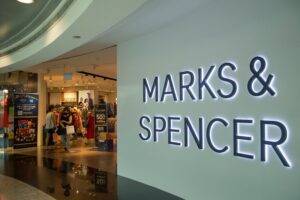
Workers at Marks & Spencer are set to benefit from bumper payouts of thousands of pounds under its share save scheme as the high street stalwart reaps the rewards of its turnaround plan and toasts its “best ever Christmas”.
The FTSE 100 retailer said that more than 9,200 employees — most of them customer service assistants — who had put a typical £150 a month into its 2020 share save scheme would gain over £10,000 when it pays out on February 1.
The announcement came alongside a Christmas trading update that revealed a performance that was better than expected as shoppers turned to M&S for groceries and clothing.
Overall like-for-like sales at the retailer rose by a record 8.1 per cent in the 13 weeks to December 30, compared with the same period in 2022. It marked an 11th successive quarter of sales growth at M&S. Food sales increased by a record 9.9 per cent in the 13 weeks, beating market expectations, as consumers increasingly used M&S for “more of their full shop”.
Stuart Machin, the company’s chief executive, said there had been double-digit growth in sales of salads, fruits and vegetables compared with the previous Christmas: “We never used to be known well known for core grocery, but actually our grocery sales were up 24 per cent on last year and our household core items were up 30-plus per cent on last year. Our food business is becoming a different food business. It’s not just for Christmas.”
He said M&S had taken share from “some of the competition”, including Waitrose, its closest rival, and added that “we think we can gain share from the market overall”. M&S and Waitrose each had a 3.8 per cent share of the grocery market in the 12 weeks to December 30, according to Nielsen IQ, the market researcher. That was an improvement for M&S from a year earlier, when its slice of the market was 3.7 per cent, while Waitrose’s share fell from 3.9 per cent.
Demand for new Christmas products was strong, up by 14 per cent compared with the previous year. It sold 725,000 “snowy” night projector tins and 723,000 shortbread light-up tins. Record sales of cranberry sauce and “Christmas creams” also helped to drive overall growth.
Sales in its clothing and home business rose by 4.8 per cent, beating expectations of a 2.8 per cent rise, with womenswear sales particularly strong as the company improved its style credentials. The retailer sold more than 150,000 sequin products. Bestsellers included its £29.50 black sequin jumper, with 23,000 sold, and £55 sequin elasticated waist trousers, with 19,000 sold.
Machin, 53, said the growth in clothing was partly a result of offering fewer discounts. “We didn’t want to discount because our commitment is not to put prices up,” he said. “We wanted to stick to our value pricing. What we’re doing is making sure we price right first time, so it’s a very different strategy [from other retailers].”
The strong Christmas trading update marks the latest sign of the turnaround taking place under Machin, Katie Bickerstaffe, 56, his co-chief executive, and Archie Norman, 69, the chairman. M&S, which has more than a thousand shops in Britain, staged a dramatic return to the FTSE 100 share index after four years last summer. The 140-year-old retailer, a founding member of the index featuring Britain’s publicly quoted companies, was demoted to the mid-cap FTSE 250 in 2019 after coming under pressure from online competition and amid stalling growth from its groceries business.
Its directors have been trying to build a more resilient business after several decades of false dawns and various iterations of a “fix the basics strategy”. They have focused on the quality and value of its clothing and food, heavy investment in technology and ecommerce and shutting dozens of larger shops, while refurbishing others.
The revival has been most dramatic in clothing, which has often been a source of woe for the retailer. The fashion team, including Maddy Evans, the womenswear director, as well as Richard Price, the clothing and home director, has been celebrated for bringing the British institution back to life.
Machin said that there was more to do to revive the business, including at Ocado Retail, its joint venture with Ocado Group, which has been struggling to keep up momentum since the online boom during the pandemic.
The M&S boss said the company had been “doubling down and supporting the Ocado reset” with Hannah Gibson, the Ocado Retail chief executive. He said 90 per cent of the M&S range was now on the Ocado platform and that the partnership was “very strong”, but declined to comment on whether the final instalment of £190.7 million from the joint venture due by August this year would be paid. Ocado Group will issue its own Christmas trading update next week.
Machin sounded a note of caution over economic uncertainty and increased costs from higher wages and business rates. When asked if the retailer was being overly cautious, he said it was better to be “cautious and not to over-promise. M&S has a history of over-promising and under-delivering and then inconsistency.”
He said that supplies of its products could be delayed if disruption to shipping in the Red Sea continued. “We’re conscious of the costs and also more importantly the availability of new ranges,” he said. “We haven’t experienced that yet, but we’re expecting maybe some slight delays in newness in February and March. That’s really clothing and home and we don’t expect our food business to be affected by it.”
He said the group had entered 2024 “with a spring in our step” and was confident that results for the year would be “consistent with market expectations”. Analysts are expecting full-year profits before tax of £667 million, compared with £482.0 million last year and £522.9 million the year before.
Shares in M&S, which have risen by about 80 per cent over the past year, fell by 14½p, or 5.2 per cent, to 263¼p, a decline blamed by some analysts on investors’ profit-taking and by others on the company’s cautionary outlook.
Read more:
Thousands of M&S staff get £10,000 in shares after strong trading period
Money, Money, Money! The Abba effect brings £322M boost to London eco …

They may only be digital dancing queens – and kings – but the four glittery avatars performing every night in front of sell out audiences in east London are pumping serious Money, Money, Money into the capital’s economy.
That is the conclusion of a report into the “socio-economic impact” of the ground breaking Abba Voyage attraction in Stratford published on Thursday just a year and a half after it opened.
The analysis, carried out by strategists Sound Diplomacy and social value consultancy RealWorth, found that the series of concerts at the 3,000 seater Abba Arena contributed £322.6 million in spending, and £177.7 million in extra economic activity – known as GVA – in its first year.
The arena was designed by STUFISH Entertainment Architects.
Abba’s shows began in May 2022 at the £50 million purpose built venue in Pudding Mill Lane and generated more than one million ticket sales – at up to £181.50 each – by the end of the year. That made it the sixth most visited paid attraction in London in 2022.
The show feature digital “Abbatar” versions of the Swedish quartet – Agnetha Fältskog, Björn Ulvaeus, Benny Andersson and Anni-Frid Lyngstad – performing hits such as Mamma Mia, Voulez-Vous and The Winner Takes it All over a 90 minute run time alongside a live 10 piece band.
They were created through motion capture technology from visual effects company Industrial Light & Magic and appear as their 1979 versions of themselves. The band members themselves are now all in their seventies.
The report – commissioned by the show’s producers – found that the show had siginficant benefits for the surrounding boroughs of Newham, Hackney, Tower Hamlets, Waltham Forest with 42% of the total impact felt in these local authority areas worth a total of £73.7 million in GVA.
The bulk of the impact in the local area was from paying for accommodation, food and drink, transport and shopping with an average spend of £103 per attendee on top of the ticket price, rising to £135 across London as a whole.
Abba Voyage was due to be joined in east London with a new attraction from the creators of the Sphere in Las Vegas, but after becoming a political football in terms of planning the scheme for the 21,000-capacity, 300ft-tall structure in Stratford has been cancelled. The company behind this, now aborted, scheme cited an increase of over 700 new jobs would have been created by the attraction.
The report claims ABBA Voyage has supported more than 5,000 jobs in London, including those directly employed at the venue and those in other sectors that rely on spending by visitors.
The report also highlights how Abba Voyage has drawn thousands of visitors from outside London with almost half the non-ticket spend from “out of towners” coming from elsewhere in the UK and more than 40% from foreign visitors.
Michael Bolingbroke, executive producer for ABBA Voyage, said: “The presence of ABBA Voyage is felt in a way that will be enduring. Knowing that in our first full year, the operations of ABBA Voyage has had an economic impact in London of £322 million is extraordinary, and our challenge will be to maintain and grow this number, and to ensure that its effects are long lasting.”
The Mayor of London, Sadiq Khan, said: “The fantastic success of ABBA Voyage shows once again how London is the music capital of the world and is roaring back from the impact of the pandemic. I am so proud that City Hall was able to help ABBA bring this pioneering show to east London, providing huge benefits to both the local area and London’s wider economy.”
Lyn Garner, Chief Executive of the London Legacy Development Corporation, said: “ABBA Voyage has been an amazing success for the area and a vibrant addition to the attractions on Queen Elizabeth Olympic Park.”
Read more:
Money, Money, Money! The Abba effect brings £322M boost to London economy
Report finds the UK is Europe’s most “advanced digital economy”

The UK is the leading destination in Europe for investment, global tech companies and start-ups, according to a new report from the Computer & Communications Industry Association (CCIA).
The study found the digital economy and online retail support £227 billion in economic action, with the UK’s digital sector adding a further £113 billion in gross value to the overall economy, supporting 1.6 million jobs.
The digital sector provides over 2.6 million jobs with an average annual pay of £45,700, 37 per cent more than the UK average, according to the report.
In 2022, the UK tech sector made $30 billion in venture capital investment, being the third largest amount in the world, bringing in investments from global tech giants such as Amazon, Google and Microsoft.
CCIA chief economist and research centre director Trevor Wagener commented, “These findings reveal that the UK’s robust tech sector doesn’t just benefit the companies at the top – its success contributes massively to the country’s workers, businesses of all sizes, and the wider economy across the UK,”
The CCIA highlighted that the UK government’s digital efforts have been a key success over recent years. According to the report, globally the UK is one of the most digitally advanced governments.
Andy Ward, VP International for Absolute Software, commented: “The UK’s emphasis on technology in recent years has been a collaborative effort between Government, regulators and industry to harness innovation and compete on the world stage. It is excellent to see the UK’s technology drive position them as the leading European hub, especially despite economic uncertainty.”
“In particular, the cybersecurity industry has played a central role in the UK technology sector, working through the NCSC, ICO and Government to protect the nation against state-sponsored attacks, supply chain risk, and the rise of AI-enabled threats. The UK’s policy of resilience has been a key enabler for the tech sector to continue innovating safely and consequently a huge boost for the digital economy.”
Read more:
Report finds the UK is Europe’s most “advanced digital economy”
New prebiotic feel-good soda launches in the UK

A brand-new functional drinks brand that wants to revolutionise the soft drinks market has announced its official launch. With an emphasis on gut-friendly ingredients and a commitment to environmental sustainability, Living Things brings a refreshing range of gut health focused prebiotic sodas that it hopes will redefine the concept of guilt-free refreshment.
Developed and manufactured in the UK, Living Things has been launched with both wellness and sustainability at the heart of its brand, with its line of sodas being Carbon Negative and packed in fully recyclable cans. The range of lightly sparkling drinks boast low sugar, high-fibre and prebiotics, delivering two billion live cultures per can without compromising on taste.
Initially available for purchase from independent cafes and retailers, direct-to-consumer through its website www.drinklivingthings.com and Amazon, Living Things is poised for an early 2024 national roll-out set to be announced soon. Living Things aims to collaborate with even more retailers, offering a distinctive opportunity to enhance value and volume within the growing functional soft drinks market. The brand’s dedication to improving human health while minimising its ecological impact aligns seamlessly with contemporary consumer preferences.
With the functional wellness drink market now worth £240 million and 31% of consumers interested in purchasing premium soft drinks with additional functional benefits, Living Things hopes to offer a solution for consumers that exceeds expectations in taste and health benefits; whilst offering retailers the chance to capitalise on demand. Living Things has an RRP of £1.99 per can, with a case of 12 priced at £19.99.
The initial release features three flavours: Raspberry & Pomegranate, Peach & Blood Orange and Lemon & Ginger, each designed to deliver great taste and exceptional nutrition. These all-natural beverages contain no added sugar, boasting less than 1.7g of naturally occurring sugar and just 13kcal per 100ml, as well as being completely free from any sweeteners.
CEO and Co-Founder, Ben Vear, brings significant experience across start-up and scale-up FMCG brands. From his involvement in his family’s Gloucestershire-based business Winstones Cotswold Ice Cream, through to roles with the likes of Mars, Urban Fresh Foods, and more recently as General Manager at Minor Figures. The company’s vision is to disrupt the soft drinks market with a product that is good for both humans and the planet.
Living Things is currently raising investment and is close to completing the round, with high profile backers and figures to be announced soon.
Ben Vear, CEO and Co-Founder of Living Things, said the following about the launch: “Tasting good and doing good don’t have to be in conflict, more than ever the consumer isn’t looking for another sugar-filled soft drink but for solutions that don’t just taste great but also pack health benefits and environmental credentials. With Living Things we’re creating a new class of soft-drink that finally does all three.
Low in sugar, free from sweeteners and packed with fibre and belly-loving benefits, we’ve taken many months to develop Living Things into what we believe can be a category defining product, brand and aesthetic. So we’re incredibly excited to finally be sharing it with consumers and investors. We’re also absolutely delighted with the investment interest we have received so far. We hope to attract a long list of stockists and have a major win to announce in Q1 2024, so watch this space!”
We’re also absolutely delighted with the investment interest we have received so far. We hope to attract a long list of stockists and have a major win to announce in Q1 2024, so watch this space!”
Read more:
New prebiotic feel-good soda launches in the UK
NatWest launches Intellectual Property-based lending to fuel high grow …

NatWest Group has launched a new lending proposition for high growth businesses to enable them to lever off the value of their Intellectual Property (IP).
High growth businesses generally own few tangible assets, but can be rich in IP and intangible assets. These businesses can find it difficult to use their assets as collateral to secure growth funding, especially when compared with firms holding more conventional assets. This has led to a large growth funding gap for fast-growing, asset light businesses which is estimated to be as much as £15 billion annually.
In response, NatWest is evolving its high growth lending offer to support eligible IP-rich businesses to unlock their full potential. While the bank will always initially assess loan applications to establish whether the customer meets the criteria for standard lending options, if the bank cannot meet a high growth business’ borrowing needs through conventional security criteria, it will consider whether it could raise funding by using their qualifying IP assets as collateral2. The bank will use valuations provided by the specialist IP evaluation company Inngot to identify and evaluate relevant assets which could be taken as security for loans.
The wider impact of scale-ups – defined as businesses that grow at more than 20% per annum – is demonstrated by the latest report from the ScaleUp Institute. In 2023 there were 28,410 scale-ups which generated a total turnover of £1.3 trillion for the economy and employed 2.6 million people. These firms have an outsized impact on the economy, generating 58% of the turnover of all UK SMEs despite making up just 0.5% of the SME population4.
Andy Gray, Managing Director of Commercial Mid-Market at NatWest Group, said: “As the UK’s leading business bank, we are delighted to have joined forces with Inngot, to provide a truly innovative and progressive proposition for high growth SMEs and scale-up businesses. Many of these businesses struggle to access debt funding when they need it without having to dilute equity. This new offering will allow these firms to go further and faster in their growth journey.”
Martin Brassell, CEO of Inngot, said: “With this new proposition, NatWest is recognising that IP is a vital component of value for growth companies that must be considered properly in lending decisions. Many entrepreneurs will welcome NatWest’s emphasis on a business’s intangibles, which have often gone ignored, rather than relying on personal or tangible assets. There is massive potential to transform the prospects of some of our most exciting firms by enabling them to leverage the things that really drive their success.”
Read more:
NatWest launches Intellectual Property-based lending to fuel high growth businesses
Post Office Scandal compares to IR35 scandal
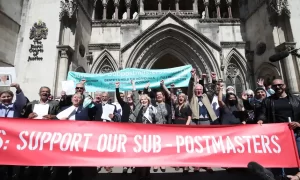
In recent years, both the Post Office scandal and the IR35 scandal have sent shockwaves through the UK business and employment sectors. These high-profile cases have exposed the flawed practices of two important institutions, leading to widespread distrust and outrage.
The Post Office scandal which unfolded over a decade, involved the wrongful conviction of hundreds of subpostmasters for financial irregularities.
These subpostmasters were wrongly accused of theft and fraud due to issues with the Post Office’s Horizon computer system. The Horizon system was responsible for managing transactions and accounts at post office branches across the country. However, it was discovered that the system had numerous technical glitches and inaccuracies, leading to discrepancies in accounts that were often attributed to the subpostmasters’ wrongdoing.
This shocking revelation highlighted the devastating consequences of a faulty system and the improper handling of the situation by the Post Office. Many subpostmasters were wrongly prosecuted, resulting in ruined reputations, financial ruin, and even imprisonment. The scandal brought to light the lack of support and empathy from the Post Office towards its own employees, who were unfairly burdened with the blame for issues beyond their control.
Similarly, the IR35 scandal has raised concerns about the fair treatment of self-employed contractors. Originally introduced to tackle tax avoidance, IR35 legislation has been criticized for unfairly burdening contractors with tax responsibilities similar to those of employees, without receiving the corresponding employment benefits. Under IR35, contractors are subject to stricter tax rules if they are deemed to be working as “disguised employees” for their clients, rather than genuinely self-employed.
The controversy surrounding IR35 stems from the challenges faced by contractors who are forced to pay higher taxes, despite not enjoying the same protections and benefits as permanent employees. This has led to financial insecurity, reduced flexibility, and a lack of employment rights for contractors. Many argue that the legislation fails to acknowledge the fundamental differences between self-employed contractors and permanent employees, and that it unfairly punishes contractors for their choice of work arrangement.
Similarities between the Post Office Scandal and IR35 Scandal
While the Post Office scandal and the IR35 scandal may differ in their specifics, there are notable similarities between the two that cannot be ignored. Both scandals shed light on systemic flaws in large institutions and raise questions about accountability and fairness.
Firstly, both scandals involve institutions with significant power and influence. The Post Office is a trusted and long-established institution that plays a crucial role in the daily lives of millions of people. Similarly, IR35 legislation affects a large number of self-employed contractors, who often rely on it for their livelihoods. The impact of these scandals extends beyond the individuals directly affected, causing widespread concern and eroding trust in these institutions.
Secondly, both scandals expose the damaging consequences of flawed systems and processes. In the case of the Post Office scandal, the Horizon computer system was found to be deeply flawed, leading to wrongful convictions and unjust treatment of subpostmasters. Similarly, the IR35 legislation has been criticized for its lack of clarity and its failure to properly distinguish between self-employed contractors and employees. These flawed systems have resulted in significant hardships for individuals and raised serious questions about the fairness and effectiveness of the institutions involved.
Finally, both scandals have sparked public outrage and demands for accountability. The wrongful convictions of subpostmasters prompted widespread public sympathy and support, with calls for justice and compensation. Similarly, the IR35 scandal has led to protests and campaigns from contractors who feel unfairly targeted and burdened by the legislation. In both cases, affected individuals and their supporters have pushed for transparency, accountability, and changes to prevent similar injustices from occurring in the future.
Dave Chaplin, CEO of IR35 compliance firm IR35 Shield and prolific campaigner on IR35 said: “LBC’s Shelagh Fogarty was right to draw parallels between the Post Office scandal and IR35 on her show earlier this week. Watching the ITV docudrama was like playing a game of snap with the Post Office and Mr Bates in one corner and HMRC and me in the other. Let’s look at the similarities:
“Individuals were told that if they appealed to the court and won then HMRC would appeal. Snap. And the record shows that’s exactly what HMRC has done.
“Individuals were told they owe the government money without a full and thorough examination of the facts. Snap.
“The state using unlimited legal firepower against individuals. HMRC has used expensive barristers and solicitors in tax tribunals for years. Snap.
“The state misinforming ministers on facts. Snap. HMRC’s head, Jim Harra, recently relayed tribunal statistics to the Public Accounts Committee which were objectively wrong.
“Individuals giving up the fight and paying up despite their innocence. Snap. Taxpayers have been paying HMRC because they cannot afford tax tribunals and fear doing so.
“Ministers responding to letters from MPs on behalf of concerned constituents. Snap. Letters from successive Treasury Ministers, including the Chancellor simply signing responses drafted by HMRC without due scrutiny.
“In the case of the Post Office victims, I am pleased to hear that the government is considering quashing all the victims’ cases en masse. When it comes to IR35, it is imperative that we see better treatment for UK taxpayers, which is why I have launched the Taxpayer Fairness campaign to address the evidence that tax authorities undermine the rule of law, leading to taxpayers becoming victims of taxing authorities’ abuse.
“The basis of reform must ensure the tax authorities maintain strong powers to enforce and administer the tax law of their country, but be subject to stronger oversight, transparency, and accountability, with checks and balances aligned with the rule of law.
“That is only fair.”
Impact on affected individuals and businesses
The impact of these scandals on affected individuals and businesses cannot be overstated. In the case of the Post Office scandal, subpostmasters faced financial ruin, reputational damage, and emotional distress. Many lost their livelihoods and were left struggling to rebuild their lives after being wrongly accused of theft and fraud. The toll on their mental health and personal relationships cannot be underestimated.
Similarly, the impact of the IR35 scandal on self-employed contractors has been significant. Many contractors have found themselves facing higher tax bills, reduced income, and a lack of employment rights and benefits. This has led to financial instability, increased stress, and a loss of trust in the institutions that govern their working lives. The uncertainty and unfair treatment faced by contractors have also had a wider impact on businesses, as many contractors have been forced to leave the industry or seek work abroad, leading to a loss of valuable skills and expertise.
Legal actions and inquiries related to the scandals
In response to the Post Office scandal, a group litigation was launched by the subpostmasters who were wrongfully accused. This legal action sought justice, compensation, and accountability from the Post Office for the devastating impact they experienced. The litigation exposed further evidence of the systemic failures within the Post Office and highlighted the need for a thorough investigation into the handling of the scandal.
Similarly, the IR35 scandal has prompted legal challenges and inquiries. Contractors and industry bodies have called for a review of the legislation and its impact on self-employed workers. The government has responded with consultations and inquiries into the effectiveness and fairness of IR35, with the aim of addressing the concerns raised by contractors and ensuring a more balanced approach to taxation and employment rights.
Media coverage and public awareness
Both scandals have received significant media coverage, which has played a crucial role in raising public awareness and exposing the systemic issues at hand. The media has reported on the injustices faced by subpostmasters and contractors, helping to bring their stories to the forefront and generate public sympathy and support. This coverage has not only led to increased scrutiny of the institutions involved but has also sparked wider discussions about the rights and protections of workers in the UK.
Lessons learned and changes implemented
The scandals have highlighted the urgent need for change and reform within the Post Office and the IR35 legislation. Lessons can be learned from the mishandling of the Post Office scandal, particularly in terms of the need for transparency, accountability, and proper oversight of systems and processes. The Post Office has since acknowledged its failures and committed to implementing changes to prevent similar injustices from occurring in the future.
Similarly, the IR35 scandal has exposed the flaws in the legislation and the need for a more considered and fair approach to taxing self-employed contractors. The government has recognized the concerns raised by contractors and has committed to reviewing and improving the legislation to address these issues. This has included consultations with industry stakeholders and experts to ensure a more equitable and supportive system for contractors.
Throughout both scandals, there have been widespread calls for accountability and compensation for those affected. Subpostmasters who were wrongfully convicted in the Post Office scandal have sought justice and financial redress for the hardships they endured. Similarly, contractors affected by the IR35 legislation have demanded fairer treatment, compensation for financial losses, and the recognition of their employment status.
These calls for accountability and compensation are not only important for the individuals directly affected but also for the restoration of trust and confidence in these institutions. The ability to address past wrongs and provide restitution is a crucial step in rebuilding relationships and ensuring that similar injustices do not occur in the future.
The Post Office scandal and the IR35 scandal have exposed significant flaws within two important institutions in the UK. The wrongful convictions of subpostmasters and the unfair treatment of self-employed contractors have raised serious questions about accountability, fairness, and the protection of individuals’ rights.
It is essential that these scandals are not forgotten or brushed aside. The impact on affected individuals and businesses cannot be underestimated, and the need for transparency, accountability, and reform is clear. Lessons must be learned, changes must be implemented, and those responsible must be held to account.
By addressing the systemic issues highlighted by these scandals, we can work towards a fairer and more equitable working environment for all. This includes protecting the rights of individuals, ensuring proper oversight and accountability within institutions, and fostering a culture of trust and fairness. Only then can we restore confidence in the systems that govern our working lives and prevent similar injustices from occurring in the future.
Read more:
Post Office Scandal compares to IR35 scandal

