

Whether you’re looking to build a thriving company culture, access top talent, or foster fairer opportunities and outcomes – diversity and inclusion are absolutely imperative in the workplace.
Nevertheless, promoting true equality as an employer often requires careful planning, particularly when it comes to the oft-overlooked neurodiverse community, which can come up against unique challenges.
What is neurodiversity? And how does it affect people at work?
Neurodiversity is an umbrella term that describes any brain function seen to deviate from the ‘norm’. Think of it as a bell curve. Whilst the majority will fit within this bubble of standard behaviours, information processing and thinking, certain people will inevitably fall outside these parameters. These people are often diagnosed with – or identify as living with – conditions like dyslexia, dyspraxia, autism and ADHD.
Michael Doolin, the Group Managing Director of Clover HR. explains that whilst the ways in which each neurodiverse individual struggles will inevitably differ, it’s commonly things like in-person meetings, spontaneous plans and phone calls that prove a challenge, particularly for those with autism. Likewise, reading through vast amounts of information can feel overwhelming for dyslexic employees, whilst ADHDers might struggle with a lack of recognition or task variety.
Changing laws
Whilst the initiative to alleviate these struggles for neurodiverse people should always extend beyond obligatory compliance, it’s important to acknowledge that the government’s new ‘Chance to Work Guarantee’ will see a greater number of neurodivergents entering the UK workforce. The scheme essentially means former disabled benefits claimants will be asked to seek suitable employment, with employers being asked to respond with flexible conditions such as allowing people who need it to work from home.
Reasonable adjustments
When managed correctly, the move could be positive for neurodiverse people previously excluded from 9-to-5 society, who might otherwise feel anxious and intimidated about entering the world of work. It’s all about making reasonable workplace adjustments to allow them to perform well and thrive.
Introduced under the Equality Act of 2010, which protects people from discrimination in the workplace and wider society, reasonable adjustments refer to any changes that employers can feasibly make to ensure those with disabilities – or physical or mental health conditions – are not significantly disadvantaged in their roles. This can be anything from installing wheelchair ramps and giving employees with anxiety their own, isolated desk to purchasing special ergonomic equipment and implementing flexible working, for example.
Supporting neurodiverse talent
For neurodiverse people, reasonable adjustments could mean purchasing standing desks or implementing hot-desking to keep those with ADHD from getting bored. Equally, it could mean creating sound-proof booths for privacy, perfect for reducing phone-call anxiety and mitigating sensory overload. Noise-cancelling headphones, time-management apps and extra time for reading likewise make for more comfortable working lives, as do fixed schedules and pre-established routines for those who prefer them. It’s all about doing things that allow employees to achieve their best, without being held back by their differences or burning out.
Given the broad range of potential accommodations that employers could make – many of which they might not think of themselves – the most important thing to do when supporting neurodiverse people is to speak to the employee concerned and find out what they want. It’s usually a good idea to get HR and occupational health professionals involved in this process to avoid inadvertently coming across as intimidating or causing any unnecessary nerves. You need to make it clear that your goal is to support to employee – not to question their abilities or review their progress.
Whilst UK employment laws grants people the right to request such conversations on their own behalf, it’s better to take a proactive approach, encouraging discussions before they are forced to reveal their struggles. People will often try to hide their difficulties for fear of getting in trouble, so it’s important to promote trust and transparency from the start.
Other team members
Another way to foster a culture of diversity and inclusion is to teach other members of staff, who are not disabled or neurodivergent, to deal with difference. Without breaching personal confidence, it’s important to teach them about any signs and symptoms that could indicate that colleagues are struggling, particularly if they work in a managerial role. Specialised training courses on equity and diversity go a long way towards eliminating any unintended discrimination, ensuring that help is delivered in a constructive, positive way. This applies to both work-related feedback and any personal, in-office help that might need to be delivered, without appearing condescending.
Beyond caring
Once again, the primary reason for implementing these changes should be concern for your neurodiverse team members. Nevertheless, there are more tangible reasons for supporting diversity, too. Take, for instance, the fact that a study conducted by Purdue University found ADHDers to be 88% better at out-of-the-box problem solving than other people – or the fact that a 2009 study led by the University of Montreal found autistic people to be 40% faster of solving problems. Likewise, 84% of people with dyslexia have above-average reasoning, according to charity Made by Dyslexia, whilst ADHDers often demonstrate unprecedented levels of creativity, in addition to a thirst for knowledge. By supporting neurodiverse people who may possess these talents, you can nurture unique abilities to create a competitive edge for your business.
Equal progression
Given the right support, neurodiverse employees are capable of great things. Employers that truly care about creating an inclusive culture should therefore do all they can to ensure they can achieve their true potential. Remember, it’s not just a case of allowing them to perform in their current roles comfortably but also conducting thorough, well-thought-out reviews that result in rewarding career plans and potential promotion.
When inclusive attitudes towards neurodiversity are successfully adopted, businesses can create a culture in which they themselves can thrive, alongside their neurodiverse talent.
Read more:
Inclusive leadership: strategies for supporting neurodiverse talent
Month: February 2024
EU’s unfolding ‘Farm to Fork’ overhaul must go all the way
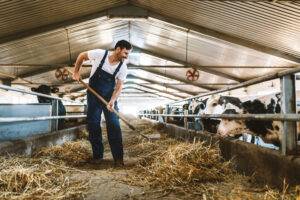
Facing a bloc-wide farmers’ uprising, European Commission President Ursula von der Leyen has boldly taken a major ‘Farm to Fork’ policy off the table.
Addressing the EU Parliament on 6 February, von der Leyen announced that she would withdraw the Sustainable Use of Pesticide Regulation (SUR) – a flagship Green Deal file that aimed to halve pesticide use by 2030 – quipping that this “proposal has become a symbol of polarisation.”
In an uncharacteristically generous mood that day, the Commission offered EU farmers another major olive branch, removing the target to cut 30% of the agriculture sector’s greenhouse gas emissions in its 2040 climate plan. With the Commission’s ‘Strategic Dialogue,’ farmers’ protests and EU electoral maneuvering intersecting in recent weeks, Brussels’s leaders are finally taking on farmers’ demands.
While cautiously encouraging, the Commission must ensure that its emerging overhaul of ‘Farm to Fork’ avoids easy solutions and overcorrection in favour of a middle road where technological innovation and genuine engagement fuel a just ecological transition while bolstering farmers’ productivity and competitiveness.
The slow death of SUR
The drawn-out demise of the SUR file reflects the recent mood music in Brussels concerning ‘Farm to Fork.”
Initially adopted by the Commission in June 2022, this ever-divisive proposal was shot down by the European Parliament last November after having been gutted by the right-wing, anti-green faction, with MEPs equally voting to discontinue work on the issue. In the ensuing months, the Spanish and Belgian EU Council Presidencies have attempted to pick up the pieces, including by scrapping national pesticide reduction targets and focusing on accelerating biocontrol alternatives to chemical pesticides, yet to no avail.
Von der Leyen’s EPP party has hailed the SUR proposal withdrawal, with MEP Alexander Bernhuber describing the move as “a first good sign that the Commission will work with farmers to tackle climate change rather than against them,” embodying the EPP’s rightward swing that notably included trying to kill off the Nature Restoration Law last summer. Facing a far-right surge in the bloc’s rural areas, the EPP is frantically attempting to project its understanding of EU farmers’ challenges.
As Sebastien Abis, director of Club Demeter, recently highlighted, farmers’ anger has largely resulted from Brussels’s unfair imposition of costly environmental regulations without the appropriate financial and technical support. Rural sociologist Natalia Mamonova has similarly posited that the Green Deal’s introduction of “environmental objectives” using “market logic” has left farmers to “carry the heaviest burden for the ecological transition” – a sentiment echoed by Catalonian young farmers’ representative Ricard Huguet.
Nutrition label clinging on
Yet, as Brussels shifts away from ‘Farm to Fork’s original sustainability agenda, the strategy’s healthy food pillar continues to pose a similar threat to EU farmers. Like SUR, the Commission’s harmonised nutrition label proposal has been deeply contentious, underlining an admirable objective – in this case, tackling the bloc’s obesity epidemic– with misguided policies.
Indeed, the controversy surrounding France’s Nutri-Score reached such a point that the Commission’s deputy director-general of food sustainability Claire Bury shelved the label in late 2022 for “polarising the debate.” Over a year later, the Belgian EU Presidency has announced its intention to revive the bloc’s nutrition label and push for Nutri-Score’s EU-level adoption. With its scientific symposium on Nutri-Score slated for 25 April, the Belgian Presidency mistakenly believes that it will be able to overcome the label’s strong opposition.
Nutri-Score has long faced criticism for unjustly penalising local EU farmers of heritage products including PDO cheeses and cured hams, with its algorithm’s outdated, narrow focus on “bad” components such as salt and fat greatly underestimating the dietary importance of vitamins and minerals, “leading to nutritional paradoxes and fundamental errors,” as medical researcher Raphael Sirtoli has noted.
While Nutri-Score’s new algorithm has downgraded breakfast cereals from ‘A’ to ‘C,’ this partially-redressed misfire reminds how the label’s previous version failed to guide consumers towards healthier choices. Moreover, the demotion of natural products including whole milk and French prunes to ‘C’ while Diet Coke retains a ‘B’ further underscores how the system’s core deficiencies have survived a cosmetic update designed, unsuccessfully, to silence critics.
With the political divide between EU member-states as wide as ever and scientific consensus remaining evasive, the time has come for the Commission to withdraw its nutrition label proposal and focus efforts on helping farmers build a healthy, green and competitive food system.
The middle road less traveled
In this undertaking, Brussels should remember, as Sebastien Abis has asserted, that “farmers who refuse to commit…to ecological transitions” remain “the minority in Europe,” as “more and more farmers are looking for ways” to adopt sustainable agricultural innovations “without losing economically.”
EU investment support for digital tech-enabled Agriculture 4.0 techniques, such as AI-powered drones and IoT-based smart sensors, would play a vital role in boosting farmers’ yields while optimising fertilizer and pesticide usage, thereby lashing their environmental impact and production costs. What’s more, the EU’s 2040 climate plan rightly identifies biomethane from manure as a promising, “relatively low cost” fertilizer alternative for farmers to help reduce GHG emissions and maintain food security.
The EU Parliament’s 7 February vote approving its amendments on new regulations for new genomic technologies (NGTs) – gene-edited crops – will also help transcend the sustainability-productivity dilemma, particularly as MEPs intent to spur NGT investment while protecting farmers from being priced out by corporate patents.
Beyond the technological front, the EU must get the trade question right, as the bloc’s free trade agreements have been one of the major bones of contention expressed in recent farmers’ protests. While brute isolationism is not the answer, Brussels must recognise that its farmers cannot compete with large inflows of agri-food products made with lower labour and environmental standards. Moving forward, the Commission must ensure all trade deals incorporate adequate mechanisms to shield farmers from unfair competition and avoid undermining their sustainability efforts.
As French MEP Pascal Cafin has aptly concluded, seeking out “a scapegoat, be it “ecology” or “free trade,” will inevitably lead to the failure of the bloc’s agri-food vision. While removing ill-conceived green and nutritional health policies constitutes a good start, the next stage for Brussels’s decision-makers must involve meaningful engagement with EU farmers to develop and progress a nuanced, future-fit food agenda.
Read more:
EU’s unfolding ‘Farm to Fork’ overhaul must go all the way
Brexit Fallout Continues to Impact Businesses – Urgent Need for Stre …

The UK’s premier business entity has cautioned the government that the ramifications of Brexit are still causing distress to firms, urging immediate action to enhance relations with the EU.
In a missive addressed to Chancellor Jeremy Hunt ahead of his budget presentation on March 6th, the British Chambers of Commerce (BCC) underscored that recent positive developments such as the Windsor Framework and the UK’s reintegration into the EU’s Horizon programme demonstrate the potential for constructive collaboration between the UK and EU. The BCC stressed the importance of leveraging this improved relationship to alleviate the operational burdens faced by companies.
Shevaun Haviland, Director General of the BCC, highlighted that businesses are yet to fully adapt to the trade barriers spawned by Brexit and are grappling with the current regulatory framework. Despite initial expectations that businesses would adjust post-implementation of new rules, Haviland lamented that this transition hasn’t materialised as anticipated.
The BCC’s latest trade survey in 2023 revealed stark figures: 77% of UK firms felt that the post-Brexit Trade and Co-operation Agreement (TCA) failed to contribute to their business growth, with 56% encountering difficulties in aligning the new trading arrangements with their sales and export strategies.
Haviland stressed the urgent need for political will to institute pragmatic changes that facilitate smoother transitions for businesses, emphasising the necessity for practical and realistic adjustments to ease the burden on enterprises.
The call for bolstered ties with the EU coincides with a raft of recommendations to the Chancellor preceding the budget announcement in March. Among these, the BCC advocates for reform in business rates and a reassessment of the VAT tax threshold, cautioning that current policies impede growth.
However, the BCC sounded a note of concern regarding impending regulations on physical checks for imports slated to commence in April. The organisation flagged the lack of clarity surrounding these checks and the financial burden associated with new charges for overseas imports intended to finance the system.
Efforts to obtain comment from the government were unsuccessful at the time of reporting.
Read more:
Brexit Fallout Continues to Impact Businesses – Urgent Need for Strengthened EU Relations, Warns Leading Business Body
Not so fast! What marketers can learn from the Slow Food movement

Take a cursory glance online and you’ll be inundated with assertions that marketers need to move faster, be more agile and respond to technological changes at breakneck speed. If you don’t, you’ll fail to keep up with shifting demands of the market and your competitors. The pressure is on!
Feeding into this mania for speed are ad platforms like Google and Meta, who, while offering a cost-effective way for businesses of all sizes to market themselves, also encourage a quantity over quality approach to advertising. They make it easy to spend money with them. Quickly. For obvious reasons.
My question today is whether in this frenzy, are we missing something fundamentally important? Does all this push for speed leave our business’ less effective as a result?
Perhaps we marketers today can learn a trick or two from the Slow Food revolution, a movement founded in rural Northern Italy as a response to overproduction and the poor nutritional quality of fast-food chains. A movement challenging quantity with a manifesto for quality. We are what we eat, they advocate.
Value over volume in marketing
The slow food philosophy values food prepared with care and consideration that fosters a sense of deep appreciation in diners. It sees that the food itself is truly significant and that time invested in the best ingredients, the most careful preparation and the time taken to enjoy all combine to create a wholly “better” experience. To some extent this is going back to the way food would have been in the old days. Simple. Authentic.
In a somewhat analogous way, if we look back at “old school” marketing, when execution was only by “slow media” e.g. TV ads that took months to prepare and played for long period, or Magazines where you had weeks before the deadline, and the publications hung around for weeks, or even Direct Mail (remember that?), the marketing process could invest considerable time and attention into getting that marketing wholly “right”. Including plenty of market research and testing.
There wasn’t a second chance. You bet once. So you had to bet right.
Now, all that’s needed is a subscription to Canva and enough budget to run your campaign on Google Ads. And off you go.
Erosion of trust in online advertising
We’re inundated on a daily basis by dozens, if not hundreds, of low-quality banner ads and sponsored social media posts, and for the most part, consumers have learnt to simply tune them out, scroll past without so much as a second glance, or in particularly egregious cases, block an advertiser from their feed altogether. It’s getting harder to get the response we want and need.
Audiences are growing increasingly irritated by online advertisers, with 9 in 10 believing ads are becoming more intrusive, and ruining their online experience.
It gets worse, however. One YouGov survey found that just 1 in 10 Brits trust social media advertising – a mere 10% compared with the 54% that rated TV advertising as trustworthy.
Clearly, marketers need to restore consumer trust in our work through high-quality, relevant ads that prompt viewers to take further action, rather than simply bolstering metrics that don’t translate into meaningful brand interactions and ultimately, sales. One could say this is akin to fast food outlets where more and more people today question the nutritional value and quality of the food they buy.
Ads are not a zero sum game
For one thing, churning out vast quantities of poorly realised ad creatives can and will have a negative impact on your overall brand perception and reputation.
Yes, maybe one outcome is you just get ignored. The downside is just wasted budget. Bad enough in its own right, but there is the real risk that dull ads harm your brand perceptions. Once you are “labelled” cheap and nasty it’s very hard to recover. Even more so in B2B.
Perhaps your customers will remember duff ads and hold them against you (even if without much thought).
And by the way, A/B testing may not help much if you test two poor options against each other!
Is it time for more Slow Marketing?
While we certainly have the ability to do rapid marketing, it would be wiser to take a page from the Slow Food book. Just because we can do something fast, doesn’t necessarily mean we should. Marketing is our connection to our customers, a precious link from our minds to theirs. Not something that should be treated lightly.
I know the immediate sugar rush of high click-through rates are seductive but all too often we can’t easily measure the attitudes and lasting emotion we create. Whether we win long term customers. Many of our clicks could fail to bring any real motivation or interest with them. Which then detracts from the potential to recruit a genuine customer. Or build a better brand reputation and image. Which is the long-term life blood of our business (in our analogy the superb, memorable meal).
Starting the Slow Marketing movement
Whilst I’d love to discuss this with you in a restaurant in rural Piedmont with lunch of fresh truffle infused local pasta, I’ll just say now that creating campaigns that engage and delight rather than irritate or bore customers requires taking the same approach to ads that slow food proponents take to their dishes. Marketers must stop the overproduction of low-quality ads that are flung out by algorithm to “the more the merrier” mass audiences, and instead take the time to craft visuals with charm and intelligence – thoughtful messaging that truly resonates with their target audience.
Or perhaps your competitors will?
Read more:
Not so fast! What marketers can learn from the Slow Food movement
Scottish salmon is named UK’s top food export for 2023
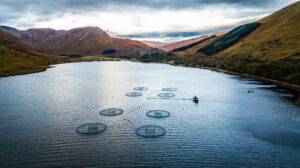
Scottish salmon was today named as the UK’s top food export in 2023, following the publication of annual HMRC figures.
Sales of the nutritious fish grown in the waters off the Highlands and islands increased by 0.5 per cent to £581 million in the calendar year – equivalent to £1.6 million every day.
France once again led the global demand, however the US and Asian markets saw sharp growth, with the popularity of premium high-quality Scottish salmon increasing among chefs, restaurants, and consumers.
Scottish salmon exports were far higher than the UK’s second largest food export, Cheddar cheese, as well as other popular British products like lamb and beef.
Salmon is also by far the most popular fish among UK shoppers, with sales running at around £1.25 billion a year.
But while the market demand is soaring, the sector is facing several business challenges.
Values rose in 2023 given the high demand, yet export volumes were down 11 per cent compared to the previous year.
The increased red tape following Brexit continues to add costs and delays for Scottish salmon farmers, while the UK’s recession has dampened the economic environment.
And the slow pace of reform of cumbersome regulation in Scotland further adds to the challenges facing farming companies.
Ahead of this year’s general election, trade body Salmon Scotland has urged all political parties to do more to support the country’s most important food sector, setting out a series of manifesto asks.
The organisation has also warned that other nations are looking to increase salmon sales at a faster rate, highlighting how vital it is that Scotland is seen as “open for business”.
Tavish Scott, chief executive of Salmon Scotland, said: “The demand for nutritious, low carbon Scottish salmon continues to grow at home and abroad.
“It’s testament to the hard work of salmon farmers in rural Scotland that our fish has been named the UK’s biggest export in 2023 in such challenging economic circumstances.
“The Scottish salmon sector is a bright spot in the Scottish and UK economies, and is ready to invest and create jobs.
“This is all the more important given the UK is now officially in recession and there is no growth in Scotland, so we need more government support to ensure that Scotland is open for business.
“Other nations are desperate to emulate our success, and it is vital that our sector – which employs 12,500 people and sustains our remotest communities – is supported so that we can deliver sustainable growth for decades to come.”
Read more:
Scottish salmon is named UK’s top food export for 2023
Jeff Bezos could save $600m in taxes after moving to Florida

Jeff Bezos and his fiancée, Lauren Sanchez, stand to save a staggering $600 million in taxes simply by relocating to Florida.
This significant tax advantage arises from a $2 billion sale of Amazon stock.
Bezos, 59, who is engaged in a three-way battle with Microsoft’s Bill Gates and Tesla’s Elon Musk for the title of wealthiest American, announced his departure from Seattle in November after residing there for 30 years. He cited proximity to his parents and Blue Origin rocket launches at Cape Canaveral as reasons for the move, as mentioned in an Instagram post.
However, a recent report by CNBC sheds light on another factor influencing his decision to relocate: two years ago, Washington implemented a new 7% capital gains tax on sales of stocks or bonds exceeding $250,000. In contrast, Florida does not impose taxes on income or capital gains.
Bezos has been selling billions of dollars worth of Amazon stock since 1998 to finance philanthropic endeavors, Blue Origin, and notable purchases such as new residences on Miami’s Indian Creek island and a $500 million mega-yacht, the Koru.
Following the introduction of the new tax in Washington, Bezos halted the sale of Amazon stock until recently informing the US Securities and Exchange Commission of his intention to sell 50 million shares by January 31, 2025, amounting to approximately $8.7 billion at current values.
With the recent sale of the first $2 billion tranche, Bezos managed to save $140 million in taxes he would have owed to Washington state. Over the next two years, on the entirety of the sale, he stands to save around $610 million or more, should the value of Amazon stock continue to rise. These savings will comfortably cover the cost of the Koru.
The move to Miami has incurred substantial expenses for the couple, who have already spent $147 million on two mansions on Indian Creek island, near prominent figures like quarterback Tom Brady, Ivanka Trump, Jared Kushner, and investor Carl Icahn.
Real estate experts in Miami anticipate that Bezos will likely demolish the existing homes and construct a new one. Additionally, he is reportedly exploring other properties on the island, known for its exclusivity and privacy, catering primarily to billionaires.
However, the expenses associated with relocating a multibillionaire, his fiancée, and their support staff across a continent may not be fully accounted for by personal real estate projects. Shortly after Bezos announced the move to Miami, Amazon revealed plans to acquire 50,000 square feet of office space in nearby Brickell.
Read more:
Jeff Bezos could save $600m in taxes after moving to Florida
Heston Blumenthal calls for greater urgency in tackling companies hous …

Restaurateur and chef Heston Blumenthal OBE is calling for greater urgency in tackling fraud on Companies House after an investigation revealed more than 750 fake firms using restaurant names have been set up in the past six weeks.
His business was one of those targeted and he is writing to Louise Smyth, Chief Executive at Companies House and Registrar for England and Wales, asking for greater transparency on how her organisation is tackling the issue.
Experts are warning that action against fraudsters damaging the reputations and legacy of a wide range of restaurants could take as long as 18 months. Heston Blumenthal is asking for a faster response from Companies House to help the restaurant industry which is already struggling with the aftermath of the COVID-19 pandemic and the cost of living crisis.
The celebrity chef and entrepreneur whose restaurants include the world-famous three Michelin Star Fat Duck, the Michelin starred Hind’s Head, the Two Michelin star Dinner by Heston Blumenthal and the Perfectionists’ Café estimates that failing to move swiftly could lead to as many as 9,750 restaurants being victims over an 18 month period.
Heston Blumenthal said: “I am grateful this issue has been highlighted and am confident Companies House will do it all it can to support businesses with tackling what is a long-running problem.
“Our legal team has been scanning the Companies Register for years and has regularly needed to notify Companies House of bogus companies claiming to be to be part of our group.
“The process for removing fake companies has to be speeded up and made easier. We need greater transparency from Companies House and a clear timeline. In some cases it is being reported it can take up to 18 months to rectify.
“Checks by Companies House on the identity of people registering companies would reduce the risk of frauds and be a major help for restaurants and other businesses facing up to problems with fraudsters.”
Fraudsters targeting restaurants register company names at Companies House usually by applying for registration with slightly different or misspelled names. They then apply for bank accounts and finance in that name and can then target suppliers and potential diners. In some cases restaurant owners have been targeted by other scammers trying to charge them for amending fake details.
Heston Blumenthal’s restaurants are now located across three continents and the group continues to expand its international presence. Heston’s imaginative and scientific approach to the dining experience is revered by many of the great chefs of our time . Recently, a Dinner by Heston Blumenthal was opened in Dubai within the Atlantis hotel and won its first Michelin star, just a few months after it started operating.
Heston Blumenthal added: “The protection of our brands is absolutely paramount to our customers, our partners and our teams who excel every day in our kitchens and restaurants. We will not allow fraudsters to deceive unsuspecting patrons or partners and risk the legacy which we have collectively built with hard work, dedication, innovation and a grain of eccentricity.”
Read more:
Heston Blumenthal calls for greater urgency in tackling companies house fraud
Airbnb ‘reinventing’ itself with £4.8bn share buyback as it looks …

Airbnb is charting a course towards diversification beyond its core offerings, unveiling a $6 billion share buyback scheme alongside a mixed set of fourth-quarter results.
The home rental platform is set on “reinventing” itself and venturing into new business territories, with plans to expand into markets like Switzerland, Belgium, and the Netherlands.
“Airbnb is at an inflection point,” the company conveyed to shareholders on Tuesday. “We’ve spent the past three years refining our core service, and now we’re poised to embark on our next chapter,” it elaborated.
Following this announcement, Airbnb’s shares surged nearly seven per cent in after-hours trading, marking a 21 per cent increase over the past year.
CEO Brian Chesky informed analysts that while the company envisions venturing “far beyond travel” in the years to come, it will initially focus on its core travel business.
In addition to this strategic move, the company’s board has sanctioned a share buyback programme amounting to up to $6 billion (£4.8 billion).
In 2023 alone, Airbnb executed total share repurchases worth $2.25 billion. Since launching its first share buyback scheme in 2022, it has repurchased $3.75 billion worth of its stock.
“The repurchase program continues to be executed as part of our broader capital allocation strategy, which prioritizes investments in organic growth, strategic acquisitions where relevant, and return of capital to shareholders, in that order,” Airbnb affirmed.
“Our robust balance sheet and substantial cash flow generation equip us with the capital to pursue all three objectives.”
Airbnb reported fourth-quarter revenue of $2.2 billion, marking a 17 per cent increase from the previous year and surpassing analyst estimates of $2.16 billion. This growth was attributed to robust travel demand and favorable foreign exchange rates.
However, the company recorded a net loss of $349 million for the final quarter, citing a one-off tax expense of approximately $1 billion as a contributing factor. This resulted in a diluted loss per share of $0.55, compared to earnings per share (EPS) of $0.48 in the preceding year.
Read more:
Airbnb ‘reinventing’ itself with £4.8bn share buyback as it looks to go ‘far beyond travel’
All’s Fair in Love and Business

It’s Valentine’s Day and love is unashamedly in the air. But what if everything is not as rosy as it seems?
In truth, all relationships can be tricky at times but even more so when your livelihood depends on it. As a business owner, you may spend as much time (if not more) with your work partner as with your significant other.
And while everything may have been wonderful at the start, with a shared positivity and determination to take on the world and win, the trials and errors of business ownership can start to chip away at that enthusiasm. An issue no doubt magnified by the trying events of recent years with a world in ‘permacrisis’. Brexit, Covid, war, energy crisis, climate crisis, rising business and living costs, workforce shortages… need we go on?
But surely you’ll have discussed and prepared for potential tough times that might arise? The answer to this is not always yes. There may have been a feeling that your indomitable determination and long-standing friendship would be enough to see you through any sticky patches. Or perhaps you did discuss such possibilities but without a crystal ball to hand, how could anyone prepare themselves for what lay ahead?
Frankly, business arrangements are rarely as well thought through as romantic relationships (and we all know how those can turn out!). Yet the implications of a business relationship can have far-reaching consequences for you and your life outside of work. If things go wrong, some ownership structures can cost you your livelihood, your reputation and crucially, your assets.
Finding the perfect partner is tricky enough in your personal life, but entering into a business arrangement with someone can be even harder. The expectations on both sides are often not clearly articulated and an ownership split that might have sounded fair in the beginning, may no longer seem like a reasonable reflection of your efforts as the company grows and workloads change.
There are, however, several steps to building, rebuilding or releasing relationships with people you’re intrinsically linked to. Let’s look at these three scenarios:
Building a relationship
An open and honest relationship is critical to success in any realm and business is no different. Be clear about your purpose or vision for this endeavour and your end goal. Are you in it for the long haul or do you want quick financial gain and an early exit? Are you keen to grow as big as possible or are you content to deliver a quality service as a boutique provider? Does your partner have similar goals? What will happen if one of you changes your mind?
Having these discussions at the start of your journey – and revisiting them frequently as your business develops – can save a lot of heartache down the line. You are on the same page and aiming for a happy ever after. And if feelings change or there is a hiccup along the way, you’re in a much stronger position to get through it for having already laid a solid foundation to build your organisation.
Fixing a relationship
But what can you do if your work partnership is floundering?
The first step is to talk and more importantly, to listen. The reality is that relationships are generally based on how you feel; on how things seem, as opposed to how they really are. The key is therefore to acknowledge those feelings and show a willingness to move forward. If you can’t at least try to rebuild trust and show respect for one other, then your commitment will be tested which can have serious repercussions for your wider organisation. After all, trouble often starts at the top.
There may be many reasons why disquiet has set in, be they financial concerns, a change of view on purpose or direction, or a question of succession/legacy planning. If the lines of communications are closing in, then a real effort must be made by all parties to set common ground for discussion, to align on the challenges and have those difficult conversations before it’s too late. Experts are available to help you navigate the fog and unite on a path forward, whether through business coaching, mediation or simply a trusted third party.
Exiting a relationship
What if it’s too late and it’s all gone to pot?
If things have declined so dramatically that communication is failing and you have reached a stalemate, then do not panic. If a break-up is inevitable, mediation should be your first port of call – it ensures clarity of communication between all parties and significantly increases your chances of reaching a fair and agreed outcome. Legal intervention should be your last resort. While it’s easy for the relationship breakdown to become all-consuming, it’s important to work together to minimise the impact on the people around you. Keep discussions behind closed doors and maintain an amicable and aligned front when facing your team and clients. If the worse comes to worst, maintaining dignity upon exit will lessen the pain all round.
In business, just as in love, the key to a successful relationship is to listen, communicate, build trust and fundamentally, to ask for help when you need it.
Read more:
All’s Fair in Love and Business

