

Aston Martin is currently in discussions with bankers regarding the management of its substantial £1.1bn debt burden, confirmed Lawrence Stroll, the company’s executive chairman.
In an interview with Bloomberg Television, Stroll stated, “We are currently in deliberation with our bankers to determine the most appropriate course of action.”
He added, “Naturally, we will approach this matter in the most suitable manner possible, prioritising the best interests of the company and its shareholders.”
The luxury car manufacturer has long been seeking to transition towards more sustainable practices after facing challenges following its underwhelming public listing in 2018 and ongoing struggles with debt. It has secured funding from investors on multiple occasions, including through a £216m share placement scheme in August.
Discussions are expected to centre around a $1.1bn (£870m) bond set to mature in November next year, as reported by Bloomberg, with the company facing annual payments of $120m (£95m).
According to data compiled by Bloomberg, Aston Martin also has a revolving credit facility of £79m due for repayment next year, along with a $121m (£96m) note.
These discussions follow a year of mixed fortunes for the iconic brand, which experienced a surge in the first half, reaching the ranks of the FTSE 250, before encountering setbacks after announcing production issues with its new DB12 model.
Under the leadership of Lawrence Stroll, Aston Martin has attracted a series of new investors, including the Chinese automaker Geely and Saudi Arabia’s Public Investment Fund (PIF).
A key component of the brand’s strategy involves substantial investment in electrification, with plans including a £2bn initiative over the next five years aimed at achieving the milestone of producing its first electric vehicle by 2025.
Read more:
Aston Martin in discussions with bankers over debt burden ahead of repayment deadlines
Month: February 2024
Brits Cut Back on Airfryer Purchases Leading to Decline in Sales at Ul …

Ultimate Products, a consumer goods conglomerate, has disclosed a decline in airfryer purchases among Brits, resulting in a four per cent decrease in revenues during the latter half of the year.
The company, which boasts ownership of Salter, Britain’s oldest houseware brand established in 1760, reported a revenue drop from £87.6m in the first half of 2023 to £84m. This dip, it explained, is primarily attributed to reduced sales of airfryers, renowned for their ability to swiftly crisp up various foods.
Based in Greater Manchester, Ultimate Products highlighted that this decline was partially offset by reduced shipping costs and enhanced productivity facilitated by increased automation, thereby boosting operating margins.
In its trading update on Tuesday, Ultimate Products stated, “shipping schedules are expected to stabilise in the second half of 2024, and peak air-fryer sales will move out of the prior year comparatives.”
The company anticipates achieving a full-year profit performance in line with current market expectations, encompassing adjusted pre-tax earnings of £21.6m and adjusted earnings per share of 15.6p.
Andrew Gossage, CEO of Ultimate Products, remarked, “The overstocking issues that have hindered ordering at many of our retail partners, particularly European supermarkets, continue to diminish.”
He added, “Given the robust underlying demand for our products and brands, customers who had paused their ordering are once again willing to make purchases.”
The company reaffirmed confidence in its future prospects, as evidenced by the implementation of its new Capital Allocation Policy.
Shares in the London-listed company have experienced a decline of nearly 12 per cent over the past year.
Ultimate Products, known for marketing Russell Hobbs cookware and laundry products under licence, in addition to owning the Beldray brands, made its debut on the London Stock Exchange through an IPO valued at over £100m in 2017.
Read more:
Brits Cut Back on Airfryer Purchases Leading to Decline in Sales at Ultimate Products
Squishmallows launches legal fight against Build-A-Bear

A potential clash is looming between two prominent plush toy manufacturers as they prepare to address a copyright dispute.
Squishmallows, produced by Jazwares, has raised concerns regarding Skoosherz, a newly introduced toy by Build-A-Bear Workshop, citing striking similarities to its own egg-shaped cushion animal characters.
Despite the cuddly nature of the toys involved, the impending legal showdown promises to be more akin to a rigorous legal battle than a playful pillow fight.
Jazwares, the manufacturer of Squishmallows, has initiated an intellectual property lawsuit in California. In response, Build-A-Bear Workshop has retaliated with a lawsuit of its own in Missouri, aiming to assert that Skoosherz, another cuddly creation of similar size, is merely its interpretation of a toy style that has gained popularity in recent years.
Jazwares contends that Skoosherz toys are “knockoffs” of Squishmallows, which it has been producing since 2017. It highlights their shared characteristics, such as “fanciful renditions” of animals, featuring “simplified Asian style Kawaii faces,” and crafted from “velvety velour-like” fabric.
The term “Kawaii” refers to the Japanese culture of cuteness.
“Build-A-Bear has made deliberate efforts to replicate the distinctive appearance, texture, and tactile design of Squishmallows in an attempt to capitalise on Squishmallows’ global success,” Jazwares stated in an email to the BBC.
Originally, Squishmallows comprised a small range of animals, including a fox, a cat, and a frog. Their popularity surged during the pandemic as consumers sought comforting items for their homes.
Squishmallows gained further traction on social media platforms like TikTok, aided by endorsements from celebrities like Lady Gaga and Kim Kardashian. Presently, there are over 1,000 different variations available.
In 2022, the investment firm owned by US billionaire Warren Buffett acquired Jazwares’ parent company, Alleghany.
The proliferation of similar velvety, squishy toys has persisted, with numerous versions widely accessible. Jazwares has already pursued legal action against the Chinese online retailer Alibaba for allegedly selling counterfeit products.
“In matters of intellectual property rights, imitation does not constitute flattery,” remarked Moez Kaba, Jazwares’ attorney.
Build-A-Bear, which introduced its Skoosherz line to tap into the soft toy trend ahead of Valentine’s Day, has not yet responded to requests for comment.
Read more:
Squishmallows launches legal fight against Build-A-Bear
Record Surge in UK Business Start-ups Signals Resilience Amid Economic …

In a testament to the resilience of the UK’s entrepreneurial spirit, newly released data reveals that over 900,000 new companies were incorporated in 2023, marking a historic high for business formation in the country.
The surge in start-ups has propelled the total number of active businesses in the UK to 5.31 million, setting yet another record and indicating a burgeoning population of entrepreneurs despite the backdrop of challenging economic conditions characterized by heightened inflation and escalating operational expenses.
Notably, the online retail sector led the charge in driving growth, witnessing the inception of over 82,000 new ventures. Additionally, the property letting market saw a substantial influx of 49,000 new businesses, while the emergence of 21,000 takeaway and street food stands further contributed to the diverse landscape of start-ups in 2023.
Conversely, sectors such as packaging, passenger rail, and logistics warehousing experienced comparatively slower rates of new incorporations.
Regionally, Northern Ireland experienced the most significant surge in start-ups, with a remarkable 59% increase compared to the previous year, as 14,000 new businesses emerged in the province. London followed suit with a 20% rise, while Scotland secured the third position with an 11% increase.
Moreover, the trend of female-founded businesses continues its upward trajectory, with a record 164,000 companies incorporated by women in 2023, reflecting a 4% uptick from the previous year and an overall growth of 26% over the span of five years from 2019 to 2023.
James Holian, Head of Business Banking at NatWest Group, expressed pride in the resilience and dynamism of the UK’s business landscape, emphasizing the crucial role small businesses play in driving economic growth. Holian underscored NatWest Group’s commitment to nurturing a supportive ecosystem for businesses to thrive.
Henry Whorwood, Managing Director of Research and Consultancy at Beauhurst, highlighted the robustness of the UK’s entrepreneurial ecosystem, noting the nation’s strong track record in fostering the success of new businesses. Whorwood emphasised the positive implications of the burgeoning start-up pipeline for investors and economists alike.
Read more:
Record Surge in UK Business Start-ups Signals Resilience Amid Economic Challenges
Hairdressing Industry Braces for Minimum Wage Increase Impact

The hairdressing and beauty sector is preparing for potential upheaval, with warnings of salon closures and job losses reverberating throughout Britain.
Toby Dicker, co-founder of the Salon Employers Association, representing over 1,400 businesses nationwide, emphasized the industry’s inability to absorb escalating labor costs and taxes. Dicker stated, “We are on the brink of collapse, and the forthcoming labor cost hikes in April could be the final blow.”
Following a decision by Jeremy Hunt to raise the national living wage to £11.44 an hour, approximately three million low-paid workers are set to receive nearly a 10% pay rise this spring. This move has prompted concerns from various sectors, including the hairdressing and beauty industry, which is already grappling with the impacts of the pandemic and shifting consumer spending habits amidst soaring living costs.
The National Hair and Beauty Federation’s May report highlighted the fragility of the sector’s recovery, with a significant number of businesses experiencing losses and decreased apprenticeship intake. Notably, the industry workforce has dwindled from 122,000 in 2018 to 88,000 by 2022, indicative of mounting challenges.
In response to the impending wage increase, the Salon Employers Association has been advocating for government intervention, particularly in reducing VAT to 10% for the hair and beauty sector. This plea comes as part of broader efforts to alleviate financial strain on businesses burdened by escalating costs.
Dicker, alongside industry stalwart Errol Douglas, recently engaged in discussions with Conservative MP Nickie Aiken to address the sector’s concerns. An early day motion urging VAT reduction for hair and beauty salons was tabled in parliament on February 7, underscoring the urgency of the issue.
Expressing the gravity of the situation, Dicker emphasized, “Without government intervention, we face a wave of closures that will devastate local economies, impact young professionals entering the field, and leave countless individuals unemployed.”
In response, a Treasury spokesperson highlighted ongoing measures to support hairdressers, including a 75% reduction in business rates bills, worth £2.4 billion, and energy bill protections amid geopolitical tensions.
As the industry braces for the impending wage increase, stakeholders remain hopeful for proactive governmental action to safeguard the future of hairdressing and beauty businesses across the UK.
Read more:
Hairdressing Industry Braces for Minimum Wage Increase Impact
UK private sector employment hits decade low amid economic uncertainty

The UK private sector is experiencing its lowest employment levels in a decade, as hiring decisions are clouded by uncertainty surrounding economic prospects amidst high interest rates and sluggish consumer demand.
According to the latest data from BDO, a leading accountancy and business advisory firm, the employment index has dropped for the seventh consecutive month to 98.77, marking its lowest point since August 2013, during the aftermath of the global financial crisis.
This downward trend in hiring mirrors the subdued economic landscape, with projections indicating that the UK’s annual GDP growth will linger at a modest 0.6 per cent this year. Recent figures suggest the economy expanded by only 0.5 per cent last year, with indications pointing to a recession towards the end of 2023, as forecasted by analysts.
BDO’s findings align with other indicators showing a cooling job market. The latest workforce snapshot from the Recruitment and Employment Confederation and KPMG reveals a slowdown in starting salary growth to its weakest pace in nearly three years. Moreover, permanent hiring has been in decline since October 2022.
The Chartered Institute of Personnel and Development (CIPD) reports a downward revision in pay expectations across both private and public sectors. Private firms anticipate a 4 per cent rise in pay for 2024, down from previous years, while expectations in the public sector have also dipped from 5 per cent to 3 per cent.
Despite these challenges, a third of surveyed employers expressed intentions to expand their workforce in the next three months, while one in ten anticipates reducing staffing levels.
Conflicting signals in unofficial labour market data versus official estimates from the Office for National Statistics have complicated the Bank of England’s assessment of inflation trends. Weaker pay growth is seen as a prerequisite by rate-setters for initiating interest rate cuts from the current 5.25 per cent.
In a more positive note, BDO highlights a growth uptick in January, with its output index reaching its highest level since July 2022 at 99.42. This resurgence in service sector activity is seen as a driving force behind the overall improvement.
Kaley Crossthwaite, a partner at BDO, acknowledges the cautious optimism among businesses, noting, “It’s encouraging to see our resilient services sector leading some positive momentum in January.” However, she stresses the need for targeted support for businesses as demand continues to recover gradually.
Financial markets anticipate three base rate cuts from the Bank of England this year, fewer than the six initially projected. This recalibration reflects the central bank’s stance, emphasizing the necessity of more evidence of falling inflation before considering policy loosening.
Crossthwaite underscores the ongoing challenges, stating, “We can’t be complacent. While certain pressures are starting to ease, demand hasn’t fully returned to pre-pandemic levels, and businesses will require tailored support in the months ahead.”
Read more:
UK private sector employment hits decade low amid economic uncertainty
Made in Britain: Harnessing nature’s power for wellness, Pukka Herbs
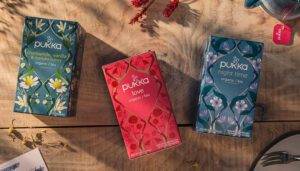
In a world increasingly turning to natural solutions for health and wellness, Pukka Herbs stands as a beacon of herbal wisdom and holistic living.
Founded in Bristol, Pukka Herbs has become synonymous with organic herbal teas, supplements, and wellness products that not only nurture the body but also respect the planet. With a commitment to sustainability, ethical sourcing, and the ancient wisdom of Ayurveda, Pukka Herbs has carved a unique niche in the wellness industry.
A Journey Rooted in Nature
Pukka Herbs’ journey began in 2001 when co-founders Sebastian Pole and Tim Westwell shared a vision of creating a company that would harness the power of nature to promote health and vitality. Inspired by Ayurveda, the traditional system of medicine from India, they embarked on a mission to blend the finest organic herbs to create potent and effective herbal remedies. Their quest led them to remote corners of the world, where they forged relationships with growers and suppliers who shared their commitment to sustainability and ethical practices.
Organic Excellence
At the heart of Pukka Herbs’ philosophy is a deep reverence for nature and a firm belief in the healing power of organic herbs. The company sources its ingredients from certified organic farms around the globe, ensuring that only the purest and most potent herbs find their way into Pukka products. By adhering to strict organic standards, Pukka Herbs not only protects the integrity of its products but also supports biodiversity and promotes sustainable agriculture.
Blending Tradition with Innovation
Pukka Herbs’ extensive range of herbal teas, supplements, and wellness products reflects a harmonious blend of ancient wisdom and modern science. Drawing on the principles of Ayurveda, Pukka formulations are carefully crafted to balance and restore the body’s natural equilibrium. Each product is expertly formulated using a synergistic combination of herbs, meticulously selected for their unique therapeutic properties.
From classic blends like “Three Tulsi” and “Peppermint & Licorice” to innovative formulations such as “Turmeric Active” and “Ashwagandha Alive,” Pukka Herbs offers a diverse array of herbal remedies to support various aspects of health and well-being. Whether it’s promoting digestion, boosting immunity, or enhancing relaxation, Pukka products are designed to address the holistic needs of mind, body, and spirit.
Sustainable Practices
Beyond creating exceptional herbal products, Pukka Herbs is committed to making a positive impact on the planet and its people. The company’s sustainability initiatives encompass every aspect of its operations, from sourcing and manufacturing to packaging and distribution. Pukka works closely with its network of growers to promote regenerative agriculture practices, ensuring that herbal crops are cultivated in harmony with the environment.
Moreover, Pukka Herbs is dedicated to minimizing its carbon footprint and reducing waste across its supply chain. The company’s packaging is made from recyclable and compostable materials, and it continually seeks innovative ways to enhance the sustainability of its packaging solutions. Through initiatives like the Pukka Planet Partnership, the company also supports environmental and social projects around the world, furthering its commitment to holistic well-being.
A Legacy of Wellness
Over the years, Pukka Herbs has earned the trust and loyalty of health-conscious consumers worldwide, establishing itself as a leading authority in herbal wellness. Whether enjoyed as a soothing cup of tea or incorporated into daily wellness rituals, Pukka products offer a natural and effective way to nourish the body and nurture the spirit.
As Pukka Herbs continues to grow and evolve, its dedication to quality, integrity, and sustainability remains unwavering. By harnessing the power of nature’s finest herbs, Pukka Herbs empowers individuals to embark on a journey of holistic healing and vibrant living. In a world filled with challenges, Pukka Herbs stands as a beacon of hope, reminding us of the profound connection between human health and the health of the planet.
Read more:
Made in Britain: Harnessing nature’s power for wellness, Pukka Herbs
Mark Dixon Plans Ambitious Expansion with 2,000 New IWG Offices
Mark Dixon, the chief executive and founder of IWG, formerly known as Regus, is embarking on ambitious plans to open 2,000 new offices across the UK within the next five years.
This substantial expansion aims to bolster IWG’s presence significantly as it gears up for a potential listing on the New York Stock Exchange.
Currently operating approximately 400 centers in the UK, Dixon envisions scaling up to 2,500 centers over the next five to six years. IWG, renowned for its flexible working solutions under brands like Regus and Spaces, is actively scouting locations nationwide, ranging from city centers to suburban areas.
Dixon’s ambitious targets have garnered skepticism from some industry rivals, but he remains steadfast in his belief that the narrative of a full return to the office is overstated. He contends that individuals’ aversion to commuting will play a more significant role in shaping their workplace choices than corporate directives.
Despite some multinationals reining in remote working policies amidst recruitment slowdowns and layoffs, IWG remains confident in the demand for flexible workspaces. Over the past year, IWG has already opened 65 new centers in the UK, spanning from high-end, Art Deco-style workspaces in London to locations outside major cities.
The company’s expansion strategy primarily hinges on management agreements, allowing IWG to operate offices on behalf of landlords for a fee. This model mitigates risks associated with leasing office blocks directly and aligns with IWG’s vision of becoming a management-centric entity akin to Marriott in the hospitality sector.
IWG’s move towards management agreements also aims to address past conflicts with landlords, as the company has faced criticism for its handling of rental obligations during economic downturns. Dixon emphasizes the importance of building a larger company before contemplating a listing shift to the US, considering the sluggish economic outlook in Britain.
Despite challenges in the flexible working industry, including WeWork’s bankruptcy, IWG remains resilient, having capitalized on opportunities to acquire WeWork locations globally. Analysts anticipate IWG to benefit from WeWork’s downfall in the long run, positioning itself for continued growth and market leadership in the flexible workspace sector.
Read more:
Mark Dixon Plans Ambitious Expansion with 2,000 New IWG Offices
The importance of play at work

The working population spends nearly 70% of their days at work. We all know that ‘all work and no play makes Jack a dull boy(/girl!)’ so what can we do to make sure that employees have enough ‘play’ during their time at work?
Historically ‘play’ has been associated with children but there is a growing trend recognising the importance of play in adults. The concept of play started as part of our fight-or-flight response and it’s been a part of all cultures across the world ever since – it is part of the fabric of being human.
Outside of the occasional team social, usually involving dinner and drinks, play is still generally overlooked in the workplace and largely seen as mutually exclusive (if you’re playing, you’re not working!). With significant shifts in the work landscape since the pandemic, if employers wish to improve retention levels, it’s now accepted that increasing the level of ‘play’ in day-to-day employee interactions could solve more than one current problem facing teams.
Why should employers increase play in the workplace?
Improved mental health
The NHS look at mental wellbeing through five key pillars – connecting with people, being physically active, learning new skills, giving to others and paying attention to the present moment.
An increase in play generally leads to increased connection with people; play provides the potential for being physically active; depending on the nature of the play employees can learn new skills; and while in play employees are forced to be present in the moment, with work and life worries ideally fading temporarily into the background.
In 2022 London School Economics published a study that playing location-based games that encourage outdoor activity, face-to-face socialisation and exposure to nature may alleviate mild depression. The study findings were based on Pokemon Go, but other events such as StreetHunt Games’ gamification of city exploration were also quoted as a popular example.
Addressing the reduced connection resulting from hybrid working
We’re getting close to two years since the COVID 19 restrictions ended but we’ve seen a permanent change to the working from home culture compared to pre-pandemic. Whereas working from home used to be the exception, as of May 2023, 39% of workers in Great Britain had worked from home at some point in the previous 7 days.
This reduction in face-to-face interaction at work means that employers need to find other ways to ensure their teams are connecting. Introducing elements of play into the working day, for example bringing colleagues together with face-to-face play can potentially reduce the risk of isolation and loneliness.
Cognitive benefits
It is believed that play has cognitive benefits for adults, including improved memory, attention, and problem-solving skills. Stuart Brown, the founder of the National institute of play was quoted as saying that ‘play leads to brain plasticity, adaptability and creativity…nothing fires up the brain like play.’
A BBC article in 2022 asked the question ‘Is it time we took ‘play’ more seriously?’ The article explored the reasons children play and it was explained by Sam Wass, a child psychologist and neuroscientist at the University of East London, that play helps to build connections between different parts of the brain which haven’t necessarily been connected before.
Increased happiness and therefore productivity
There is a significant benefit to employers having happier employees with evidence from the University of Oxford indicating that happy workers are 13 per cent more productive.
For Samantha Warren, Professor at the University of Portsmouth, having a “good old laugh at work seems to be the solution for everything.”
Her work suggests that being playful can make businesses better with effects such as “reduced absenteeism, greater commitment, more creativity, better team building and general happiness.”
What practical changes can organisations make to incorporate more play into the workplace?
Introduce play to team training
Learning and development are critical to a teams’ success and one way to increase employee engagement is to introduce elements of play into training and workshops.
This is a concept used by LEGO in their LEGO SERIOUS PLAY methodology. They run facilitated sessions, where participants are playing with LEGO and they’ve found this kind of hands-on, minds-on learning produces a deeper, more meaningful understanding of the world and its possibilities. It encourage reflection, as well as develop problem-solving skills and use of the imagination.
Bring play to team socials
Historically team socials involve dinner and a reliance on alcoholic drinks, but there has been a growing trend to increase the level of play at such events and move to activity-based team socials instead.
As reported by Raconteur, VenueScanner’s head of BSB Sophie Knight noted that they have seen a 2.5 times increase in reservations for experience and activity-based venues over the 2023 Christmas period, compared to last year.
There are a number of examples of activity based team socials such as ten-pin bowling, electronic darts, crazy golf, escape rooms and outdoor scavenger hunt games. Events such as StreetHunt Games and Monopoly Lifesized have substantial proportions of their business generated through corporate bookings.
Ensure adequate breaks
Increased play can also be enabled through ensuring employees have time and flexibility in their working day to fit in their choice of activities. This could include playing a game of squash or tennis with a colleague or friends, a gym or dance class or a game of table tennis in the workplace.
Table tennis England have reported that 51% of workplace table tennis participants reported they increased their physical activity levels since playing at work. Healthy body = healthy mind!
The use of technology
There is now a whole industry dedicated to providing gamification software to businesses with the aim of boosting engagement. This includes games that employees play to teach them how to become better salespeople or self-improvement training using habit tracking software.
If companies are looking to improve workplace processes, gamification software may also provide an efficient solution. Wazoku, a web based workplace idea generation and innovation tool, incorporates challenges and leaderboards into such activities, facilitating play whilst looking to improve working practices/environments.
Play is not a new concept – it was a method used to appease the Gods in Roman times. The Roman Games included chariot races, gladiator contests and theatrical performances which were held in honour of Jupiter, the king of the gods.
Although not new, its role in adult society and in particular in the workplace is evolving and a likely trend in 2024 is for the importance of play for both employers and employees continuing to increase.
Read more:
The importance of play at work

