

Vinted, the online marketplace for secondhand fashion, has achieved a significant milestone by reporting a remarkable 61% surge in sales, reaching nearly €600 million (£513 million).
This surge has propelled the company into profitability for the first time, marking a significant achievement amid the burgeoning demand for “pre-loved” clothing.
Based in Lithuania, Vinted attributes its impressive growth to various strategic initiatives, including its expansion into new markets such as Denmark and Finland. Additionally, its foray into the luxury fashion segment, facilitated by the acquisition of secondhand high-end fashion platform Rebelle in 2022, has contributed to its growth trajectory. Moreover, the introduction of a verification service has bolstered customer confidence and further fuelled sales.
In the fiscal year, Vinted’s sales surged to €596 million, positioning it as a formidable player in the fashion e-commerce landscape. Remarkably, the company achieved a profit after tax of €17.8 million, a significant turnaround from the previous year’s loss of approximately €20 million. With a workforce of over 2,000 employees, predominantly based in Lithuania, Vinted continues to solidify its position in the market.
Vinted’s success reflects a broader trend driven by increasing consumer concerns about sustainability, budget constraints, and a desire for unique fashion choices. Particularly among younger demographics, there has been a notable shift towards purchasing secondhand clothing.
To facilitate its expansion plans, Vinted secured a €50 million credit facility, earmarked for potential acquisitions and the enhancement of its delivery service, Vinted Go. Thomas Plantenga, CEO of Vinted Group, underscored the company’s commitment to exploring various growth avenues, including geographical expansion and diversification of product categories.
Despite the growing popularity of the “pre-loved” fashion category, online secondhand retailers have faced profitability challenges. Vinted’s success stands out in this context, highlighting its ability to navigate the competitive landscape effectively.
Looking ahead, Vinted remains optimistic about its growth prospects, viewing the secondhand fashion market as an area of immense potential. As consumer preferences continue to evolve, Vinted aims to capitalize on emerging opportunities while maintaining a balance between profitability and investment to fulfil its mission.
The mainstream acceptance of the “pre-loved” fashion trend is evident, with popular culture, including reality TV shows like Love Island, embracing and promoting secondhand style. Despite challenges, such as stiff competition and profitability concerns among industry peers, the momentum behind the “pre-loved” fashion movement remains strong.
With sales of secondhand clothing and footwear projected to comprise a tenth of the global fashion market by next year, the outlook for the resale fashion sector appears promising. GlobalData forecasts indicate robust growth in pre-owned fashion sales, underscoring the continued appeal and relevance of sustainable fashion choices.
Read more:
Secondhand fashion seller Vinted moves into profit after 61% sales rise
Month: April 2024
Construction Skills Shortage Threatens Infrastructure Projects Amid Gr …

A dire shortage of construction skills and persistent planning delays pose significant threats to infrastructure projects, despite heightened interest from pension funds to invest in the sector.
Randstad’s analysis reveals a pressing need to recruit 500,000 individuals to fulfill demand for ongoing large-scale projects and upcoming schemes, including the Lower Thames Crossing, National Grid expansion, and Stonehenge Tunnel.
Simon Harris, Construction Head at the recruiting firm, underscores the industry’s stretched capacity, exacerbated by talent drain from housebuilding sectors. Since 2008, the construction labor force has dwindled by 465,000 workers, creating a stark labor shortage amidst escalating demand, particularly for green energy initiatives.
Harris warns of a looming “brutal labor shortage” as infrastructure demands surge, with projects like HS2 and Sizewell C competing for skilled workers.
Meanwhile, pension fund leaders signal intentions to boost investment in British infrastructure, with nearly two-thirds planning increased spending. GLIL Infrastructure’s survey highlights energy transition as a priority for 70% of respondents, citing investments in battery storage, hydrogen, and carbon capture.
Ted Frith, COO at GLIL, underscores the pivotal role of patient capital in financing infrastructure projects essential for the UK’s transition to a sustainable, net-zero economy. However, he flags concerns about the UK’s attractiveness for investment, citing prolonged planning delays hindering infrastructure upgrades.
While pension funds express readiness to allocate capital, Frith underscores the urgent need to address planning inefficiencies to facilitate smoother project delivery and bolster investor confidence in the UK infrastructure market.
Read more:
Construction Skills Shortage Threatens Infrastructure Projects Amid Growing Pension Fund Interest
Declining Job Vacancies Stoke Hopes for Interest Rate Cuts Amid Coolin …

The persistent decrease in job vacancies is underscoring a cooling labour market, fueling optimism for potential interest rate cuts in the coming months.
According to the latest labour market report by Adzuna, a leading job search engine, vacancies have plummeted by over 17% year-on-year, with a further 0.5% decline on a month-on-month basis.
The ratio of job vacancies to unemployed individuals has emerged as a pivotal gauge of labour market vitality, particularly amid deliberations at the Bank of England regarding interest rate adjustments. The decline in vacancies, reflective of diminished demand for workers, contrasts starkly with the peak levels exceeding a million observed in 2022, which empowered employees to negotiate better pay deals and contributed to elevated earnings growth, consequently fueling inflationary pressures.
Adzuna’s data reveals a total of 862,000 vacancies across the economy, marking the fifth consecutive month of diminishing job opportunities. The ratio of jobseekers per vacancy has surged to 1.87, the highest since August 2021, indicating heightened competition in the job market.
Notably, vacancies in sectors such as domestic help, cleaning, and trade and construction have witnessed substantial declines of over 40% over the past year.
Andrew Hunter, co-founder of Adzuna, characterizes the current labour market landscape as “challenging” for jobseekers, citing persistent declines in vacancies, rising unemployment, and intensifying competition for available roles.
As labour market surveys assume greater significance in monetary policy discussions, Adzuna’s findings point to a nearly 3% increase in advertised salaries over the past year, with a 0.4% uptick between February and March. This uptrend in earnings may embolden the Bank of England’s Monetary Policy Committee (MPC) to contemplate interest rate cuts in the upcoming summer months.
The MPC, which has maintained the base rate at 5.25% since September 2023, is inching closer to its first interest rate cut since 2020. While opinions within the committee vary, with some advocating for further easing to counter high inflation, others express concerns about the potential impact of monetary tightening on economic growth.
With consumer price inflation easing to 3.2% in March, albeit slightly above private sector forecasts, the MPC’s upcoming decision on May 9 is poised to be closely monitored, with expectations of a majority vote to maintain the status quo on interest rates.
Read more:
Declining Job Vacancies Stoke Hopes for Interest Rate Cuts Amid Cooling Labour Market
UK Consumers Regain Financial Confidence Amid Easing Inflation, Reveal …

Consumer confidence is on the rise in the UK, with a hopeful outlook towards financial prospects emerging for the first time in two years, according to NatWest.
Paul Thwaite, the bank’s chief executive, noted that the alleviation of price pressures, as inflation gradually recedes, appears to be resonating with the general public. While headline consumer price inflation remains above the Bank of England’s 2% target at 3.2%, it has significantly declined from its peak of 11.1% in October 2022. NatWest’s economic forecast suggests a further reduction to 2.5% by year-end.
“As inflation continues to decrease, and with expectations of the Bank of England commencing rate cuts later this year, individuals and families are expressing greater confidence in their financial circumstances,” Thwaite stated on Friday morning. “For the first time since August 2021, a majority of consumers anticipate an improvement in their financial position over the next 12 months.”
Thwaite emphasized that these insights were gleaned from both internal and external surveys monitored by banking executives.
Despite lingering uncertainty surrounding the UK’s economic trajectory, NatWest remains cautiously optimistic. With no notably bleak forecasts in sight, the banking group is bolstered in its confidence that the majority of customers will uphold their loan repayment obligations.
During the first quarter, NatWest allocated £93 million to safeguard against potential borrower defaults, a notable increase from £70 million in the same period of 2022 but lower than the £191 million anticipated by analysts.
“While diverse perspectives exist, and actual outcomes may diverge, particularly amidst significant macroeconomic uncertainty both domestically and internationally, customers continue to demonstrate resilience, and impairments remain minimal,” Thwaite remarked.
NatWest’s shares soared by 4.6% on Friday to reach a 14-month high of 303p per share. This surge propelled NatWest to the top of the FTSE 100 risers, contributing to the index’s attainment of a new all-time high of 8,136.52 points during early trading.
Despite a 27% decline in pre-tax profits to £1.3 billion in the three months to March, NatWest’s performance is notable, especially given the challenging comparison with a 50% profit surge to £1.8 billion during the same period last year, spurred by a series of interest rate hikes by the Bank of England.
Thwaite attributed this to NatWest’s commitment to offering competitive interest rates to savers amidst stiff competition in the mortgage market, coinciding with a slowdown in the housing market.
NatWest also confirmed a reduction in the taxpayer’s stake in the bank, from 28.9% to 27.9%, following the government’s sale of another tranche of shares ahead of Friday’s results. The government aims to further divest its stake to the public this summer, with the aspiration of fully exiting its ownership by 2025-26.
Thwaite, formally appointed chief executive in February, succeeded Alison Rose on an interim basis in July, following her departure amidst a dispute with Nigel Farage. Thwaite previously led NatWest’s business banking division.
Read more:
UK Consumers Regain Financial Confidence Amid Easing Inflation, Reveals NatWest CEO
Brexit: business success beyond the borders

The aftermath of Brexit has presented both unprecedented challenges and unique opportunities for businesses in the UK.
Areas causing the biggest impact include increased costs, labour and skill issues and supply shortages, with many businesses having to reassess and adapt to thrive in a post-Brexit era.
The effects of 2020
Before 31st January 2020, when the UK officially withdrew from the European Union and the single trading market, there were no borders for trading goods and services between the UK and EU countries. Imports and exports weren’t subject to border checks and restrictions, tax and duty rates, or documentation. Now these rules have made exporting to European countries more complicated and expensive.
As businesses began adapting to the new trade barriers and associated costs and operational complexities, there was a lot to be learned. This, coupled with the double blow of the pandemic on the global economy, meant that momentum was understandably slow. However, as time went on, many businesses began thinking differently and seizing opportunities presented to them.
For some, facing fewer EU restrictions meant they could access new global markets and trade more freely, leveraging the new free trade agreements with Australia and New Zealand. Others have been growing their businesses into more emerging markets such as Latin America, Asia and Africa. Another avenue for lots of businesses has been to expand their physical footprint globally.
Retail: an industry facing change
One industry hugely affected by the overall changes brought about in 2020, was retail. For this sector, Brexit marked a real turning point. Exiting the EU brought about a totally new way of doing business that caused many retail brands to suffer, but within a few months of Brexit coming into play, the enforced lockdowns all across Europe caused by the pandemic sent ecommerce rates soaring.
Bricks and mortar brands were left with little choice but to utilise ecommerce sales channels to remain open and profitable, while meeting shifting consumer preferences. For existing ecommerce retailers, business ramped up significantly. Those who adapted quickly and navigated the requirements post-Brexit were the ones able to prosper.
Analysing fulfilment and logistics strategies was imperative for fast-growing retail brands operating across key global markets. However, as with any unchartered territory, forming partnerships can ease and optimise the process.
For many retailers, it was difficult to capitalise on the opportunity to grow their brand during a time of uncertainty. It was important to navigate these challenges effectively to scale and thrive in the new environment.
Collaboration to create success
This sense of partnership and collaboration was key for one iconic brand with ambitious growth plans post-Brexit. Legacy fashion brand, Ed Hardy wanted to re-establish itself across the UK and the EU, but like many other retailers, was confronted with a range of post-Brexit complexities servicing EU customers from UK-based centres.
This was exacerbated by the fact that Ed Hardy had identified territories like Germany and the Netherlands as key growth markets. The resulting required split between the UK and EU markets meant the brand would have to re-evaluate logistics to avoid increased customs charges, shipping delays, and regulatory hurdles that could impede its reach to vital customer bases across mainland Europe.
We supported Ed Hardy in overcoming the challenges it faced and meeting its goals, through our international expertise and tech-led approach to fulfilment and logistics.
The first area we jointly addressed was distribution effectiveness. With a fulfilmentcrowd warehouse in Bocholt, Germany, and a UK base in Otters Brook, South Wales, Ed Hardy was able to avoid Brexit-related trade barriers, while reducing costs and shipping more quickly. Localised distribution centres also enabled the brandto offer a wider range of products tailored to regional tastes and preferences.
The partnership also provided Ed Hardy with the scalability needed to adapt to changing market demands and consumer trends rapidly; vital in the fast-paced fashion industry where consumer preferences shift abruptly. Specifically, fulfilmentcrowd’s logistics and data analytics tools offered the retail brand valuable insights into their customers’ behaviour and market trends. This data-driven approach enabled more informed decision-making regarding inventory management, product development, and marketing strategies.
Ed Hardy is now one of the fastest-growing companies in the UK, setting its sights on getting back to previous levels of revenue.
Conclusion
With change comes opportunity. However, taking action by collaborating, being more agile and diversifying will enable businesses to more easily – and successfully – capitalise on them. Both Brexit and the pandemic turned the business world upside down, but as brands continue to work together and adapt, they will be capable of not just surviving, but thriving in whatever the future of work brings.
Read more:
Brexit: business success beyond the borders
Global wine consumption falls to its lowest level since 1996 with prod …

World wine consumption dropped to its lowest level since 1996 last year, with production down 10 per cent, after the world’s worst grape harvest in 62 years, a new report has revealed.
While the rising cost of living has put a dent in consumption trends, experts at the Organisation of Vine and Wine (OIV), monitoring trade, blamed ‘extreme’ climate changes for the overall slump.
‘Extreme environmental conditions’ including droughts, fires and other problems with climate were mostly driving the trend and the greatest threat to the industry, according to the organisation.
Major wine producers Australia and Italy suffered the worst, with 26 and 23 percent drops in productivity respectively.
In further bad news for winemakers, customers drank three per cent less wine in 2023, the French-based intergovernmental body said.
Director John Barker highlighted ‘drought, extreme heat and fires, as well as heavy rain causing flooding and fungal diseases across major northern and southern hemisphere wine producing regions.’
Although he said climate problems were not solely to blame for the drastic fall, ‘the most important challenge that the sector faces is climate change.
‘We know that the grapevine, as a long-lived plant cultivated in often vulnerable areas, is strongly affected by climate change,’ he added.
France bucked the falling harvest trend, with a four percent rise, making it by far the world’s biggest wine producer.
Spain lost more than a fifth of its production. Harvests in Chile and South Africa were down by more than 10 percent.
Wine consumption last year was however at its lowest level since 1996, confirming a fall-off over the last five years, according to the figures.
The trend is partly due to price rises caused by inflation and a sharp fall in wine drinking in China – down a quarter – due to its economic slowdown.
The Portuguese, French and Italians remain the world’s biggest wine drinkers per capita.
Barker said the underlying decrease in consumption is being ‘driven by demographic and lifestyle changes. But given the very complicated influences on global demand at the moment,’ it is difficult to know whether the fall will continue.
‘What is clear is that inflation is the dominant factor affecting demand in 2023,’ he said.
Last month it was revealed champagne sales had declined due to the cost-of-living crisis and the availability of cheaper alternatives.
Waitrose reported sales of crémant have overtaken the Spanish fizz cava. Over a period of three months, crémant sales rose by 51 per cent compared with the same period last year.
Sales of prosecco also fell by five per cent in 2019, costing the market approximately £100mn according to the Wine and Spirit Trade Association.
Land given over to growing grapes to eat or for wine fell for the third consecutive year to 7.2 million hectares (17.7 million acres).
But India became one of the global top 10 grape producers for the first time with a three percent rise in the size of its vineyards.
France, however, has been pruning its vineyards back slightly, with its government paying winemakers to pull up vines or to distil their grapes.
The collapse of the Italian harvest to its lowest level since 1950 does not necessarily mean there will be a similar contraction there, said Barker.
Between floods and hailstones, and damp weather causing mildew in the centre and south of the country, the fall was ‘clearly linked to meteorological conditions’, he said.
Climate change was recently implicated as a cause of the severe flooding that derailed Dubai this month.
Between 10% and 40% more rain fell in just one day last week than it would have in a world without the 1.2 degrees Celsius warming that has come from the burning of coal, oil and natural gas since the mid-19th century, scientists at World Weather Attribution said Thursday in a flash study that is too new to be peer-reviewed.
In at least one spot, a record 11 inches (28.6 centimeters) of rain fell in just 24 hours, more than twice the yearly average, paralyzing the usually bustling city of skyscrapers in a desert.
‘It’s not such a clear fingerprint, but we have lots of other circumstantial evidence, other lines of evidence that tell us that we see this increase,’ said Imperial College of London climate scientist Friederike Otto, who coordinates the attribution study team.
‘It’s what we expect from physics. It’s what we expect from other studies that have been done in the area, from other studies around the world, and there’s nothing else that’s going on that could explain this increase.’
Last summer, Greece was devastated by a number of wildfires.
In July, many British tourists were trapped on the island of Rhodes with no way home as officials sought to evacuate those affected.
Almost 17,770 hectares (more than 43,000 acres) were ravaged in 10 days in the south of the holiday island in the southeastern Aegean Sea.
It came as a heatwave swept Europe, leading to drier conditions that make it easier for fires to take hold and spread.
MailOnline spoke to experts, who explained that the scorching temperatures are being driven by three key factors – El Niño, a stationary high-pressure system also known as an anticyclone, and climate change.
Professor Stefan Doerr, director of the Centre for Wildfire Research at Swansea University, said: ‘Any ignition can rapidly turn into a fast moving wildfire.
‘That could be faulty power lines, small intentional fires to burn debris getting out of control, sparks from moving machinery or building activity or arson.
‘Focusing mainly on ignition sources distracts from the main issues which are more flammable landscapes due to insufficient management of vegetation and more extreme weather due to climate change.’
In August, beaches around Athens were deserted as firefighters and water bombing planes attempted to tackle brutal wildfires threatening the south.
Again, meteorologists cited hot and dry conditions adding to the fire risk.
Read more:
Global wine consumption falls to its lowest level since 1996 with production down 10%
Barclays profits fall less than expected as turnaround strategy progre …
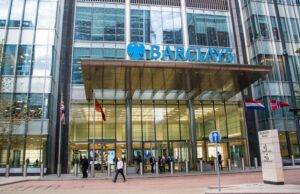
Barclays has shown promising signs of progress in its ambitious turnaround efforts, with quarterly profits falling less than anticipated by the markets.
Coimbatore Sundararajan Venkatakrishnan, known as Venkat, Barclays’ CEO, has been working to address years of underperformance in the stock market, and the recent results suggest that the bank’s overhaul strategy is beginning to yield positive outcomes.
Despite a 12% year-on-year decline in pre-tax profits to just under £2.3 billion, the figure surpassed City analysts’ expectations of £2.2 billion. Venkat expressed satisfaction with the bank’s performance in the first quarter, stating that the progress aligns with the three-year targets set by the company.
The positive results prompted a 6.1% increase in Barclays’ shares, reaching their highest level in two years. Analysts at Peel Hunt noted that the bank’s profit exceeded expectations.
Barclays, one of the UK’s major lenders, is diversifying its business away from its investment bank, aiming to strengthen other areas such as consumer and corporate banking in Britain. This includes recent deals such as the acquisition of Tesco’s retail banking business and the sale of an Italian mortgage portfolio.
Venkat’s strategy also involves cost-cutting measures, job reductions, and returning at least £10 billion to shareholders over three years. The bank has already achieved £200 million in gross efficiency savings out of the targeted £1 billion this year.
However, Barclays faces challenges amid a tougher banking environment, characterized by increased competition for deposits and mortgages as the boost from higher interest rates fades. Despite these challenges, there are indications that the pressure on margins is easing.
The investment banking division experienced mixed results, with fixed-income, currency, and commodities trading revenues declining by 21%, while equities trading saw a 25% increase in revenues. Overall, group revenues at Barclays dipped by 4% to £7 billion.
Despite the challenges, the bank’s progress in the first quarter suggests that Venkat’s turnaround plan is gaining traction, offering hope for improved performance in the future.
Read more:
Barclays profits fall less than expected as turnaround strategy progresses
Shoplifting hits highest level in at least 20 years

Shoplifting incidents reported to the police have surged to their highest level in at least two decades, according to recent data from the Office for National Statistics (ONS).
Last year, a staggering 430,104 shoplifting offences were recorded in England and Wales, marking a significant 37% increase from the previous 12 months. This figure represents the highest number of shoplifting incidents since recording practices began in the year to March 2003, as stated by the ONS.
The rise in shoplifting comes amid growing concerns from major retailers about the escalating cost of theft. Additionally, “thefts from the person,” including snatch-thefts and pickpocketing, reached 125,563 incidents in 2023, marking an 18% increase from the previous year and the highest level since 2004.
Robbery incidents also saw an uptick last year, totaling 81,094 offences, representing a 13% increase from the previous year. However, when considering the longer term, robbery rates have significantly decreased by 26% since 2003.
Knife-related crimes experienced a 7% increase, with 49,489 offences recorded by the police. Although this number is 3% lower than in 2015, it still indicates a concerning trend. Notably, the data for knife crimes does not include information from Greater Manchester or Devon & Cornwall police due to data-recording issues.
On a positive note, fraud offences witnessed a 16% decline, driven by reductions in bank and credit account fraud, as well as a notable 34% decrease in advance-fee fraud. Similarly, criminal damage incidents decreased by 18%, including a significant 25% drop in criminal damage to vehicles.
Nick Stripe, head of crime statistics at the ONS, commented on the notable increases in robbery, theft from the person, and shoplifting. He emphasized the substantial rise in shoplifting incidents, with over 100,000 more offences reported, along with the highest levels of theft-from-the-person offences recorded in two decades.
Overall, the ONS crime survey for England and Wales estimated approximately 8.4 million criminal offences in the year ending December 2023, indicating a relatively stable trend compared to the previous year. However, the data also showed a long-term decline in crime, with offences 25% lower than in 2017.
Read more:
Shoplifting hits highest level in at least 20 years
Labour set to renationalise most rail services within five years

Labour has announced its intention to renationalise most passenger rail services within five years if elected, aiming to bring them under public control as contracts expire.
Despite this move towards nationalisation, the party asserts that there will still be a place for the private sector in the rail industry.
Among Labour’s railway pledges are commitments to provide automatic refunds for train delays, improve internet connections on trains, and introduce a “best-price ticket guarantee” to ensure passengers pay the lowest possible fare when using contactless payment methods.
However, Rail Minister Huw Merriman has criticised Labour’s plans, describing them as “pointless” and “unfunded,” highlighting concerns over the potential for tax increases to fund rail nationalisation.
While Labour’s proposal does not explicitly use the term “nationalisation,” it effectively amounts to bringing passenger rail services back under public ownership. Private train companies, responsible for overseeing a surge in rail usage since the British Rail era, have faced scrutiny over issues such as fares and reliability.
Shadow Transport Secretary Louise Haigh stressed that Labour is not driven by ideology and acknowledges the value that private companies can bring. However, she argued that the current system is flawed, leading to delays and overcrowding, necessitating reform.
In addition to the nationalisation pledge, Labour aims to implement reforms such as automatic refunds for delays, improved internet connectivity, and a fairer ticketing system. Haigh clarified that while the best-price ticket guarantee may not result in lower prices, it will enhance transparency and clarity for passengers.
Labour’s stance on rail policy underscores its commitment to address perceived shortcomings in the current system while striking a balance between public and private sector involvement in the rail industry.
Read more:
Labour set to renationalise most rail services within five years

