

Homeownership among millennials has climbed to its highest level in over a decade, driven by a significant rise in earnings among young people, according to recent research from the Institute for Fiscal Studies (IFS).
The IFS’s findings reveal a notable rebound in property ownership among 25 to 34-year-olds, which had been at a low point in 2015. Since then, the proportion of homeowners in this age group increased from 33% to 39% by 2022, marking the highest percentage since 2010.
The IFS attributes this recovery to a faster growth in disposable incomes among young adults compared to the general population. Adjusted for inflation, incomes for young people have risen by 9% since 2015, compared to a 3% increase for the overall population.
Despite this progress, homeownership among 25 to 34-year-olds remains significantly lower than it was in 2000, when it stood at 58.6%. The decline and subsequent rebound in homeownership have been most pronounced among middle-income and upper-middle-income households.
Jonathan Cribb, an economist at the IFS, commented: “The collapse in homeownership among young adults has been central to policy concerns for a while – not surprisingly given that out of every 100 young people there were 20 fewer homeowners in 2022 than in 2000.”
The long-term decline in young people owning homes has raised concerns about the UK’s housing supply, with critics arguing that not enough new homes are being built. Meanwhile, some have blamed millennials’ spending habits for their difficulties in saving for a deposit. Australian property developer Tim Gurner famously criticised millennials for spending on items like avocado on toast and expensive coffee, suggesting this was hindering their ability to buy homes.
In related economic news, the value of sterling hit its highest level against the euro in nearly two years, driven by expectations of sharper interest rate cuts in Europe. On Wednesday, the pound was trading at £0.85 against the euro, its strongest rate since August 2022, after rising by as much as 0.3% against the European Union currency.
Sterling has appreciated by 2% since the start of the year, as traders anticipate that the Bank of England will implement fewer interest rate cuts compared to the European Central Bank (ECB). Higher interest rates typically attract international investment, thereby boosting the value of a currency.
The ECB is expected to begin cutting interest rates soon, with at least two reductions anticipated this year. In contrast, investors have only fully priced in one rate cut from the Bank of England this year. Strong services inflation figures have caused traders to delay their expectations for a rate cut, moving predictions from June to November.
The UK job market has shown signs of recovery, with the services sector employment rising at the fastest pace in two years, according to a survey by the Confederation of British Industry (CBI). However, costs per employee continue to climb at above-average rates.
The upcoming general election also suggests that an imminent interest rate cut is unlikely. Historically, the Bank of England has never cut rates immediately before a general election since gaining independence in May 1997.
Read more:
Millennial Homeownership Reaches 12-Year High Amid Rising Wages
Month: May 2024
Dame Kate Bingham Celebrates ‘Astonishing’ $3bn Deal for EyeBio
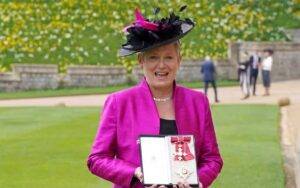
In a landmark deal for the biotech industry, EyeBio, a London-based startup co-founded by Dame Kate Bingham, has been acquired by US pharmaceutical giant Merck, known as MSD in the UK, for up to $3bn (£2.36bn).
This acquisition is poised to revolutionise treatments for blindness.
Merck has committed to an initial payment of $1.3bn (£1bn) for EyeBio, with an additional $1.7bn contingent on achieving certain milestones. The rapid success of EyeBio, which raised just $130m since its founding in August 2021, has been described as “astonishing” by Dame Kate Bingham.
Bingham’s venture capital firm, SV Health Investors, established EyeBio in collaboration with scientists David Guyer and Tony Adamis. Since its inception, Dame Kate has served as the company’s chairman, leveraging her prominent profile as one of the key figures behind the UK’s successful Covid-19 vaccine rollout.
Dame Bingham was instrumental in leading the UK’s Vaccine Taskforce in early 2020, earning a damehood for her efforts in securing Covid-19 vaccines, which enabled the UK to become the first Western country to begin vaccinating its population in late 2020. She stepped down from this role at the end of 2020 and returned to her position at SV Health Investors as a managing partner.
The acquisition by Merck is expected to accelerate the development of EyeBio’s innovative treatments for eye diseases. EyeBio’s primary focus has been on diabetic macular oedema and age-related macular disease, two of the most prevalent causes of blindness in the Western world. Dame Kate told the Financial Times that the company’s drugs have the potential to “revolutionise the treatment” of these conditions.
David Guyer, EyeBio’s Chief Executive and President, highlighted the benefits of the acquisition: “As a subsidiary of Merck, EyeBio will be positioned to tap into the resources and infrastructure needed to support the clinical, regulatory, and commercial development of these candidates and help bring them to patients worldwide.”
Merck’s acquisition of EyeBio aligns with its strategy to enhance its drug pipeline, particularly as its blockbuster cancer drug nears the end of its patent. This deal not only signifies a major advancement for EyeBio but also underscores the critical role of innovative biotech companies in transforming healthcare outcomes.
Read more:
Dame Kate Bingham Celebrates ‘Astonishing’ $3bn Deal for EyeBio
UK Households with No Work Reach 12-Year High Amid Labour Crisis
The number of UK households where no adult has ever worked has reached a 12-year high, highlighting a deepening labour crisis that experts warn is stifling Britain’s economic growth.
In the first quarter of this year, there were 269,000 non-student households where no adult had ever been employed, the highest figure since spring 2012, according to the Office for National Statistics (ONS). This marks a 12% increase from the same period last year.
Between January and March, 4.3 million 16 to 64-year-olds lived in households where no adult was employed, nearly 300,000 more than at the end of last year and the highest total in seven years.
This alarming trend is part of a broader worklessness crisis that threatens to cripple the UK’s growth as Prime Minister Rishi Sunak prepares for a general election in July. Nationally, 9.4 million working-age adults were economically inactive at the start of the year, neither employed nor seeking work. This figure is up by 832,000 compared to pre-pandemic levels.
Sir Jacob Rees-Mogg, Conservative MP and former Business Secretary, described high levels of economic inactivity as a “huge problem” for the country. He emphasised that non-working individuals do not contribute to GDP growth, reducing the state’s capacity to fund tax cuts or public services. This situation, he argued, fuels calls for increased migration to fill labour shortages.
Tony Wilson, Director of the Institute for Employment Studies (IES), suggested that the rise in jobless households is likely driven by increased worklessness among young people. Recent data indicated that the number of 16 to 24-year-olds not in education, employment, or training (NEETs) reached a nine-year high of 900,000 at the start of this year, an 18% increase from pre-pandemic levels.
Wilson warned that prolonged periods out of work and education during youth can cause lasting harm, both to the individuals affected and to society and the economy. He highlighted that young people who remain out of the workforce long-term are more likely to suffer from poor health, lower incomes, and disadvantage their own children.
In response to the crisis, Prime Minister Sunak has pledged to introduce National Service for 18-year-olds. However, Wilson criticised the plan, arguing that it would divert funds from existing programmes designed to help economically inactive individuals re-enter the workforce. The proposed scheme, estimated to cost £2.5 billion, would be primarily funded by the UK Shared Prosperity Fund, which supports community organisations.
As the labour crisis deepens, addressing the root causes of economic inactivity and providing targeted support for young people and other vulnerable groups will be crucial for sustaining the UK’s economic growth and societal well-being.
Read more:
UK Households with No Work Reach 12-Year High Amid Labour Crisis
IWG Founder Sells £68.5m in Shares to Repay Bank Loan
Mark Dixon, the founder and chief executive of IWG, has sold a substantial stake in the serviced offices company, amounting to £68.5 million, to repay a bank loan. Despite the sale, Dixon, 64, still retains a 25.2% share in the company.
Dixon disposed of 35 million shares at just under 196p each through Estorn Limited, his wholly-owned investment vehicle. The shares were pledged as collateral for a loan from Deutsche Bank taken in December, the specifics of which were not disclosed.
The sale, executed by IWG’s largest shareholder, caused a stir among investors, leading to a significant drop in IWG’s share price. Shares fell by 14¼p, or 6.9%, to 192¾p during afternoon trading, marking their worst performance since March of the previous year.
Leveraging shares as collateral is a common practice among wealthy entrepreneurs. High-profile examples include Elon Musk, who has used Tesla shares for personal loans, Larry Ellison of Oracle, and Adam Neumann, co-founder of WeWork, a rival of IWG. Previously, Dixon had pledged shares in Regus, IWG’s predecessor, for a £7.7 million loan from Merrill Lynch, repaid in June 2009.
Dixon founded IWG in 1989, starting with an office in Brussels to cater to executives needing temporary office space. The company has since expanded to manage 3,500 offices across 120 countries. Post-pandemic, Dixon has shifted IWG towards a “capital-light” model, forming partnerships with landlords to manage office spaces rather than owning or leasing them directly. This approach mirrors the strategy of Marriott, which manages rather than owns hotels.
Over the years, Dixon has sold hundreds of millions of pounds’ worth of IWG shares, including a £27.5 million sale in 2005 to settle a divorce. After the latest sale, Dixon’s remaining stake in IWG is valued at approximately £490 million. The most recent Sunday Times Rich List estimated Dixon’s wealth at £923 million, ranking him as the 177th richest person in Britain.
Read more:
IWG Founder Sells £68.5m in Shares to Repay Bank Loan
How to supercharge your corporate LinkedIn profile in eight steps

Whether you’re an individual setting out to be an industry thought leader or a brand seeking leads, LinkedIn is a valuable tool for business success.
Think of your profile as your digital shopfront. It’s the first impression you make on potential employers, clients, and collaborators. Get it right, and you’ll see a positive impact on your brand and bottom line.
This guide will help you craft a compelling LinkedIn profile, from your photo to SEO optimisation. We’ll cover everything you need to maximise the potential of LinkedIn for you, your team, and your business. Here are eight steps to consider.
Clear and consistent visuals and branding
If you’re a business, make sure that you have a high-quality logo or brand mark as your profile image and header. Make sure that you are following LinkedIn’s most up-to-date design rules, or else it will end up cropped and distorted.
To fully weave your brand throughout your entire Linkedin ecosystem, a professional photoshoot for your team is a good idea. This way, you and all of your team members will have brand and visual uniformity.
Create a compelling summary headline
Make sure that it accurately reflects your role, experience, current position, and your value proposition. Be clear and concise for anyone visiting your LinkedIn profile for the first time.
You can also take your headlines a step further. Use online search keyword research to insert valuable relevant keywords into your headline. Having these keywords present in your LinkedIn profile can have positive impacts on your overall search presence. Having a high presence in SERP is a crucial part of digital PR and Online Reputation Management.
For instance, if someone is searching for Project Management Specialists in the construction sector, if your keywords are tuned into your LinkedIn profile, they will have a much easier time finding you both on and off the platform.
List your skills, endorsements and recommendations
Listing your own skills and experience is one thing, but it’s even more powerful when these come from your colleagues, recruiters, clients, and peers.
Having others endorse you, and your teams, helps further validate your key skills and proficiences. So canvas colleagues, clients, end users and whoever you can, to add endorsements and recommendations. They serve as incredibly powerful trust signals that can showcase your capability and credibility.
Post relevant content regularly
The frequency and cadence of output and engagement on LinkedIn are very important.
Posting irregular content and updates serves very little benefit. You will need to get into the mindset of regular, relevant content.
Have a content strategy in place that includes long-form feed posts of LinkedIn blogs by company thought leaders. LinkedIn is also prioritising video as its content format of choice, so think about how you can take your written thought leadership and convert it into an engaging and entertaining video.
Like, share, comment…engage
LinkedIn runs on engagement. Respond promptly to comments on posts from your business page. This will show that you place value in being part of a wider industry community. Don’t be a monolith in your sector.
You can also engage your internal teams, by sharing their own Linkedin content on your main business page. Celebrate achievements or share a great post on a pressing industry topic.
Engage with content from your connections. This could be industry influencers and key decision makers, media or other thought leaders within your professional network.
Carefully manage your online reputation
In business, your reputation is your bond. Ensure that your teams understand that when they are online, they’re representing the interests of the business. There’s a code of conduct when it comes to being on Linkedin, professionalism comes before personal opinion, this isn’t Facebook.
If anything should arise that could damage that, then you need to approach the situation very carefully. This is where crisis management comes into play.
A ‘crisis’ could be a negative review or criticism aimed at your business, but it could also be something a lot more serious. Ensure that you’re prepared with an effective crisis management policy.
Test and learn
LinkedIn is indeed a very competitive place to set out your stall. There are 830 million members on the platform and 67 million listed companies. Whichever way you look at it, that’s a lot of noise.
Challenge yourself to consistently deliver high-quality content and engage with your audience. But most importantly, know what’s working for you and what’s not to get noticed. To do so, adopt a test-and-learn mindset. Don’t be disheartened if a particular post doesn’t land. Learn from it and go again.
Enjoy the process!
These practical tips will help you to create a compelling and engaging LinkedIn profile that acts as a springboard to a richer professional network. Enjoy the process of building relationships, sharing knowledge, and growing your influence within your industry.
Read more:
How to supercharge your corporate LinkedIn profile in eight steps
Surelock Homes Unlocks Victory as Best Small Business Name Champion 20 …

Surelock Homes, a locksmith business based in Hastings, has been crowned Britain’s Best Small Business Name for 2024. The winning name was selected by the UK public, earning the business a prestigious title and a £2,500 cash prize.
Simply Business, a leading provider of small business insurance, launched the competition to celebrate the creativity, originality, and humour of small business owners across the UK. Their research highlighted the significant impact a witty or funny business name can have on success, with over half (51%) of consumers more likely to shop at a business with a humorous name.
The competition, which saw over 2,500 public votes, was judged in collaboration with comedian and pun aficionado Darren Walsh. Surelock Homes emerged as the favourite, surpassing other finalists such as Tikka Chance On Me and Prints Charming.
Surelock Homes is known for its reliable and superior locksmith services throughout East Sussex. The business prides itself on professional technicians who deliver exceptional work, fostering long-term relationships with loyal customers.
This year’s competition was part of Simply Business’s “You name it. We insure it” TV campaign, which features cleverly named UK businesses like Pane in the Glass, Get Stuffed, Curl Up and Dye, and Rough Around The Hedges.
Matt Triboulliard, owner of Surelock Homes, expressed his delight: “I was thrilled to be nominated for Simply Business’s competition. Winning from such an incredible list of names is an honour. Our unique name has brought significant attention and business, with many people commenting or taking photos of our vehicle.”
Bea Montoya, COO at Simply Business, praised the creativity and innovation of SME owners: “This competition highlights the wonderful spirit and humour that small businesses bring to their work daily. We are thrilled to award Matt from Surelock Homes the £2,500 prize to support their business journey.”
Comedian Darren Walsh added: “The public has shown they not only have a knack for picking the best small business names but can also appreciate a clever pun. Surelock Homes is a deserving winner. Let’s give a round of applause for our key workers and their brilliant business names!”
Read more:
Surelock Homes Unlocks Victory as Best Small Business Name Champion 2024
Rachel Reeves Pledges ‘Most Pro-Growth Treasury in History’

Labour’s shadow chancellor Rachel Reeves will commit to leading the “most pro-growth Treasury in our country’s history” if her party wins the election on July 4.
In her first major economic speech of the campaign, Reeves will promise to “bring growth back to Britain” and ensure a pro-business and pro-worker government under Sir Keir Starmer’s leadership.
Reeves, a former Bank of England economist, will address business leaders, emphasising that Labour has evolved to serve working people and support business growth. She is expected to assert: “If we can change this party to bring it back to the service of working people, if we can return it to the centre ground of politics, if we can bring business back to Labour, then I know we can bring business back to Britain.”
Reeves will highlight her commitment to economic stability with strict spending rules and a collaborative approach with businesses. She will underscore Labour’s vision of a “mission-led government” built on economic stability, contrasting it with the current Conservative administration.
“We will fight this election on the economy,” Reeves will declare. “Every day we will expose the damage they have done and set out Labour’s alternative. Five missions for a decade of national renewal. And six first steps to point the way to a better Britain.”
The speech comes just hours after Labour gained the endorsement, through an open letter, of a coalition of 120 business leaders, who argue that the UK needs a “new outlook” to overcome a decade of economic stagnation.
However, Laura Trott, Chief Secretary to the Treasury, criticised Labour’s economic plans. Trott pointed out concerns from business leaders about Labour’s proposed union laws, claiming they could harm the economy and lead to job losses.
“Rishi Sunak and the Conservatives have a clear plan that businesses can rely on. We took the bold action to deliver the biggest business tax cut in modern history. Labour would tie businesses in red tape and raise taxes by £2,094 on hardworking families,” Trott warned.
Reeves’s speech aims to position Labour as the party of economic growth and stability, appealing to both businesses and workers as the election approaches.
Read more:
Rachel Reeves Pledges ‘Most Pro-Growth Treasury in History’
NatWest Tells Customers to Visit Branches as Outage Hits Online Bankin …

NatWest has issued an apology to customers following an outage that has rendered its app and online banking services inaccessible.
Customers began reporting issues early Tuesday morning, with many unable to log in to their accounts via the smartphone app.
Upon attempting to open the app, users were met with an error message stating, “We’re sorry, some kind of error has occurred when trying to establish a connection between your device and ourselves.”
In response, NatWest directed customers to use telephone banking or visit a branch. The bank stated on its online support page: “Some of our customers are experiencing issues with our mobile app and Online Banking service. We’re sorry for any inconvenience caused and we’re working hard getting everything back up and running for you. We will share an update when we have more information.”
NatWest advised: “If you need to complete a transaction you can continue to do this using our telephone banking service or alternatively you can visit one of our branches or ATMs. If you are looking to make a payment with us today, please consider sending money another way. You can still use your debit or credit card to make payments and get cash from ATMs, branches, and the Post Office.”
Reports of the outage began surfacing around 5:30 am, according to the website DownDetector. The bank is currently working to resolve the issue and restore online services.
Read more:
NatWest Tells Customers to Visit Branches as Outage Hits Online Banking
British Businesses Face £42bn Debt Crisis Post Ultra-Low Rates Era

British businesses are bracing for a debt crisis as high interest rates are predicted to cost an additional £41.7 billion by the end of the decade.
With the expiration of cheap loans, borrowing costs are expected to surge, significantly impacting the economy.
According to consultancy Baringa, businesses will face an average annual increase of £4.7 billion in debt servicing costs following the Bank of England’s decision to end the era of ultra-low rates, raising borrowing costs to a 17-year high.
Economist and Baringa partner Nick Forrest highlighted the potential inflationary pressures as companies might be forced to raise prices to manage the increased costs, with some companies facing the prospect of collapse. Forrest remarked, “It’s tempting to look at plateauing or falling interest rates and conclude we’re coming out of the woods. Sadly, this disguises the truth that the hike in rates since the end of 2021 condemns business and the wider economy to a huge hangover for years to come.”
Baringa estimates that debts worth £1.6 trillion are set to refinance between 2024 and 2030. Since December 2021, the Bank of England has raised its base rate from 0.1% during the peak of the Covid pandemic to 5.25% to combat the cost of living crisis.
Despite hopes that inflation’s return towards the Bank’s 2% target would lead to rate cuts, persistent price rises in the services sector and an upcoming general election mean that analysts now expect borrowing cuts to begin later in the year.
Many businesses are likely to struggle, particularly as most finance directors have little experience managing borrowing costs at these levels. Forrest warned, “Ultimately, those companies and sectors that are highly leveraged, that took out debt when it was that much cheaper, and are facing other headwinds, will struggle, and I am sure there will be some businesses where this is the last straw on the camel’s back.”
Surviving companies are expected to pass on the increased borrowing costs to customers, with three-quarters of surveyed executives indicating plans to raise prices, further exacerbating inflationary pressures.
Economists at BNP Paribas, Europe’s second-largest bank, have cautioned that inflation will be higher and more volatile in the coming years due to factors such as deglobalisation, the transition to net zero, and increased geopolitical instability. Matthew Swannell, a BNP economist, stated, “The world is likely, all else equal, more inflationary. The consequence of that is that the neutral rate is higher because central banks will always work to keep inflation at 2%.”
Higher defence spending, with both Rishi Sunak and Keir Starmer pledging to increase it to 2.5% of GDP, could also push up interest rates if it results in increased government borrowing.
Although inflation has eased from a high of 11.1% in October 2022 to 2.3% last month, many investors are sceptical that rates will return to the lows seen post-financial crisis. Orla Garvey, a senior fixed-income portfolio manager at Federated Hermes, commented, “Inflation will be more volatile in the future because of the need for greater spending on things like defence. That will tend to make inflation bumpy.”
Read more:
British Businesses Face £42bn Debt Crisis Post Ultra-Low Rates Era

