
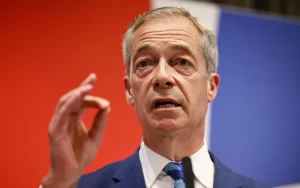
Nigel Farage, leader of Reform UK, has expressed strong opposition to the idea of Shein, the Chinese-founded fast-fashion retailer, listing on the London Stock Exchange.
Farage criticised efforts by ministers, including Chancellor Jeremy Hunt, to attract the company to London, arguing that it would not help revive the market.
Farage emphasised that Shein’s potential £50 billion listing would not enhance London’s financial stature. The retailer has faced accusations of forced labour in its supply chain, which it denies. “Encouraging Shein to choose London would be a mistake,” Farage said, adding that it “won’t change the IPO crisis” in the City.
He continued, “They see an IPO for Shein and say, ‘Oh isn’t that marvellous because London needs it’. No, it doesn’t. It doesn’t at all. Saying no to Shein is not cutting off our nose to spite our face. It’s saying we think this is a very bad idea.”
Farage, the parliamentary candidate for Clacton, attributed the London Stock Exchange’s struggles to “excess regulation” and called for a “radical rethink of the financial market rules.” He argued that “We have not deregulated from EU rules at all.”
Shein has been preparing for a London listing after earlier plans to float in New York were thwarted by political opposition. Although founded in China, Shein is now headquartered in Singapore and is working on paperwork for a potential blockbuster listing, though this does not guarantee it will choose the UK market.
Both Conservative and Labour parties have indicated support for Shein listing in London. Labour MPs recently met with the retailer, affirming that “raising investment, productivity, and growth is one of Labour’s missions for government.” Jeremy Hunt also held talks with Shein’s executive chairman Donald Tang in January, in an effort to persuade the retailer to choose London.
Shein has rapidly grown to become one of the world’s largest fashion retailers, known for its ability to launch new products swiftly. However, concerns have been raised about how it can afford to charge such low prices, with some items selling for as little as £4. US Senator Marco Rubio stated in April that there was a “high probability these companies have facilitated the importation of goods made with forced labour.”
These concerns focus on Shein’s Chinese supplier base, particularly as much of China’s cotton comes from Xinjiang, where there are allegations of forced labour involving Uyghurs. Last week, Peter Hugh Smith, chief executive of CCLA Investment Management, warned that allowing Shein to list in London would risk the City becoming a “listing venue of last resort” for companies with questionable human rights records.
Smith added that government support for a Shein float “sends the signal that the UK is willing to overlook significant human rights concerns.”
A spokesperson for Shein responded, “Shein has a zero-tolerance policy for forced labour and we are committed to respecting human rights. We take visibility across our entire supply chain seriously and require our contract manufacturers to only source cotton from approved regions.”
Read more:
Nigel Farage: Shein’s London Listing is a ‘Very Bad Idea’
Month: June 2024
David Davis Criticises Extradition Treaty Following Mike Lynch Acquitt …

Sir David Davis, former chairman of the Conservative Party, has sharply criticised the UK’s extradition treaty with the United States following the acquittal of British technology entrepreneur Mike Lynch.
Lynch was cleared of charges related to inflating the value of his company, Autonomy, in its sale to Hewlett-Packard (HP).
Davis stated that the acquittal is a “real clear demonstrator of how ridiculous” the extradition treaty is, suggesting that it has a “chilling effect” on British companies considering sales to American buyers. He warned, “Any sale to an American company is plainly seen by the American Department of Justice to fall under American rules and regulations no matter where in the world it is.”
The 2003 treaty, designed to streamline the extradition process for serious offenders, was used to extradite Lynch, 58, over alleged fraud in the 2011 sale of Autonomy to HP. Davis, a longstanding critic of the treaty, expressed concerns that British entrepreneurs could face biased legal battles in the US long after their business dealings.
After a three-month trial in San Francisco, Lynch was acquitted late Thursday night. Reflecting on the trial, Davis remarked, “I would be very cautious of any deal if I was a British tech entrepreneur because I would never know that five or ten years later I wasn’t going to be carted off to America to face a partisan case in a partisan court.”
Other notable cases under the treaty include the extradition of David Bermingham, part of the “NatWest Three” linked to the Enron scandal, who served 37 months in a US prison. Davis highlighted that most US federal cases, approximately 97%, are resolved through plea bargains, which could coerce individuals into guilty pleas.
Autonomy, founded by Lynch in 1996, specialised in analysing unstructured data from various sources. HP acquired the company for $11 billion in 2011, aiming to integrate its software capabilities into their product offerings. However, the deal soured, with HP accusing Lynch of financial manipulation to inflate Autonomy’s value. Lynch has consistently denied these accusations over the past 13 years.
Davis described the case as “daft,” elaborating, “You have a sale of a British company on a British stock exchange, bought by a European subsidiary of Hewlett-Packard. They suddenly decide they’ve been defrauded after they sacked the chief executive who bought it. It was ridiculous.”
Following the acquittal, Lynch and Davis have pledged to address what they see as flaws in the extradition treaty. Senior business leaders, including Sir John Rose and Lord Stevenson of Coddenham, have previously called for a halt to Lynch’s extradition, reflecting widespread concern within the business community.
Brent Hoberman, founder of Lastminute.com, celebrated the verdict on social media, stating, “Great news for UK tech! Many UK tech founders looked up to Mike and will be happy to see him cleared.”
Suranga Chandratillake, a partner at Balderton and former US CTO at Autonomy, added, “Mike Lynch is a remarkable technologist and entrepreneur. If this verdict means he’s back in the UK and free to start working on tech again, rather than worrying about legal briefs, I think that’s a great outcome for British technology and UK plc.”
This case is the latest fallout from HP’s acquisition of Autonomy. Sushovan Hussain, Autonomy’s former finance director, was sentenced to five years in the US for fraud in 2019. Additionally, Deloitte, Autonomy’s auditor, was fined £15 million in 2020 for misconduct.
In a 2022 UK civil trial, Mr Justice Hildyard found that Lynch had indeed defrauded HP but noted that the acquisition might have proceeded even with adjusted financial figures due to the strength of Autonomy’s technology and client base. Damages in this case are still pending.
Read more:
David Davis Criticises Extradition Treaty Following Mike Lynch Acquittal
Labour to Make Mortgage Guarantee Scheme Permanent for First-Time Buye …

Labour has announced plans to permanently extend the mortgage guarantee scheme, initially introduced by the Conservatives in 2021 under then-Chancellor Rishi Sunak, if they win the upcoming general election.
This scheme, designed to support low-deposit mortgages for first-time buyers, was recently extended until July next year by current Chancellor Jeremy Hunt.
Labour leader Sir Keir Starmer emphasised his commitment to making homeownership more accessible, stating his ambition to “turn the dream of owning a home into a reality.” The scheme involves the government acting as a guarantor for part of a home loan, encouraging lenders to offer low-deposit deals. Labour claims this initiative, branded as “Freedom to Buy,” will help over 80,000 young people onto the property ladder within the next five years.
However, the latest statistics from the Office for National Statistics reveal that in 2022, approximately 40% of the 16.5 million people aged 15 to 34 in the UK were living with their parents, equating to around 6.7 million individuals. This underscores the significant challenges many young people face in securing their own homes.
Labour argues that making the mortgage guarantee scheme permanent will prevent young people from being “locked out of homeownership” due to the tough conditions in the private rented sector and difficulties in saving for a deposit. Starmer highlighted the importance of this initiative by reflecting on his own family’s experience, saying, “My parents’ home gave them security and was a foundation for our family. As prime minister, I will turn the dream of owning a home into a reality.”
The existing scheme allows lenders to purchase a guarantee on part of mortgages, meaning the government could compensate for some losses if a bank repossesses a house. This programme aims to boost lenders’ willingness to offer high loan-to-value mortgages, thereby reducing the deposit burden on buyers.
However, mortgage brokers point out that borrowers still need to pass affordability checks to secure a mortgage, not just raise a deposit. Lenders typically require a sufficient regular income to ensure borrowers can manage mortgage repayments, meaning the scheme might serve more as a safety net rather than a widely utilised tool.
In addition to making the mortgage guarantee scheme permanent, Labour has pledged to reintroduce housing targets, fast-track planning permissions on brownfield sites, and prioritise building on “grey belt” land. These measures, Labour claims, could facilitate the construction of 1.5 million homes.
David Sturrock, a senior research economist at the Institute for Fiscal Studies, noted that declining homeownership rates since the 2000s mean young adults are now a third less likely to own a home compared to 25 years ago. He acknowledged that making the mortgage guarantee scheme permanent could help reduce barriers to homeownership but emphasised that prospective buyers also need sufficient incomes to afford mortgage repayments.
The Conservative Party, in response, has highlighted its “Family Home Tax Guarantee” which pledges not to increase the number of council tax bands, carry out a council tax revaluation, cut council tax discounts, or raise stamp duty rates.
Laura Trott, Chief Secretary to the Treasury, stated, “Only Rishi Sunak and the Conservatives have a clear plan, backed by bold action, to strengthen the economy, bring mortgage costs down and help more people get on the housing ladder.”
Meanwhile, SNP candidate for Airdrie and Shotts, Anum Qaisar, criticised Westminster’s handling of the economy, arguing that Scottish households are “being punished by Westminster failures” and highlighting the high costs of mortgages and energy bills.
The Liberal Democrats also weighed in, promising to prioritise community needs over developer interests and to promote genuinely affordable housing options for first-time buyers.
Read more:
Labour to Make Mortgage Guarantee Scheme Permanent for First-Time Buyers
Rachel Reeves Faces Pressure to Raise Capital Gains Tax to Fund Public …

Rachel Reeves, Labour’s Shadow Chancellor, is under mounting pressure from her colleagues to consider raising capital gains tax (CGT) as part of an ambitious autumn budget designed to fund public services.
With increases in income tax, national insurance, and VAT off the table, Reeves is exploring alternative revenue-raising measures.
Labour insiders reveal that Reeves is evaluating up to twelve potential fiscal strategies to bolster the public coffers. A source close to the discussions commented, “Rachel is considering a range of measures, each designed to contribute modestly to the overall budget, cumulatively generating significant funds.”
The push for a CGT hike comes as part of a broader strategy described by one Labour figure as a “kitchen sink” approach, aimed at securing the necessary funds for radical public service investment and reform. This strategy involves unveiling all potential fiscal measures upfront to justify substantial interventions.
Despite these deliberations, a Labour spokesperson emphasised the party’s commitment to fully costed and funded plans, asserting, “We have identified specific tax loopholes to close for immediate revenue without increasing taxes.”
The proposed plans emerge amidst a heated debate with the Conservative Party over tax policies. The Conservatives have pledged not to raise property taxes, challenging Labour to match their “family home tax guarantee”. Prime Minister Rishi Sunak has accused Labour leader Keir Starmer of planning extensive tax hikes, a claim Labour has dismissed as misleading.
Reeves has already ruled out significant tax increases, including almost all major taxes, yet acknowledges the pressing need for new revenue streams to avoid deep cuts to public services in the next parliamentary term.
Labour’s current fiscal proposals include increasing the windfall tax on oil and gas companies, eliminating tax exemptions for private schools, and tightening regulations on non-doms. However, these measures alone may not suffice to bridge the funding gap.
The Resolution Foundation recently warned that without additional revenue, the next government could face £19 billion in cuts to unprotected departments by 2028-29, impacting sectors like local government, the Home Office, and the courts.
Some Labour members advocate for aligning CGT rates with income tax, potentially increasing the higher rate from 24% to 40% or 45%, estimated to raise £8 billion. This approach mirrors a move by former Conservative Chancellor Nigel Lawson in 1988, later reversed by subsequent Labour budgets.
Alternatively, Labour could revert to the pre-2023 budget CGT rate on second homes, raising it from 24% to 28%. However, the Office for Budget Responsibility predicts minimal fiscal gain from this adjustment.
Another option under consideration is reinstating the health and social care levy, a 1.25 percentage point rise in national insurance introduced by Boris Johnson and later scrapped by Kwasi Kwarteng. This levy, which would have included pensioners, was partially intended to fund health service improvements. Despite support from notable figures like Sir Nicholas Macpherson, former Treasury head, insiders suggest Reeves is unlikely to reintroduce it to avoid breaking her pledge against national insurance hikes.
As Labour officials prepare to finalise the party’s manifesto, due next week, the focus remains on finding viable fiscal solutions to ensure robust and sustainable public services under a potential Labour government.
Read more:
Rachel Reeves Faces Pressure to Raise Capital Gains Tax to Fund Public Services
Scottish Woman Sues Netflix for $170M Over Baby Reindeer Character Dep …

A Scottish woman, Fiona Harvey, is suing Netflix for defamation, negligence, and privacy violations, claiming that the character Martha in the hit drama Baby Reindeer is based on her.
Harvey’s lawsuit, filed in a California court, seeks over $170 million (£132 million) in damages, alleging that Netflix broadcast “brutal lies” about her to over 50 million viewers worldwide.
Harvey argues that the series falsely depicts her as a convicted criminal who spent time in prison for stalking. She also denies allegations of sexually assaulting the show’s creator, Richard Gadd. According to court documents, Harvey contends that Netflix chose to perpetuate falsehoods because “better stories made money.”
In the series, Martha is shown sexually assaulting Gadd’s character along a canal, a scene Harvey strongly refutes. Speaking to BBC News, Harvey expressed confidence in her case, stating, “I have no doubt about that. Otherwise, we wouldn’t be doing it. We think we are going to win.”
The first episode of Baby Reindeer claims to be a true story, while end credits note that some characters and incidents have been fictionalised. During a parliamentary hearing last month, Netflix executive Benjamin King described the show as depicting the “true story of the horrific abuse that the writer and protagonist Richard Gadd suffered at the hands of a convicted stalker.”
Gadd, a comedian, wrote and stars in the series based on his alleged experience with a woman he met at a pub. He is not named as a defendant in Harvey’s lawsuit, nor are their real names used in the series. However, Harvey has identified herself as the inspiration for the character Martha.
Harvey’s lawsuit claims that Netflix failed to verify Gadd’s story before creating the series. “It never investigated whether Harvey was convicted, a very serious misrepresentation of the facts,” the complaint states, adding that Netflix did not confirm any details about the alleged stalking or assault.
Richard Roth, Harvey’s lawyer, asserts that there is “incontrovertible documentary evidence” proving Harvey has no criminal record. The lawsuit includes a background check and a certificate attesting to Harvey’s clean criminal record.
Since the series’ release in April, Harvey says she has received numerous death threats and has become increasingly reclusive. She described feeling “fearful of leaving her home or checking the news,” according to the lawsuit.
In a recent interview with Piers Morgan, Harvey confirmed knowing Gadd during his time working at a London pub but denied sending him excessive emails or voicemails, as depicted in the series. “None of that’s true. I don’t think I sent him anything,” she stated, acknowledging only a few “jokey banter emails.”
The lawsuit also claims that real comments Harvey made to Gadd, such as a tweet from 2014, are used in the show’s dialogue.
Netflix and Richard Gadd have not confirmed Harvey’s identity as the basis for Martha, and Netflix has not responded to BBC’s request for comment.
Read more:
Scottish Woman Sues Netflix for $170M Over Baby Reindeer Character Depiction
Britain Urged to Triple Offshore Wind Farm Construction Pace

Britain must accelerate the construction of offshore wind farms threefold to meet its crucial decarbonisation targets, according to a leading think tank, the Institute for Public Policy Research (IPPR).
The government has set an ambitious goal of achieving 50 gigawatts (GW) of offshore wind capacity by the end of this decade, a significant increase from the current 15GW. However, IPPR’s analysis suggests that, at the current rate, the target will not be reached until 2048.
Increasing offshore wind capacity is essential to meeting the government’s objective of decarbonising the electricity system by 2035. Labour has set an even more ambitious target of achieving net zero by 2030.
Despite having one of the most mature renewables industries globally, Britain has fallen behind other European nations in developing the manufacturing capacity for key wind supply chain components. The IPPR report claims that if Britain had fully exploited its potential for wind installation, it could have generated an additional £30 billion between 2008 and 2022, matching the efforts of countries like Spain and Germany.
Simone Gasperin, an associate fellow at IPPR, commented: “The UK has missed out on becoming a world leader not just in wind power but also in wind manufacturing. This has cost thousands of jobs, billions for the economy, and is putting future net zero targets for wind deployment at risk.”
To reduce import dependence and revitalize its manufacturing industry, the UK needs to produce more wind components domestically. The think tank recommends the construction of at least one additional blade factory, two nacelle and tower factories, and two extra foundation factories within the next five years.
An investment of £3.2 billion in British manufacturing facilities could create tens of thousands of direct and indirect jobs, particularly benefiting small and medium-sized businesses, according to IPPR.
The urgent need for Britain to step up its offshore wind efforts is not just about meeting environmental targets but also about maintaining economic competitiveness and securing energy independence. As other European countries forge ahead, the UK must act swiftly to ensure it does not fall further behind.
Read more:
Britain Urged to Triple Offshore Wind Farm Construction Pace
Ikea to Hire Virtual Staff for £13 an Hour in Roblox Metaverse Store

Taking remote working to a novel dimension, Ikea is offering £13 an hour for ten employees to assist in its new virtual store on Roblox.
These virtual roles will involve tasks such as guiding customers and serving digital meatballs, blending the realms of gaming and employment.
Set to launch soon, Ikea’s digital shop on Roblox will employ staff to help customers navigate the store and select furniture. “Fans will be able to live their home furnishing dreams and get paid for it,” the job advert promises.
Prospective employees must first tackle a unique questionnaire, posing challenges like, “How do you feel about being turned into pixels?” and “What would you do if we ran out of pixelated hot dogs in our bistro?” Shortlisted candidates will then undergo virtual interviews.
Ikea is the pioneer retailer to offer paid positions on Roblox, aiming to attract young talent to their real-world workforce. Roblox, a platform where users can play and create games, boasts over 77 million daily active users, with a significant portion aged 17-24. Popular games on the platform often involve work roleplays, aligning well with Ikea’s recruitment strategy.
The Roblox Ikea story is laid out just as it would be in any other location
The Co-Worker Game, as Ikea has named its virtual employment experience, promises opportunities for virtual workers to hone their skills, assist customers, and gain promotions within the digital store.
Ikea’s initiative will see ten candidates working in various store sections like the showroom and bistro. These roles offer chances to win exclusive user-generated content (UGCs) and more. The company will pay the London-based rate of £13.15 per hour, with applications open to individuals over 18 from the UK and Ireland.
Despite the seemingly enticing job offer, social media reactions have been mixed, with some expressing disbelief. One user joked on Twitter/X about quitting their real job, while another on TikTok humorously suggested turning off the wifi if annoyed by a customer.
The virtual store opening on June 24 follows a trend of brands seeking younger audiences through digital platforms. Walmart, for instance, recently launched a virtual store on Roblox. Digital items also fetch high prices on the platform, as evidenced by Adidas selling a digital necklace for the equivalent of $20,000.
Roblox, valued at $25 billion and listed on the New York Stock Exchange in 2021, has faced scrutiny alongside its success. The platform is currently contesting lawsuits in the US over issues like facilitating illegal gambling and exposing children to explicit content.
Hayfa Mohdzaini, a technology research adviser at the Chartered Institute of Personnel and Development, commented on the innovative approach: “Employers creating virtual workplaces dates back to 2006 with IBM in Second Life. Ikea’s paid virtual roles take this concept further, integrating elements of in-store work online. It’s an intriguing strategy that we expect more employers to explore.”
Darren Taylor, Ikea UK and Ireland’s country people and culture manager, added, “We’re excited to be the first brand to offer paid work on Roblox, showcasing our unique career philosophy. At Ikea, there is no set route to career progression, allowing co-workers to explore various roles both in the game and real life.”
Winnie Burke, head of fashion, luxury, beauty, and retail partnerships at Roblox, noted, “Retail brands continue to push boundaries on Roblox, engaging a deeply involved Gen Z community.”
Read more:
Ikea to Hire Virtual Staff for £13 an Hour in Roblox Metaverse Store
Rishi Sunak to Extend Child Benefit to Higher Earners
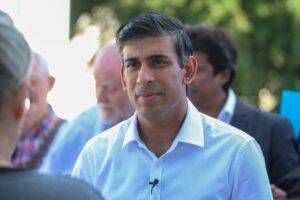
In a strategic move to close the polling gap with Labour, the Conservative Party has pledged to extend child benefit to 700,000 higher-earning households by raising the threshold to a combined income of £120,000 per household.
Currently, child benefit, worth over £2,000 annually for two children, is withdrawn when one household member earns over £60,000, with complete withdrawal at £80,000. Critics have pointed out the arbitrary nature of these thresholds, as households with dual earners each making £60,000 still receive full benefits, while a single earner at £80,000 does not receive any.
The proposed overhaul would allow households with a single earner making up to £120,000 to receive full child benefit, with gradual withdrawal commencing only when household earnings exceed £160,000. This reform is projected to cost £1.3 billion, funded through measures against tax avoidance and evasion.
Chancellor Jeremy Hunt announced, “Today we have unveiled a £1,500 tax cut for parents to enhance financial security and provide more spending power for families. Raising the next generation is paramount, and as part of our plan to reduce taxes, we are alleviating the burden on working families.”
In the upcoming manifesto, the Conservatives plan to announce another significant tax cut, with potential reductions in stamp duty and inheritance tax.
Prime Minister Rishi Sunak used a recent debate to claim that Labour would impose a £2,000 tax hike on households, a statement dismissed by Labour leader Sir Keir Starmer as false. Hunt emphasised, “Voters face a clear choice: bold Conservative tax cuts for working families or a £2,094 tax increase under Labour to cover their £38.5 billion spending gap.”
The £60,000 threshold, introduced by the Conservatives in 2013, ended universal child benefit, initially affecting one in eight families. Frozen since its introduction, it now impacts nearly one in three families, or up to 2.5 million households. Hunt had previously raised the threshold from £50,000 to £60,000, citing unfairness to single-earner households and calling for further reforms.
A Labour spokesperson criticised the announcement, saying, “This is another chaotic, unfunded policy from Rishi Sunak, reversing his party’s own decisions. The choice is between continued Conservative chaos or stability with Labour.”
The Conservative Party’s claim about Labour’s £2,000 tax rise has faced scrutiny, with the Office for Statistics Regulation noting the figure covers a four-year period, potentially misleading without full context.
Starmer reiterated, “Our plans are fully costed and funded, with no tax rises for working people. The prime minister’s desperate claims are false, and he knew it.”
Read more:
Rishi Sunak to Extend Child Benefit to Higher Earners
How SMEs can navigate the most common financial challenges

Every business grapples with a diverse range of financial challenges and no company is fully protected from cash flow issues, late invoice payments, and unexpected costs.
Understanding these challenges is the first step in navigating them successfully and achieving business success.
As James Robson, CEO, FundOnion explains, we know that adopting effective cash flow management strategies, leveraging technology, and ensuring timely invoicing and negotiation with suppliers are vital for SME financial stability. As are key practices such as creating and managing a realistic budget, and establishing an emergency fund.
Effective cash flow management
Monitoring the money entering and leaving your business is the essence of cash flow management. Maintaining a positive cash flow is key to the survival and expansion of your business, while avoiding negative cash flow is crucial. Understanding your operating cash flow can provide valuable insight into your business’s day-to-day operations.
Effective techniques like consistent financial analysis and forecasting, efficient invoicing and payment collection processes, and striking beneficial payment deals with suppliers can help you achieve successful cash flow management and avoid cash flow issues. By focusing on financing cash flow, you can ensure the stability of your business’s financial health.
Maintaining your business’s financial health requires consistent financial analysis and forecasting. This helps you gain a deeper understanding of your business and foresee future issues, enabling you to manage your cash flow effectively.
A significant part of managing cash flow is ensuring that you collect payments from your customers on time. By streamlining your invoicing and payment collection processes, you can improve your cash flow and reduce the risk of late payments. Negotiate favourable payment terms with your suppliers to help you manage your cash outflows more effectively.
Budgeting strategies for SMEs
Budgeting plays an integral role in financial management and holds paramount importance for SMEs. It’s about making informed decisions so that every pound you spend helps your business grow. A detailed and realistic budget can guide your business and provide a convenient way to compare performance from one year to the next. But you must regularly review and update your budget accordingly.
A detailed and realistic budget can help you plan for future expenses and allocate resources effectively. By keeping track of your income and business costs, you can make informed decisions about your business’s financial future. Your budget should evolve with your business. By regularly reviewing and updating your budget, you can ensure that it accurately reflects your business’s current financial situation.
While you can’t predict all your business expenses, you can certainly prepare for them. An emergency fund can provide a financial cushion to cover unexpected costs and protect your business during times of financial strain.
The importance of diversifying revenue streams
By finding new ways to generate revenue, you can enhance your business’s stability and mitigate risks.
Expanding your product or service offerings can open up new opportunities for your business. Whether it’s adding a new product line or offering a new service, diversification can help you reach new customers and increase your revenue.
Exploring new markets and channels can help you achieve business growth by reaching a wider audience and diversifying your revenue sources. Whether it’s expanding into a new geographic region or tapping into a new customer demographic, there are many opportunities to grow your business.
Regardless of whether you’re a start-up or aiming to scale up your business, professional advice and support can prove to be of immense value. Numerous resources, ranging from consulting a financial advisor to government grants and resources, can assist you in overcoming the financial hurdles associated with running a small business.
Consulting a financial advisor can provide you with expert guidance on a wide range of financial matters, from budgeting and cash flow management to investment strategies. A financial advisor can help you make informed decisions and navigate financial challenges more effectively.
Government grants and resources can provide additional funding and support to help you overcome financial challenges and grow your business. From grants for start-ups and established businesses to resources for energy efficiency projects, there’s a wealth of support available for SMEs.
Whether you’re just starting your small business journey or looking to take your SME to the next level, mastering cash flow management is key. By understanding the financial challenges you may face, implementing effective cash flow management techniques, creating a detailed and realistic budget, diversifying your revenue streams, leveraging technology, and seeking professional advice and support, you can navigate these obstacles and drive your business towards financial success.
Read more:
How SMEs can navigate the most common financial challenges

