

Non-doms hoping for changes or delays to the new Labour Government’s reforms will be disappointed by the HM Treasury policy paper released yesterday, according to leading audit, tax, and business advisory firm Blick Rothenberg.
Nimesh Shah, CEO of Blick Rothenberg, stated: “Non-doms holding out for changes or a delay to the original Conservative Government proposals will be disappointed, as the reforms will be largely the same as announced by Jeremy Hunt in his last Spring Budget as Chancellor.”
Shah added: “The new Government has committed to implementing the 4-year Foreign Income and Gains (FIG) regime from 6 April 2025, and there is clear intent to progress that change as soon as possible.”
The policy paper has curtailed some of the original transitional provisions for the move to the FIG regime. This includes removing the first-year discount on foreign income, suggesting an increase to the tax rate for the temporary repatriation facility, and confirming the removal of the inheritance tax exemption for trusts. Shah indicated, “There is a clear signal that this Labour Government wants an end to the non-dom regime.”
Many non-doms have been critical of the proposals, with reports suggesting that they are considering relocating to countries like Italy, the UAE, and Switzerland, which offer tax breaks. The confirmation that the Labour Government is pressing ahead with its plans is likely to reinforce and, in some cases, accelerate plans to leave the UK.
Shah noted, “In some ways, it is helpful that the new Government has clarified their position and a line has been drawn. Although the final details of the rules will not be known until the Autumn Budget on 30 October 2024, we shouldn’t expect any reversals given the clear tone in the policy document.”
Read more:
Labour government presses ahead with non-dom tax reforms
Month: July 2024
McDonald’s global sales drop for the first time in four years as cos …

McDonald’s global sales have declined for the first time in nearly four years, with a 1% drop in the second quarter as inflation-weary consumers choose to eat at home or opt for cheaper menu options.
The company expects same-store sales to continue falling over the next few quarters and is introducing meal deals and new menu items in response.
“Consumers still recognise us as the value leader versus our key competitors, but it’s clear that our value leadership gap has recently shrunk,” said Chris Kempczinski, McDonald’s chairman, president, and CEO, during a conference call with investors. “We are working to fix that with pace.”
Sales at locations open for at least a year fell by 1% during the April-June period, marking the first decline since the final quarter of 2020 when the pandemic led to store closures and widespread home confinement.
In the US, sales fell nearly 1%. Although McDonald’s saw fewer customers, those who did visit spent more due to price increases. Kempczinski defended the higher menu prices, citing a 40% rise in costs for paper, food, and labour in some markets over the past few years.
The company’s net income fell 12% to $2bn, or $2.80 per share. Excluding one-time items such as restructuring charges, McDonald’s earned $2.97 per share, falling short of the $3.07 per share profit forecasted by industry analysts.
In May, McDonald’s CEO Joe Erlinger noted in an open letter that the price of Big Macs had risen 21% since 2019.
The decline in sales extends beyond McDonald’s. Customer traffic at US fast-food restaurants fell 2% in the first half of the year compared to the same period last year, according to market research company Circana. David Portalatin, a food industry adviser for Circana, expects high inflation and rising consumer debt to continue impacting traffic in the second half of 2024.
McDonald’s also reported lower store traffic in France and the Middle East, where boycotts related to perceived support for Israel in the Gaza conflict have affected sales. In China, weak consumer sentiment has driven customers to lower-priced rivals.
In April, McDonald’s warned that more customers were seeking better value and affordability. On June 25, the company introduced a $5 meal deal at US restaurants, which was late in this financial reporting period. According to Joe Erlinger, McDonald’s US President, sales of the $5 meal deal are exceeding expectations and attracting lower-income consumers back into McDonald’s stores. The promotion will run through August, with 93% of McDonald’s franchisees participating.
Other countries, such as Germany and the United Kingdom, have also seen success with meal deals. However, Kempczinski emphasised the need for broader value offerings and improved marketing.
“Trying to move the consumer with one item or a few items is not sufficient for the context that we’re in,” he said.
New menu items are also being tested, including the value-oriented Big Arch double burger in three international markets through the end of this year.
For the second quarter, McDonald’s revenue remained flat at $6.5bn, just below the $6.6bn expected by Wall Street, according to analysts polled by FactSet.
Despite the sales decline, investors appeared satisfied with McDonald’s plans to reverse the trend. McDonald’s shares rose 4% in Monday morning trading.
Read more:
McDonald’s global sales drop for the first time in four years as cost of living impacts consumer choices
HS2 reveals £2bn costs from Sunak’s downgrade of rail project

HS2 has revealed more than £2bn in costs associated with Rishi Sunak’s decision to downgrade the high-speed rail line.
The UK’s largest infrastructure project announced it had written off £1.1bn in costs incurred during “phase two,” which was intended to connect Birmingham to Manchester until the government scrapped it last year.
In its annual report, HS2 Ltd disclosed a further £1bn in accounting charges related to the project’s reduced ambitions, which will lower its expected future income. Overall, the business reported £2.17bn in one-off costs due to the railway’s scale-back.
Sunak cancelled the second leg of the HS2 project and scaled back plans for London Euston station in October last year during the Conservative party conference in Manchester. This decision, viewed as a political misstep, caused dismay in Manchester, a city that was set to benefit from the new rapid link.
The HS2 project had faced long delays and rising costs, causing its estimated price tag to balloon to £71bn. The government claimed it would save £36bn by scrapping part of the line, with Sunak pledging to reinvest in other rail projects, including Network North, to improve links between northern cities.
Originally planned as a Y-shaped line linking London with Manchester and Yorkshire, HS2 has been progressively scaled back. Boris Johnson’s government cancelled plans for HS2 to reach Leeds in November 2021. The decision to terminate HS2 in Birmingham has been met with anger in regions that were poised to benefit. Labour has stated it would not reverse the decision, with Keir Starmer acknowledging in January that it was “not possible.”
The government’s spending watchdog recently noted that the decision to axe HS2’s second leg is likely to mean higher fares on the west coast mainline from London to Manchester to discourage train travel. HS2 was intended to relieve capacity on the line, but the National Audit Office warned there could be 17% fewer seats on trains between Birmingham and Manchester due to the decision to stop the line in the Midlands.
HS2 attributed £850m of asset write-downs to the cancellation of the Birmingham to Manchester route, meaning the company is “no longer expected to gain an economic benefit from the preparatory work required to build these phases.” This figure does not include the cost of purchasing land and property, which the company hopes to sell later.
The company also reported a loss of £1.07bn from the cancelled phase two leg, including design, preparation of legislation, enabling works, and environmental projects. An additional £95m in costs will arise from winding down the project, such as “remediation” and ensuring safe work stoppage.
In theory, some taxpayer costs could be recouped by redirecting funds to other areas of the rail network, or if a future private or public body revives the Birmingham to Manchester line or the original larger plan for Euston station.
The annual report also disclosed that HS2’s former chief executive, Mark Thurston, was paid £652,569 for his final year, including a £34,345 bonus. Thurston resigned in 2023 after six years. At the time, HS2 was still expected to extend to Crewe and Manchester.
A spokesperson for HS2 stated: “We are required to declare spending on the project that HS2 Ltd is no longer expected to gain any economic benefit from. In this case, losses relate entirely to work delivered on the northern phase of HS2, which was cancelled by the previous government, and the former design of the high-speed station at Euston.”
Shadow transport minister Helen Whately commented: “Cancelling the second leg of HS2 was a difficult decision, but it was the right one. The £36bn saved will make more of a difference as road and rail improvements for communities up and down the country. Or at least would have done, because Labour have now thrown the entire transport pipeline into chaos. Vital transport upgrades look like they’ll be collateral in their mission to trash our legacy.”
The Department for Transport has been approached for comment.
Read more:
HS2 reveals £2bn costs from Sunak’s downgrade of rail project
Reeves scraps winter fuel payments for 10M pensioners to fund public s …
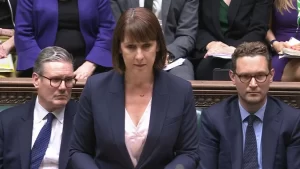
Rachel Reeves will eliminate winter fuel payments for 10 million pensioners to help fund substantial public sector pay increases.
The Chancellor announced plans to save £5.5bn this year, addressing a £22bn shortfall in public finances left by the previous government.
The majority of the savings will fund a £9.4bn pay settlement for public sector workers, excluding a 22% pay rise for junior doctors. One major change includes restricting winter fuel payments to those already receiving means-tested benefits, affecting nearly 10 million pensioners who will lose this benefit for the first time.
Currently, all 11.4 million pensioners receive an extra £200 to help with winter heating costs, with those over 80 receiving £300. The new measures will save £1.4bn this year and £1.5bn next year, reducing the recipients to only 1.5 million households.
Reeves also signalled potential tax increases in her upcoming Budget on 30 October. A Treasury document highlighted that the £5.5bn savings alone would not suffice to balance the books, indicating further fiscal measures are necessary.
The Chancellor’s decision has drawn sharp criticism from former chancellor Jeremy Hunt, who described Labour’s plans as the “biggest betrayal in history by a new chancellor.” Hunt accused Reeves of using a “fictitious black hole” to justify new tax rises, suggesting this undermines political trust.
Labour is also expected to advance the introduction of VAT on private school fees from January 1, preventing early down payments to avoid the 20% tax charge.
Reeves stated that Whitehall’s day-to-day budgets are expected to be £21.9bn higher than previously anticipated, due to increased costs related to asylum claims and illegal immigration, which alone amount to £6.4bn this year. Additional spending on the NHS, Ukraine funding, and infrastructure maintenance has further strained public finances.
Labour will also terminate the Rwanda asylum scheme and cancel the Dilnot reforms, which were designed to allow people to retain more of their savings when paying for care costs.
Read more:
Reeves scraps winter fuel payments for 10M pensioners to fund public sector pay rise
Reeves’ tax raid spells ‘game over’ for North Sea oil and gas

The North Sea is approaching “game over territory” after Rachel Reeves pushed forward with an expanded tax raid on oil and gas companies.
On Monday, the Chancellor followed through on Labour’s election pledge to impose harsher taxes on oil companies by increasing the energy profits levy. Reeves announced that the levy, initially introduced by the Conservatives, will now extend for an additional two years, expiring at the end of March 2030, with the headline rate rising from 75 per cent to 78 per cent.
She also abolished an “unjustifiably generous” allowance that permitted companies to deduct a portion of their investments in new oil and gas fields from their tax obligations. This allowance will cease on November 1, though investments made before this date will remain unaffected.
A separate allowance for investment in green energy projects will continue to be deductible from the tax.
The Chancellor’s decision was met with fierce criticism from oil and gas companies, who branded it “reckless, wrong, and economically ruinous for the North Sea.”
Russell Borthwick, chief executive of the Aberdeen & Grampian Chamber of Commerce, representing a significant portion of the industry, said: “The new government is pushing the North Sea dangerously close to ‘game over’ territory, jeopardising our energy transition. Instead of viewing the energy sector as a solution to the UK’s public finance challenges, the Chancellor has chosen to tax the industry into oblivion.”
He added, “This decision will result in £20 billion lost in Treasury revenues, increased reliance on imported oil and gas—which is worse for the planet and the economy—and the potential loss of tens of thousands of jobs.”
Prior to Labour’s election victory earlier this month, Reeves had estimated that the expansion of the windfall tax would generate an additional £10.8bn in revenue. However, analysts have warned that this move could trigger “unintended consequences,” accelerating the decline of the North Sea.
An analysis by Wood Mackenzie previously cautioned that the new tax could prompt oil and gas companies to “freeze investment” until the tax expires, with some companies likely to conclude production on older fields prematurely, withdraw supporting infrastructure, and reduce investments in green technologies such as offshore wind and carbon capture and storage.
Graham Kellas of Wood Mackenzie added that while the new headline tax rate matches that of Norway, the removal of capital allowances and the UK’s frequent rate changes have made the UK appear like a “fiscal wild west,” deterring investors.
Read more:
Reeves’ tax raid spells ‘game over’ for North Sea oil and gas
Taxpayers urged to heed HMRC’s simple tax assessments

More than half a million taxpayers, set to receive HMRC’s simple tax assessments for the first time, are being warned not to ignore them to avoid penalties and missed tax deductions, according to leading audit, tax, and business advisory firm Blick Rothenberg.
Robert Salter, a Director at the firm, stated: “HMRC has recently announced that 560,000 individuals – including 140,000 pensioners – will receive simple tax assessments for the 2023/24 tax year in the coming weeks. Unfortunately, many taxpayers tend to automatically ignore correspondence from HMRC or assume that ‘the tax will take care of itself’ via PAYE or another type of tax withholding.”
He explained: “However, these simple assessments effectively act as tax demands, requiring individuals to proactively make a tax payment to HMRC. Failure to do so could result in penalties and interest on their unpaid tax for not settling the tax position in a timely manner.”
Robert further emphasised: “It is crucial that taxpayers who receive these simple tax assessments verify the calculations prepared by HMRC and the income captured within their assessments. Experience shows that HMRC may not necessarily account for available tax deductions, such as charitable gift aid contributions, pension contributions, or professional subscriptions.”
He added: “If taxpayers pay the tax demanded by the simple assessment without considering potential deductions, they risk overpaying taxes to HMRC. Spending 5 or 10 minutes reviewing the Revenue’s figures can prevent this.”
Robert also noted: “HMRC has always issued a small number of simple assessments each year to capture tax due on income such as investment income, dividends, and state pensions – essentially, income not directly subject to PAYE withholding or collected via a self-assessment tax return.”
He continued: “The number of such cases has increased for 2023/24 due to frozen tax bands, such as the personal tax allowance of £12,570, which has been frozen since April 2021. Additionally, higher interest rates mean that more individuals with modest savings may now be liable to tax on such income. This increases the risk of tax penalties for those who ignore HMRC, but those who are proactive can benefit from tax deductions – a reminder that ‘a stitch in time saves nine’.”
Read more:
Taxpayers urged to heed HMRC’s simple tax assessments
How companies carry out fleet maintenance in the summer. The dangers o …

Summer is a time when the strain on vehicles increases, as hot weather can cause the engine to overheat, which can have serious consequences. Fixing the consequences of overheating can be expensive, including engine replacement or major repairs.
To avoid overheating problems, keep their vehicles running efficiently, and minimise repair costs, companies with fleets take a number of maintenance measures. We will discuss what these measures are and why engine overheating is dangerous in this article.
Key maintenance activities for vehicles in the summer
The cooling system. Insufficient coolant level is the most common cause of overheating. It is important to make sure that the coolant level is correct and that there are no leaks in the cooling system and that the radiator is clean. If necessary, the cooling system is flushed.
The thermostat, water pump and fan are also checked.
The engine oil and filters. Oil not only lubricates the engine but also helps to cool it. High temperatures can affect the viscosity of the oil, therefore, a check is carried out its level and condition. If the oil level is too low, the engine can overheat.
A dirty air filter can reduce engine power and cause the engine to overheat. A clogged or faulty fuel filter increases the load on the fuel pump and leads to its breakdown.
A faulty fuel pump can cause the engine temperature to rise. Because the fuel pump is one of the main elements, which supplies fuel to the engine.
The brake system and tyre condition. In summer, the braking system is subject to greater stress due to heat and dust. Checked the brake fluid level, the condition of the pads and discs, and the tightness of the system.
Summer temperatures can increase the pressure in tyres, so their pressure and condition are checked. Worn tyres increase the risk of punctures and impair handling.
The battery and electrical system. Heat can have a negative impact on the battery, so its condition, charge and terminals are checked.
The condition of the wiring and electrical appliances is also checked.
The air conditioning system is checked – refrigerant level and compressor condition.
Visual inspection. All important components and assemblies of the vehicle are inspected for leaks, damage and other problems.
The dangers of engine overheating
Overheating can cause serious engine damage, such as cylinder deformation, gasket damage and other critical components.
An overheated engine does not work as efficiently as usual, which can lead to reduced power output and poorer dynamic performance.
An overheated engine consumes more fuel.
An overheating engine can cause a loss of power or even stall the engine while driving, which can lead to an accident.
In extreme cases, overheating can cause the engine to catch fire, which is also a serious hazard.
Regular inspection and maintenance of fleets in the summer is crucial to maintain vehicle efficiency and reliability and avoid costly repairs.
Read more:
How companies carry out fleet maintenance in the summer. The dangers of engine overheating
Intergenerational Learning is Key for Building a Skilled and Engaged W …

For the first time, organisations have access to a workforce across five generations, with Baby Boomers working alongside Gen Z.
While this may present some challenges, there is a huge opportunity to utilise intergenerational learning, and embrace different opinions, knowledge and experiences.
Traditionally, mentoring and learning has been seen as a relationship between older generations, sharing their wisdom and experience to those younger than them. Although this way of learning is still hugely valuable, intergenerational learning, and reverse mentoring, sees different generations teaching and learning from one another. Understanding and supporting the idea that each generation can offer different skills, experiences and learnings, is a vital step in creating a strong workforce and filling skill and knowledge gaps. For both my own company and those that we work with, supporting a multi-generational workforce and encouraging learning from within, has become a well-deserved priority.
Fostering a culture of continuous learning can help build and maintain a workforce that feel empowered. It has been found that those who spend time learning at work are 39% more likely to feel productive and successful and 23% more ready to take on additional responsibilities. In my experience, I have seen how applying intergenerational learning allows employees to fulfil their curiosities in a diverse and engaged manner. Rather than relying on the likes of search engines to get answers, having the means to learn readily available through peer-to-peer communication, produces a workforce that is more eager to participate, whether they are the ones teaching or learning.
There are plenty of other benefits to encouraging intergenerational learning aside from filling knowledge gaps. Having different generations come together and collaborate is an incredibly effective way to encourage strong relationships across age groups and reduce siloes in the workforce. It can be a highly effective way to create a workforce with a strong sense of belonging and reduce feelings of loneliness in the workplace. Offering opportunities for different generations to contribute their knowledge and lead where they are able, but also be advance in areas they are less familiar with, can also support a strong sense of purpose.
As a true advocate for mentoring, I see huge value in reverse mentoring in particular which reverses the conventional learning and mentoring setup. Younger, often more junior employees, take the role of mentors to more senior team members and share fresh perspectives, technological adeptness, and contemporary insights. It can give those who may typically not have a ‘voice’ an opportunity to interact with, and teach, business leaders, managers and C-Suite members.
Harnessing this mentoring technique can help everyone across an organisation grow and develop, while providing individual empowerment and the opportunity to develop soft skills such as communication. Reverse mentoring can also help promote increased transparency across an organisation, encouraging people at every level to speak up on areas they’re keen to develop.
A recent study highlighted that 93% of organisations are concerned about employee retention and providing learning opportunities is currently the number one-way businesses are working to improve this. Reverse mentoring, and intergenerational learning is a hugely effective way to promote development and growth for all, and one which I hope more organisations globally will implement.
Regardless of how companies choose to build a learning culture, it is vital to pick one that ensures all workers across the different generations are engaged and feel supported, to reap the benefits of building a multi-generational workforce.
Read more:
Intergenerational Learning is Key for Building a Skilled and Engaged Workforce
Petrol Stations accused of overcharging drivers by £1.6bn in 2023
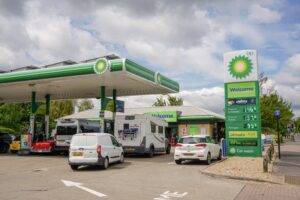
Petrol stations have come under fire after overcharging UK motorists by a staggering £1.6 billion last year, according to the Competition and Markets Authority (CMA).
The regulator’s findings reveal that fuel margins – the difference between the wholesale cost and the pump price – have remained significantly above pre-pandemic levels.
The CMA highlighted that supermarkets were particularly guilty, with their fuel margins roughly double what they were in 2019. This hike in margins cost drivers an additional £1.6 billion in 2023 alone.
Simon Williams from the RAC described the situation as “nothing short of outrageous,” particularly given the reliance many have on their vehicles. “Drivers have every right to feel ripped off, especially knowing there is virtually no market competition between retailers,” he added.
Last year, the CMA’s review of the road fuel market uncovered that competition among petrol stations was insufficient to drive down costs for motorists. Major supermarkets, including Asda, Morrisons, Tesco, and Sainsbury’s, were criticised for treating drivers as “cash cows,” having overcharged them by £900 million in 2022.
To address the issue, the CMA has recommended the introduction of a “pumpwatch” scheme. This initiative would provide real-time fuel price data to drivers via mobile devices and services like Google Maps, potentially saving motorists up to £4.50 per fill-up by making it easier to find cheaper fuel options nearby.
Currently, the CMA is monitoring prices through a voluntary data-sharing scheme. However, only 40% of forecourts have agreed to participate, resulting in incomplete data that is insufficient for use in mapping and navigation applications.
In response, the Government has proposed the Digital Information and Smart Data Bill, aiming to create a comprehensive and compulsory scheme. While this legislation is being developed, the CMA has urged ministers to implement an enhanced interim voluntary scheme to mitigate overcharging in the meantime.
The RAC has also called on Energy Secretary Ed Miliband to expedite the CMA’s recommendations, ensuring that motorists are protected from excessive fuel prices as soon as possible.
Read more:
Petrol Stations accused of overcharging drivers by £1.6bn in 2023

