

The new Government must address the 55% effective tax rate on Universal Credit recipients if it aims to reduce unemployment.
That’s according to Robert Salter, Technical Director at audit, tax, and business advisory firm Blick Rothenberg, who highlighted the issue in light of the recent King’s Speech, where the Government committed to focusing on employment. He stated, “While the Government’s commitment to getting the unemployed and under-employed back into the workforce is commendable, the practical implementation of this policy remains to be seen.”
Salter questioned whether the Government would relax the 55% tax rate on Universal Credit, which reduces benefits when recipients work extra hours. “Given that the top rate of income tax in the UK is 45%, it is inequitable that Universal Credit recipients, who typically have lower incomes, face an effective tax rate of 55%.”
He added that this high clawback rate, combined with PAYE and National Insurance contributions, discourages claimants from increasing their working hours, thus counteracting efforts to combat underemployment.
Read more:
Universal credit tax rate hindering employment efforts, says Blick Rothenberg
Month: July 2024
Nothing in the King’s Speech: A Call to Arms for Entrepreneurs

In a world where rhetoric is as valued as policy, one might expect a regal missive such as the King’s Speech to brim with assurances and incentives for our nation’s entrepreneurial spirits.
Alas, the latest edition of this ceremonious address delivered naught but disappointment to the enterprising souls of Britain. For those of us who had our hopes pinned on a royal proclamation of support, the silence was deafening.
Picture this: the King’s Speech, an opportunity for the government to lay out its grand vision, to rally the troops, and to offer the clarion call of encouragement to those daring enough to invest in the uncertain waters of new business ventures. Yet, what did we receive? A tepid, insipid reiteration of familiar promises and a glaring omission of any substantial support for the business community. This, from a government that supposedly champions the cause of enterprise and innovation.
Simon Rothenberg of Blick Rothenberg articulated the collective dismay succinctly. Entrepreneurs, he noted, are in a state of anxiety about the new government’s potential impact on their ventures. The King’s Speech failed to provide the much-needed reassurance. There was no mention of business taxation, no clarification on corporation tax, capital gains tax, or VAT. Business leaders are left in a limbo, anxiously awaiting the Budget for any semblance of certainty. It’s akin to waiting for a bus in the pouring rain, with no timetable in sight.
The absence of a clear, supportive narrative for businesses is compounded by other governmental proposals that could exacerbate the challenges faced by British enterprises. Take the proposed changes to the Apprentice Levy, for instance. These adjustments threaten to disadvantage businesses that currently benefit from government support in training and developing their staff. It’s a classic case of giving with one hand while taking away with the other, and it leaves businesses caught in a precarious balancing act.
Moreover, the King’s Speech incorporated proposals from the Labour Party’s election manifesto to enhance employment protections. While these measures are a triumph for trade unions, they spell potential trouble for businesses grappling with increased costs and reduced flexibility. One cannot help but marvel at the irony: a government that professes to support business simultaneously imposes regulations that might stifle their very growth.
Consider the proposed extension of the National Living Wage to all adults, including those 18-19 years old with no prior work experience. On the surface, it seems a noble endeavour, a step towards equity. But scratch beneath the surface, and it becomes clear that this could act as a deterrent for businesses considering hiring young, inexperienced staff. The costs of recruiting and training these individuals would skyrocket, undermining the existing system that acknowledges the need for differential wage rates for younger employees.
Trainees, by their very nature, require significant investment from employers to bring them up to speed. The current wage system reflects this reality, offering a pragmatic approach to fostering young talent. Yet, the government’s new proposal threatens to disrupt this delicate balance, potentially discouraging businesses from investing in the workforce of the future. It’s a shortsighted move that could have long-term repercussions.
In this context, the King’s Speech could have been a beacon of hope. It could have addressed these concerns head-on, offering clear policies and incentives to bolster the confidence of entrepreneurs. Instead, it skirted around the critical issues, leaving the business community in a state of uncertainty.
One might argue that the King’s Speech is merely a ceremonial affair, not the place for detailed policy announcements. Yet, symbolism matters. The speech sets the tone for the government’s agenda, and its failure to acknowledge the pressing needs of businesses sends a troubling message. It suggests a disconnect between the government’s proclamations of support for enterprise and the reality of its legislative priorities.
In a time of economic flux, with Brexit still casting a long shadow and global competition intensifying, Britain’s entrepreneurs need more than vague assurances. They need concrete policies, tax incentives, and a regulatory framework that encourages innovation and growth. They need to know that the government has their back, that their risks will be rewarded, and that their contributions to the economy are valued.
As it stands, the King’s Speech offered none of this. It was a missed opportunity, a disappointing silence where there should have been a resounding declaration of support for the lifeblood of our economy – the entrepreneurs. If the government truly wishes to foster a thriving business environment, it must do better. It must listen to the concerns of the business community and act decisively. Otherwise, we risk stifling the very spirit of innovation that has long been the hallmark of British enterprise.
Read more:
Nothing in the King’s Speech: A Call to Arms for Entrepreneurs
Getting To Know You: Shereen Daniels, founder and MD, HR rewired

Shereen Daniels is a bestselling author of The Anti-Racist Organisation: Dismantling Systemic Racism in the Workplace, a three-time LinkedIn Top Voice, and a former winner of HR Most Influential Thinker.
As the Managing Director of the award-winning HR advisory firm HR rewired, she is dedicated to driving meaningful change within organisations.
HR rewired excels in racial equity assurance, assisting public, private, and non-profit organisations in assessing the impact of their practices on marginalised employee groups. Their work focuses on both inward effects—how company culture influences employees—and outward impacts on societal equity and stakeholder perceptions. Using a proprietary methodology and diagnostic tools developed in collaboration with experts in anti-racism, ESG, human rights, and sustainability, the firm conducts comprehensive racial equity risk assessments to identify and mitigate racism, bias, and discrimination.
Additionally, Shereen serves as Chair of the African Diaspora Economic Inclusion Foundation, furthering her commitment to inclusivity and equity.
In this Q&A, we delve into her inspiring journey and vision for a more equitable workplace.
What was the inspiration behind HR rewired?
The origins of HR rewired, a company dedicated to transforming the experiences of employees most impacted by racism, bias, and discrimination, are rooted in both my personal and corporate experience. The harrowing events surrounding the murders of Breonna Taylor and George Floyd and the subsequent social protests were pivotal moments that sparked my journey.
In May 2020, I recorded a 20-minute video on my mobile phone in my bedroom, talking about my experiences as a Black woman navigating the discomfort around race and racism within the UK. What started as a single, raw, and honest video quickly grew into a YouTube series. One video became five, then ten, and soon, I found myself recording for 100 consecutive days.
My videos were regularly reshared on social media, catching the attention of Forbes and leading to my recognition as a LinkedIn influencer, amassing over 100,000 followers. This newfound platform meant that CEOs and founders of global brands and household names requested my support and guidance.
Alongside the 2022 publication of my bestselling book The Anti-Racist Organization: Dismantling Systemic Racism in the Workplace, my company has supported brands corporate brands from Google, to Wagamama’s, De Beers to Vodafone as well as nonprofits such as Prostate Cancer, YMCA, Duke of Edinburgh to help evolve their workplace cultures to work for the many, not just the dominant few.
Looking back, is there anything you would have done differently?
My strong personal brand heavily influences the success of my company, a double-edged sword that brings both opportunities and challenges. While people naturally buy from those they trust, especially in a small company, this often means embodying the business until it grows large enough to develop its own identity. You are the business in the eyes of your clients, and it can be difficult to navigate when you are trying to scale and bring in new senior team members.
Reflecting on my journey, I wish I had been more aware of how much I wanted my business to rely on my brand. This would have allowed me to make slightly different marketing choices, for example, when it came to HR rewired. The company brand was on the backburner, which could make it difficult in the future for me to hire people to take over the running of the business. It’s not an issue now, but I feel I should have been more aware of it.
Addressing these challenges required clear role definitions, understanding how my personal brand affects the company, and a strategic repositioning of our products and services to meet market demands. It also demanded a willingness to take calculated risks and often put my personal feelings to one side.
What defines your way of doing business?
A steadfast commitment to making a tangible difference for employees whose racial identity negatively impacts their ability to perform and be accepted at work. My approach is grounded in core values of honesty, transparency, and the courage to say what is necessary, rather than what is most comfortable or palatable.
I believe in running a lifestyle business that aligns with how I wish to work. I partner with clients who are ready to push past their discomfort, roll up their sleeves, and move from debate to action. This means working with those who are not just talking about change but are committed to implementing it.
As a former cancer survivor (I had stage 4 Hodgkins Lymphoma), I am acutely aware of how stress and burnout can impact the body, but also the necessity of working in a way that allows one freedom of choice to a point and freedom of expression. Therefore, my way of doing business is more about how I wish to live my life.
What advice would you give to someone starting out?
My advice to entrepreneurs starting out is to be crystal clear about the problem you’re solving and ensure it aligns with the problems clients are willing to pay to solve.
Remember, an idea is only as good as its execution—done is better than perfect. Continuously hone your craft and maintain discipline to build a brand that establishes you as the unchallenged authority in your field.
Embrace the reality that entrepreneurship is filled with often costly challenges and mistakes; failure is part of the process. Be bold in asking for help and humble enough to accept it when offered.
It’s also crucial to move beyond the allure of the entrepreneurial title and focus on creating real value that attracts customers. Fall in love with the impact rather than the idea. Recognise the difference between loving the idea of entrepreneurship and running a viable business.
Finally, build a strong support network. The entrepreneurial journey can be lonely, so having people to exchange ideas with, seek support from, or simply chat with is essential to keeping you sane! Stay true to your values and keep pushing forward while simultaneously recognising when it’s time to pivot.
Read more:
Getting To Know You: Shereen Daniels, founder and MD, HR rewired
Could Labour’s plan to put VAT on private schools lead to parents †…

Ah, the Labour Party, ever the beacon of fairness and redistribution, has yet again graced us with a stroke of genius. This time, it’s a plan to slap a VAT on private schools, those bastions of privilege and top-tier education.
Now, while the sight of Etonians and Harrovians squirming at the prospect of higher fees might bring a smirk to the faces of many, the ripple effects of such a policy deserve a closer examination. Could this lead to a surge of secular parents suddenly ‘finding religion’ to secure a spot for their offspring in church schools, thus dodging the financial blow? It’s a fascinating, if somewhat cynical, possibility.
Labour’s proposal to levy VAT on private school fees is not without merit. The intention is clear: generate revenue and level the playing field. Private schools, with their vast resources, extensive facilities, and polished alumni networks, do embody the stark inequalities within the British education system. Adding 20% to the already hefty fees could theoretically divert some funds to the underfunded state sector, potentially improving the quality of education for the many, not just the privileged few.
However, as with many well-intentioned policies, the devil is in the details. Private school parents are a resourceful lot. Faced with the prospect of even higher fees, one can imagine a scenario where the quest for an affordable yet high-quality education leads them to the gates of the Church of England – or indeed any religious institution offering state-funded education. Church schools, after all, have a reputation for maintaining rigorous academic standards, often rivalling their private counterparts.
So, are we on the brink of a religious revival, spurred not by a spiritual awakening but by a fiscal one? Picture the scene: the PTA meeting replete with parents who, until yesterday, couldn’t distinguish between a psalm and a parable, now eagerly attending Sunday services, volunteering at church events, and dusting off their old confirmation certificates. Cynical? Perhaps. But far from improbable.
Church schools, with their dual commitment to education and moral instruction, have long been a preferred alternative for parents seeking more than what the average state school offers. These institutions, often oversubscribed, already have rigorous selection criteria, frequently prioritising children from practising Christian families. In response to a sudden influx of new ‘believers’, churches could find themselves inundated with applications, leading to a comical, if somewhat uncomfortable, scenario of competitive piety.
I am broadly able to speak about this from the point of knowledge having been a governor for period of the secondary faith school that I myself attended growing up. As even more than a decade ago rumours were that parents attended church or synagogue for the ‘required’ period just to obtain the requisite ‘Green stamp’ letter from the vicar or rabbi and then oddly their faith evaporated once little Johnny or Jane had packed their school bag on their first day.
This potential surge in faux religiosity raises several questions. For one, it challenges the integrity of both the educational and religious institutions involved. Schools may find their ethos diluted by families whose primary motivation is financial rather than spiritual, potentially undermining the communal values that define these establishments. For churches, the moral quandary of accommodating these new ‘members’ could strain their resources and alter their congregational dynamics.
Moreover, this shift could exacerbate existing inequities within the state system. Church schools, already advantaged by more engaged parent bodies and additional funding, might become even more exclusive, leaving the truly comprehensive schools to cope with a disproportionate share of the challenges associated with educating diverse and often disadvantaged populations. The very aim of Labour’s policy – to reduce inequality – could, paradoxically, result in a new form of segregation.
Of course, some might argue that parents will always find ways to navigate the system to their advantage, and that church schools have long been a part of this landscape. The new policy would merely add another layer to the complex interplay of education, economics, and faith. Yet, the broader societal implications cannot be ignored. Encouraging disingenuous behaviour in the pursuit of educational advantage sends a troubling message about the value we place on honesty and integrity.
The real solution, one might argue, lies not in punitive taxation but in genuine investment in the state sector. Smaller class sizes, better teacher pay, improved facilities – these are the changes that can truly level the playing field. If state schools were sufficiently funded and resourced, the appeal of private and church schools might naturally wane, making the educational landscape more equitable without resorting to fiscal sleight of hand.
So whilst Labour’s plan to impose VAT on private school fees may seem like a step towards greater fairness, it risks triggering unintended consequences. The spectre of parents ‘finding religion’ to secure a better education for their children highlights the complexity of the issue. Rather than driving families to disingenuous displays of faith, a more comprehensive approach to education reform is needed – one that ensures all schools, regardless of their funding model, can provide an excellent education. Only then can we hope to create a truly level playing field for all our children.
Read more:
Could Labour’s plan to put VAT on private schools lead to parents ‘Finding Religion’
Actions speak louder than words

It’s a well-worn saying but when it comes to leadership, it definitely rings true.
You may hold the position of top dog but to truly earn that magic key to success, you need to leave your ego at the door and accept that it’s not always about what you want or need from your employees, but rather what they need from you.
Recognising the grey
It’s ever apparent these days that a positive culture is the glue that’s holds your team together. It motivates, inspires, bonds and produces long-term success and a happy, dedicated workforce.
But what if, despite knowing all the above, things are just not right. There is an ever-growing toxic cloud snaking its way around the office that isn’t clearing no matter how many windows you open or Friday lunches you provide.
Weeds may be starting to grow throughout your business landscape – grey areas as we like to call them or issues that need to be investigated and firmly tackled to restore calm to your perfectly balanced ecosystem.
Stepping up
It’s understandably difficult for leaders to keep everything in tip-top shape all the time, as is true in every element of life. There are always peaks and troughs to tackle but the more people you have on-side and supporting you on that rollercoaster, the easier it will be to enjoy the ride.
Leadership is about being brave. That is why, in a tough situation, you’ve just got to stand up and take ownership. Acknowledge when things are rough and when work needs to be done. There will undoubtedly be brutal truths that you need to hear. Asking your team for anonymous feedback will help you gain a true measure of problems from an employee perspective.
Most important of all, once you have digested that feedback and pieced together any common themes, is ACTING on it. This is the time to be pragmatic and walk the talk, otherwise your leadership abilities will be questioned, and your team will start defecting. After all, if you don’t have their back, why should they have yours?
Transparency & communication
In the right culture, people will roll their sleeves up and help in times of hardship but only if they feel respected, appreciated, and genuinely believe they are part of something. And while overcoming a challenge can indeed be a team effort, that will only be the case if the challenge is clear in the first place.
That is why you need to be open and honest about the issues being faced and be clear on the actions needed to remedy the situation. As leader, you may not be the only one who needs to hear and accept some brutal truths. You may also need to have some tough conversations with others. Not everyone may like what they hear but ‘you can’t make an omelette without breaking eggs’ and the longer you leave it, the bigger the problem will grow. It is, however, always best to deliver such truths with kindness, empathy and understanding of a person’s individual experience. And if the very idea of this fills you with dread, external help could prove useful to help facilitate any difficult discussions.
It’s also good to remember that the more willing you and your team are to both sharing and accepting tough truths, the more resilient and successful your business will become.
So, what other actions can you take to make a positive difference?
Lose the blame culture
Foster an environment where owning your mistakes and learning from them is the norm (you included!)
Encourage autonomy where everyone is accountable for actions/decisions and wins are acknowledged and celebrated
Value questioning as a means to improvement
Seek transparency at all turns – holding onto assumptions and denials about the extent of a problem could mean you end up in crisis mode
Reject complacency – even when times are good, never stick your head in the sand and ignore the danger signs of what may lie ahead
In summary
Running a business is not always a bed of roses. Let’s face it, being a leader is tough. If it wasn’t, everyone would be doing it!
Make sure you enlist the help of someone impartial to support you through challenging times and give yourself the space you need to think, unwind and show up as the best version of yourself. This is how you will lead from the top and build the best company with the best team around you.
And while the truth may at times hurt, the pain of ignoring it can be far worse. As seventeenth-century philosopher, Thomas Hobbes, wrote forebodingly: ‘Hell is truth seen too late’. No matter what type or size your organisation is, you may be unwittingly harbouring a harsh reality that needs to be outed and dealt with to avoid bigger repercussions. Therein lies the path to prosperity!
Read more:
Actions speak louder than words
Trump-Vance Ticket: A potential disaster for climate progress and US-U …

The announcement of JD Vance as Donald Trump’s running mate for the 2024 presidential election isn’t just another headline—it’s a potential turning point with far-reaching implications for both America and the world.
JD Vance’s firm support of the oil and gas industry and his open disdain for solar power and electric vehicles are well known. His views on climate change, mirroring Trump’s dismissal of the issue, starkly contrast with the progressive climate policies we are striving for here in the UK. Prime Minister Keir Starmer has made it clear that combating climate change is a top priority, and this ideological clash could create significant tension between our two nations.
Impact on Renewable Energy Initiatives
If Trump and Vance are elected, we can expect a reversal of the Biden administration’s renewable energy initiatives. This potential shift back to fossil fuels in the US is troubling. For the UK, which has committed to achieving net-zero emissions by 2050 and invested heavily in renewable energy, this presents a real challenge.
Firstly, global efforts to combat climate change could lose momentum. The US is a major player in these efforts, and its regression could encourage other countries to deprioritise renewable energy investments, making it harder to meet international climate goals.
Secondly, UK businesses in the renewable energy sector might face stiffer competition from a revitalised US oil and gas industry. This could impact the profitability and feasibility of UK renewable energy projects, particularly if US policies lead to lower global oil and gas prices.
Strain on the US-UK Special Relationship
The US-UK special relationship has always been strong, but differing views on such a critical issue could strain this bond. Prime Minister Starmer’s administration is committed to sustainability and innovation in renewable energy, while a Trump-Vance administration would likely move in the opposite direction.
This divergence could hinder collaborative efforts on climate change, a key area of cooperation. Joint initiatives, funding for green technologies, and shared research might all be at risk. The ideological divide might also affect other areas of the bilateral relationship, complicating trade negotiations, defence cooperation, and broader geopolitical strategies.
Looking Forward
As we face the escalating impacts of climate change, international cooperation is more important than ever. The potential election of a Trump-Vance administration feels like a step backward, threatening to undo years of progress.
For the UK, maintaining its leadership in renewable energy and climate change mitigation will require careful navigation of these complex dynamics. Diplomatic efforts must be intensified to find common ground and mitigate the negative impacts of US policy shifts. It’s crucial for the UK to strengthen alliances with other like-minded nations to keep advancing the global renewable energy agenda.
Read more:
Trump-Vance Ticket: A potential disaster for climate progress and US-UK relations
Remote working paradox: just 7% of CEOs work full-time in the office d …

A recent survey highlights a significant discrepancy between UK chief executives and their stance on office attendance. Despite a nationwide push to bring employees back to their desks, only 7% of bosses actually work full-time in the office.
A study conducted by workspace provider IWG has revealed that a small fraction are spending five days a week in a central office. Interestingly, a quarter of these leaders consider a full-time return to the office as a top priority.
This discrepancy has raised concerns of potential hypocrisy, as staff members compelled to return may see their leaders’ actions as contradictory. The pressure to increase office attendance has led some companies to closely monitor employee presence, including tracking swipe-card data.
Prominent figures such as Sir Jim Ratcliffe, billionaire industrialist and co-owner of Manchester United, have been vocal about their stance. Ratcliffe recently issued an ultimatum to the football club’s staff to return to the office full-time or find “alternative employment.” Lord Sugar has also expressed support for Ratcliffe’s position on banning Working from home.
The push for office returns has also gained traction among senior politicians. Last year, Jeremy Hunt, the former chancellor, warned that British businesses could face a creativity crisis unless office work becomes the norm again. The Labour Party is expected to continue this agenda, especially for civil servants. Jonathan Ashworth, now the chief executive of think tank Labour Together, expressed before the general election that Labour intends for civil servants to spend most of their time in the office, deeming it “sensible” for them to be at their desks.
Private sector leaders are increasingly frustrated with their inability to enforce office attendance, citing declines in productivity and team culture. Online forums and social media, including TikTok, reveal various employee tactics to circumvent office attendance requirements, such as “coffee badging,” where employees scan in briefly before heading back home.
Despite these challenges, the IWG survey found that two-thirds of respondents believe they would lose talented employees if they enforced a strict office attendance policy. Additionally, three-quarters of business leaders reported improved employee engagement and team collaboration due to flexible working arrangements.
Read more:
Remote working paradox: just 7% of CEOs work full-time in the office despite calls for staff return
Property developers prepare for green belt ‘gold rush’ as Chancell …

Developers are preparing for a green belt “gold rush” following Chancellor Rachel Reeves’ commitment to cut planning red tape and initiate a housebuilding surge across the UK.
Phones are “ringing off the hook” as housebuilders, landed estates, and property companies gear up to take advantage of the Chancellor’s drive to unlock green belt land for development and “get Britain building again.”
Jon Stoddart, head of London and South East planning at property consultancy CBRE, commented: “We have been inundated. In the last couple of days, the phone has just been ringing off the hook. It almost feels like there could be some sort of gold rush, some sort of stampede of developers thinking ‘well actually this is a new era and it might be best to work up planning applications’.”
This surge follows Reeves’ first speech as Chancellor, where she announced “urgent steps” to deliver the Government’s central mission to “kickstart economic growth,” including reinstating mandatory local authority housing targets and reviewing green belt land.
Deputy Prime Minister Angela Rayner will instruct local planning authorities to review green belt boundaries, prioritising former industrial brownfield sites and so-called grey belt land for development to meet housing targets.
Green belt land, which surrounds 16 city areas across England, is protected from development and covers roughly an eighth of England’s land area. Much of this land is in prime commuter belt areas around London, traditionally Tory heartlands. Labour’s manifesto pledged to release grey belt sites, such as disused car parks, for housing development.
Knight Frank has identified 11,000 potential grey belt sites, which could deliver 200,000 new family homes. Developers and landowners are now evaluating new opportunities to build.
Mr Stoddart said: “They’re saying ‘we have got a lot of sites that could be classified as grey belt that are well located near train stations’. There is a fresh emphasis to actually get on with this.”
One leisure company with “massive” green belt sites is exploring ways to capitalise on this opportunity. If reclassified as grey belt, these sites could significantly boost their business and diversification prospects.
The Chancellor’s announcement that Ms Rayner has already recovered two planning appeals for data centres in Buckinghamshire and Hertfordshire signals a clear message to developers that a cautious approach no longer pays off.
Stoddart added: “If they had been playing a fairly patient game under the old regime and they hadn’t made a planning application, if they hadn’t just been refused or at public inquiry, then they will have missed out.”
Mark Evans, head of regional residential development at Knight Frank, added that the green belt review has “immense potential” to unlock land, anticipating a significant increase in interest from landowners and housebuilders in the coming weeks.
Evans added: “We expect landlords of such sites [grey belt] to come forward as they evaluate the implications of the new government’s policy shift.”
Despite the expected wave of planning applications, experts warn that high mortgage rates and environmental regulations could hinder actual housebuilding.
Stoddart warned: “Even without planning red tape, there will still be huge challenges to building because homeowner demand is currently constrained by high interest rates.”
Evans also cautioned that Labour’s requirement for half of the homes on these sites to be classed as “affordable” might render many potential sites unviable due to insufficient profitability.
He concluded: “A balanced approach that considers both housing needs and economic feasibility will be essential if any new housing is to be delivered following this change in green belt policy.”
Read more:
Property developers prepare for green belt ‘gold rush’ as Chancellor pushes for building revival
Last bank in paddock wood closes, impacting local community
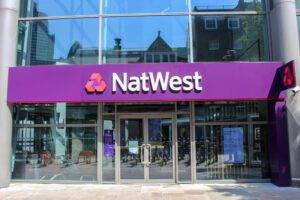
The last remaining bank in Paddock Wood, NatWest, has permanently closed its branch on Station Road, marking the end of all banking services in the expanding Kent town.
This closure follows the previous exits of HSBC and Barclays, leaving local residents without a dedicated bank.
Paddock Wood has experienced significant population growth over the past decade due to the construction of thousands of new homes. Despite this, NatWest has opted to shut its doors, with a spokesperson stating, “As we adapt our services to meet changing needs, we may take the difficult decision to close or consolidate some of our branches.”
Residents are now directed to the Post Office for basic banking services, such as cash withdrawals, cheque deposits, and balance enquiries. However, for payments or transfers, customers will need to travel to the nearest NatWest branch in Tunbridge Wells.
NatWest is encouraging customers to utilise its comprehensive range of online services, including internet banking via its app, video banking for both personal and business needs, and telephone banking.
The decision has been met with disappointment from the local community. In a leaflet, NatWest disclosed that customer usage of the branch had dropped by 67% between 2019 and 2023. Furthermore, in 2022, 72% of customers who visited the branch also used online banking services.
A NatWest spokesperson acknowledged the frustration but emphasised the bank’s commitment to a sustainable network. “While we know that this is disappointing, we have carefully considered how best to invest to make sure we have a sustainable network for the future. We are also significantly investing in refreshing our network, with close to £35m allocated for this purpose across the UK from 2023-24, alongside continued investment in shared solutions like the Post Office and banking hubs.”
Read more:
Last bank in paddock wood closes, impacting local community

