

Retailers and the hospitality sector are gearing up for a significant boost in consumer spending as Labour’s recent election victory coincides with a major weekend of sporting events, including England’s Euro 2024 match and Andy Murray’s potential final appearance at Wimbledon.
Businesses across the UK are expected to benefit from a surge in consumer confidence following Keir Starmer’s election win, combined with the excitement generated by key sports events. Historical trends show that a change in government often stimulates economic activity, with previous post-election periods in 1997 and 2010 seeing upticks in consumer sentiment and retail spending, according to GlobalData and PwC research.
The upcoming weekend promises a spending bonanza, highlighted by England’s Euro 2024 quarter-final against Switzerland and a Wimbledon doubles match featuring Emma Raducanu and Andy Murray. GlobalData forecasts a £419.5 million economic boost from football fans alone, with 24.8 million Britons expected to watch the England match, many of whom will gather in pubs and bars.
Tesco anticipates strong sales in alcohol, predicting the sale of 3.5 million items of beer and cider, complemented by 1 million packs of sausages and 1.3 million punnets of strawberries. Fans are expected to consume 13.4 million pints in pubs as they support the Three Lions.
The celebratory atmosphere extends to searches for champagne, which have surged by 36% at Ocado, potentially driven by both hopeful Labour supporters and enthusiastic football fans.
Prior to the election, nearly 36% of consumers indicated they would be more confident in spending with a Labour victory, a sentiment even stronger among younger demographics. PwC’s senior retail adviser, Kien Tan, noted the positive outlook, stating, “July will get a bit of a halo effect,” referencing the current economic conditions and consumer confidence.
The Labour government’s anticipated policy shifts, such as cuts in national insurance and increases in the minimum wage and pensions, are expected to further bolster consumer spending. The retail and hospitality sectors are likely to outperform last year’s sales, which were dampened by poor weather and competition from popular films like Barbie and Oppenheimer.
Patrick O’Brien, research director at GlobalData, highlighted the renewed optimism in retail, particularly among younger consumers. The expected mini-boom also reflects a reaction to pre-election spending dips, with households delaying major purchases amidst uncertainty.
As the new government settles in and the weather improves, the UK’s retail and hospitality sectors are poised for a summer of robust spending, fuelled by political change and a thrilling sports calendar.
Read more:
Shops and restaurants poised for consumer spending boost with labour win and major sports events
Month: July 2024
Remaining Authentic as an Entrepreneur

Authenticity is of great importance yet something that many of us are guilty of straying from at times.
In a world heavily dominated by the media, where we often see the best of people’s lives and similarly want to show the best parts of our own, it’s easy to put up facades for the purpose of seeking validation from others.
Social media is often a major player for dictating people’s belief in what life should look like and even benchmarking where we should be at certain points in our lives. I was guilty of becoming consumed by the chase for likes and views, questioning why some posts didn’t have as much engagement as others.
The professional world is no different. People strive to position themselves in a particular way they feel will be redeeming for others. The question is, should we change ourselves? Easy, in business, people do what they need to get the role, land a promotion or gain investment and just like outside of work, fitting in makes it easier to be a part of a group. At some point in my nearly 30 years of life I learnt it’s okay not to fit in. In fact, it’s better to stand out for being you and if you don’t fit in with the group, then the group is not meant for you.
In the early days of PushFar, I positioned my goals around finances, with ideologies of success around company value. I genuinely thought that was the dream. I then realised, partly because of the pandemic and through taking a step back and examining what I was building, that it was okay not to be the start-up entrepreneur who did what was expected.
It was okay not to fit the mold and to do things differently. I chose to focus on profit, not revenue. As it turns out, when fundraising and start-up investments weren’t as readily available in late 2022 and early 2023, suddenly all the venture capitalists realised what companies like PushFar were doing (keeping things lean and profitable with steady, achievable growth) was closer to what they wanted than what they’d expected of their own investments in the previous decade.
Trying to follow goals that are perceived as being ‘correct’ can be exhausting and quite frankly, unfeasible for many. Authenticity should be encouraged as it embraces diverse insight and increases inclusivity, which is important in all walks of life. When it comes to entrepreneurship, authenticity is important for steering the business in the direction that is right for you. It allows you to make genuine connections that align with your own values and will contribute positively to the future of your career. Being honest to yourself and others will bring much more joy in the long run over striving to achieve what others deem success.
Read more:
Remaining Authentic as an Entrepreneur
Jonathan Reynolds appointed as new business minister amid calls for SM …

Jonathan Reynolds has been named the UK’s new Business Minister following Labour’s victory in the General Election. With the Labour Party’s ambitious pre-election promises to support small businesses, all eyes are now on Reynolds to deliver on these commitments and drive economic growth.
This appointment comes amid growing anticipation and expectations from various business groups, particularly the National Enterprise Network (NEN), which represents micro and small businesses across the country.
Prior to the election, Labour had laid out an ambitious plan to back small businesses, recognising them as “not just the lifeblood of our communities but essential to our economic success.” Now, as Keir Starmer unveils his new cabinet, the NEN is urging Reynolds to expedite the implementation of this small business agenda to stimulate national growth.
The NEN recently published its Policy Report, *Harnessing the Economic Potential of Our Small and Micro Businesses*, outlining key steps for the new government. These steps focus on finance, education, social value, and levelling the playing field for minoritised communities. The report’s recommendations include making the UK the best place to start and scale-up businesses by improving access to finance, boosting small business exports through a comprehensive trade strategy, addressing late payment issues, opening public contracts to small businesses, and creating Skills England to tackle skill shortages.
Alex Till, Chair of the NEN, highlighted the critical role of small businesses in the UK economy: “It is clear that over the last decade, entrepreneurs, start-ups, and micro businesses have largely been overlooked with no direct strategy in place from the government. The UK’s micro, small, and medium-sized enterprises account for 50% of the country’s GDP, 50% of its growth, 75% of its innovation, and a third of its jobs.”
Till emphasised the need for the new government to harness the potential of the SME economy not just for national growth but also for local community regeneration, delivering the necessary skills, jobs, investment, and social cohesion.
The NEN’s policy report, based on research from its network of Enterprise Support Organisations, provides a roadmap for addressing skills gaps and the needs of emerging and existing businesses through training, learning opportunities, one-on-one advice, and mentoring.
As Jonathan Reynolds takes on his new role, the business community will be watching closely to see how he addresses these pressing issues and delivers on the promises made by his party.
Read more:
Jonathan Reynolds appointed as new business minister amid calls for SME support
Keir Starmer PM – is he a force for good?
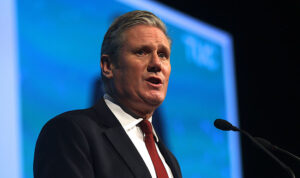
All politicians are liars. None of them can be trusted. Really? Is this true? I don’t think so. For sure, there is room for improvement in the general trustworthiness of our political leaders.
As someone who has campaigned for greater levels of trustworthiness in leadership over the past seven years, I understand the frustration thousands of people felt when they visited their polling booths yesterday. What is the point? Nothing will change regardless of who is in Downing Street and so on…
But today, we wake up to a new Prime Minister, Sir Keir Starmer. Will Sir Keir be the perfect leader for this country? No. But is he a force for good? At heart, is he in it for himself, or is he one of those rare leaders who are driven by a higher purpose to make the world a better place? Time will tell, but our job is to keep that hope alive that some leaders are a force for good because without it we sink into cynicism, bitterness and despair.
Regardless of position, I believe that ‘Inside each leader is a force for good and a force for bad. Which one wins? The one you feed’. We all have the seed of goodness within us, but the bigger question is how to feed that seed such that it grows to become the good habits that sustain a purpose-driven leader and keep them motivated, resilient and authentic through the ups and downs of organisational life. As Keir Starmer sets out his stall as Prime Minister I recommend a threefold diet –
UP – He needs to identify, serve, stay connected to and feel the achievement of his higher calling in public office
IN – He needs to stay motivated, resilient and energised to sustain the journey over his full-term
OUT – He needs to bring his cabinet, his party and the country with him on the journey as he pursues the goals of his premiership
Like all leaders, he will be something of a ‘two-legged stool’. In other words, he will be naturally strong at two of the UP, IN or OUT of purpose-driven leadership and weaker on the third dimension. Having seen him in action on the campaign trail, I suspect he may have the ‘Martyr’ leadership profile. In other words, I do not doubt his passionate sense of mission (UP), or his ability to work hard to bring people with him on the journey (OUT), but I am concerned that he may burn out halfway through the journey. The job of the Prime Minister is uniquely lonely, relentless and demanding. With this in mind, he needs to focus on the IN aspects of purpose-driven leadership to ensure he can run the full marathon and seize the prize.
Maybe the highest vision Keir Starmer could set for his time as leader of our country is to become a force multiplier – a leader who ignites in us a desire to become a force for good ourselves. We know that transforming our country will require more than one great leader; it will require thousands of us to find again the hope that tomorrow could be better than today – a hope that many of us have lost through the trials and tribulations of recent years.
Dr John Blakey is an executive coach for purpose-driven leaders and author of Force for Good (August 2024)
Read more:
Keir Starmer PM – is he a force for good?
Business owners across the UK comment on Labour’s landslide win

Will Labour’s manifesto have the positive effect that business owners desperately need?
It’s the day that many people have been waiting for, after a 14 year Conservative rule in government the British public have voted and Labour has won by a landslide.
But how will this impact SMEs? I set out to find out the opinion from Britain’s business owners across the nation about Labour’s change which promises to ‘end the chaos’ and put the Great back into Great Britain.
Across the nation, business owners are keen to see if the Labour Party will keep the promises made in their manifesto and hope they will react quickly to change.
Tax relief is high on people’s agendas
Sean Massey, a Management Consultant, based in Cambridge, said:
‘The Labour party’s manifesto only contains general messages on growth, nothing even starting to be specific on this topic. The current government has made some positive progress on this issue over the past ten years with the British Bank and a large collection of innovation grants, plus the R&D Tax Credit Scheme.
‘New grants and tax breaks would really help the small business community to invest at a scale, and this would keep the UK at the forefront of tech. This kind of innovation is what smaller businesses excel at – and it’s not entirely clear how Labour’s plan will support these essential innovators.
‘Research indicates that a review of the business rates system could offer some relief to small business owners, 27% of whom wanted reducing the tax burden to be a top priority for the new government.
‘Across the board, rising costs present the most pressing challenge for smaller vendors, with the hospitality sector facing some of the greatest increases. The British Beer and Pub Association reported that 1,000 pubs have closed since 2021, at a rate of 500 closures per year.’
Will small businesses get the support they need in the time that they need it?
Bea Montoya, Chief Operating Officer at insurance broker, Simply Business UK, said ‘Small businesses have been in a state of limbo throughout the campaigning period, and now is the time for Labour to double down and get to work on promises made in their manifesto.
‘As the new government steps in, small business owners face a torrent of challenges. Over a third of small business owners believe this change in leadership will have absolutely no impact on them. This feeling of apathy – though understandable – is uncharacteristic for the sector, which has shown seemingly boundless resilience over the past few years.
‘The new government needs to set the tone for their leadership, and small businesses can be a catalyst for change in the wider economy. Our research shows that, if provided the right economic conditions, small businesses would create over one and a half million new jobs. De-prioritising this enterprising community would be a missed opportunity for the government, and we hope that the new leaders can deliver on their proposals.’
Rebekah Ann, owner of independent, eco-friendly jewellery store Rebekah Ann Jewellery in Brighton, said:
‘There are definitely issues within the Labour Party that have made me less confident in them compared to the past, but I still believe that their leadership could bring about some positive changes compared to the current government.
‘I completely self-funded my venture by saving – which, on my wage at the time, wasn’t easy. Now, even with five years as a business owner under my belt, I continue to face hurdles in securing the funding I need to grow the business. I have a solid track record of how the business is performing, independent review, and positive projections, but I’ve still struggled to get face-to-face appointments with business bank managers.
‘When I do manage to apply for funding, my efforts are often met with rejection, with little to no explanation as to why. I have no way of knowing how to improve my application, and the business – although in great shape – just can’t be taken to the next level. I look forward to seeing what solutions Labour can implement to genuinely support our growth.’
Can Labour make accountancy a business friendly environment?
Bruce Cartwright CA, CEO at the Institute of Chartered Accountants of Scotland (ICAS), said:
‘We congratulate and welcome the new Labour Prime Minister and his colleagues following their historic victory last night. As the oldest professional accountancy body in the world, it’s our job to work in the public interest and we’re optimistic about working with the new government to make positive changes for the UK and Scotland.
‘We hope the new Labour government will quickly bring forward the long-delayed audit and corporate governance reforms that will help restore trust in business and protect livelihoods. Investing in HMRC to address poor service levels, enhancing apprenticeship programmes and routes into professions, and increasing funding for accountancy and financial education will all be crucial steps for Labour to support the business community.
‘Labour’s sustainability commitments now need to prioritise bringing forward legally enforced reporting standards, re-positioning the UK as leaders in sustainability and net-zero goals.
‘Lastly, we urge collaboration to improve financial regulation, ensuring it is fair, proportionate, and enhances our global reputation as a business-friendly environment.’
Service in the capital
If Keir Starmer is looking to hop into a Black Cab during his time in London, he might want to take Sam Pooke, Senior Public Affairs Manager at FREENOW UK’s opinion into account. Representing Black Cabs and ride hires across London he said:
‘On behalf of FREENOW, we would like to congratulate the Labour Party for winning the 2024 General Election. The newly elected Labour government has a lot of work to do when it comes to VAT treatment for private hire journeys to ensure the regime is fair and there is a level playing field across the industry.
‘We encourage the new government to work closely with the Mayor of London to tackle existing challenges in the taxi sector, particularly reversing the declining number of black cab drivers and the high cost of EV vehicles to ensure this iconic trade can thrive and continues providing its outstanding service to Londoners and visitors’.
Is the future certain for EV development?
The switch to EV saw a massive blow with the present government’s plan to delay uptake. Business owners across the EV marketplace share their thoughts, all in solid agreement that fleet support in the EV sector is key to Britain reaching its net zero target …
Adam Hall, Director of Energy Services at Drax Electric Vehicles urges the new government to incentivise electric vehicle businesses:
‘The new Labour government’s priority must be to build on the growing momentum towards Net Zero and to support the EV industry to develop in a way that makes it work for everybody. Fast and accessible charging for all vehicle types – including vans and HGVs – along with government grants and subsidies are a key part of instilling confidence among businesses and consumers, making the prospect of switching to an EV an attractive one.
‘Fleet-operating businesses, who continue to be the driving force behind EV market growth, require clarity around future rates and taxes to help inform their decision-making. We’d therefore urge the government to prioritise the publication of Company Car Tax (CCT) rates for 2028 and beyond and give confirmation that the Plug-In Van Grant and Workplace Charging Scheme will continue past March next year.
‘At the same time, we’d ask them to explore other ways in which we can reward and incentivise businesses who invest in EVs and renewable energy infrastructure.
‘We’d also like to see a continued commitment to the implementation of the standards set out in the 2023 Public Charge Point Regulations, such as a 24/7 helpline for drivers and mandatory contactless payment options. There’s also an urgent need for more accessible charging, particularly for van drivers and disabled drivers, to ensure that everyone has the same positive experience while topping up their vehicle.’
Michael Topham, CEO, Biffa, calls on the new Government to introduce more Zero Emission Zones to encourage better uptake of EVs – which will be key for decarbonisation in the waste industry:
‘The transition to decarbonised energy and transport systems is increasingly urgent, and the waste sector must move to no or low carbon collection fleets.
‘Biffa has already started to adopt alternative fuels across our fleet, with more than 94 battery electric vehicles and electric HGVs, and 64 renewable diesel (including HVO) fueled vehicles, in service.
‘A huge obstacle to further decarbonisation, identified by Labour, is the electricity distribution grid. Here we need to up the pace, and we must ensure that costs for grid upgrades are not imposed only on the first to act.
‘We also welcome Labour’s commitment to accelerating the roll out of charge points; shared charging infrastructure should be encouraged to save space in metropolitan areas. At all times it is vital that electrical commercial vehicles are given equal focus as domestic vehicles.
‘To support the transition to net zero, we’re also urging the Government to introduce zero emissions zones, speeding up adoption of electric vehicles, stimulating innovation and investment in new technologies, and improving air quality and reducing noise.’
A call for strategic investment in electrification of fleets to achieve Net Zero from Richard Staveley, CEO, EO Charging:
‘The Labour Party’s election manifesto, to positively impact climate change by accelerating the move to greener transport and developing the necessary infrastructure for electric vehicles (EVs) is welcomed by the sector. Now, at this critical time for climate change, the industry needs determined action and expects the Labour government to deliver on their election manifesto.
‘Transport is responsible for almost a quarter of global emissions, with commercial fleets accounting for a large proportion of this.
‘The Society of Motor Manufacturers and Traders (SMMT) found that out of the 679,822 EVs sold in the UK in 2024 so far, 407,661 were across the fleet sector. However, due to the high initial costs of electrification, commercial and public sector fleets often rely on local governments to distribute EV funding. We’ve already seen a dramatic positive impact from initiatives such as the Zero Emission Bus Regional Areas (ZEBRA) scheme that have enabled bus operators to electrify their fleets at pace. Introducing similar schemes to support commercial fleet electrification will undoubtedly have a positive impact and will accelerate EV fleet adoption. If funding does not materialise, this will delay fleet electrification, and achieving Net Zero goals will become incredibly difficult.
‘We already know that developing and investing in the right infrastructure to support electrification is important, but focusing on the electrification of commercial and public sector fleets is fundamental. We need to see Labour developing and implementing a strategy that tackles the challenges to EV adoption and creates long-term reliable funding, particularly for commercial and public sector fleets, which stand to have the greatest environmental impact.
‘Labour must commit to a robust funding strategy that transcends local politics and ensures a stable environment for fleet operators to transition to EVs. Exploring alternative funding models such as Scotland’s direct-to-operator approach, which streamlines the process and empowers fleets to use resources effectively, could be another answer.’
When asked: ‘What does Labour need to prioritise when it comes to cyber security?’
Al Lakhani, CEO of IDEE, said: “For all the election noise, cyber security was absent. In a way this is understandable; there are many other social and economic issues to focus on when trying to woo voters. But as the dust settles on this election and a new party comes to power, continuing to overlook cyber security would be a grave mistake.
‘The electoral commission: hacked. NHS hospitals: hacked. Countless UK businesses: hacked. How many attacks are too many? With Labour coming into power for the first time in 14 years, a comprehensive strategy to strengthen the UK’s cyber defences is urgently needed. The EU is implementing the NIS2 directive, why does the UK lag in securing its digital infrastructure? It’s time for the government to wake up, smell the coffee and develop a plan to change this.
‘But businesses must also act. It’s high time for a radical shift away from outdated security methods and 1st generation MFA. We need state-of-the-art, same device MFA 2.0 solutions to crush phishing and password-based attacks. No more delays – let’s safeguard the UK’s digital landscape for good.’
AI and privacy needs governance
Looking specifically at the future of tech in the UK where AI is concerned, Alasdair Anderson, VP of leading data protection platform Protegrity commented:
‘With AI spurring business transformation and causing an influx of AI-based attacks, it will be a challenge for both the government and businesses to strike a balance between growth in the AI sector and improving cybersecurity measures and regulations. Before these measures can be put in place, it is likely UK organisations will continue to see an increase in AI-based attacks.
‘Following the success of the Labour Party a big theme they must contend with in the coming years is Artificial Intelligence (AI). In their manifestos both Labour and Conservative committed to facilitating growth in the UK AI sector through tactics such as building more data centres and driving adoption in the public and business sectors. However as both parties are aware, the ascent of AI will increase the occurrence of AI-based attacks from bad actors, and as such increased cyber security measures must be a priority.
‘Gartner states that approximately 80% of enterprises will have used Generative Artificial Intelligence (GenAI), Application Programming Interfaces (APIs), or models by 2026. As AI is a disruptor and presents breakthroughs in the ability to process logic differently, it is attracting attention from businesses and consumers alike, which creates the potential for their data to be put at risk.
‘Meanwhile, the cybercrime industry will be quickly adopting AI technologies, informing more innovative AI-based attacks. As such, through 2024 there may continue to be an increase in AI-based attacks until businesses and government bodies can put in place robust and ethical AI cyber-security measures. The importance at this time will be in employing safe data practices so private information is always protected.
‘This drives the need for stringent data privacy controls and regulations to safeguard individual information and ensure that even when using AI, an individual’s data is not exposed publicly, and bad actors won’t have easy access to it.’
Can the UK become a destination for tech startups?
Keen to see the UK become a respected hotbed for tech startups, particularly health tech, Santosh Sahu, CEO and founder of pharmacy tech platform Charac, shares his thoughts on the next steps for the new Labour government to support healthtechs and other startups in the UK:
‘The priority for the new Government in supporting the UK’s tech and startup sector should be to increase funding in high-growth enterprises with potential. The biggest challenge our startup landscape is facing is the exodus of businesses from the UK to the US, with 24% of UK healthtech SMEs preferring to launch in the US rather than the UK.
‘The lure of Silicon Valley is in part due to the funding available – US financial schemes through agencies such as DARPA and NASA, have been instrumental in Silicon Valley’s growth. However, we do not just need more money from the Government but from investors. VCs in the US last year invested $170bn in startups, compared to $22bn in the UK. Supporting tax-efficient incentives, such as EIS, SEIS and VCT schemes for investors can drive more investment in our nation’s exciting startups.
‘Despite the UK seeing the third-most healthtech investment globally, the US is seen as a markedly more attractive market for startups. In addition to funding, this is because of a more supportive regulatory environment – 46% of healthtech companies have removed products from the UK market due to regulatory uncertainty. Healthtech today in the UK is comparable to where fintech was over a decade ago, and it was regulations such as Open Banking and a regulatory sandbox that facilitated the UK becoming a world leader in fintech. This is something the Government has not yet addressed – and with Labour’s calls for a more digital, interconnected NHS, they will need to look at regulations that actually facilitate competition, collaboration, and interoperability to accelerate the UK’s economy, and create a more favourable environment for startups.’
What about the post-16 education strategy?
EngineeringUK, along with the National Engineering Policy Centre, are particularly keen to see a National Engineering and Technology Workforce Strategy.
EngineeringUK Chief Executive, Hilary Leevers commented:
‘We look forward to the new government acting on its manifesto commitments to develop workforce and training plans and a post-16 education strategy and ensure that more young people gain access to apprenticeships and other training opportunities.
‘The Labour manifesto also pledged to tackle careers education, promising to recruit an extra thousand careers advisers, develop a broader curriculum, and address STEM teacher recruitment and retention. With severe and growing STEM teacher shortages – just over 1,600 vacancies compared to around 1,300 a year ago – EngineeringUK is urging the government to commit to investing in teacher professional development, which research shows is not just a ‘nice to have’ but can significantly prolong teaching careers.
‘As the new government has rightly recognised, we need to nurture a greater pool of talent in engineering and technology including more apprenticeship opportunities for young people, to meet current demand and to help our economy to thrive and to achieve our net zero goal.
‘In order to address skills shortages in the future, the workforce strategy needs to link to a comprehensive education and skills plan underpinned by enhanced careers advice in schools and an urgent solution to current STEM teacher shortages. We will be doing what we can to support the new government in taking action to turbo charge the sector.’
Labour needs to be mindful of the impact of their decisions on global expansion
Zain Ali, CEO and founder of Centuro Global – a global mobility business that monitors changes in immigration, tax, business, and employment law across 170+ countries said:
‘This election result signifies a moment of change and opportunity for the business community after a decade of difficulties with Brexit, Covid, and instability within the Conservative party leadership. We look forward to seeing how the new government will address economic challenges and foster growth and innovation.
‘In terms of support for businesses, I hope to see an increased focus on boosting investment in R&D, particularly with its manifesto commitments to boost AI development and create a ‘pro-innovation regulatory framework’.
‘While there is optimism, though, Labour must urgently clarify its plans to reform the immigration and visa system. If Keir Starmer is truly serious about spurring economic growth, relief is needed for the skills-intensive businesses currently struggling to recruit the highly specialised workers they need with the burdensome system recently introduced by the Tories. The business community needs decisive action and clear policies to drive growth, and any delays could impact confidence and investment.
‘Overall, we are cautiously optimistic. The potential for positive change is significant, and if Labour can deliver on its promises, the future for UK businesses looks bright. The focus must be on creating a supportive environment that addresses business needs and drives the economy forward.’
Read more:
Business owners across the UK comment on Labour’s landslide win
Dragons’ Den star Peter Jones’ camera chain Jessops faces closure …

Jessops, the iconic 89-year-old camera retailer owned by Dragons’ Den star Peter Jones, is on the brink of closure after HM Revenue & Customs (HMRC) issued a winding-up petition due to unpaid taxes.
This development marks a critical juncture for the struggling retailer, which has entered administration three times in the past four years. If Jessops fails to settle its tax debt, it risks insolvency once again.
Recent financial disclosures reveal that Jessops’ sales dropped by 7.5% to £19.97 million for the year ending October 1, 2023, down from £21.58 million the previous year. This decline contributed to a loss of £1.2 million, widening the company’s total net liability to £16.9 million.
The winding-up petition from HMRC, as seen in court filings, could be rescinded if Jessops manages to clear its tax arrears.
Founded in 1935 in Leicester by Frank Jessop, the chain flourished under his son Alan Jessop’s leadership as personal photography gained popularity. It changed hands several times, including a £116 million acquisition by ABN Amro in 2002 and a debt-for-equity deal by HSBC in 2009 during the financial crisis, which led to the closure of 80 out of 300 stores.
In 2013, Jessops went into administration and was subsequently acquired by PJ Investment Group, Peter Jones’s investment vehicle. Jones revitalised the brand by boosting online sales and reopening stores nationwide. However, the rise of smartphones with advanced cameras has severely impacted high street sales of traditional photography equipment. In response, Jessops has pivoted to target a new generation of social media influencers on platforms like TikTok and Instagram.
Despite these challenges, Jessops remains optimistic, stating, “The group’s strong heritage, trust, and awareness of the Jessops brand and reputation for quality continue to be the driving force behind our customer loyalty and highly regarded position in the imaging sector.”
Peter Jones, awarded a CBE in 2009 for services to business, enterprise, and charity, has invested millions in start-ups during his tenure on Dragons’ Den. His investments include Levi Roots’ Reggae Reggae Sauce, Bladez Toyz, and Boot Buddy.
HMRC typically engages with companies over unpaid taxes, resorting to court orders only when negotiations fail. After being restrained from issuing winding-up petitions during the pandemic, HMRC is now under pressure to act, with total tax debt reaching £45.9 billion as of March last year. PwC’s analysis shows a 44% increase in winding-up petitions in April, reflecting heightened demands from HMRC, local authorities, and businesses.
Read more:
Dragons’ Den star Peter Jones’ camera chain Jessops faces closure over unpaid taxes
UK car market sees first million sales since pandemic, driven by hybri …

The UK car market has reached a significant milestone, with new car registrations surpassing one million in the first half of 2024, the first time this has happened since before the pandemic in 2019.
This resurgence includes a notable rise in the market share of electric vehicles. However, sales of plug-in hybrids and petrol hybrids have outpaced those of fully electric cars.
June’s monthly figures showed a slight deceleration in overall growth, with 179,263 new vehicles registered—a modest 1% increase compared to June of the previous year. Despite this, the first half of 2024 saw a 6% rise in new car sales compared to the same period last year, totalling 1,006,763. Yet, this figure is still down by 20.7% from 2019 levels.
The data reveals a significant shift in buyer demographics, with private purchasers now accounting for a historically low 38% of the market. In contrast, fleet and business buyers are taking advantage of fiscal incentives and subsidies to invest in lower-emission vehicles.
Mike Hawes, Chief Executive of the Society of Motor Manufacturers and Traders (SMMT), praised the market’s ongoing recovery post-pandemic but warned of future challenges. He emphasised the need for supportive policies to revitalise the shrinking private consumer market and expedite the transition to zero-emission vehicles.
Hawes stated, “The private consumer market continues to shrink against a difficult economic backdrop, but with the right policies in place, the next government can re-energise the market and deliver a faster, fairer zero-emissions transition. All parties are agreed on the need to cut carbon, and replacing older fossil fuel-based technologies with new electrified powertrains is the essential step to achieving that goal.”
Petrol engine-only vehicles continue to dominate but their market share fell to just over 50% in June. Battery electric vehicles saw a 7.4% increase in sales in June, representing 19% of the market. For the first half of the year, electric vehicles accounted for 16.6% of the market, a slight increase from 16.1% in the same period last year.
The market dynamics are influenced by some major brands reducing their petrol vehicle supplies to boost electric vehicle sales. Both Ford and Stellantis, which includes Vauxhall, have cut back on petrol vehicle supplies to avoid fines under the new zero-emissions vehicle mandate, which requires 22% of each manufacturer’s deliveries to be electric in 2024. This has resulted in significant sales declines for both companies.
Tesla, historically the UK’s leading electric car brand, saw a near 12% decline in sales. This downturn was partially offset by an increase in sales of electric vehicles from Chinese manufacturers like MG and BYD, with MG capturing nearly 4.3% of the market and BYD showing strong growth.
Despite these challenges, the market’s transition towards lower-emission vehicles is evident, with hybrids and plug-in hybrids showing substantial sales increases. Plug-in hybrid sales surged by 30% in June, capturing over 9% of the market, while hybrid sales rose by 27%, accounting for nearly 15% of the market.
Read more:
UK car market sees first million sales since pandemic, driven by hybrids over fully electric vehicles
Vodafone and Virgin Media O2 partner to enhance rural connectivity in …

Vodafone and Virgin Media O2 have announced a long-term network-sharing agreement designed to revolutionise the mobile experience for tens of millions of UK customers.
This strategic partnership aims to enhance rural connectivity, improve service quality, and establish a third major network operator to rebalance the mobile market.
Building on their existing collaboration, including the Shared Rural Network initiative, this agreement focuses on delivering high-quality mobile coverage to hard-to-reach areas across the UK. Ahmed Essam, CEO of European Markets at Vodafone, emphasised the significance of this deal: “With this agreement and our merger with Three, we will transform the mobile experience for over 50 million customers in the UK. We are committed to providing significant network improvements, including more choice, better quality, and greater coverage across the country. These benefits will extend to both retail and wholesale MVNO customers.”
Essam added that the proposed merger and this agreement would boost competition by establishing a robust third player in the UK mobile market. This move aims to improve the balance of spectrum holdings, levelling the playing field among the UK’s mobile operators.
The combined investments from MergeCo’s prospective £11 billion and Virgin Media O2’s £2 billion annual investment in networks and services are set to ensure long-term quality in mobile connectivity, particularly in rural areas.
Elizabeth Anderson, CEO of the Digital Poverty Alliance, welcomed the partnership: “It is impossible for one organisation to solve UK connectivity on its own, so the partnership between Vodafone and Virgin Media O2 is a welcome step to improve network reach across the country. Connectivity in rural areas is a pressing issue for millions in the countryside and remote towns, cutting them off from essential online services such as education and healthcare. With these essential services increasingly shifting online, we can’t stand by and watch millions more people get left behind in the digital world.”
Anderson also highlighted the importance of continued investment: “There have been several impressive connectivity rollout schemes over the past few years, and with this partnership, we hope to see further investment and resources dedicated to VMO2’s Shared Rural Network programme. To drive the rollout of rural connectivity further, we also hope to see the incoming government support these schemes, placing digital inclusivity at the heart of its policies to make a significant societal impact for millions across the UK.”
This partnership marks a significant step towards bridging the digital divide and ensuring that rural communities receive the same level of connectivity as urban areas, paving the way for a more inclusive digital future.
Read more:
Vodafone and Virgin Media O2 partner to enhance rural connectivity in new network-sharing deal
How important is trust to you as an entrepreneur?
There are so many different levels on which trust can make or break your business success that maybe it is something you should give more thought to.
Who do you trust and how do you build trust in your team are fundamental questions for any business owner to start with and review regularly, but also more broadly trust needs to be considered in the context of the industry sector you work in, trust in the products or services you deliver, trust in the government to support UK business. When you think about it, trust is central to everything.
The result of the general election may over time help to instil greater trust on many levels that are beyond your control as a business owner and so if you haven’t thought about it already, what can you personally do now to create greater trust to help your business grow?
Infrastructure
Start with having the infrastructure in place to minimise issues around trust in your business. If you are a business which handles cash, have safeguards in place so as your business grows, you will have more control and there will be fewer opportunities for theft or mistakes.
Can you ever trust your team 100%? This is often a real issue for entrepreneurs, especially when having to scale up fast and employing people for the first time or outsourcing aspects of their production or service offering to third parties.
Having the building blocks – the processes, the governance, the external advisors and support that allow you to grow will help to build trust. Use the knowledge and experience of your professional advisors from the beginning and at different stages of your business growth journey to help you to maintain and build trust every step of the way.
Culture
Having the right structure in place builds trust and helps to then shape the culture of the business. Where employees can work efficiently and effectively and are well rewarded for their efforts creates a more trusting and success focused internal culture. Put simply you deliver on your side of the bargain to your team, and they will deliver what your business needs to succeed. What is built on the inside of the business is also projected externally to customers and clients.
Relieve the burden
It is often underestimated how much hard work is needed for building and maintaining success and we know being an entrepreneur is often a lonely business. You need someone around you who can help to relieve the burden – a ‘right-hand’ person who you trust to enable you to think about the next big challenge. People who can act in this role are quite frankly gold dust to your business success and they will play a key role. Whether this is a family member, an employee or an advisor, think about who is critical to your success and do they trust you?
Be more trustworthy
You can’t succeed in anything unless people trust you, so keep your promises to others and yourself, no matter how small. If you can be trusted on the small stuff you can be trusted on the larger things.
Also only commit to what you can deliver. Many entrepreneurs have hastily promised and then had to back track. You won’t be the first or last person to do this and it is something which happens regularly, so avoid it.
The modern-day equivalent of “My word is my bond” from Shakespeare’s The Merchant of Venice is now your personal brand. Only promise what you can deliver and in the age of social media, make sure what you project professionally is matched personally.
Finally, if you can’t keep to a commitment or fulfil a promise, be honest and explain why. In business there are always so many factors that can impact on a business’s ability to deliver, but to maintain trust and keep clients and customers coming back to you even if you mess up means they must trust you.
Read more:
How important is trust to you as an entrepreneur?

