

Sunswap, a pioneering UK clean-tech startup focused on decarbonising cold chain logistics, has secured £17.3 million in a funding round led by investment company BGF.
The investment will accelerate the deployment of Sunswap’s innovative zero-emission transport refrigeration technology across the UK and Europe, marking a significant step forward in the effort to reduce carbon emissions in the logistics industry.
Sunswap’s cutting-edge “Endurance” Transport Refrigeration Unit (TRU) is a fully electric solution designed to replace traditional diesel-powered units, offering a cleaner, more sustainable alternative for the transportation of chilled goods. The Endurance TRU combines advanced battery technology, solar power, and rapid charging capabilities, allowing fleet operators to transition to zero-emission refrigeration without sacrificing performance or cost-effectiveness.
The £17.3 million investment includes contributions from Shell Ventures, Dutch venture capital firm Move Energy, and existing backers Barclays and the Clean Growth Fund. This funding will support the further development and production of Sunswap’s TRUs, which have already demonstrated superior performance and a lower total cost of ownership during commercial trials with major industry players like Tesco and Müller.
Sunswap’s technology is distinguished by its integration of solar panels on trailer roofs and a cloud-based telematics system, enabling operators to monitor and control refrigeration units remotely. This not only enhances performance but also delivers significant operational savings for logistics companies.
The company’s growing customer base includes prominent names such as equipment services provider TIP Group, shipping and logistics giant DFDS, and leading UK fleet operators. With this new investment, Sunswap plans to expand production to meet increasing customer demand, broaden its nationwide service network, and continue advancing its technological innovations.
Michael Lowe, co-founder and CEO of Sunswap, expressed his excitement about the partnership with BGF and other investors: “We are thrilled to have BGF and Shell Ventures support in our mission to decarbonise cold chain logistics. This funding will be instrumental in accelerating our growth and expanding our presence in the UK and European markets. Together, we will work towards a cleaner, greener future for cold chain logistics, helping businesses meet their sustainability targets.”
BGF investor Rowan Bird highlighted the significance of Sunswap’s technology: “As the logistics industry moves towards more sustainable practices, Sunswap’s TRU technology stands out as a leading solution for fleet operators seeking to reduce their carbon footprint and operational costs. We are excited to support Sunswap in continuing to develop its technology and expand its manufacturing capabilities.”
Stephen Price, Investment Director at the Clean Growth Fund, added: “With this further investment, Sunswap is poised to accelerate the decarbonisation of cold chain logistics and rapidly transition the industry away from highly polluting legacy technology.”
James Ferrier, Director of Principal Investments at Barclays Sustainable Impact Capital, also emphasized the importance of Sunswap’s advancements: “Sunswap’s latest acceleration towards a fully electric, zero-emission alternative to diesel-powered TRUs represents a major step forward for the logistics industry. We are proud to help scale this essential clean tech solution.”
As Sunswap continues to drive innovation in cold chain logistics, this latest investment round will play a crucial role in supporting the company’s ambitious plans to transform the industry and contribute to a more sustainable future.
Read more:
BGF leads £17.3m investment in Sunswap to accelerate decarbonisation in cold chain logistics
Month: August 2024
Waracle secures three-year digital transformation partnership with SP …
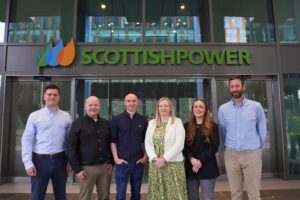
Waracle, the Scottish technology services company, has announced a significant new partnership with SP Energy Networks, a deal set to accelerate the digital transformation of the electricity network operator over the next three years.
The multi-million-pound contract will see Waracle design and develop a streamlined digital customer experience, addressing the growing demand for network connections to support electric vehicle (EV) chargers, solar panels, and heat pumps.
SP Energy Networks, part of the ScottishPower group, is responsible for maintaining the electricity network across central and southern Scotland, as well as Merseyside and North Wales, serving over 3.5 million homes and businesses throughout the UK. This partnership with Waracle aims to enhance the efficiency and accessibility of its services by implementing a user-friendly, automated self-serve platform for customers.
Dundee-based Waracle has a longstanding relationship with ScottishPower and its parent company, Iberdrola, dating back to 2016. The firm has previously developed digital products like the YourEnergy app, which enables millions of customers to monitor their energy consumption and manage meter readings.
This new collaboration with SP Energy Networks will also support more than a dozen jobs across Glasgow, Dundee, and Edinburgh, solidifying Waracle’s position as a leader in mobile and digital product development within the utilities sector. The deal follows a series of recent successes for Waracle, including significant growth in its London office, which is expanding its footprint in the energy, financial services, and health sectors.
David Romilly, co-founder of Waracle, expressed his enthusiasm for the partnership: “We’re excited to bring Waracle’s expertise in customer experience, digital product development, and emerging technologies to one of the UK’s largest electricity network providers. The leadership and ambition shown by the SP Energy Networks Business Transformation Team have been truly impressive, and we’re honoured to have been chosen after a rigorous tender process.”
Lynda Ward, Business Transformation Director at SP Energy Networks, echoed these sentiments, highlighting the importance of the partnership for the company’s digitalisation goals: “We’re delighted to be working with Waracle to advance our digitalisation agenda. Waracle has consistently demonstrated its value over several years of collaboration with the ScottishPower group, and I’m excited about the potential of this new partnership as we introduce innovative digital solutions across our systems and processes.”
Ward further emphasised SP Energy Networks’ commitment to enhancing customer services through digital innovation, which aligns with the broader goal of transitioning to a net-zero future.
This deal comes just a month after Waracle’s acquisition of Glasgow-based design and software engineering agency, Screenmedia, further expanding its capabilities. With offices in London, Edinburgh, Glasgow, and Dundee, Waracle now boasts a team of over 200 employees. The company is backed by growth capital investor BGF and serves an impressive roster of clients, including Lloyds Banking Group, Royal London, Roche, and Imperial College London.
Read more:
Waracle secures three-year digital transformation partnership with SP Energy Networks
Apple intelligence: How AI integration in IOS 18 will change your iPho …

Apple is on the brink of transforming how you use your iPhone with the introduction of “Apple Intelligence,” a suite of AI-powered features set to debut in iOS 18.
At the forefront of this development is a revamped Siri, now enhanced through a partnership with OpenAI, the company behind ChatGPT. This new iteration promises to make your interactions with your iPhone more intuitive and personalised, but it also raises important questions about data privacy.
What is apple intelligence and when is it arriving?
Apple Intelligence is the umbrella term for the AI enhancements coming to iPhones with iOS 18. The initial iOS 18 update will roll out with the launch of the iPhone 16 in September, but the AI features, including ChatGPT-4o integration, will be introduced in the iOS 18.1 update expected in October.
Among the first features users can expect are improved writing tools, suggested replies in Messages, email summarisation, and phone call transcription. Additionally, Siri will become smarter, integrating more deeply with your apps to offer contextual responses based on your personal data, such as messages, emails, and calendar entries. Later updates will bring creative tools like Image Playground and custom emoji, known as Genmoji.
These AI capabilities will only be available on newer devices, specifically the iPhone 15 or later, or any Apple device equipped with the M1 or M2 chip.
How will this change your iPhone usage?
The gradual rollout of Apple Intelligence means that changes to your iPhone experience will be subtle at first. However, once the features are fully enabled, you should notice a more personalised and efficient experience. For instance, you might find the email summarisation tool useful for managing your inbox on the go, or appreciate the ability to transcribe phone calls with the other party’s consent.
Apple’s AI assistant will also gain the ability to follow conversations more naturally, remembering previous interactions to provide more relevant responses. A new visual indicator around the Siri icon will alert you when it is listening, offering greater transparency.
However, as with any new technology, there may be some initial glitches. Apple’s CEO, Tim Cook, has acknowledged that while the AI is expected to perform well, there’s no guarantee that it will be flawless from the start.
How does siri’s chatgpt integration differ from the ChatGPT app?
When you use Siri’s ChatGPT integration, Apple serves as a privacy-focused intermediary. Unlike direct use of the ChatGPT app, where your queries go straight to OpenAI’s servers, Siri first tries to handle requests on your device. If that’s not possible, some data may be sent to Apple’s servers, but it is encrypted and anonymised before being passed on to ChatGPT.
This extra layer of privacy protection is a key difference, ensuring that your data is better shielded than it would be when using ChatGPT directly. Additionally, users can access the GPT-4o powered Siri without needing to create an account, though those with ChatGPT subscriptions can connect their accounts for added features.
Are your conversations tracked or stored?
Apple has emphasised that privacy is central to Apple Intelligence. Most processing will occur on your device, meaning data typically remains on your iPhone. For more complex requests requiring cloud processing, Apple will anonymise and encrypt your data before sending it to its servers or to ChatGPT.
While Apple asserts that it won’t store requests linked to you, there is always a small risk that highly specific queries could potentially be connected back to you. To address this, Apple is introducing the Apple Intelligence Report, a feature that provides a detailed breakdown of how your Siri requests were processed, ensuring transparency.
Despite these safeguards, the need for AI to access vast amounts of information means that enabling Apple Intelligence will require Apple to have more access to your personal data, including messages, calendar events, location, and photos.
Can you opt out?
Yes, participation in Apple Intelligence is entirely optional. The AI features will be disabled by default, and you will need to enable them manually in the Settings. This ensures that if you have concerns about privacy or the utility of these new features, you are not obliged to use them.
Read more:
Apple intelligence: How AI integration in IOS 18 will change your iPhone experience
Unite urges 1% wealth tax on the super-rich to fund public sector pay …

Unite, the UK’s second-largest trade union, is set to challenge the new Labour government by calling for an emergency 1% wealth tax on the assets of the super-rich.
The proposal aims to fund substantial 10% pay increases for public sector workers and to fill over 100,000 vacant NHS positions. This demand, outlined in a motion for the Trades Union Congress (TUC) conference next month in Brighton, is expected to highlight growing tensions between Keir Starmer’s administration and the union movement.
As Chancellor Rachel Reeves prepares for her first budget on 30 October, Labour MPs and ministers are bracing for potential friction at the TUC conference. This event could signal the end of an unofficial truce that has existed between many unions and Labour, which has been instrumental in supporting Starmer’s successful general election campaign. However, with Labour’s leadership emphasising fiscal responsibility, pressure is mounting from within the party to address urgent social and economic needs.
Unite’s motion is particularly bold, suggesting that a 1% tax be levied on the assets of individuals with fortunes exceeding £4 million. The union estimates this would generate £25 billion annually, which could be used to bolster public services and prevent a return to austerity measures. Under the proposal, someone with £6 million in assets would be taxed on the £2 million above the threshold, with the tax applying to properties, shares, and bank accounts, though mortgaged properties would be exempt.
Sharon Graham, Unite’s general secretary, did not mince words in her critique of the current state of the UK economy: “Unite’s resolution to the TUC on the economy calls things by their real name. The British economy is broken. We need serious investment in our crippled public services and in industry to ensure a prosperous future for Britain’s workers and their communities.”
Unite’s stance is shared by other key unions. The RMT transport union has also called for a wealth tax to fund public investment, while Usdaw, the shop workers’ union, seeks the abolition of the two-child benefit cap. The PCS civil service union has added its voice to the debate, urging opposition to cuts in the winter fuel allowance and advocating for more stringent taxation of corporations and the wealthy.
These motions are expected to amplify the strain between Labour and its union backers, particularly after recent pay agreements between the government and striking workers across various sectors, including healthcare and transportation. As the TUC conference approaches, the pressure on Labour to balance fiscal prudence with the demands of its traditional supporters is set to intensify.
Read more:
Unite urges 1% wealth tax on the super-rich to fund public sector pay rises and NHS recruitment
HMRC recovers £70m in tax crackdown on footballers and agents

HM Revenue & Customs (HMRC) has clawed back nearly £70 million in unpaid taxes from footballers, agents, and clubs over the past year as part of a rigorous crackdown on tax avoidance schemes in the sport.
This initiative has seen investigations launched into 20 football clubs, 83 players, and 21 agents since April 2023.
The focus of HMRC’s efforts has been on the misuse of “dual-representation contracts” and other tax avoidance strategies prevalent in football. Dual-representation contracts allow agents to claim they represent both the player and the club during a transfer, resulting in tax advantages that HMRC now challenges. The tax authority has tightened guidelines, demanding that clubs provide evidence if they claim an agent worked for them during a transfer. Failure to provide such evidence could see the entire agent’s fee treated as income for the player, subject to income tax and national insurance.
This crackdown has already implicated well-known figures in football, including former England internationals John Barnes and Emile Heskey. Barnes was recently banned as a company director for failing to pay over £190,000 in taxes, while Heskey faced legal action over an unpaid £1.6 million tax bill related to a film investment scheme.
HMRC has been particularly vigilant about the “over-aggressive” use of image rights, where players form limited companies to handle payments for their image rights, often resulting in lower tax rates. However, the tax authority frequently investigates cases where it believes the value of the player’s image rights is inflated or unfounded.
Elliott Buss, a partner at UHY Hacker Young, warned that the football industry remains a prime target for HMRC, particularly when it comes to correctly reporting agent fees and educating young players about their tax responsibilities. He noted that younger players, often earning substantial salaries, may be unaware of their obligation to file tax returns, making them vulnerable to fines and investigations.
Over the past five years, HMRC has recovered £384 million in unpaid taxes from the football industry, with £67.5 million recouped in 2023 alone. The crackdown is part of a broader effort to ensure compliance and deter tax evasion within the sport, following high-profile cases of tax fraud involving international stars such as Lionel Messi and Javier Mascherano in Spain.
Read more:
HMRC recovers £70m in tax crackdown on footballers and agents
British steel to cut 2,500 jobs despite £600m taxpayer-funded green i …

British Steel is set to close its blast furnaces in Scunthorpe by the end of the year, placing 2,500 jobs in jeopardy. The move comes as the Chinese-owned company seeks to accelerate its transition to greener steel production, despite having received £600 million in taxpayer support.
The company is in talks with the UK government to cut coking coal imports, originally planned to continue for another two years, as part of its £1.3 billion decarbonisation strategy. This could lead to the replacement of the three million tonnes of steel produced in Scunthorpe with imports from China, potentially signalling the end of large-scale UK steel production.
British Steel, purchased by China’s Jingye Group in 2020, has been struggling financially, reportedly losing £1 million per day. While the company had initially planned to keep the blast furnaces operational during the construction of a new electric-arc furnace in Teesside—an initiative that would have preserved jobs—the revised plan now threatens significant job losses.
Union leaders expressed their outrage, with Charlotte Brumpton-Childs of GMB stating that the early closure of the Scunthorpe furnaces would be devastating for both the local community and the workforce. Unions claim they were not consulted about the latest developments and are demanding immediate engagement with British Steel and the government to safeguard jobs.
The closure comes amid broader concerns about the strategic implications of losing domestic steel production, which plays a crucial role in the UK’s construction, rail, and energy sectors. British Steel’s output is vital for projects ranging from nuclear reactors to wind turbines, raising concerns about the UK’s reliance on foreign steel.
Labour’s recent talks with Jingye over a potential rescue deal have added a political dimension to the issue. Critics, including Kevin Hollinrake, the shadow business secretary, have accused Labour of betraying the UK steel industry by supporting the shift towards imported steel, despite promises to invest in domestic production.
The government’s decision on British Steel’s decarbonisation plans and the future of its Scunthorpe operations is still pending, leaving thousands of jobs and the future of UK steelmaking hanging in the balance.
Read more:
British steel to cut 2,500 jobs despite £600m taxpayer-funded green initiative
Mike Ashley appoints youngest daughter as director to expanding family …

Mike Ashley has appointed his youngest daughter, Matilda Ashley, as a director of Mash Holdings, the company through which he controls his substantial stakes in Frasers Group and other ventures.
This move underscores the growing influence of family ties in the billionaire’s business operations.
According to recent filings with Companies House, 27-year-old Matilda Ashley has taken on this significant role within Mash Holdings, which plays a central part in overseeing Ashley’s extensive retail and property interests. The appointment follows her recent resignation as director of her beauty business, Double Take, which Frasers Group reportedly acquired for £1 last year without informing its shareholders.
Double Take, launched by Matilda in 2015, owns SportFX, a cosmetics brand available in Sports Direct stores. The business weathered the pandemic with financial support from Mash Holdings, which is believed to own the rights to SportFX’s clothing, footwear, and sports equipment lines. Mike Ashley had previously committed to backing the brand financially for the “foreseeable future.”
This latest family appointment may attract attention in the City, where concerns over corporate governance and nepotism have surfaced. The Sunday Times recently highlighted that Matilda’s boyfriend, David Al-Mudallal, serves as the Chief Operating Officer of Frasers Group and was appointed to its board, making him one of the youngest directors in a FTSE 100 company. Michael Murray, who became CEO of Frasers in 2022 and is married to Anna Ashley, the elder daughter of Mike Ashley, also holds a prominent position within the group.
The intertwining of family and business interests in Ashley’s empire has drawn scrutiny in the past. In 2016, Sports Direct faced criticism from shareholders after it was revealed that a company owned by Ashley’s brother was paid to handle international deliveries, a relationship that was not initially disclosed in the annual report.
Frasers Group, which started as a single shop in Maidenhead, Berkshire, in 1982, has grown into a retail giant with over 1,500 stores across 20 countries. The group includes well-known high street names such as House of Fraser, Sports Direct, Flannels, Evans Cycles, and Jack Wills. Although Mike Ashley stepped down from the board in 2022, he retains a 73% ownership stake and holds a powerful consultancy role within the company.
Read more:
Mike Ashley appoints youngest daughter as director to expanding family empire
Gatwick sees 7.7% passenger increase as short-haul demand surges

Gatwick Airport has reported a significant uptick in passenger numbers, with 19.9 million travellers passing through its terminals in the first half of 2024, marking a 7.7% increase compared to the same period last year.
The UK’s second-largest airport attributes this growth to a strong recovery in short-haul travel, even as long-haul passenger numbers continue to lag behind pre-pandemic levels.
Revenues at Gatwick rose by 15.3% to £488 million in the first six months of 2024, while pre-tax profits surged by 36% to £136.3 million. Despite these gains, overall passenger numbers remain 10% below the levels seen in the first half of 2019, with long-haul travel particularly affected—down by 30% from pre-pandemic figures.
Stewart Wingate, Gatwick’s Chief Executive, noted that some long-haul flight slots have been temporarily reallocated to short-haul carriers but expressed optimism that these will revert to long-haul use as the airport continues to expand its network, especially with airlines from India, China, and other parts of Asia.
Gatwick’s short-haul network remains robust, with 16.9 million passengers in the first half of 2024—just 5.6% shy of pre-pandemic numbers. Wingate anticipates that short-haul passenger volumes in the latter half of the year will surpass those of 2019.
The airport is also awaiting government approval to bring its emergency northern runway into regular use, a key part of its £2.2 billion expansion plan. If approved, this would allow Gatwick to handle up to 75 million passengers annually by the late 2030s, a significant increase from the 40.9 million passengers recorded last year.
Read more:
Gatwick sees 7.7% passenger increase as short-haul demand surges
British holidaymakers to face €7 EU visa waiver by next summer

British holidaymakers planning trips to Europe will soon need to budget for a €7 visa waiver as the EU prepares to introduce its European Travel Information and Authorisation System (ETIAS) by the middle of next year.
The EU has confirmed that the scheme, which applies to over 60 non-EU countries including the UK, is scheduled to begin “in the first half of 2025.”
EU Home Affairs Commissioner Ylva Johansson, speaking at the announcement of the related Entry/Exit System (EES), indicated that the visa waiver could be operational in time for the May half-term holiday in 2025. The EES, which will require non-EU travellers to register their fingerprints and a photo in lieu of traditional passport stamps, is set to go live on 10 November this year.
The ETIAS system will function similarly to the US ESTA, necessitating an online application before travel. Once approved, the waiver will be valid for three years or until the traveller’s passport expires, whichever comes first. This will cover travel to the Schengen Area, encompassing most EU states as well as Iceland, Liechtenstein, Norway, and Switzerland.
The Home Office has stated that further details on the ETIAS rollout are expected from the EU “in due course.”
This update coincides with the much-anticipated launch of the EES, which has faced multiple delays. Commissioner Johansson emphasised that the EES would bring stringent digital border controls to “every single airport,” “harbour,” and “road into Europe,” enhancing security across the continent.
Last year, over 700 million tourists visited Europe, and the new systems are intended to bolster security by ensuring stricter monitoring of entries and exits. “We will know if people stay too long,” Johansson said, adding that the systems will make it more difficult for individuals using fake passports, including criminals and spies, to enter the EU.
Understanding the EES and ETIAS
The EES will require travellers entering the EU to submit fingerprints, a photograph, and passport details during an initial registration process. This registration is valid for three years and will replace the need for passport stamps, although it is expected to add at least two minutes to the current border processing time per passenger, potentially leading to longer queues.
The ETIAS, on the other hand, will apply to citizens from countries that currently do not require a visa to enter the Schengen Area. While the €7 fee is modest compared to the $14 charged for the US ESTA, the requirement reflects the EU’s efforts to enhance border security amid ongoing concerns over migration and terrorism.
The application process is designed to be quick, with most approvals granted automatically within minutes. However, more complex cases could take up to 72 hours, and in exceptional situations, up to four weeks. The fee applies to travellers aged 18 to 70, with exemptions for children and seniors over 70.
British travellers will need to complete the ETIAS application online or via a mobile app, providing passport information and answering questions related to criminal records and medical history. While the procedural step is small, it marks a significant change for UK citizens accustomed to visa-free travel within Europe.
Read more:
British holidaymakers to face €7 EU visa waiver by next summer

