

China has hit back at the European Union with new taxes on European brandy imports, a move seen as retaliation for the EU’s recent imposition of steep tariffs on Chinese-made electric vehicles.
The Chinese commerce ministry has described the tax as an “anti-dumping” measure designed to protect domestic producers from significant harm caused by European imports.
The European Commission has vowed to challenge the new taxes at the World Trade Organization (WTO), calling the move an “abuse” of trade defence measures. French Trade Minister Sophie Primas characterised the brandy tax as retaliatory, calling it “unacceptable” and a breach of international trade rules.
The new tariffs will have a particularly harsh impact on France, which accounts for 99% of brandy exported to China. Major French brands like Hennessy and Remy Martin are expected to be hit hard by the move, with industry experts warning of “catastrophic” consequences. The French cognac lobby group BNIC urged French authorities and the EU to intervene, stating that brandy producers are caught in the middle of a dispute unrelated to their industry.
Shares of luxury brands involved in the production of brandy tumbled after the announcement. LVMH, which produces Hennessy, saw a drop of over 3%, while Remy Cointreau, the company behind Remy Martin, fell more than 8%. Analysts have warned that the tariffs could result in a 20% price increase for Chinese consumers, leading to a potential 20% decline in sales volumes and revenue for suppliers.
The dispute escalates tensions between the EU and China, following the EU’s decision to impose tariffs of up to 35% on Chinese electric vehicles. In response, China has signaled it is considering further tariffs on other European products, including cars, pork, and dairy. Shares in German carmakers, including Volkswagen, Porsche, Mercedes-Benz, and BMW, also fell amid concerns that they may be targeted next.
Read more:
China retaliates against EU tariffs with brandy tax
Month: October 2024
Private Christian Schools to sue government over VAT plans

Three private Christian schools and a group of parents are preparing to launch a legal challenge against the government’s plan to impose VAT on school fees.
Emmanuel School in Derby, the Branch Christian School in Yorkshire, and the King’s School in Hampshire, alongside parents, claim that the tax will unlawfully discriminate against faith-based schools and families by making Christian education unaffordable, potentially forcing many schools to close.
In a letter to the government, the claimants argue that the tax breaches human rights laws and fails to meet legal requirements. They claim the imposition of VAT on education — historically exempt from such taxes in the UK — is unprecedented and unjust. According to their legal team, the policy disproportionately affects Christian schools, many of which have smaller budgets and lower fees compared to larger independent institutions.
The schools and parents behind the legal challenge allege that the VAT policy violates anti-discrimination rights enshrined in the European Convention on Human Rights, which is incorporated into UK law via the Human Rights Act 1998.
Caroline Santer, headteacher at the King’s School, called the government’s plan “ill thought out,” stressing that families choosing faith-based education often sacrifice other luxuries, such as holidays and extracurricular activities, to cover fees. Parents like Stephen White argue that the policy leaves them no choice but to homeschool their children, as they are unwilling to send them to secular state schools.
Andrea Williams, chief executive of the Christian Legal Centre, which is supporting the legal action, warned that the VAT charge would make independent faith-based schooling unaffordable for many families and might force smaller faith schools to close.
This legal challenge comes amid broader criticism of the VAT policy from education unions and private school groups, who have urged Chancellor Rachel Reeves to delay the January implementation. Despite these appeals, the government has reaffirmed its commitment to the tax, which it claims will raise £1.5 billion to fund state education and the hiring of 6,500 new teachers.
The Christian schools’ legal challenge underscores the deep concerns over how the VAT on school fees will impact faith-based and smaller independent schools. The Treasury has been approached for comment but has yet to respond.
Read more:
Private Christian Schools to sue government over VAT plans
10,000 fewer children in private schools ahead of Labour’s VAT polic …

The number of children in private education has dropped by 10,000 over the past year as parents anticipate the introduction of VAT on school fees in January, according to the Independent Schools Council (ISC).
The organisation estimates the move could cost the government an additional £93 million to educate these pupils in state schools.
A survey conducted by the ISC across nearly 1,200 fee-charging schools revealed a 1.7% decline in enrolment, with the steepest drop—4.6%—occurring in year seven, the first year of secondary education. This data compares pupil numbers from September 2022 to September 2023.
The government’s decision to add 20% VAT to private school fees is set to take effect in January 2025, a move Labour claims will generate £1.5 billion in additional funding for state education and teachers. While ministers have suggested schools do not have to pass the full VAT cost onto parents, few schools have committed to absorbing the charges.
Wales has been hardest hit, with a 5.2% drop in private school enrolment, followed by Yorkshire at 2.6%, and southwest England at 2.4%. The ISC noted that the decline is particularly affecting smaller schools and those with lower fees.
Smaller schools with fewer than 300 students have seen pupil numbers fall by 3.2%, triple the rate experienced by larger institutions. Additionally, schools with fees more than 10% below the average have experienced an average reduction of 7.5 pupils per school, compared to 5 pupils in higher-fee institutions.
The ISC has raised concerns about the impact of the VAT policy on small schools, faith schools, and pupils with special educational needs and disabilities (SEND). Julie Robinson, the ISC’s general secretary, said: “Parents are already removing their children from independent schools as a result of the government’s plans to charge VAT. This is just the tip of the iceberg, with many small schools already at risk of closure.”
The ISC is considering a High Court challenge to delay the implementation of the VAT on school fees. A separate legal challenge is also being pursued by the law firm Sinclairs on behalf of a mother of a child with special needs.
The government has pledged that pupils with an Education Health and Care Plan (EHCP) will not have to pay VAT on school fees. However, many children with special needs who do not have an EHCP will be subject to the additional charge. This year’s ISC census revealed that 20% of children in private schools have a special need or disability.
As the population bulge in secondary-aged children is expected to peak in 2029, the VAT policy may further strain both private and state schools. A government spokesperson said: “Ending tax breaks on private schools will help to raise the revenue needed to fund our education priorities.”
The government’s full analysis of the VAT policy and its expected impacts, based on Office for Budget Responsibility (OBR) costings, is expected to be published in the upcoming budget.
Read more:
10,000 fewer children in private schools ahead of Labour’s VAT policy, warns sector
Electric car makers and heat pump firms ‘deserve net zero tax breakâ …

The Confederation of British Industry (CBI) has urged Chancellor Rachel Reeves to introduce significant tax cuts for electric car, heat pump, and biofuel manufacturers to accelerate the UK’s path to net zero.
The business group is advocating for slashing the corporation tax rate for companies involved in these sectors to 10%, down from the current headline rate of 25%.
The CBI is also calling for a range of measures to support green investment, including a “green innovation credit” offering a 40% tax relief for companies investing in low carbon technology research and development, as well as an “enhanced green super-deduction” at a rate of at least 120% for businesses building factories for electric vehicles (EVs) and battery manufacturing.
Rain Newton-Smith, chief executive of the CBI, said these moves would solidify the UK as an attractive destination for investment in green technologies, despite the challenging economic environment. “The Budget can provide a tone-setting moment in the Government’s growth mission,” she said, adding that these measures would help foster growth while ensuring economic stability.
The CBI estimates that the proposed 10% corporation tax rate for green technology manufacturers would cost the Government £238 million annually, while the super-deduction would come with a £389 million price tag. Additionally, the CBI is pushing for the VAT on public EV charging to be reduced from 20% to 5%, costing the Treasury £33 million. It also advocates for removing VAT on home improvements like double-glazing to improve energy efficiency.
These proposals come alongside calls from the Institute for Public Policy Research (IPPR) for changes to borrowing rules, allowing the Government to increase public investment by focusing on the UK’s net worth rather than just its debt. According to the IPPR, this could provide £50 billion of additional borrowing headroom, which could be channelled into infrastructure, energy, and healthcare investments to boost productivity.
Carsten Jung, an economist at the IPPR, noted that the UK is stuck in a “low growth trap” due to decades of underinvestment. He said, “The new Labour Government has been elected on a platform to change this,” and urged the Chancellor to shift the focus toward long-term investment.
Ms Reeves has indicated that she may be open to revisiting the Government’s borrowing rules, with a view to fostering public and private investment in green technologies. Speaking to the Financial Times, she said: “I hope that at the Budget the OBR will look at not just the short-term impact of boosting capital investment but also the long-term impact and the catalytic impact of public sector investment crowding in private investment.”
These proposals reflect a growing call for the UK Government to provide the necessary fiscal and policy support to drive the transition to a low-carbon economy and meet its ambitious net zero targets.
Read more:
Electric car makers and heat pump firms ‘deserve net zero tax break’
Report backing Labour’s private school VAT policy written by ministe …
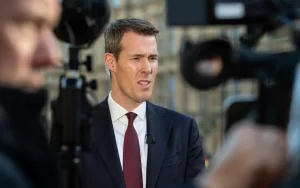
Labour’s plan to impose VAT on private school fees has come under scrutiny after it emerged that a key report justifying the policy was authored by a close friend of a government minister.
Matthew Pennycook, a minister in the Department for Levelling Up, Housing and Communities, was reported to have been the best man at the wedding of Luke Sibieta, who wrote the Institute for Fiscal Studies (IFS) paper backing Labour’s VAT proposal.
The report, which found that Labour’s VAT policy would have a minimal impact on state schools and could raise up to £1.5 billion for the Treasury, has been frequently cited by Sir Keir Starmer and other ministers to defend the measure. The VAT on private school fees, along with an end to business rates relief for private schools, is expected to come into effect in January 2025.
Mr Sibieta, a research fellow at the IFS with nearly 20 years of experience, suggested that the policy would likely force around 20,000 to 40,000 pupils, or 3% to 7% of the private school population, into the state sector. His report also projected a net gain of between £1.3 billion and £1.5 billion for public finances due to the removal of tax exemptions.
However, critics have questioned the close personal relationship between Mr Sibieta and Mr Pennycook, whose department will be involved in implementing the tax policy. Mr Pennycook and Mr Sibieta reportedly used to live together, and Mr Pennycook served as best man at Mr Sibieta’s wedding, raising concerns over potential conflicts of interest.
Opponents of the VAT proposal, including the Independent Schools Council (ISC), have warned that the number of pupils leaving private schools could be far higher than Mr Sibieta’s estimates, which could result in the policy generating far less revenue than expected. ISC figures show that private school enrolments have already dropped by 10,000 pupils in September 2024, suggesting that Labour’s predictions may be overly optimistic.
Julie Robinson, the chief executive of ISC, said: “This data couldn’t be clearer: parents are already removing their children from independent schools as a result of the Government’s plans to charge parents VAT. This is just the tip of the iceberg, and many small schools are already at risk of closure.”
Mr Sibieta has defended his analysis, pointing to demographic factors such as a declining birth rate that could also affect private school enrolments. He stressed that it was too early to draw firm conclusions and that the full impact of the policy might not be clear for another two years.
The Conservative Party is expected to use an Opposition Day debate to call for a deferral of the VAT policy until 2028 in areas where state schools are already nearing capacity. Damian Hinds, the shadow education secretary, argued that the policy could lead to a localised crisis in school places, saying it would “reduce choice, increase class sizes, and be disruptive for teachers and pupils.”
As the debate over the VAT policy intensifies, the Government faces calls from education unions and tax associations to delay its implementation until at least September 2025. The IFS has defended the impartiality of its work, with a spokesperson stating: “The IFS is a politically independent research organisation committed to the highest standards of empirical analysis.”
Despite these assurances, the revelations about the close personal connection between Mr Sibieta and Mr Pennycook have raised concerns over the impartiality of the report underpinning Labour’s tax plans, which could have significant implications for both private and state education in the UK.
Read more:
Report backing Labour’s private school VAT policy written by minister’s close friend
UK risks losing AI leadership without a national data strategy, expert …

The UK risks losing its leadership position in artificial intelligence (AI) without a clear national strategy for data centres, a key player in the sector has warned.
Data centres, essential for powering cloud computing and AI applications, have become central to the digital economy. However, without a cohesive plan, the UK could fall behind in the global AI race, according to industry experts.
The UK is currently Europe’s largest data hub, with more than 500 data centres, the majority concentrated in the South East. These facilities are critical to everything from personal device browsing to AI learning, providing the power, connections, and security required for massive data processing.
Despite this status, high land prices, competition for grid connections, and local resistance have created barriers to further expansion in the South East. This has led some companies to explore opportunities beyond the industry’s traditional base, with Kao Data breaking ground on a £350 million development in Stockport, Greater Manchester.
Paul Lamb, Kao Data’s CEO, highlighted the importance of a broader strategy: “If we want to be part of the global AI opportunity, we need to deploy these resources in locations that are suitable, sustainable, and have the opportunity for growth.” He noted that the UK lacked a plan a decade ago when cloud computing took off, resulting in a concentration of power usage around west London. Lamb called for a UK-wide data centre strategy to distribute these facilities across the country.
The challenge of further expansion in the South East is evident in places like Abbotts Langley, Hertfordshire, where a proposed data centre development has sparked a local debate over green belt land. The planning application was initially rejected by the local council, but Housing Minister Angela Rayner called in the decision on her first day in office, indicating the government’s commitment to growth.
However, the push for more data centres has also raised concerns. Local residents and council leaders argue that development on green belt land should only be allowed if there is significant community benefit. Stephen Giles-Medhurst, leader of Three Rivers Council, said, “We will make the best case possible to say no to this development because it is an inappropriate site, which causes very high harm to the green belt.”
Kao Data’s expansion in Greater Manchester reflects a potential solution to the challenges faced in the South East. By repurposing an industrial site and leveraging existing grid connections, the new facility aims to support the growing demand for AI-driven data processing. Andy Burnham, the mayor of Greater Manchester, supports the project, recognising data centres as critical infrastructure for regional economic growth.
The UK government recently designated data centres as “critical national infrastructure,” putting them on a par with power stations and railways. However, industry experts argue that a more comprehensive strategy is needed to ensure the country remains competitive in AI development.
As AI becomes increasingly central to global economic growth, the UK must navigate the challenges of expanding its data centre capacity while balancing environmental concerns and local opposition. Without decisive action, experts warn that the UK could miss out on a key opportunity to lead in the AI revolution.
Read more:
UK risks losing AI leadership without a national data strategy, experts warn
Former Tesco chief invests in ‘spotify for textbooks’ platform per …

Perlego, an education technology platform known as the “Spotify for textbooks,” has secured a $20m fundraising round led by Sir Terry Leahy, the former CEO of Tesco.
The digital library service, which offers unlimited access to academic titles via subscription, is expected to announce the capital injection this week.
The new funding round also includes investment from ITHAKA, the organisation behind JSTOR, a prominent digital library for academic journals and books. Perlego’s growing list of shareholders already includes notable names such as Mediahuis, the Belgian publisher that recently bid for The Daily Telegraph, and KPN Ventures.
Founded in 2017, Perlego partners with thousands of international publishers and provides access to academic, professional, and non-fiction content from publishers like Cambridge University Press, Elsevier, and Harvard University Press. The platform’s catalogue is available in six languages and is used by over 250 educational institutions worldwide.
Sir Terry Leahy, who has made a number of technology investments since stepping down from Tesco over a decade ago, expressed enthusiasm for Perlego’s innovative approach to education. “Perlego is addressing one of the most pressing challenges in modern education—access to essential learning materials,” Leahy said. “This investment is a vote of confidence in Perlego’s potential to reshape the educational landscape.”
The new funding will be used to expand Perlego’s international footprint and to enhance its offerings by incorporating artificial intelligence. One key development will be Dialogo, an AI-powered research assistant aimed at improving access to academic content.
Gauthier Van Malderen, Perlego’s founder and CEO, commented on the impact of the investment, saying: “This investment represents a vital opportunity to drive meaningful change in education and AI more broadly. We’re passionate about providing accessible yet game-changing solutions to education.”
The platform’s mission to democratise access to academic resources has garnered attention from major industry players, and the recent funding will further bolster its efforts to advance educational technology on a global scale.
Read more:
Former Tesco chief invests in ‘spotify for textbooks’ platform perlego with $20m funding round
Fears of Capital Gains Tax rise pushing UK farmers to exit industry, w …

Up to 10% of UK farmers may abandon the industry this month as concerns over rising Capital Gains Tax and reduced subsidies mount ahead of the new government’s Autumn Budget, according to Mark Chatterton, Head of Agriculture at Duncan & Toplis accountancy and business advisers.
The looming financial pressures have left British agriculture at a critical crossroads, with many farmers contemplating selling their land or stepping back from active farming altogether.
Chatterton reports that a significant portion of his East Midlands client base is now considering drastic measures such as selling land, passing it on to the next generation, or contracting out to larger farming businesses. The sector, already grappling with poor harvests and shrinking financial support, is now facing the additional uncertainty of potential tax hikes.
“The future of British farming is at a critical crossroads,” Chatterton warns. “This Autumn’s Budget could deliver a devastating blow if Capital Gains Tax is hiked as expected. Farmers are already struggling after poor harvests and diminishing subsidies—another financial hit may push many out of the industry for good.”
Confidence within the agricultural sector is at an all-time low. According to DEFRA figures, nearly half of farmers fear for the future, and the National Farmers’ Union (NFU) reports that confidence is at its lowest level since records began. The Sustainable Farming Incentive, a key support program, is set to expire in three years, leaving many farmers without a clear financial safety net.
The fear of a significant rise in Capital Gains Tax, potentially up to 45%, and changes to Inheritance Tax could further drive farmers to exit the industry, particularly those without clear succession plans. High land prices have provided an opportunity for some farmers to sell, but the uncertainty surrounding the upcoming Budget has accelerated decisions to leave before potential tax changes reduce financial prospects further.
Chatterton emphasizes the need for immediate government intervention to protect the sector. “The new government has vocally affirmed the UK’s agricultural sector as a matter of the utmost national security—and I couldn’t agree more. I’d urge the government to apply firm and consistent support for the sector when it needs it most.”
With speculation growing that the Autumn Budget will include significant tax reforms, the future of the UK’s agricultural sector remains uncertain. Farmers hope the government will turn its promises of support into actionable plans with clear timelines and deliverables. Without decisive action, Chatterton warns, the consequences could be devastating for both farmers and consumers, threatening the stability of the nation’s food production.
As the agricultural industry braces for potential tax hikes and reduced financial support, the next few weeks will be crucial in determining whether the sector can survive or whether an exodus of farmers will leave a lasting impact on British farming.
Read more:
Fears of Capital Gains Tax rise pushing UK farmers to exit industry, warns expert
Santander calls for government focus on leadership, digital, and susta …

Santander UK has urged the government to prioritise leadership, digital, and sustainability skills in its new National Plan for Skills to tackle the UK’s productivity crisis and prepare the workforce for the future.
In a newly published report, Tomorrow’s Skills, Santander highlights three major societal shifts—changing attitudes to work, the rise of AI, and the transition to Net Zero—that will impact the British workforce. The report calls for increased investment in training and upskilling to address these challenges.
The report reveals that UK workers are spending 20% less time on training than they did a decade ago, despite more than half acknowledging that they need to upskill to stay relevant in their roles. Barriers such as time constraints, costs, and lack of flexibility are preventing workers from accessing training, contributing to the country’s stagnant productivity levels. Moreover, 69% of workers expect to remain in the same field for their entire careers, and 72% believe their jobs will still exist in 10 years—indicating a lack of awareness of the potential impact of emerging technologies and societal changes.
Mike Regnier, CEO of Santander UK, stressed the importance of education and skills development, stating: “The UK cannot afford to fall behind in this critical area if we want our economy to grow and remain competitive.” He called on the government to focus its skills strategy on addressing three key areas:
Changing attitudes to work:
The rise of hybrid working has introduced new challenges for managers and leaders, with generational differences in attitudes towards remote work. While 65% of 25–34-year-olds view hybrid working positively for the UK economy, only 27% of 55–64-year-olds share this view.
The rise of AI:
As AI continues to transform industries, 63% of workers recognise the need for training around new technologies, while 47% of younger workers worry that AI could replace their jobs. Upskilling in AI and digital technologies is seen as essential for increasing productivity and future-proofing careers.
The transition to Net Zero:
As the UK moves towards its 2050 emissions targets, 58% of workers believe they will need new skills to adapt to their roles in a greener economy. The report highlights the importance of equipping workers with sustainability skills to support the Net Zero transition.
In response to these challenges, Santander has launched a new adult education programme in partnership with xUnlocked, Fearless Adventures, and House 337. The programme, available on Santander Open Academy, offers free, video-led training on green, digital, and leadership skills for people over 18. The aim is to help individuals and businesses prepare for the future by developing the skills needed to thrive in a rapidly changing economy.
Steph McGovern, presenter of The Rest is Money podcast and a business journalist, added her support for lifelong learning, saying: “As the needs of the economy change, so too should our attitude to learning. We should think of education as lifelong. We all need to adapt, but workers can’t do that on their own.”
Santander’s new initiative, combined with its call for government action, underscores the urgency of addressing the UK’s skills crisis. As the economy evolves, Santander’s focus on developing essential skills in leadership, digital technologies, and sustainability will be key to driving future productivity and ensuring the UK remains competitive on the global stage.
Read more:
Santander calls for government focus on leadership, digital, and sustainability skills to future-proof UK economy

