
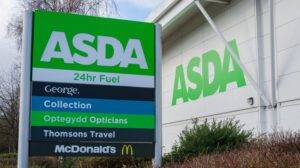
Asda is mandating that head office employees work on-site at least three days a week, while also announcing job cuts to streamline operations and stabilise its market position.
The changes, communicated in an internal email by interim CEO Lord Rose, affect over 5,000 staff across Leeds and Leicester, taking effect from January 2025.
Since Asda’s £6.8 billion sale to the Issa brothers and TDR Capital in 2021, the supermarket’s market share has dropped from 14.6% to 12.6%, losing ground to Tesco and Sainsbury’s. The decision to reduce remote working aligns Asda with its competitors and aims to foster a more collaborative and responsive work culture.
In addition to the shift in its working policy, Asda will eliminate certain head office roles to “remove duplication and simplify structures,” though the retailer has not specified the number of positions affected.
Lord Rose, who took interim leadership after Mohsin Issa stepped down, aims to revitalise Asda’s performance with support from TDR partner Rob Hattrell. A permanent CEO search, led by recruitment firm Spencer Stuart, is ongoing, though the role reportedly presents challenges in attracting candidates given Asda’s current performance struggles.
Read more:
Asda cuts jobs and mandates office attendance amid turnaround efforts
Month: November 2024
Treasury accused of hiding £9.5bn ‘black hole’ in budget, says OB …
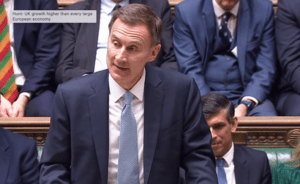
The UK Treasury may have breached the law by withholding £9.5 billion in spending pressures ahead of Jeremy Hunt’s final Budget in March, according to Richard Hughes, head of the Office for Budget Responsibility (OBR).
Hughes suggested that vital financial data on departmental budgets, required by the OBR under the Budget Responsibility and National Audit Act 2011, was not shared, leading to a “materially different” outlook on public finances.
Hughes told MPs that this undisclosed information affected the OBR’s ability to provide an accurate forecast, describing it as a “systematic failure” within the Treasury. While Hughes does not suspect malicious intent, he noted that the lapse has impacted trust, shifting their relationship with the Treasury from “trust” to “trust but verify.”
This revelation follows Chancellor Rachel Reeves’ claim of inheriting a £22bn budget “black hole,” a figure questioned by the OBR but partly substantiated by the £9.5bn of hidden costs. Former Chancellor Jeremy Hunt, however, has criticised the timing of the report, suggesting it risks being used as a “political weapon.”
In addition to the controversy, Hughes warned that the Government’s shift towards electric vehicles, with fuel duty revenue set to drop as petrol and diesel cars phase out, could leave a significant gap in the public finances, comparable to recent tax hikes. Fuel duty, expected to bring in £27.2 billion this parliament, will steadily decrease as the UK approaches its 2035 ban on new petrol and diesel car sales.
Read more:
Treasury accused of hiding £9.5bn ‘black hole’ in budget, says OBR chief
Top 3 Sports Where Home Advantage Matters Less Than You Think

A popular strategy to undertake for strategising bets is leaning on one particular factor, like home advantage, as a base from which to build. The home advantage in sports is something that’s talked about a lot.
There has been a ton of research done on the phenomenon where a team’s performance is typically better at home than it is out on the road.
This is something that’s also reflected in the sports betting odds that you see at sportsbooks such as those rated by Legalbet, a service which analyses bookmakers and their offers. Home favourites are popular picks for punters, and even a weak team, who may be a 3/1 underdog against a title contender away from home, may have their odds adjusted to something like 11/4 or 13/5 if they are at home against the same strong opponent.
But does home advantage matter as much in all sports? Here we have a look at the top three sports which have historically produced thinner margins for home teams.
Why Do Teams Perform Better at Home?
There are some fascinating facts about why teams are expected to play better at home. One of them is simply being in familiar surroundings and because it’s their home, there is a fortress mentality when they will play that little bit harder to defend that precious home territory.
Not having to travel halfway across the country and staying in unfamiliar surroundings can also have a positive effect, as well as enjoying the benefit of majority support from the surrounding stands. Crowd influence can give teams a second wind when they need it, and potentially be hostile enough to put a referee off making a certain decision against their team.
But there are some sports where the home advantage gets watered down compared to others.
Baseball
The MLB has one of the lowest rates of home wins in sports. In 2019, the Washington Nationals went 0-3 at home in the World Series, which sounds like they should have been in big trouble. With no home form, they should have been out of the running.
But remarkably, they still won the championship series 4-3 because their opponents, the Houston Aeros, lost all four of their home matches. Never before had all matches in the World Series been won by the away team. That feat, however, did take a very long time to happen.
During the 2023 MLB Playoffs, there were more away wins than home wins during the playoffs. That has been the trend in the last five years in the world’s biggest baseball league. So for betting, it’s an area to watch where home advantage isn’t necessarily as strong as it’s made out to be. Japan’s Nippon League actually tends to run at a slightly lower home success rate than even the MLB does.
Ice Hockey
Staying in the North American scene, the National Hockey League is a top professional competition where things tend to be pretty evenly split across the boards. Since 2008 the regular season results in the world’s biggest ice-hockey league have produced a rate of anywhere between a 52% and 58% success rate for teams on home ice.
But once things shift over to the playoffs, the numbers become a lot different. Then you are looking at between 45% and 69% home advantage success rate in the Playoff and the lower end of that is extremely low, potentially providing windows for betting.
Rugby and American Football
The average home win rate in international rugby is about 55-58%, which is roughly the same as the NFL. That puts these sports at one of the lower rates for home successes, so they can also both be good ones to target for a betting edge.
So targeting road wins during a weekend of the NFL for example, or during a big international rugby tournament like the Rugby Championship or Six Nations, is more likely to churn up a road success than a bet on European soccer statistically.
See What’s Current
Just for measure, popular competitions like Spain’s La Liga, the English Premier League, Italy’s Serie A and the US MLS soccer scene all typically have well over a 60% home success rate for a season.
The best advice is to always keep up with the current trends. It’s important to understand that there may be shifts from season to season where home advantage may count for a little more or less than usual. There will also likely be really strong outlier teams in both directions as well, which is why you always look at averages.
Read more:
Top 3 Sports Where Home Advantage Matters Less Than You Think
James Dyson condemns ‘spiteful’ inheritance tax in budget, warns o …

Sir James Dyson has strongly criticised Chancellor Rachel Reeves’ latest Budget, describing the new inheritance tax policy as a “spiteful” move that threatens the future of family businesses in the UK.
Under the changes, family-owned businesses and farms worth over £1 million will face a 20 per cent inheritance tax starting in April 2026, a measure Dyson argues could lead to the “death of entrepreneurship” and dismantle the foundation of the British economy.
Writing in The Times, Dyson accused Reeves of “killing off established family businesses” with the so-called “Family Death Tax,” cautioning that this policy undermines long-term business continuity and discourages new ventures. “No business can survive Reeves’s 20 per cent tax grab,” he argued, highlighting the risk of job losses in a sector that, he says, traditionally values stability and generational commitment.
In defence of the Budget, Home Secretary Yvette Cooper rejected Dyson’s remarks, asserting that the measures were necessary to address “the shocking state of public finances.” Cooper stated that the tax changes were part of a strategy to “fix the foundations” of the economy and fund critical public services, including the NHS. She emphasised that, while the policy involved difficult decisions, it was essential for building a stronger financial foundation.
The inheritance tax changes come amid a broader £40 billion tax increase aimed at supporting the NHS and other public services. However, critics argue that the tax on family farms, expected to raise £520 million annually, would cover less than a day’s NHS spending. National Farmers Union president Tom Bradshaw warned of a mental health crisis among farmers, with many expressing concern that the tax could force them to sell or significantly alter their businesses.
Rachel Reeves defended the inheritance tax changes on Sunday with Laura Kuenssberg, stating that agricultural property relief primarily benefited “the wealthiest landowners” and was no longer sustainable given current fiscal pressures. She argued that redirecting funds from these reliefs into public services would ultimately benefit all, including rural communities.
As rural voters and family businesses react to the policy, Labour faces pressure to balance tax reform with the unique needs of these sectors, particularly ahead of local elections in May.
Read more:
James Dyson condemns ‘spiteful’ inheritance tax in budget, warns of impact on family businesses
High street retailers face bleak festive season amid tax hikes and ris …

High street retailers are preparing for a difficult Christmas trading period, as higher taxes and mounting costs raise concerns over the viability of many businesses in town and city centres.
A recent report from advisory firm BDO revealed that in-store sales in October grew by only 1.7% compared to the previous year, highlighting the struggles facing retailers even before last week’s budget, which included a £25 billion tax increase on employers.
The combined retail sales, including online, rose by 4.1% year-on-year, but sectors such as fashion and homeware underperformed. BDO’s head of retail and wholesale, Sophie Michael, expressed concern over the weak start to the festive season, noting that sales volumes are “not back to 2022 levels.” Michael warned that if sales continue at this pace, the industry could face an “exceptionally tough festive period.”
The Chancellor’s budget added to these worries with a 1.2 percentage point rise in employers’ National Insurance to 15%, effective from April, alongside a lowered threshold for contributions. Retailers also face a 6.7% rise in the minimum wage next April, which could drive up employment costs by as much as 10% for some businesses.
BDO warns that these increased expenses will likely stymie high street investment, with retailers potentially forced to halt expansion or refurbishment plans. With the festive period crucial for the sector, the added costs and economic pressure could see more stores reconsider their presence on the high street, exacerbating challenges in town and city centres across the UK.
Read more:
High street retailers face bleak festive season amid tax hikes and rising costs
Unite union threatens legal action over cuts to pensioners’ winter f …

The Unite union has issued a stark warning to the UK government over its controversial decision to cut the winter fuel payment for millions of pensioners, threatening to pursue a judicial review if the policy isn’t reversed.
Initially announced in July and confirmed in the latest budget, this policy aims to address a £22 billion gap in public finances. However, it has sparked widespread criticism, with Unite general secretary Sharon Graham calling it a “cruel” measure that “picks the pockets of pensioners.”
As a result of the cuts, up to 10 million pensioners will lose winter fuel payments worth between £100 and £300. Only those on pension credit or other means-tested assistance will continue receiving the benefit. Graham urged the government to reconsider, stating it is “not too late” to “do the right thing” and reinstate the payment for all pensioners.
Unite’s legal team sent a pre-action letter to the government on 29 October, naming Works and Pensions Secretary Liz Kendall as a proposed defendant. The letter argues that the government failed to conduct a thorough assessment of the policy’s impact on vulnerable groups, especially amid escalating living costs and cold weather risks. Although the government released a limited “equalities analysis,” it admitted there was no comprehensive assessment.
Unite insists the government had a duty to consult the Social Security Advisory Committee and gather further evidence on the cuts’ impact, particularly on vulnerable and disabled people. With cold weather on the horizon, the letter describes the situation as “urgent” for pensioners who risk “disconnection” and are already cutting back on essentials.
The government responded by reaffirming its commitment to supporting pensioners through the triple lock, which will raise state pensions by up to £1,700 during this parliamentary term. It also highlighted other measures, including the warm home discount and the increase in pension credit claims.
Prime Minister Sir Keir Starmer defended the “tough” decision, attributing it to financial pressures inherited from previous governments. In Scotland, a couple has also secured permission to pursue a separate legal challenge against both the UK and Scottish governments over the benefit’s removal, underscoring the broad opposition to the policy.
Read more:
Unite union threatens legal action over cuts to pensioners’ winter fuel payments
We voted for change, now we desperately need it in hospitality

Now we have got a new chancellor and government, with the incoming budget there’s a crucial chance to re-set what is an increasingly dire situation in hospitality.
Many of us voted for change to bring this new government in. However, the expectation of increased National Insurance contributions for employers only and talk of changing tax thresholds and living wage increases sends alarm bells ringing in the hospitality sector, which desperately need recalibration.
There’s an ongoing climate of uncertainty with closures of all kinds of hospitality businesses each week – shutting down for good because they can’t make their businesses add up any more. Turnover remains relatively the same broadly speaking for many operators I know both here in Liverpool and around the UK, but the reality is that making this turnover profitable is getting harder each day.
We need an urgent recalibration in tax for hospitality, which generated £54bn in tax receipts in 2022. In Liverpool, the tourism industry – with hospitality forming a huge part – was worth £6.25bn in 2023. For a city with hospitality in its DNA, we need to increase this each year; the question remains how do we here, and across the UK, make this happen?
Because we continue to face an incredibly demanding, draining and difficult set of circumstances. So unless the government really listens, we will see more closures and more redundancies. How many other fresh food-led businesses need to close to make the new government realise that they aren’t allowing the hospitality industry to grow, invest, employ and quite frankly survive?
Unless swift action is taken, the sector is gearing to fail with post-Covid support long gone but the debts very much remaining, along with the ongoing lack of consumer confidence. And it’s not just restaurants – pubs, cafes, bars and more all face the most difficult trading landscape imaginable, with the perfect set of circumstances for failure.
We would like to grow again and there are many obstacles preventing this growth. Some of the key pressure points are:
High VAT on fresh prepared food
Business rates relief ending – the threat of rates increasing on April 1st 2025
Energy costs
Inflation of ingredients costs
Wage increases
Increased business PAYE and NI contributions
Brexit tariffs on import of wine and international goods
Cost of borrowing
Servicing of CBIL loans businesses were forced to take out during the pandemic to survive
The single most important point is to recalibrate the VAT charge on fresh prepared food to be in line with Europe for fresh led businesses so we can grow, invest and thrive using artisan skills and develop our people and business normally, not just scraping through week by week. There’s a chorus of businesses across the UK asking for this.
And we need business rates reform to create a level playing field for businesses with physical premises on the high street compared to online businesses and dark kitchens. It makes no sense how business rates are currently assessed and the fees levied, on top of the potential end to business rates relief next spring which would be another crippling blow.
We voted for change. Now we desperately need it in hospitality. I really hope the chancellor and government are listening.
Read more:
We voted for change, now we desperately need it in hospitality
Could motor finance become the next PPI scandal?

The UK’s motor finance industry could be heading for a financial storm reminiscent of the Payment Protection Insurance (PPI) scandal.
A recent Court of Appeal ruling found car dealerships and lenders liable for failing to disclose commissions to customers, a precedent that could unleash billions in compensation claims.
For decades, PPI haunted UK banks, ultimately costing them around £50 billion in fines and compensation. Now, analysts fear motor finance could follow a similar trajectory. The Financial Conduct Authority (FCA) began investigating potential misselling of motor finance commissions in January, with banks like Lloyds, Close Brothers, and Barclays setting aside provisions in anticipation of compensation claims. This judgment has since raised the stakes, with the potential industry-wide cost now estimated at £6 billion to £16 billion, according to Shore Capital.
Banks and car dealerships are now required to disclose commissions to customers and obtain explicit consent, which has led to operational disruptions, manual processing of finance offers, and temporary suspension of lending by some banks. The Finance and Leasing Association (FLA) warns that claims management companies could seize on this legal uncertainty, mirroring the surge in PPI claims.
Lenders are already bracing for potential losses. RBC Capital Markets has increased its estimated compensation for Lloyds from £2.5 billion to £3.2 billion, while Santander UK’s costs are expected to climb from £1.1 billion to £1.4 billion. Shares in Lloyds have dropped by over 10%, erasing about £3 billion from its value, while Close Brothers has seen its stock plunge nearly 70% this year.
This latest challenge could extend beyond motor finance, applying to other financial products with undisclosed commissions. Claims for compensation could continue to mount if the Supreme Court upholds the ruling, placing further pressure on UK banks and sparking a new wave of claims and regulatory scrutiny.
Read more:
Could motor finance become the next PPI scandal?
UK shoplifting offences reach record high as over 1.2m cases logged si …

Shoplifting in the UK has reached unprecedented levels, with over 1.2 million cases recorded by police forces since April 2019, according to data obtained by Personal Injury Claims UK.
The surge is particularly pronounced in 2023, with 344,709 offences logged—a 30% rise over the previous year—marking a new 20-year high in England and Wales.
The cost-of-living crisis is cited as a significant factor driving the increase, as economic pressures lead to higher theft rates across the country. Retailers like the Co-op and John Lewis have reported record incidents of theft, often accompanied by abuse and violence toward staff. These crimes have taken a financial toll, with losses from theft doubling to £1.8 billion this year and £1.2 billion spent on security measures, up from £950 million last year.
Despite the rise in offences, prosecution rates remain low. Retail leaders have accused the government of treating shoplifting as a low-priority crime, with a large gap between reported incidents and legal consequences. The Times found that in many cases, police have ceased pursuing charges, further emboldening offenders. The Metropolitan Police Service recorded the most cases of shoplifting among UK forces, with over 215,000 offences since 2019.
The surge in retail crime has put pressure on staff, who face a growing risk of injury during confrontations with shoplifters.
As retailers invest heavily in anti-theft measures, questions remain about whether the government and law enforcement agencies will address the underlying issues contributing to this rise in shoplifting.
Read more:
UK shoplifting offences reach record high as over 1.2m cases logged since 2019

