

In a major shift affecting family-owned businesses, the Chancellor has announced that Business Property Relief (BPR) will be reduced to 50% from April 2026, exposing thousands of family firms to inheritance tax for the first time in decades.
While previously exempt, business assets will now incur an effective 20% tax when passed to the next generation, jeopardising the financial stability of many firms.
The policy change, aimed at generating £500 million annually by 2027, will end full inheritance tax relief for businesses valued over £1 million, with exceptions for smaller firms. The government’s spending watchdog, the Office for Budget Responsibility, anticipates the changes could spur active tax planning among affected families, potentially resulting in lost tax revenue of £200 million to £300 million each year.
Family business advocates have criticised the move, with Neil Davy, CEO of Family Business UK, calling it a “betrayal of Britain’s hard-working family business owners.” He argues that BPR was essential in helping family businesses compete with corporate models like private equity, which are not subject to the same tax burdens.
Steve Rigby, co-CEO of Rigby Group, described the tax shift as “poorly conceived,” warning that family members may be forced to sell their businesses to cover tax liabilities, especially if they need to raise cash through dividends, which face an effective tax rate of 38%.
The inheritance tax relief reduction extends to investors in private companies, who will also see their relief capped at 50%. Rachel Nutt, a partner at MHA, warns that families holding private company shares must rethink their estate planning, as they could face significant tax bills. “For a £30 million business, this could mean a £5.8 million inheritance tax hit,” she explained, underscoring the potential financial strain on family-owned firms.
Chancellor Rachel Reeves defended the move, noting that only 0.3% of estates would be impacted. However, the changes raise questions for family business owners, who may now need to re-evaluate their succession and tax strategies to preserve business continuity across generations.
Read more:
Family businesses face new inheritance tax burden as relief cut to 50%
Month: November 2024
Aston Martin bleeding £1m a day as supply chain issues and China dema …
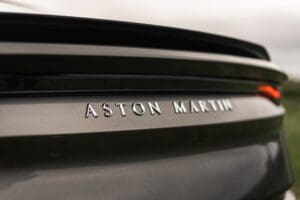
Aston Martin Lagonda, Britain’s only carmaker listed on the London Stock Exchange, is grappling with substantial financial setbacks, missing all 2024 targets as production cuts, supply chain issues, and a steep drop in Chinese demand impact performance.
The luxury automaker, led by new CEO Adrian Hallmark, is burning through cash at over £1 million a day, with net debt climbing to £1.21 billion—nearly 50% higher than a year ago.
The company, controlled by executive chairman Lawrence Stroll alongside Saudi Arabia’s PIF and Chinese carmaker Geely, has faced ongoing challenges. After a disappointing third quarter, in which Aston Martin reported a £12 million loss despite an 8% revenue rise to £391 million, it revised its outlook. Hallmark, formerly with Bentley, cut production targets by 14% to 6,000 vehicles annually and has recalibrated growth expectations.
One of the biggest blows to Aston Martin has been the plummet in demand for the DBX 4×4, particularly in China—the world’s largest auto market—where sales of the model have dropped by 54%. Previously Aston’s best-seller, the DBX now accounts for only 30% of sales. The company’s overall volumes remain down 17% this year, with revenues slipping 4% to £994 million.
In response to these setbacks, Aston Martin has abandoned its goal of achieving cashflow break-even by the end of 2024. Hallmark remains optimistic about the company’s “diverse, dynamic, and desirable portfolio,” asserting that a steady supply chain and stabilised markets could restore momentum. “We are on track to meet our revised full-year guidance,” he said, underscoring a renewed focus on adjusting production volumes to align with market conditions and supply limitations.
Aston Martin’s stock rose slightly following the announcement, closing at 111p, but shares remain far from the £4.3 billion valuation the company boasted when it floated six years ago. As the carmaker faces increasing competition in the luxury electric segment, all eyes will be on its ability to stabilise operations and capture market share amid mounting challenges.
Read more:
Aston Martin bleeding £1m a day as supply chain issues and China demand slump hit targets
Brookfield buys £1.75bn stake in Orsted’s UK offshore wind farms
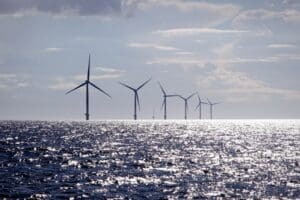
Brookfield, chaired by former Bank of England governor Mark Carney, has acquired a 12.45% stake in four UK offshore wind farms owned by Orsted for £1.75 billion ($2.3 billion).
This significant deal includes the world’s largest single offshore wind farm, Hornsea 2, located 55 miles off the Yorkshire coast with a capacity of 1.32 gigawatts—enough to power approximately 1.4 million homes.
This acquisition represents about 20% of the £8.75 billion disposal target set by Orsted for 2026, a strategy to reduce costs and reinforce its balance sheet amid rising interest rates and supply chain challenges affecting the sector’s profitability. Orsted operates over 5GW of offshore wind capacity, with an additional 5GW under construction, including Hornsea 3 and 4. The latter projects recently secured contracts in the UK’s clean power auction, for which the government boosted the budget to £1.5 billion to drive renewable investments.
Connor Teskey, CEO of Brookfield Renewables, stated that UK offshore wind assets are “a critical part of the energy mix,” echoing Chancellor Rachel Reeves’s assertion that this deal is a “huge vote of confidence in the UK’s clean energy sector.” Since Labour’s July election win, the government has prioritised net zero targets by 2050, increasing support for renewables and launching Great British Energy with £8.3 billion in taxpayer backing.
For Brookfield, this acquisition builds on its recent foray into the UK wind market following its purchase of Banks Renewables, rebranded as OnPath, which operates 11 onshore wind farms across the UK. This marks Brookfield’s first UK offshore wind venture, adding to its 11.1GW global wind capacity, more than half of which is in North America.
Read more:
Brookfield buys £1.75bn stake in Orsted’s UK offshore wind farms
Land Rover and Range Rover hybrid sales surge as EV uncertainty shifts …
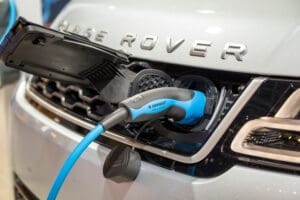
Amid ongoing uncertainty around electric vehicle (EV) adoption timelines, demand for Land Rover and Range Rover plug-in hybrids (PHEVs) has surged.
Jaguar Land Rover (JLR), the West Midlands-based, Indian-owned automotive group, has reported a 29% increase in global sales of its PHEV models for the first half of its financial year, ending in September.
This shift towards hybrids reflects changing consumer priorities, with many buyers opting for PHEVs as a transition step towards full EVs. JLR sees PHEVs as a “stepping stone” technology, enabling customers to familiarise themselves with electric driving while alleviating “range anxiety” through a hybrid petrol engine. For longer journeys, the hybrid system switches seamlessly from electric to fuel, providing flexibility for those uncertain about fully committing to an EV.
PHEVs are becoming a popular choice in the UK market, where hybrid sales have risen by 26% this year, surpassing diesel’s share. JLR’s Defender and Range Rover models have seen particularly strong demand, with global PHEV sales up 47% for Range Rover and 23% for Defender, building on a 59% increase in global PHEV sales in the year to March. In the UK alone, JLR’s PHEV sales reached 20,800 units, a 55% rise from last year.
Mark Camilleri, JLR’s electric vehicle programme director, highlighted that PHEVs provide an introductory ownership experience that includes both home and public charging before buyers consider transitioning to fully electric vehicles. Currently, JLR’s Range Rover PHEVs offer an electric-only range of 70 miles—well above the UK driver’s average daily mileage of 20 miles—allowing for zero-emission daily commutes in urban settings.
Looking ahead, JLR has committed to introducing fully electric models of the Range Rover, Defender, and Discovery by the end of the decade. Jaguar, JLR’s sister brand, will go fully electric next year, signalling the group’s dedication to electrification while balancing consumer needs for hybrid solutions in the meantime.
Read more:
Land Rover and Range Rover hybrid sales surge as EV uncertainty shifts buyer focus

