

SME manufacturers in the north west of England will benefit from an additional £230,000 in funding to accelerate the adoption of advanced digital technologies and strengthen their competitiveness.
The Department for Business and Trade (DBT) has awarded the extra funding to Made Smarter Adoption North West, enabling at least ten more businesses to introduce transformative tools such as sensors, robotics, and 3D printers.
The cash injection comes as welcome news for the digital adoption programme, which is due to continue from April 2025 under the government’s £16 million pledge to roll out similar support initiatives across all English regions.
Made Smarter provides smaller manufacturing and engineering firms with access to technology advice, leadership development, and skills training, as well as grants for digital internships and implementation projects. The goal is to help companies increase productivity, enhance growth, create high-value jobs, and support decarbonisation efforts.
Alain Dilworth, Programme Manager at Made Smarter Adoption North West, said: “We are delighted that the DBT has allocated a further £230,000 to support our ongoing mission. Most of this funding will help businesses accelerate their digital transformations, and we urge any manufacturers who haven’t yet engaged with us to get in touch.”
Launched seven years ago, Made Smarter Adoption North West was set up to help SMEs lacking the in-house resources to embrace digital tools. Run by a team of 16 experts in manufacturing, technology, and organisational development, it has already engaged 2,500 companies and offered personalised advice to more than 500.
Of these, 330 businesses have secured over £7 million in grants to co-fund 379 tech projects, with a total investment of £25 million (including £18 million from participating firms). This combined backing is expected to create 1,700 new jobs, upskill 3,200 existing roles, and add £267 million in gross value added (GVA) to the economy over the next three years.
More than 200 manufacturers have improved their operations through digital skills programmes, with half of the 75 internships facilitated by Made Smarter leading to permanent roles.
Donna Edwards, Director of the programme, said: “This additional funding recognises the significant impact Made Smarter North West is having on the region’s manufacturing sector. Our approach is built around specialist advice to help firms select the most effective technologies for growth and resilience.
“As we enter our seventh year, we’re more determined than ever to reach even more SMEs and illustrate how digital innovation can transform their operations, workforce, and environmental footprint.”
Inspired by its success in the north west, the Made Smarter model has since been adopted in several other English regions, including the North East, Yorkshire and the Humber, the West Midlands, and the East Midlands. This blueprint will guide the programme’s further expansion in April 2025.
Read more:
DBT gives £230k injection to drive digital transformation among north west SME manufacturers
Month: December 2024
UAE buys Mclaren’s automotive business following record losses

Abu Dhabi’s sovereign wealth fund is set to acquire the automotive division of McLaren, the renowned British supercar manufacturer, in a move that reshapes the ownership of one of the UK’s most iconic motoring brands.
The deal follows a difficult period for the Woking-based firm, which recorded a record annual loss of £924 million in 2023, up sharply from £349 million the previous year. Under the agreement, McLaren’s longtime majority shareholder, the Bahraini state-owned investment vehicle Mumtalakat, will retain control of the racing arm, while Abu Dhabi’s CYVN Holdings – backed by the trillion-dollar Abu Dhabi Investment Authority – steps in as a minority shareholder.
The signing ceremony was reportedly witnessed by Sheikh Khaled bin Mohamed bin Zayed Al Nahyan, crown prince of Abu Dhabi and son of UAE president Sheikh Mohamed bin Zayed Al Nahyan, underscoring the strategic importance of the acquisition for the emirate. In a statement, Abu Dhabi described the move as “a defining moment” in CYVN’s plan to build a “leading, globally connected mobility platform.”
Mumtalakat first acquired a major stake in McLaren in 2007 and has repeatedly injected funds over the last few years to keep the carmaker afloat. The business suffered severely during the pandemic and faced mounting losses, which prompted Bahrain’s sovereign investor to seek a buyer. Having already enlisted Wall Street bankers from JP Morgan, Mumtalakat has now found its exit strategy through CYVN’s investment.
Tom Molnar, chief executive of McLaren, has emphasised the need for the firm to pivot towards electrification, with the company racing to develop its first fully electric supercar. The investment from Abu Dhabi could provide the capital required for extensive research and development and to secure McLaren’s position in a future driven by advanced technology and cleaner propulsion systems.
While the McLaren racing division – originally founded in 1963 – will remain separate, the new deal is expected to secure the automotive business’s financial footing. The hope is that with stable backing from Abu Dhabi and the continuing strategic involvement of Mumtalakat, McLaren can navigate the challenges of rising costs, supply chain pressures, and an evolving global market for luxury and high-performance vehicles.
Read more:
UAE buys Mclaren’s automotive business following record losses
Rent rises slow, offering hope to beleaguered tenants

After years of surging rental costs, tenants are finally seeing signs of relief. According to new data from property portal Zoopla, annual rent inflation has slowed to 3.9 per cent, its lowest rate since August 2021.
Although rents are still increasing, this marks a significant cooling from 2022’s peak growth of 12 per cent.
For the average tenant, who now pays £1,270 per month for a typical rental home, slower price increases come as welcome news. Over the past four years, rents have risen by 27 per cent while earnings have grown by just 19 per cent. Compared to 2021, tenants are paying a hefty £3,240 more per year, on average.
The rate of rental growth varies across the country. Northern Ireland remains a hot spot, with annual rents up 10.5 per cent, while London’s rental prices have edged up by only 1.2 per cent in the past year. These regional differences highlight how location and local market conditions can influence affordability.
Richard Donnell, executive director at Zoopla, notes that the pandemic-era rent boom stemmed from a supply-demand imbalance. While there are nearly a third more potential renters seeking accommodation than in 2019, the stock of available rental homes has been broadly static since 2016. The shortage, while easing slightly, is expected to continue. Would-be buyers are locked out of the housing market due to affordability issues, net migration is at record highs, and more landlords are exiting the sector in response to tougher taxes and regulations.
Zoopla predicts that rents will increase by another 4 per cent in 2025, with more affordable areas around major towns and cities likely to see the strongest demand. This is already evident in places such as Havering, on London’s eastern fringe, and Birkenhead, across the River Mersey from Liverpool, where rents are outpacing pricier urban cores.
Labour’s pledge to build 1.5 million homes over the next five years could help alleviate the chronic shortage and keep rents and prices in check. However, Donnell cautions that a real easing of pressure on renters must come from boosting all forms of housing supply, both private and social. Landlords, he says, will remain essential to meeting demand, and conditions may eventually encourage them to re-enter the market—but not just yet.
Read more:
Rent rises slow, offering hope to beleaguered tenants
Farmers descend on Westminster amid inheritance tax row as Starmer fac …

Hundreds of farmers gathered in Westminster today, chanting “no farmers, no food” outside Downing Street, as Prime Minister Sir Keir Starmer faced tough questioning in the Commons over proposed changes to inheritance tax.
Tractors blocked parts of Whitehall during a demonstration organised by Save British Farming and Kent Fairness for Farmers, reflecting the industry’s growing anger over Chancellor Rachel Reeves’s levy proposals.
Under the plans, announced in last month’s Budget, inheritance tax will rise to 20 per cent on agricultural assets worth more than £1 million. Although the government insists the majority of farms will remain unaffected, farmers’ groups have argued that the threshold is far too low for many family-run holdings. Approximately 500 farmers travelled to Westminster today to protest, following a rally of around 13,000 people in the capital last month.
As the protest took place, Liberal Democrat leader Sir Ed Davey pressed Sir Keir Starmer on whether he would “change course and recognise the vital role that family farms play.” In response, the Prime Minister stated that the “vast majority” of farms would be unaffected, citing the £3 million threshold for an “ordinary family” case.
However, many farmers remain unconvinced. Matt Cullen, a beef farmer and organiser with Kent Fairness for Farmers, claimed: “We need to show this government that we will not be pushed over and have our farms destroyed. This is war and we will win and force the government into a U-turn.”
Among the demonstrators was 26-year-old Claire Fifield, whose step-family runs a tenanted farm in Amersham, Buckinghamshire. Ms Fifield said the £1 million threshold was unrealistically low given the costs associated with farming: “I don’t think they’ve spoken to a single farmer, especially not a tenant farmer. They looked at Jeremy Clarkson and decided to take his money, but this punishes people who have been working these lands for generations.”
The emotional toll of the dispute was highlighted during a session of the Commons Environment Committee, where Tom Bradshaw, President of the National Farmers’ Union (NFU), was moved to tears while describing the pressure some farmers face. Middle-aged farmers are reportedly worried their parents will not live the seven years required to avoid tax liabilities, putting businesses that have been nurtured for decades at risk. Bradshaw warned of severe human consequences, including the possibility of farmers taking their own lives due to financial despair.
During Prime Minister’s Questions, Conservative MP Jerome Mayhew reminded Sir Keir Starmer of his pre-election remarks to the NFU, where he acknowledged that losing a farm “is not like losing any other business.” Mayhew accused the current administration of being duplicitous. Sir Keir countered by highlighting the £5 billion of support pledged to agriculture over the next two years, including £350 million allocated in the last week, and reiterated that “the vast majority of farmers will be unaffected” by the changes.
As tensions remain high, the government stands by its reforms, while many farmers fear the new inheritance tax threshold will jeopardise family farms that have supported communities and produced British food for generations.
Read more:
Farmers descend on Westminster amid inheritance tax row as Starmer faces MPs’ questions
Coffee prices reach new heights as weather woes hit global supply

The cost of your morning cup of coffee could soon increase, after the price of arabica beans—the most widely produced variety—soared to a record high on international commodity markets.
On Tuesday, the price of arabica surpassed $3.44 per pound, reflecting an increase of over 80% since the start of the year. Robusta beans, which are cheaper and more bitter, have also risen sharply, hitting fresh highs this autumn.
The price surge follows challenging weather conditions in the world’s leading coffee producers, Brazil and Vietnam. Brazil, the largest producer of arabica beans, has suffered its worst drought in 70 years, followed by unusually heavy rains that threaten this season’s flowering crop. Vietnam, the top supplier of robusta, has also experienced weather extremes that are expected to limit future yields.
These supply concerns emerge at a time of steady global demand for coffee. Consumption in countries like China has more than doubled over the past decade, while roasters and traders report that inventories of beans are critically low.
For several years, major coffee brands including JDE Peet’s (the owner of Douwe Egberts) and Nestlé managed to absorb higher raw material costs, protecting consumers from price increases to maintain their market positions. However, industry insiders say that this strategy is reaching its limit. With soaring bean prices putting intense pressure on profit margins, brands are now preparing to pass costs along to customers in the first quarter of 2025.
Italian coffee giant Lavazza, which until recently tried to shield shoppers from rising costs, confirmed that it was ultimately forced to adjust its prices. David Rennie, Nestlé’s head of coffee brands, has also admitted that the firm will need to raise prices and possibly adjust package sizes, describing the situation as “tough times” for the entire industry.
Commodity analysts expect the upward trend in coffee prices to persist for some time, with the impact of extreme weather on supply—and consistently strong consumer demand—making it likely that coffee lovers will feel the pinch in their wallets well into next year.
Read more:
Coffee prices reach new heights as weather woes hit global supply
Mencap warns National Insurance rise could force closure of care servi …

Mencap, one of Britain’s leading charities supporting people with learning disabilities, has warned it may have to close at least 60 of its services due to mounting cost pressures following changes announced in the Budget.
The organisation says the rise in employers’ National Insurance contributions (NICs), combined with a sharp increase in the national minimum wage, will add up to £18 million a year to its annual costs. The charity’s chief executive, Jon Sparkes, cautioned that frontline care services could become unviable without higher fees from local authorities, which are responsible for commissioning most adult social care.
Currently, employers pay NICs at 13.8% on earnings above £9,100, but under the new rules the rate will increase to 15% from April 2025 and start from £5,000. At the same time, the national minimum wage will rise to £12.21 an hour for over-21s. Mencap says these measures will affect every one of its roughly 7,500 staff, including many low-paid care workers, leading to a £12 million annual hit. If the charity also raises pay for other workers to preserve pay differentials, the total could reach £18 million.
Mencap supports around 600 services across England, Wales, and Northern Ireland. While some sites—like Churchfields in Essex, where 26 people with complex learning disabilities live—are not immediately at risk, Sparkes warns that at least 60 services may have to close unless the charity receives “substantial” increases in funding from councils. He expressed concern that “basic daily social care” for some of society’s most vulnerable people could be lost.
These concerns are echoed widely across the sector. Analysis by health and care consultancy LaingBuisson, commissioned by care associations, found that 80-85% of social care is provided by small local organisations with little financial resilience. With higher wage and NIC costs, care providers fear a “significant reduction in care and support services,” according to Dr Jane Townson of the Homecare Association.
Local authorities, who face their own funding challenges, say that to cover the increased costs, they would need to raise provider fees by 9-10%. Melanie Williams, president of the Association of Directors of Adult Social Services (ADASS), argues that councils are already struggling with overspends and rising demand, calling the mounting pressures “insurmountable.”
ADASS estimates that an extra £1.8 billion is needed just to maintain current care services in England. While the government insists it is taking steps to stabilise and improve the sector—including increasing council funding by £3.5 billion in 2025-26—it acknowledges that it must tackle longstanding challenges in adult social care.
A government spokesperson said it is committed to supporting adult social care through improved staff pay and broader measures, noting: “We are giving local authorities an additional £3.5bn in 2025-26… to support the sector.” Yet for charities like Mencap, already operating on tight margins, the question remains whether this support will arrive in time to prevent the closure of services that provide essential, life-enhancing care.
Read more:
Mencap warns National Insurance rise could force closure of care services
Vodafone faces £120 million franchisee legal battle over alleged ‘b …

Vodafone is facing a £120 million-plus legal action brought by 61 of its current and former UK franchisees, marking one of the largest franchise-related claims to hit a major British company.
The group of claimants, many long-standing and loyal franchise partners who began their careers with Vodafone, allege the telecoms giant breached its duty of good faith and violated the terms of its Franchise Agreement from July 2020 onwards.
Central to the claim are accusations that Vodafone imposed “irrational and arbitrary” business decisions, slashing franchisees’ commissions without warning or explanation, appropriating government support intended for small businesses, and failing to pass on rent-free periods negotiated with landlords. The claimants say that Vodafone’s approach stands in stark contrast to the ‘true partnership’ model it originally promoted, and is at odds with the firm’s public image as a supportive franchisor.
The legal action also highlights the severe personal and financial toll on some franchisees. Several have reported facing bankruptcy, potential home repossession, and debilitating mental health issues after changes to their remuneration structures and the removal of their store operations left them with mounting debts. One former franchisee said the ordeal “started as a dream – and ended as a nightmare,” while another said it had undermined their ability to support their family and maintain their personal well-being.
In specific allegations, the claim states that Vodafone cut commissions with as little as 14 days’ notice, and levied disproportionately large fines and penalties on partners. In one instance, a franchisee was fined £21,000 for a simple £7 customer mischarge. The group also contends that Vodafone effectively neutralised the benefit of Covid-19 business rates relief intended to help struggling small retailers, using the relief information provided by franchisees to reduce their commissions.
Notably, the claim asserts that Vodafone stopped paying commission for selling mobile phones altogether, despite being one of the UK’s most recognisable telecoms brands. Instead, the company allegedly only paid commission on the airtime contracts, increasing its own margins at the expense of franchisees.
Although the franchisees initially sought to resolve matters through dialogue, they say they were repeatedly met with silence or dismissal, prompting their collective decision to pursue a formal legal route. This lawsuit follows Vodafone’s recent withdrawal from the British Franchise Association and could present a serious reputational challenge for the company, which supplies mobile, broadband, and other services to millions of UK consumers.
Vodafone has thus far denied the allegations in pre-action correspondence. With the claim now before the courts, a fiercely contested legal battle is expected. If the franchisees prevail, it would represent a landmark case within Britain’s franchising and retail sectors, raising questions about the obligations of major brands and the protections afforded to their small business partners.
In a response to Business Matters, Vodafone said: “We are aware of the allegations and take them very seriously, and we are sorry to any franchisee who has had a difficult experience. While we have acknowledged challenges were faced by some franchisees, we strongly refute claims that Vodafone has ‘unjustly enriched’ itself at the expense of small businesses. Our franchise model is a commercial relationship. We offer our franchise partners a large amount of cost-free support, but, as with any business, commercial success is not guaranteed. The majority of franchise partners are profitable and there is strong demand among our current franchisees to take on new stores. We maintain that where issues have been raised, we have sought to rectify these and believe we have treated our franchisees fairly.”
Read more:
Vodafone faces £120 million franchisee legal battle over alleged ‘bad faith’ business practices
Myenergi calls for local businesses to celebrate what makes Grimsby gr …
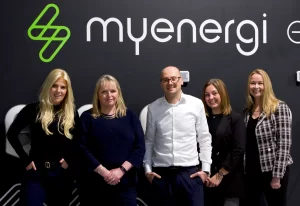
With Grimsby making headline news earlier this week as the ‘worklessness’ capital of Britain, Stallingborough-based renewable energy tech manufacturer myenergi is calling for local businesses to stand up to the criticism, champion the region and celebrate the thriving community that makes the town great.
While the publicity may paint a bleak picture, co-founder Jordan Brompton is keen to raise awareness of the industry-defining work that takes place behind closed doors, as well as to showcase the pioneering businesses that call the town home. With myenergi’s global headquarters based in Stallingborough, Brompton is passionate about Grimsby’s potential, as well as its position at the very heart of the UK’s renewable energy revolution.
She comments: “We can’t escape the fact that Grimsby has been hit hard by the decline of the fishing industry, but we also shouldn’t shy away from the resurgence of North East Lincolnshire as a fantastic place to do business and a real hub of clean energy innovation. Almost 2,000 local residents are already employed within the renewables industry – a number only set to increase as more and more important projects get underway.
“There are a whole host of inspirational businesses that have chosen Grimsby as their base. From Orsted’s £14m East Coast Hub, to port offices of E.ON, RWE and the Renewable Energy Systems Group (RES), the clean energy industry is kick-starting Grimsby’s revival. The wider Humber Energy Estuary cluster includes Siemens’ wind turbine blade manufacturing operations and the Able Marine Energy Park – it’s a thriving community centred around the future of clean, green, decentralised power.
“Add to this the headquarters of pharmaceutical giants Novartis and ALLpaQ, and it’s clear to see that the town is fast-becoming a the centre for a number of essential industries, something that the headlines often fail to recognise.
“As a leading global player in renewable energy technology, we could have based the business in London, Eindhoven or even Silicon Valley, but we’re absolutely committed to North East Lincolnshire. And why wouldn’t you be? The opportunities are extensive, the talent pool is plentiful and you’re surrounded by some of the most innovative green businesses anywhere in the UK. Two thirds of our workforce are from the local area and we find that those we employ from Grimsby and the surrounding area are incredibly resilient, hard-working and resourceful.”
“We’re passionate believers in the transformative role of sustainability, as well as the importance of embracing renewable energy, decarbonising the supply chain and accelerating the global transition to electrification. Many of the companies based around the Humber Estuary are operating at the absolute forefront of this industry and we’re proud to be part of the movement.
“It’s safe to say that Grimsby is often painted in a bad light, but this dated view fails to scratch the surface. A recent study revealed that the town is considered a far better place to live than Liverpool, Bournemouth and even Oxford. However, misconceptions are holding us back.
“I think local businesses have a key role to play in championing the region and celebrating what makes Grimsby great. We collectively need to be seen as the driver of the green movement, the centre of excellence for tomorrow’s low carbon technology and the heart of the UK’s technology melting pot.
“As a region, we’re contributing significantly to the economy and leading the way in the transition to net zero. We mustn’t hide our light or play down our contribution, we should be proud to stand up and be counted.”
Read more:
Myenergi calls for local businesses to celebrate what makes Grimsby great
Ashtead to shift primary listing stateside, dealing fresh blow to Lond …

In a significant setback for the London Stock Exchange’s global standing, Ashtead, one of Britain’s largest equipment hire groups, has announced plans to shift its primary listing to the United States.
The move deals another blow to London’s efforts to remain attractive to major companies, following a series of high-profile departures in recent years.
Ashtead, which hires out construction equipment and employs more than 25,000 staff worldwide, said the US was the “natural long-term listing venue” for the group. Its rationale is clear: North America is now responsible for the majority of the company’s profits, and its leadership team, corporate headquarters, and the bulk of its workforce are already based there.
The company plans to maintain a secondary listing in the UK as an international business, but the decision to shift its primary listing across the Atlantic underscores investor concerns that London’s allure is weakening. In recent years, firms valued at hundreds of billions of pounds, including British tech champion ARM Holdings and Paddy Power’s owner Flutter, have favoured floating in New York rather than staying tied to their London listings.
Ashtead said it aims to complete the move within the next 12 to 18 months, following consultation with shareholders and a formal vote. The firm’s announcement comes at a time when it expects lower-than-anticipated annual profits due to softness in the local US commercial construction market. Nevertheless, it anticipates a stronger outlook as interest rates begin to ease, making borrowing cheaper for construction projects. Securing a deeper pool of US investors is a key factor behind the move.
Market commentators suggest other motives may also be in play. Dan Coatsworth, an investment analyst at AJ Bell, noted speculation that re-listing stateside could help justify higher pay packages for senior executives—something that has faced pushback under UK governance standards. A $14 million pay package proposed for chief executive Brendan Horgan drew criticism for being “excessive” by British standards, but would be more in line with norms for top-tier US-listed companies.
Ashtead’s shift comes at a time when the British government is attempting to spur investment, with Chancellor Rachel Reeves recently easing self-imposed debt rules to allow for up to £50 billion more borrowing for infrastructure projects. While the company’s decision may not directly alter Ashtead’s domestic investment plans—an Ashtead spokesman insisted UK investment intentions remain unchanged—there is no denying the symbolic weight of the move.
Founded in England in 1947 and listed on the LSE since 1986, Ashtead built its dominance in equipment rental after expanding into the US in 1990. By the early 2000s, it had become one of the largest players in North America. With the next chapter of its corporate journey set to be under US regulatory and investor scrutiny, London will be left to reflect, once again, on how to keep global champions anchored on British soil.
Read more:
Ashtead to shift primary listing stateside, dealing fresh blow to London’s market allure

