

Britain’s soaring sickness bill has left policymakers and economists scratching their heads, with near-record numbers of workers absent on long-term health grounds costing the public purse more than £65.7 billion a year.
Some 2.8 million people now claim incapacity and disability benefits, far above pre-pandemic levels, and the House of Lords’ economic affairs committee has warned that the problem cannot be attributed solely to deteriorating health or NHS delays. Instead, evidence suggests the benefits system itself may be contributing to a surge in claimants, at a time when overall sickness support already eclipses the entire national defence budget.
A rise in mental health conditions and back problems has partly fuelled the sharp jump. Official survey data from the Office for National Statistics (ONS) indicates that around 700,000 more people are out of work with long-term sickness than in early 2020. Despite the global nature of the pandemic, the UK’s incapacity rate appears to have increased more rapidly than in many other countries.
Even so, the Lords committee, after questioning leading experts, concluded: “We received no convincing evidence that the main driver of the rise in benefits is deteriorating health or high NHS waiting lists.” In fact, other government data suggests that overall health in the population has remained relatively stable over the past decade. While concerns linger over stagnant life expectancy and a growing number of Britons self-reporting as disabled, the committee believes deeper structural issues are at play.
Senior researchers highlight a mounting incentive within the benefits system that could be prompting more people to list health issues as their reason for leaving the labour market. Stephen Evans, from the Learning and Work Institute, points to tightened rules and sanctions for unemployment benefit, combined with a lower weekly payment, which can be a fraction of the top-level incapacity payout.
Eduin Latimer from the Institute for Fiscal Studies (IFS) agrees, noting that shifting from unemployment to the highest-rated incapacity benefit could roughly double a single person’s income. Though these rules are not new, the economic shock of the pandemic and cost-of-living pressures may be accelerating the trend, leaving more people in a category that offers neither financial disincentives nor strong support mechanisms for returning to work.
Once labelled too ill to work, claimants typically no longer receive substantial help from job centres, and there is little requirement to search for employment. Less than one in ten people in that category receive job-hunting support, according to Evans, and a mere 1pc of those deemed inactive through ill-health are back in work after six months.
The Lords’ economic affairs committee worries that “once in receipt of [health-related benefits], there is neither the incentive nor support to find and accept a job”. This pattern undermines not only the public finances but also the long-term prospects of individuals who may recover sufficiently to work again, yet never receive the guidance or confidence to attempt re-entry to the labour market.
Forecasters project that the annual price tag of the UK’s long-term sickness bill could exceed £100 billion by 2030, piling pressure on the Prime Minister to tackle the crisis. Experts agree there is no single explanation: some health indicators are deteriorating, but evidence linking waiting lists directly to the benefits surge is slim. The design of incapacity benefits, coupled with external shocks and personal motivations, appears to have created a perfect storm.
Stephen Evans offers a stark conclusion: “We’re writing far too many people off.” Resolving Britain’s sickness puzzle will likely require more nuanced reforms to the benefits system, improved mental health support, and a robust set of back-to-work programmes that offer real hope for those grappling with genuine illness — and genuine financial pressures.
Read more:
Record surge in long-term sickness claims baffles experts amid mounting benefits costs
Month: January 2025
Pocket money toys see sales surge as parents and ‘kidults’ hunt fo …

Sales of “pocket money” toys under £10 boomed last year, as cost-conscious parents and adult collectors turned to cheaper playsets and mini-figurines to weather tough economic conditions.
According to new data from market research firm Circana, UK toy sales slipped 3.7 per cent to £3.4 billion in 2024, yet lower-priced items performed robustly, with 80 per cent of all toys sold costing under £15 and almost 30 per cent under £10.
The bestselling toy for a second year in a row was the Squishmallows plush range, typically priced below £9, illustrating how affordability has helped propel certain brands. Melissa Symonds, executive director for UK toys at Circana, says families have scaled back impulse purchases after years of rising living costs, boosting demand for “cuddly toys and collectibles” over costlier options.
Crucially, an expanding group of older toy enthusiasts—known as ‘kidults’, aged 12 and over—now accounts for nearly 30 per cent of UK toy sales. Their willingness to spend on pricier building sets, especially Lego’s advanced or licensed ranges, has helped offset some revenue declines. Sales of building sets rose by 6 per cent, aided by Lego’s Botanics range of floral-themed sets, which appeal to a growing adult demographic.
Across the board, demand for collectible toys continues unabated. One in five toys sold in 2024 was a collectible, with average prices at £7.59. Brands like Funko Pop! and Sylvanian Families have capitalised on Britons’ love of assembling entire sets, while licensed lines from hit films and TV series—such as Despicable Me and Bluey—are also on the rise.
Kerri Atherton, the head of public affairs at the British Toy & Hobby Association, highlights the surge in “micro collectibles”—toys under 5cm tall—driven by the popularity of Lego minifigures and Funko’s Bitty Pop! range. “We’ve seen plenty of excitement around these tiny toys that deliver both a high ‘cute factor’ and a low price tag,” she said, noting an 18 per cent rise in micro-collectible sales.
Despite a flurry of late-December sales, the UK toy market posted its fourth consecutive annual decline, reflecting a wider slump in retail sales volumes. Official data from the Office for National Statistics showed a 0.3 per cent month-on-month fall in December, a key shopping period.
“These figures have undoubtedly been shaped by the unsettled economic climate,” Atherton said, emphasising that inflationary pressures and cost-of-living challenges have rippled through discretionary categories such as toys. Nevertheless, robust performance in budget and collectible segments suggests that when it comes to playtime, British shoppers are simply scaling down rather than opting out.
Read more:
Pocket money toys see sales surge as parents and ‘kidults’ hunt for cheaper fun
Volkswagen warns of ‘harmful’ consequences from Trump’s Mexico t …

Volkswagen has cautioned that the US administration’s proposed tariffs on imports from Mexico could have a “harmful economic impact” on both American consumers and the global automotive industry.
It comes after President Donald Trump indicated this week that he intends to impose tariffs as high as 25 per cent on vehicles from Mexico and Canada by 1 February, citing concerns over migration.
Volkswagen operates a large plant in Puebla, Mexico — its biggest site outside Europe — which built nearly 350,000 vehicles in 2023, primarily for export to the United States. The German carmaker criticised the mooted protectionist move, saying:
“The Volkswagen Group is concerned about the harmful economic impact that proposed tariffs by the US administration will have on American consumers and the international automotive industry. We remain a strong advocate for free and fair trade.”
The company has invested more than $10 billion in the US market, maintaining that “open markets have been a driving force behind global economic growth and prosperity”. Analysts at Stifel previously warned that around 65 per cent of Volkswagen’s US sales are made up of cars produced in Mexico, suggesting that if new tariffs are enforced, the brand could become uncompetitive and even withdraw from the American market altogether.
Volkswagen shares eased by €0.50, or 0.5 per cent, to €96.35, while its rival Stellantis slipped €0.17, or 1.3 per cent, to €12.68. Stellantis, which imports nearly 40 per cent of its US-sold vehicles from Mexico and Canada, has expressed support for boosting US-based manufacturing. The group’s chairman, John Elkann, reportedly spent four days meeting Trump and senior officials in the new administration earlier this month.
The potential introduction of tariffs threatens to disrupt the US-Mexico-Canada trade agreement (USMCA), the successor to the North American Free Trade Agreement (Nafta). Both Canada and Mexico have vowed to retaliate with counter-tariffs if Trump goes ahead with his plan, creating the prospect of a new trade war. The Canadian dollar and Mexican peso each weakened against the US dollar by mid-morning on the news, falling 0.9 per cent and 1.2 per cent respectively.
Read more:
Volkswagen warns of ‘harmful’ consequences from Trump’s Mexico tariffs
Treasury intervenes in car finance row as billions in compensation han …

The Treasury is bidding to step into a major Supreme Court case that could drag Britain’s motor finance industry into a costly mis-selling crisis on a par with the infamous PPI scandal.
Ministers want the court to consider the broader impact on investor confidence in the UK’s regulatory regime and, crucially, to ensure that any compensation orders are kept “proportionate.”
It is up to the Supreme Court to decide whether the Treasury’s intervention will be allowed. However, the government’s push to influence the outcome underscores growing concern over potential liabilities that some analysts estimate could reach £44 billion — almost matching the £50 billion bill banks faced over PPI claims.
“We want to see a fair and proportionate judgment that ensures compensation to consumers that is proportionate to the losses they have suffered, and allows the motor finance sector to continue supporting millions of motorists,” a Treasury spokesperson said.
The news gave an immediate boost to banks heavily involved in motor finance. Close Brothers, a merchant bank with a sizeable car finance business, saw its shares rise by 20 per cent to 294p. Lloyds Banking Group, which owns Black Horse vehicle finance, gained 4 per cent to 61p.
Private sector analysts welcomed the Treasury’s move. RBC Capital Markets described it as “clearly positive for the UK banks with motor finance exposure.” However, it also noted that “there is a clear separation of powers in the UK, so the ultimate outcome will be solely determined by the views of five Supreme Court judges.”
The Court of Appeal triggered alarm across the industry in October by ruling that undisclosed commissions on motor loans were unlawful, leaving lenders liable for refunding borrowers. The Financial Conduct Authority (FCA) has been investigating the sector’s use of commissions, and its retrospective review reaches as far back as April 2007. About 80 per cent of vehicle purchases in the UK are financed, making the potential fallout particularly large.
Banks have already begun setting aside funds for potential payouts: Lloyds has earmarked £450 million, while Santander’s UK division holds £295 million. Close Brothers has not yet made a provision, but in recent months has suspended its dividend and sold off its wealth management arm to boost capital by £400 million.
Jefferies analysts highlighted that “the argument that any compensation due should be proportionate is key.” If upheld by the Supreme Court in April, the Court of Appeal’s decision could force a wave of refunds across the industry, undermining some of Britain’s biggest lenders and forcing a sector-wide restructuring reminiscent of the PPI saga. For now, the Treasury’s intervention offers a glimmer of hope for motor finance firms, but also confirms the high stakes involved.
Read more:
Treasury intervenes in car finance row as billions in compensation hang in the balance
Businesses using AI to file R&D tax claims risk HMRC rejection

Companies that rely heavily on artificial intelligence (AI) to prepare their Research and Development (R&D) tax claims could find their claims rejected by HMRC if the process lacks human oversight.
That is the warning from Blick Rothenberg, a leading audit, tax, and business advisory firm.
Ele Theochari, a Partner and R&D specialist at the firm, says the government’s recently announced AI Opportunities Action Plan offers both “opportunities and risk” to R&D claimants. A growing number of providers use AI-based tools to compile and submit R&D claims as well as additional information forms, sometimes falsely claiming they enjoy special privileges with HMRC.
Theochari highlights concerns about the quality of AI-driven R&D submissions, warning that many appear “wordy but lack substance,” making them vulnerable to HMRC scrutiny. She notes that some large, volume-focused R&D companies have already gone out of business over the past four years due to the poor quality of their work and follow-up investigations they could not defend.
Although AI can streamline aspects of the R&D claims process, Theochari stresses that the role of a knowledgeable adviser “cannot be underestimated.” Even accurate data fed into AI can result in mistakes and falsehoods—known as “AI hallucinations”—that compromise the integrity of a claim. HMRC’s own attempt to rely on AI for fact-checking during compliance queries has similarly encountered this problem.
On a more positive note, Theochari points out that AI can be harnessed to effectively summarise complex technical information, identify baseline technologies, conduct research, and manage large calculations. However, she emphasises that expert input is essential to ensure any AI-generated content is factual, relevant, and ready for HMRC’s scrutiny.
Read more:
Businesses using AI to file R&D tax claims risk HMRC rejection
Bitcoin climbs above $109,000 on hopes of pro-crypto Trump agenda

Bitcoin soared to a new all-time high ahead of Donald Trump’s inauguration for his second term as US president, topping $109,000 before settling around $108,214 — up 6.5 per cent.
The popular cryptocurrency’s surge reflects investors’ optimism that Trump’s incoming administration will adopt a more favourable stance towards digital assets.
The so-called “Trump effect” has spurred hopes that the president will use executive powers to reduce the regulatory burden on crypto firms and help integrate digital currencies into mainstream financial markets. Trump, who initially doubted cryptocurrencies, has reversed course with a pledge to make America “the crypto capital of the planet” and to create a “strategic reserve” of bitcoin.
According to reports, Trump may sign an executive order in the early days of his presidency establishing a “crypto advisory council”, an idea he floated in July. He is also expected to remove Gary Gensler, chairman of the Securities and Exchange Commission, who has spearheaded a clampdown on the crypto industry; Gensler is standing down on Monday to pre-empt his dismissal.
Over the weekend, Trump launched the “meme coin” $Trump, while his wife, Melania, introduced her own token, $Melania. The couple have also started World Liberty Financial, a family-run venture to trade cryptocurrencies.
The promise of a crypto-focused White House also helped lift traditional markets: the FTSE 100 nudged up 0.14 per cent, hitting 8,518.12, while sterling strengthened 0.18 per cent against the dollar at $1.2197. Investors believe Trump’s flurry of executive orders — potentially as many as 200 on his first day — will help spur both digital currency and equity markets.
Bitcoin has come a long way since its 2008 creation. Once worth next to nothing, it traded at $7,333 five years ago. It crossed the $100,000 mark early last month, further fuelled by expectations that Trump’s administration would help bring cryptocurrencies into the financial mainstream.
Read more:
Bitcoin climbs above $109,000 on hopes of pro-crypto Trump agenda
Farage puts 25% odds on becoming Prime Minister within four years

Nigel Farage, leader of Reform UK, has claimed there is a “20–25%” chance he could become prime minister in the next four years—potentially before Donald Trump leaves the White House in January—if economic turmoil triggers an early election.
Farage made the remarks in an interview for 5 News with Dan Walker, suggesting that another market-driven crisis like the one triggered under Liz Truss’s premiership could bring the current government down.
“A run on the markets can do it,” Farage said, drawing parallels with past political upheavals. “I wouldn’t put it at more than 20%, 25%, but it’s possible.”
While Farage’s estimate seems high, seasoned political commentators have explored scenarios in which the Conservative Party fragments, paving the way for Reform UK to replace it. Writing on Substack, Peter Kellner, former YouGov president, outlined a potential strategy for Farage, describing it as having “an outside chance of working – no more.” Another analyst, Sam Freedman, questioned whether Reform could “kill the Tory party” entirely, but cautioned that it would require a sustained rise in Reform’s poll numbers, a decisive swing of support from Tory donors and MPs, and ultimately success in the next general election—likely to be in 2028 or 2029.
Freedman added that under the UK’s first-past-the-post electoral system, two right-leaning parties cannot both survive long-term in direct competition, noting: “A ‘winner takes all’ system … will always end with one party being crushed or a merger.”
Still, doubts remain as to whether the backing Farage needs would materialise. The Conservative Party has proven resilient to fragmentation in the past, and Freedman cites possible negative perceptions of Farage’s association with figures such as Elon Musk as an ongoing hurdle. For now, however, Farage is talking up his chances—and the latest polling surge for Reform UK suggests Westminster should not dismiss him entirely.
Read more:
Farage puts 25% odds on becoming Prime Minister within four years
Mandelson’s Washington bid under scrutiny as Donald Trump’s team c …
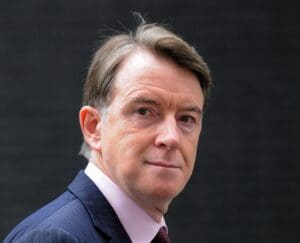
Downing Street remains cautiously optimistic that Lord Mandelson will secure approval as Britain’s next ambassador to Washington, despite reports that the incoming Donald Trump administration has raised questions over his “political baggage”.
Mandelson, a former Labour cabinet minister and European trade commissioner, is awaiting the final sign-off for the prestigious post. Dame Karen Pierce, the current UK ambassador, will continue to represent the government at President Trump’s inauguration while the US team makes its decision.
A leading figure in Republicans Overseas, Greg Swenson, acknowledged concern about Mandelson’s affiliations and past disagreements with the Republican Party. He pointed to an existing “political difference” between Labour in the UK and the resurgent Republicans in the US, but he expects both sides to work together once the appointment is confirmed.
Downing Street’s choice of Mandelson has been questioned by some within Trump’s inner circle, with critics citing his ties to China. Nigel Farage, leader of Reform UK, suggested that Keir Starmer was “getting off to the worst possible start” with the Trump administration by tapping such a high-profile New Labour figure.
However, Chancellor of the Duchy of Lancaster Darren Jones and others at No 10 have rallied behind Mandelson, praising him as a “world-recognised senior statesman”. The peer has sought to temper past criticisms of President Trump—he once branded him “reckless”—by recently highlighting the president’s “straight talking and deal-making instincts” in a Fox News article.
Political insiders note that a final decision on any ambassadorial appointment rests with the White House. Yet there is confidence in Westminster that London and Washington share a strategic and economic imperative to maintain a strong relationship, meaning Mandelson’s extensive experience in global trade could prove valuable in navigating the next phase of UK-US ties.
Read more:
Mandelson’s Washington bid under scrutiny as Donald Trump’s team considers UK ambassador choice
Spending freeze to push major railway projects into the sidings past g …

Rachel Reeves is expected to halt spending on major new rail projects until after the next general election, leaving Britain’s train network under pressure from a squeeze on the public finances.
Senior industry figures say three projects already under construction are set to consume almost all available Department for Transport (DfT) funding between now and the end of the decade: the first phase of High Speed 2 (HS2) from London to Birmingham; multi-billion-pound upgrades to TransPennine infrastructure; and East West Rail, a new route connecting Oxford, Milton Keynes, Bedford and Cambridge.
Beyond these schemes, sources suggest that rail spending will be largely restricted to safety-critical maintenance unless the DfT can persuade the Treasury to bring in private investment. The future of other major rail upgrades hangs in the balance.
The revelations emerge as Transport Secretary Heidi Alexander prepares to say on Monday that public ownership of railways is “not a silver bullet” for improved performance. She will pledge to focus “relentlessly on passengers” by unveiling a new app with a “best price guarantee” ensuring travellers always secure the lowest fare, alongside further trials of tap-in-and-out “pay as you go” services. Station performance league tables will also be published in a bid to “rebuild passenger confidence one punctual, comfortable journey at a time”.
Alexander is expected to point to the poor performance of some publicly run lines, such as Northern, as evidence that state ownership alone will not solve the railways’ longstanding issues. However, she will emphasise the government’s commitment to a new public body, Great British Railways, describing it as “second in size and importance only to the NHS”. Greater integration of the rail network will be “non-negotiable”, ensuring passengers can transfer between services with minimal hassle.
Despite the focus on operators, the concern among industry insiders centres on how new rail lines and major upgrades might fare. Under Rishi Sunak’s “Network North” programme, road and rail projects intended to reallocate the £36 billion budget originally earmarked for the axed HS2 extension to Manchester are reportedly facing major delays or cancellation.
Network North promised new schemes such as a Midlands rail hub and electrification of lines in north Wales. Any postponements here could cause friction in cabinet, after Welsh Secretary Jo Stevens declared rail her “number one priority” in Reeves’ spending review.
However, Reeves may have even less room for manoeuvre than expected. Sluggish UK economic growth could leave the chancellor facing a £30 billion shortfall if the government bases spending on updated rather than official forecasts, according to reports.
Insiders stress that not all transport upgrades will be abandoned. Sir John Armitt, who chairs the National Infrastructure Commission, is drawing up a ten-year infrastructure plan to be revealed alongside Reeves’s spring forecast. This strategy will outline day-to-day government spending over at least three years and map out capital budgets for five years.
Armitt recently hinted that the government’s approach to infrastructure investment could pivot more towards roads, noting that the decarbonisation of vehicles means “the traditional argument that rail is less polluting than roads will not apply in future.” He told MPs he does not expect “significant growth in rail” and that roads will remain critical.
Responding to industry concerns, a government spokesman pointed to the autumn budget, where ministers pledged to “kick-start economic growth” by pressing on with projects including HS2, TransPennine upgrades and East West Rail. Officials denied claims that future rail schemes could be mothballed, maintaining that they remain “committed to delivering the infrastructure this country needs”. A Treasury source added that final decisions would not be taken until the spending review, where “every single pound of taxpayer’s money” would be scrutinised.
Within Whitehall, there is still a possibility of attracting private funds for new rail ventures. One option under consideration is to sell off stations built for East West Rail, allowing private investors to charge train operators or the state for their use. Similar structures already exist: Heathrow airport levies fees on rail companies for using its station, while the high-speed link between London St Pancras and Folkestone is owned by private investors who receive “access charges” from Eurostar and Southeastern.
Industry figures acknowledge such sales might raise “hundreds of millions of pounds” but would not alone elevate Britain’s network to the standards seen elsewhere in Europe. Just 39 per cent of UK lines are electrified compared with 65 per cent in Italy, 63 per cent in Spain and 60 per cent in Germany. Network Rail’s 2020 plans to electrify Britain’s railways at a cost of £30 billion were shelved by the Treasury, underscoring the fiscal challenges ahead.
Read more:
Spending freeze to push major railway projects into the sidings past general election

