
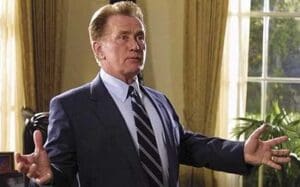
Let me start by saying that I, like every self-respecting political junkie, have watched and adored The West Wing — all seven seasons, multiple times.
So before you roll your eyes and think here we go again, another musings-on-Sorkin piece, let me declare it plainly: the show remains as close as modern television gets to pure, unadulterated political catnip
It’s become a universal language, so much so that every English-speaking politician from Tony Blair and David Cameron to Canada’s Justin Trudeau has insisted, at some point, on comparing themselves to President Josiah Bartlet and his merry band of idealistic staffers.
The starry-eyed, walk-and-talk-laden world that Aaron Sorkin conjured up has seduced even the loftiest of policy heavies. Tony Blair’s love for it was famously well-documented: apparently No.10 once invited John Spencer – the late, great Leo McGarry – to break bread with Blair’s real-life chief of staff, Aaron Sorkin. One wonders if they also tried to rope in Martin Sheen to give them one of those soaring, paternal pep talks that always ended with him sauntering down the corridor while rousing orchestral chords hammered home the point.
And let’s not forget Bill Clinton’s adviser, Gene Spurling, who was not only a leading policy mind but served as an expert adviser on the show. Blair’s office invited him to dinner too, bridging that gap between fiction and reality so seamlessly that one might have expected C.J. Cregg to walk in and brief them on the daily crisis. The West Wing was the political soap du jour. It gave politicos the same rush a teenage pop fan might get from meeting the entire lineup of their favourite band backstage. For a certain generation, it was cultural currency — and, crucially, it made politics look downright cool, something that was in desperately short supply.
Fast-forward to 2017 (or indeed 2025, if we’re looking back and counting the years of regret). Enter Donald Trump as President. The question arises: how far removed is he from the luminous Sorkin universe? Trump is the antithesis of Bartlet, right? The brash spectacle, the Twitter rants, the preference for punchy, provocative soundbites over nuanced, reasoned debate — all of it seems anathema to the measured, idealistic, legislative artistry that Sorkin’s scripts so worshipfully championed. President Bartlet was a Notre Dame economics professor with a Nobel Prize, a man who’d pour over reams of data before making the slightest peep. Trump? Definitely not scribbling cross-charts of comparative advantage in the Oval Office.
And yet, watch carefully, and you’ll find moments of The West Wing in Trump’s presidency, whether we like it or not. The genius of Sorkin’s masterpiece lay in its ability to turn the daily drudgery of politics into compelling drama — the big set-piece speeches, the grand pronouncements, the staff’s unwavering devotion to their man. Trump’s White House might not do subtle, but it certainly goes big. And it’s that flair for drama, that showmanship, which paradoxically echoes the power The West Wing had over its audience. In a strange way, Trump turned the real West Wing into something more akin to a reality show, with cliffhangers every week and the press corps eternally breathless. We might not like it, but it’s got its own narrative arcs that might make Sorkin, in some bizarre alternate universe, nod in recognition.
Meanwhile, across the pond, we have to wonder if Keir Starmer’s people are busy working out which streaming platform the show is still on in the UK or hitting up eBay for the DVD’s and a Player to play them on for some marathon session ahead of strategy meetings. You can almost imagine a staffer breathlessly proclaiming: “We need to find our ‘Let Bartlet be Bartlet’ moment!” Indeed, according to The Times, the phrase “Let Starmer be Starmer” has just strolled into mainstream commentary. Let’s not forget it was “Let Bartlet be Bartlet” that became a rallying cry in the show — a reminder for our dear President Jed Bartlet to be his own best self. Now we’re hearing it of Starmer, and perhaps that’s the closest one gets to a truly British version of Sorkin’s flair. The noble counsel, the rousing phrase, the vow not to compromise. Sean Kemp quipped on Twitter this morning that this fresh bit of Starmer-lore completes “whatever the fourth goal of a hat trick is called.” Precisely.
But, aside from comedic parallels, one of the most intriguing endorsements of The West Wing came from Justin Trudeau who admitted on The West Wing Weekly podcast that he found the show entirely relatable, right down to the everyday grind of the job and the ephemeral “moments of moral clarity.” He even boasted that he used a 2002 Bartlet debate scene — you know, the one where the President annihilates his opponent’s shallow “10-word” answers — as prep for his own contests. And, fair play to him, it worked. Trudeau pranced into office with youthful swagger and rhetorical vision. Yet, as events have shown, the real political stage can’t be so finely scripted, nor can all the future’s curveballs be condensed into a snappy Sorkin speech.
The allure of that Sorkin speech, though, is something no political obsessive can quite resist. Take a quick spin through the best five minutes of any political programme, the opening scene of Sorkin’s The Newsroom (there’s a conveniently viral clip on YouTube, if you’ve got five minutes). There’s Jeff Daniels as Will McAvoy, cornered into an uncomfortably direct answer, launching into a blistering monologue about why America isn’t the greatest country in the world. It’s raw, it’s electric, it’s borderline heretical, and it’s how a great many political onlookers secretly long for politicians to speak: with honesty untainted by spin, delivering zingers that’d knock James Carville’s socks off. But in real life, that brand of oratory is as rare as hen’s teeth — especially now that spin itself has become a zero-sum game, the lifeblood of the permanent campaign. The only British politician who does come close is Nigel Farage, which might explain why he is now gaining in polls for his common-people direct style.
So here we are, decades into the mania for Sorkin’s seminal drama, and it remains the shining, unattainable standard for political conduct. It’s still quoted in press briefings, dinner parties, and, yes, Prime Minister’s Questions. The notion that every new prime minister (or indeed president) might be the next Jed Bartlet has proven more ephemeral than the soggy phrase “the new normal.” Yet, ironically, that might be part of The West Wing’s enduring genius: it presented not the real political sphere but the ideal. It’s an allegory for how we wish politics could be — high-minded, passionate, and infused with moral clarity — and not how it usually is, full of cheap jibes and shady negotiations behind closed doors.
So how far from The West Wing is Donald Trump? It’s tempting to say a million miles, that Sorkin’s measured erudition and Trump’s brash staccato simply don’t speak the same language. But I’m not entirely sure. They share a sense of showmanship, albeit on opposite ends of the rhetorical scale. Both delighted their respective audiences; Bartlet with refined moral passion, Trump with punchy populist jabs. If The West Wing taught us anything, it’s that political theatre resonates deeply. We want a big, emotional story, a sense of the moral arc bending the right way (or at least some way). Trump’s new presidency will be show of a very different sort, but a show it will certainly be. And perhaps that’s the real lesson: The West Wing showed how deeply politics and performance intersect. Whether you prefer the quicksilver repartee of Bartlet’s White House or the combative streetfighter style of Trump’s, both are indelibly etched into modern political culture.
In the end, I suspect all these references to The West Wing in politics — from Blair’s dinner guests to Starmer’s rhetorical pep talk, from Trudeau’s binge-watching will keep surfacing for years to come. As long as there are leaders who want to conjure that golden combination of intellect, charm, and unstoppable moral gravitas, Sorkin’s script will remain the Platonic ideal. And we’ll keep measuring real politicians by how far they fall short. Or, in Trump’s case, by how far he soared off in a completely different direction. One thing’s for sure: President Bartlet is still in that mythical corridor, walking and talking, as relevant as ever. And long may he remain so.
Read more:
Bartlet vs. Trump: the surprising West Wing secrets that still shape global politics
Month: January 2025
UK sees record wave of business closures amid tough environment

Britain has recorded its highest number of company closures for two decades, with the final quarter of 2024 seeing 198,046 businesses struck off the official register.
The figure, revealed by research firm Beauhurst, surpasses levels last reached in 2021 and in the aftermath of the 2008 financial crisis.
Henry Whorwood, managing director of research and consultancy at Beauhurst, said the increase in business dissolutions is largely a consequence of last year’s budget measures, combined with a difficult financing climate. “We really need to make sure this doesn’t get worse,” he added.
Separately, data from Zempler Bank, a small-business lender, points to an 8 per cent drop in new company formations throughout 2024, taking the total to 807,000. Rich Wagner, chief executive of Zempler, suggested the higher costs and stricter policing of new incorporations could be deterring many would-be entrepreneurs. Last year Companies House was granted new powers and raised incorporation fees from £12 to £50, which coincided with a year-on-year dip of almost 20 per cent in registrations between May and December.
Wagner said it remains to be seen if these changes will mean fewer, but more resilient, businesses in the long run:
“It will be interesting to see whether the changes at Companies House, which may have the effect of weeding out those who aren’t serious about starting a company, result in a higher proportion of businesses surviving, even in challenging economic conditions.”
Despite nearly 900,000 new companies being registered in 2023, a portion of those were shell entities created for future use, and more than 40,000 were subsidiaries of existing companies. Online retail saw the highest number of formations during that period (82,000), followed by property-letting firms (49,000).
Read more:
UK sees record wave of business closures amid tough environment
Deliveroo raises profit guidance on back of surging orders

Tie-ups with retailers such as B&Q, Screwfix and Ann Summers have helped Deliveroo to raise its profit forecast, after the food delivery group recorded a strong uptick in orders.
The FTSE 250 firm, which debuted on the London Stock Exchange in 2021, told shareholders that adjusted underlying profit for the year to 31 December is likely to come in at the upper end of its £110 million to £130 million guidance.
Will Shu, Deliveroo’s founder and chief executive, said that “strong growth in groceries” and an expanding product range have enabled the business to “bring even more of the neighbourhood to consumers’ doors”. Over the past year, the company partnered with several well-known retail names including The Perfume Shop and Not On The High Street.
Deliveroo said its total number of orders increased by 3 per cent to 77.5 million during the final quarter of last year, with the UK and Ireland contributing 43.1 million of these orders—a 5 per cent jump on the same period in the previous year.
Overseas markets proved more mixed. While the UAE and Italy saw continued growth, France showed “some ongoing market softness” and Hong Kong remained “difficult” due to strong competition from Chinese rival Meituan, which entered the market in May 2023.
Sean Kealy, an analyst at Panmure Liberum, suggested that Deliveroo might consider withdrawing from Hong Kong given the challenging environment there.
Deliveroo’s gross transaction value (GTV)—the total cost of all food orders plus delivery charges—rose by 7 per cent to £1.97 billion in the three months to December. Quarterly revenue, which excludes payments to restaurants and riders, increased by 6 per cent to £545 million.
For the whole of last year, revenue amounted to £2.07 billion, a 3 per cent uplift, while total GTV climbed 6 per cent to £7.4 billion from 296 million orders.
Founded in London in 2013, Deliveroo now operates in ten markets with around 180,000 restaurant partners, employing about 140,000 riders. Shu, who once personally delivered pizzas, retains a 6.1 per cent shareholding in the business, while Amazon is the biggest shareholder, holding 13.7 per cent.
Though Deliveroo’s 2021 initial public offering was seen by some as disappointing—its shares sank by almost a third on debut—Thursday’s upbeat trading update lifted the stock by 6.6 per cent, closing at 138p.
Read more:
Deliveroo raises profit guidance on back of surging orders
New chair at Small Business Charter as Byron Dixon OBE takes the helm

The Small Business Charter (SBC) has appointed entrepreneur Byron Dixon OBE, founder and chief executive of freshness-technology firm Micro-Fresh, as its new chair.
Dixon takes over from outgoing chair Michael Hayman MBE, marking a key leadership shift as the organisation celebrates its tenth anniversary.
Dixon is best known for establishing Micro-Fresh, a multi-award-winning business that develops odour-control and antimicrobial solutions for textiles, healthcare, construction, food and beverages, packaging, and the automotive industry. Operating both in the UK and overseas, Micro-Fresh stands as a testament to Dixon’s belief in supporting small enterprises, particularly when it comes to harnessing expertise and research from universities and business schools.
He has long championed the role of higher education in driving entrepreneurial growth and innovation, especially for startups and smaller firms. In his new position, Dixon will guide SBC’s mission of empowering UK economic growth through business schools that excel in supporting small businesses, student-led enterprises, and local communities.
On his appointment, Dixon commented: “I am honoured to take on the role of chair of the Small Business Charter Management Board. Small businesses are a vital part of the UK economy, and business schools play a critical role in their development. As an entrepreneur, I have personally experienced the expertise and support that these schools provide, which have been invaluable in helping me to grow my business. I look forward to working with the team and network of accredited schools to strengthen the impact they have on small businesses in every part of the economy.”
Flora Hamilton, executive director of the Small Business Charter, said: “We are delighted to welcome Byron. His extensive experience as a successful entrepreneur and passion for the role of business schools in supporting small businesses make him perfectly suited to lead the SBC at this pivotal time. His leadership will build on our mission to connect business schools with small businesses to foster growth, innovation, and productivity.”
Read more:
New chair at Small Business Charter as Byron Dixon OBE takes the helm
Aston Martin poised for £1bn Verstappen coup in F1 power play

Aston Martin appear to be plotting a record-breaking deal worth an estimated £1 billion to lure Max Verstappen away from Red Bull, signalling an extraordinary shift in Formula One’s financial landscape.
Multiple industry insiders suggest Jefferson Slack, Aston Martin’s Managing Director (Commercial and Marketing), has been hinting to prospective sponsors that the four-time world champion is destined to join the Silverstone-based outfit.
Officially, Aston Martin dismiss any notion that Verstappen’s impending arrival has prompted formal offers, yet the very speculation highlights the ambitions of owner Lawrence Stroll. The Canadian billionaire has already enticed Adrian Newey—revered as the greatest car designer in F1 history—on a reported £20 million-a-year contract with added equity incentives.
Despite Verstappen’s existing deal with Red Bull through to 2028 and his repeated statements about staying at the Milton Keynes team, his unparalleled success affords him the power to name his own price. At a current salary of around £50 million per annum, sources suggest an offer nearing £200 million a year—plus potential equity in Aston Martin—may be required to prompt a move, mirroring the arrangement that prised Newey from Red Bull.
Stroll’s drive to challenge Red Bull and Mercedes at the summit of Formula One underscores these aggressive tactics. Insiders claim that Newey, in particular, is convinced neither Lance Stroll (the owner’s son) nor 44-year-old Fernando Alonso is the long-term solution for title triumphs. Securing Verstappen would therefore represent a transformative step towards championship glory.
On Verstappen’s side, any decision will likely depend on the future performance of Red Bull’s partnership with Ford under evolving regulations, as well as the growing potential of Aston Martin’s project. Although talk so far has been limited to “casual contact” over endurance racing, the possibility of a formal offer further highlights the sport’s swelling commercial clout.
If the Dutch star were to leave Red Bull and reunite with Newey at Aston Martin, the fallout would be monumental—potentially dislodging Red Bull’s stranglehold on the grid and propelling Aston Martin to the forefront of the championship race.
Read more:
Aston Martin poised for £1bn Verstappen coup in F1 power play
Empowering Communities Through Healthcare: A Conversation with Lena Es …

Lena Esmail is a trailblazer in healthcare leadership, dedicated to creating equity and accessibility in medical services. Born and raised in Youngstown, Ohio, Lena grew up on the city’s North Side, working in nearly every business on Belmont Avenue during her formative years.
She graduated from Liberty High School in 2004 and pursued higher education locally, earning baccalaureates in Nursing and Biology from Youngstown State University (YSU). Her advanced degrees include a Master’s in Nursing from Ursuline College, a post-master’s certificate in critical care from YSU, and a Doctorate in Nursing Practice from Kent State University. She is the CEO of QuickMed, a growing healthcare organization that operates urgent care and in-school clinics throughout Northeast Ohio. Lena is also a passionate advocate for empowering women in healthcare and bridging gaps in community health.
In this exclusive Q&A, Lena shares her unique insights into leadership, community impact, and the future of healthcare.
What inspired you to dedicate your career to addressing healthcare inequities in your hometown?
Growing up on the North Side of Youngstown, I witnessed firsthand how healthcare disparities impacted people in my community. I worked at so many places on Belmont Avenue, and I saw the barriers people faced when it came to accessing basic medical services. I knew that if I wanted to make a difference, I had to start right here in the Mahoning Valley. For me, it’s personal—my heart is here. Seeing the positive impact QuickMed is having on reducing inequities has been one of the most rewarding experiences of my life.
QuickMed has grown rapidly across Northeast Ohio. What sets your healthcare model apart?
QuickMed was founded on the idea that healthcare should be accessible, community-based, and tailored to the needs of the people we serve. We use an advanced practice provider model, meaning patients are cared for by highly skilled nurse practitioners and physician assistants. This approach allows us to deliver quality care in areas that might not otherwise have it. Our clinics are strategically located in schools and underserved communities because those are the places where access is needed most. It’s not just about treating illness—it’s about creating trust and lasting relationships with the people we serve.
As a leader, how do you empower women in healthcare?
Empowering women starts with recognizing their potential and creating pathways for their success. At QuickMed, we prioritize mentorship and leadership training. I’ve personally mentored women to take on more advanced roles within our organization, and I encourage them to embrace their voices at the decision-making table. Women bring a unique perspective to healthcare leadership, one that is compassionate, collaborative, and solutions-oriented. By fostering a culture of support and continuous learning, we ensure that women in our organization feel confident to lead and innovate.
What challenges do you think women face most in healthcare, and how can they overcome them?
The biggest challenges are systemic—gender bias, unequal pay, and limited representation in leadership roles. Women make up over 70% of the healthcare workforce but hold only a fraction of senior leadership positions. Beyond that, work-life balance can be a significant obstacle, especially for women who also shoulder family responsibilities. To overcome these challenges, we need to create more flexible work environments and leadership pipelines that are intentionally inclusive. Mentorship is crucial too. Women need access to seasoned professionals who can guide them and advocate for their growth.
What advice would you give to someone looking to start a healthcare initiative in their community?
Start by listening. The best way to create meaningful change is to understand the specific needs of the community you want to serve. What works in one area may not work in another. Build relationships and earn trust—that’s the foundation of any successful initiative. And don’t be afraid to dream big but remain grounded in the reality of what’s achievable. Passion will take you far, but perseverance will ensure you make a lasting impact.
How do you balance your roles as a CEO, a nurse, and a mother of six?
Balance is a daily practice, and I won’t pretend it’s always easy. But I’ve learned to focus on what truly matters and let go of the rest. My family keeps me grounded—they’re my greatest source of joy and inspiration. At work, I delegate to a strong team that shares my vision for QuickMed. I also prioritize self-care. As a nurse, I understand the importance of health and well-being, so I make time for basketball and quiet moments with my family to recharge. It’s about showing up fully in each role, even if it’s not all at the same time.
What is your vision for the future of healthcare in the Mahoning Valley and beyond?
My vision is simple: equitable access to quality healthcare for everyone, regardless of where they live or their financial situation. I want QuickMed to continue expanding into underserved areas, ensuring that no one has to travel far for the care they need. Beyond that, I hope to see more women in leadership roles, driving innovation and systemic change. Healthcare isn’t just about treating illnesses—it’s about building healthier, stronger communities. That’s the legacy I hope to leave behind.
Read more:
Empowering Communities Through Healthcare: A Conversation with Lena Esmail of Youngstown, Ohio
Dyson ditches £100m Bristol hub, consolidating all R&D in Wiltshi …
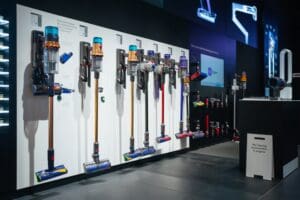
Dyson has shelved plans for a £100 million technical and research centre in Bristol, opting instead to consolidate its southwest operations at its flagship Malmesbury campus in Wiltshire.
The move will see the relocation of 180 staff – previously earmarked for Bristol’s 1 Georges Square – to the company’s main site, which also houses the Dyson Institute and its engineering degree programme.
The British technology firm, best known for its vacuum cleaners and hairdryers, had originally announced the Bristol hub in 2023. However, Bill Wright, Dyson’s UK HR director, said bringing teams under one roof would support the company’s collaborative approach to research and innovation. “As the pace of innovation and development accelerates, we increasingly see the benefits that would come from having teams all located together in one physical location,” Wright explained.
While it has already invested significantly in refurbishing the Bristol site, Dyson confirmed that 1 Georges Square will now be put on the market for lease. The company says it will help staff commute by introducing a coach service and offering free electric car charging points to soften the impact of the move.
This latest development follows Dyson’s global review, which last year triggered an announcement to cut up to a third of its UK workforce. The decision also comes against a backdrop of founder Sir James Dyson’s outspoken criticisms of the UK’s economic policies – especially Labour’s recent tax proposals and higher national insurance costs. In a letter to the Telegraph, he wrote: “Why would anyone start a company in the UK? The hit delivered by Labour to business, and the destruction of British family-owned businesses especially, is an egregious act of self-harm.”
Though the company stresses that the site closure in Bristol is a business decision rather than a political statement, it underscores a continuing consolidation strategy in Dyson’s global operations. Now headquartered in Singapore, Dyson appears intent on centring its core innovation activities back where it all began: on the historic Malmesbury campus in rural Wiltshire.
Read more:
Dyson ditches £100m Bristol hub, consolidating all R&D in Wiltshire
Stormy skies dampen festive cheer for Mitchells & Butlers

Mitchells & Butlers (M&B), the FTSE 250 pub and restaurant operator behind chains including All Bar One, Harvester and Toby Carvery, has reported strong like-for-like sales growth over Christmas, offset by weaker performance in early 2025 due to adverse weather.
The company enjoyed a 10.4 per cent year-on-year boost in key festive trading weeks, covering Christmas Day and New Year’s Eve, while like-for-like sales for the full 15-week period to 11 January increased by 3.9 per cent. However, chief executive Phil Urban said that “cold and stormy weather over recent weeks has subsequently had a material adverse impact on trading”, softening the positive momentum.
Despite these conditions, Urban remains confident in M&B’s long-term prospects, noting that the group is well equipped to manage a forecast rise of about £100 million in costs following the government’s budget. This additional pressure includes higher employers’ national insurance contributions and an increased minimum wage, which M&B previously warned could force tougher measures on pricing and efficiency.
Industry commentators remain optimistic. Jefferies analyst James Wheatcroft suggests M&B is well placed to outpace rivals, highlighting its strong cash generation and the potential for further debt reduction. Anna Barnfather of Panmure Liberum agrees, calling M&B’s update a “relief” against broader economic uncertainties and highlighting the operator’s resilience.
M&B, which emerged from the old Bass brewing empire two decades ago, runs 1,726 venues under well-known brands such as Miller & Carter, Vintage Inns, O’Neill’s, Browns and Nicholson’s. It is majority-owned by Odyzean Group, a consortium led by prominent investors Joe Lewis, John Magnier and JP McManus, who together hold 56.6 per cent of M&B’s shares.
Last year, M&B’s revenue climbed to £2.61 billion, with operating profit surging from £98 million to £300 million and pre-tax profits hitting £199 million.
Read more:
Stormy skies dampen festive cheer for Mitchells & Butlers
Looking ahead to 2025: Increased costs for employers

The new year is an excellent opportunity for businesses to review their finances and plan effectively for the months ahead.
With the annual increases to the national living and minimum wage and other statutory payments set to take effect in April 2025, its essential to prepare for these changes in advance.
National Living and Minimum Wage
From 1 April 2025, the National Living Wage (NLW) and the National Minimum Wage (NMW) will increase as follows:
National Living Wage (workers aged 21 and over) from £11.44 an hour to £12.21
Aged 18-20 from £8.60 an hour to £10.00
Aged 16-17 from £6.40 an hour to £7.55
Apprentice rate from £6.40 an hour to £7.55
The 16.3% increase in the 18-20-year-old rate is the largest increase ever. It is intended to narrow the gap with the NLW because the higher rate is expected to be extended to 18-20-year-olds in the future. The Low Pay Commission is likely to consult on how to achieve this in 2025.
Employers should audit the ages of their workforce so that they can inform payroll or payroll providers about the individuals benefitting from any increases to the NLW or NMW to ensure that the new rates are paid.
Increase in statutory payments
On 6 April 2025:
The weekly rate of statutory maternity, adoption, paternity, shared parental and parental bereavement leave pay will increase from £184.03 to £187.18 or 90% of the employee’s average weekly earnings if this is less than the statutory rate.
The weekly rate for statutory sick pay will increase from £116.75 to £118.75
Employers will need to ensure that staff going on family-related leave are informed of the increased rates at the relevant time.
Although there is a relatively modest increase to statutory sick pay (SSP), employers must be aware that there are potentially significant changes ahead. On 4 December 2024, a consultation exercise about strengthening SSP ended. To be eligible for SSP, an employee must have average weekly earnings at, or above, the lower earnings limit (LEL), which is currently £123 a week (increasing to £125 in April). SSP is only paid from the fourth day of sickness absence. It is estimated that up to 1.3 million low-paid workers are not eligible for SSP. In addition, because SSP is not payable until the fourth day, many people who qualify for it work when they are unwell. As part of the consultation, it is proposed that eligibility be extended to those earning below the LEL and that the three-day waiting period be removed so that SSP is available from day one. The proposal is to introduce a taper to the SSP rate so that an employee is entitled to a certain percentage of their average weekly earnings or the SSP flat rate, whichever is lower. There are no further details at the moment.
National insurance contributions
In the autumn budget, it was announced that, from 6 April 2025, the rate of employers’ NICs will increase from 13.8% to 15%. In addition, because the earnings threshold has been lowered, employers will pay NICs on employee earnings from £5,000 rather than £9,100.
There is some concern that this rise in employers’ NICs and the increases in the NLW and NMW could negatively impact recruitment and result in job losses. The increased costs could also be passed on to consumers.
According to a recent announcement by the Deputy Governor of the Bank of England, the rise in employers’ NICs could slow long-term wage growth overall.
Undoubtedly, the additional costs present challenges for employers, particularly when balancing the need to remain competitive with the rising financial pressures. Employers should consider proactive measures, such as reviewing budgets, identifying efficiencies, and exploring options to enhance productivity. Open communication with employees about potential changes and ensuring compliance with legal obligations will also be key to navigating these adjustments.
Furthermore, consulting with legal or financial professionals can assist businesses in making informed decisions and implementing strategies to manage these changes effectively.
Read more:
Looking ahead to 2025: Increased costs for employers

