

Hundreds of current and former McDonald’s employees – some as young as 19 – have joined a legal action against the fast-food giant over allegations of bullying, sexual abuse and harassment across more than 450 UK outlets.
The complaint, filed through law firm Leigh Day, follows a fresh wave of accusations highlighted by a BBC investigation. The broadcaster reported that workers at McDonald’s faced “unacceptable” conduct despite promises made by the company last year to address such issues.
The developments come as Alistair Macrow, chief executive of McDonald’s in the UK, prepares to testify before the business and trade committee of MPs, who are expected to ask how the fast-food chain has handled the alleged misconduct. McDonald’s, one of Britain’s biggest private sector employers with a workforce of 168,000 and more than 1,400 restaurants, said it had pressed the BBC for details of the reported cases “to allow us to carry out full investigations” but had yet to receive them.
One 19-year-old claimant told Leigh Day he suffered homophobic abuse from managers and fellow staff, with insults including being called a “faggot”. Another claimant said he was bullied over his learning disability and eye condition, and that managers were “touching other staff up” and making racist remarks. Other examples include a young worker being pressured for sex and one manager making offensive references to staff based on their nationality.
The Equality and Human Rights Commission (EHRC) says it has received about 300 reports of harassment at McDonald’s restaurants since the original BBC investigation. It has escalated its intervention, saying it is working “to update our ongoing legal agreement in light of serious allegations raised by our work with the company, and the BBC investigation”.
McDonald’s insists it is committed to safeguarding staff and has improved its reporting structures, including introducing a digital whistleblowing platform called Red Flags and a dedicated investigations team. It said it had hired its first head of safeguarding and was “confident” it is taking “significant and important steps” towards eliminating abusive behaviour.
Emma Cocker, Senior Associate in the Employment team at Lawrence Stephens Solicitors, commented that workers on zero-hours contracts can feel especially vulnerable. “They are likely fearful of being subjected to detrimental treatment for raising complaints,” she said. “It would appear McDonald’s still has a long way to go in providing a safe working environment. The longer businesses allow this kind of behaviour to persist, the longer the list of grievances and legal claims they will face.”
Read more:
McDonald’s faces legal challenge from over 700 workers amid harassment claims
Month: January 2025
Mark Carney considering bid to replace Justin Trudeau in race for Cana …

Mark Carney, the former governor of the Bank of England, has confirmed he is weighing up a bid to succeed Justin Trudeau as Canada’s prime minister.
Trudeau announced on Monday that he would step down after nearly a decade in office, prompting the Liberal party to scramble for a new leader ahead of an impending general election.
Carney, 59, rose to prominence as the first non-Briton to head the Bank of England. He previously led the Bank of Canada from 2008 to 2013, earning a reputation for his cool handling of the global financial crisis. Since leaving the Bank of England in 2020, Carney has served as chair at Brookfield Asset Management and as a United Nations special envoy for climate action and finance.
In a statement quoted by Bloomberg, where he sits as chair of the board, Carney said he was “encouraged” by support from Liberal lawmakers and Canadians who “want us to move forward with positive change and a winning economic plan”. He pledged to consult family members before making a definitive decision.
Speculation around Carney’s possible leadership ambitions has been fuelled by Trudeau’s falling poll numbers in the face of high inflation, record food prices and widespread voter fatigue. The Liberal government’s agenda for carbon pricing is also under fire from the Conservative party, whose leader Pierre Poilievre has labelled Carney “Carbon Tax Carney”.
Pollsters currently give the Conservatives a strong chance of forming a majority government. A recent Angus Reid Institute survey placed Carney second behind former deputy prime minister Chrystia Freeland in a list of potential Liberal leaders.
Trudeau’s resignation comes amid anxiety over Canada’s economic outlook and the possibility of US tariffs under incoming president Donald Trump, which could potentially damage Canadian trade. An election is due before October, though the exact date remains unconfirmed.
Carney’s diverse background — he holds Canadian, Irish, and, since 2018, British citizenship — adds an international element to his profile. His economic pedigree and climate change advocacy might well appeal to Liberals seeking a fresh perspective for a party facing a difficult electoral challenge.
Read more:
Mark Carney considering bid to replace Justin Trudeau in race for Canadian premiership
Festive golden quarter falls short for UK retailers as shoppers hold b …

Britain’s retailers have suffered another blow after budget-conscious consumers reined in their Christmas spending, disappointing hopes of a bumper festive season and leaving the “golden quarter” with only muted growth.
Figures from the British Retail Consortium (BRC)-KPMG Retail Sales Monitor show that total sales rose by just 0.4 per cent over the three months to December, compared with the same period in 2023. Households wary of rising living costs appear to have kept a tight grip on their wallets in the final weeks of 2024.
Helen Dickinson, chief executive of the BRC, noted that the “crucial ‘golden quarter’ failed to give 2024 the send-off retailers were hoping for” after what has already been a challenging year of weak consumer confidence and economic strain.
Overall sales grew by 0.7 per cent in 2024, compared with 2023, but a 3.3 per cent uplift in food sales was dented by a 1.4 per cent drop in non-food categories. Clothing, footwear, computing, furniture, and toys were among those areas hit by more cautious spending.
Although December – combined with the impact of Black Friday at the end of November – yielded a 3.2 per cent year-on-year lift, the BRC suggested those figures were flattered by the late timing of last year’s Black Friday deals. AI-enabled gadgets and beauty advent calendars proved to be holiday bestsellers.
Dickinson said food sales “fared better” in December, inching up by 1.7 per cent year-on-year, although this was weaker than the 6.3 per cent growth seen in December 2023. Some shoppers opted to trade up to more premium food items for Christmas, offering some respite for grocers.
Linda Ellett, head of consumer, retail and leisure for KPMG UK, described the run-up to Christmas as showing “minimal” growth, reflecting the “ongoing careful management of many household budgets”. Data released by the BRC also pointed to a “drab December” on high streets and in shopping centres, with footfall likely affected by wet and windy weather.
Separate figures from Barclays revealed flat consumer card spending growth in December, suggesting that the combination of cost pressures and economic uncertainty has weighed on dining out and discretionary spending.
The retail sector’s lacklustre festive period raises concerns over how individual businesses fared. A flurry of post-Christmas updates from major players such as Next, Tesco, Sainsbury’s, and Marks & Spencer is expected to offer more insight, although many non-food retailers are braced for disappointing results.
Discount grocers Lidl and Aldi have both reported year-on-year increases in total festive sales, at 7 per cent and 3.4 per cent, respectively, but they have not provided like-for-like figures excluding new store openings.
The BRC has warned of a “spending squeeze” this January after public confidence in the economy slid by eight points to minus 27 last month. It forecasts sales growth of only 1.2 per cent this year, falling below the 1.8 per cent shop price inflation and implying a drop in sales volumes.
On top of that, retailers face a projected £7 billion increase in costs due to rising national insurance contributions, an uplift in the national living wage announced in October’s budget, and new packaging levies. The trade body warns that covering these costs by raising prices or cutting investment will harm the sector further and undermine high streets.
The BRC urged the government to “find ways to minimise this”, beginning with a planned review of business rates to prevent stores from facing higher bills than they do currently.
Read more:
Festive golden quarter falls short for UK retailers as shoppers hold back
5.4 million yet to file self-assessment tax returns, warns HMRC

Millions of people across the UK are at risk of penalties after HM Revenue & Customs (HMRC) revealed that 5.4 million taxpayers have yet to submit their self-assessment tax return.
With the 31 January deadline fast approaching, HMRC has urged anyone who has not yet filed to do so immediately to avoid hefty fines.
Tax insurance firm Qdos reacted to the announcement, warning that failing to file and pay on time incurs an automatic £100 penalty. Additional charges mount rapidly the longer the delay persists, with daily penalties and further levies imposed after three months, six months and 12 months. Seb Maley, chief executive of Qdos, said: “Fail to file your tax return and pay it by midnight on 31 January and you’ll be hit with a £100 fine immediately. These fines start to rack up, with interest added to the amount you owe. Needless to say, acting sooner rather than later will make a big difference.
“What’s more, unfiled, late or incorrect tax returns can increase the likelihood of being investigated by HMRC. Doing everything you can to meet this month’s deadline and submit an accurate tax return is vital.”
For taxpayers concerned about meeting their liabilities, HMRC’s Time to Pay facility can spread the cost of any outstanding bill into manageable monthly instalments. In its press release, HMRC reminded those who have not filed that even if there is no tax due or if the tax is paid on time, a £100 fixed penalty still applies if the return is late.
Read more:
5.4 million yet to file self-assessment tax returns, warns HMRC
Small businesses warn of layoffs as new employment rights bill prompts …

Nearly every small business in the UK is bracing for staff cutbacks in the wake of proposed employment law changes, according to a survey by the Federation of Small Businesses (FSB).
The survey of 1,270 companies found that 92 per cent fear the new legislation will undermine hiring and expansion plans, with nearly a third planning to reduce their workforce in the next year.
The bill, currently under committee scrutiny in the House of Commons, aims to address what ministers describe as an imbalance of power between employers and workers. Among its measures are ending zero-hours contracts, expanding statutory sick pay, strengthening union rights, and granting workers protection from unfair dismissal from day one of their employment.
Critics, particularly from the small business community, argue these changes could raise operating costs and depress already fragile confidence. The cost impact may be exacerbated by recent fiscal moves, including Chancellor Rachel Reeves’s £40 billion in tax hikes and a 6.7 per cent increase in the minimum wage, both of which take effect this year.
Tina McKenzie, policy chair at the FSB, warned that “small firms have made it crystal clear” the bill will diminish their appetite to hire. She said they worry that increased legal risks around unfair dismissal claims may hamper recruitment and investment.
The Department for Business and Trade maintains that the legislation is part of a wider effort to boost living standards and drive economic growth, noting that “this government is pro-business and pro-worker”. It points to its recent steps to tackle late payments and bolster funding for small firms as evidence of its commitment.
KPMG and the Bank of England have each suggested that higher government spending may offer a short-term boost to the economy, although the central bank cautioned inflation is likely to remain above target, potentially weighing on growth and business sentiment into 2024 and beyond.
Read more:
Small businesses warn of layoffs as new employment rights bill prompts worry
UK support at global tech show less than Ukraine in puzzling move

Britain’s presence at CES, the world’s largest technology trade fair, has dwindled in recent years, according to the event’s organiser.
Gary Shapiro, chief executive of the Consumer Technology Association (CTA), said it was “a shame” and “doesn’t make sense” that UK engagement has dropped off, even though the country still has strong potential in innovation.
He noted that other European nations, including France and the Netherlands, were visibly better represented in Eureka Park, the convention’s dedicated area for start-ups. “Even Ukraine might be bigger than the UK,” Shapiro said, adding that the government no longer offers the same support it once did.
CES, held each year in Las Vegas, typically attracts thousands of exhibitors and some 400,000 visitors. It showcases cutting-edge products from technology giants like Microsoft, while also providing a global platform for smaller ventures. This year, just 41 UK companies will attend, including Etc (BT Group’s incubation arm), the female-focused healthtech firm Elvie, and the precise location business what3words.
Back in 2019, more than 100 British firms formed a UK delegation led by then international trade secretary Liam Fox. Eight of those companies won innovation awards, and the government spoke of “millions of pounds worth of deals” being signed at the show. Shapiro called it “crazy” that the UK no longer puts as much energy into CES, given the longstanding ties between the two countries.
“We are the largest technology event in the world by far,” he said. “We are definitely the biggest business event in the United States and attract over 50,000 people from outside the US.”
Read more:
UK support at global tech show less than Ukraine in puzzling move
HMRC calls on businesses to come clean about accidental R&D tax ov …
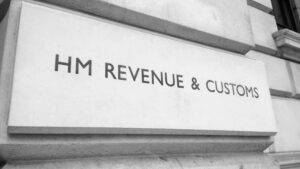
HM Revenue & Customs (HMRC) has rolled out a new disclosure service for companies that have inadvertently overclaimed research and development (R&D) tax relief and failed to amend their returns.
The move underscores the government’s intensified crackdown on misuse of the scheme, which reportedly cost the exchequer over £1 billion in missing revenues.
The initiative targets firms that may have overstated their R&D expenditure in good faith, rather than those deliberately committing fraud. It follows a surge in HMRC investigations into questionable R&D claims, with the tax under review reaching £641 million this year, according to the department’s annual report.
Generous by design, R&D tax credits encourage companies to invest in innovative projects. However, this same generosity has also attracted fraudulent activity and organised criminal efforts to exploit it, costing the Treasury an estimated £1 in every £4 of the relief in 2020-21.
Dawn Register, a tax dispute resolution partner at BDO, said: “There are also other disclosure routes available to companies looking to bring their tax affairs up to date. We’ve seen many unscrupulous ‘claims’ agents in the R&D market in recent years. If a company now realises its past claims were ‘speculative’, a voluntary disclosure is definitely the best course of action.”
Read more:
HMRC calls on businesses to come clean about accidental R&D tax overclaims
Tide gears up for new share sale as it eyes global growth

Tide, the fast-growing SME-focused banking services platform, is lining up a fresh share sale valued at more than £50m as it expands its presence in the UK and abroad.
The company is understood to be in discussions with investment banks, including Morgan Stanley, about overseeing the primary fundraising in the coming months.
Sources say the latest round may involve issuing new stock as well as giving existing shareholders the opportunity to sell part of their stake. It remains unclear at what valuation the new capital will be raised.
Founded in 2015 by George Bevis and Errol Damelin, Tide began trading two years later. The company currently provides business current accounts and a suite of connected services – ranging from invoicing to accounting – to 650,000 small- and medium-sized enterprise (SME) “members” in the UK, giving it an estimated 11% market share.
Tide, which employs roughly 2,000 people, has also been growing internationally. It now serves 400,000 SMEs in India, while May 2024 saw its launch in Germany. Its backers include Apax Partners, Augmentum Fintech and LocalGlobe, and it is chaired by City grandee Sir Donald Brydon.
A spokesperson for Tide declined to comment.
Read more:
Tide gears up for new share sale as it eyes global growth
Why forcing a return to the office is a step backwards for business

It wasn’t so long ago that having the option to work from your lounge in your slippers felt like a futuristic dream bordering on utopia.
Yet here we are, practically on the doorstep of the full remote revolution, and I’m watching a queue of business leaders feverishly backpedal towards outdated notions of “bums on seats.” Or, as I like to call it: “The Return of the Status Quo.” Pardon me while I stifle a yawn. Because if there’s one thing I’ve learned from a decade-plus of banging the proverbial drum about the virtues of working from home, it’s that the naysayers are usually being led by something that’s more about control (and a touch of distrust) than genuine business sense.
Let’s be perfectly clear: I’ve been peddling the work-from-anywhere mantra since 2011, if not earlier—my piece in Business Matters a five years ago, “Working at Home Can Lift Positivity, Productivity, and Profitability,” should have been etched onto the hearts of every forward-thinking employer. Back then, I remember the world patting me on the head and saying, “Yes, dear, lovely idea,” while proceeding to double-check no one was playing solitaire in the back corner of the office. It was like telling a Victorian mother you planned to feed her precious son vegetarian sausages. The horror. The uncertainty. The mild panic that everything we knew about corporate life was about to disintegrate into chaos.
Fast-forward a few years—well, more than a few—and we’ve all seen precisely how viable working from anywhere can be. There are even fewer excuses for archaic attitudes now. Technology has made it simple, cheap, and ridiculously flexible to replicate all the necessary functions of a physical workplace without actually dragging your bleary-eyed body onto a crowded commuter train. Of course, that’s not to say the standard HQ has no purpose. Some people genuinely love the camaraderie and structure of a shared space. But to insist that it’s the only way? That’s a bit like refusing to let your kids have a smartphone because you think carrier pigeons were doing just fine all those years ago.
One of the earliest arguments I recall making, in another Business Matters piece titled “Bodies & Bums Cost Money, Can Go Virtual,” was that paying for an army of chairs to be occupied from nine until five is both expensive and, frankly, pointless in the modern age. You’re shelling out for the real estate, the electricity, the toilet paper—and for what? A chance to watch Sandra from accounting type away in real time? A daily chat over the coffee machine about last night’s telly? I’ve nothing against Sandra’s enthralling conversation, but let’s be honest: a good Zoom or Teams meeting can deliver the same interplay, minus the leaky commute. If you want to foster human interaction, schedule weekly get-togethers or one good off-site a month. But making it mandatory every single day feels as antiquated as a carbon copy receipt.
And yet, that’s precisely what many companies are doing, pressing the big red “Reverse” button on progress by dictating that everyone scuttle back under the fluorescent lighting, tethered to desks once more. We hear the same, tired rationale: “productivity is slipping,” or “team spirit is lost,” or (my personal favourite) “people can’t be trusted to do their work from home.” Let’s unpick those, shall we?
First, productivity. It is breathtaking how often remote staff end up working longer hours simply because they don’t have to endure the pains of a commute. Factor in that people can set their own schedules, do their best work when they’re actually feeling awake, and take breaks that don’t revolve around obligatory small talk in the kitchen. That’s not laziness; it’s quite the opposite. People who aren’t pigeonholed into a 9-to-5 routine often discover a sweet spot for output that suits their natural rhythms. And guess what? That usually means more deliverables, not fewer.
Second, the team spirit myth. As if the only thing binding a workforce together is the ability to physically see each other in an open-plan environment. Team spirit comes from shared goals, supportive leadership, and clear communication—not the faint smell of microwaved curry and the pitter-patter of frantic typing. Anyone who’s spent more than a week in a Zoom-based collaboration will know there’s a genuine camaraderie that sprouts when you’re working collectively towards the same objectives, even if you’re in different postcodes. And if you ever miss hugging your colleagues in person, you can meet up once a fortnight or month for that big, warm embrace—no harm done.
Lastly, the trust issue is perhaps the most bewildering of all. Why hire people you don’t trust, and then fixate on babysitting them from nine to five in an office? If your business model depends on eagle-eyed managers hawkishly scanning for slouching employees, there’s something rotten in the process. Good workers get the job done. Exceptional ones will do it better when given the freedom to shape how they work. Micro-managing, by contrast, breeds resentment and stifles creativity. We have a word for that, and it begins with “toxic.”
At the end of the day, businesses pushing a rigid return-to-office directive are not just ignoring the past decade of evidence that remote work is beneficial; they’re flipping a V-sign to the future. People have proven they can be even more productive, balanced, and, crucially, content working from spaces that suit them—be that a home office, a beach hut in Cornwall, or a Wi-Fi café in the mountains. I’m not saying offices should be eradicated entirely. I’m suggesting they ought to be an option, not an obligation. A tool, not a trap.
So, yes, I consider the “bring back the offices” brigade to be as misguided as dial-up internet evangelists—clinging to the comfortable drudgery of the old ways rather than forging ahead with the new. We can do better than that. In fact, we already have. The argument against remote work made some sense back in the ‘80s, but in the 21st century, it’s about as relevant as a Filofax. And if you ask me, long may that irrelevance continue.
So let’s collectively knock this regressive idea on the head. A flexible approach allows businesses to hire the best, keep the best, and get the best from them. Insisting on the old model of “bodies in the building” is short-sighted, blinkered, and will inevitably lead to a mass exodus of talented folks who know they can be just as effective—or more so—at home. After over a decade of championing this cause, I’ll say it louder for those in the back: real, thriving businesses in this century will value outcomes, not face time. And the rest? They’ll be left standing with their creaky roller chairs, wondering where it all went wrong.
Read more:
Why forcing a return to the office is a step backwards for business

