

Apple has pledged to pay $95 million (£77 million) to settle a US class-action lawsuit alleging that Siri, its virtual assistant, recorded private conversations without users’ consent.
The proposed settlement, filed in a federal court in Oakland, California, comes after a five-year legal dispute and covers tens of millions of Apple device owners.
Although Apple denies any wrongdoing, it has agreed to the payout, which allows individuals who owned Siri-enabled devices — including iPhones and Apple Watches — to claim up to $20 per device. The case focuses on allegations that Siri was unintentionally triggered without the use of the “Hey, Siri” wake word, resulting in private conversations being recorded and shared with third parties such as advertisers.
Plaintiffs reported incidents where private discussions about products or services — from Air Jordan sneakers to specific medical treatments — apparently led to targeted adverts for those same items. They allege that Apple captured and shared these conversations without user permission.
The proposed settlement could damage Apple’s privacy-focused image, with chief executive Tim Cook previously positioning the company as an industry leader in safeguarding customer data. However, the $95 million settlement represents just a fraction of the profits Apple has generated since 2014 (an estimated $705 billion).
The settlement still requires court approval, with a hearing proposed for 14 February in Oakland. If approved, eligible US customers who owned Siri-enabled devices between 17 September 2014 and the end of last year will be able to submit claims. Lawyers for the plaintiffs may seek legal fees and expenses from the settlement fund, potentially up to $29.6 million in total.
Read more:
Apple agrees to £77M settlement over alleged Siri eavesdropping
Month: January 2025
Ex-Tory MP defects to Reform UK as poll predicts 120-seat breakthrough
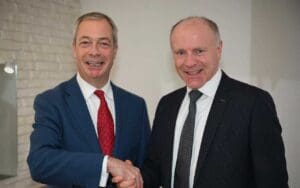
Marco Longhi, the former Conservative MP for Dudley North, has joined Nigel Farage’s Reform UK after accusing his old party of having been “captured by a left-wing influence masquerading as conservatism”.
He is the third ex-Tory MP to defect to Reform UK since last year’s general election, following Aidan Burley and Dame Andrea Jenkyns.
Longhi, who lost his seat in July, claimed the Conservative Party he once identified with had become “unrecognisable” and said he could no longer stand by the “uniparty drift” towards a “left-wing agenda”. He pledged that, if re-elected, he would remain loyal to “the people,” rather than the party leadership.
His defection coincides with a new “mega-poll” by Stonehaven, based on 17,000 voters, suggesting that Reform UK would capture up to 120 seats if a general election were held today. It also indicates Labour would fall from its current 411 MPs to 278, while the Tories would rise to 157 seats from 121. Although Reform UK has only five MPs at present, the poll suggests its strongest gains could come in East Anglia, Essex and much of northern England’s so-called red wall.
Other former Conservative figures have gravitated towards Farage’s party, including Nick Candy, who serves as Reform UK’s billionaire treasurer, and Tim Montgomerie, founder of the ConservativeHome website. Rael Braverman, husband of ex-home secretary Suella Braverman, also recently defected, though she dismissed any suggestion that she might follow.
Read more:
Ex-Tory MP defects to Reform UK as poll predicts 120-seat breakthrough
Three quarters of ousted Tory MPs eyeing a return to Westminster
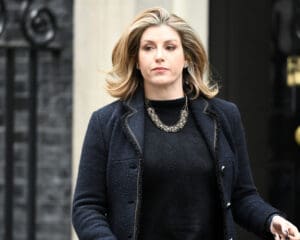
Three quarters of former Conservative MPs who lost their seats at the last election are poised to attempt a comeback, new research suggests.
According to a survey by the Conservatives Together group — a network headed by Grant Shapps, the former defence secretary — only 10 of 88 ex-Tory MPs polled ruled out standing again. A further 38 said they would “definitely” run, while 25 indicated they were “leaning towards” a renewed campaign for office.
Among those considering a return are prominent former MPs Penny Mordaunt, who remains on the party’s candidate list, and Sir Jacob Rees-Mogg, who said he was “thinking very strongly” about re-entering parliament. Sir Nick Gibb, Sir Ranil Jayawardena and Sir Marcus Jones — all of whom lost their seats — each received knighthoods in the new year’s honours list.
Shapps, who lost the constituency of Welwyn Hatfield and is now leading Conservatives Together, said he had not ruled out a comeback. “It’s hard to sit on the sidelines and not feel that pull,” he noted, adding that any decision would ultimately “depend on the voters”.
Conservatives Together is modelled on Labour Together, a group previously run by Morgan McSweeney, now the prime minister’s chief of staff. It combines training for would-be Conservative MPs with local polling analysis to feed into party strategy. Early research suggests Labour remains the Tories’ main challenger, with Reform UK acting more as a “vote splitter” than a serious rival.
A recent report from Conservatives Together criticised the party’s use of social media during the previous campaign, accusing it of “stupidity” for neglecting TikTok and failing to appeal to younger voters. Shapps said the decision to call the election on 4 July last year was taken “without understanding, consultation, warning or sufficient preparation,” adding that the resulting vacuum allowed Reform to outperform the Tories on key digital platforms.
Lord Kempsell, who co-leads the group with Shapps, warned that Conservative support now skews significantly older, with the average likely Tory voter aged 63, compared with a much younger profile in 2019. To help rebuild, he believes the party must “master social media, not just dabble in it,” if it hopes to connect with a broader swathe of the electorate.
Read more:
Three quarters of ousted Tory MPs eyeing a return to Westminster
Five months of travel chaos loom as Avanti staff vow Sunday walkouts
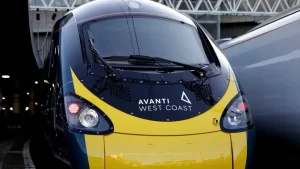
Train travellers face up to five months of disruption on the West Coast Main Line, as the Rail, Maritime and Transport (RMT) union launches a series of Sunday strikes from 12 January to 25 May.
The action follows the rejection of Avanti West Coast’s latest pay offer, with more than four-fifths of train managers voting against it in a recent referendum.
Avanti West Coast, which operates high-speed services between London, the North West and Scotland, has warned that the strikes will cause “significant disruption” for customers, after stating it was disappointed by the outcome of the vote. The company claims it made a “very reasonable revised offer” to resolve the long-running dispute over rest day working and a so-called “new technology payment” for scanning electronic tickets.
The RMT, led by Mick Lynch, previously suspended pre-Christmas walkouts after Avanti tabled a revised proposal. However, union leaders have decided to resume and extend industrial action, blaming what they call the company’s failure to deliver a fair deal. The dispute centres on persuading guards to work on rostered rest days, including Sundays, to cover staff shortages and avoid timetable disruptions.
Avanti, which has endured criticism for poor punctuality in recent months, was the worst-performing train operator between July and September: just 41 per cent of its services arrived on time, compared to a national average of 67 per cent. The franchise escaped an early threat of nationalisation after reporting improvements, but continues to face scrutiny from the government, which ultimately controls its spending.
Industry observers suggest that the RMT may be playing “hardball” in seeking a more generous package from the Treasury, given Avanti’s reliance on public funding. The union’s decision to escalate the dispute with five months of planned strikes underscores the continued volatility in Britain’s rail sector, raising concerns for businesses and commuters alike.
Read more:
Five months of travel chaos loom as Avanti staff vow Sunday walkouts
Shops and restaurants brace for record employment tax surge after Reev …

Retailers and hospitality firms are staring at an unprecedented rise in staff tax bills this year, triggered by Chancellor Rachel Reeves’s decision to increase employer National Insurance contributions alongside an above-inflation hike to the minimum wage.
New figures compiled by the Centre for Policy Studies (CPS) show that the annual cost of employing one full-time minimum wage worker will jump by £2,367 to more than £24,800, of which over £5,000 will go directly to the Treasury. More than a fifth of the amount businesses spend on those staff — 21.3 per cent — will now be swallowed up in taxes, up from 17.5 per cent last year.
This represents the largest year-on-year increase in the so-called “tax wedge” since the minimum wage was introduced in 1999. The wedge — which includes levies paid by employers and by workers themselves — had never exceeded 20 per cent until now. By comparison, in 2015 it was just 11 per cent for a minimum wage role, when a rise in the personal allowance led to lower taxes overall.
Robert Colvile, director of the CPS, criticised Labour’s approach, warning that heavier taxation on jobs would harm Britain’s growth prospects. “Labour claims to understand the importance of growth and to have made it a priority. But it was clear from the moment of the Budget that taxing jobs and work would damage the economy,” he said.
The sectors most affected will be retail and hospitality, which together rely heavily on lower-paid, often part-time staff. Kate Nicholls, chief executive of UKHospitality, urged the Government to reconsider: “We’re calling for a delay to its introduction in April to give the Chancellor time to consult with businesses on measures that can protect businesses and team members.”
Meanwhile, the British Retail Consortium estimated that the new Budget measures will cost the sector an additional £7 billion. This heavier burden arrives at a time of declining footfall, which dropped for the second year in a row to 2.2 per cent below 2023 levels.
Helen Dickinson, the BRC’s chief executive, called December’s footfall data “drab”, adding that it “capped a disappointing year for UK retail footfall”.
Business confidence remains fragile, with 71 per cent of leaders surveyed by the Institute of Directors feeling pessimistic about Britain’s economic outlook for 2025. Anna Leach, the IoD’s chief economist, pointed to “profit uncertainty” as a major constraint on investment, noting that nearly a quarter of business leaders plan to make no investments at all this year.
The increase in employer National Insurance contributions is also having a disproportionate impact on lower earners, whose taxable pay is pushed above new thresholds more quickly than those on average salaries. CPS analysis shows that the typical employer’s National Insurance bill for a full-time minimum wage employee will jump from £1,617 to £2,583 this year — a 60 per cent rise.
On top of that, the National Living Wage is increasing by 6.7 per cent, compounding the overall cost of employing staff. Daniel Herring of the CPS said: “By making it more expensive to employ people, the hikes in employer’s National Insurance disproportionately affect the lowest paid.”
The Treasury defended the Budget measures, emphasising the need to restore economic stability. A spokesman pointed to the independent Office for Budget Responsibility’s conclusion that it will lead to “lower unemployment and higher wages over the coming years”, while noting that “more than half of employers will either see a cut or no change in their National Insurance bills.” The spokesman added that the government’s Plan For Change aims to “get Britain building, unlock investment, and support business so we can make all parts of the country better off.”
Read more:
Shops and restaurants brace for record employment tax surge after Reeves’s budget raid
Post Office eyes extra £100m from new bank deal to boost postmastersâ …
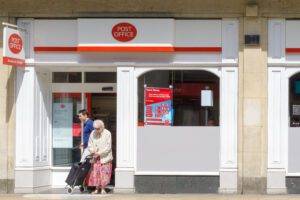
The Post Office is pushing for a significant increase in the fees that banks pay to allow their customers to use its national branch network, hoping to secure between £350 million and £400 million a year from the next banking framework — up from the current £250 million.
Under the proposal, around 30 banks and building societies are being asked to pay the higher sum to maintain essential services for millions of customers who still depend on physical access to deposit and withdraw cash. A final agreement is expected in the autumn, providing additional funding that will be channelled into higher pay for sub-postmasters, following a pledge made by Post Office chairman Nigel Railton last November.
The rising cost for the banks reflects the continuing importance of the Post Office’s 11,500-strong network, particularly as traditional high street lenders have closed more than 6,000 branches over the past decade. Figures from 2023 show that more than £10 billion was withdrawn and £29 billion was deposited at Post Office counters.
Although the Post Office continues to rely on public subsidies, the organisation’s leadership hopes to use this new deal to underpin its long-term commercial sustainability. The push to secure extra income comes in the wake of the Horizon IT scandal, which saw hundreds of sub-postmasters wrongly convicted due to flawed software. The Post Office has acknowledged that re-establishing trust and financial support for these branch operators remains crucial.
A spokeswoman for the Post Office declined to comment on ongoing negotiations, but confirmed the importance of maintaining access to cash for communities across the UK, describing the service as especially vital for vulnerable or less digitally connected customers.
Read more:
Post Office eyes extra £100m from new bank deal to boost postmasters’ pay
Lidl celebrates record festive sales with 7% Christmas boost
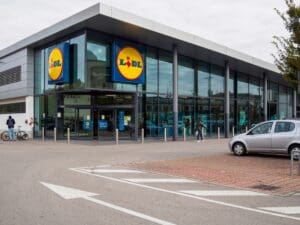
Lidl has reported its strongest UK Christmas trading period, with sales rising by 7 per cent year-on-year in the four weeks to 24 December, surpassing the £1 billion milestone for the first time.
Two million more shoppers visited its stores during the festive season, lured by cut-price champagne and an “affordable” party food range, which saw sales jump by almost a third.
The German-owned grocer revealed a 25 per cent rise in champagne sales, the equivalent of 11 million glasses poured, while British turkeys remained a favourite, selling at a rate of one every second. Customers also snapped up 16 million pigs in blankets, 8 million stuffing balls and 2 million litres of gravy.
Ryan McDonnell, Lidl GB’s chief executive, said the retailer’s blend of “unbeatable quality and value” had drawn more shoppers than ever, adding that the company would “build on our momentum” through continued store openings and competitive pricing.
Lidl’s market share has continued to climb as rising living costs push consumers to seek value. Industry analysts at Kantar recently named Lidl as the country’s fastest-growing bricks-and-mortar grocer, edging closer to Morrisons’ position as the UK’s fifth largest supermarket.
Although it represents slower growth than the 12 per cent increase recorded over the same period a year ago — when inflation on food and drink was more pronounced — Lidl’s performance stands out as many shoppers have reined in supermarket spending to focus on smaller indulgences such as beauty and entertainment products.
The supermarket sector will face further scrutiny in the coming week, as Sainsbury’s and Marks & Spencer unveil their festive figures. Meanwhile, the British Retail Consortium has warned of a potential “spending squeeze” in January, with consumer confidence taking a hit towards the end of the year.
Read more:
Lidl celebrates record festive sales with 7% Christmas boost
High Street closures set to surge in 2025 as business rates burden gro …

A record number of shops are expected to close their doors this year, with rising business rates cited as the final blow for many retailers.
According to fresh figures from the Centre for Retail Research, store closures could hit 17,349 in 2025, surpassing the 17,145 recorded in 2022 when pandemic support measures were scaled back.
Last year saw 13,479 shops cease trading — a 28 per cent jump on 2023 — with well-known names among the casualties. Carpetright, once operating 273 stores, went under, although rival Tapi Carpets & Floors took on 54 of its sites. The Body Shop went into administration in February, closing 82 high street outlets, while Homebase’s demise in November shuttered half of its 130 branches, the other half saved by the owners of The Range.
On average, 37 shops closed every day in 2024, creating what the Centre for Retail Research called “another brutal year for the retail sector”. Many executives fear that 2025 will be even tougher due to an imminent rise in business rates, which takes effect in April.
Chancellor Rachel Reeves has announced a reduction in business rates relief from 75 per cent to 40 per cent for retailers, leisure firms and hospitality operators. According to Altus Group, this will see the typical shop’s rates bill more than double, jumping from £3,589 to £8,613 in the next tax year.
Alex Probyn, president of property tax at Altus, warns that slashing support “after a tough year for many retailers, especially independents, is foolhardy” and highlights the increase as contrary to Labour’s manifesto pledge to reduce the overall rates burden.
Smaller businesses continue to bear the brunt of the crisis, accounting for eight in ten of last year’s closures. The Centre for Retail Research anticipates that 14,660 of the projected 17,349 closures in 2025 will come from independents.
It is not all bad news, however. The Co-op intends to buck the downward trend by opening 75 new convenience stores in 2025. Yet the most recent figures from Sensormatic suggest that footfall in British shops fell by 11.4 per cent in the final full week before Christmas, compared with the same period in 2023. Diane Wehrle, founder of retail analytics group Rendle Intelligence, attributes the sluggish festive footfall to consumers’ “lack of confidence around the economy” and stormy weather deterring people from venturing out.
Read more:
High Street closures set to surge in 2025 as business rates burden grows
Bank of England poised for four or more rate cuts in 2025, say economi …
The Bank of England is expected to cut interest rates at least four times this year, according to a new survey of 51 economists.
The recent poll suggests the base rate could fall from its current 4.75 per cent to 3.75 per cent or lower in 2025, with a majority of respondents forecasting four quarter-point reductions to support the UK’s slowing economic growth.
The findings go beyond the two rate cuts currently priced in by financial markets for 2025, after traders scaled back expectations for monetary easing on the back of robust wage data and higher-than-expected services inflation at the end of last year. Indeed, 15 per cent of those surveyed believe rates will drop to 3.5 per cent, while three economists predict cuts to 3.25 per cent.
Economists warn that policymakers will be under pressure to balance concerns about sluggish growth — which most respondents believe will hover at 1-2 per cent this year — with inflationary risks posed by continued wage growth and the impact of the recent national insurance rise. Although only two economists anticipate inflation dipping below the 2 per cent target in 2025, most project it to remain between 2.5 and 3.5 per cent.
A significant 37 per cent of participants cite wage increases as the single biggest factor driving inflation. Andrew Sentance, a former member of the Bank’s monetary policy committee, noted that “pay rises of 3-4 per cent still mean labour costs rising by about 6 per cent once the NI rise is added in”. The Bank’s latest vote indicated a split committee, with three members favouring a rate cut to 4.5 per cent, while the remaining six supported holding at 4.75 per cent.
On the continent, over half the economists surveyed expect the European Central Bank to move more aggressively with cuts, bringing rates down from 3 per cent to 2 per cent or lower in 2025. Across the Atlantic, participants were divided over the Federal Reserve’s trajectory: a fifth predicted two rate cuts, another fifth expected three, and 35 per cent forecast four or more reductions in US rates this year.
Read more:
Bank of England poised for four or more rate cuts in 2025, say economists

