

BMW has confirmed a delay to the reintroduction of electric vehicle (EV) production at its iconic Mini plant in Oxford, blaming a confluence of factors shaping the beleaguered automotive sector.
The German carmaker said the decision includes pausing a £600m upgrade of the facility and declining a £60m grant offer from the government, although it maintained that close discussions with Westminster continue.
The UK industry has been grappling with ambitious EV targets mandated by the government, known collectively as the zero emission vehicle (ZEV) mandate, which determines the proportion of electric vehicles that manufacturers must sell. Carmakers have long argued these targets are set too high for the current market, with Stellantis notably pointing to the ZEV policy as a key factor in its decision to close its Luton van plant late last year.
Despite BMW’s re-evaluation of timelines, it insists significant elements of the original Oxford investment remain on track. Construction work is reportedly “well under way”, including a state-of-the-art logistics hub.
Production of two next-generation electric Minis was initially slated for a 2026 launch, but revised schedules have yet to be confirmed. A BMW spokesperson commented: “Given the multiple uncertainties facing the automotive industry, the BMW Group is currently reviewing the timing for reintroducing battery-electric Mini production in Oxford.”
Government officials have acknowledged the challenges confronting carmakers and are currently consulting on “reinstating the 2030 electric vehicle deadline while also protecting jobs,” a Department for Transport spokesperson noted. Ministers maintain that more than £2.3bn has been allocated to encourage both the industry and consumers to switch to electric, with the majority of manufacturers aiming to meet or exceed existing ZEV targets.
Read more:
BMW delays electric Mini production at Oxford, over ‘multiple uncertainties’
Month: February 2025
Waspi campaigners threaten legal action as pension compensation row de …

Campaigners battling for state pension compensation have issued the Government with a formal ultimatum, warning that they will pursue a judicial review unless ministers rethink their refusal to pay out billions to millions of 1950s-born women.
The Women Against State Pension Inequality (Waspi) group claims 3.6 million women were short-changed because the Government failed to provide adequate warning when it raised the state pension age from 60 to 65, and later to 66. These changes date back to legislation introduced in the 1990s, but many women were not notified until years later, leaving them with little time to adjust retirement plans.
Although Work and Pensions Secretary Liz Kendall apologised for the delays in communicating the changes, she maintained there was no “direct financial loss” and has declined to offer compensation. According to Ms Kendall, awareness of rising pension ages was already significant, so earlier notification would not have altered many women’s retirement decisions. Waspi, however, contends that a lack of timely information led directly to financial hardship.
Last year, the Parliamentary Ombudsman suggested a one-off payment of up to £2,950 to each affected woman, highlighting a 28-month gap in notifying them of the new state pension age. Waspi describes the Government’s stance as an “outrage” and says ministers are effectively “gaslighting” those who had no realistic opportunity to prepare for longer working lives. The campaign group has launched a crowdfunding appeal, hoping to raise £75,000 to fund its legal challenge.
If the courts side with Waspi, analysts estimate the final compensation bill could reach as high as £10.5bn—an amount the Government insists public finances cannot stretch to, particularly amidst ongoing economic pressures. Labour leader Sir Keir Starmer has also ruled out large-scale compensation, citing constraints on the national budget.
Despite political hesitancy, Waspi chair Angela Madden says the group has been left with no alternative but to take legal action. “We will not allow the DWP’s gaslighting of Waspi women to go unchallenged,” she said, adding that they will stand firm until ministers recognise the hardship caused by later-life pension changes.
With a judicial review potentially just weeks away, the row over what many view as a significant maladministration case shows no sign of abating. For the Treasury, any unfavourable court verdict could spark considerable pressure to reopen the issue—and billions in potential liabilities.
Read more:
Waspi campaigners threaten legal action as pension compensation row deepens
Mcdonald’s keeps DEI on the menu in Britain despite trump’s rollba …

McDonald’s UK arm is maintaining its diversity, equity and inclusion (DEI) policies, despite its Chicago-based parent company scaling back such initiatives since Donald Trump returned to the White House.
While the fast-food giant’s US division scrapped targets for minority representation in senior roles, rebranded its diversity department, and abandoned DEI requirements for suppliers, the British business says its own pledges remain intact. These include ensuring 40 per cent of senior leadership roles are held by under-represented groups by 2030 and strengthening “social inclusion” across its supply chains.
The Bakers, Food and Allied Workers Union (BFAWU), which represents UK food workers, had urged McDonald’s to resist following America’s example. The union accused the US business of “regressive” actions in dismantling DEI commitments.
McDonald’s UK move mirrors a similar split at Deloitte, where the British arm insisted it was “committed to diversity goals” even as the US branch announced it would end specific DEI targets and regular diversity reporting.
The discussion around corporate diversity has grown increasingly polarised. Proponents believe it improves company performance by fostering a broader range of talent. Critics, however, accuse businesses of sacrificing meritocracy and point to political and legislative changes in the US. Earlier this year, a Supreme Court ruling tightened restrictions on affirmative action in American universities, prompting some employers to follow suit.
Walmart, John Deere and Harley-Davidson are among those in the US that have significantly wound down their DEI programmes. Mr Trump, who last year listed so-called “woke companies” he claimed he would target, has repeatedly challenged such corporate initiatives.
In Britain, McDonald’s has also faced allegations of bullying and sexual harassment in its outlets, while the global chain has weathered reputational damage in recent years following the sacking of former chief executive Steve Easterbrook in 2019 for an inappropriate relationship with an employee.
The Fawcett Society, a campaign group for women’s rights, warned that “what’s going on in the US is a warning shot across the bow of our economy”, adding that any retreat from DEI would undermine hard-won gains in the workplace.
But objections are not confined to the political right. In a speech this month, Health Secretary Wes Streeting said “some really daft things [are] being done in the name of equality, diversity and inclusion” in the NHS, describing them as “ideological hobby horses” that risk overshadowing genuine efforts to address inequality.
For now, McDonald’s UK is holding firm and has no plans to emulate its US parent’s approach. Whether that stance remains steadfast—amid mounting global pressure to abandon DEI policies—remains to be seen.
Read more:
Mcdonald’s keeps DEI on the menu in Britain despite trump’s rollback in the US
‘If they close, they close’: Education Secretary brushes off priva …

The Education Secretary, Bridget Phillipson, has reiterated the Government’s stance on levying VAT on private school fees, insisting that closures in the sector are not a new development.
Appearing on Camilla Tominey Today on GB News, Ms Phillipson acknowledged that parents now face a choice in terms of fee-paying education, but stated she has no intention of reversing the policy.
“I don’t want disruption to children’s education if that were to result,” Ms Phillipson said. “But private schools, as businesses, will face choices as to how they manage their money. Parents also have choices as to how they spend theirs. If they choose not to opt for a particular school, and demand falls, that is how the market operates.”
When pressed on whether she was comfortable seeing further private school closures under her watch, Ms Phillipson noted that a falling birth rate has already led to “significant numbers of spare places” both in the state and private sectors. Highlighting that many private schools have shut down over the years, she stressed it is “not a new phenomenon” and that the broader trend has long predated the VAT policy.
Defending the policy
The Government’s decision to impose VAT on private education has sparked debate and concern among some parents and school administrators, who fear rising fees could drive more establishments to close. However, Ms Phillipson appeared resolute in her approach:
“Private schools, as I say, have closed in significant numbers for many, many years—this is not a new phenomenon. The policy stands, and I see no reason to move away from it.”
Welcoming Trump’s stance on Ukraine
Shifting focus from education, Ms Phillipson also used her appearance on GB News to address international affairs, specifically the ongoing conflict in Ukraine. In a move that may surprise some observers, she expressed support for recent calls by former US President Donald Trump to negotiate a peaceful resolution:
“We believe the British government should step up and play a bigger role,” Ms Phillipson told presenter Camilla Tominey. “That’s why we do welcome the approach of President Trump in bringing parties to the negotiating table and in seeking to secure an enduring and lasting settlement for Ukraine.”
Ms Phillipson linked the conflict to rising costs and economic instability at home, underlining the Government’s commitment to increasing defence spending. She noted that billions of pounds are being pledged annually to support the Ukrainian effort, describing the conflict as one with “big consequences here in terms of energy bills [and] the instability that is being caused.”
Acknowledging that the Defence budget had already risen under the Chancellor’s recent package, Ms Phillipson suggested there is scope to accelerate existing timelines for further spending:
“It’s been talked about getting [Defence spending] to 2.5% of GDP by 2028, not 2030,” she said. “Alongside that, we are committed to reaching 2.5% and we’ll be setting out a pathway towards it.”
While the VAT on private school fees remains contentious, Ms Phillipson appears unconvinced by arguments that it will lead to an unprecedented wave of closures. Pointing instead to broader demographic shifts, she reiterated the Government’s stance that private schools must adapt to market forces—a position that is likely to keep debate lively in the coming months.
Meanwhile, her supportive remarks regarding Trump’s diplomatic suggestions signal a willingness to endorse a wide range of interventions in the Ukraine crisis, placing further scrutiny on how the UK can expedite the conflict’s resolution. As both education and foreign policy challenges continue to evolve, Ms Phillipson’s firm positions on these issues will undoubtedly remain in the spotlight.
Read more:
‘If they close, they close’: Education Secretary brushes off private schools’ fate while praising Trump’s war plan
As Amazon MGM secures creative control of 007, Cavill supporters flood …

In a move that has sent ripples through Hollywood, Amazon MGM, in partnership with long-time James Bond producers Michael G. Wilson and Barbara Broccoli, has formed a joint venture to oversee the rights to the iconic 007 franchise.
Although all three parties will remain co-owners of Bond’s intellectual property, Amazon MGM will now lead on creative decisions for new projects, a sharp departure from the company’s previous passive role in the franchise.
The turning point follows Amazon’s 2021 acquisition of MGM for US$8.5 billion. Until now, Amazon owned 50 per cent of the Bond property but was restricted to distribution rights and limited input in key artistic calls. Ever since Daniel Craig’s swansong as Bond in 2021’s No Time to Die, speculation about who might step into the secret agent’s well-polished shoes has been rife, yet no official word on next steps has materialised.
Amazon founder and current executive chairman Jeff Bezos reignited Bond casting discussions on social media platform X, simply asking his 6.8 million followers, “Who’d you pick as the next Bond?” The response was immediate—and overwhelming. While a host of names popped up in his feed, a fervent campaign quickly emerged in favour of Henry Cavill, the British actor best known for his turn as Superman and, more recently, for roles in The Witcher and Mission: Impossible – Fallout.
In 2006, Cavill auditioned for the part of James Bond in Casino Royale, only to lose out to Daniel Craig. Casino Royale ultimately relaunched the Bond series, revitalising the franchise after 2002’s less well-received Die Another Day starring Pierce Brosnan. Director Martin Campbell, who helmed Casino Royale, later described Cavill’s tryout as “excellent,” praising his physique, acting talent, and classic good looks. Yet Campbell felt Cavill was simply too young at the time to shoulder the demands of Bond.
Over the years, Cavill’s name has regularly surfaced as a frontrunner to replace Craig. Despite Casino Royale having premiered well over a decade ago, Campbell recently pointed out another potential hurdle: Cavill is now in his early forties. “By the time he’s completed a few more Bond films, he’d be pushing 50,” Campbell quipped, suggesting a longer-term commitment might be challenging.
Meanwhile, Daniel Craig—who bowed out of the franchise after five films—has paid tribute to producers Michael G. Wilson and Barbara Broccoli, following the announcement that they are relinquishing day-to-day creative control to Amazon MGM. “My respect, admiration and love for Barbara and Michael remain constant and undiminished,” Craig told Variety. “I wish Michael a long, relaxing (and well deserved) retirement and whatever ventures Barbara goes on to do, I know they will be spectacular and I hope I can be part of them.”
Craig’s own departure, alongside the producers’ reduced role, leaves the door wide open for Amazon MGM to forge a new direction in the Bond universe. While Wilson and Broccoli still retain co-ownership, they now appear ready to take more of a back seat, offering creative space for Amazon MGM to shape Bond’s on-screen future.
With Amazon MGM’s newfound authority and Jeff Bezos openly soliciting opinions, fans are itching for an official Bond announcement. Henry Cavill, Taron Egerton, Tom Hardy, and Idris Elba are just a few names commonly touted to take up the mantle. For now, though, the studio has not revealed a timeline for naming the next 007, nor have they signalled how adventurous their new direction might be.
What is clear is the potential for a significant shake-up in how future Bond films are produced, marketed, and distributed. With Amazon’s global streaming platform to hand and Hollywood’s obsession with brand expansion, the next iteration of Bond might encompass more than just feature films—think spin-offs, series, or newly licensed products.
As devotees and insiders alike watch for clues from both Amazon MGM and Henry Cavill’s schedule, the question “Who’s next?” remains very much open—though the steel-jawed Cavill faithful will undoubtedly keep making their case until they have their answer.
Read more:
As Amazon MGM secures creative control of 007, Cavill supporters flood Jeff Bezos’s call to pick next Bond
Jobs axed at second-fastest pace since global financial crisis, PMI su …
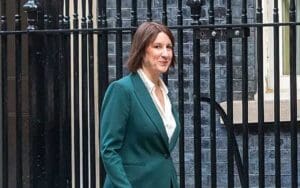
British businesses cut jobs last month at a rate not seen outside the pandemic since 2009, as many companies looked to head off the impact of higher employment taxes and the rise in the National Living Wage due in April.
New flash data from S&P Global’s UK purchasing managers’ index (PMI) revealed that private sector employment fell sharply in February, with nearly one in three businesses reporting lower staffing levels. Those respondents directly linked the cuts to policies announced in last October’s Budget, when Chancellor Rachel Reeves introduced a £25 billion National Insurance hike and confirmed that the legal minimum wage would climb for many age brackets from April.
Chris Williamson, chief business economist at S&P Global, said: “Employment fell sharply again in February, dropping at a rate not seen since the global financial crisis if pandemic months are excluded. One in three companies reporting lower staffing levels directly linked the reduction to policies announced in last October’s Budget.”
While the PMI data also indicates that overall private sector growth softened slightly in February, wage pressures continue to drive up average cost burdens. According to S&P Global, operating costs grew at the fastest pace in 21 months, compounding the labour cost concerns of companies already bracing for higher tax bills and statutory pay obligations.
The resulting job cuts underline the challenges facing businesses in multiple sectors as they navigate both global headwinds and domestic fiscal changes. Many employers appear to be proactively adjusting headcount ahead of the higher wage floor and the sizeable National Insurance hike.
The news comes at a delicate time for Chancellor Reeves, who has been wrestling with higher-than-expected levels of public borrowing since the fiscal year began. Treasury data from the Office for National Statistics (ONS) shows public sector borrowing hitting £118.2 billion in the 10 months to January, overshooting the Office for Budget Responsibility (OBR)’s October forecast by £12.8 billion.
With government debt building, some economists predict the Chancellor will be forced into further tax increases or spending cuts in her next Budget. Alex Kerr of Capital Economics said that “in order to meet her fiscal rules, the Chancellor will need to raise taxes and/or cut spending in the fiscal update on March 26.”
Elliott Jordan-Doak of Pantheon Macroeconomics described the pressure on the public finances as “seemingly relentless,” noting that analysts’ estimates had undershot the Treasury’s borrowing tally by £5.1 billion in January alone—the biggest miss so far this fiscal year. He suggested “it will only get worse from here,” citing fresh revisions to earlier borrowing data.
With the OBR scheduled to produce updated fiscal forecasts next month, many insiders believe that both new revenue-raising measures and more stringent public spending discipline will follow. A potential combination of further tax hikes, alongside a clampdown on departmental budgets, is increasingly on the cards for the Autumn Budget.
The spectre of higher employment taxes and wage costs underscores the challenges facing businesses across Britain, from large retailers down to SMEs. Uncertainty over consumer demand—amid stubborn inflation—and ongoing global supply chain disruptions add further layers of complexity.
For employees, the blow of job cuts coincides with rising household bills and living costs. The pace of wage growth may offer some relief, but it remains to be seen whether the upward pressure on operating costs will moderate or if more firms will decide to follow suit by trimming payroll.
As Chancellor Reeves wrestles with the need to shore up the government’s finances while delivering on policy promises, the tension between raising the labour market floor and maintaining robust employment levels is set to remain a key concern for businesses—and for the British economy as a whole.
Read more:
Jobs axed at second-fastest pace since global financial crisis, PMI survey shows
Global jobs slump at two-decade low, warns Hays boss, as hiring freeze …

The global employment market is mired in its longest downturn in more than 20 years, according to Dirk Hahn, chief executive of Hays, Britain’s largest listed recruitment group.
“I’ve been in this business for 27 years and have never seen a global downturn like it,” he said, citing “ongoing macroeconomic uncertainty” as the primary factor keeping both employers and prospective hires on the sidelines.
Hays, which employs nearly 7,000 consultants worldwide, reported subdued demand for temporary workers in early 2025, while the market for permanent roles, especially in Europe, has failed to recover from a pre-Christmas slump. France, the UK, Ireland, and Germany — Hays’s biggest market — remain under particular pressure.
Over the six months to December, group net fees slipped 15 per cent to £496 million, compared with £583.3 million a year earlier. Pre-tax profits tumbled 67 per cent to £9.1 million, significantly below the £27.6 million booked in the same period the previous year. Hays’s shares, down by a quarter over the past year, eased a further 1.8 per cent on Thursday, closing at 71¾p and valuing the FTSE 250 recruiter at just under £1.2 billion. Despite the fall in profits, Hays will hold its interim dividend at 0.95p per share.
The UK’s broader labour market has remained relatively resilient, with few mass redundancies. Yet James Hilton, Hays’s chief financial officer, notes a lack of appetite for new hires: “Most companies have enough work to justify keeping current staff, but they’re not looking to grow headcount,” he said. “People who secured good pay rises in the last few years aren’t motivated to move. We’re in a stalemate, but at some point, employees will want promotions or fresh challenges.”
Recruitment groups had hoped that the market would rebound earlier this year, yet that recovery continues to be “pushed back,” Hahn warns, with an upturn now not expected until 2026. In the meantime, Hays, headquartered in London with offices in 33 countries, remains focused on its technology recruitment arm — currently its most profitable division — as it weathers the enduring global hiring freeze.
Read more:
Global jobs slump at two-decade low, warns Hays boss, as hiring freeze persists
British Business Investments backs Twin Path Ventures with £10m AI fu …

Twin Path Ventures, the UK’s leading pre-seed investor in AI-first start-ups, has received a £10 million commitment from British Business Investments.
The agreement, spread over the next three years, is designed to expand Twin Path’s capacity to nurture emerging tech founders across all UK regions.
Led by partners John Spindler, Nick Slater, and Katie Lockwood, Twin Path Ventures aims to invest approximately £10 million each year in around 15 AI-focused start-ups. The investment will target companies both inside and outside of London, reflecting the investor’s drive to champion regional innovation and decentralise economic growth.
Demonstrating impact
• Sention: East London-based Sention harnesses ultrasound and cutting-edge AI to spot and diagnose faults in fuel cell and battery production, enabling manufacturers to predict performance and degradation rates at an early stage. The funding allowed Twin Path Ventures to lead a £3 million seed round, alongside international co-investors.
• Amply Discovery: Hailing from Belfast, Amply Discovery deploys advanced machine learning and synthetic biology to uncover novel drug therapies. As a spin-out from Queen’s University Belfast, it is tackling major global health challenges, including cancer and drug-resistant infections.
• Composo AI: With teams in London and the North West, this start-up founded by ex-Graphcore and Quantum Black engineers has developed a platform that enables domain experts—engineers, lawyers, teachers—to easily train, test and evaluate AI applications built on Large Language Models.
Strategic collaboration
Adam Kelly, Managing Director at British Business Investments, says: “We’re thrilled to join forces with Twin Path Ventures and reinforce our support for the UK’s burgeoning AI ecosystem. By encouraging innovation in emerging tech, this partnership underlines our commitment to driving economic growth across all parts of the UK.”
John Spindler, Partner at Twin Path Ventures, adds: “This collaboration marks a big milestone. It boosts our ability to reach out to the next generation of AI pioneers, particularly in regions where support can be harder to find. We’re eager to discover new talent and help scale transformative projects in AI.”
Twin Path Ventures has already invested in over 20 AI-first companies since launching 18 months ago, with the new injection of funds set to accelerate its mission of backing UK-based start-ups poised for global impact.
Read more:
British Business Investments backs Twin Path Ventures with £10m AI fund to power UK tech growth
Unions seek £200m from ministers to safeguard Scunthorpe steelworks a …

Unions are calling on the UK government to inject £200 million into British Steel, in a last-ditch attempt to keep its two blast furnaces in Scunthorpe running until electric arc replacements can be brought online.
The trade union Community warns that without additional support, the rapid shutdown of Scunthorpe’s coal-fuelled blast furnaces could spark nearly 2,000 immediate job losses.
British Steel, owned by Chinese group Jingye, is already committed to installing cleaner electric arc furnaces (EAFs) in Scunthorpe. However, union leaders fear that the abrupt closure of blast furnaces, without an interim plan, will devastate Lincolnshire’s local economy and eliminate key steelmaking capabilities prematurely.
Roy Rickhuss, Community’s general secretary, described the plan as a “roadmap towards a just transition” and a way to avoid a “destructive cliff-edge” in job cuts. He believes government intervention to cover an extra £200 million in carbon costs, which are levied on large polluters, could keep both blast furnaces running and maintain income streams until EAFs are operational.
Syndex, the consultancy commissioned by Community, backs the union’s case. It argues that government support to fund the short-term costs of carbon is the only way to make operating both furnaces “financially viable.” Maintaining just one furnace or closing them both would prove too costly, Syndex warns, especially considering the high fixed costs and potential loss of critical raw material access.
The request follows a separate move by the government to provide around £500 million to India’s Tata Steel for upgrading the Port Talbot plant in Wales, a deal that included the closure of its blast furnaces there, costing 2,500 jobs. Ministers have pledged up to £2.5 billion in further support to help decarbonise the UK steel industry, but details remain vague, and it is unclear how much might go to British Steel.
Business Secretary Jonathan Reynolds has signalled a desire to “champion decarbonisation without deindustrialisation,” launching a consultation on the UK’s steel strategy. Yet a cocktail of global forces—such as a steel glut fuelled by China’s construction downturn and the 25% US tariffs on steel imports—threatens to depress prices further, complicating British Steel’s switch to greener operations.
While EAFs produce significantly less carbon dioxide compared to traditional blast furnaces, they require extra facilities to convert iron ore for steelmaking. Such infrastructure is not yet established in the UK at the necessary scale, fuelling fears—particularly among some politicians and defence officials—that the country could lose a core manufacturing skillset if Scunthorpe’s blast furnaces are mothballed.
Despite these concerns, the Trades Union Congress (TUC) says moving quickly to modern, cleaner technology is “vital” if UK steel is to remain globally competitive. “It’s essential we continue to produce steel in Britain, and decarbonising is the only way we can do that in the long term,” insists TUC general secretary Paul Nowak.
For now, British Steel acknowledges that government talks are ongoing, emphasising that its “trade union partners will be an important part of that future.” The question remains whether ministers will agree to pump in a further £200 million, with Community and Syndex arguing it is the only strategy that will save Scunthorpe from large-scale redundancies and maintain a fully functioning domestic steel industry until greener technology is ready to take over.
Read more:
Unions seek £200m from ministers to safeguard Scunthorpe steelworks as blast furnaces face closure

