

Consumer spending in the United States rose in February but fell short of economists’ expectations, as households cut back on dining and travel while grappling with rising costs and economic uncertainty.
Figures released by the US Commerce Department’s Bureau of Economic Analysis showed that consumer spending climbed by 0.4 per cent last month. This followed a downwardly revised 0.3 per cent decline in January and was slightly below economists’ expectations of a 0.5 per cent rebound.
The data suggests that American households remain cautious about non-essential purchases. Spending on restaurants, hotels and motels dropped sharply by 15 per cent, while expenditure at non-profit institutions also slumped by 15.8 per cent — likely impacted by federal funding cuts as President Trump moves to shrink government spending.
However, the overall picture was supported by stronger sales of durable goods, including motor vehicles, furniture, and household equipment. Non-durable goods such as food and beverages also saw a modest rise, while services spending edged up 0.2 per cent.
The weaker-than-expected rebound in spending comes amid mounting pressure on US households from rising prices and concerns over the economic outlook. Economists are increasingly warning that a series of tariffs imposed by President Trump could push inflation higher, particularly on imported goods.
Federal Reserve Chair Jerome Powell said last week that inflation had begun to rise, “partly in response to tariffs,” and warned that further progress towards the central bank’s 2 per cent inflation target could be delayed.
In the 12 months to February, core inflation — which excludes food and energy — rose to 2.8 per cent, up from 2.7 per cent in January.
The Fed, which tracks the Personal Consumption Expenditures (PCE) price index as its preferred inflation measure, left interest rates unchanged last week, maintaining its benchmark range between 4.25 and 4.50 per cent. Financial markets currently expect the Fed to resume rate cuts in June, but analysts are growing more sceptical.
Stephen Brown, deputy chief North America economist at Capital Economics, said the spending figures support the view that the Fed may hold off on rate cuts this year. “Admittedly, officials are likely to be concerned by the evidence of slower consumer spending growth, but we suspect that is partly due to the unseasonably severe winter weather,” he said.
With inflation still running hot and consumer sentiment fragile, policymakers will be watching closely for signs that demand is cooling — or whether further interest rate adjustments may be needed to keep inflation in check while supporting household spending.
Read more:
US consumer spending rises in February, but falls short of expectations
Month: March 2025
Retailers’ profit optimism hits highest level in a decade, says Lloy …

Retailers are more optimistic about their profits and growth prospects than at any point in nearly a decade, according to new data from Lloyds Bank — signalling growing confidence in the UK economy despite continued fiscal pressures and global uncertainty.
The bank’s latest Business Barometer, released on Monday, found that optimism among retailers surged in March to its highest level since August 2015. Sentiment in the sector jumped by seven points to 58 per cent — well above the overall UK business confidence reading of 49 per cent, which held steady at a seven-month high.
The upbeat data follows stronger-than-expected retail sales figures from the Office for National Statistics (ONS), which reported sales rising by 1.4 per cent in January and 1 per cent in February. Real incomes also posted their fastest rise in nearly ten years at the end of 2023, supporting a pick-up in consumer spending.
The ONS said the savings ratio — the share of disposable income being saved — remained well above the long-run average at 12 per cent in the final quarter of 2023, suggesting there is still room for households to release further spending power.
Hann-Ju Ho, senior economist at Lloyds Commercial Banking, said: “Business confidence remained steady this month, suggesting that UK companies may have been waiting to see the impact of government decisions at home and globally. Despite this, the data continues to reflect a positive growth trend in the UK economy.”
According to the survey of 1,200 firms conducted before Rachel Reeves’s spring statement, nearly two-thirds of businesses said they expected to grow in the year ahead. However, there was a slight dip in hiring expectations, reflecting continued concerns over labour costs and tax pressures.
In particular, tax rises announced in the October budget continue to loom over business planning. From 6 April, the main rate of employers’ national insurance will rise from 13.8 per cent to 15 per cent, and the earnings threshold triggering contributions will fall from £9,100 to £5,000 — a move that could hit labour-intensive employers hard, especially in retail and hospitality.
Despite these concerns, many economists believe that private sector surveys may have overstated the likely impact on hiring, noting that the tax hike amounts to less than 1 per cent of GDP.
Looking ahead, 63 per cent of businesses surveyed said they planned to increase prices over the coming year — reflecting both inflationary expectations and a stronger demand outlook — while only 2 per cent said they would cut them.
The Bank of England last week left interest rates unchanged at 4.5 per cent but warned that inflation could rise again later this year. Still, with retail sentiment buoyant and consumer spending showing resilience, confidence across the sector appears to be mounting — positioning UK retailers for a potentially strong 2024.
Read more:
Retailers’ profit optimism hits highest level in a decade, says Lloyds
Tech entrepreneur Tom Adeyoola to lead £1.1bn Innovate UK amid fundin …

Technology entrepreneur Tom Adeyoola has been named as the government’s preferred candidate to head Innovate UK, the country’s £1.1 billion-a-year innovation agency, at a pivotal moment for the organisation.
The Department for Science, Innovation and Technology confirmed that Adeyoola, 47, is in line to replace Indro Mukerjee in the £195,000-a-year role. The appointment comes as Innovate UK faces renewed scrutiny over its spending and future direction amid a broader government spending review.
The agency plays a key role in supporting the UK’s research and development ecosystem, working with 450,000 organisations annually and helping to unlock hundreds of millions in private-sector investment. However, pressure on public finances has already led to the suspension of its £25 million-a-year Smart Grants scheme pending a review of its effectiveness.
Adeyoola founded virtual fitting room startup Metail in 2008, growing it into a leading digital fashion tech player before selling it in 2019 to TAL Apparel. Since then, he has held advisory and non-executive roles — including his current position on the board of Channel 4, where he advises on technology and innovation.
Lord Vallance, science minister, said: “With his experience in technology, entrepreneurship, and digital transformation, Tom Adeyoola is the right person to ensure Innovate UK delivers real impact — backing pioneering businesses, scaling up breakthrough innovations and ensuring the UK leads in the industries of the future.”
His appointment comes as debate continues over Innovate UK’s future funding model. Critics, including Cambridge entrepreneur and BAE Systems board member Ewan Kirk, have argued the agency should move from a grant-focused model to a more investment-led approach.
“Innovate UK is a good idea, but badly executed,” Kirk said last year. “The incoming chair should transform it into more of an investment-led organisation.”
Innovate UK’s Business Group programme supported 10,600 businesses last year, helping them to secure £674 million in private funding and sustain more than 6,700 jobs. Around a third of the agency’s annual budget is spent on maintaining nine sector-specific “catapult” centres — R&D hubs for fields ranging from gene therapy and medicine discovery to advanced manufacturing and energy systems.
Acting chair Stella Peace will continue to oversee Innovate UK’s strategic initiatives in health and agriculture until Adeyoola’s appointment is confirmed.
Adeyoola’s leadership will be closely watched as the agency seeks to maintain momentum in supporting British innovation while adapting to shifting fiscal priorities and increasing calls for reform.
Read more:
Tech entrepreneur Tom Adeyoola to lead £1.1bn Innovate UK amid funding review
Frasers blocks Boohoo name change to Debenhams amid deepening rivalry
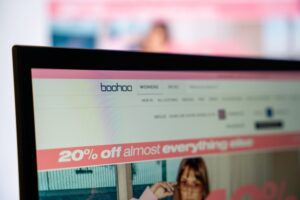
Frasers Group has voted to block Boohoo’s attempt to change its holding company name to Debenhams, escalating a long-running feud between the UK retail giants.
The move, led by Mike Ashley’s group, which owns a 27 per cent stake in Boohoo, effectively prevented the resolution from passing at a general meeting on Friday. The motion required at least 66 per cent of shareholder approval but was defeated after 38 per cent of votes were cast against it.
Boohoo, which acquired the Debenhams brand out of administration in 2021, said it would continue to rebrand as Debenhams Group regardless of the result. The company’s ticker symbol will change to DEBS on the London Stock Exchange from Monday, although its listed name will remain Boohoo Group Plc.
Frasers Group’s CFO Chris Wootton defended the decision, saying: “When Boohoo stops destroying shareholder value, Frasers Group as its biggest shareholder will be happy to support its proposals.”
Boohoo hit back, accusing Frasers of acting in its “own self-interest”, and noting that “it was no surprise to the board that Frasers, a major competitor to the group, has voted against the resolution”.
Dan Finley, CEO of Boohoo, remained bullish despite the vote: “Debenhams is back, and we continue to move forward as Debenhams Group. The successful turnaround of Debenhams is the blueprint for the turnaround of the wider group. Our best days are ahead of us and I am excited for our future.”
The attempted rebrand comes amid pressure on Boohoo’s core fast-fashion business, which has been hit by falling sales, supply chain issues, and questions over governance. The company believes leveraging the heritage and trust in the Debenhams brand could revitalise its wider portfolio.
The latest clash follows a failed attempt last year by Frasers to install Mike Ashley and restructuring expert Mike Lennon on Boohoo’s board. Shareholders rejected the proposals, including a separate motion to remove Boohoo founder Mahmud Kamani as a director.
Despite their adversarial history, Frasers now insists it is seeking “constructive engagement” with Boohoo and reiterated its desire for Lennon to be granted a board seat.
“We do not see them as a major competitor to any part of our business,” the group said — a claim that will do little to mask the deepening tensions between two of Britain’s most prominent fashion retailers.
Read more:
Frasers blocks Boohoo name change to Debenhams amid deepening rivalry
HMRC considers overhaul of £8bn R&D tax credit scheme amid fraud …

The UK’s £8 billion-a-year R&D tax credit scheme is facing a major shake-up as the government moves to tackle widespread fraud and error while improving accessibility for genuine claimants.
Proposals outlined in a consultation published alongside the Spring Statement suggest that businesses may soon be required to obtain formal pre-approval — or “advance assurance” — for research and development (R&D) claims before submitting them to HMRC. Currently a voluntary option, advance assurance is used by relatively few companies.
The Treasury said the move could significantly reduce fraudulent and non-compliant claims, which have become a growing concern in recent years. Between 2020 and April 2023, HMRC estimates that £4.1 billion in taxpayer money was lost to fraud and error in the R&D tax relief system.
The proposed reforms are also a response to criticism from entrepreneurs and employer groups, who say the scheme has become increasingly difficult to navigate due to heightened compliance scrutiny. Some legitimate businesses report being denied support or asked to repay funds, while poorly reviewed claims continue to slip through.
“Non-compliant claims are sometimes made in the hope that HMRC will not identify them,” the government said. “Mandatory assurances in areas with a high degree of non-compliance may be the best way to meet our objectives of reducing fraud, improving customer experience and offering certainty to businesses.”
Scrutiny of R&D claims has increased significantly since 2022. The proportion of claims being checked rose from 10 per cent to 17 per cent in the past year. HMRC now has over 500 staff dedicated to R&D compliance — a five-fold increase from 2020.
The tax credit scheme, designed to incentivise innovation in science and technology, has come under fire after a 2022 Times investigation uncovered widespread abuse. Some advisors were found encouraging dubious claims, including tax relief for a vegan menu at a pub. Since then, HMRC has been under pressure to strengthen oversight without stifling genuine innovation.
Rufus Meakin, author of the R&D Tax Credit Insider blog, welcomed the proposal as “a step in the right direction” but cautioned that HMRC still lacks the technical expertise required to assess claims across a diverse range of sectors.
Carrie Rutland, R&D tax partner at accountancy firm BDO, added: “This would go a long way to tackling the high prevalence of fraud and error we’ve seen. But HMRC must be properly resourced with qualified R&D inspectors to process assurance requests quickly — otherwise the system risks grinding to a standstill.”
While advance assurance could reduce uncertainty for companies and offer a clearer path through the claims process, the success of the reform will hinge on HMRC’s ability to deliver both technical rigour and efficiency in implementation.
The consultation is part of a broader push to simplify and safeguard one of the UK’s most significant business tax incentives — one seen as vital to driving investment in innovation at a time of low productivity and global competition.
Read more:
HMRC considers overhaul of £8bn R&D tax credit scheme amid fraud concerns
Trump’s car tariffs could make UK top export market for German auto …

President Donald Trump’s sweeping new tariffs on car imports could reshape global trade routes — and push the UK into pole position as the most important export market for Germany’s automotive industry.
That’s the opinion of leading audit, tax and business advisory firm Blick Rothenberg.
With a 25 per cent tariff on all German car imports to the United States due to take effect on 2 April, German manufacturers may look to strengthen ties with the UK, which already ranks as the second-largest buyer of German vehicles worldwide.
Viktor Gottschlich, Senior Manager and German Desk Deputy at Blick Rothenberg, said: “With the looming 25% tariffs on German car imports to the US, the UK might become the most important export market for German car makers.”
The UK currently accounts for 11.3 per cent of German car exports — just behind the US at 13.1 per cent. But with the US market potentially becoming far less profitable under the new trade barriers, the UK may become a preferred partner. “German-made cars would generally not be subject to UK tariffs, making the UK an attractive alternative,” Gottschlich noted.
German manufacturers already have a strong footprint in the UK, owning iconic British brands like Bentley and Mini. Expanding export operations and strengthening supply chains to and from the UK could help German automakers cushion the blow from a less viable American market.
The impact could also extend to the classic car sector. Gottschlich warned that the term “finished vehicles” — as used in Trump’s tariff announcement — may be broad enough to include vintage and collector cars. “US Borders and Customs may not be permitted to distinguish between classic and new cars — which currently attract a 2.5% duty. The 25% tariff could be added on top of existing duties, representing a significant cost increase for classic car businesses,” he said.
Blick Rothenberg believes that deepening engagement with the UK market — for both new and classic cars — presents a practical and potentially profitable path forward for German carmakers amid the unfolding US trade war.
“Increased engagement with the UK market seems sensible for German businesses to compensate for a potentially bumpy US car market,” Gottschlich concluded.
Read more:
Trump’s car tariffs could make UK top export market for German auto industry, says Blick Rothenberg
Shopping still in fashion despite faltering consumer confidence

UK retail sales delivered a surprise boost in February, rising by 1 per cent month-on-month and defying expectations of a downturn, as consumers continued to spend on clothing, homewares and household goods despite lingering economic uncertainty.
The latest figures from the Office for National Statistics (ONS) mark the second consecutive month of growth in retail volumes, with analysts having forecast a 0.4 per cent contraction. Annual retail sales growth also strengthened to 2.2 per cent, up from 0.6 per cent in January.
Non-food store sales, including clothing and department stores, rose by 3.1 per cent — the highest monthly level since March 2022. Food sales, however, fell back by 2 per cent following a strong 4.8 per cent increase in January.
Hannah Finselbach, senior statistician at the ONS, said: “Retail sales jumped again in February, with increases across most sectors. However, after a very strong January, food sales fell back, particularly across supermarkets.”
She added that it was a particularly strong month for household goods stores, which saw their biggest increase since April 2021 — largely driven by hardware store sales. Clothing also saw a moderate lift, with widespread discounting contributing to the uptick.
“Looking at the wider trend, retail sales are now showing growth across both the three-month and annual period but remain below pre-pandemic levels,” Finselbach said.
The figures have raised hopes that the Bank of England could begin cutting interest rates sooner than expected, particularly if inflation continues to ease. February’s inflation reading came in at 2.8 per cent — down from 3 per cent in January — offering a timely boost to Chancellor Rachel Reeves as she delivered her spring statement.
However, the inflation outlook remains uncertain. Rising wholesale energy prices and food costs are expected to push inflation back up later this year, with the Bank warning it could peak around 3.7 per cent. Meanwhile, the Office for Budget Responsibility has downgraded its UK growth forecast for 2025 to 1 per cent, while revising its inflation forecast upward to an average of 3.2 per cent.
Despite persistent pressures on household budgets and muted consumer confidence, February’s data suggests many shoppers are still willing to spend — especially on discounted goods and non-essentials — keeping the high street ticking over for now.
Read more:
Shopping still in fashion despite faltering consumer confidence
WH Smith to disappear from high street after 233 years in £76m sale t …

WH Smith, one of the UK’s oldest and most recognisable retail brands, is set to vanish from the high street after 233 years following the sale of its high street division to Modella Capital for £76 million.
The historic books and stationery chain, established in 1792, has sold its entire portfolio of 480 UK high street stores — along with 5,000 staff and associated assets — to Modella, the owner of Hobbycraft and The Original Factory Shop. The shops will be rebranded as TG Jones, marking the end of the WH Smith name on Britain’s high streets.
The WH Smith brand itself was not part of the sale, and will continue to exist globally through the group’s fast-growing travel division, which operates retail stores in airports, train stations, and hospitals across 32 countries.
Carl Cowling, group chief executive, said the move reflects the company’s shift in focus. “As our travel business has grown, our UK high street business has become a much smaller part of the WH Smith Group,” he said. “High street is a good business; it is profitable and cash-generative, with an experienced and high-performing management team. However, given our rapid international growth, now is the right time for a new owner to take the high street business forward and for the WH Smith leadership team to focus exclusively on our travel business.”
WH Smith opened its first store in Little Grosvenor Street, Mayfair in 1792, founded by Henry Walton Smith and his wife Anna. The company pioneered travel retail in the UK, opening its first railway station store at London Euston in 1848.
In recent years, the business has become increasingly reliant on its travel division, which accounted for 75 per cent of group revenue and 85 per cent of trading profit in the last financial year.
The deal signals the end of an era on British high streets, where WH Smith has long been a familiar presence in towns and cities across the country. Under Modella Capital, the stores are expected to retain their core retail offering, but with a new identity and operational direction under the TG Jones brand.
Read more:
WH Smith to disappear from high street after 233 years in £76m sale to Modella Capital
Why is it important to get outside? Practical tips to make outdoor act …

In today’s fast-paced, technology-driven world, it’s easy to spend most of our time indoors -whether at work, home, or commuting between the two.
However, spending time outdoors is essential for both our physical and mental wellbeing. Engaging in outdoor activities can boost health, enhance mood, improve productivity, and even contribute to better sleep quality. We all know this deep down, but scientific studies have reinforced our understanding of these benefits, showing the profound impact of nature on human health and behaviour. For example, the Journal of Global Health analysed 39 studies on nature-based interventions and found that 98% of them reported improvements in mental health outcomes, while 83% and 75% noted enhancements in physical and cognitive health respectively.
The decline in outdoor time
Despite awareness of the benefits, recent studies indicate that people in the UK are spending less time outdoors compared to just a few years ago. According to the Office for National Statistics, approximately one million fewer people in the UK are gaining health benefits from spending time in nature compared to 2020. Recent data also indicates a general decline in outdoor activities (like walking for exercise) since March 2021. Similarly, Natural England’s People and Nature Survey found that nearly 45% of adults in England reported spending more time outdoors in March 2022 than before the pandemic, but this trend has since reversed. All told, it seems clear – we need to individually and collectively prioritise outdoor time!
The benefits of outdoor activities
Improves physical health
Regular outdoor activities like walking, cycling, or playing sports contribute to cardiovascular health, stronger muscles and better overall fitness. According to a study published in the journal Environmental Science & Technology, individuals who engage in outdoor exercise experience greater reductions in blood pressure and stress hormone levels compared to those who exercise indoors. Even a short walk in the park can help reduce the risk of chronic diseases such as obesity, heart disease and diabetes.
Boosts mental wellbeing and sleep quality
Spending time in nature has been linked to lower stress levels, reduced anxiety and improved mood. A study from the National Academy of Sciences found that individuals who took a 90-minute walk in a natural setting showed reduced neural activity in the brain region associated with rumination, a key factor in anxiety and depression. Fresh air, natural light and green spaces help reset the mind and combat mental fatigue, making outdoor activities an excellent remedy for modern-day stress.
Moreover, exposure to natural light helps regulate the body’s circadian rhythm, which plays a key role in sleep quality. Research published in the Journal of Clinical Sleep Medicine found that individuals who spent more time outside during the day experienced better sleep, both in duration and quality, at night. Just a short amount of daylight exposure in the morning can help improve sleep patterns and overall wellbeing.
Think about it – in the millions of years we were hunter gatherers, were we ever sat behind a desk in unnatural light for all daylight hours?!?
Dr. Rangan Chatterjee, a well-known advocate for lifestyle medicine, often talks about the simple yet powerful habit of enjoying a coffee outside each morning. This small daily ritual allows for a mindful moment outdoors, helping to lower stress levels, enhance wellbeing, and support better sleep by reinforcing the body’s natural sleep-wake cycle.
Enhances creativity and focus
Being outside can stimulate creativity and improve concentration. A joint study by the University of Kansas and the University of Utah found that individuals who spent four days in nature without technology showed a 50% increase in creative problem-solving skills (50%!). A change of environment – especially one filled with natural elements – can enhance cognitive function and inspire innovative thinking. Additionally, seeing new places and experiencing different surroundings can stimulate curiosity and fresh perspectives, further fuelling creativity. Who doesn’t like exploring something/somewhere new?
Encourages social connections
Outdoor activities provide an excellent opportunity to connect with friends, family, or even meet new people. Whether it’s playing team sports, going on group hikes or participating in outdoor events, these interactions foster stronger relationships and a sense of community. Research published in the Journal of Aging and Health suggests that social interactions in outdoor settings contribute to greater overall life satisfaction and emotional resilience.
Increases environmental awareness
Spending time outdoors helps build an appreciation for nature and the environment. This awareness often translates into more sustainable habits, such as reducing waste, conserving resources, and supporting green initiatives. A study from Frontiers in Psychology found that individuals who spend more time in natural environments are more likely to adopt pro-environmental behaviours.
I doubt any of this will surprise anyone, but that awareness alone doesn’t change anything, especially when it’s 2 degrees outside and much easier to curl up on your sofa in front of a screen than head outside!
If you want a few ideas to make a positive change, read on…
Practical tips to make outdoor activities part of your life
Start small and make it a habit
If you’re not used to spending much time outdoors, start with small, manageable activities. A 10-minute walk during lunch, a weekend picnic, or a short morning jog can make a significant difference. Maybe just get off the tube one stop earlier and walk the last leg to your office/back home?
Consider adopting Dr. Rangan Chatterjee’s suggestion of having your morning coffee outside – it’s a simple yet effective way to build outdoor time into your routine.
Incorporate outdoor activities into your routine
Find ways to integrate outdoor time into your daily schedule. Walk or bike to work, hold meetings outside, or exercise in a nearby park instead of a gym. A lunchtime walk or even short walking meetings can be great ways to get fresh air and stay active during a busy day. You’re a team leader and are concerned it will look bad? Invite your team to join you for a lunchtime walk and enjoy the added benefit it brings to everyone!
Plan social outings outdoors
Instead of meeting friends at a café, suggest a walk, a hike, or an outdoor game, for example StreetHunt Games. Organising outdoor activities makes socialising more dynamic and enjoyable. Activities with colleagues outside can also boost team morale and encourage a more active lifestyle.
Try a new outdoor hobby
Different activities like kayaking, birdwatching, photography or street exploration games are just a couple of examples of potential hobbies. Trying something new keeps outdoor time exciting and engaging. Park Runs, which are free, weekly 5k runs in parks around the world, can be a great way to stay active and connect with others.
Make it a family affair
Encourage family members, especially children, to spend time outdoors. Outdoor play, nature walks, and weekend adventures help develop a lifelong appreciation for nature and an active lifestyle. When do you get the best behaviour from your kids? When they’ve been running outside all day, or when they’ve been cooped up at home in front of screens?
Set outdoor goals
Challenge yourself with goals like completing a certain number of outdoor workouts, hiking a specific trail, setting a steps per day target or participating in a community clean-up. Goals provide motivation and make outdoor time more fulfilling – also who doesn’t love a medal/excuse for a treat once a challenge is completed?
In summary
Outdoor activities are not just a luxury; they are essential for a healthy, balanced life. By making small changes to incorporate outdoor time into your daily routine, you can enjoy the numerous benefits nature has to offer. Scientific research continues to support the importance of spending time outside for both mental and physical wellbeing. However, with recent studies showing a decline in outdoor time in the UK, it’s more important than ever to prioritise getting outside.
Spending time outdoors doesn’t have to be a grand adventure – sometimes, the simple act of seeing new things, stepping outside for fresh air, or enjoying a mindful moment with a coffee in hand can be enough to reset and recharge.
So, what’s your next outdoor adventure? Good luck in finding ways to get outside more!
Read more:
Why is it important to get outside? Practical tips to make outdoor activities part of your daily routine

