

Chancellor Rachel Reeves’s Spring Statement announcement to cut 10,000 back-office civil service roles has drawn support from leading policy recruitment experts, who see the move as a long-overdue correction that could increase public sector efficiency and create new career pathways.
Lauren Maddocks, Associate Director at specialist recruiter Policy by Murray, described the planned reductions as a chance to modernise and reshape the public sector for the future.
“While the headline-grabbing news has been around proposed job cuts, these are long overdue, and could dramatically cut wastage in what has become a ‘flabby’ public sector,” she said. “Both Brexit and the pandemic led to huge increases in the size of the public sector workforce. The planned reductions represent a correction of that growth and will help to drive greater efficiency and better use of public funds.”
Maddocks pointed to previous examples of successful public sector reform — such as the 1980s Next Steps programme and the 2004 Gershon Review — which demonstrated how workforce restructuring can deliver substantial efficiency gains. She believes the same is possible now, particularly if the civil service embraces new technology and agile ways of working.
As the government moves to modernise public services, Maddocks expects to see a rising demand for professionals skilled in change management, innovation and digital transformation. “We anticipate that as the public sector undergoes this transformation, there will be an increased demand for professionals who are adept at managing change, implementing innovative solutions, and driving efficiency.”
She also noted that reforms to planning policy, outlined elsewhere in the Spring Statement, will likely fuel demand for infrastructure, planning and construction professionals across all levels of government.
“While the reductions do present some initial challenges, they also offer an opportunity to reassess and redesign public sector operations so they are fit for 2025 and beyond,” Maddocks added. “By embracing this change, the public sector can emerge more agile, responsive, and better equipped to serve the needs of the country.”
The government’s wider plan includes a £3.25 billion Whitehall transformation fund, which will support workforce restructuring and investment in new technologies, including AI, as part of a broader strategy to reduce inefficiencies and future-proof public services.
Read more:
Civil service job cuts will drive efficiency and open new opportunities, says policy recruiter
Month: March 2025
Trump’s car tariffs wipe billions off European automakers as global …

A sweeping new round of tariffs from President Trump has sent shockwaves through global markets, wiping billions of euros off the value of major European carmakers and dealing a fresh blow to the UK’s automotive sector.
Trump’s decision to impose a 25 per cent tariff on all imports of cars and parts into the US — set to take effect on 2 April — triggered sharp selloffs in global equities, with automakers bearing the brunt.
Shares in German giants Mercedes-Benz, BMW, Porsche and Volkswagen fell between 2 per cent and 5 per cent, while Stellantis — parent company of Vauxhall, Fiat, Citroen and Peugeot — dropped 6 per cent in Paris. In London, luxury carmaker Aston Martin fell 4.47 per cent, dragging the FTSE 100 index down 0.6 per cent to 8,638.04. Germany’s DAX lost 1.42 per cent and France’s CAC 40 slipped 1 per cent.
The fallout wasn’t limited to Europe. In after-hours US trading, General Motors fell 8 per cent and Ford 3.7 per cent. Asian markets followed suit, with Toyota, Nissan, Mazda, Hyundai and Kia all dropping, while Tata Motors — parent of Jaguar Land Rover — fell 5 per cent on India’s stock exchange.
The new tariffs threaten a vital lifeline for the UK automotive industry. The US is the UK’s second-largest car export market, accounting for nearly 17 per cent of total exports, or around 79,000 vehicles in 2024, according to the Society of Motor Manufacturers and Traders (SMMT). Exports to the US had surged by 38.5 per cent last year, even as exports to the EU and China declined sharply.
Nissan, which operates the UK’s largest car plant in Sunderland, exported more than 73,000 vehicles to the US last year — a full 10 per cent of its total UK output. Meanwhile, luxury marques like Rolls-Royce, Aston Martin and McLaren are heavily reliant on US sales.
The SMMT warned that nearly eight in ten cars made in Britain are exported, with any disruption to international trade posing a serious threat to the industry’s recovery.
Even before the tariffs were announced, British car production was struggling. Output fell 11.6 per cent in February, marking the twelfth consecutive month of declines, according to SMMT data released overnight.
President Trump defended the tariffs, claiming the US was “the piggy bank that everybody steals from.” He views tariffs as a tool to raise revenue to pay for tax cuts and revive domestic industry — even as economists warn of higher prices, supply chain disruption, and retaliatory trade action.
Trump has threatened even harsher tariffs if trading partners respond in kind. “If the EU and Canada team up to retaliate, we’ll go further,” he warned.
In response, Canadian Prime Minister Mark Carney condemned the tariffs as a “direct attack” and pledged to defend national interests, while Japan and South Korea signalled emergency responses were being prepared. European Commission President Ursula von der Leyen said the EU would continue to pursue “negotiated solutions while safeguarding its economic interests.”
In the UK, Chancellor Rachel Reeves told Times Radio that talks were under way to secure a trade agreement with the US to avoid the tariffs. However, economists warned that even if the UK is spared direct inclusion, the knock-on effects could be damaging.
David Miles, economist at the Office for Budget Responsibility, said: “There is a growing realisation that we could be in for a major blow to trade that wasn’t there a few weeks ago.”
The OBR now forecasts that if global trade tensions escalate into a full-blown tariff war — with average import duties rising by 20 percentage points between the US and its partners — UK GDP could shrink by up to 1 per cent at its peak.
With tariffs set to take effect from 3 April and further retaliatory measures on the horizon, the risk of a full-scale trade war is growing. For UK and European carmakers already under pressure, Trump’s latest move could not have come at a worse time.
Read more:
Trump’s car tariffs wipe billions off European automakers as global trade war escalates
CIPD: Spring statement fails to support employers, risking productivit …

The government’s 2025 spring statement has come under fire from the CIPD, the professional body for HR and people development, which warns that the Chancellor’s plans risk undermining business productivity and job creation by failing to address the real workplace challenges faced by employers.
While the Chancellor announced increased funding for defence and infrastructure, CIPD Head of Public Policy Ben Willmott said the statement lacked meaningful support for businesses and failed to tackle the growing cost and complexity of employing staff in the UK.
“While the Chancellor highlighted welcome support for key sectors such as defence and plans to boost investment in infrastructure and housing, there was no recognition of the need to provide more support for employers,” said Willmott.
He warned that recent government moves — including national insurance hikes and the forthcoming Employment Rights Bill — have added costs and regulatory burdens to businesses at a time when they need greater flexibility and support.
“We now need to see the Government back businesses by setting out how it will work with employers to address these challenges and boost productivity, as together these measures stand to undermine business investment in workforce training and employment,” he said.
CIPD data has shown that regulatory uncertainty and rising employment costs are already having a chilling effect on hiring and investment, particularly in skills development. Willmott urged the government to ensure that new regulations under the Employment Rights Bill do not unintentionally deter recruitment — especially of young people and those who need additional support to thrive at work.
“If the Government wants to see more people in work, then there must be jobs for them to go to. It’s important that new regulations don’t deter employers from hiring staff,” he said.
The CIPD also called for a clear implementation plan for the Employment Rights Bill, including additional funding for ACAS and the employment tribunal system, to cope with a likely rise in claims once new rights come into effect.
On skills, Willmott called for urgent action to benefit everyday economy sectors that employ millions across the UK. This includes fast-tracking consultation on the proposed Growth and Skills Levy to give businesses the tools they need to upskill their workforce and tackle labour shortages.
He also urged the government to support the forthcoming recommendations from the Keep Britain Working review — particularly on improving access to occupational health services for SMEs, helping more people stay healthy and in work.
“The Government has been quick to introduce costs, but now is the time to back British businesses,” Willmott concluded. “This means real investment in skills, genuine engagement with employers, and a practical approach to regulation — all essential for driving long-term economic growth and keeping people in good jobs.”
Read more:
CIPD: Spring statement fails to support employers, risking productivity and jobs
Throwing more money at HMRC won’t fix Britain’s £40bn tax gap, wa …
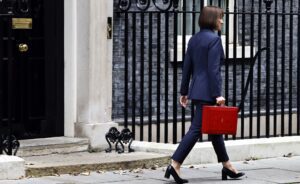
The government’s pledge to invest £300 million in HMRC over the next five years to close the UK’s tax gap has been branded “wholly insufficient” by a leading tax expert, who warned that without a long-term strategy and systemic reform, the country’s complex tax system will continue to hinder progress.
Nimesh Shah, CEO of audit, tax and business advisory firm Blick Rothenberg, said the investment — which forms part of the Chancellor’s spring statement — “won’t scratch the surface” of tackling the UK’s widening tax gap, which now stands at a record £40 billion.
“The government’s claims of a three-fold return on this investment in additional tax revenue seem incredibly ambitious,” Shah said, “especially given that HMRC has faced repeated criticism from both the government itself and the Public Accounts Committee.”
He noted that despite successive waves of funding over the past decade — including £1.4 billion in the past three years alone — the tax gap has remained stubbornly around 5 per cent of total revenues, even as overall tax receipts have grown. “The result is that the absolute value of the tax gap has never been higher,” he said.
Shah argued that Britain’s tax burden, now at its highest level in 50 years, is being undermined by HMRC’s continued inefficiencies and a lack of focus on effective collection. “It’s fine for the government to increase taxes as it sees fit, but without accountability and operational reform at HMRC, the gap will continue to grow,” he warned.
As part of the Chancellor’s plans, the government announced 500 new HMRC compliance officers and 600 additional staff in debt management, along with promises to modernise tax systems through digitisation and partnerships with businesses. But Shah remains sceptical: “These plans sound sensible on paper, but HMRC’s customer service is at an all-time low. Phone lines are closing, taxpayers can’t access the right information, and there’s a long way to go before we can have confidence in these projected returns.”
He believes the root of the issue lies in the complexity of the UK’s tax code — the longest in the world — and argues that HMRC is simply unable to keep pace with the volume of new legislation introduced each year.
“The government needs a proper strategy on tax and the future direction of HMRC,” Shah said. “Piecemeal investments and bold claims of revenue returns do not inspire confidence. A future Chancellor focused on true reform would take a step back and develop a long-term, sustainable strategy — because history shows that throwing more money at HMRC alone won’t address the problem.”
Read more:
Throwing more money at HMRC won’t fix Britain’s £40bn tax gap, warns leading tax expert
Business reaction to Reeves’s spring statement: confidence remains f …
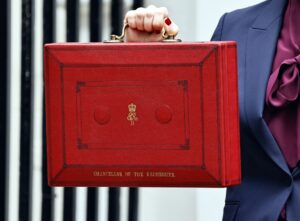
Chancellor Rachel Reeves delivered her 2025 spring statement today, outlining £14 billion in cuts to restore the UK’s fiscal headroom and committing £2.2 billion in defence investment.
While the measures are aimed at tackling Britain’s debt and boosting economic resilience, business leaders have voiced concern that the statement did little to support growth, especially among the UK’s SMEs and entrepreneurial community.
Theo Chatha, CFO at Bibby Financial Services, described the statement as “a huge disappointment” for small and medium-sized enterprises, saying: “We know 87% of SME business leaders are eager to invest, and nearly half were deferring major investment decisions until after today’s statement. Will SMEs feel more confident after today’s announcements? Likely not,” he said.
Chatha warned of a continued “wait and see” approach, with businesses delaying spending on machinery, tech and recruitment — risking further economic stagnation. He added that rising business rates and National Insurance contributions, combined with the lack of SME-specific support, marked this as “a missed opportunity.”
Julian Mulhare, Managing Director, EMEA at Searce, welcomed the government’s commitment to digital transformation within the public sector but warned that simply investing in tech won’t solve deep-rooted inefficiencies. Mulhare, commented: “Tech alone won’t solve the problem. Too many organisations still plan in five-year cycles that can’t keep up with innovation, or dive in without clear goals. Real transformation starts with process first, technology second — focusing on scalable, interoperable solutions that support how people actually work.”
Dr Marc Warner, CEO of AI firm Faculty, was more direct in his assessment, stating: “With anaemic growth since 2008, the Chancellor must realise tinkering around the margins will not arrest the UK’s economic slump. The path to reviving our economy will be paved by technology — and AI is now widely recognised as the most important of our time.”
Adebola Babatunde, Financial Planning Director at Rathbones, said the Spring Statement failed to inspire confidence among entrepreneurs.
“With over 10,000 millionaires reportedly leaving the country last year, today’s statement could have been a pivotal moment to reverse the trend and cultivate a thriving ecosystem for innovation and growth. Instead, it felt like a missed opportunity to energise the entrepreneurial community.”
Genevieve Morris, Head of Corporate Tax, took issue with the Chancellor’s claim that working people aren’t footing the bill for increased NICs.
“Show me an employer in the UK that is not critically reviewing their costs of employment and making decisions on headcount or recruitment as a result,” she said.
“If you increase the costs on a business, they will increase prices and/or make cost reductions. That £500 average household benefit won’t go far when we’re paying £50 for a pint of milk.”
Brendan Callan, CEO of trading platform Tradu, criticised the lack of action on share trading stamp duty — an issue many in the finance sector had lobbied on.
“Stamp duty is a tax that increases costs and makes UK markets less competitive, driving retail investors toward lower-cost markets like the US. By scrapping it, the Chancellor could have boosted investor participation and strengthened UK capital markets. Without that action, the UK risks falling further behind global peers.”
As the UK faces slow growth and fiscal constraints, business leaders remain cautious. While there was broad support for tech investment and AI-led public sector reform, the absence of meaningful incentives for SMEs, investors and entrepreneurs leaves questions over whether today’s statement will be enough to restore confidence and ignite economic momentum.
Read more:
Business reaction to Reeves’s spring statement: confidence remains fragile as costs rise and support lags
Ethnicity and disability pay gap reporting: What employers need to kno …

Gender pay gap reporting for large employers was introduced in 2017. The Government’s view is that this has improved transparency and provided employers with important information about how to address inequalities.
It intends to introduce mandatory ethnicity and disability pay gap reporting and is now consulting on how to do this.
The consultation period ends on 10 June 2025.
The aim is to adopt a similar reporting framework used for gender pay. Accordingly, many proposals will be familiar to large employers, that is, those with 250 or more employees. However, it is accepted that ethnicity and disability pay gap reporting will be more complex. This is because of the large number of ethnicities in the workforce and the fact that many organisations do not have much information about employee ethnicity.
Most ethnic minority groups earn, on average, less than their white British peers, and disabled people have, on average, lower incomes than non-disabled people. Introducing mandatory ethnicity and disability pay gap reporting will expose any pay gaps and enable organisations to consider why such pay gaps exist and how to tackle them.
What does the consultation paper cover?
Pay gap calculations
As with gender pay gap reporting, it is proposed that employers would report on mean and median differences in average hourly pay and bonus pay, the percentage of employees receiving bonus pay and the percentage of employees in four equally-sized groups, ranked from highest to lowest hourly pay. Significantly, the Government also proposes to make it mandatory for employers to report on:
The overall breakdown of their workforce by ethnicity and disability.
The percentage of employees who did not disclose their personal data on their ethnicity and disability.
Additional reporting requirements for public bodies
The Government has asked whether employers should report ethnicity pay differences by grade or salary bands and recruitment, retention and progression data by ethnicity. It has also asked whether these requirements should extend to disability.
Ethnicity data collection and calculations
These are complex issues for the reasons mentioned above. Asking employees to report their own ethnicity is the best way to collect data, but the Government suggests there should be an option to “opt-out” of answering. Because some ethnic groups may be earning more than others, the Government is keen that employers show pay gap measures for as many ethnic groups as possible.
However, there are data protection implications. To protect employees’ privacy, a minimum of 10 employees in any ethnic group is proposed, and employers might have to add some ethnic groups together to meet this threshold. A “binary classification” of two groups is proposed if an employer has smaller numbers of employees in different ethnic groups, for example, comparing white British employees with ethnic minority employees.
Disability data collection and calculations
The Government proposes taking a “binary approach” to measuring the disability pay gap by comparing the pay of disabled employees with that of non-disabled employees. The Equality Act 2010 definition of disability is likely to be used. Employees will not be required to identify or disclose their disability to their employers when disability pay gap reporting is introduced. As with ethnicity, a minimum of 10 employees in each group being compared is proposed for data protection purposes and to protect employees’ privacy.
Dates and deadlines
The same two sets of dates as used for gender pay gap reporting are proposed: the “snapshot date” of 5 April each year for the private and voluntary sector and the “reporting date” by 4 April the following year. Public bodies’ dates are 31 March and 30 March the following year. Employers will probably have to report their ethnicity and disability pay gap data online, similar to the gender pay gap service.
Other parts of the consultation paper consider the geographical scope of mandatory reporting and whether employers should produce action plans to help identify why there is a pay gap and how it can be closed. It is proposed that the Equality and Human Rights Commission will be responsible for enforcement.
Conclusion
Many organisations are already analysing ethnicity pay gaps voluntarily. In April 2023, the previous Government published comprehensive guidance for employers on how to voluntarily measure, report and address any ethnicity pay difference within the workforce.
However, many employers may not have enough employee data to produce a meaningful ethnicity pay gap report, so the starting point is to focus on collecting this data and encourage employees to participate in workforce surveys.
Read more:
Ethnicity and disability pay gap reporting: What employers need to know
Retail sales fall sharply in March as weak confidence hits consumer sp …

Retailers across the UK have reported another sharp drop in sales this month, as fragile consumer confidence continues to weigh on spending, according to the Confederation of British Industry (CBI).
The business group’s latest Distributive Trades Survey, released just a day ahead of Rachel Reeves’s spring statement, shows retail sales volumes fell year-on-year in March — marking the sixth consecutive monthly decline. It represents the steepest fall in retail sales in eight months, highlighting ongoing pressures facing both consumers and businesses.
The data adds to findings from a separate survey by KPMG, which also revealed households are cutting back on everyday purchases in response to rising costs and economic uncertainty.
Martin Sartorius, principal economist at the CBI, warned that the outlook remains bleak: “Annual retail sales volumes fell markedly in March and are expected to continue declining next month. Firms across the retail and wholesale sectors reported that global trade tensions and the Autumn Budget are weighing on consumer and business confidence, which is leading to reduced demand.”
He added that Reeves’s spring statement is likely to shine a light on the UK’s persistent structural challenges and urged the government to deliver policies that restore business confidence and drive investment.
“Reforming business rates, supporting the British Business Bank’s Growth Guarantee Scheme, and properly resourcing the Growth and Skills Levy could support businesses’ investment plans and drive the government’s growth ambitions,” Sartorius said.
The CBI’s survey is based on the difference between the number of retailers reporting rising and falling sales. It found that sales volumes dropped at an accelerated rate in the year to March, and while the pace of decline is expected to slow next month, retailers are still anticipating a subdued April.
Sales for the time of year were once again judged to be below seasonal norms, continuing a trend seen in February. With global economic uncertainty, domestic fiscal tightening and cost pressures continuing to bite, the retail sector appears to be bracing for a difficult spring.
Read more:
Retail sales fall sharply in March as weak confidence hits consumer spending
Investors retreat from sterling ahead of spring statement and looming …

Institutional investors have offloaded the pound at the fastest pace since 2023 in anticipation of this week’s spring statement, where Chancellor Rachel Reeves is expected to unveil £15 billion in spending cuts as part of efforts to restore fiscal discipline.
According to Bank of America, the past three weeks have seen the sharpest outflows from sterling in over two years, with money managers — including asset managers and mutual funds — reducing exposure to the currency amid growing uncertainty around the UK’s economic trajectory.
The cuts, designed to meet Labour’s commitment to run a budget surplus by 2030, come as market sentiment remains fragile. Analysts at the US bank warned that traders are still “likely under-pricing the pound’s volatility risks,” adding: “We are concerned by the complacency in the foreign exchange volatility market. We do sense that market sentiment remains fragile and perhaps skewed towards a weaker fiscal outcome.”
The pound held steady against the US dollar on Tuesday, trading at $1.29. It has risen 3 per cent against the greenback since the start of the year, largely due to concerns over President Trump’s proposed tariffs weighing on the US currency. However, sterling has fallen 2 per cent against the euro in 2025 so far, sitting at €1.20.
Hedge funds have maintained “short” positions on the pound for much of the past year, betting on further declines in its value. By contrast, institutional investors have remained net-long on sterling, anticipating a rebound — a position that could quickly unravel depending on the tone and content of Wednesday’s fiscal statement.
The pound slumped to a two-year low on a trade-weighted basis earlier this year amid a broader global market sell-off. Since then, it has regained some ground on expectations that the Bank of England will carry out no more than two interest rate cuts this year — a scenario that typically supports a currency by preserving higher returns for investors.
Nevertheless, the spring statement is expected to shift the spotlight back onto the UK’s sluggish economic outlook. GDP forecasts from the Office for Budget Responsibility are likely to be cut from 2 per cent to closer to 1 per cent for 2025. Meanwhile, the UK continues to lead G10 economies on the so-called “misery index”, a measure that combines inflation and unemployment rates.
Goldman Sachs analysts echoed caution in the short term, suggesting that ongoing fiscal “noise” makes the pound “less attractive in the near term”. However, they noted that sterling could still benefit from the next round of US tariffs due on 2 April, which are expected to hit continental European economies harder than the UK.
The investment bank has revised its year-end forecast for the pound against the dollar to $1.29, up from a previous estimate of $1.26. Still, much hinges on how markets respond to Reeves’s first major fiscal intervention — and whether investors find her plans credible amid tightening public finances and subdued growth.
Read more:
Investors retreat from sterling ahead of spring statement and looming £15bn spending cuts
Millions of DNA records at stake as 23andMe files for bankruptcy and C …

Genetic testing giant 23andMe has filed for bankruptcy protection in the US as it seeks to sell off its business — placing the personal genetic data of millions of customers in a precarious position.
The San Francisco-based company, which rose to prominence with its consumer DNA testing kits, announced on Sunday that it had initiated voluntary Chapter 11 proceedings in Missouri to “facilitate a sale process to maximise the value of its business.”
The dramatic development follows a catastrophic data breach in 2023 that compromised the personal information of nearly 7 million customers — almost half of its global user base. With customer trust plummeting and revenues collapsing, the company has cut 40 per cent of its workforce, halted all therapeutic development, and now faces an uncertain future.
To add to the turmoil, co-founder and chief executive Anne Wojcicki has stepped down in order to mount a private bid for the company — one of several she has unsuccessfully proposed in recent months. She remains on the board but has passed day-to-day leadership to CFO Joe Selsavage.
Wojcicki’s latest offer, valuing the firm at just $11 million, represents a dramatic fall from grace for a company once valued at $5.8 billion at the peak of its Nasdaq debut in 2021. Her bid of $0.41 per share — an 84 per cent drop from an earlier proposal — was rejected by the board, prompting her private equity partner to withdraw from the process.
The company has secured $35 million in debtor-in-possession financing from JMB Capital Partners to maintain operations during the sale, and insists it is “business as usual” for now. “There are no changes to the way the company stores, manages, or protects customer data,” 23andMe said.
But concerns about genetic privacy are escalating. California’s attorney general, Rob Bonta, issued a public warning over the weekend urging 23andMe customers to request deletion of their DNA data and destruction of biological samples. The company is already paying $30 million and offering three years of identity protection following a class-action lawsuit over the breach.
Chairman Mark Jensen said a court-supervised sale was now the only viable route. “Data privacy will be an important consideration in any potential transaction,” he noted.
Wojcicki, who co-founded 23andMe in 2006, had long harboured ambitions to evolve the company into a drug developer by leveraging its vast genetic database. That strategy is now on ice, with all therapeutic projects shelved since November.
Writing on X (formerly Twitter), she expressed her disappointment: “If I am fortunate enough to secure the company’s assets through the restructuring process, I remain committed to our long-term vision of being a global leader in genetics.”
But critics say the collapse of 23andMe is a stark warning about the risks of commercialising sensitive health data without adequate safeguards. As one of the first direct-to-consumer genomics companies, its downfall raises questions not only about business models in biotech but also about consumer trust in the handling of deeply personal data.
With 15 million DNA profiles in its archives and ownership potentially changing hands, privacy campaigners and customers alike are watching closely — and calling for stronger protections around how genetic data can be sold, stored or shared in future.
Read more:
Millions of DNA records at stake as 23andMe files for bankruptcy and CEO quits to bid for business

