

Americans are growing ever more uneasy about Donald Trump’s aggressive tariff strategy, despite the former president’s fervent reassurances.
A fresh survey by the Harris Poll reveals that, out of a list of pressing issues including inflation, healthcare, and immigration, tariffs rank as a top concern for 72% of respondents — a sizeable jump from 61% recorded in mid-January.
Trump’s sweeping trade measures have escalated substantially in recent weeks. Since returning to the White House, he has imposed an additional 20% tariff on Chinese imports and hiked taxes on steel and aluminium shipped to the United States. Next month, the administration plans to introduce even more stringent measures: a wave of so-called “reciprocal” tariffs targeting goods from around the globe, plus universal levies on imports from Canada and Mexico.
The White House continues to argue that higher tariffs will re-shore American jobs and ultimately boost wages, with Commerce Secretary Howard Lutnick going so far as to say a possible recession would be “worth it”. However, scepticism remains high among US voters, with 66% convinced that any economic benefits gained from tariffs could take years to materialise.
Unsurprisingly, the nation is split along political lines. Republicans report being less alarmed by the possibility of recession and higher prices for imported goods, whereas Democrats and independents are notably more anxious. Only a third of Democrats and around 40% of independents believe tariffs on Canada and Mexico are justified, compared with an overwhelming majority of Republicans who back them.
Inflation and the general cost of living remain dominant worries across all political affiliations. More than 80% of Americans — including 82% of Republicans, 91% of Democrats and 88% of independents — say they are worried about affordability. Escalating trade tensions have already prompted retaliatory measures from key US trading partners. Ontario threatened to hit American electricity exports with tariffs last week, prompting Trump to double levies on Canadian steel and aluminium to 50%. Although Ontario later backed down, Trump’s readiness to escalate has stirred further unease both at home and abroad.
Likewise, when the EU responded to American duties by slapping a 50% tax on US bourbon, Trump threatened a 200% tariff on European alcohol imports. The result has been a volatile period on Wall Street, where a spate of recent economic data showing stable job and price growth has jostled with fresh investor fears of a looming slowdown.
Still, one point unites Americans of different persuasions: a majority (59%) believe that tariffs will be short-lived. “Most Americans are of the sentiment that ‘this too shall pass’,” notes John Gerzema, CEO of the Harris Poll. “But there’s a growing conviction that, even if these trade measures are rolled back soon, the impact on the broader US economy could be unpredictable and long-lasting.”
Read more:
Americans increasingly wary of Trump’s tariff push as new poll reveals mounting anxieties
Month: March 2025
Construction firms drive new hiring surge amid improving market outloo …

Recruiters have reported a marked increase in vacancies for construction jobs across the UK, indicating a tentative rebound in activity in a sector that has recently endured sluggish growth.
According to the latest figures from the Recruitment and Employment Confederation (REC) and data firm Lightcast, the number of advertised positions surpassed 1.5 million in February—slightly above January’s total, despite newly posted opportunities falling 10 per cent month on month.
In addition to construction roles, demand has surged for gardeners, teachers and maintenance workers, reflecting pockets of renewed hiring confidence in areas once perceived as vulnerable to cost pressures and economic uncertainty.
On the other hand, job openings for veterinary nurses, delivery drivers, and train and tram drivers declined over the same period. The REC suggested that, following a flurry of demand in logistics and transport over the past couple of years, hiring in these roles is temporarily cooling as employers seek to rebalance their workforce needs.
Neil Carberry, chief executive of the REC, said: “Firms have been working hard to find growth in the face of rising costs since the budget, and it is reassuring that some are now feeling more ready to hire.”
The construction sector, in particular, has faced months of subdued activity amid a gloomy outlook for housing and commercial projects. However, industry players have gained hope from government pledges to boost housing starts, combined with lower interest rates and a sustained rebound in property prices—factors that are prompting employers to build capacity for anticipated future projects.
Carberry also pointed to a “substantial rise” in adverts within the hospitality industry, another area that has struggled of late due to higher energy costs, staff shortages and subdued consumer confidence.
In contrast, IT hiring remains patchy, although Carberry emphasised that “there are still opportunities” for tech professionals, with nearly 30,000 job postings seeking programmers and software developers, and close to 12,000 for IT business analysts, architects and systems designers.
While the Bank of England’s monetary policy and broader global economic shifts continue to cast a shadow of uncertainty on the UK job market, the latest findings suggest that the construction and hospitality sectors may be among those leading the push towards a more stable recruitment landscape this year.
Read more:
Construction firms drive new hiring surge amid improving market outlook
Why BA keeps climbing despite the turbulence: inside Sean Doyle’s pr …
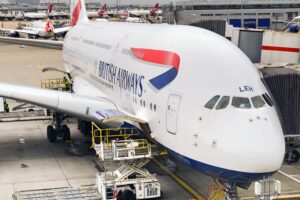
British Airways has long been the target of customer ire—complaints about service standards, outdated technology and, most recently, contentious changes to its loyalty programme are far from rare.
Yet the carrier, part of the FTSE 100-listed International Airlines Group (IAG), is on course to announce a significant upswing in its fortunes next month. Financial analysts forecast annual earnings before interest and tax of over €4 billion (£3.4 billion) for 2024, aided by the 45 million passengers expected to have flown with BA, a figure close to its record of 47.7 million in 2019.
At the centre of BA’s rebound is chief executive Sean Doyle. His £7 billion investment plan—unveiled a year ago—takes aim at overhauling the airline’s finances, service offering and reliability. Half of that sum goes into acquiring new aircraft, including seven Boeing 787 Dreamliners and 18 777X jets from the Seattle planemaker, though the latter face production hold-ups. Another €2.1 billion is earmarked for IT improvements and engineering upgrades, while €1.4 billion will modernise premium cabins.
It is that premium sector that Doyle is most intent on developing, true to former BA boss Lord (John) King’s philosophy of “premium or nothing.” The plan is to add 20 per cent more premium economy seats, 15 per cent more business seats, and 10 per cent additional first-class spaces over the coming years, while the vast Airbus A380s are set for a refit that will boost premium capacity from 60 per cent to 72 per cent.
BA’s focus on the top end of the market is no surprise, given London’s status as the world’s biggest hub for upmarket international travel. Corporate travel is also on the rise post-pandemic, with estimates from Citi suggesting conferences in the US are once again drawing significant numbers of European business travellers.
However, it is not just about expansion. Doyle is betting on cost discipline, with BA rolling out “zero-based budgeting.” Each item of spending must be justified annually from scratch—a method that can yield savings but risks distracting staff from day-to-day operations. BA aims to save £500 million by 2027 through this approach, even though past adopters, including Kraft Heinz, have seen the pitfalls of poorly implemented cost-cutting.
One of the biggest lightning rods for criticism has been BA’s loyalty programme, which recently announced a shift to awarding points based on the cost of a flight or holiday booking rather than class and destination. This triggered a backlash—most vocally from Great Western Railway boss Mark Hopwood, who warned it could backfire badly by failing to appreciate the power of travellers’ emotions.
Doyle remains unmoved by the outcry, insisting that the changes merely bring fairness to a system that has not evolved in line with modern passenger expectations. He also faces the challenge of turning around perceptions of BA’s IT systems, which have been plagued by failures, including the memorable 2017 fiasco when a contractor accidentally pulled the plug at Boadicea House data centre.
Undaunted, Doyle has pressed ahead with a complete redevelopment of BA’s digital offering, discarding outdated applications in favour of a cloud-based system in partnership with Amazon Web Services. The move is intended to prevent further IT meltdowns and has culminated in a soon-to-be-released website and app, which Doyle promises will be “a complete leapfrog from where we are today.”
The airline’s problems are partly seen as the legacy of decisions made before the pandemic. Álex Cruz, Doyle’s predecessor, was accused of driving down costs too aggressively, resulting in underinvestment in IT, fleet upgrades and product quality. The impact was compounded by the UK’s approach to employment support during Covid, which saw BA lose many experienced staff.
Yet, according to industry observers like Andrew Lobbenberg at Barclays, BA’s key metrics, such as net promoter scores, are steadily improving, even if there remains ample room for progress. Robert Boyle, the airline’s former director of strategy, notes that the BA app—once considered a market leader—has fallen behind its rivals, and reversing this trend will be crucial to maintaining growth and warding off disgruntled passengers.
Meanwhile, macroeconomic headwinds remain a concern. Wars and diplomatic tensions can raise fuel costs, force flight diversions, and wreak havoc on schedules. Engine problems, particularly those involving Rolls-Royce’s Trent series, have already forced BA to curtail once-regular services, including a long-standing route to Kuwait. Such disruptions can be deeply frustrating for a carrier that is finally within sight of surpassing its pre-pandemic performance.
In Doyle’s view, a more dynamic corporate culture will help mitigate future shocks. “We are a much more agile, adaptive and responsive organisation than we were three or four years ago,” he says, confident that BA is now better placed to navigate whatever turbulence lies ahead.
For all the complaints—from loyalty revamps to service hiccups—BA’s surging passenger numbers and financial gains suggest that Doyle’s plan may be paying off. The airline’s next set of results, due shortly, are expected to cement its comeback, even if winning back the hearts and minds of disgruntled frequent fliers may prove to be a slightly longer flight path.
Read more:
Why BA keeps climbing despite the turbulence: inside Sean Doyle’s premium plan
Car finance mis-selling: millions set to receive automatic compensatio …

Millions of motorists are poised to receive payouts without having to file a claim, under plans being drawn up by the Financial Conduct Authority (FCA) to address the car finance mis-selling scandal.
The watchdog aims to introduce an industry-wide redress scheme obliging banks to identify and compensate affected customers directly, cutting out claims management companies in the process.
Under current rules, consumers must actively bring forward their own complaints to recoup losses. However, the FCA wants to overhaul this approach, placing the burden on lenders to pinpoint drivers who were sold inappropriate car loans. The initiative follows a year-long investigation into hidden commission arrangements, in which banks allegedly paid car dealers bonuses based on the interest rate they charged borrowers.
While the Supreme Court is expected to rule next month on whether car finance agreements were generally mis-sold, the FCA’s proposed scheme focuses on loans tied to so-called “discretionary commission” arrangements. These deals often incentivised dealerships to push higher interest rates, exposing borrowers to potentially excessive costs.
Several major lenders have already earmarked substantial reserves to handle any fallout. Lloyds and Close Brothers, for instance, have set aside billions and hundreds of millions of pounds respectively to meet potential redress liabilities.
The industry-wide compensation plan is set to be finalised later this year, having been delayed from an initial May timeframe. If implemented, it will be welcomed by consumer advocates who hope that automatic payouts will ensure faster restitution for those who suffered financially under mis-sold car loans.
Molly Preleski, of PA Consulting, said the scheme “should help to ensure that where consumers have lost out, redress won’t be dependent on them taking action to complain,” while also reducing speculative claims made by customers unaffected by these issues.
Read more:
Car finance mis-selling: millions set to receive automatic compensation
Businesses are embracing new product development after cost-cutting lu …

Large firms are once again pouring resources into cutting-edge product and service development, according to Frazer Bennett, global head of innovation at PA Consulting.
After two years of focusing on cost control, many of the company’s corporate clients are re-engaging with projects designed to fuel growth, Bennett told Business Matters.
“Our pipeline for work in the private sector is twice what it was this time last year,” he said, pointing to renewed appetite for both digital and physical innovation. PA Consulting, which counts Unilever, Diageo, Pfizer and Sanofi among its major clients, is also seeing smaller venture-backed companies ramping up their innovation drives.
Bennett’s remarks come ahead of a speech from the prime minister on Thursday, where he is expected to call for a more “agile and active” state, urging ministers to remove regulatory and procedural barriers that hinder government priorities. Sir Keir Starmer’s comments echo those made by science secretary Peter Kyle, who highlighted the role of innovation in tackling the UK’s productivity challenge.
“There is no route to long-term growth, no solution to our productivity problem, without innovation,” Kyle told a techUK conference on Monday. Bennett agrees, defining innovation as delivering growth by “exploiting discoveries in science, exploiting creativity in design and exploiting innovation in engineering,” while bringing these breakthroughs to market.
Regarding the regulatory environment, Bennett believes that setting clear aims, rather than prescribing implementation details, fosters experimentation and competitiveness: “Regulation is as much a catalyst for innovation as it is a constraint. It is about ensuring that the stringency of that regulation is not so high that it becomes a barrier.”
He added that large companies increasingly seek sustainable materials and deeper digital engagement with customers, rather than mere transactional relationships. With this shift in priorities, competition for skilled talent is likely to intensify. However, Bennett views some constraints as beneficial. “If you just keep funding stuff you don’t necessarily get a good outcome. Creativity loves constraint and it is an important constituent in driving innovation,” he explained.
Read more:
Businesses are embracing new product development after cost-cutting lull
BMW braced for €1bn hit as Trump’s tariffs disrupt global car trad …

BMW has cautioned that recently imposed tariffs by the United States and the European Union will dent its earnings by at least €1 billion this year, destabilising the already volatile global motor industry.
The warning comes as the German manufacturer, which produces the Mini at its Oxford plant in Cowley, braces for fresh levies on vehicles exported through the US and on China-made electric models.
Oliver Zipse, BMW’s chief executive, described the €1 billion figure as “conservative” but is hopeful not all tariffs will remain in place for the entirety of 2025. On the same day, BMW reported an 8.4 per cent fall in annual revenue to €142.4 billion, blaming “challenging geopolitical and macroeconomic conditions” for its bleak outlook.
BMW’s global footprint includes a major factory in Spartanburg, South Carolina, yet many of its 2 and 3 series and M2 models are produced in Mexico, placing them squarely under scrutiny. Although the US recently suspended tariffs on Mexican imports meeting the terms of its trade pact with Canada and Mexico, some of BMW’s vehicles fail to reach local content thresholds, leaving them exposed to potential new duties.
Around half of BMW’s US-made cars are sent abroad, primarily to Germany, China, Canada and the UK, making the company particularly vulnerable should retaliatory tariffs come into force. Meanwhile, fellow German firm Daimler Truck sounded a similar warning, announcing that trade uncertainties have already weighed on its first-quarter orders. It has responded with a €1.1 billion cost-reduction programme.
These challenges strike just as the automotive sector negotiates a transition from traditional combustion engines to electric vehicles. Last year, some 54,000 jobs were shed by major suppliers, and 2025 forecasts signal no immediate respite for an industry in flux.
France’s finance and economy minister, Éric Lombard, condemned the transatlantic tariff row as “idiotic” and called for dialogue to alleviate tensions. Christine Lagarde, president of the European Central Bank, said the spat has galvanised the EU, describing it as a “big wake-up call” that could strengthen European unity.
However, there is no shortage of hardline rhetoric in Washington. When asked about the possibility of tariffs on cars from all nations, President Trump’s ally, Howard Lutnick, told Fox Business: “That would be fair, right? If you’re going to tariff cars from anywhere, it’s got to be tariffing cars from everywhere.”
Joachim Nagel, president of Germany’s Bundesbank, labelled the US president’s approach “a horror show” that may tip Germany into recession. François Villeroy de Galhau, his French counterpart, argued that the fallout would be global, saying: “It’s firstly a tragedy for the American economy.”
Read more:
BMW braced for €1bn hit as Trump’s tariffs disrupt global car trade
Extra cladding tax will jeopardise 1.5 million homes target, warns Ber …

Berkeley Group, one of the UK’s biggest housebuilders, has cautioned the government that introducing another cladding tax will place “significant pressure” on its aim of delivering 1.5 million homes by the end of 2029.
The warning follows industry-wide frustration over mounting costs linked to the remediation of unsafe cladding, first highlighted by the Grenfell Tower tragedy in 2017.
Developers are already contending with a 4 per cent surcharge in corporation tax and the imminent building safety levy—estimated to raise up to £3 billion. The government insists the new charge will speed up necessary repairs, but many property firms fear that further costs and regulations will slow construction at a time when the nation urgently needs more homes.
In its trading update on Friday, Berkeley voiced alarm at the “extent and pace of regulatory changes” in recent years. Citing the soon-to-be-introduced levy, the company said these “incremental” adjustments could undermine the delivery of new homes. That view is echoed by Jennie Daly, chief executive of Taylor Wimpey, who recently warned that yet another “costly requirement” will make it challenging to build quickly and at scale.
Founded in Surrey in 1976 by Tim Farrer and Tony Pidgley, Berkeley built 3,521 homes in its most recent financial year—mostly in and around London. Under chief executive Rob Perrins, it has also been moving further into the rental sector with plans to manage up to 4,000 homes.
Despite the looming cladding levy, Berkeley’s trading statement noted a “modest improvement in sales reservations” over winter, with wage growth, static house prices and improved mortgage deals all luring cautious buyers back to the market. The builder stressed that sustained confidence depends on the course of interest rate cuts and broader economic stability.
The company reconfirmed at least £975 million in pre-tax profit over the next two years, including £525 million in 2025—a rare show of optimism in a sector still grappling with multiple headwinds. Analysts welcomed this “short, reassuring update,” with Berkeley’s shares rising 1.4 per cent to £36.08, although they remain down by nearly 26 per cent year-on-year.
Shareholder returns also remain in focus, with the developer buying back £71.3 million of its own shares since December and preparing to return a further £156 million by September through additional buybacks or another dividend. The next dividend payout of £33 million is due at the end of this month.
Read more:
Extra cladding tax will jeopardise 1.5 million homes target, warns Berkeley Group
Trump threatens 200% tariffs on European wine over whiskey levy

In a move that heightens the prospect of another trade war across the Atlantic, Donald Trump has vowed to impose a 200 per cent tariff on wine, champagne and other alcoholic products from the European Union unless the bloc immediately lifts its planned surcharge on American whiskey.
The European Commission announced that it intends to apply a 50 per cent levy on US whiskey exports in retaliation for the United States’ recent tariffs on steel and aluminium. However, the former president responded on Truth Social, branding the EU tariff as “nasty” and threatening to raise the stakes by quadrupling costs for European drinks brands in the American market. “This will be great for the Wine and Champagne businesses in the US,” he claimed.
The Trump family is not without its own stake in the drinks industry. Eric Trump, Donald Trump’s son, serves as president of Trump Winery in Charlottesville, Virginia. The 1,300-acre estate offers wine-tasting services, operates a hotel in the foothills of the Blue Ridge Mountains, and sells an array of premium wines, including a “Presidential Reserve: Inaugural Edition” sparkling wine priced at nearly $250.
The EU’s counter-tariffs on American whiskey, which it first introduced in 2018 during Trump’s presidency, are set to return on 1 April. The Distilled Spirits Council of the United States noted that when similar measures were enforced between 2018 and 2021, American whiskey exports to the EU declined by 20 per cent, slipping from $552 million to $440 million. Following their removal under President Biden in 2021, exports climbed by nearly 60 per cent to reach $699 million last year.
Chris Swonger, president and chief executive of the Distilled Spirits Council, urged Mr Trump to pursue a “zero-for-zero” tariff deal with the EU to bolster exports and protect jobs in America’s hospitality sector, adding: “We want toasts, not tariffs.”
Laurent Saint-Martin, France’s trade minister, criticised the renewed threat of a hike in duty as an unwelcome provocation. “France remains determined to respond with the European Commission and our partners. We will not give in to threats and will always protect our sectors,” he said.
European drinks companies felt the immediate impact on stock markets, with shares in Moët champagne owner LVMH declining by €8.90, or 1.47 per cent, to €603.10, while French distiller Rémy Cointreau slid by €1.70, or 3.6 per cent, to €45.38. Campari Group dropped by €0.24, or 4 per cent, to €5.79, and Pernod Ricard fell by €3.46, or 3.5 per cent, to €96.74.
Read more:
Trump threatens 200% tariffs on European wine over whiskey levy
UK SMEs eye £4bn NI savings despite looming tax hike

Small and medium-sized enterprises (SMEs) are bracing for a significant rise in National Insurance (NI) contributions after last year’s Autumn Budget, in which Chancellor Rachel Reeves announced higher employer NI rates and a lower threshold from 2025/26.
Although the Treasury expects to raise £25 billion annually to help plug a public finances deficit, concerns are growing that many smaller businesses will struggle with the extra cost — potentially curbing recruitment, wages and even pension contributions.
According to research from Moore UK, employer NI payments by SMEs alone could soar by almost £15 billion, from £54.75 billion to £69.72 billion, covering 16.6 million employees. With 37 per cent of smaller firms citing tax as a principal challenge — and many already operating on thin margins — cost-cutting measures seem likely. Reducing employee benefits or freezing pay are among the most common tactics that businesses employ under financial pressure.
However, a growing number of SMEs are adopting salary sacrifice schemes, which enable employees to exchange a portion of their salary for pension contributions or other non-cash benefits, thereby lowering the overall wage bill subject to NI. Analysts say such schemes could collectively save UK SMEs more than £4 billion annually, offsetting some of the Treasury’s NI increase. Proponents add that salary sacrifice also promotes stronger long-term savings among employees — a key consideration as the UK grapples with a looming pensions shortfall across multiple generations.
Despite these advantages, salary sacrifice remains under-utilised, partly because many business owners are unaware of how straightforward it is to implement. Some industry experts argue the government could do more to highlight salary sacrifice’s potential to reduce employer costs and, simultaneously, bolster employees’ financial security. In times of economic uncertainty, such measures might well be a lifeline for hard-pressed SMEs — and a timely means of easing the looming burden of higher NI charges.
Read more:
UK SMEs eye £4bn NI savings despite looming tax hike

