

Two British minicab operators, Liverpool’s Delta Taxis and Cardiff-based Veezu, are seeking £500,000 in crowdfunding to continue their long-running legal dispute with Uber.
The case, set to be heard by the Supreme Court in July, hinges on whether private-hire operators outside London should charge VAT on fares — a shift that could add at least 20 per cent to the cost of trips.
Uber began adding VAT to its London rides in 2021 following a separate legal ruling but is now pushing for a nationwide, uniform approach. Delta and Veezu argue that extending VAT to their services would devastate smaller operators, drive up costs for passengers reliant on local taxi services, and potentially force thousands of self-employed drivers out of business. According to Veezu’s data, 43 per cent of minicab trips involve essential journeys for medical, work, or educational purposes.
Paul McLaughlin, of Delta Taxis, described the case as a “David v Goliath moment”, while Veezu’s chief legal officer, Nia Cooper, warned that imposing VAT beyond London could make fares unaffordable for vulnerable passengers. An Uber spokesperson countered that “there should be consistency throughout the UK to ensure all operators are required to have the same model”.
Read more:
Taxi firms crowdfund final legal push against Uber over VAT on fares
Month: March 2025
UK doesn’t rule out retaliation as Trump’s 25% metal tariffs fuel …
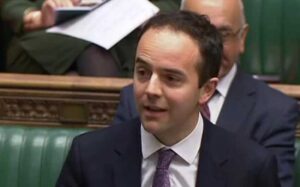
The British government has not ruled out imposing its own tariffs on the United States after President Trump’s decision to levy a 25 per cent duty on steel and aluminium imports. James Murray, Exchequer Secretary to the Treasury, stressed that Britain must remain “cool-headed,” yet warned that “all options are on the table.”
In contrast to the EU’s move to implement €26 billion of countermeasures against American goods, Britain is withholding immediate retaliation while focusing on negotiations towards a UK-US economic agreement. “Obviously, the imposition of tariffs is disappointing,” Murray told Times Radio. “We want a pragmatic approach . . . but we will stand up for British industry if needed.”
Trump’s increased tariffs took effect on Wednesday, extending beyond basic steel and aluminium to hundreds of derivative products, ranging from building bolts to drinks cans. Exemptions and duty-free quotas that previously applied to several international partners have now expired.
The European Commission has vowed to end its suspension of tariffs on US goods from 1 April, launching a new package of countermeasures by mid-April. Targeted products, worth an estimated €18 billion, could include everything from steel and aluminium to textiles, poultry and dairy. Ursula von der Leyen, the Commission President, emphasised the need to “act to protect consumers and business,” calling the tariffs “strong but proportionate.”
William Bain, head of trade policy at the British Chamber of Commerce, described the situation as “a difficult day for trans-Atlantic trade,” cautioning that it plunges British and American businesses into heightened uncertainty.
President Trump rattled market confidence further by announcing fresh levies on Canadian imports, doubling planned tariffs for steel and aluminium to 50 per cent, after Ontario imposed a 25 per cent tariff on electricity entering the US. The Canadian market is the single largest foreign supplier of US steel and aluminium, and it joins Brazil, Mexico and South Korea in losing key exemptions or quota arrangements.
Australia also voiced its displeasure, with Prime Minister Anthony Albanese calling the US tariffs “entirely unjustified” but ruling out tit-for-tat duties, noting that “tariffs and escalating trade tensions are a form of economic self-harm.” Meanwhile, China vowed “all necessary measures to safeguard its rights and interests,” and Japanese Chief Cabinet Secretary Yoshimasa Hayashi warned of major repercussions for US-Japan economic ties.
Against this backdrop, Britain’s efforts to negotiate a new economic pact with the US aim to preserve vital trade flows without resorting to a swift retaliatory response. Nevertheless, Murray underlined the government’s readiness to protect UK industry: “We reserve our right to retaliate . . . Failing to do so would risk the wellbeing of British businesses and the wider economy.”
Read more:
UK doesn’t rule out retaliation as Trump’s 25% metal tariffs fuel trade tensions
Disabled employees under strain as PIP cut rumours grow

Rumours of potential government policy changes — including over £5 billion in disability benefit cuts and possible reforms to Personal Independence Payments (PIP) — could lead to more disabled people entering workplaces that lack essential accommodations, according to new research from consultancy
The study, by consultancy firm Barnett Waddingham (BW) shows 79% of disabled employees have experienced burnout, almost double the rate of their non-disabled peers, while 86% of physically disabled employees report work-related health issues compared to 35% of non-disabled workers. A quarter of disabled employees feel their employers fail to provide reasonable adjustments for neurodiversity.
Worries about discrimination compound these challenges: more than half of disabled employees (52%) have refrained from disclosing a neurodiverse condition at work for fear of bias. This environment contributes to 76% of disabled staff feeling inadequate, a figure that stands at just 37% for non-disabled colleagues.
If, following the Spring Statement on 26 March, the government moves forward with the rumoured measures, it will push more disabled people into work. Yet employers may be underprepared for this influx. Thirty per cent of disabled workers say paid mental health leave would be the most valuable support, while 26% prioritise flexible work options and another 26% want regular mental health check-ins.
Julia Turney, Partner and Head of Platform and Benefits at BW, said: “The government is pushing to get more disabled people into work, but we know that disabled individuals often face worse outcomes once employed, including higher rates of burnout, health issues, and feelings of inadequacy. If more disabled individuals enter the workforce, employers must swiftly adapt working conditions and benefits to support them. Failing to do so could lead to higher turnover and lower productivity.”
Read more:
Disabled employees under strain as PIP cut rumours grow
UK’s 110 most prolific under-40 entrepreneurs revealed

A new report has spotlighted 110 British entrepreneurs under 40 who have founded or co-founded companies valued at a combined £82 billion.
The inaugural Hurun UK Under40s 2024 list celebrates these innovators for creating more than 60,000 jobs across sectors ranging from fintech and healthcare to consumer goods.
To earn a spot on the list, each founder had to launch a venture worth at least $100 million. Among the highest-profile success stories is London-based fintech Revolut, valued at $45 billion and co-founded by Nik Storonsky. Other notable names include Euan Blair and Sophie Adelman of the educational start-up Multiverse, now worth almost £1.4 billion, and Cera’s Ben Maruthappu, whose patient care app was recently recognised as a unicorn. Their achievements mirror those of 44 other founders who have guided their companies to unicorn status, underlining the dynamism of Britain’s entrepreneurial scene.
Financial services emerged as the most represented sector, accounting for 25 per cent of the entries. London remains the main hub, hosting 79 of the 110 founders, but the North West also makes a strong showing, with 10 entrepreneurs based there.
Rupert Hoogewerf, chairman and chief researcher at Hurun Report, praised the diversity of talent within the list: “There are those with PhDs from the world’s top universities and others who left school with few qualifications. Some are building groundbreaking businesses through advanced technologies such as AI, while others have unlocked tremendous value from everyday consumer categories.”
More than a quarter of founders on the list hail from abroad, emphasising the UK’s continued pull for global entrepreneurial talent. Alongside these founders, 10 ‘next generation’ honourees appear for managing revenues or investments of at least $200 million.
Read more:
UK’s 110 most prolific under-40 entrepreneurs revealed
Elon Musk blames ‘massive’ cyberattack for X outage

Elon Musk has claimed that his social media platform X (formerly Twitter) came under a “massive cyberattack” on Monday, leaving it inaccessible for several hours.
Speaking on the site once it was back online, the billionaire suggested the assault may have been orchestrated by a “large, coordinated group and/or a country,” and later indicated it might have originated from Ukraine.
Thousands of X users reported problems accessing the platform for much of Monday, with the outage appearing most pronounced between 9.30am and 6pm, as tracked by monitoring site Downdetector. Musk told Fox Business that “we’re not sure exactly what happened,” but said the scale of the attack implied a significant expenditure of resources.
A hacking group known as Dark Storm claimed responsibility on the Telegram messaging app, though their statement is as yet unverified. The group typically targets Israeli sites and promotes cryptocurrency and hacking tools.
X underwent similar outages shortly after Mr Musk completed his takeover in 2022, when the entrepreneur cut much of the workforce and made broad changes to its IT systems. Since buying Twitter for $44 billion (£34 billion), Musk has laid off around 80 per cent of the company’s staff.
The alleged attack comes amid growing protests against Mr Musk’s involvement in Donald Trump’s administration, where he leads the new Department of Government Efficiency (Doge). Tesla premises have suffered vandalism, with demonstrations taking place at dealerships. Musk has previously suggested he may face assassination attempts because of his government role. When an X user posited that hackers wanted to “silence” Musk and the platform, the billionaire tersely responded: “Yes.”
Separately, shares in Tesla, Musk’s electric car company, fell on Monday in response to wider market sell-off, sparked by fears of a US economic downturn.
Read more:
Elon Musk blames ‘massive’ cyberattack for X outage
Employer costs for low-paid staff to jump by over £2,100 per employee …

Companies employing staff on the National Living Wage (NLW) are braced for cost increases exceeding £2,100 per employee from April 2025, according to leading tax, audit and business advisory firm Blick Rothenberg.
The surge follows simultaneous hikes in the NLW and National Insurance Contributions (NIC).
Matt Crawford, a partner at Blick Rothenberg, says that with the NLW set to rise from £11.44 to £12.21 per hour, employers could see an annual increase of around £1,400 in wages per full-time worker. Topping that off is an extra £700 in NIC per employee, reflecting the Chancellor’s latest budget changes. “We know of several employers who are already revisiting hiring plans or scaling back pay rises for those slightly above the NLW as they balance their books,” adds Crawford.
Large firms with substantial numbers of lower-paid, casual employees—particularly in retail, hospitality and transport—are likely to feel the biggest squeeze. Smaller businesses, however, receive a partial cushion via the employer’s National Insurance ‘employment allowance,’ which will double from £5,000 to £10,500. While that mitigates some NIC increases for small businesses, they still must meet the same minimum wage requirements as larger employers.
In an attempt to manage overheads, companies are increasingly exploring salary sacrifice schemes, where employees effectively trade a portion of their salary for NIC-efficient benefits such as extra pension contributions or electric vehicles. But “these arrangements don’t help the lowest-paid staff,” Crawford says, as the law requires their gross salary to remain above the national minimum wage.
The upshot for many businesses with large pools of lower-paid staff is a reluctance to recruit or an introduction of overtime restrictions, warns Crawford. “These higher costs might push some employers to rein in expansion or reduce investment in order to stay within budgets,” he says, suggesting the new measures could have a ripple effect across multiple sectors when they come into force in April 2025.
Read more:
Employer costs for low-paid staff to jump by over £2,100 per employee from April 2025
Boohoo to rebrand as Debenhams group in new marketplace drive

Boohoo is set to be renamed as Debenhams Group, marking a pivotal step in new chief executive Dan Finley’s plans to revive the troubled online retailer.
Finley, who previously headed Boohoo’s Debenhams business, says he intends to replicate the “marketplace model” across the entire company, underpinned by Debenhams’ profitable growth since Boohoo acquired it out of administration in 2021.
“Debenhams is back,” Finley declared, as he confirmed the group will maintain its own brands while also hosting other retailers’ products on its platform. Boohoo believes this rebrand, effective immediately, “reflects a major strategic change” and will serve as a “blueprint for the wider turnaround of the group.”
The company also announced a shake-up of its senior leadership: Phil Ellis, who worked alongside Finley in running Boohoo’s Debenhams business, has replaced Stephen Morana as finance director with immediate effect.
Despite this strategic overhaul, Boohoo trimmed its sales forecast for the financial year to February 2025 down to £1.22 billion, below analysts’ estimates of £1.29 billion. The Manchester-based group, known for owning labels such as PrettyLittleThing and Karen Millen, has seen its share price slump by more than 88 per cent over the past five years. Fierce online competition, the high street’s resurgence post-pandemic, and calls to break up the business have all taken their toll.
Boohoo, founded in 2006 and once among Britain’s fastest-growing retailers, completed an IPO on London’s junior Aim market in 2014 at 50p a share, with an initial valuation nearing £600 million. Co-founders Mahmud Kamani and Carol Kane reaped £135 million and £25 million respectively from the flotation. While the group’s fortunes have faltered, Finley insists that Debenhams Group now has “its best days ahead,” promising to become “leaner, faster, and more technologically advanced.”
Read more:
Boohoo to rebrand as Debenhams group in new marketplace drive
Thank goodness for Mark Carney: The quiet genius poised to lead Canada
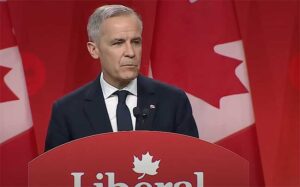
Thank heavens, indeed, for Mark Carney. After watching his Thanksgiving address, I’ve never been more delighted at the thought that the next Prime Minister of Canada could be one of the most able public figures on the planet.
Let’s face it: the chap’s resumé reads like a hagiographic entry in Who’s Who. He’s done the rounds as Governor of the Bank of Canada (with startling success, I might add), dipped his toe—well, his entire foot, actually—into the murky waters of the Bank of England as a sort of honorary Brit and deal with the economic nightmare that was Brexit, and if that weren’t enough to scare off any fainthearted competitor, he’s also had a decent academic stint.
So who else would we want stepping into Justin Trudeau’s shoes than a man who can, with his head firmly on his shoulders, steer a massive economy without so much as ruffling his famously neat hair?
From the moment he opened his mouth at that podium, I was amazed. Firstly he switched between French and Canadian at a whim, that I, a French passport holder, could only dream upon enthralled—well, enthralled in the way one might be at a policy symposium where you suspect you might nod off at any second, but can’t, because Carney’s voice is just a bit too smooth.
It was a Thanksgiving address, yes, which might lead one to assume a certain brand of sentimental “and thanks to my mother, and thanks to the turkey, and thanks to the harvest” pap. But oh no. Mark Carney, good old Carney, delivered a string of words that were eloquent, grand, and oh-so-measured, “When you worship at the altar of Donald Trump, you will kneel to him, not stand up to him”, when talking about the 25 per cent tariffs that Trump is imposing on Canada.
No bombast, no fulmination, no confected rally-the-troops theatrics. It was precise, it was cerebral, and it was… well, it was quite Mark Carney. Yet, ironically, that cool, banker-esque persona might be the very thing that leaves some Canadians longing for a bit more show in their statesman.
Let’s not forget who the next Prime Minister of Canada will be up against on the world stage. Trump provides us with a particular brand of leadership, shall we say. Loud, brash, a tad unhinged at times—like a bull in a china shop, armed with a phone and a Twitter account. To hold one’s own on that stage, you might expect Mark Carney to morph into a rhetorical, podium-stomping arch-enemy to the American president, lobbing barbs with the best of them, the savage confrontation that Volodymyr Zelenskyy had to endure only last week.
But Carney’s not that chap, is he? He isn’t the sort to stand there yelling about walls or tweeting at four in the morning about celebrity gossip. You’ll not see him provoke a shoving match with a G7 colleague. And that, incidentally, is exactly why he’s the perfect choice. Because politics, for better or for worse, should be about competence, level-headed leadership, and the ability to speak to ordinary folk without scaring them witless about the state of the world tomorrow. Who needs another moose-like bellow from a North American leader when we can have a calmly guiding hand that says, “Look, the global economy is a bit of a thicket at the moment, but here’s how we navigate it without losing sight of our values”?
Don’t get me wrong, I enjoy a good rhetorical punch every now and again. Winston Churchill didn’t steer Britain through the war by softly mumbling that we’ll have a cup of tea and see how it goes. He roared. He cajoled. He made you feel that you were personally going to storm the beaches of Normandy, strapped to the hilt with courage. But Mark Carney, with his track record, doesn’t need to roar. He’s a two-time national banker, for heaven’s sake. He was the man who helped shepherd Canada through the 2008 financial crisis with minimal bruising. He was the Governor of the Bank of England in the years after the Brexit referendum, ensuring that—while many expected the sky to fall—London’s financial hub did not exactly transform into a wasteland overnight. He’s proven his mettle in situations that would have frayed the nerves of lesser men.
Hence my abiding gratitude that we’re about to witness a Carney premiership. No more of this foot-shuffling and glancing around, thinking, “He’s too polite for politics.” If Justin Trudeau taught us anything, it’s that Canadians have no problem supporting a leader who’s mild-mannered and well-spoken. They also happen to like leaders who get their facts straight, demonstrate some dexterity in both domestic and international arenas, and manage to project a sense of modern Canada: a balanced, globally-savvy, somewhat grown-up presence amid the howling oratory of other nations.
Carney, in that regard, is tailor-made. He radiates a certain old-school reliability that comforts. You sense he’s the sort of chap who’s never spilled his coffee down his tie, let alone humiliated himself in a petty Twitter war. His Thanksgiving speech might have lacked the rhetorical fireworks that get people’s blood pumping, but the substance was pure gold. It reminded us of what we ought to be thankful for: a nation with a stable democratic tradition, a place that celebrates immigrants, fosters innovation, and remains open for business without locking itself in the cut-throat theatrics that have turned so many people off politics.
Mark Carney may not single-handedly usher in a golden age of flamboyant verbal sparring on the global stage, but if “stuffy banker in a suit” is the price we pay for an honest, capable, and strategically-minded Prime Minister, sign me up. I’d rather have a leader who speaks softly and carries a briefcase full of actual, workable policies than yet another tedious purveyor of bombast and nonsense. Thank God, indeed, for this measured Canadian with an impeccable record and a willingness to stand at a lectern—minus the foot-stomping and self-aggrandising insults—and calmly show the rest of the world how it’s done.
If he channels even a fraction of that quiet brilliance—yes, brilliance—that made him the go-to man at not one but two major central banks, then Canada is in for one hell of a (composed, thoughtfully navigated) ride. And frankly, we could all use a bit of Carney’s brand of sanity right about now. Let the grateful cheering begin.
Read more:
Thank goodness for Mark Carney: The quiet genius poised to lead Canada
Number of registered UK companies shrinks for the first time since 201 …

The UK’s official company register contracted at the close of 2024, marking the first recorded decline since Companies House began publishing statistics in 2012.
There were 5,408,707 businesses listed on the register at the end of December—19,879 fewer than the previous quarter. Meanwhile, the so-called “effective register,” which excludes businesses in dissolution or liquidation, dropped by 59,495.
Companies House attributes part of this decline to its new powers that enable stricter policing of the register, dissolving firms that fail to provide an appropriate registered office address. However, the ongoing economic squeeze is also a significant contributor: in the last three months of 2024 alone, 203,584 companies dissolved, up 24.6 per cent on the same period in 2023, while registrations fell by 15.5 per cent to 181,261.
Experts point to multiple factors. Henry Whorwood, managing director of research at Beauhurst, cites “a double whammy of inflation and the [tax rises in the autumn] budget” as drivers behind the closures. Rachel Reeves’s October increase to employers’ National Insurance from 13.8 to 15 per cent—alongside a reduction in the salary threshold—raised labour costs further. From April 6, businesses must also shoulder an extra £2,000 per worker for those on minimum wage.
Michael Steed, a chartered tax adviser and president of the Association of Accounting Technicians, adds that many entrepreneurs may opt to remain sole traders rather than incorporate, partly because of these rising tax and administrative burdens. “You’ve got to do your compliance with Companies House. You’ve got to keep your minutes, your dividend payments. All those need to be in real time,” he explains. “Whereas if you compare that to being a sole trader, only you, HMRC and the Holy Spirit know your results.”
Companies House had initially postponed publication of its statistics for Q4 2024 after detecting “anomalies,” later attributed to human error. It has since revised figures for previous reporting periods. Despite the blip, the latest data underscores real pressures on British businesses, as regulatory scrutiny, tax obligations, and rising costs continue to weigh on owners’ decisions about their company structures.
Read more:
Number of registered UK companies shrinks for the first time since 2012

