

Made in Britain, the not-for-profit organisation behind the official trademark for UK manufacturing, has forged a new partnership with Lincoln-based digital marketing agency Carrington.
The move aims to raise the profile of British-made products, support homegrown businesses, and drive the continued growth of its now 2,100-strong membership.
Under the agreement, Carrington will leverage its expertise in manufacturing-focused PR to spotlight companies carrying the Made in Britain mark, highlighting their quality standards and contributions to local economies. As part of the initiative, both organisations will emphasise the importance of responsible, sustainable production, from traditional makers to leading global brands such as Vauxhall and Babcock.
John Pearce, CEO at Made in Britain, said that expanding the charity’s communications strategy is key to underscoring the achievements and ambitions of British industry. “Carrington’s creativity, energy, and success in our sector made them a natural choice to help champion the value of the Made in Britain mark,” he added.
With a track record of delivering successful marketing campaigns in manufacturing, business services, and the events industry, Carrington intends to help members share their news and innovations more widely. David Sykes, Head of PR at Carrington, praised the trademark for demonstrating high ethical, safety, and sustainability credentials, and stressed the team’s enthusiasm for shining a spotlight on Britain’s diverse range of manufacturers.
Made in Britain was established in 2013 and provides its members with a trusted, widely recognised mark that identifies the provenance and authenticity of goods. Alongside licensing the official trademark, the organisation also offers expert support, networking opportunities, and tools to help businesses measure their environmental and social impact. As it works closely with government bodies and trade groups, Made in Britain plays a key role in shaping policies that reinforce domestic manufacturing, safeguard skilled jobs, and spur economic growth.
This collaboration with Carrington underlines the growing importance of British-made products in competitive global markets, as well as the appetite for innovative, sustainable manufacturing that resonates both at home and abroad.
Read more:
Made in Britain teams up with Carrington to drive UK manufacturing growth
Month: March 2025
Bernie Ecclestone’s Formula One car collection sells for record-brea …

Bernie Ecclestone has achieved a record-breaking sale with the disposal of his renowned fleet of historic grand prix and Formula One cars, believed to be worth around half a billion pounds.
The 94-year-old former Formula One supremo, who amassed these vehicles over five decades, sold the entire 69-car collection to Mark Mateschitz, son of the late Red Bull founder Dietrich Mateschitz.
Mateschitz, 32, inherited 49 per cent of the global energy drink empire last October and confirmed that he plans to open the collection for public viewing in the near future. Although financial details remain confidential, the deal is said to represent the most valuable transaction ever to occur in the collectors’ car market.
Among the highly prized exhibits are Ferraris once raced by world champions Mike Hawthorn, Niki Lauda and Michael Schumacher, as well as a number of Brabham cars piloted by Nelson Piquet, Carlos Pace and Lauda himself. The line-up also includes the iconic one-off Brabham-Alfa Romeo BT46B “fan car”, which famously competed only once, triumphing at the 1978 Swedish Grand Prix.
According to broker Tom Hartley Jnr, who managed the sale, there has never been a classic car transaction “that even comes close” to this one in terms of scale and value. He revealed that there was interest from potential buyers across the globe, including two sovereign wealth funds, but noted that Ecclestone had a particular preference for Mateschitz.
Ecclestone had announced in late 2023 that he would sell the collection, although he stressed that his decision was unrelated to his recent legal issues. Following a guilty plea for fraud, having failed to declare a trust worth more than £400 million, he reached a settlement which included a record payment to HM Revenue and Customs and a suspended jail sentence of 17 months. Nonetheless, Ecclestone insisted these circumstances did not influence his willingness to part with the treasured cars, instead citing a desire to spare his family from dealing with the logistical challenges of such a substantial estate.
Hartley Jnr confirmed that Ecclestone’s unique, privately negotiated approach helped secure an optimal result, free from the unpredictable elements often seen at auction. He praised the extensive research efforts behind the sale, which included scrutinising Ferrari’s archives to verify each car’s racing history and chassis details.
Mateschitz, the only son of Dietrich Mateschitz, expressed delight that Ecclestone had entrusted him with such a historically significant array of machines. He has pledged to maintain and expand the collection, and it is widely expected that it will be displayed in Austria, reflecting Red Bull’s roots in the country.
Ecclestone, for his part, described the transfer as a relief and expressed satisfaction that these iconic Formula One cars will remain under the stewardship of a serious motor racing enthusiast. Although the deal was finalised swiftly, industry insiders believe it is unlikely to be bettered in terms of magnitude or prestige in the foreseeable future.
Read more:
Bernie Ecclestone’s Formula One car collection sells for record-breaking sum to Red Bull heir
Business secretary signals major shift on electric car policy to safeg …
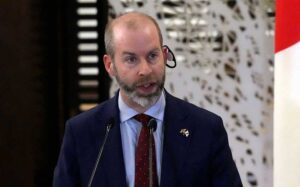
In a determined effort to retain Nissan’s manufacturing presence in Britain, Business Secretary Jonathan Reynolds has vowed to implement “substantial change” to the country’s electric vehicle (EV) sales targets.
Speaking during a visit to Nissan’s sprawling headquarters on the outskirts of Tokyo, Mr Reynolds assured senior executives that the Government was prepared to revise the so-called zero emission vehicle (ZEV) mandate to address concerns voiced by carmakers. Following the meeting, he said “a substantial change of policy” had been agreed, according to reports in The Times.
Mr Reynolds commented: “We will do everything we can to make sure Nissan has that secure long-term future in the UK, making sure the business and regulatory environment reflects that. The whole Government is absolutely of the view that you will not get to the progress around net zero and the energy transition that we want to see by closing down British jobs and British industry.”
Although the Business Secretary declined to specify the precise nature of the changes discussed, insiders indicate that “nothing is off the table.” However, government sources swiftly countered the idea of an official change in stance, insisting there is “no alteration” to the headline targets of the ZEV mandate—though they have long hinted that “more generous flexibilities” could be introduced to accommodate manufacturers.
Carmakers including Nissan, Ford and Stellantis (owner of Vauxhall) have criticised the stringent nature of the ZEV mandate. In particular, the potential £15,000-per-car fine for failing to meet set EV sales targets has been described as excessive, especially at a time when consumer demand for electric cars has not yet caught up with official ambitions.
At present, 28 per cent of new cars sold in the UK must be fully electric by 2025—a figure set to rise steadily to 80 per cent by 2030. While these milestones remain in place, the Government has hinted that the penalties for non-compliance could be eased and has suggested that existing “flexibilities” may be expanded.
Industry insiders also believe ministers are assessing how to reduce the scale of fines. The Society of Motor Manufacturers and Traders (SMMT) has further urged the Government to boost consumer interest by cutting taxes on EV purchases and equalising VAT rates for drivers who rely on public charging points and those who charge at home.
Despite recent efforts—including £4.5bn worth of discounts last year—electric vehicles still only account for one in ten new cars purchased by private owners. With Nissan poised to produce the latest incarnation of its popular Leaf model in Sunderland, its executives have warned that inflexible regulations could undermine the viability of British manufacturing if consumer demand remains tepid.
As the debate continues, Mr Reynolds maintains that ensuring a stable, competitive, and forward-looking environment for UK carmakers is paramount. Whether through softened penalties or expanded “flexibilities,” the Government’s proposed “substantial change” aims to secure Britain’s future in an automotive market increasingly defined by the transition to net zero.
Read more:
Business secretary signals major shift on electric car policy to safeguard Nissan’s UK future
Second-hand Teslas flood UK market as Elon Musk’s politics take toll

The UK’s second-hand Tesla market has hit unprecedented levels, with 4,822 used vehicles listed in February alone, according to data from Auto Trader.
This figure represents a 36 per cent increase from December and a 70 per cent jump on the same month in 2024, signalling mounting pressure on the electric car pioneer.
Industry insiders suggest that Elon Musk’s outspoken political views – including perceived alignments with Donald Trump and far-right European parties – are alienating some British buyers. Tesla’s technological edge over competitors has also narrowed, deterring drivers who were once drawn to the brand’s innovations and sleek designs.
Thom Groot of the Electric Car Scheme said that there had been a notable drop in consumer enthusiasm for Tesla over the past few months, while a senior executive at a major leasing firm likewise notes that “some people are cancelling orders, explicitly because of Musk’s politics.”
As more Teslas flood the market, used car prices are tumbling. A three-year-old Model 3 now averages £20,887 on Auto Trader, marking a 17 per cent decline year-on-year – compared to an 8.2 per cent drop for the wider EV sector in that same period. These trends reflect both Tesla’s waning brand strength and broader competition across the electric car space.
Tesla’s share price has plummeted by over 30 per cent this year, as indications of slackening demand have surfaced in key international markets, including China, Australia, and Germany. And while UK sales of new Teslas rose 21 per cent in February – boosted by a last-minute rush ahead of a tax rise on electric vehicles – that figure lagged the wider 41.7 per cent jump in EV sales overall.
Industry experts believe the combination of Musk’s political activism, fewer new Tesla models, and evolving consumer taste for rival EVs explains the ongoing slide in the brand’s appeal. Where once the Model 3 stood out, now BMWs, Lexuses, and other premium marques are rivalling Tesla on both performance and price, adding extra competitive strain to the once-dominant electric car maker.
Read more:
Second-hand Teslas flood UK market as Elon Musk’s politics take toll
Boots snapped up by US private equity giant Sycamore in $10bn takeover
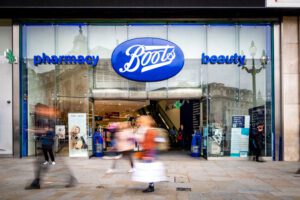
Walgreens Boots Alliance, owner of the Boots pharmacy chain since 2014, is set to be acquired by US private equity firm Sycamore Partners for $10 billion (£7.7 billion).
Sycamore’s offer of $11.45 per share, which represents an 8 per cent premium on Walgreens’ most recent closing price, stands in stark contrast to the $85 per share peak reached in 2015, when the company was valued at over $90 billion.
Over the past year, Walgreens’ share price has almost halved amid stiff competition from online retailers and pressures on health insurance payouts. Despite employing some 311,000 people worldwide, the company has struggled to maintain profitability, prompting its leadership to consider several strategic moves — including carving out Boots — whenever its market cap slumped.
Sycamore Partners, based in New York, owns US-based stationery chain Staples (acquired for $7 billion in 2017) and healthy-eating restaurant chain Playa Bowls. It has previously owned Kurt Geiger and attempted to purchase Ted Baker in 2022. The Walgreens transaction includes a 35-day “go-shop” window, during which the US pharmacy giant can invite and assess competing bids.
Walgreens Boots manages about 12,500 pharmacies worldwide, including 1,900 Boots stores in the UK. The chain’s roots date back 174 years, having been credited with popularising pharmacy-led retail across Britain. Although it benefited from an explosion of demand in the 1990s and early 2000s, Boots has faced fresh competition in recent years, coupled with periodic financial burdens stemming from its parent company’s shifting fortunes.
Under Sycamore Partners’ ownership, Walgreens is set to go private, with chief executive Tim Wentworth arguing that the group’s “ambitious turnaround strategy” will be more effectively managed away from the public glare. Stefan Kaluzny, Sycamore’s managing director, says the firm remains confident in the “pharmacy-led model” and “essential role” of the Walgreens Boots network.
Analysts such as Michael Cherny at Leerink Partners expressed little surprise at the announcement, noting that the scale and complexity of the deal made a rival offer unlikely. By the time the deal closes in the fourth quarter of this year, both the iconic Boots brand and Walgreens’ broader global operations will be under Sycamore’s ownership, signalling a significant shake-up in both British and international pharmacy retail.
Read more:
Boots snapped up by US private equity giant Sycamore in $10bn takeover
Pizza Express eyes £30m bailout as tax hikes threaten casual dining s …

Pizza Express, one of the UK’s best-known casual-dining brands, is poised to receive a £30 million lifeline from its shareholders, according to reports from Sky News.
Bain Capital, the private equity firm, is believed to be spearheading the funding to ensure the business can refinance its £335 million bond due for repayment next year. The deal has yet to be finalised, and Cyrus Capital Partners, another major bondholder from Pizza Express’s 2020 restructuring, may also play a role.
The investment comes as the restaurant chain, which operates roughly 350 UK and Irish outlets, faces a challenging environment. The industry is bracing for additional cost pressures when National Insurance payments rise in April, in tandem with a higher minimum wage. Hospitality leaders warn these changes may curb investment and put further upward pressure on menu prices — a concern given that consumers have already faced steadily rising costs in recent years.
Pizza Express’s recent history has been defined by ownership changes and heavy debt. Though it saw explosive success from the 1990s into the early 2000s, a series of takeovers left it saddled with a £1.1 billion debt pile. Interest costs reportedly hit £93 million a year, contributing to a pre-tax loss of £350 million in 2019.
Since then, the chain has closed dozens of restaurants, reduced headcount, and embarked on a refurbishment drive to recapture the ambience of its heyday. Latest publicly available figures show revenue rose to £367 million in 2023, though the company still posted a pre-tax loss of £6.4 million.
Research from CGA indicates that sales at top UK hospitality businesses in January were 1.3% lower year-on-year. Rising costs, supply chain pressures, and changing consumer habits have combined to weigh on the sector. More restaurants could be forced to raise prices to absorb new labour expenses, potentially testing customers’ willingness to keep dining out.
Meanwhile, Pizza Express’s ambitions for expansion or acquisition — it considered taking over The Restaurant Group (parent of Wagamama) in 2023 but withdrew — may be constrained by market headwinds. The firm hopes that new investment and an ongoing image refresh will foster resilience against a rapidly evolving casual-dining landscape.
Neither Bain Capital nor Pizza Express has commented on the reported deal, but if the funding package is agreed, it could secure the brand’s position as it navigates the prospect of higher taxes and operating costs in the months ahead.
Read more:
Pizza Express eyes £30m bailout as tax hikes threaten casual dining sector
Labour’s employment reforms ‘deeply damaging’ for business inves …
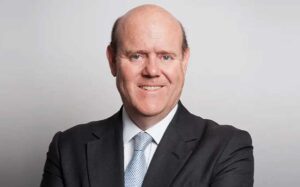
Labour’s planned reforms to employment rights pose a “highly damaging” threat to business investment and recruitment, according to Rupert Soames, president of the Confederation of British Industry (CBI) and chairman of medical technology firm Smith & Nephew.
His comments follow government amendments to the Employment Rights Bill this week, which include boosting statutory sick pay and extending zero-hours contract measures to agency workers.
Ministers argue the legislation will drive productivity and economic growth, and it has received backing from some prominent leaders, including the bosses of Centrica and Richer Sounds. However, the CBI – one of Britain’s largest business lobby groups – and others such as the British Chambers of Commerce, British Retail Consortium, UKHospitality and the Institute of Directors have voiced serious reservations.
Soames says the new rules will cost companies an extra £5 billion, encouraging them to scale back on both hiring and capital investment. He also points to existing burdens on employers, including rises in National Insurance and the National Living Wage, as well as higher business rates and steeper taxes on intergenerational transfers of business assets, which cumulatively undermine growth.
While acknowledging a minority of bad employers in the marketplace, Soames argues that penalising “the 99 per cent” to catch the few is counterproductive. He highlights “fire and rehire” as a practice used by fewer than 1 per cent of companies, yet the government plans measures that would add “vast additional complexity” for all.
A recent study by the Chartered Institute of Personnel and Development found that four out of five employers expect their overall costs to increase under the new framework. The CBI insists that, unless there is a “course correction” before royal assent, the reforms will run counter to the government’s stated ambition to boost UK competitiveness, warning that businesses, not unions, create the majority of jobs.
Soames emphasises the CBI’s willingness to collaborate on adjustments that tackle workplace abuses without imposing blanket red tape. Without such changes, he warns, Britain may see fewer job offers and lower investment at a time when policymakers are striving for economic growth.
Read more:
Labour’s employment reforms ‘deeply damaging’ for business investment and hiring, warns the CBI
Could British brewers profit from Canada’s US alcohol ban?

The ongoing trade tussle between the United States and Canada, sparked by President Trump’s tariffs on Canadian goods, is poised to shake up North America’s drinks market.
Ontario’s Liquor Control Board (LCBO), which typically stocks nearly £570 million (CA$1 billion) of American-made beverages each year, has begun removing US products in retaliation against Washington’s 25 per cent tariffs on Canadian imports.
According to Melissa Thomas, Head of the Canada Desk at audit, tax and advisory firm Blick Rothenberg, this development offers British brewers and distillers a prime chance to break into a lucrative segment of the Canadian market. As the LCBO controls the wholesale of alcohol in Ontario, its ban effectively halts American beer, wine and spirits from reaching most local restaurants, retailers and bars.
Even if Canadian producers try to step in, Thomas notes that US tariffs on steel and aluminium may undermine their ability to bridge the gap. Meanwhile, US brands like Californian wines, Kentucky whiskies and Tennessee bourbons are suddenly seeking fresh export destinations, having lost a key outlet north of the border.
For British producers, the timing could not be better. Given Canada’s current “anti-US” sentiment, consumers may be more receptive to a Scottish whisky, sparkling wine from the South Downs or a Kentish bitter on store shelves. Over in the United States, producers shut out by Canada may also see the UK as a promising alternative, thanks to a historically close trading relationship and Britain’s longstanding role as a gateway to European markets.
Read more:
Could British brewers profit from Canada’s US alcohol ban?
UK service sector sheds jobs for fifth month running after autumn budg …
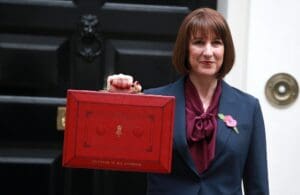
UK service businesses have cut employment for the fifth successive month, according to the final S&P Global purchasing managers’ index (PMI) for February.
The survey’s data highlight what economists describe as a “loss of growth momentum” since the autumn budget, with some firms citing the Chancellor’s £25 billion increase in employers’ national insurance as a key factor.
This prolonged spell of job losses is the most extended period of contraction since early 2011, excluding the Covid-19 downturn. Tim Moore, Economics Director at S&P Global Market Intelligence, says reduced optimism and ongoing cost pressures “led to net job shedding across the service economy in February.”
Despite these figures, some analysts urge caution over the PMI’s apparent gloom. Rob Wood, Chief UK Economist at Pantheon Macroeconomics, points out that the index “asks only how many firms are cutting output or employment, rather than by how much.” Indeed, official data from the Office for National Statistics suggest unemployment remains near a historic low of 4.4 per cent.
The final services PMI reading edged up to 51 in February from 50.8 in January, remaining above the 50-point threshold that separates expansion from contraction. However, it was slightly below the preliminary “flash” reading. The composite PMI, which gauges activity across the entire UK private sector, slipped marginally to 50.5 from 50.6.
Economists note that the Chancellor is now focusing on potential public spending cuts in the run-up to the spring statement on 26 March to uphold her fiscal targets. The Office for Budget Responsibility is expected to warn that her £9.9 billion margin for error may have eroded since October, owing to higher government bond yields and softer economic growth forecasts.
Thomas Pugh, an economist at consultancy RSM UK, observes that the tepid PMI performance implies the economy “continued to flatline” in the first quarter, yet he suspects the survey underestimates the underlying strength of economic activity. Meanwhile, analysts suggest that President Trump’s tariffs have weighed particularly on British manufacturing, a sector more vulnerable to potential import levies and global trade uncertainties.
Read more:
UK service sector sheds jobs for fifth month running after autumn budget

