

Trade tariffs imposed by the Trump administration on some of the world’s most remote and sparsely populated territories — including Australia’s Norfolk Island and the uninhabited Heard Island and McDonald Islands — appear to have been based on flawed shipping data and misclassified trade records.
Norfolk Island, which lies over 1,600km north-east of Sydney and has a population of just over 2,000, was this week hit with a 29% US tariff on its goods. That’s 19 percentage points higher than the rate applied to mainland Australia, despite Norfolk Island having no known export relationship with the United States. According to George Plant, the island’s administrator, “There are no known exports from Norfolk Island to the United States.”
Yet trade data used by US authorities appears to show otherwise. The Observatory of Economic Complexity, a US trade data tracker, reports that the island exported more than $650,000 worth of goods to the US in 2023, including $413,000 worth of leather footwear. The problem? There is only one shoe shop on Norfolk Island, Frank’s Shoes, which caters to local tourists and does not export goods to the US. The shop’s manager confirmed to The Guardian that the business has no dealings with the United States whatsoever.
Further investigation has revealed that multiple shipments of goods from major brands were mistakenly recorded as originating from Norfolk Island. Two shipments of Timberland boots, totalling more than $315,000, were sent from the Bahamas to Miami in December 2023. However, shipping documents erroneously listed the country of origin as Norfolk Island and the shipper’s address as being in “Stratham, Norfolk Island” — when in fact the company is based in Stratham, New Hampshire, USA.
The errors don’t stop there. Several shipments from UK-based firms also appear to have been mislabelled. Equipment from an aquarium systems company, OASE, and structural steel products from Novum Structures were sent from Norfolk in the UK but recorded as originating from Norfolk Island. In each case, paperwork either incorrectly entered a location code or misidentified the UK location as the Australian territory.
The flawed records have had real-world consequences. The US Census Bureau, responsible for compiling the data that informs tariff policy, has acknowledged in official guidance that misclassification and documentation errors can significantly distort trade statistics. These inaccuracies appear to have been incorporated into a basic tariff formula used by the Trump administration, which sets rates based on each country’s trade deficit with the US. For Norfolk Island, that mislabelled trade data produced a calculated tariff rate of 29%.
Heard Island and McDonald Islands — an uninhabited external Australian territory near Antarctica, with no permanent human habitation — was also included on the White House’s list of tariffed “countries”, facing a 10% levy. According to World Bank export figures, the US imported $1.4 million worth of goods from the territory in 2022, almost entirely classified as machinery and electrical equipment. However, several shipping records show that goods from Europe were erroneously marked as coming from the territory. One such shipment, for parts used in a PET recycling plant, was sent from Vienna, Austria, but the sender’s location was mistakenly listed as “Vienna, Heard Island and McDonald Islands”.
Australia’s trade minister, Don Farrell, has called the tariff on Norfolk Island “clearly a mistake” and said it would be raised with the US government. He also criticised the rushed nature of the policy, stating that “the trade system that America has until yesterday been working on had been built up since the Second World War. In the space of four weeks, the American president has upended that process.”
Analysts and economists are now scrutinising how such a serious policy error occurred. Jared Mondschein, director of research at the United States Studies Centre at the University of Sydney, said the situation highlights what can happen when there is insufficient oversight. “It doesn’t surprise me that because of the lack of conventional interagency thinking on this, there were some errors that were not caught,” he said. “If you input the wrong data in, then you’re going to get the wrong data out.”
Norfolk Island and Heard Island are not alone. Other isolated territories including Jan Mayen and the Svalbard archipelago — with limited populations and little to no trade with the US — also appeared on the tariff list. In some cases, trade records showed shipments originating from Indian suppliers being incorrectly listed as coming from the British Indian Ocean Territory. Likewise, Tokelau, a remote New Zealand territory, was linked to a shipment of pergola parts that actually originated in Turkey.
While no US comment has been issued, the situation underscores the dangers of relying on automated trade data without sufficient checks. What was intended as a calculated show of protectionism by the Trump administration has instead exposed serious flaws in international trade reporting — with potential diplomatic and economic consequences for territories wrongly caught in the crossfire.
Read more:
Data blunder behind Trump tariffs on remote Norfolk Islands with no US trade
Month: April 2025
Gold prices hit record high as investors seek haven from Trump’s tar …

Gold prices surged to a record high this week, capping the strongest quarterly rally in nearly three decades, as investors seek protection from mounting global economic uncertainty fuelled by President Trump’s aggressive US trade tariffs.
On Tuesday, the precious metal climbed another 1.2 per cent to $3,120.20 per ounce, setting a new all-time high. Gold has now risen almost 20 per cent since the start of 2025, making it the best-performing asset this quarter and marking its strongest three-month performance since 1986.
The rally has been driven by escalating fears over global inflation and slowing growth, triggered by sweeping US import tariffs on 60 countries. Trump’s trade policy is expected to lift consumer price inflation in the US by at least one percentage point over the next three years, according to analysts — a scenario that historically boosts gold, which acts as a hedge when the value of cash and bonds declines.
Investor demand has also been fuelled by concerns that the Trump administration may impose tariffs on gold imports, as well as broader unease about the sustainability of US public finances.
Gold is increasingly flowing into the US in anticipation of tighter trade rules, while bullion is leaving vaults at the Bank of England, which holds the second-largest official gold reserves globally. Central banks in China and across Asia have continued to accumulate gold reserves since 2022, in a move widely seen as protection against potential US-led financial sanctions, following the freezing of Russian assets after its invasion of Ukraine.
Hamad Hussain, climate and commodities economist at Capital Economics, expects the rally to continue.
“Gold has arguably become a more attractive asset given the environment of heightened fiscal, inflationary, and geopolitical risks,” he said, forecasting that prices could reach $3,300 per ounce by year-end.
With inflation expectations rising and equity markets volatile, gold’s traditional role as a safe-haven asset is once again in sharp focus for both institutional investors and central banks — a signal of deepening uncertainty in the global economic outlook.
Read more:
Gold prices hit record high as investors seek haven from Trump’s tariffs
German firms could benefit from closer UK ties amid Trump’s trade ta …

German manufacturers and alcohol producers could benefit from closer trade ties with the UK in the wake of President Donald Trump’s sweeping new US tariffs, according to leading audit, tax and advisory firm Blick Rothenberg.
The so-called ‘Liberation Day’ tariffs, announced by the White House this week, impose significant levies on imports from 60 countries. While the UK faces a 10% tariff, imports from the European Union will be hit with a 20% rate, creating new dynamics for global supply chains and exporters.
Nils Schmidt-Soltau, Head of the German desk at Blick Rothenberg, said the new tariff structure could present a “silver lining” for German businesses with a manufacturing footprint in the UK.
“The lower tariff on UK imports could be regarded as a silver lining for German businesses with a manufacturing presence in the UK, given the 10% rate announced for UK imports compared to the 20% rate on EU imports,” he said.
The changes could also open up new export opportunities for German alcohol producers. Germany is the EU’s third-largest wine exporter and the fourth-largest beer exporter, with the US as a key market. However, Trump’s new tariffs on beer and wine imports threaten to stifle that flow.
“German producers could turn their attention to the UK, which is the second largest wine importer globally after the US,” Schmidt-Soltau noted. “Although German alcohol exports to the UK are currently modest, there is significant potential for growth — especially as Germany was also the UK’s largest import partner in 2023.”
The shift may also prompt German brewers and winemakers to consider expanding their presence in the UK, either through direct exports or local partnerships.
However, Germany’s carmakers are unlikely to benefit. Despite the UK’s lower tariff status, Volkswagen-owned Bentley, BMW-owned Rolls-Royce, and Mini — all of which manufacture in the UK — will still be subject to the 25% tariff on automotive imports into the US, in line with the broader industry ruling.
As global trade relationships continue to evolve, the UK’s post-Brexit flexibility on trade terms could prove advantageous — not only for British exporters but also for European firms seeking to maintain access to key international markets, particularly the US.
Read more:
German firms could benefit from closer UK ties amid Trump’s trade tariffs
What Trump’s tariffs could mean for UK business & consumers
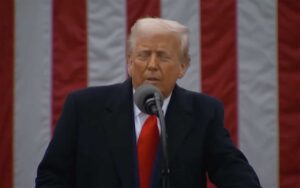
President Donald Trump’s sweeping new tariffs on global imports — including a 10% charge on all UK goods — have triggered fears of a global trade war, with wide-ranging implications for UK consumers, investors and businesses.
While the UK’s tariff rate is lower than that faced by some countries, the knock-on effects could still be significant — from higher prices and rising inflation to weaker pensions, lower interest rates, and job losses in key sectors.
Will prices rise?
At this stage, the UK has not introduced retaliatory tariffs on US imports, meaning American goods entering the UK remain unaffected. However, if the UK were to respond in kind, prices for US goods could increase, especially for products with tight profit margins, where importers may pass on costs to consumers.
Some importers may choose to switch suppliers to countries unaffected by US tariffs, which could help keep prices down. If supply from alternative markets grows, prices could even fall in the short term, although such outcomes are highly uncertain.
There have been questions around the role of VAT in Trump’s trade complaint, but the UK government is unlikely to alter VAT rules in response — doing so could unfairly advantage US imports over domestic products.
What about pensions and investments?
Stock markets have reacted sharply, with both UK and US markets falling in response to the escalating trade tensions. For UK consumers, this could affect pensions and personal investments, especially those with exposure to US equities.
Most pension funds are globally diversified, and even savers with indirect exposure will likely see a dip in fund values. However, market corrections can provide buying opportunities for those contributing regularly.
Tom Stevenson, investment director at Fidelity International, said: “It may sound counterintuitive, but staying invested throughout times of volatility is the best strategy. Trying to time the market can lead to missed opportunities.”
He added: “Taking a long-term approach is more likely to deliver the outcomes investors are looking for.”
Could mortgage rates fall?
The Bank of England has held interest rates at 4.5%, but hinted at a gradual decline amid growing economic uncertainty — with tariffs now part of that picture.
Money markets are already pricing in a potential interest rate cut as early as May, with further reductions possible this year. If this happens, mortgage rates could fall, making borrowing more affordable.
Are jobs at risk?
One of the clearest risks is to UK manufacturing jobs, especially in export-focused industries such as automotive. US tariffs on car imports have been set at 25%, putting intense pressure on British carmakers.
Think tank IPPR estimates that over 25,000 UK jobs are at risk, particularly at Jaguar Land Rover and the Mini plant in Cowley, Oxford.
If demand for UK exports falls due to tariffs, businesses may scale back operations. Redundancy protections exist — workers are entitled to statutory redundancy pay if they’ve been with their employer for two years or more — but the wider economic impact could stretch beyond the automotive sector.
The outlook
The full implications of Trump’s tariff policy are still unfolding, but UK consumers should brace for increased volatility, both in prices and the jobs market. At the same time, lower borrowing costs and potential long-term investment opportunities could help soften the blow — if the UK economy navigates the turbulence with care.
Read more:
What Trump’s tariffs could mean for UK business & consumers
Amazon makes shock last-minute bid to buy TikTok as US ban looms

Amazon has stunned the tech world with a last-minute bid to acquire TikTok, the hugely popular video-sharing platform currently facing a US ban over national security concerns linked to its Chinese ownership.
The move comes just days ahead of a critical enforcement deadline. Under legislation signed into law in April 2024 by then-President Joe Biden, TikTok’s Chinese parent company, ByteDance, was ordered to divest its US operations or face a nationwide ban. The deadline, repeatedly delayed, is now set to expire this Saturday.
According to the New York Times, Amazon submitted its bid as a last-ditch effort to acquire the entire platform — a deal that would catapult the e-commerce giant into the centre of the social media and digital advertising landscape. However, sources in Washington suggest administration officials are not treating Amazon’s offer as a serious contender at this stage.
TikTok, which boasts around 170 million US users, has become one of the most powerful digital platforms in America, not just as a media outlet but also as a fast-growing e-commerce channel generating millions of dollars in daily sales.
Amazon’s approach underscores both the strategic importance of the platform and the increasingly chaotic political backdrop in Washington. In addition to Amazon, other potential suitors reportedly include Oracle, Microsoft, Walmart, and even YouTube personality MrBeast.
The flurry of bids follows months of legal and political wrangling. ByteDance initially failed to secure a buyer ahead of the original deadline and briefly took TikTok offline on 19 January, just one day before President Donald Trump’s second inauguration.
Despite having previously pushed for a ban during his first term, Trump reversed his position in early 2025, allowing the app to resume operations. His administration has since come under fire for defying court rulings and delaying enforcement of a law that had been upheld by the Supreme Court.
Trump’s move came after an intensive lobbying campaign by TikTok and a wave of user-led pressure on lawmakers. Although the Supreme Court unanimously upheld the constitutionality of the divestment requirement, the platform has remained operational due to Trump’s intervention.
Amazon has confirmed that it sent a formal letter to Vice President JD Vance and Commerce Secretary Howard Lutnick outlining its interest in acquiring TikTok. The bid reflects Amazon’s wider ambitions in media, advertising and social commerce — sectors where TikTok holds significant influence.
Whether ByteDance is willing — or able — to reach a sale agreement with any US entity before the Saturday deadline remains uncertain. But the implications are clear: with multiple tech giants circling and political pressure mounting, the outcome of this high-stakes deal could redefine the future of digital media and e-commerce in the US and beyond.
Read more:
Amazon makes shock last-minute bid to buy TikTok as US ban looms
UK economic forecasts called into question as ONS data reliability fal …

The credibility of UK economic data has been thrown into doubt after senior officials at the Office for Budget Responsibility (OBR) and the Bank of England raised serious concerns about the reliability of statistics produced by the Office for National Statistics (ONS).
Speaking to MPs on the Treasury select committee, Richard Hughes, chairman of the OBR, warned that “trying to get a clear read” on the UK economy from current ONS data is “very difficult”. His comments follow a sharp decline in response rates to the ONS’s labour force survey, which has compromised the quality of data on employment and wage trends.
The situation has now triggered a formal government investigation into the “performance and culture” of the ONS. The review, commissioned by the Cabinet Office and the UK Statistics Authority (UKSA), will be led by Sir Robert Devereux, a former top civil servant, and is expected to conclude this summer.
The ONS’s labour force survey — a key tool used by the Bank of England and the OBR to inform monetary and fiscal policy — has seen its response rate fall from around 50 per cent a decade ago to just 12.7 per cent in 2023. Although it has since improved marginally, the data remains under significant scrutiny. The ONS has delayed the rollout of a new “transformed labour force survey” until 2027, despite spending £40 million on its development.
Professor David Miles, a fellow OBR committee member, compared the current approach to “trying to generate economic data with a tool which isn’t working as well as it did in the past”.
Beyond labour data, confidence in other key metrics — including GDP, trade, and inflation — has also weakened. The ONS has recently delayed publication of several important statistics due to quality concerns, while the Institute for Fiscal Studies (IFS) has criticised a recent £2.2 trillion revision in household wealth estimates as “fundamentally flawed”.
Bank of England governor Andrew Bailey has described the shortcomings in the ONS’s data as a “substantial problem” for interest rate setting.
Sir Robert Chote, chair of the UKSA, said the review into the ONS is an opportunity to ensure the statistics agency is equipped to meet rising expectations. “This is a chance to help ensure the ONS can deliver of its best in what is a challenging external environment.”
Concerns have been echoed by Dame Meg Hillier MP, chair of the Treasury select committee, who recently wrote to UK chief statistician Sir Ian Diamond to express alarm about the impact of unreliable labour market data on policy decisions.
The accuracy of ONS data underpins everything from interest rate movements to government tax and spending decisions. Forecasts produced by the OBR are heavily reliant on these figures to determine fiscal headroom — the margin chancellors such as Rachel Reeves have to meet borrowing rules.
Hughes also told MPs that the OBR did not factor in President Trump’s proposed 25 per cent car tariffs in its spring economic forecast, citing their rapidly shifting nature. Had they been included, the chancellor’s £9.9 billion fiscal buffer could have been significantly eroded.
The OBR did, however, model potential outcomes of the tariffs in alternative scenarios — including one where retaliatory trade measures reduce UK GDP by 1 per cent.
While challenges with data collection are affecting other developed economies, experts warn that the UK’s issues are becoming particularly acute. The response rate for the Living Costs and Food Survey has dropped from 60 per cent to just 22 per cent over two decades, while the DWP’s Family Resources Survey now receives only 25 per cent participation.
With the integrity of key data under the microscope, the outcome of the Devereux review — and the government’s willingness to act on its findings — may have far-reaching implications for business confidence, policymaking, and the UK’s economic resilience.
Read more:
UK economic forecasts called into question as ONS data reliability falters
Elon Musk to scale back White House advisory role and refocus on busin …

Billionaire entrepreneur Elon Musk is set to step back from his advisory role within the Trump administration, according to reports from Politico.
US President Donald Trump is said to have informed close aides that Musk will return his attention to his business ventures in the coming weeks, having overseen what has been described as an “unprecedented programme” of government cost-cutting during his time advising the White House.
Despite recent speculation about tensions behind the scenes, Trump is understood to remain satisfied with Musk’s contributions, crediting the Tesla and SpaceX chief executive with helping to drive significant budgetary efficiencies.
However, Politico reports growing concern among senior officials that Musk, 53, had begun to overstep his advisory remit, leading to his influence becoming more of a liability than an asset.
While no formal statement has yet been made by either Musk or the White House, sources suggest the transition has been agreed internally, allowing Musk to refocus on his portfolio of technology and infrastructure ventures — including Tesla, SpaceX, X (formerly Twitter), and xAI.
The move marks a shift in Musk’s recent visibility in Washington, where he had become a high-profile voice in discussions around federal spending, regulation, and public sector innovation.
Read more:
Elon Musk to scale back White House advisory role and refocus on business interests
UK fines 10 carmakers and two trade bodies £77m over green advertisin …

Ten of the world’s leading car manufacturers – along with two major automotive trade associations – have been fined over £77 million by the UK’s Competition and Markets Authority (CMA) after admitting to illegal collusion on green advertising practices.
The watchdog found that BMW, Ford, Jaguar Land Rover, Peugeot Citroën, Mitsubishi, Nissan, Renault, Toyota, Vauxhall, and Volkswagen had “illegally agreed” not to compete when advertising how recyclable their cars were at the end of their lifecycle. With the exception of Renault, the manufacturers also agreed not to disclose how much recycled material was used in their vehicles — limiting transparency for environmentally conscious car buyers.
The European Automobile Manufacturers’ Association (ACEA) and the Society of Motor Manufacturers and Traders (SMMT) were also implicated, accused of facilitating the agreements among manufacturers.
The cartel agreement was known internally as the “ELV Charta”, or informally, a “gentleman’s agreement”, and was in effect from May 2002 until September 2017 — with Jaguar Land Rover joining in 2008.
The scheme came to light after a tipoff from Mercedes-Benz, which cooperated with the CMA’s investigation and was granted immunity from financial penalties under the leniency policy.
The CMA said this illegal behaviour harmed consumers by restricting access to information needed to make informed choices about the environmental credentials of vehicles.
“Colluding to restrict competition is illegal — and that extends to how you advertise your products,” said Lucilia Falsarella Pereira, senior director of competition enforcement at the CMA.
“This kind of collusion limits consumers’ ability to make informed choices and reduces the incentive for companies to invest in environmental progress.”
Following the CMA’s probe, SMMT, Stellantis (owner of Opel, Peugeot Citroën and Vauxhall), and Mitsubishi also applied for leniency, leading to reduced fines in return for cooperation.
A spokesperson for Renault, which was fined in both the UK and the EU, noted that the offending practices took place “at a time when the ELV recycling sector was still nascent” and argued the collusion “did not financially harm consumers”.
The European Commission has also fined 15 carmakers and ACEA €458 million (£383 million) following its own parallel investigation launched in 2022 into the same cartel across EU markets.
The CMA emphasised that the case shows its determination to pursue anti-competitive practices that threaten both consumer rights and innovation, especially as the environmental claims of companies face greater public scrutiny.
The 10 manufacturers fined in the UK were contacted for comment, and the CMA’s investigation is considered one of the most significant in recent years to target greenwashing through collusion.
Read more:
UK fines 10 carmakers and two trade bodies £77m over green advertising cartel
FCA says motor finance compensation ruling ‘goes too far’ as lende …

The Financial Conduct Authority (FCA) has warned that a Court of Appeal ruling at the heart of the UK’s motor finance commission scandal risks legal overreach and “goes too far”, as lenders face potential compensation claims of up to £44 billion.
In a written submission to the Supreme Court on Tuesday, the City regulator pushed back against last year’s ruling, which found that car dealers acted unlawfully by failing to clearly disclose commission arrangements to borrowers — and by not securing their informed consent.
The FCA’s intervention comes as two specialist lenders, Close Brothers and FirstRand, seek to overturn the October 2023 ruling. The case has become a flashpoint in UK financial services regulation, with 90% of new car purchases and many used vehicles involving dealership-arranged loans — and millions of consumers potentially eligible for redress.
While the FCA is expected to make oral arguments later this week, it made clear in its filing that the Court of Appeal’s approach, which effectively treated motor dealers as fiduciaries — obliged to act in the borrower’s best interest — is at odds with the regulatory framework.
“The sweeping approach of the Court of Appeal in (effectively) treating motor-dealer brokers as owing fiduciary duties to consumers in the generality of cases goes too far,” the FCA said.
It argued that car dealers do not typically have this legal obligation and warned the ruling could introduce widespread uncertainty across financial markets.
The Treasury, which tried but failed to intervene in the case, is also concerned that the current ruling could spook investors and undermine UK competitiveness. Industry leaders and trade bodies including the National Franchised Dealers Association (NFDA) echoed these concerns, warning of “financial chaos” if such legal duties were imposed without regulatory consultation.
“A novel duty that has not been consulted upon… has the capacity to cause havoc within an established commercial order,” the NFDA said in its submission.
Mark Howard KC, representing Close Brothers, compared car dealers to shop staff, saying they had no greater duty to act in a customer’s financial interest than a retail assistant helping a shopper choose a suit.
“They are there to make a sale,” he told the panel of Supreme Court judges.
However, while the FCA disagreed with the Court of Appeal’s sweeping interpretation, it warned the Supreme Court not to completely dismiss concerns about how commission arrangements may incentivise misconduct, particularly when it comes to “potential bribery” or secret payments that influence sales.
Consumer campaigners criticised the FCA’s position, accusing the regulator of siding with lenders over consumers. Darren Smith, managing director of claims firm Courmacs Legal, said the FCA should be standing up for the millions who may have been mis-sold finance.
“On a day when millions of people’s bills are going up, it’s hard to understand why the FCA aren’t on the side of consumers,” Smith said. “The regulator should be standing up for consumers, not protecting lenders who have taken them for a ride.”
The outcome of the Supreme Court case, which runs until Thursday, is expected to have far-reaching consequences not just for the car finance market, but potentially for other commission-based financial products — including insurance and loans — triggering one of the largest compensation liabilities since the PPI scandal.
With pressure mounting from both sides, the FCA’s balancing act between consumer protection and financial system stability has rarely been more under scrutiny.
Read more:
FCA says motor finance compensation ruling ‘goes too far’ as lenders face £44bn claims risk

