

Employers across the UK are scaling back hiring plans as rising labour costs and economic volatility take their toll, with new data showing workforce expansion expectations at their weakest level in a decade outside the pandemic.
The latest Labour Market Outlook from the Chartered Institute of Personnel and Development (CIPD) reveals that the net employment intention — the difference between employers planning to hire and those expecting to cut jobs — has dropped to just 8. That’s down from 13 in the previous quarter and the lowest figure recorded since the CIPD began tracking the measure in 2014, excluding the exceptional lows of the Covid-19 crisis.
The drop in hiring optimism is particularly stark among large private-sector employers and retailers. Public-sector hiring remains sluggish too, especially in the education sector. Only 32 per cent of private-sector employers surveyed said they planned to increase staff over the next three months, while nearly a quarter (24 per cent) said they were preparing for redundancies.
A parallel report from KPMG and the Recruitment and Employment Confederation (REC) reinforces the picture of a cooling labour market. April saw a continued decline in demand for both permanent and temporary staff, while the number of jobseekers rose sharply due to restructuring and layoffs.
The south of England experienced the most pronounced drop in permanent appointments, with London recording the smallest decline. Engineering was the only sector to buck the trend, while vacancies fell steeply in nursing, retail, and hospitality. Temporary roles were down across all ten tracked sectors, led by retail.
While starting salaries increased — thanks to the April rise in national minimum and living wages — overall pay growth remains below historical averages. Temporary pay rose at its fastest pace in nearly a year, although wage inflation remains modest compared to longer-term norms.
Neil Carberry, chief executive of the REC, described the findings as mixed but not entirely unexpected. “Given the bow wave of costs firms faced in April, maintaining the gradual improvement in numbers we have seen over the past few months is on the good end of our expectations,” he said.
However, business sentiment has taken a deeper hit. According to new research from accountancy firm BDO, UK employment has slumped to a 12-year low, fuelled by the dual impact of higher wages and increased national insurance contributions. Vacancies have now fallen below pre-pandemic levels for the first time in four years, and HMRC estimates indicate a loss of 78,000 payroll employees in March alone.
Global factors are also weighing heavily on business confidence. BDO’s optimism index — which gauges sentiment across the UK’s manufacturing and services sectors — dropped to 91.36 in April, the lowest level since the third national lockdown in January 2021.
Business output has also stalled. The firm’s output index fell from 98.23 to 96.9 in April, marking the sharpest decline since October 2023, when tensions in the Middle East intensified.
Analysts warn that if labour market activity continues to cool, government and industry may need to re-evaluate the balance between wage policy, inflation control, and business competitiveness. For now, the outlook for UK hiring remains uncertain, with employers cautious amid mounting cost pressures and an increasingly fragile global economic backdrop.
Read more:
UK hiring confidence hits 10-year low amid wage pressures and economic uncertainty
Month: May 2025
The Peter Jones Foundation and FRP join forces to expand the National …

The Peter Jones Foundation has announced a new partnership with leading business advisory firm, FRP, to significantly expand its flagship National Entrepreneur of the Year competition.
Now open to all young entrepreneurs aged 16 and 21, the competition will see FRP host regional finals across the UK – spotlighting the most promising young business founders from every corner of the country. The partnership aims to unlock opportunities for aspiring entrepreneurs from underserved communities and under-represented backgrounds, providing a powerful platform for the next generation of business leaders.
The five regional winners will pitch their business to a high-profile judging panel that includes Peter Jones CBE and Geoff Rowley, CEO of FRP. The overall winner will be crowned at the Foundation’s prestigious annual awards ceremony in November and receive a £10,000 grant to help grow their business. Additional cash prizes include £1,000 for each regional winner and £5,000 for the runner-up – every finalist will also benefit from a year of expert mentorship.
To apply, candidates must submit a business plan and elevator pitch video. The competition has successfully launched the careers of several standout entrepreneurs, including Ross Bailey, founder of AppearHere, which has gone on to raise over $20million in venture capital funding; David Humpston, founder of ViewPoint Videos and one of the youngest people ever to receive a Virgin StartUp loan; and Miah Maddock-Hodgins, last year’s winner and founder of MCR Education Hub, a groundbreaking inclusive education platform that is dedicated to supporting young people who face barriers to mainstream schooling, such as SEND learners and those in elective home education.
Peter Jones CBE said: “We’re truly grateful for FRP’s support. This collaboration will enable us to increase the reach of the National Entrepreneur of the Year competition and generate greater impact. I can’t wait to meet the finalists and see how their businesses develop with the ongoing support of the Foundation.”
Geoff Rowley, CEO of FRP, added: “We’re proud to champion grassroots entrepreneurship alongside the Peter Jones Foundation. This initiative will empower young people from all walks of life to take their business ventures to the next level – creating opportunities, driving innovation, and supporting the job creators of tomorrow. We’re looking forward to meeting the emerging talent through the regional finals.”
If you are a young entrepreneur between the age of 16 and 21 who is interested in applying for the competition please visit the Foundation’s website and submit your entry by Friday 30th May 2025.
Read more:
The Peter Jones Foundation and FRP join forces to expand the National Entrepreneur of the Year Competition
Bank of England governor urges UK to rebuild EU trade ties as key summ …
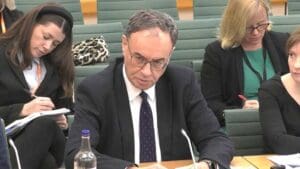
Andrew Bailey, the Governor of the Bank of England, has called for renewed efforts to rebuild trade ties with the European Union, warning that repairing the damage caused by post-Brexit disruption would be “beneficial” for the UK economy.
His comments come just ten days before a pivotal UK-EU summit in London, where Prime Minister Keir Starmer is expected to present a new strategic partnership aimed at “resetting” post-Brexit relations and reviving long-term trade flows.
“Having a more open economy to trade with the European Union … would be beneficial,” Bailey told the BBC. “There has been a fall-off in goods trade with the EU over recent years, and we must ensure Brexit doesn’t continue to damage the UK’s trade position.”
While stopping short of criticising Brexit directly, Bailey said reversing some of the negative economic consequences would support growth, particularly as the UK looks to reassert itself on the global trade stage.
The renewed focus on EU ties follows recent successes on other international trade fronts. Earlier this week, the UK signed a long-awaited free trade agreement with India, which Starmer described as a “landmark deal” projected to add £4.8 billion to the economy by 2040.
Bailey praised the government’s recent trade diplomacy, saying that the UK’s willingness to strike deals — including last week’s agreement with the United States — sends a positive signal to other nations about the importance of global trade cooperation.
“Trade deals can be done, and trade is important,” he said. “It’s good news in a world where the effective tariff rate is higher than it was before all of this started.”
While the UK-US agreement brings some relief, including reduced tariffs on UK car and steel exports, most tariffs on UK goods remain higher than pre-2024 levels due to President Donald Trump’s global tariff regime.
Speaking at an economics conference in Reykjavík, Iceland, Bailey said that the global economy remains volatile and central banks must be “nimble and robust” in the face of ongoing uncertainty, particularly as countries adjust to rising US tariffs.
The UK economy, already weighed down by tax rises and weak consumer spending, is further exposed by geopolitical trade disruptions. Although the Bank of England cut interest rates to 4.25% on Thursday, it warned that further cuts would only be made once there is greater certainty that inflation will fall to 2%.
Inflation currently stands at 2.6%, with the Bank forecasting a rise later this year — a key reason for the Monetary Policy Committee’s cautious approach to further rate reductions.
The Bank’s measured stance has prompted criticism from business groups and unions. The British Chambers of Commerce (BCC) and the Trades Union Congress (TUC) argue that the Bank is underestimating the severity of the economic downturn, with firms and households in need of more immediate support.
“Many firms, desperate for financial respite, will be keen to see further rate cuts in the months ahead,” said David Bharier, Head of Research at the BCC. “Confidence is being hit by the twin pressures of domestic tax rises and the global trade war.”
The TUC echoed those concerns, saying working families also need cheaper borrowing to cope with the cost of living.
Bailey’s remarks ahead of the London summit reflect a growing consensus that the UK must look again at its relationship with the EU — still its largest trading partner — as it seeks to revive investment, tackle inflation, and prepare for global trade realignment.
“We must not let political difficulty stand in the way of long-term prosperity,” Bailey said. “This is a moment for pragmatism and rebuilding.”
With the government poised to present a renewed UK-EU framework, Bailey’s intervention adds weight to calls for a more cooperative approach to trade — not just with new partners, but with those closest to home.
Read more:
Bank of England governor urges UK to rebuild EU trade ties as key summit looms
The Power of No: Why, When and How to Say It

Running a small or medium-sized business often means navigating a constant stream of demands. From emails requesting your insight to acquaintances seeking introductions, and charities asking for your time or support, it can feel like your attention is endlessly divided.
In a culture where responsiveness and openness are often equated with professionalism, saying yes becomes the path of least resistance. Yet, for business leaders determined to protect their time, energy, and strategic direction, the real skill lies in saying no—and saying it well.
Saying no is frequently misunderstood. It’s not about being obstructive or aloof, nor is it a rejection of collaboration or community. Rather, it’s about making deliberate choices that safeguard your capacity to lead effectively. Every yes you give represents a commitment of your most finite resources. Every no, when delivered with thought and care, becomes a conscious investment in your focus, priorities and long-term goals.
For entrepreneurs and SME leaders, the impulse to say yes often stems from positive traits: generosity, ambition, and a genuine desire to help others. These qualities are admirable. But when left unchecked, they can lead to burnout, distraction, and missed opportunities. The business landscape is littered with well-intentioned leaders who agreed to too much, too often, and lost sight of what really mattered.
Warren Buffett famously observed that “the difference between successful people and very successful people is that very successful people say no to almost everything.” This quote is repeated so often because it speaks to a difficult truth: the path to real success is paved not just with action, but with discipline. The ability to discern what to engage with—and what to walk away from—can make all the difference in a business’s trajectory.
So how does one know when to say no? It begins with clarity. Clarity about what your business is trying to achieve, what your own role should focus on, and what success looks like over the short and long term. From there, it becomes possible to assess new requests through a personal decision-making filter. My own framework revolves around five key questions: Will this make me money? Will it help a large number of people? Will it support the business in future, even if not immediately? Am I repaying a favour to someone who has supported me? And finally, do I have a genuine moral obligation to do this?
Not every decision needs to tick all five boxes, but a strong yes to even one of them often justifies the time. If a request doesn’t align with any of them, it’s likely a no. Importantly, this is not about judging the merit of the request itself—many will be entirely reasonable and well-meaning—but about understanding whether it fits with your current mission and capacity.
Many SME leaders will be familiar with the kinds of scenarios where this filter proves valuable. A former colleague asks you to provide ongoing mentorship for free, even though your team urgently needs your guidance. A well-connected acquaintance wants you to co-host a webinar series that could enhance your profile, but would require weeks of preparation during your busiest season. A charity you admire invites you to speak at their fundraising event, but you arealready committed to another cause. Each of these examples might appeal to your sense of goodwill or ambition—but that doesn’t mean they are right for you, right now.
The next challenge, of course, is how to say no without damaging relationships. This is the part that many of us find difficult. We worry about appearing unkind, ungrateful, or disinterested. But the reality is that when you say no with respect and clarity, most people will understand—and many will admire your decisiveness. It helps to be direct, but warm. A simple statement such as,
“Thank you for thinking of me, but I need to focus on existing commitments at the moment,” is usually more than sufficient. Avoid over-explaining or apologising excessively, as this can inadvertently undermine your message. If you can offer an alternative, do—perhaps by suggesting someone else who might be able to help, or recommending a more suitable time to revisit the idea. And always express appreciation. A heartfelt thank you shows that you value the connection, even if you cannot say yes this time.
Over time, saying no becomes easier. It evolves from an uncomfortable act into a confident expression of self-awareness. As you begin to say no more often, you may notice that people start to respect your time more—and that your own sense of focus and control improves significantly. When you do say yes this will carry more weight, because people will know they are considered and genuine.
This mindset also has a powerful effect on your team. By modelling boundaries and intentional decision-making, you encourage those around you to do the same. In a business environment where overwhelm is increasingly common, this example can be transformative. Your business benefits, your people benefit, and ultimately, so do your customers and clients.
Leadership isn’t about doing everything—it’s about doing the right things, at the right time, for the right reasons. That means being selective. It means embracing the power of no, not as a rejection of opportunity, but as a tool for growth.
So the next time a request lands in your inbox and you feel that familiar pull to agree, take a breath. Run it through your filter. Ask whether it serves your business, your values, or your strategic direction. And if it doesn’t, say no. Kindly, clearly, and without guilt.
Because in business—as in life—every no to the wrong thing is a yes to something better.
Read more:
The Power of No: Why, When and How to Say It
US trade deal is not a win for UK automotive industry

The new UK-US trade deal, announced with fanfare as a major step in transatlantic economic relations, offers little benefit to the UK’s automotive sector, according to the audit and tax experts at Blick Rothenberg.
The deal — officially titled the General Terms for the United States of America and the United Kingdom of Great Britain and Northern Ireland Economic Prosperity Deal — will reduce tariffs on British car exports to the US from 27.5% to 10%. However, Robert Salter, Director at Blick Rothenberg, argues the agreement merely limits the damage caused by President Trump’s previous protectionist policies and does not open new market opportunities.
“While a 10% tariff is clearly better than the 27% imposed under President Trump, it’s important to remember that under the previous administration of Joe Biden, UK car imports faced only a 2.5% tariff,” said Salter.
The 10% tariff will apply only to the first 100,000 vehicles imported into the US each year. The UK exported approximately 101,000 vehicles to the US last year, meaning the agreement effectively caps growth.
“This limit means that the UK automotive sector cannot expand exports to the US without being hit with higher tariffs,” Salter explained. “All the deal does is preserve the status quo — it doesn’t help the sector grow.”
He added that, while the agreement might safeguard existing jobs and exports, it does not create any meaningful new commercial advantages or incentives for investment in UK automotive production for the US market.
Salter also questioned the broader economic value of the deal, calling it a limited framework that falls short of delivering macroeconomic gains.
“While the agreement might provide a foundation for more meaningful trade terms in other sectors, this deal by itself will not deliver significant wins for the overall UK economy,” he said.
The comments contrast with more optimistic reactions from some corners of government and industry following the deal’s announcement, which included tariff relief for UK steel and certain other exports.
The Society of Motor Manufacturers and Traders (SMMT) previously welcomed the deal for removing “an immediate threat” to exports, but experts like Salter warn that this should not be confused with progress.
“This is a damage-limitation agreement,” Salter concluded. “It prevents further harm — but it’s not a trade win in the way it’s being presented.”
As the UK looks to boost exports and grow its manufacturing base, Salter urged policymakers to pursue more ambitious, sector-specific trade terms — particularly in high-value export industries like automotive, aerospace, and green technology.
With domestic car production under pressure and trade competitiveness increasingly vital, the latest deal may have bought the UK some time — but not the breakthrough the automotive sector needs.
Read more:
US trade deal is not a win for UK automotive industry
Salmon Scotland urges further talks to scrap 10% US tariff after UK-US …

Salmon Scotland, the trade body representing the UK’s largest food export, has called on the UK Government to pursue further negotiations with the United States after it was confirmed that a 10% tariff on Scottish salmon exports will remain in place under the newly announced UK-US trade deal.
Speaking after discussions with UK Food Security Minister Daniel Zeichner, Tavish Scott, chief executive of Salmon Scotland, said the agreement marked a positive step but warned it should be viewed as a “staging post, not the destination” in ongoing efforts to reduce barriers for the industry.
“Scottish salmon is enjoyed in 50 countries worldwide, and we welcome strong trading relationships with overseas markets,” Scott said. “However, the 10 per cent tariff on exports to the US remains a barrier, and we want to see it removed.”
The US is Scotland’s second-largest export market, accounting for £225 million in sales in 2024 — more than a quarter of the UK’s total salmon exports by both value and volume. Despite the popularity of Scottish salmon in America, where it is considered a premium product, exporters face a competitive disadvantage compared to suppliers from countries like Chile, which dominates the US market.
Scott made his comments following meetings with UK officials and salmon businesses at the Seafood Expo Global in Barcelona, the world’s largest seafood trade event.
Scott also welcomed this week’s announcement of a UK-India trade agreement, which includes the removal of a 33% tariff on salmon exports, a move he described as a “welcome step” and a clear example of the benefits of close government-industry collaboration.
“It shows what can be achieved when government works with our sector to open new opportunities,” he said.
With international markets growing in strategic importance for the sector, Salmon Scotland is urging ministers to continue trade talks with the US to level the playing field and unlock further economic growth and job creation in coastal communities.
The salmon farming industry supports thousands of jobs across Scotland and contributes significantly to the UK’s agri-food exports. But the 10% tariff on US-bound salmon, retained under the new trade deal, remains a cost burden for producers and a competitive disadvantage in one of the world’s most lucrative seafood markets.
“We want to build on our success in the US, not be held back by unnecessary barriers,” Scott added.
As the UK continues to reshape its global trading relationships post-Brexit, the salmon sector is urging policymakers to use trade diplomacy to remove friction and open doors for premium British exports.
Scott concluded: “Today’s US-UK deal should be seen as a staging post – not the destination – on the path to reducing trade barriers, securing jobs in Scotland, and driving economic growth.”
Read more:
Salmon Scotland urges further talks to scrap 10% US tariff after UK-US trade deal
Tesla hits trademark roadblocks for ‘Robotaxi’ and ‘Cybercab’ …

Tesla has encountered legal headwinds in its push to trademark the terms “Robotaxi” and “Cybercab”, dealing a blow to the company’s highly anticipated autonomous ride-hailing plans ahead of a planned June 2025 launch.
The U.S. Patent and Trademark Office (USPTO) this week issued a “nonfinal office action” denying Tesla’s attempt to trademark “Robotaxi” for its electric vehicles, stating the term is “merely descriptive” and too generic to qualify for exclusive use.
The decision means that Tesla now has three months to provide evidence or argumentation to convince the USPTO of the term’s distinctiveness. If it fails to respond, the trademark application will be abandoned.
Tesla filed multiple trademark applications for “Robotaxi,” “Cybercab,” and “Robobus” in October 2024, coinciding with the public reveal of the Cybercab — a purpose-built electric vehicle intended for use in Tesla’s upcoming autonomous ride-hailing service. While the “Robobus” applications remain under review, both the “Robotaxi” and “Cybercab” marks have encountered early resistance.
The USPTO examiner handling the “Robotaxi” case noted that while no conflicting trademarks currently exist, the word is commonly used in the industry to describe self-driving taxi services, making it generic in context.
“Such wording appears to be generic in the context of applicant’s goods and/or services,” the USPTO wrote, adding that similar terms such as “ROBO,” “ROBOT,” or “ROBOTIC” are already being used by competitors in reference to comparable offerings.
Tesla has been asked to provide evidence including fact sheets, marketing materials, website screenshots, and other supporting documentation to demonstrate that the public associates the term specifically with Tesla and its products.
The company’s separate trademark application for “Robotaxi” — focused on ride-hailing services such as vehicle rentals, travel coordination, and car-sharing — is also under examination but has yet to receive a formal ruling.
Tesla’s attempt to trademark “Cybercab” has also stalled, this time due to conflicts with other “Cyber”-based trademark applications, including one related to aftermarket accessories for the Cybertruck.
The clash highlights a broader issue in Tesla’s naming strategy, which frequently leans on futuristic-sounding, tech-driven branding but can collide with generic or widely used industry terms.
Trademark attorney Mark Caddle, of Withers & Rogers, said Tesla’s misstep illustrates a key principle in trademark law: don’t file a trademark that merely describes the product.
“Tesla has fallen foul of an important rule that applies when attempting to register a trademark — that it shouldn’t simply describe the new product or service, as this could be considered generic,” he said.
Caddle warned that brands can also face “genericide”, where widespread use of a term leads it to lose distinctiveness. Historical examples include aspirin, escalator, and trampoline, all once trademarked but now generic.
“If the mark becomes widely used and the brand owner loses control of its exclusivity, it could be subject to genericide,” he added.
Tesla is widely expected to formally unveil its Robotaxi fleet and Cybercab service in June, making the timing of the USPTO refusal particularly problematic.
“With plans in place to launch a new ride-hailing business this summer, Tesla may have left its attempt to register ‘Robotaxi’ until a bit late in the day,” Caddle said. “This refusal by the USPTO is a setback that could impact its business plan.”
While Tesla can still use the term “Robotaxi” in marketing, lacking trademark protection leaves it vulnerable to imitation and weakens its intellectual property strategy, especially as rivals in the autonomous vehicle and ride-hailing sectors ramp up their offerings.
As Tesla races to finalise branding, launch strategy, and regulatory approvals, its ability to secure distinctive legal protections for its core product names will be critical — not just for marketing clarity, but for defending market share in a fiercely competitive field.
Read more:
Tesla hits trademark roadblocks for ‘Robotaxi’ and ‘Cybercab’ ahead of planned June launch
Trump announces UK-US trade deal on VE Day anniversary, cutting car ta …
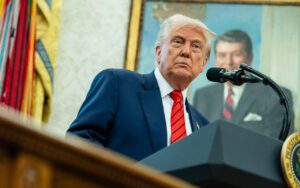
President Donald Trump has announced a new trade deal between the United States and the United Kingdom, marking what he described as a “historic day” for the transatlantic alliance. The agreement, unveiled on the 80th anniversary of VE Day, is the first major trade accord since the president introduced sweeping tariffs on dozens of trading partners earlier this year.
Speaking at a press conference in the Oval Office, Trump said the deal would “remake the global trading system” and strengthen economic ties between two of the world’s largest economies, even as final details are still being completed.
Prime Minister Keir Starmer hailed the announcement as a major diplomatic achievement, calling the agreement “an incredible platform for the future”. Starmer noted the symbolic timing of the deal, aligning it with the 80th anniversary of Victory in Europe Day, when Winston Churchill announced the end of World War II in Europe. The Prime Minister emphasised the deep-rooted alliance between the UK and the US in defence, intelligence and now, increasingly, in trade and technology.
“There are no two countries closer than the US and the UK in areas like defence and intelligence sharing,” Starmer said. “Now, trade and economic policy have joined that list.”
The agreement includes provisions to lower tariffs and expand bilateral trade in key sectors. The US has agreed to cut tariffs on UK-made cars to 10%, while the UK will continue purchasing Boeing aircraft worth $10 billion. The deal also grants tariff-free access for UK-made Rolls-Royce jet engines and includes favourable terms for US exports such as ethanol, beef, and industrial machinery.
Howard Lutnick, a senior member of the US trade negotiating team, described the UK as a “huge market” and said the agreement would be worth £5 billion to US companies. He said the deal aims to reduce red tape and streamline customs procedures.
Trump praised the negotiating teams on both sides and thanked Starmer for his partnership, describing the UK as “right at the top” of America’s closest allies. He added that “many meetings” were planned with other nations in the weeks ahead to expand on the new framework.
Steel was also highlighted as a key part of the agreement. Trump said the aim was to ease restrictions and reinvigorate trade in the sector, adding, “We will become strong when trade in steel is uneased.”
The announcement comes after months of volatility in global markets following Trump’s April 2 “Liberation Day” tariff announcement. While the US has since delayed the imposition of its harshest reciprocal tariffs until July, the baseline 10% tariff on imports and the 145% levy on Chinese goods remain in place.
The UK was spared the worst of the tariff increases due to its favourable trade balance with the US, importing more American goods than it exports.
Despite the upbeat tone, experts have urged caution in interpreting the agreement as a fully finalised trade deal. Simon Gleeson, head of the US corporate desk at tax and advisory firm Blick Rothenberg, said the deal “appears more like a statement of intent and tariff mitigation rather than the much longed-for signed declaration”.
“Industries like steel, aluminium and car manufacturing show how narrow today’s focus has been—£59.3 billion compared with £137.0 billion in services,” he said.
Gleeson added that volatile market conditions and bond market uncertainty may have helped to bring “sense and sensibility” to the negotiating table, noting that the tone had shifted from strong rhetoric to a more constructive outlook.
The UK government said it remains committed to building on the agreement and creating a modern, balanced trade relationship with the US. A government spokesperson said: “This agreement reinforces our strong economic and strategic partnership and lays the groundwork for deeper cooperation in the years ahead.”
As both nations move forward, the announcement has been widely seen as a timely reaffirmation of the “special relationship” between Britain and the United States—one that could shape a new chapter in global trade.
Read more:
Trump announces UK-US trade deal on VE Day anniversary, cutting car tariffs and hailing ‘historic’ partnership
Record 299,000 tax returns filed in first week of new tax year, says H …
Nearly 300,000 people filed their Self Assessment tax returns in the first week of the new tax year — the highest number ever recorded during the opening week of filing, according to HM Revenue and Customs (HMRC).
The figures show that 299,419 returns were submitted between 6 and 12 April, almost 10 months ahead of the 31 January 2026 deadline, as more taxpayers opt to file early to get ahead of their financial responsibilities. The figure represents a 28,503 increase compared with the same period five years ago, when 270,916 people filed in the first week of the 2020 tax year.
More than 57,800 people submitted their return on 6 April, despite the day falling on a Sunday this year, suggesting growing awareness of the benefits of early filing. HMRC says early submission gives taxpayers more time to budget for their tax bill, avoid penalties, and even receive refunds more quickly where applicable.
Filing early has practical advantages, particularly for self-employed workers and small business owners. Jade Milbourne, who co-runs a dog grooming salon, said early filing has become a crucial part of her annual routine.
“Filing early means that I have plenty of time to pay my tax bill,” she said. “I set aside money each month, and the flexibility it gives me takes the stress out of the whole process.”
HMRC is keen to encourage more taxpayers to follow suit. Myrtle Lloyd, HMRC’s Director General for Customer Services, said early filing offers peace of mind and helps people focus on their business or personal lives without the looming pressure of a tax deadline.
“Filing your Self Assessment early means you can spend more time growing your business and doing the things you love, rather than worrying about your tax return,” she said.
The tax authority has updated its guidance on early filing and payment options on GOV.UK, including a budget payment plan feature that allows customers to pay their bill in weekly or monthly instalments via Direct Debit. For those owed money, refunds can be issued as soon as the return is processed, and taxpayers can check their status through the HMRC app.
Who needs to file?
HMRC is also reminding taxpayers to check whether they are required to file a Self Assessment return this year. Individuals must file if they:
• Are newly self-employed with income over £1,000
• Rent out one or more properties
• Earn over £2,500 in untaxed income
• Receive Child Benefit and earn over £60,000
• Have savings or dividend income over £10,000
• Need to pay Capital Gains Tax
• Are in a business partnership
A full list of criteria and a checker tool is available on GOV.UK.
With the rise in early filings, HMRC has also issued a warning about phishing and fraud attempts. Criminals often impersonate HMRC through texts, calls, and emails, especially during peak tax periods. HMRC urges taxpayers to never share their login credentials and to verify any suspicious contact by searching “HMRC phishing and scams” online.
As record numbers move to get their tax affairs in order early, HMRC hopes to build on the momentum and reduce the January tax rush. The message is clear: early filing isn’t just efficient — it could save you time, stress, and money.
Read more:
Record 299,000 tax returns filed in first week of new tax year, says HMRC

