
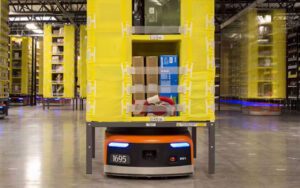
Amazon has announced a major breakthrough in warehouse automation with the launch of Vulcan, a new robot equipped with a sense of touch, capable of handling around 75% of items in the company’s vast fulfilment network.
Unveiled at the retailer’s “Delivering the Future” event in Dortmund, Germany, Vulcan represents what Amazon calls a “fundamental leap forward in robotics”, with AI-powered tactile sensing that allows it to identify and handle items based on what they feel like, not just how they look.
“It’s not just seeing the world, it’s feeling it,” said Aaron Parness, Amazon’s director of robotics. “Enabling capabilities that were impossible for Amazon robots until now.”
Unlike previous robots in Amazon’s fleet, which rely on suction cups and computer vision to move items, Vulcan’s ability to “feel” enables it to pick up and sort a wider range of products, and store them on upper and lower shelves, reducing the need for humans to climb ladders or bend frequently.
Vulcan will join Amazon’s growing army of warehouse robots — now numbering more than 750,000 — designed to work alongside humans at picking stations. The company says these innovations are intended to improve efficiency and safety, not to replace human workers entirely.
“There’s no such thing as completely automated,” said Tye Brady, Amazon’s chief technologist for robotics. “People will always be part of the equation. Robots are here to handle the menial, the mundane and the repetitive.”
Brady likened Vulcan’s collaborative nature to R2D2 from Star Wars, calling it an “amazing collaborative robot” that supports rather than supplants humans.
Amazon says the next generation of robots — powered by machine learning — are being designed to navigate complex warehouse spaces, adapt to new tasks, and even ask for help to improve their performance. Vulcan, for example, can autonomously learn how to move safely and efficiently alongside people and other machines.
“It’s really exciting to bring both the mind and the body together,” Brady said. “It’s finally here, and it’s just beginning.”
Amazon is also rolling out new automated packaging technology that uses AI to create bespoke packages and cut waste. More than 70 machines will be installed across Germany, the UK, France, Italy and Spain this year, with more planned by 2027.
The launch of Vulcan is likely to reignite concerns over automation and job displacement, especially in light of Amazon’s history of industrial action over pay and working conditions in its warehouses.
A 2023 report from Goldman Sachs suggested that 300 million jobs globally could be replaced by AI by 2030, while research from the Tony Blair Institute estimates that up to 275,000 jobs in the UK could be displaced annually at the peak of AI disruption.
But Brady insists that humans remain essential, not just for oversight, but also for practical judgement — whether it’s spotting a broken item in a delivery or detecting a cybersecurity issue that automation might miss.
The debut of Vulcan coincides with the UK launch of Amazon Haul, a low-cost shopping site offering products under £20 as Amazon ramps up competition with Shein and Temu.
As Amazon continues to expand its robotics capabilities and AI-driven logistics, the company appears intent on staying ahead in both e-commerce innovation and operational efficiency — even as the human implications of that progress become harder to ignore.
Read more:
Amazon unveils ‘leap forward’ in robotics with Vulcan, a robot that can feel
Month: May 2025
Novo Nordisk cuts forecasts as Ozempic and Wegovy sales hit by US copy …

Novo Nordisk has slashed its full-year revenue and profit forecasts for the first time since launching its blockbuster weight-loss drug Wegovy, as unauthorised compounded versions of its GLP-1 drugs eat into sales — particularly in the United States, its largest market.
The Danish drugmaker, which also markets Ozempic for diabetes, now expects sales growth of 13% to 21% in constant currencies this year, down from its previous range of 16% to 24%. Operating profit is also forecast to be lower, at 16% to 24%, versus the prior estimate of 19% to 27%.
“We have reduced our full-year outlook due to lower-than-planned branded GLP-1 penetration, which is impacted by the rapid expansion of compounding in the US,” said Lars Fruergaard Jorgensen, Novo Nordisk CEO.
The US Food and Drug Administration (FDA) had allowed pharmacies to compound their own versions of semaglutide, the active ingredient in both Wegovy and Ozempic, to address supply shortages. But with supply now stabilised, the FDA has ordered these compounded versions off the market by May 22, offering Novo a potential reprieve.
Novo’s shares jumped 6.8% in Copenhagen following the news, despite the revised outlook, as the company signalled that prescription growth for Wegovy is expected to rebound once the FDA ban is enforced.
Despite Wegovy sales surging 83% year-on-year to $2.65 billion, growth was below analyst expectations and down from the previous quarter. Ozempic posted a 15% rise, slightly ahead of forecasts.
Novo estimates that compounding pharmacies have captured nearly a third of the US obesity drug market, undermining its dominance in the fast-growing GLP-1 sector.
“It’s unprecedented in our industry to have very large volumes of products flowing to patients that are not approved,” Jorgensen said.
Investor anxiety has also grown over intensifying competition, particularly from US rival Eli Lilly, which has gained traction with tirzepatide, branded as Mounjaro for diabetes and Zepbound for obesity. Lilly recently unveiled positive trial data for a weight-loss pill, heightening concerns over Novo’s future share in the injectable GLP-1 market.
Other pharmaceutical giants, including AstraZeneca, are racing to develop next-generation oral alternatives, which are cheaper to produce, easier to distribute, and may offer better patient outcomes by preserving muscle mass during weight loss.
To combat supply issues, Novo has made aggressive investments, including the $11 billion acquisition of three factories from Catalent, the US-based contract manufacturer, in a bid to scale up Wegovy production.
Jorgensen also addressed rising concerns over potential pharmaceutical tariffs from President Trump’s administration, stating that Novo is a net exporter from the US, where it operates multiple production sites and employs over 10,000 people.
“We have a strong US footprint,” he noted, emphasising that most of the company’s GLP-1 products are manufactured in the US and shipped globally.
While Novo’s GLP-1 franchise remains the market leader, the era of uninterrupted growth may be over as price pressure, regulatory shifts, and fierce competition disrupt the sector.
Investors will now look closely at how Novo navigates its US supply dynamics, defends its market share against new entrants, and transitions to the next phase of its product innovation pipeline — including potential oral therapies.
Read more:
Novo Nordisk cuts forecasts as Ozempic and Wegovy sales hit by US copycat versions
UK consumer confidence plunges to lowest level since 2022 amid global …

UK consumer confidence has dropped to its lowest level since the peak of the cost of living crisis in December 2022, as households feel the strain of Donald Trump’s new tariffs, the ongoing war in Ukraine, and a raft of domestic tax and price increases, according to new data from Which?.
The consumer group’s latest confidence tracker fell by seven points to -53, reflecting widespread concern over both the economy and personal finances. Nearly two-thirds of consumers (64%) believe the UK economy will deteriorate over the next year, while just 11% are optimistic it will improve.
The data mirrors other warnings about rising anxiety among UK households. According to GfK, April brought a “perfect storm” of pressures including higher utility bills, council tax, road tax, and stamp duty, compounded by global instability and fresh concerns about inflation rebounding due to Trump’s trade policies.
The survey, conducted in the month to 11 April, found that 67% of people blamed their pessimism on global events like the Russia-Ukraine war and Trump’s reciprocal tariffs, while 63% cited rising prices, and 60% pointed to UK government tax changes.
Household financial outlooks also deteriorated sharply, with confidence in future household finances dropping by 10 points to -19 — the lowest level since July 2023. Confidence in current finances also fell by six points to +21.
Roughly 1.9 million households missed at least one essential payment in April, including rent or mortgage payments, utility bills, or loan repayments. The rate of missed rent payments rose to 4.7%, reflecting the continued squeeze on tenants.
An estimated 13 million households (46%) were forced to make at least one financial adjustment in the past month to cover basic costs like energy, housing, groceries, school supplies, or medicines. These adjustments included cutting back on essentials, dipping into savings, selling belongings, or taking on debt. While slightly improved from 51% in March, the figure remains high.
Rocio Concha, director of policy and advocacy at Which?, urged the government to take action to restore confidence and shield consumers from predatory practices.
“Consumer protections give people the confidence to spend,” she said. “Whether it’s rooting out online fraudsters, taking down rogue traders or tackling misleading business practices, the government must do more to place consumers at the heart of its plans to grow the economy.”
With Trump’s tariffs threatening to push up prices on imported goods and further disrupt global supply chains, analysts fear the current slide in confidence could worsen. The International Monetary Fund has already cut its UK growth forecast for 2025, and the Office for Budget Responsibility has warned of potential tens of billions in lost output if global trade tensions escalate.
As millions of British households remain on tight budgets, the path to economic recovery may depend as much on rebuilding consumer trust as on taming inflation or boosting GDP. For now, the outlook remains clouded by both international uncertainty and domestic policy decisions.
Read more:
UK consumer confidence plunges to lowest level since 2022 amid global and domestic pressures
US media stocks fall as Trump threatens 100% tariffs on foreign-made f …

Shares in major US streaming platforms and film studios fell sharply on Monday following President Trump’s surprise announcement that he plans to introduce 100% tariffs on films produced abroad, reigniting concerns over the disruptive reach of his trade policies.
Netflix shares slid 1.7%, Amazon was down 1.5%, and both Warner Bros Discovery and Paramount Global dropped more than 1% in early afternoon trading. The Nasdaq index, heavily weighted toward media and tech stocks, was off 0.6% as investors weighed the implications of a tariff that could drastically reshape the economics of Hollywood.
The president’s Truth Social post said he had ordered the Commerce Department and US Trade Representative to begin implementing the new levy, but provided no details on how it would be applied — including whether it would target streaming content, theatrical releases, or if the tariff would be calculated based on production costs or revenue.
A significant portion of US-produced entertainment is filmed abroad to take advantage of tax breaks, lower labour costs, and specialised post-production hubs. Netflix, in particular, relies heavily on an international production network to cater to its global subscriber base.
“The problem is that pretty much all the studios are moving tons of production overseas to reduce production costs,” said Barton Crockett, media analyst at Rosenblatt Securities. “Raising the cost to produce movies could lead studios to make less content.”
Film locations such as the UK, Canada and Australia — favoured for their incentives and skilled workforces — now face being penalised under Trump’s proposed plan. A survey by ProdPro found the top five preferred production locations for 2025–26 among studio executives were all outside the US.
Even this year’s Oscar-nominated films were largely produced overseas, underlining how deeply embedded international production has become in Hollywood’s business model.
Cinema operators also took a hit, with Cinemark down 2% and IMAX dropping 3%, as investors feared a knock-on effect on content supply and box office revenues.
“It doesn’t feel like something that will happen in the short term as everyone will be grappling to understand the whole process,” said Paolo Pescatore, analyst at PP Foresight. “Inevitably, costs will be passed on to consumers.”
The UK’s media and production sector could be among the hardest hit. The Bectu union, which represents tens of thousands of UK-based film and TV freelancers, urged the government to take swift action to defend the country’s £6 billion screen sector, warning that jobs and investment could be at risk if productions are repatriated to the US under tariff pressure.
“Tens of thousands of freelance jobs are on the line,” Bectu said in a statement. “The UK is a vital part of the global film production supply chain and must be protected.”
Hollywood’s 2023 strikes already raised the cost of doing business, securing better pay and benefits for writers and actors. Trump’s proposed tariffs could now add another layer of financial pressure, just as studios attempt to recover from months of halted production.
While the administration has yet to confirm the timetable or precise scope of the movie tariff plan, analysts warn that even the threat of protectionist policy is enough to deter investment and disrupt studio planning cycles.
For a sector already grappling with streaming competition, cinema recovery, and shifting audience habits, Trump’s latest policy salvo may force difficult decisions — and a possible scaling back of content creation altogether.
Read more:
US media stocks fall as Trump threatens 100% tariffs on foreign-made films
UK ministers to meet bank bosses over small business lending amid acce …

Ministers will hold a high-level meeting with leading bank executives on Tuesday as pressure mounts on lenders to improve access to credit for small businesses, amid growing fears that the UK’s economic recovery could be held back by underinvestment in the SME sector.
Senior figures from HSBC, NatWest and Lloyds will attend the talks to explain how they plan to support the government’s growth strategy, particularly through increased lending to small and medium-sized enterprises (SMEs). The meeting comes just days before the government concludes a major review into SME finance access, which could lead to new regulatory obligations for banks.
Rachel Reeves, the chancellor, has raised concerns that restrictive lending practices by high street banks — including the requirement for personal guarantees and centralised decision-making — are hampering small businesses’ ability to invest and grow.
“The last few years have been incredibly difficult for business,” said a government spokesperson. “That’s why this pro-business government is determined to improve the total business environment, including for small businesses.”
Government data shows that just under 50% of SME loan applications are approved — down from 67% in 2018. The Department for Business and Trade (DBT) said the drop raises “questions as to whether these rejection rates are too high and why this may be the case.”
Many small businesses have turned to high-risk private lenders after being turned down by banks, prompting further concern about the financial resilience of the SME sector, which is crucial to UK jobs, exports and innovation.
Representatives of the banking industry are expected to argue that they are willing to lend more, but that higher SME risk profiles make this difficult under current conditions. They are likely to call for an expansion of the British Business Bank’s loan guarantee scheme, which currently underwrites 70% of qualifying loans.
Trade group UK Finance has pushed for more government funding to support this guarantee, saying it is the only way to scale up SME lending safely.
The meeting will be chaired by Gareth Thomas, minister for small businesses, who has been outspoken about the loss of personal relationships between banks and SMEs. He has criticised the shift to online-only loan applications and is reportedly interested in expanding mutual lenders, which play a key role in SME lending in countries like Germany.
Thomas’s frustration reflects findings from a 2023 Treasury committee report, which accused the sector of “damaging” banking practices and harmful financial regulation. It highlighted the closure of 140,000 SME bank accounts last year, often without clear explanation — a practice labelled “debanking” by critics.
The report concluded that SMEs, already weakened by high inflation, energy price shocks, and pandemic-related disruptions, are now facing unnecessary barriers to finance that risk stifling innovation and long-term growth.
As ministers prepare to wrap up their finance review, the upcoming meeting may be a pivotal moment in determining whether voluntary reforms from the big banks will be sufficient — or whether more robust intervention is on the horizon to ensure small businesses can access the funding they need to grow, export and compete.
Read more:
UK ministers to meet bank bosses over small business lending amid access and ‘debanking’ concerns
Rolls-Royce scales back DEI policies amid US political pressure and le …

Rolls-Royce has become the latest major UK-headquartered company to pull back from diversity, equity, and inclusion (DEI) initiatives, citing the need to comply with anti-DEI legislation in the United States — a move influenced by growing pressure from President Trump’s White House.
The FTSE 100 aerospace and defence group, which employs 43,000 staff globally, has informed employees that it will cut funding and internal support for its employee inclusion networks, such as Prism, its LGBTQ+ group. While employees can continue to meet informally, the groups will no longer receive corporate backing, have a presence on the company intranet, or be allowed to promote events within company premises.
The changes were communicated last month by Natasha Whitehurst, head of diversity, inclusion and belonging, and Adam Riddle, head of North America operations. They also confirmed the launch of a new “employee voice network”, open to all employees and designed to replace identity-specific groups.
Rolls-Royce said the decision was taken to ensure compliance with recently introduced anti-DEI legislation in the US, where 6,000 employees and a third of the company’s £19 billion revenues are based. The company holds major defence contracts with the US government, including engine production for military aircraft such as the C-130 Hercules and B-52 bomber fleets.
In a statement, a Rolls-Royce spokesperson said: “We support all our colleagues to be at their best, ensuring we live by our behaviours and drive a culture of high performance and engagement. We regularly review our policies and approach to ensure we achieve this outcome, while complying with all legal requirements in the jurisdictions in which we operate.”
References to DEI and the inclusion networks have since been removed from Rolls-Royce’s corporate website.
Rolls-Royce is not alone in its course correction. Other UK multinationals with significant US footprints have similarly scaled back their DEI visibility in recent months. GSK has removed references to “diversity” from its website, while WPP, the advertising group, excluded DEI language from its annual reports and executive compensation criteria.
The rollback comes amid a wider backlash against corporate DEI policies in the US, with Trump’s administration targeting what it sees as politically motivated corporate initiatives. Several Republican-led states have introduced laws to ban or restrict diversity programmes in publicly funded institutions and in companies that contract with the government.
The decision marks a stark contrast to previous messaging from Rolls-Royce’s leadership. Last year, CEO Tufan Erginbilgic praised the inclusion networks as a “powerful way” to foster a sense of belonging across the company.
“As volunteers from every part of our business — from the shop floor to senior leadership — they are role models who bring us together and help us learn,” he said in 2024.
Despite this shift, Rolls-Royce insists that merit-based hiring remains central to its culture. However, the global imposition of US compliance standards — even in countries where DEI programmes remain encouraged — has drawn criticism from campaigners and employees alike.
With DEI under growing political scrutiny in both the US and UK, the future of corporate inclusion efforts may increasingly hinge on balancing internal culture with external pressures — and navigating the legal grey zones in between.
Read more:
Rolls-Royce scales back DEI policies amid US political pressure and legal shifts
Jaguar Land Rover resumes US exports despite Trump tariffs and trade u …

Jaguar Land Rover (JLR) has resumed shipments of its vehicles to the United States after a near month-long suspension triggered by President Trump’s 25% tariffs on imported cars — a move that underscores the UK carmaker’s tough balancing act in the face of US protectionism.
The first shipments since April 7 departed the UK on Wednesday, marking a cautious return to the crucial US market, despite no resolution on tariffs and growing fears that the UK may be sidelined in American trade talks.
“The US is an important market for JLR’s luxury brands and 25 per cent tariffs on autos remain in place,” a company spokesperson said. “As we work to address the new US trading terms with our business partners, we are enacting our planned short-term actions.”
The company offered no detail on the decision to resume exports, but industry analysts say the move likely signals an acceptance that tariffs may be unavoidable and that US customers will face higher prices — with up to $27,000 added to the price tag of some Range Rover models if tariffs are passed on in full.
The decision comes as the UK grapples with growing concerns that it is a “second-order priority” in securing a trade deal with the US. Washington is said to be focusing first on South Korea and other Asian economies, leaving UK automakers exposed.
JLR, owned by India’s Tata Motors, is the UK’s biggest car manufacturer and employs 38,000 people across Britain. The company is highly reliant on the US market, which accounts for £6.5 billion of its £30 billion in annual revenues — more than any other region.
About one in four JLR vehicles is sold in the US, including bestsellers like the Land Rover Defender and Range Rover Sport, which enjoy a loyal celebrity following that includes Jennifer Lopez and Bruce Springsteen.
While rivals such as Aston Martin, Rolls-Royce, and McLaren are also affected by US tariffs, their higher price points and ultra-premium positioning make them less vulnerable to short-term price sensitivity. JLR’s luxury SUVs, by contrast, occupy a broader pricing band and cater to a larger market segment.
JLR vehicles take about 21 days to reach the US, meaning the latest batch will arrive around May 20 — well before any trade deal could feasibly be finalised. Without one, the cars will be subject to full 25% duties under Trump’s new rules.
Though Trump last week suspended additional tariffs on car parts and aluminium and steel for now, auto imports remain firmly within the crosshairs of his broader “reciprocal tariff” doctrine.
JLR has previously explored the idea of building a manufacturing facility in the US, but has so far opted to export from Europe, a model now under mounting pressure. The latest shipment resumption may signal JLR is buying time while it reassesses longer-term supply chain and production options.
The UK auto sector is on high alert. Aston Martin confirmed it had limited US shipments, citing the same tariff headwinds. Industry leaders warn that delays in striking a trade deal — or clarity on long-term tariff arrangements — could seriously erode the UK’s competitiveness in global car exports.
“Even affluent buyers are watching the bottom line,” said one executive. “If the UK remains outside the fast lane of trade negotiations, we’re going to see strategic pivots — and possibly production shifts — to other countries.”
With Prime Minister Starmer’s government under pressure to secure trade concessions and Chancellor Rachel Reeves balancing a budget hit by post-Brexit volatility and non-dom outflows, the stakes could hardly be higher.
For now, JLR’s move back into the US market is a bold step forward — but with no trade deal in sight and tariffs still biting, the journey is far from over.
Read more:
Jaguar Land Rover resumes US exports despite Trump tariffs and trade uncertainty
Warren Buffett to step down as Berkshire Hathaway CEO by end of 2025
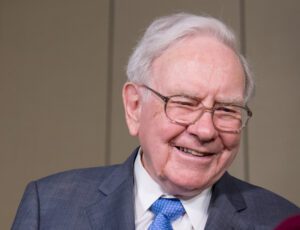
Warren Buffett, one of the most iconic figures in global finance, has announced plans to step down as chief executive of Berkshire Hathaway by the end of the year, marking the end of an era for the $1.1 trillion conglomerate he has led for over five decades.
Speaking at Berkshire’s annual shareholder meeting in Omaha on Saturday, the 94-year-old investor confirmed that he will ask the board to approve Gregory Abel as his successor, handing over operational leadership of the business empire he built from a textile manufacturer into one of the most successful companies in capitalist history.
“Greg will have the final word on operations, investments and more,” Buffett told tens of thousands of shareholders, adding that while he will remain chairman, he expects to play a more limited advisory role moving forward.
Buffett, who retains a 14% stake in Berkshire worth approximately $164 billion, said the plan had only been known to two of his children — Howard and Susan Buffett — until Saturday’s meeting. The announcement was met with a standing ovation, and Abel, 62, appeared visibly surprised.
Upon Buffett’s passing, the chairmanship will pass to Howard Buffett, completing a carefully managed succession plan that has been years in the making.
Buffett’s leadership of Berkshire Hathaway transformed the company into a sprawling empire encompassing insurance, railroads, utilities, and iconic consumer brands. Its holdings include Geico, BNSF Railway, Dairy Queen, See’s Candies, Fruit of the Loom, Benjamin Moore and NetJets, alongside a stock portfolio with major stakes in companies like Apple and Coca-Cola.
Abel, a Canadian executive and current vice chairman of non-insurance operations, joined Berkshire when the firm acquired his energy business in 2000. He has since built Berkshire Hathaway Energy into one of the largest power utilities in the US and has long been seen as Buffett’s most likely successor.
“Greg is ready,” said Berkshire board member Ronald L. Olson, who is also stepping down. “Warren will still be a sounding board, just as Charlie Munger was.”
Munger, Buffett’s legendary business partner, passed away in 2023.
Despite Buffett’s continued good health and humour — he fielded hours of questions at the meeting — this year’s event was shortened and marked by a noticeable shift in tone. Buffett used a cane and showed signs of slowing down, reflecting the growing urgency around succession planning.
The timing comes amid a more volatile business environment. Berkshire’s first-quarter operating income fell 14% to $9.6 billion, and net income plunged 64%, driven largely by paper investment losses and weaker performance across many of its businesses, including insurance, which was hit by California wildfire losses.
Trump’s return to the White House and sweeping trade tariffs were also front and centre. Buffett warned that the new policies were fuelling global uncertainty and could affect supply chains, demand, and operating costs for Berkshire’s businesses.
“Trade should not be a weapon,” Buffett said. “It’s not right and it’s not wise.”
Buffett did not elaborate on the future roles of Todd Combs and Ted Weschler, the two investment managers he brought in over a decade ago. Combs now also serves as CEO of Geico, suggesting his role may evolve further in the post-Buffett era.
Berkshire’s record cash pile rose to $347.7 billion, reflecting Buffett’s caution and difficulty finding acquisition targets large enough to meaningfully move the needle for the sprawling conglomerate. While he teased a potential $10 billion investment, he declined to share details.
Berkshire was a net seller of stocks in the quarter, offloading $4.68 billion in equity compared to $3.18 billion in purchases.
Prominent business figures in attendance at the shareholder meeting included Bill Gates, Tim Cook, William Ackman, and Hillary Clinton, with some — like Priscilla Chan — attending for the first time.
As Buffett prepares to pass the torch, his departure from the CEO role will conclude one of the most legendary leadership tenures in corporate history. With Abel at the helm, investors and observers will be watching closely to see whether Berkshire’s next chapter can live up to the extraordinary legacy Buffett leaves behind.
Read more:
Warren Buffett to step down as Berkshire Hathaway CEO by end of 2025
As wealthy Americans flee Trump’s chaos Britain is cashing in

A growing number of wealthy Americans, scientists, and students are eyeing the UK as political instability under President Trump’s second term pushes them to look for safer ground — reversing a decades-long brain and wealth drain to the US.
Lawyers, estate agents, and immigration experts are reporting a sharp spike in interest from affluent and high-profile Americans seeking to relocate to Britain, purchase property, or secure second citizenship as an “insurance policy” against Trump’s controversial early policies.
“The number of inquiries has gone through the roof over the last few months,” says Ceri Vokes, tax partner at London law firm Withers. “There is definitely a desire to diversify away from the US. London is a natural place for them to come to.”
Inquiries from American clients considering relocation have reportedly tripled so far in 2025 compared to the same period in previous years. Meanwhile, immigration partner Kelvin Tanner at Charles Russell Speechlys says inquiries from millionaires and billionaires have doubled, particularly among those in tech and finance.
The exodus comes amid growing alarm over Trump’s escalating trade war, stock market volatility, and crackdown on universities. Within his first 100 days, Trump has imposed sweeping tariffs, targeted federal research funding, and threatened to strip elite institutions like Harvard of their ability to enrol foreign students.
“It is suicidal what the Trump administration is doing with one of their very biggest assets, and that is the excellence of research and the universities,” says Professor Christian Dustmann of University College London. “If those talents are moving away towards the UK, this is a huge opportunity for us.”
A recent survey by Nature found three in four US academics are reconsidering their future in the country. Interest in British degrees has surged 25% year-on-year, according to Study Portal.
Meanwhile, Trump’s threats against DEI initiatives and ongoing protests on campuses have deepened fears among US scholars and students about academic freedom and research funding.
Among the wealthy, fears of higher taxes and increasing instability have led to a surge in property purchases in the UK. According to Knight Frank, Americans overtook Chinese buyers in late 2024 to become the largest group of overseas purchasers of luxury homes in central London, now accounting for 11.6% of sales.
“We’re seeing more Americans coming in,” says Rosy Khalastchy of luxury estate agent Beauchamp Estates. “They value London, the services here, and they’re looking for stability.”
The UK’s shared language, strong legal system, and cultural proximity make it an appealing alternative to American elites seeking to hedge against Trump-era risk.
The influx could prove fortuitous for Chancellor Rachel Reeves, who is battling the fallout from recent tax changes that have driven out several high-profile non-doms and investors. Renewed interest from wealthy Americans, academics, and students may help fill that void.
“People are leaving but there is a transition period going on,” says Khalastchy. “There is turmoil in their country. We are seeing more Americans coming in.”
Yet, experts warn that Britain must act decisively to seize the opportunity. Jamie Arrowsmith, director of Universities UK International, says the UK’s underfunded higher education system may struggle to absorb the rising interest from international academics and students.
“If leading research talent wants to choose the UK, then we should absolutely welcome that,” he says. “But the big challenge is that the UK is not without its own uncertainties.”
Immigration lawyers also note that investor and entrepreneur visa routes are still limited, creating barriers even for high-net-worth Americans looking to settle.
While the scale of the US brain drain remains uncertain, analysts agree: Britain has a rare window to capitalise on America’s self-inflicted chaos.
Whether Reeves and the UK government can move fast enough to attract — and keep — this new wave of American talent and capital could determine whether Britain’s stagnating economy finds an unexpected engine of growth.
Read more:
As wealthy Americans flee Trump’s chaos Britain is cashing in

