

Thailand feels like a mix of shimmering golden temples, lively floating markets, and stunning tropical islands. Most travelers know about popular spots like Bangkok and Phuket, but there is so much more to discover beyond these famous places.
If you venture off the beaten path, you will find peaceful towns and villages that give you a real sense of Thai culture and everyday life.
For those venturing into these lesser-known areas, staying connected can be helpful, especially when navigating unfamiliar streets or booking last-minute accommodations. Using a Thailand dtac eSIM provides mobile data access from the moment of arrival without the need to search for a local SIM shop. It’s a convenient solution for those who prefer not to rely on public Wi-Fi while traveling.
1. Chiang Khan: Quiet Mornings and Riverside Views
Chiang Khan is a peaceful town along the Mekong River in Thailand’s northeast, known for its wooden homes, narrow streets, and scenic riverwalk. Evenings come alive with local vendors and families strolling by the riverside. Each morning, visitors can experience the quiet tradition of giving alms to barefoot monks walking through the calm streets. Here, life moves slowly, inviting you to soak in the gentle rhythm of local life.
2. Koh Yao Noi: The Island That Time Forgot
Koh Yao Noi, nestled between Phuket and Krabi, is a quiet island that has kept its fishing village charm. Unlike crowded resorts nearby, it offers peaceful coastlines, palm trees, and laid-back afternoons. Exploring by scooter reveals roads lined with rubber trees and rice paddies, along with small cafes and local food stalls. With nearly empty beaches and a slow pace, the island feels like a refreshing escape from mass tourism.
3. Ban Rak Thai: Tea, Hills, and Mist
Ban Rak Thai, tucked in the hills near the Myanmar border, feels like stepping into another world with its Yunnan-style teahouses and clay-walled homes. The cool mountain air and early morning mist add to its peaceful charm. Visitors enjoy sampling local teas while taking in lakeside views and exploring nearby forested trails. This village’s unique blend of culture and calm makes it a refreshing alternative to typical Thai destinations.
4. Phu Kradueng National Park: A Hiker’s Reward
Phu Kradueng National Park is renowned for its stunning highlands and challenging hiking trails. Reaching the summit requires several hours of hiking on foot, making it a favorite among those who enjoy nature and appreciate a bit of effort. The view from the top includes cliffs, pine forests, and plateaus blanketed in morning fog.
The park also features waterfalls and meadows that bloom with wildflowers in cooler months. Staying connected for trail updates or weather changes is easier with tools like a Thailand dtac eSIM, especially since mobile signals can be limited in certain areas. Overnight stays are common, with tents and cabins available for rent. With few crowds and no vehicles allowed on top, the atmosphere remains calm and serene.
5. Nakhon Phanom: Along the Mekong’s Edge
Nakhon Phanom sits quietly on the Mekong River, facing the mountains of Laos just across the water. Its streets carry a blend of Thai, Lao, and Vietnamese influence, seen in both the food and the architecture. The city’s riverside walkway is perfect for evening strolls and quiet observation.
Temples, colonial buildings, and local markets all exist without the rush of tourist traffic. Ferries still carry goods and people between riverbanks, and old traditions remain part of everyday life. Nakhon Phanom is ideal for those seeking subtle cultural details without large crowds.
6. Laem Sing: An Undisturbed Coastal Spot
Laem Sing, located in Chanthaburi Province, offers a gentle coastal experience with fewer visitors than Thailand’s larger beach towns. The area is lined with casuarina trees, fishing boats, and small seafood shacks. It’s the kind of place where the pace naturally slows down.
A short walk inland leads to forest parks and viewpoints offering wide-open vistas of the sea. The nearby French-built bridge, a reminder of past colonial influence, is a quiet spot to pause and reflect. Laem Sing remains calm, practical, and full of everyday charm.
7. Nan Province: Northern Culture and Mountain Roads
Nan Province holds a special place in Thailand’s north, known for its preserved heritage and winding mountain routes. The city of Nan is home to murals and temples that reflect Lanna-style art and architecture. There is also a strong presence of ethnic communities whose traditions remain woven into daily life.
Roads from the city lead into forested hills and quiet farming villages. Coffee farms, natural viewpoints, and small museums offer a unique blend of nature and culture, free from crowds. Nan is a destination for those drawn to authenticity over spectacle.
Every trip doesn’t need to follow the usual paths. A Thailand dtac eSIM supports these slow discoveries by keeping travel simple, even in places far from the spotlight. Taking time to explore smaller towns and quiet corners reveals deeper connections to culture, nature, and history.
Read more:
7 Hidden Corners of Thailand Worth Adding to Your Travel List
Month: June 2025
UK jobs market shows modest rise in new postings as tax pressures weig …

The UK jobs market posted a modest rise in new job adverts last month, suggesting early signs of resilience despite economic headwinds and growing pressure on employers from tax increases.
According to new data from the Recruitment and Employment Confederation (REC), the number of new job adverts rose by 0.3 per cent in May to 726,084, a small uptick that follows a prolonged slowdown in hiring. However, the total number of active job postings fell by 1.8 per cent to 1.44 million, underlining the market’s sluggish pace.
Neil Carberry, chief executive of the REC, said the labour market is “more stuck than going backwards”, noting that the slow growth in postings marks a second consecutive month of slight improvement, rather than a sign of deeper contraction.
“Despite the headwinds of tax rises and lower growth there seems to be some resilience,” Carberry said. “After a long jobs market slowdown, a second month of weak growth in new postings is a sign more of hope than concern.”
The tentative recovery comes against a backdrop of rising employer costs. A recent hike in national employment contributions and new government policies that will expand employee rights — including enhanced sick pay, maternity protections and unfair dismissal safeguards — have prompted employers to review hiring plans.
The government’s move to raise £25 billion in extra revenue through employment taxes has compounded the strain on a labour market already affected by over 15 months of declining vacancies.
Recent figures from HM Revenue and Customs show the number of payroll employees fell by 109,000 in May, the steepest decline since the early days of the Covid-19 pandemic. The unemployment rate rose to 4.6 per cent in the latest quarter, the highest since 2021, according to the Office for National Statistics.
Despite these warning signs, Carberry struck a cautiously optimistic tone.
“While the global growth picture is weaker than anyone would like, the UK is relatively well-positioned to take advantage of what opportunities there are,” he said. “We are past the interest rate peak, the UK looks good value by comparison to the US, has banked progress on trade deals, and has a stable legal and political picture for the next few years.”
The jobs data follows a string of mixed economic signals. While GDP growth slowed in April, there are tentative signs of improving consumer confidence and softer inflation, which could lead to lower interest rates later in the year. However, rising business costs and ongoing uncertainty about global demand continue to weigh heavily on the hiring outlook.
Recruiters say the coming months will be critical in determining whether the recent uptick in postings develops into a sustained recovery or stalls under the weight of policy and macroeconomic pressures. For now, employers appear cautious but not retreating — and that, say experts, may be the best the market can hope for in the short term.
Read more:
UK jobs market shows modest rise in new postings as tax pressures weigh
Lack of role models holding back jobseekers with Down’s syndrome, st …

People with Down’s syndrome and other learning disabilities say the lack of visible role models in the workplace is one of the biggest barriers to finding employment, according to a new survey that highlights the urgent need for greater inclusion in customer-facing roles.
While there are around 1.3 million people with learning disabilities in the UK, only 5 per cent are employed, a figure that has remained stubbornly low for years. But new research suggests that seeing others with similar conditions thriving in the workplace would significantly boost confidence and encourage more applications.
The poll, conducted by Savanta for the Hilton hotel group, found that three-quarters of respondents with learning disabilities would feel more confident applying for jobs if they saw people like themselves in hospitality roles. Yet just 16 per cent of those already in work said they had someone they could look up to with a similar disability in their workplace.
“When people with learning disabilities see others like themselves thriving in customer-facing roles, it inspires confidence and ambition,” said Mark Costello, principal at Aurora Foxes, a hospitality college for young people with learning disabilities.
The survey also polled 2,000 members of the general public, with over 90 per cent saying it was important to see people from diverse backgrounds — including those with learning disabilities — in visible frontline roles. Three-quarters of consumers felt that not enough people with learning disabilities were represented in the hospitality sector.
The research highlights both the lack of representation and the potential benefits of greater inclusion. Only one in four carers said they had ever been served by someone with a learning disability — a telling sign of how rarely these individuals appear in customer-facing positions.
For those who do manage to find meaningful work, the impact can be transformative.
“Having a job helps people with learning disabilities feel valued and shows others what we can achieve when given the chance,” said Sam Innes, a food and beverage assistant with Down’s syndrome at The Waldorf Hilton in London.
“It’s boosted my confidence and helped me become more independent.”
Stephen Cassidy, senior vice-president of Hilton UK & Ireland, said the company’s goal was to foster a culture where everyone — regardless of ability — could thrive.
“Representation matters — seeing people like yourself succeed at work builds confidence and opens doors to opportunity,” he said.
“By providing the right support and fostering an inclusive environment, we empower individuals to reach their full potential and show that inclusion is a powerful driver of success in hospitality.”
Hilton says team members with learning disabilities now contribute in a wide variety of roles, including front-of-house positions like reception and concierge, as well as behind-the-scenes departments such as kitchens, housekeeping, and revenue management.
As awareness grows, advocates are calling on more employers to follow suit by investing in inclusive hiring practices, providing workplace support, and creating environments where people with learning disabilities are not only welcomed, but actively represented.
The message from jobseekers like Sam is clear: “We want to work. We just need to see that it’s possible.”
Read more:
Lack of role models holding back jobseekers with Down’s syndrome, study finds
Royal Mail boss quits after just one year as new owner takes over

Emma Gilthorpe, chief executive of Royal Mail, has stepped down from her role after just over a year in the job, marking the first major leadership change since Czech billionaire Daniel Kretinsky completed his £3.6 billion takeover of the postal group’s parent company, International Distribution Services (IDS).
Gilthorpe’s departure, confirmed just days after the deal was finalised, comes as sources close to the business said the role had simply “not worked out” for her. She will be replaced by Alistair Cochrane, currently Royal Mail’s chief operating officer, who will step into the top job with immediate effect.
Gilthorpe joined Royal Mail in April 2023 following a long tenure at Heathrow Airport, where she had served as chief operating officer and was considered a frontrunner for the CEO position before losing out to Thomas Woldbye. Her move to Royal Mail was seen as a bold appointment, as she took on the task of leading a complex and often troubled transformation programme at one of the UK’s oldest institutions.
In a statement, Martin Seidenberg, CEO of IDS, paid tribute to her work: “Emma has worked tirelessly to drive forward Royal Mail’s transformation and I would like to extend my personal thanks to her for the significant contribution she has made to the company. On behalf of everyone at Royal Mail and IDS, we wish Emma all the best for the future.”
He welcomed Cochrane’s promotion, calling him an “exceptional leader” with deep knowledge of the logistics sector, and praised his work at Parcelforce and within the broader Royal Mail business.
Gilthorpe said she remained proud of her time at the company: “I will always be incredibly proud to have led Royal Mail and I would like to thank all 130,000 colleagues for their support as we worked together to deliver our ambitious transformation programme.”
“I look forward to seeing Royal Mail continue to transform in the years ahead, ensuring a stronger and more sustainable future for this great British company.”
Her departure comes at a pivotal moment for the 500-year-old postal service, as Kretinsky — dubbed the “Czech sphinx” for his elusive public profile — moves to modernise and streamline the business. The billionaire industrialist’s EP Group now holds majority control of IDS and is expected to play a more active role in shaping the future of Royal Mail.
Kretinsky’s acquisition has raised hopes of investment and reform, but also unease among some politicians and unions about the strategic importance of the UK’s national postal operator falling under foreign ownership.
Gilthorpe’s exit signals both a changing of the guard and a new chapter for Royal Mail, as the company attempts to reposition itself in a challenging logistics landscape marked by declining letter volumes, intense competition in parcel delivery, and pressure to improve efficiency and financial performance.
As Royal Mail prepares for deeper reforms under its new leadership, the focus will now shift to Cochrane’s strategy — and whether he can deliver where his predecessor’s efforts stalled.
Read more:
Royal Mail boss quits after just one year as new owner takes over
Morrisons rebounds from cyber‑disruption with stronger second‑quar …
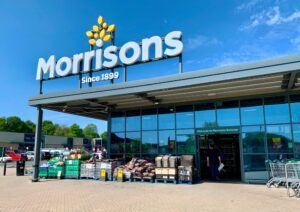
The UK’s fifth‑largest supermarket said like‑for‑like sales grew 3.9 per cent in the three months to early June, up from 2.1 per cent in the previous quarter, when a cyberattack on supply‑chain software provider Blue Yonder forced the retailer to slash prices on some items to keep shelves stocked.
Including new space, total sales rose 4.2 per cent to £3.9 billion, while underlying EBITDA for the first half climbed 7.2 per cent to £344 million. (Morrisons does not disclose pre‑tax profit.)
Chief executive Rami Baitiéh, who arrived last year with a turnaround mandate, said the chain had “bounced back strongly” despite a “challenging macro environment”. Since taking the helm, Baitiéh has focused on tighter in‑store execution, a slimmer product range and fresher food displays to improve customer perception—efforts he claims are starting to bear fruit.
“Value remains at the forefront of customers’ minds,” he said. “We’ve worked hard on price, promotions and meaningful rewards for loyalty.”
Central to that push is the Morrisons More Card, which now offers deeper discounts and personalised deals aimed at cash‑strapped shoppers battling stubborn food inflation.
The grocer is also trialling revamped “market street” sections—complete with farm‑shop‑style merchandising and expanded world‑foods aisles—to broaden its appeal. Early feedback, the company said, has been “very positive”.
Meanwhile, Morrisons is accelerating its convenience‑store rollout. Forty‑two franchise‑owned Morrisons Daily outlets opened during the quarter, taking the estate of small‑format stores to more than 1,700, up 120 year‑on‑year, with more openings planned.
Chief financial officer Jo Goff pointed to “broad‑based progress” across the business. Cost‑saving measures delivered £58 million in the quarter, taking cumulative savings to £700 million; the retailer has now raised its savings target to £1 billion by the end of 2026.
To sharpen pricing and range decisions, Morrisons has also signed a new deal with a global analytics provider, hoping to mine deeper commercial insights as competition among UK grocers intensifies.
The improved performance offers some relief to owners Clayton, Dubilier & Rice, which loaded the company with £6.6 billion of debt when it took Morrisons private in 2021. Although challenges remain, the latest figures suggest the supermarket is regaining momentum after a turbulent start to the year.
Read more:
Morrisons rebounds from cyber‑disruption with stronger second‑quarter sales
Post Office Horizon scandal payouts pass £1bn as redress efforts cont …

More than £1 billion has now been paid out to victims of the Post Office Horizon IT scandal, marking a significant milestone in the ongoing effort to deliver justice to thousands of wronged sub-postmasters.
The government confirmed that, as of 2 June, a total of £1.039 billion had been awarded to just over 7,300 individualsthrough a series of compensation schemes. However, despite the growing payouts, campaigners say many victims are still navigating a slow and often complex path to full redress.
Post Office Minister Gareth Thomas said the government was continuing to speed up payments, particularly in the most complex cases: “We are settling cases every day and getting compensation out more quickly for the most complex cases,” he said. “But the job isn’t done until every postmaster has received fair and just redress.”
The figures span four separate compensation schemes, each designed to cater to victims in different circumstances, reflecting the varying legal and personal consequences experienced by those affected.
The most high-profile group of victims includes the 555 sub-postmasters who led a landmark court case against the Post Office, spearheaded by Alan Bates, whose campaign was brought to national attention through a widely watched ITV drama earlier this year.
Although the group secured a £42.5 million settlement in 2019, most saw only a fraction of that payout due to the high legal costs of taking the case to court. In response, the government established the Group Litigation Order (GLO) Scheme to provide additional compensation. So far, £167 million has been paid through this scheme, including interim payments.
However, 63 members of the GLO group had criminal convictions, rendering them ineligible for the GLO compensation. They may instead be entitled to compensation through one of two schemes for those who had their convictions overturned.
The Overturned Convictions Scheme is open to anyone whose conviction has been quashed by the courts. This includes individuals both inside and outside the GLO group. It is now directly overseen by the government, which has so far paid out £68 million under this route.
Meanwhile, the newly created Horizon Convictions Redress Scheme caters to those whose convictions were overturned en masse under the Post Office (Horizon System) Offences Act 2024, which came into force in May. These individuals can choose to receive a fast-tracked £600,000 settlement or enter into negotiations if they believe they are owed more. All are eligible for interim payments while final amounts are calculated. This scheme has delivered £245 million to date.
A fourth scheme, the Historic Shortfall Scheme, continues to offer compensation to sub-postmasters who repaid money that was never actually missing, due to errors caused by the Horizon software. Although the government did not break out updated figures for this scheme, it remains a significant component of the overall total.
The Horizon IT scandal is widely regarded as one of the worst miscarriages of justice in British history. Between 1999 and 2015, hundreds of sub-postmasters were accused—and many convicted—of theft, fraud, and false accounting, based on faulty data generated by the Horizon computer system.
To date, 992 convictions have been linked to the system, of which around 700 were brought privately by the Post Office. Many of those affected lost their businesses, homes, and in some cases, their liberty.
While compensation efforts have accelerated in recent months under government supervision, victims and campaigners have raised concerns about bureaucratic delays and the complexity of the claims process. Some have criticised the existence of multiple overlapping schemes, which they say can be confusing and intimidating for claimants.
However, officials maintain that tailored approaches are necessary to reflect the legal and financial differences among affected individuals.
Despite surpassing the £1 billion compensation mark, ministers have acknowledged that many victims are still waiting. The government has pledged to continue processing payments swiftly and to ensure all those entitled to compensation receive what they are owed.
With redress still ongoing and public scrutiny intensifying, the legacy of the Horizon scandal is far from resolved. For many former sub-postmasters, the compensation offers some measure of justice—but for many, it will never fully make up for what was lost.
Read more:
Post Office Horizon scandal payouts pass £1bn as redress efforts continue
Bank of England warns of ‘elevated’ global uncertainty after leavi …
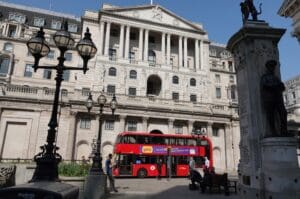
The Bank of England has kept its benchmark interest rate at 4.25%, but hinted that a cut could be on the horizon as early as August, amid growing signs of a weakened UK economy and rising global risks.
While Governor Andrew Bailey acknowledged that inflation is now on a gradual downward path, he warned that the world remains “highly unpredictable”, with escalating geopolitical tensions—particularly in the Middle East—threatening to derail the UK’s fragile economic recovery.
“In the UK we are seeing signs of softening in the labour market,” Bailey said. “We will be looking carefully at the extent to which those signs feed through to consumer price inflation.”
The Bank’s Monetary Policy Committee (MPC) said it remained “sensitive” to developments in the Israel-Iran conflict, which has driven oil prices up by 26% and gas prices by 11% since the MPC’s last meeting in May. Further spikes in energy prices could reignite inflation and complicate decisions around future rate cuts.
The decision to hold interest rates came despite inflation remaining above the Bank’s 2% target and at its highest level in over a year. While some on the MPC are reportedly pushing for an earlier cut, the majority opted to wait, citing a complex mix of domestic and international pressures.
Domestically, the outlook remains uncertain. After a strong start to 2025, the UK economy contracted sharply in April, highlighting the volatility of the current recovery. Although the Bank has slightly upgraded its overall economic expectations, it noted that “underlying growth remains weak”.
At the same time, there are signs that wage growth is slowing—a development that may help bring inflation under control—but unemployment is also rising, with businesses reluctant to hire or replace staff in the face of economic uncertainty.
Despite these warning signs, the Bank appears cautiously optimistic that it will be able to begin lowering rates later this year, especially if inflationary pressures continue to ease and growth remains subdued.
Markets are now pricing in a possible 0.25 percentage point cut in August, with a second cut potentially following by the end of 2025.
For now, the message from Threadneedle Street is clear: the Bank is prepared to act, but only when the balance of risks allows. With energy prices volatile, global tensions high, and growth stalling at home, policymakers are walking a fine line between supporting the economy and keeping inflation in check.
Read more:
Bank of England warns of ‘elevated’ global uncertainty after leaving interest rates on hold
UK inflation cools to 3.4% in May as Bank of England holds rates

UK inflation edged down to 3.4 per cent in May, slightly lower than April’s 3.5 per cent, in a sign that price pressures across the economy are gradually easing—though inflation remains well above the Bank of England’s 2 per cent target.
The latest figures from the Office for National Statistics (ONS) also showed a fall in core inflation, which strips out volatile categories like food, energy, alcohol and tobacco. Core inflation dropped to 3.5 per cent, from 3.8 per cent in the previous month, offering policymakers some encouragement that underlying pressures are starting to subside.
Services inflation, a key metric closely watched by the Bank of England’s Monetary Policy Committee (MPC) as an indicator of persistent domestic price pressures, also dipped slightly—from 5.4 per cent in April to 5.3 per cent in May.
Despite the slowdown, the Bank is expected to hold interest rates steady at 4.25 per cent when the MPC meets on Thursday, as it awaits more consistent evidence that inflation is returning sustainably to its target.
Richard Heys, acting chief economist at the ONS, said the largest downward contribution to the monthly inflation figure came from transport, particularly air fares, which fell in May compared with a sharp rise during the same period last year. The timing of Easter and school holidays, which had pushed travel costs higher last spring, helped bring the annual comparison down. Petrol prices also contributed to the decline.
However, the downward momentum was partially offset by rising food prices, including chocolates and meat, as well as increased costs for furniture and household appliances, such as fridge freezers and vacuum cleaners.
Economists say that while inflation is on the right path, the Bank of England will need to see further falls in services and wage growth figures before it is confident enough to begin cutting interest rates. With inflation still more than a percentage point above the target, and services inflation remaining sticky, many analysts believe the Bank will remain in a holding pattern until later in the summer.
Markets are currently pricing in a rate cut by September, depending on the trajectory of wage data and inflation expectations.
Read more:
UK inflation cools to 3.4% in May as Bank of England holds rates
Banking giants plot takeovers to ramp up market share

Britain’s banking sector is preparing for a fresh wave of consolidation, as major lenders and challengers alike position themselves for strategic acquisitions that could reshape the industry.
Leading the charge is specialist lender Shawbrook, backed by private equity firm Pollen Street Capital, which is reportedly circling high street player Metro Bank in a potential deal that would mark a significant shift in the challenger banking landscape. Shawbrook has already pursued a series of bold moves in recent years, including a proposed £5 billion merger with Starling Bank and a failed attempt to acquire the Co-operative Bank.
Meanwhile, Banco Sabadell, the Spanish owner of TSB, has confirmed it has received expressions of interest in its UK retail banking arm. This adds further fuel to speculation that the British banking sector is on the brink of a major shake-up.
Analysts see these manoeuvres as part of a broader trend toward consolidation that has gathered pace over the last two years. According to William Howlett, financials analyst at Quilter Cheviot, the flurry of dealmaking reflects the growing imperative for banks to achieve greater scale. Larger banks, he said, are better positioned to absorb the rising costs of technological transformation and heightened regulatory demands.
The consolidation trend has already produced significant deals in recent months. Last year, Nationwide Building Society completed its £2.9 billion takeover of Virgin Money, while Barclays snapped up Tesco Bank in a £600 million transaction. HSBC, too, has moved to strengthen its consumer finance footprint by renewing its partnership with the M&S Bank arm.
Now, attention is turning to the UK’s Big Four banks—Barclays, HSBC, Lloyds, and NatWest—which collectively hold around 85 per cent of UK business accounts and 75 per cent of current accounts, according to figures from Moneyfacts.
Analysts believe NatWest is especially well-positioned to lead the next wave of acquisitions. Having recently returned to full private ownership, the bank is seen as eager to capitalise on its newfound strategic freedom. Market watchers say a deal for TSB could be on the cards, with RBC Capital Markets analysts naming NatWest the “most likely acquirer,” arguing such a deal “would make the most sense” given its growth trajectory and domestic retail focus.
NatWest has already shown strong appetite for expansion. In early 2024, it acquired the majority of Sainsbury’s lending assets and later bought Metro Bank’s £2.5 billion residential mortgage book. Earlier this year, the bank also made headlines with an £11 billion bid for Santander UK’s retail arm, a deal that ultimately fizzled out but would have marked the biggest banking acquisition in the UK since the financial crisis.
According to John Cronin, founder of Seapoint Insights, the larger banks are likely to remain “active” as they seek out new acquisitions. The race for scale, Cronin said, is driving institutions to explore deals that not only increase customer bases but also allow them to streamline operations and invest more effectively in technology.
The renewed interest in mergers and acquisitions comes at a time when banks are under mounting pressure to modernise their services, upgrade legacy IT systems, and improve digital infrastructure. All of this requires capital—something smaller banks often lack in sufficient scale. In contrast, larger institutions see consolidation as a path to efficiency, resilience, and long-term competitiveness.
With political stability returning following the general election and post-Brexit market uncertainties easing, many believe the UK banking sector is entering its most active period of restructuring since the wave of post-2008 financial crisis mergers. For institutions like Metro Bank and TSB, the next few months could be decisive in determining whether they remain independent or are absorbed into larger, more formidable banking groups.
What’s clear is that the UK banking sector is on the move again. With major players jostling for position and regulatory reform on the horizon, the market looks set for one of its most transformative periods in recent memory.
Read more:
Banking giants plot takeovers to ramp up market share

