

A high-stakes legal battle begins at the High Court today as the UK government seeks to recover £122 million from PPE Medpro, a company awarded Covid-era contracts following a recommendation from Conservative peer Michelle Mone.
The Department of Health and Social Care (DHSC) is suing PPE Medpro for the return of funds paid for 25 million sterile surgical gowns supplied in 2020, which were ultimately rejected as unsuitable for NHS use. The department is also claiming an additional £11 million to cover storage, disposal, and associated costs, as well as interest.
The case centres on two contracts worth more than £200 million awarded via the government’s now-infamous “VIP lane”—a fast-track procurement process that gave priority to companies with political connections during the pandemic. PPE Medpro was awarded a £122m gown contract and an £80.85m deal to supply face masks.
At the time, both Mone and her husband, Isle of Man financier Doug Barrowman, denied involvement in the company. However, a series of Guardian investigations later revealed that Mone had personally lobbied ministers, including then-Cabinet Office minister Michael Gove, and that Barrowman had received over £65 million in profits from the contracts.
In late 2023, Mone publicly admitted she had lied about her links to PPE Medpro, and Barrowman confirmed he had transferred £29 million into a trust benefiting Mone and her adult children.
While the supplied face masks were accepted and used, the surgical gowns were never deployed. According to the DHSC’s legal filings, the gowns were “non-sterile”, carried “invalid technical labelling”, and posed a risk to patient safety. The government maintains they were “not fit for any purpose within the NHS”.
PPE Medpro continues to deny wrongdoing. In a statement this week, the company said it “categorically denies breaching its obligations to DHSC in the supply of sterile surgical gowns during the Covid Pandemic and it will robustly defend these claims in court.”
The High Court case is separate from an ongoing criminal investigation by the National Crime Agency (NCA) into the procurement process and the couple’s financial dealings. In April 2022, the NCA raided several properties linked to the pair. Earlier this year, the Crown Prosecution Service secured a court order to freeze £75 million of their assets—an application Mone and Barrowman did not contest. Both deny any criminal wrongdoing.
The case is expected to intensify scrutiny over the government’s use of the pandemic procurement “VIP lane”, which has faced widespread criticism for lack of transparency and due diligence. It also raises questions about the role of peers and politically connected figures in lobbying for lucrative public contracts.
PPE Medpro’s legal team is set to argue that the gowns were produced in China to the correct specifications and were sterile when shipped. The company has claimed its products “undoubtedly helped keep NHS workers safe” and insists the DHSC’s rejection of the gowns was unfounded.
The DHSC has declined to comment on the case while proceedings are ongoing. The trial is expected to last several weeks and could set a significant precedent for future government efforts to recover funds related to pandemic-era procurement.
Read more:
Michelle Mone-linked PPE firm faces £122m high court battle with government
Month: June 2025
‘Blazing the trail for others’: easyJet founder Sir Stelios awards …
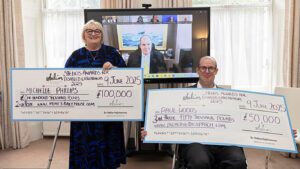
Three inspirational disabled entrepreneurs have been awarded a combined £300,000 by easyJet founder Sir Stelios Haji-Ioannou in the 17th annual Stelios Awards for Disabled Entrepreneurs, celebrating innovation, resilience and impact across the UK business community.
The top prize of £150,000 went to Umbreen David, founder of Hoama Group Ltd and owner of Iden Manor Nursing Home in Kent. Her vision to redefine compassionate care, informed by her own lived experience with muscular dystrophy and hearing loss, has transformed the home into a model of inclusive and dignified elderly care. She plans to invest in accessibility upgrades, leadership development, and a mentorship platform for disabled entrepreneurs in the care sector.
Taking second place and £100,000 was Michelle Phillips, the powerhouse behind Edinburgh’s much-loved Mimi’s Bakehouse. Diagnosed with multiple sclerosis after founding the business, Michelle has grown Mimi’s into a national bakery brand with five shops, two concessions and a flourishing online delivery service. Her prize will support relaunching the website, expanding the product range, and opening up export opportunities.
Paul Woods, founder of Proactive Despatch, claimed the £50,000 third prize. Living with cerebral palsy, Paul turned years of being underestimated into fuel for launching a courier business that now sets the standard for reliable, values-led service in the Northwest. He will use the prize to build his sales team and expand the company’s reach.
This year’s awards, held at the Stelios Foundation headquarters in South Kensington, marked a record-breaking 125 applicants—the highest in the initiative’s 17-year history. Since its inception in 2007, the Stelios Philanthropic Foundation, in partnership with disability charity Leonard Cheshire, has awarded over £1.7 million to disabled entrepreneurs in the UK.
Sir Stelios said: “We know how difficult it can be for disabled people to get a job. That is why I always believed their best option is to become their own boss. This year’s winners are blazing the trail for others—building businesses that create jobs, deliver value, and prove that disability is no barrier to success.”
The awards are more than a cash grant—they are a vote of confidence in individuals overcoming social and systemic barriers to lead thriving enterprises. With support from Leonard Cheshire and private philanthropy, they continue to shine a light on a new generation of leaders changing what’s possible in British business.
Photo: Nick Edwards
Read more:
‘Blazing the trail for others’: easyJet founder Sir Stelios awards £300,000 to disabled entrepreneurs transforming care, baking and logistics
M&S reopens online orders after cyberattack disruption
Marks & Spencer has reopened its website for online orders, nearly two months after a significant cyberattack brought its e-commerce operations to a standstill.
In a statement, the retailer confirmed that a selection of its bestselling fashion ranges is now available for home delivery across England, Scotland and Wales. Deliveries to Northern Ireland are expected to resume “in the coming weeks”.
The phased return of services will also include click and collect, next-day delivery, nominated-day delivery and international shipping, all of which are due to be reinstated gradually. M&S said it will continue adding more fashion, home and beauty products to its website each day.
The attack, which severely disrupted M&S’s digital operations, has overshadowed the retailer’s recent turnaround progress. The company has estimated the incident will cost it £300 million in operating profit this year.
While M&S has not disclosed the full technical details of the breach, it has acknowledged that online trading was “heavily impacted and remains in recovery phase”.
The resumption of online services marks a significant milestone in M&S’s efforts to restore consumer confidence and stabilise its digital operations after one of the most damaging cyber incidents in its recent history.
Read more:
M&S reopens online orders after cyberattack disruption
UK payrolls see biggest drop since covid as wage growth slows and job …

The UK labour market suffered its sharpest decline in payroll employment since the height of the Covid-19 pandemic, according to the latest official data, with wage growth cooling and job vacancies continuing to fall.
Figures from HM Revenue & Customs revealed that the number of payroll employees fell by just over 109,000 in May — the steepest monthly fall since May 2020. The annual drop now stands at 274,000. Since Chancellor Rachel Reeves’s inaugural budget in October, payroll employment has contracted by 276,000, prompting concern that rising employer costs — including a £25 billion hike in national insurance contributions this spring — are hitting jobs.
The Office for National Statistics (ONS) also reported that wage growth is slowing. Average pay excluding bonuses rose by 5.2% in the three months to April, down from 5.5% in the previous period and below analysts’ expectations. Including bonuses, wage growth stood at 5.3%, also down from 5.6%.
This cooling came despite the 6.7% increase in the minimum wage in April. KPMG UK’s chief economist Yael Selfin said the figures indicated that wage pressures are likely to ease further this year as the economy slows. “This will limit workers’ bargaining power,” she added.
The UK unemployment rate also edged up to 4.6% in the latest quarter — the highest level since the post-lockdown rebound in 2021. Job vacancies dropped by a further 63,000 to 736,000, as many firms appeared to delay or freeze hiring.
ONS director of economic statistics Liz McKeown said that feedback from businesses indicated a growing hesitancy to replace workers or hire new staff. “There continues to be weakening in the labour market,” she said. “Some firms may be holding back from recruiting.”
Despite this, wage levels remain historically strong, particularly in the public sector, where pay rose by 5.6% compared to 5.1% in the private sector. “Public sector pay is now growing at a higher rate than private sector wages,” McKeown added.
The deteriorating jobs outlook could provide the Bank of England with justification for further interest rate cuts, especially after last week’s soft earnings and inflation data. With inflation now back up to 3.5% in April — its highest since January — the Bank remains under pressure to balance cooling wage growth against stubborn price pressures.
James Smith, economist at ING, said the data “helps cement” rate cut expectations for August and November. Rob Wood of Pantheon Macroeconomics agreed, noting that “the labour market looks in worse shape in May, which could tip the MPC into cutting rates again in August”.
Markets responded swiftly. Sterling dropped 0.6% against the dollar to $1.34, while the yield on 10-year gilts fell to 4.56%. The FTSE 100 rose 0.48% and the FTSE 250 gained 0.40%.
The figures land ahead of Rachel Reeves’s hotly anticipated spending review on Wednesday, where she is expected to outline the government’s day-to-day spending for the next three years, alongside over £100 billion of capital investment.
With calls mounting for increased funding across public services — from defence to welfare — and UK borrowing costs still high, the pressure on the government’s economic strategy is growing.
New GDP figures out this Thursday are expected to show that the UK economy shrank slightly in April, despite a 0.7% expansion in the first quarter. If confirmed, this would reinforce concerns that the post-election honeymoon may be short-lived as Britain’s labour market begins to stall.
Read more:
UK payrolls see biggest drop since covid as wage growth slows and job market weakens
Half of Brits would trust AI for legal advice, survey finds – but ex …

Artificial intelligence may be revolutionising everything from admin to healthcare, but would you trust it with your legal affairs? According to a new survey by The Legal Director, half of UK adults would — a finding that has sparked both fascination and concern across the legal sector.
The poll found that 50% of Brits would turn to AI over a traditional solicitor for legal decision-making, and a further 56% would trust it to interpret contracts or terms and conditions. That figure rose among younger respondents and men, with 55% of men and over 60% of Gen Z respondents saying they would rely on AI for legal guidance. By contrast, just 39% of over-75s would consider doing so.
Perhaps most surprisingly, a third of respondents said they would trust AI over friends for legal advice, while nearly half (46%) said they’d use it before seeking health advice. But while the appetite for digital decision-making is growing, experts are sounding a note of caution.
Kiley Tan, a lawyer at The Legal Director, warned that AI tools – especially large language models not trained on verified legal material – are not yet fit for purpose in a legal context. “Legal services can be expensive, and there’s no doubt that AI seems like a clever workaround. But the results, though convincing, can be wildly inaccurate,” he said. “And in law, close isn’t good enough.”
Tan also pointed out that most contracts are not publicly available and so fall outside the datasets on which most AI systems are trained. This lack of access to real-world legal documents further limits AI’s ability to offer sound advice or draft enforceable contracts.
While tech evangelists praise AI for its speed and cost-efficiency, the survey revealed that trust in AI drops sharply as tasks become more personal or consequential. Two-thirds of respondents said they wouldn’t let AI perform surgery on themselves or a loved one. Over half wouldn’t trust it to plan their wedding or handle their bills.
Sarah Clark, Chief Revenue Officer at The Legal Director, echoed these concerns: “AI is brilliant at sorting data and automating admin, but when it comes to law, nuance matters. Context, consequences, emotional insight — these are all vital when interpreting the law or negotiating a legal outcome.”
Even among the most tech-forward demographic — those aged 18 to 29 — scepticism remains. While they were the most likely to consider AI for legal support, 43% still said they wouldn’t fully trust it, and nearly 40% wouldn’t rely on AI to read a contract on their behalf.
Ultimately, just 15% of the UK public said they would trust AI to perform all the tasks they were asked about — a clear indication that the human touch still matters in areas of judgement, risk and responsibility.
As AI continues its march into professional services, the message from the legal world is clear: use technology to assist, not replace. For now, when it comes to navigating legal complexity, there’s still no substitute for the trained eye of a human expert.
Read more:
Half of Brits would trust AI for legal advice, survey finds – but experts urge caution
Starmer pledges £1bn investment to supercharge UK tech and AI infrast …

Sir Keir Starmer has unveiled a £1 billion investment package aimed at scaling up the UK’s computing power twentyfold, in a major push to solidify Britain’s status as a global technology and artificial intelligence leader.
Opening London Tech Week this morning, the prime minister said the investment would form part of the government’s long-term ambition to be “the best state partner for tech entrepreneurs anywhere in the world.”
The funding boost is expected to play a central role in the forthcoming spending review by Chancellor Rachel Reeves, with industry leaders anticipating further announcements on the development of AI growth zones. These zones would expedite planning approvals and guarantee access to clean energy for data centres—key enablers of AI development and deployment.
The move comes as tech giants and investors increasingly highlight the UK’s potential in AI, but also warn of infrastructure bottlenecks. Speaking at the same event, Nvidia’s chief executive Jensen Huang described the UK’s AI sector as “the envy of the world,” but added that the country lacks one crucial element: “If you’re in the world of AI, you do machine learning. You can’t do machine learning without a machine.”
Huang’s comments were echoed in conversations with Starmer and Baroness Gustafsson, the new minister for investment. “The ability to build these AI supercomputers here in the UK will naturally attract more start-ups,” Huang said, signalling that AI infrastructure will be key to maintaining the UK’s competitive edge.
The government’s AI strategy, outlined in January, promised a roadmap for national AI infrastructure within six months. Today’s announcement marks a major step towards that goal, addressing industry calls for greater clarity and investment in the physical and digital foundations needed to support advanced computing and innovation.
Starmer’s pledge is likely to be welcomed by tech investors and entrepreneurs, many of whom have argued that, despite the UK’s academic strength and entrepreneurial culture, its progress in AI has been held back by limited access to high-performance computing and grid-ready energy infrastructure.
The Prime Minister’s remarks also signal a shift towards a more collaborative relationship between government and the tech industry, with an emphasis on long-term, joined-up planning. “This is not just about creating infrastructure,” Starmer said. “It’s about creating confidence—confidence that the UK is a place where innovation can thrive, where start-ups can scale, and where the state is an active and reliable partner.”
With London Tech Week serving as a global platform for UK tech ambition, today’s announcement sets the tone for a pivotal summer in digital policy and investment. Whether this promise will translate into the infrastructure, skills and energy reforms the sector demands will likely be revealed in Reeves’s detailed budget plans later this week.
Read more:
Starmer pledges £1bn investment to supercharge UK tech and AI infrastructure
Business leaders paralysed by risk warn BDO as caution stifles growth

Global business leaders are becoming increasingly paralysed by a relentless cycle of crises, with their excessive caution now posing a significant threat to growth, according to BDO’s Global Risk Landscape Report 2025.
The annual report, based on a survey of 500 C-suite executives at firms with revenues over $100 million, reveals that 84% of decision-makers believe the global risk environment is now defined by constant crisis—up from 76% last year. In response, nearly seven in ten (69%) say their organisations are now ‘risk averse’ or actively ‘risk minimising’, compared with 61% in 2024.
Alarmingly, the number of executives describing their risk management strategy as ‘very proactive’ has plummeted to just 7%, a sharp decline from 19% last year and 29% in 2023.
The top concerns dominating boardroom agendas include regulatory risk, supply chain fragility, talent acquisition and retention, geopolitical instability, environmental challenges, and cybercrime. While regulatory oversight is increasing, only 39% of respondents believe it significantly reduces company risk. The majority—57%—see it as only ‘somewhat helpful’, while a growing number of CEOs are expressing frustration over compliance costs they feel deliver limited strategic value.
Alisa Voznaya, partner and head of risk consulting at BDO, warned that too many leaders are responding to uncertainty with defensive stagnation. “The risk landscape for businesses has been in flux for more than a decade and shows no sign of stabilising,” she said. “Faced with this relentless volatility, some business leaders are being too hesitant to take decisions and are paralysed by fear. But this safety-first approach means businesses are missing out on opportunities and limiting their growth prospects.”
Voznaya argues that overreliance on compliance frameworks is leading to a box-ticking culture that distracts from the active management of real-world risks. “Many would do well to adopt a more proactive approach, engaging in regular scenario planning and anticipating the things that could go wrong so they can start to identify opportunities,” she added. “Businesses shouldn’t lose sight of the fact that there can be competitive gains to be made from responding positively to challenging circumstances.”
The research highlights a tension between the pressure to maintain resilience and the need to invest in future growth. With regulation increasing across almost every sector—from financial services and life sciences to manufacturing and private equity—executives report being bogged down in compliance rather than focusing on innovation or agility.
BDO’s findings suggest that risk management must evolve beyond static frameworks to become more dynamic and opportunity-led. As Voznaya concludes: “It’s time to move from paralysis to purpose. Businesses that can shift their risk mindset from reactive to resilient will be best placed to thrive in an era defined not by certainty, but by adaptability.”
Read more:
Business leaders paralysed by risk warn BDO as caution stifles growth
Nintendo Switch 2 launches at midnight as fans queue worldwide

Stores opened their doors at midnight across the globe as Nintendo fans scrambled to get their hands on the highly anticipated Switch 2, the gaming giant’s first direct console sequel.
The launch saw eager queues from Tokyo to Toronto, with UK tech retailer Currys calling it their “biggest gaming pre-order ever” after selling 30,000 units ahead of release.
Despite the fanfare, the rollout wasn’t without hiccups. Retailer Game cancelled a number of pre-orders, and earlier this year, Nintendo temporarily paused US orders over tariff concerns. Even so, the global buzz remained undimmed as crowds gathered to unbox the successor to the original Switch—one of the best-selling consoles of all time, with more than 150 million units sold since 2017.
Currys attributed the huge demand to “incredible excitement” surrounding both the console and its flagship title, Mario Kart World, which headlines the launch. Yet the £74.99 price tag for the game has raised eyebrows—around £15 more than most Nintendo titles—prompting questions about affordability.
“It’s a big deal for us,” said Tushar Sandarka, president of the University of York’s Mario Kart society. “Even if it’s more expensive than I’d hoped, it’s going to serve me well for the next 7 or 8 years.” Others were less convinced. Students Mae and Lottie told the BBC they’d stick with the original Switch due to the cost. “It’s quite spenny,” Mae said, while Lottie added, “I’m not spending a day’s pay on a game.”
For Nintendo, the Switch 2 signals a shift in strategy. Unlike previous consoles, it carries the same name as its predecessor, reinforcing a clear message to existing fans. “This is the first time Nintendo has launched a straight sequel,” said Sam Loveridge, brand director at GamesRadar+. “It’s a clear proposition. Consumers know exactly what they’re getting.”
The hybrid console—playable both handheld and on a TV—features a larger, brighter screen, improved storage, and enhanced power. Early hands-on testers noted clever innovations such as using the controller like a computer mouse, offering new ways to play PC-style games like Civilization VII.
However, beyond Mario Kart World and a small tech-demo title called Welcome Tour, few major first-party titles are available on launch day. The likes of Metroid Prime 4, Donkey Kong: Bananza, and Super Mario Party Jamboree TV are still in development. Nintendo has instead focused on launching upgraded editions of Breath of the Wild and Tears of the Kingdom, enhanced to showcase the Switch 2’s capabilities.
Third-party developers are stepping in to fill the initial void, with titles such as Rune Factory: Guardians of Azuma, Cyberpunk 2077, and Bravely Default available from day one. “This more powerful console brings Nintendo into more direct competition with Sony and Microsoft,” said Katie Holt, senior analyst at Ampere Analysis.
Nintendo’s senior director Takuhiro Dohta acknowledged that developers will need time to fully explore the console’s capabilities. “As developers continue to understand the hardware, we can expect improvements not only in graphics but in gameplay too,” he said.
With launch-day excitement running high, early indicators suggest strong sales. But whether the Switch 2 can match the enduring appeal of its predecessor may ultimately hinge on broader software support—and how far fans are willing to stretch their budgets.
Read more:
Nintendo Switch 2 launches at midnight as fans queue worldwide
Fears grow that Tata Steel could be excluded from Starmer-Trump trade …

Tata Steel, the UK’s largest steelmaker, faces potential exclusion from Prime Minister Keir Starmer’s new tariff-free trade agreement with the United States, prompting urgent talks between ministers and US counterparts.
The company, which operates the vast Port Talbot site in south Wales, fears it may fall foul of stringent US origin rules that threaten its $100 million annual export business to America.
Speaking on Wednesday, Starmer confirmed that the agreement – brokered with US President Donald Trump last month to lift tariffs on UK steel and aluminium – could be enacted “in just a couple of weeks”. The deal pauses the imposition of new 50% tariffs on British metals and keeps the current rate at 25% until at least 9 July. However, key implementation details, including quota sizes and qualifying conditions, have yet to be finalised.
At the heart of the issue is the “melted and poured” rule that governs US steel imports, which mandates that steel must be manufactured entirely in the country of origin to qualify for tariff exemptions. Tata Steel, in the midst of transitioning to greener production using electric arc furnaces, has been importing steel from its sister companies in India and Europe to fulfil orders – a practice that could breach the US requirements.
The Times has reported that UK negotiators are pressing for a carve-out that would allow Tata’s steel to qualify under the new trade terms. A senior government source told the paper they were “confident” that a solution could be found, but acknowledged that “the negotiations are complex.”
Tata Steel shut down its traditional blast furnaces at Port Talbot last year as part of its £1.25 billion plan to decarbonise production. While this move aligns with the UK’s green industrial strategy, it has introduced complications for exports to markets such as the US that enforce rigid origin definitions.
The US has also raised concerns over British Steel, currently owned by Chinese conglomerate Jingye Group. American officials reportedly worry that Chinese state-linked ownership could create a “back door” for Chinese steel to enter the US market under a British flag. In response, the UK government invoked emergency powers in April to temporarily take control of British Steel’s Scunthorpe plant, citing national security concerns.
The urgency surrounding the agreement has intensified amid a global escalation in trade protections. Earlier this week, the US formally increased steel and aluminium tariffs to 50% for most international partners, placing significant pressure on UK exporters.
Industry leaders have urged both governments to fast-track the trade agreement. Russell Codling, a director at Tata Steel, told MPs that ongoing delays have disrupted approximately £150 million in transatlantic business. “If we can get this deal enacted as quickly as possible … it will get stability for us and for our customers in the US,” he said.
While the UK government is framing the US-UK Economic Prosperity Deal as a flagship post-Brexit win, the uncertainty over Tata’s eligibility underscores the complex realities of global trade policy – particularly when it intersects with industrial strategy, environmental goals, and national security sensitivities.
Read more:
Fears grow that Tata Steel could be excluded from Starmer-Trump trade deal

