

Trump Media and Technology Group (TMTG) has struck a deal to broadcast GB News on its US-based streaming platform, Truth+, in a move that will make the UK right-leaning channel accessible to audiences worldwide.
TMTG – which operates Truth Social, Truth+, and the financial services brand Truth.Fi – confirmed the agreement on Friday, saying GB News will be available with the free basic Truth+ package on multiple devices and platforms, including iOS, Android, Web, Apple TV, Android TV and Amazon Fire.
The deal will significantly expand GB News’s footprint, particularly in the US, where it will now sit alongside a roster of other content on the streaming service. The British network, known for hosting figures such as Nigel Farage, positions itself as a champion of free speech and an alternative to what it calls “mainstream” news.
The move comes as Donald Trump continues his sustained criticism of US mainstream media, labelling outlets “radical-left monsters” and accusing them of “illegal” reporting. The White House’s communications director, Steven Cheung, recently accused “liberal media” of spreading “fake news” following reports linking Trump’s name to US Justice Department files on Jeffrey Epstein – a claim Trump has denied.
Speaking about the deal, TMTG chief executive and chair Devin Nunes said: “GB News is a terrific source for news, facts and commentary. By expanding its global reach, we aim to connect an enormous new, international audience to the network’s unique reporting and opinion, while putting another dent in the global woke news monopoly.”
GB News chief executive Angelos Frangopoulos described the partnership as a strategic step: “As the fearless champion of freedom of speech in Britain, it is important that we launch across the United States of America and globally on the Truth+ streaming platform.”
The rollout reinforces GB News’s ambition to grow its international audience and aligns with Trump Media’s push to expand its streaming offering beyond the US.
Read more:
Trump Media to stream GB News on Truth+ in global expansion deal
Month: August 2025
From Altadena to Westminster: climate denial is a luxury we can’t af …

I’ve been to Los Angeles many times over the years — for work, for pleasure, and occasionally for that curious hybrid of both that journalists tell their accountants is “business travel”. I’ve always loved the place: the optimism in the air, the palm-lined streets, the sun-washed hills rolling down to the Pacific.
But this time was different. The hills were scorched. The air was acrid. Driving into Altadena, I was met not by the familiar suburban hum but by the sight — and smell — of destruction. Houses gutted. Trees reduced to brittle, blackened bones. A haze that clung to the lungs.
The Altadena fires had not just burned through land. They’d burned through lives. People who had built homes, memories, and futures there now stood in the ash, holding nothing but what they’d managed to carry out in the scramble to safety.
And it wasn’t just the physical damage. It was the mood. Conversations were quieter, eyes heavier. You could feel the shared trauma — the knowledge that the place they loved could, at any moment, be taken again.
I was so moved by what I saw that I did something I rarely do on the road: I stopped, set up my phone, and recorded a short video for the EV Powered YouTube channel. Standing there in the still-smouldering aftermath, I spoke about the urgency of action on climate change. You can watch it here: EV Powered – LA Fires.
And yet, despite the unarguable evidence — the rising temperatures, the worsening storms, the lengthening wildfire seasons — there are still those who stand before cameras and insist that climate change is some elaborate hoax. In the US, Donald Trump has made a sport of it. His casual dismissal of climate science has been a defining theme of his politics, playing to the crowd but abandoning the planet.
It’s a dangerous luxury, this denial. It allows leaders to dodge difficult policy decisions, to swerve the costs of action, to keep the machine humming exactly as it always has. But it comes at the expense of people like those in Altadena, and the farmers in Oxfordshire, and communities everywhere that are already paying the price in floods, droughts, fires, and food shortages.
And climate denial is not confined to the MAGA circuit. In Britain, we too have our own chorus of sceptics — some in the press, some in the pub, and some, regrettably, in positions of real influence, and then there is Reform UK’s very strong opinion on the topic. They cloak themselves in the language of “common sense”, as though ignoring a problem is somehow more practical than solving it.
This is where my LA trip connected in my mind to my previous column on Jeremy Clarkson. Clarkson is no Trump — he’s not campaigning to roll back environmental protections, and he’s done more to educate the public on the realities of farming than any politician I can name. But when he waves away the link between extreme weather and climate change, it feeds the same complacency that lets fires burn hotter, seas rise faster, and communities like Altadena bear the brunt.
Here’s the hard truth: the cost of action is high, but the cost of inaction is ruinous. Businesses know this — supply chains are disrupted by floods, crop yields are hit by droughts, insurance costs soar with every “once-in-a-century” disaster that now happens every other year. Whether you’re running a farm in Chipping Norton or a logistics hub in California, climate change is a line on your P&L whether you acknowledge it or not.
The lesson from Altadena is not simply that wildfires happen. It’s that they are happening more often, more intensely, and in places that didn’t used to burn. And unless we accept the link to our changing climate — and act accordingly — they will keep happening.
Flying home, I thought about the people I’d met there. Not activists, not lobbyists, not political operatives — just residents, trying to rebuild. They don’t have the luxury of debating whether the climate is changing. They are living in the aftermath of the answer.
If there’s one thing the business community can take from this, it’s that leadership means facing reality, even when it’s inconvenient. We can’t keep treating climate change as someone else’s problem, or tomorrow’s problem, or — worst of all — not a problem at all. Because by the time the flames are at your door, it’s too late to deny they’re real.
Read more:
From Altadena to Westminster: climate denial is a luxury we can’t afford
The Ivy faces legal challenge from waiter over share of tips and servi …

The Ivy is facing a legal battle with a former waiter who claims the upmarket restaurant chain unfairly allocated him a share of tips and service charges – and refused to explain how his portion was calculated – despite a new law requiring fair and transparent distribution.
The part-time waiter, who resigned in June and asked not to be named, alleges constructive dismissal and says his share of a £31,562 monthly pot of tips and service charges at his branch was “totally unfair”.
He claims that for 43 hours’ work in March he initially received £46.34 in gratuities and service charges, later increased to £97.45. By his estimate, his hours accounted for around 2% of the total worked by staff that month – yet he received less than 1% of the total funds collected.
The Ivy disputes his calculations, describing them as “inaccurate and misleading”, and says an independent consultancy oversees its distribution process. The company has branded the ex-waiter a “disgruntled and discredited” former employee and vowed to challenge the claims at an April 2026 employment tribunal.
Under the Employment (Allocation of Tips) Act 2023, 100% of service charges collected in a venue must be shared among workers in a fair and transparent way, and employees have the right to know how tips are allocated and distributed.
The Ivy, owned by Richard Caring’s Troia (UK) Restaurants, says it complies with the legislation via a “tronc” system, in which staff are allocated “tronc points” that determine their monthly share. However, employees are not told how those points are decided or how their allocation compares with other team members’.
A company spokesperson said: “We absolutely refute all the claims that are being made and will provide all the evidence necessary to disprove these allegations to the employment tribunal. We introduced a fair and transparent scheme after consultations with staff that is overseen by employee representatives and an independent, third-party business.”
The Ivy says revealing individual tronc allocations could breach employee privacy.
Employment lawyer Michael Newman of Leigh Day says the case could test the strength of the new legislation: “This was introduced to make the system fairer. Either the company has avoided it, or the law hasn’t achieved its purpose. This case could clarify if employers must provide more detail on service charge distribution.”
The waiter’s payslips did not separate personal tips from service charges, nor reveal how his share compared to kitchen staff or managers. He claims repeated requests for clarification from late 2023 went unanswered.
In April, he received a warning over alleged performance issues, which he disputes, and says he filed a formal request for details of his tip allocation around the same time. He resigned two months later.
The outcome of the tribunal could have far-reaching implications for hospitality employers and staff, potentially forcing greater transparency over how tips and service charges are divided.
Read more:
The Ivy faces legal challenge from waiter over share of tips and service charges
How Europe’s car industry can survive the Chinese EV challenge

China’s electric vehicle (EV) manufacturers are rapidly expanding into Europe, offering cheaper, faster-to-market, and technologically advanced cars – a combination that threatens to disrupt the continent’s traditional automotive giants.
Brands such as Zeekr, a premium EV maker owned by Geely, are already selling in several European countries and plan to enter the UK within two years. Zeekr’s highly automated plants, vertical integration, and proprietary battery and software technology give it an edge over legacy carmakers hampered by complex supply chains, internal silos and slower development cycles.
“All new cars sold in the UK and EU must be zero-emission by 2035, and Europe’s car industry is under huge pressure to adapt,” says Professor Peter Wells, director of the Centre for Automotive Industry Research at Cardiff University. “Chinese firms are nimble, fast and technologically advanced – especially in software, where European firms have struggled.”
Last year, Europe registered almost two million fully electric cars, but price, charging infrastructure and consumer hesitation remain challenges. While European manufacturers such as Jaguar Land Rover, Nissan, Volkswagen, and Renault are retooling for an electric future, analysts warn they are a decade behind China in both production capacity and supply chain control for critical battery minerals.
Andy Palmer, former Aston Martin CEO and ex-Nissan executive, says tariffs are a short-term fix that could leave Europe further behind: “Tariffs insulate the baby, so the baby never learns to walk. The price of entry for Chinese brands should be localisation – build here, employ here, invest here.”
He points to Nissan’s Sunderland plant as proof that local manufacturing can create strong automotive ecosystems. “The UK has clout as Europe’s second-largest EV market. We should use it,” Palmer argues.
Chinese EV makers have focused on compact, efficient, and affordable cars – such as Nio’s soon-to-launch Firefly – while European brands have pushed larger, more expensive SUVs. Wells says this mismatch risks ceding the mass market to Chinese rivals.
The EU has imposed tariffs of up to 45% on some Chinese EV imports, but member states are divided: Germany fears retaliation against its exports to China, while France and Italy back stronger trade barriers. Chinese firms are already exploring tariff workarounds, including shifting production to Turkey.
Analysts say Europe must prioritise innovation, affordability and strategic alliances over trade barriers. Al Bedwell at GlobalData believes Chinese brands will take around 15% of Europe’s all-electric market by the mid-2030s – significant, but “not an existential threat”.
“Europe can’t compete on cost, but it has brand recognition, dealer networks and after-sales service that take time to build,” Bedwell says. “Some Chinese brands have entered markets without understanding local customer preferences.”
Partnerships are already emerging – Stellantis has invested in Leapmotor, while BMW and Audi have signed joint projects with Chinese firms.
Felipe Munoz, an automotive analyst in Turin, says Europe’s high costs and complex regulations are a handicap: “These rules were designed when China wasn’t a player. We need lower taxes, less red tape and more R&D incentives.”
Palmer remains cautiously optimistic: “We have a once-in-a-generation chance to reset Europe’s automotive industry. If we act wisely – and quickly – Europe can still lead in EVs. If we rely on tariffs and delay tough decisions, we’ll face terminal decline.”
Read more:
How Europe’s car industry can survive the Chinese EV challenge
Employment minister warns ‘job deserts’ and long-term sickness are …

Employment minister Alison McGovern has warned that “job deserts” and high rates of long-term sickness are holding back towns and cities across the UK, leaving too many people “on the scrap heap” and stifling local economies.
Speaking as the Government unveiled new plans to boost recruitment through Jobcentre Plus, McGovern said concentrated pockets of economic inactivity were harming both individuals and the regions in which they live.
“We’ve got too many people who’ve essentially been put on the scrap heap and that’s bad for them individually,” she said. “But it’s also bad for those places in our country where there are high concentrations of people in that position, because that town and that city is also held back.”
According to the Office for National Statistics (ONS), the UK’s overall rate of economic inactivity stands at 21%. In some areas, more than half of working-age adults are out of work and not seeking employment.
The 2021 census showed that part of Stockton-on-Tees in County Durham has the highest rate of inactivity in the UK at 67%. Knowsley in Merseyside has the highest proportion of working-age residents receiving fit notes from their GP, at 31.4%.
McGovern linked the issue to the nation’s health, warning that the number of people leaving the workforce due to long-term sickness has risen sharply since the pandemic.
With only 9% of UK businesses using job centres to hire staff, the Department for Work and Pensions is writing to more than 8,000 of the country’s largest employers to promote the benefits of recruiting through Jobcentre Plus.
The Government is investing in additional staff to provide “comprehensive recruitment support” and launching pre-employment training programmes in partnership with employers.
KFC is among the companies working with the scheme, offering paid work experience to help young people move into full-time jobs. “It’s about giving young people a fair shot at a first job,” said Shaffra Gray-Read of KFC. “So many young people are locked out of opportunity.”
Between January and March 2025, there were 923,000 people aged 16–24 not in education, employment or training, according to ONS figures.ke me to prepare that?
Read more:
Employment minister warns ‘job deserts’ and long-term sickness are holding back Britain
Former Dragons’ Den star Julie Meyer stripped of MBE after court con …

Former Dragons’ Den star Julie Meyer has been stripped of her MBE after being found in contempt of court over a long-running dispute involving almost £200,000 in unpaid legal fees.
The 58-year-old US-born venture capitalist, awarded the honour in 2011 for services to entrepreneurship, was handed a six-month suspended prison sentence after repeatedly failing to submit documents or attend hearings.
According to the Cabinet Office’s latest list of forfeitures since August 2023, Meyer lost the honour for “bringing the honours system into disrepute”. She is one of only two women on the list, alongside former Post Office chief executive Paula Vennells, who forfeited her CBE over the Horizon IT scandal.
Meyer, who became one of two new Dragons on an online version of the BBC Two show in 2009 and served as an enterprise adviser to then–Prime Minister David Cameron in 2010, became embroiled in a legal battle with Farrers, the law firm that once represented Queen Elizabeth II.
The dispute began in 2022, when a warrant was issued for her arrest after she failed to attend a High Court hearing on 14 February. Meyer argued she could not travel from Switzerland due to conjunctivitis and her unvaccinated status against Covid-19, but a judge ruled her medical evidence was insufficient.
Farrers claimed she owed partner Julian Pike £197,000 for work carried out in a Maltese court case. Meyer disputed the bill, claiming the services were worth only £50,000.
Mr Justice Kerr described Meyer as “a selfish and untrustworthy person”, adding: “I am satisfied there is every prospect that the defendant will continue to flout orders of the court unless coerced into obeying them.”
Once celebrated for her role in championing entrepreneurship, Meyer’s reputation has been tarnished by the legal dispute and subsequent contempt ruling. The loss of her MBE marks a significant fall from grace for the entrepreneur, who had been seen as a rising figure in UK business circles during the early 2010s.
Read more:
Former Dragons’ Den star Julie Meyer stripped of MBE after court contempt ruling
Deliveroo posts £19m loss despite £1bn revenue as Doordash takeover …

Deliveroo has reported a £19.2 million loss for the first half of 2025, despite an 8% rise in revenues to £1 billion, as costs linked to its £2.9 billion takeover by US rival DoorDash weighed on its results.
The loss marks a reversal from the £1.3 million profit recorded in the same period last year, which was the London-listed food delivery company’s first-ever profit. Deliveroo said the downturn was driven by “higher exceptional items” tied to the acquisition, which was announced in May and is expected to complete later this year.
Excluding one-off expenses, Deliveroo reported a tax-adjusted profit of £31.8 million for the six months to 30 June. The company highlighted risks to its operations including cybersecurity threats, increasing competition, changing market conditions and regulatory challenges.
Once the DoorDash deal completes, Deliveroo will delist from the London Stock Exchange – another blow for the UK market – and operate under the San Francisco-based group’s ownership, pending final regulatory approvals.
Chief executive and founder Will Shu said the business continued to improve customer engagement, with “order frequency and retention” rising across all cohorts.
“Today, both growth and profitability are accelerating,” Shu said. “I’m excited for what the partnership with DoorDash can bring in the future. They will be an excellent partner for everyone at the company, as well as for our consumers, merchant partners and riders.”
Rumours of the takeover, which began circulating in April, have lifted Deliveroo’s share price from 123.4p at the start of that month to 177.3p today, giving the company a market value of £2.65 billion.
Read more:
Deliveroo posts £19m loss despite £1bn revenue as Doordash takeover costs bite
Rayner defends plan to raise 18-year-old minimum wage despite business …
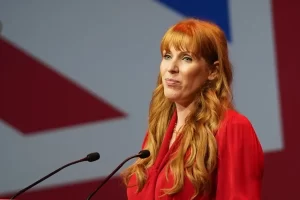
Angela Rayner is pressing ahead with plans to raise the minimum wage for 18–20-year-olds to match the adult rate, despite warnings from business groups that the move risks pricing young people out of work.
The Deputy Prime Minister has asked the Low Pay Commission to draw up proposals to scrap the £2-per-hour gap between the current minimum wage for 18–20-year-olds (£10) and those aged 21 and over (£12.21). The policy, backed by trade unions, forms part of Labour’s election pledge to “make low pay a thing of the past” and remove “discriminatory age bands”.
The move is also seen as part of Labour’s strategy to court younger voters amid polling gains by Reform UK. Last month, Rayner also set out plans to lower the voting age to 16 before the next general election.
Industry leaders say the policy risks accelerating youth job losses in sectors already hit by rising employment taxes. Kate Nicholls, chair of UKHospitality, said hospitality has shed 84,000 jobs in the past six months, partly due to the £25bn employer National Insurance rise introduced last autumn.
“We understand the Government’s objective of fair pay, but you can only have fair pay if you have a job that actually pays,” Nicholls said. “Now is not the time to make big jumps in employment costs.”
Pubs, hotels and restaurants – key employers of young people – have been “hammered” by the tax changes, she added, warning that the new wage rise could destroy even more entry-level jobs.
Jane Gratton, deputy director of policy at the British Chambers of Commerce, said almost one million young people are currently not in employment, education or training. “Employers want to help, but the rising cost of employment makes that very difficult for many firms,” she said. “If wages rise too fast in this age group, it could mean fewer opportunities.”
The business backlash has been intensified by Chancellor Rachel Reeves’ decision to lower the threshold for employer National Insurance contributions to £5,000, pulling more part-time workers into the scope of the tax.
Nicholls said the change is disproportionately affecting youth employment and part-time work. “All the warning signals on the labour market are flashing red. Now is the time for caution, not going too far,” she said.
Despite business concerns, new YouGov polling shows strong public support for equalising the minimum wage for over-18s. Two-thirds (67%) of respondents believe 18–20-year-olds should receive the same minimum wage as those aged 21 and above. Only 22% support a lower rate, while 11% are unsure.
Rayner insists the policy will boost disposable incomes and growth. “This remit is the next milestone in our plan to get more money in working people’s pockets, raise living standards in every part of the UK, and get our economy growing,” she said.
The Low Pay Commission is now tasked with setting out a path to align the youth and adult minimum wage rates. If implemented, the change would hand a pay rise to hundreds of thousands of young workers – but business groups warn it could also reshape the youth employment market.
Read more:
Rayner defends plan to raise 18-year-old minimum wage despite business backlash
Trump opens $9tn US retirement market to crypto in landmark executive …

President Donald Trump has signed a historic executive order that will allow cryptocurrencies and alternative assetsinto US 401(k) retirement plans for the first time — a move expected to fundamentally reshape long-term wealth building strategies and ripple through global capital markets.
The announcement unlocks access to the $9 trillion US retirement market, historically limited to equities and bonds, by revising investment rules and encouraging retirement plan providers to include digital assets and private equity among investment options.
“This is a defining moment not just for crypto, but for the entire future of finance,” said Nigel Green, CEO of international wealth and asset management firm deVere Group.
“The world’s largest economy is saying, in effect, that digital assets now belong in the core of long-term wealth strategies. This has global implications.”
The executive order instructs US regulators to reassess and modernise longstanding restrictions on 401(k) investment options. Until now, these employer-sponsored plans — used by over 90 million Americans — have been unable to offer crypto exposure, despite mounting investor interest and the surging value of digital currencies in 2025.
“This order breaks the psychological and regulatory barrier that’s kept crypto in a sandbox. Now it’s mainstage,” said Green.
Analysts believe that even a modest allocation of 1–2% to crypto within retirement portfolios could trigger hundreds of billions of dollars in inflows, further accelerating the institutionalisation of digital assets.
The executive order also establishes the American Manufacturing and Investment Programme, which aims to promote US-based blockchain innovation and capital formation, with a focus on digital asset infrastructure.
While the US leads the way, other jurisdictions may now feel pressure to follow suit. In Europe, regulators are reportedly under growing pressure to revisit pension directives and modernise retirement frameworks. In Asia, where crypto adoption is already advanced, investors and governments are watching the US move closely.
“The floodgates are opening,” said Green. “Retirement savings are among the most conservative asset pools. If crypto can earn its place there, it can earn its place anywhere.”
The policy shift comes during a record-breaking year for digital currencies, with Bitcoin hitting all-time highs, fuelled by fresh sovereign interest, institutional demand, and favourable regulatory momentum.
Meanwhile, large firms — including pension managers and sovereign wealth funds — are increasingly seeking inflation-hedged, high-growth assets as traditional portfolios struggle with volatility and geopolitical uncertainty.
“Investors want exposure to the future. They don’t want to miss out,” Green added. “This move allows them to build that exposure inside their most important financial vehicles — with guidance and safeguards.”
While Trump’s order follows years of lobbying by digital asset firms, insiders suggest that the inclusion of crypto specifically was the tipping point that helped push the reforms through.
The announcement signals a deeper political embrace of crypto — a sharp contrast to earlier US policy under successive administrations which often focused on restrictive enforcement and regulation.
Trump has previously expressed both admiration and frustration with the crypto industry, but this move places the US president at the forefront of global crypto integration.
While the executive order opens new investment frontiers, it also brings new responsibilities for plan providers, advisors, and investors. Crypto markets remain volatile, and investment risk must be carefully managed — particularly in retirement portfolios where stability is prized.
However, with proper diversification, education, and professional oversight, industry leaders argue that the long-term benefits outweigh the risks.
“Crypto is no longer just an option for speculative traders or hedge funds,” said Green. “It’s becoming part of the financial DNA of today’s world.”
Read more:
Trump opens $9tn US retirement market to crypto in landmark executive order

