
August 2025 – Page 8 – AbellMoney

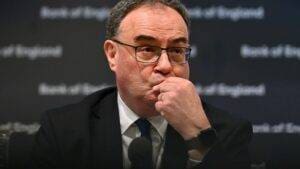
Bank of England cuts interest rates to 4% in historic two-round vote a …

The Bank of England has cut interest rates to 4%, their lowest level in more than two years, following a split vote among policymakers that reflects deep uncertainty over the UK’s economic outlook.
In a historic two-round vote, the Bank’s Monetary Policy Committee (MPC) voted 5-4 in favour of a 0.25 percentage point reduction, lowering the base rate from 4.25%. It marks the fifth quarter-point cut in the past 12 months and the first time since the MPC’s formation in 1998 that two ballots were needed to reach a decision.
The initial vote was evenly divided, with four members favouring a cut, four preferring to hold, and one voting for a larger 0.5-point cut. In the second round, five members backed the quarter-point reduction that ultimately prevailed.
The cut, announced at midday on Thursday, comes despite a rise in inflation to 3.6% in June, and represents a carefully balanced move to support a weakening economy under pressure from tax hikes, falling consumer demand, and rising unemployment.
“This was a finely balanced decision,” said Governor Andrew Bailey. “Future rate cuts will need to be made gradually and carefully.”
The Bank’s decision comes as GDP contracted in April and May, unemployment hit a four-year high of 4.7%, and payrolled staff numbers fell for five consecutive months, partly due to April’s £25 billion increase in employers’ National Insurance contributions.
While inflation is expected to climb further to 4% in September, the MPC majority judged that the economic headwinds now justify more accommodative policy.
“There has been sufficient progress on inflation, but we’re also seeing higher layoffs and sluggish consumer spending,” the Bank said.
Alan Taylor, an external MPC member who initially supported a larger rate cut, changed his vote in the second round, warning of an “increased recession risk” if monetary policy remained too tight.
However, Huw Pill, the Bank’s chief economist, and three other members voted to hold rates, citing concern over wage-price spirals and arguing that more data was needed to confirm a sustained downward trend in inflation.
The Bank now expects inflation to remain above its 2% target until well into 2026, driven by:

Higher food and energy prices
A 6.7% rise in the minimum wage
Secondary inflation from April’s NICs hike

It also warned that September’s inflation rate, which determines uprating of benefits and the state pension, would likely be higher — fuelling speculation about increased fiscal pressure heading into the autumn.
The Bank added that the inflationary backdrop may be further complicated by President Trump’s incoming tariffs, which could shave 0.2% off UK GDP over three years. However, re-routed goods from other countries may exert downward pressure on UK prices.
Despite the rate cut, the Bank only made a modest upgrade to its growth forecast, projecting GDP to rise 1.25% in 2025, 1.25% in 2026, and 1.5% in 2027.
Unemployment is now forecast to peak at 4.9%, up from 4.7% currently — reflecting rising job losses across multiple sectors.
“The economy remains in a fragile state, and the outlook is highly uncertain,” the Bank said. “Monetary policy is not on a pre-set path.”
The rate cut offers some relief for mortgage holders, SMEs, and retail borrowers, especially after two years of rapidly rising borrowing costs. However, persistent inflation and rising wage bills continue to weigh on employer confidence, particularly in labour-intensive sectors.
Markets now expect the Bank to make at least two further cuts by mid-2026, with the base rate potentially reaching 3.5%.
Economists warn that while the easing in rates will help offset some of the drag from fiscal tightening — including National Insurance and corporation tax increases — businesses should prepare for continued volatility, both at home and abroad.
Read more:
Bank of England cuts interest rates to 4% in historic two-round vote amid economic slowdown


NDAs banning harassment and discrimination disclosures to be void unde …

The UK government is moving to ban non-disclosure agreements (NDAs) that prevent employees from speaking out about alleged workplace harassment or discrimination, under newly published amendments to the Employment Rights Bill (ERB).
The change, announced on 7 July 2025, means that any clause in a contract or settlement agreement that attempts to silence an employee from disclosing or alleging harassment or discrimination will be legally void, unless the agreement falls under a narrow, as-yet undefined, exception.
The amendment marks a major shift in employment law, with serious implications for HR teams, legal advisers and employers who routinely rely on confidentiality clauses as part of workplace settlement agreements.
“When your life, as well as your family’s, has literally been ruined it results in a substantial claim,” said William Clift, Senior Associate at Winckworth Sherwood LLP, writing on the legal update.
The proposed ban will apply to any employment agreement — including employment contracts, settlement agreements, or exit packages — that seeks to restrict workers from making:
• Allegations of harassment or discrimination, or
• Disclosures of information about harassment, discrimination, or the employer’s response to it.
The provisions will apply even in cases where no specific details of the alleged conduct are provided. For example, a vague statement such as “I was harassed by my manager” may still be protected under the new rules.
Significantly, the ban applies to:
• All protected characteristics under the Equality Act, including age, sex, race, disability, religion, sexual orientation and gender reassignment.
• Allegations involving fellow employees, including disclosures about the treatment of colleagues.
• Employer responses to such allegations — for example, failure to investigate, retaliation, or attempts to silence a complainant.
Notably, victimisation claims and failures to make reasonable adjustments are not explicitly covered, and it remains unclear whether this is an oversight or intentional.
It’s also uncertain whether an employer’s offer of a settlement agreement itself could be viewed as part of the “response” to discrimination — and thus made subject to the disclosure protections.
The legislation leaves the door open for certain NDAs to remain valid if they meet the definition of an “excepted agreement”. However, the Secretary of State has not yet defined what these will include. Until secondary regulations clarify the criteria, all NDAs that restrict disclosures about harassment or discrimination risk being unenforceable.
These proposals build on a growing legislative and regulatory crackdown on NDAs used to conceal wrongdoing. Additional measures taking effect later this year include:
• 1 August 2025: NDAs that silence victims of misconduct in higher education will be banned.
• 1 October 2025: NDAs preventing disclosure of criminal conduct to legal or law enforcement bodies will also be rendered void.
Currently, many employers include ‘carve-outs’ in NDAs that allow workers to report criminal offences or cooperate with investigations. These remain essential, as failing to do so could breach Solicitors Regulation Authority (SRA) guidelines and render clauses invalid under whistleblowing protections.
However, the new ERB amendments go further by rendering void any NDA that prevents workers from repeating allegations of harassment or discrimination to anyone, regardless of whether a financial settlement has been agreed.
This presents a challenge for employers who rely on NDAs to resolve disputes quickly and discreetly. Some may become less inclined to offer settlement agreements, particularly in cases where reputational risk is high, and employees may prefer to resolve matters privately.
As Clift notes, “if some employers become unwilling to agree a settlement as a result of this ban, employees’ only recourse may be to bring an Employment Tribunal claim — a process that is lengthy, public, and costly.”
While employers may see increased litigation risk, many in the legal and HR community view the change as an overdue rebalancing of power in the workplace, following years of high-profile cases in which NDAs were misused to silence victims of harassment and discrimination.
These reforms align the UK more closely with growing international efforts to protect whistleblowers, victims of misconduct, and promote transparency in employment practices.
Read more:
NDAs banning harassment and discrimination disclosures to be void under new UK workplace reforms

Starmer refuses to rule out tax hikes as economists warn of £50bn fis …

Sir Keir Starmer has refused to rule out further tax increases in the upcoming autumn Budget, as leading economists warn Labour faces a £50 billion shortfall in the public finances by the end of the decade.
The Prime Minister said that the government would focus on improving living standards, but declined to confirm whether Labour will uphold its manifesto pledge not to raise income tax, VAT, or corporation tax.
“The focus will be living standards,” Starmer told broadcasters during a visit to Milton Keynes. “In the autumn, we’ll get the full forecast and obviously set out our budget… [but] at this stage, that will be set out in the Budget.”
The remarks came after a stark warning from the National Institute of Economic and Social Research (NIESR), which said Chancellor Rachel Reeves would need to find £51 billion annually in higher taxes or spending cuts by 2029/30 to comply with Labour’s fiscal rules.
NIESR estimates that Reeves’ £9.9 billion “buffer” from the March Budget has already disappeared, due to a combination of weaker growth, inflationary pressures, welfare spending, and slower-than-expected economic recovery.
“Filling a £50 billion hole is a huge undertaking,” said Professor Stephen Millard, deputy director of NIESR. “We’re looking at the equivalent of a five percentage point increase in both the basic and higher rates of income tax.”
Although Millard clarified that such hikes were not a recommendation, he said they illustrate the scale of the challenge now facing the Chancellor.
He described Reeves’ situation as an “impossible trilemma”: maintaining her fiscal rules, delivering Labour’s spending commitments, and keeping her tax lock promise to avoid raising taxes on “working people”.
Labour MPs and trade unions have called on Reeves to consider a wealth tax or extend the freeze on income tax thresholds beyond 2028 to increase revenue — but neither option would raise anywhere near the required £50 billion.
Culture Secretary Lisa Nandy sought to play down expectations of a wealth tax, telling Sky News that the Chancellor had “poured cold water” on the idea, saying Labour had inherited historically high tax levels and wanted to reduce the burden on working households.
Starmer insisted that Labour’s economic stewardship had delivered early progress, including four interest rate cuts, wage growth, and improvements to the minimum wage.
“We’ve stabilised the economy. That means interest rates have been cut now four times,” he said. “For anybody watching this on a mortgage, that makes a huge difference.”
However, Shadow Chancellor Sir Mel Stride accused Labour of economic mismanagement, saying:
“Labour will always reach for the tax-rise lever. Businesses are closing, unemployment is up, inflation has doubled, and the economy is shrinking. Labour are refusing to rule out more damaging tax rises on investment.”
NIESR said the government’s decision not to proceed with planned welfare reforms has added £13.7 billion to public spending, while continuing the winter fuel allowance contributes another £1.5 billion.
Compared to Office for Budget Responsibility (OBR) forecasts, NIESR identified a £22.2 billion shortfall in output and employment, along with a £14.3 billion discrepancy in projected expenditure, totalling a £51 billion difference by 2029/30.
To maintain her fiscal “buffer,” Reeves may have little choice but to make “moderate but sustained” tax increases, Millard said — unless significant spending reductions are introduced.
Elsewhere in its outlook, NIESR upgraded its 2025 UK GDP forecast slightly to 1.3% (from 1.2%) but downgraded 2026 to 1.2% (from 1.5%).
It also warned that inflation will remain stubbornly high, averaging 3.5% in 2025, and staying at 3% well into 2026 — above the Bank of England’s 2% target — due to persistent wage pressures and inflationary effects from the previous year’s Budget.
There was some good news for mortgage holders. NIESR expects the Bank of England to cut interest rates twice more this year, with rates potentially falling to 3.5% by early 2026. The first cut could come this week, when the Bank releases its latest Monetary Policy Report.
A Treasury spokesperson said the government remained focused on stimulating growth, arguing that planning reforms and investment incentives would improve long-term fiscal sustainability.
“The best way to strengthen public finances is by growing the economy — which is our focus. Thanks to our planning reforms, the OBR has said the economy is expected to grow by the end of the decade.”
With Labour’s first full Budget under scrutiny and its tax pledges in doubt, the autumn statement is now shaping up to be a defining moment for the government’s fiscal credibility.
Read more:
Starmer refuses to rule out tax hikes as economists warn of £50bn fiscal black hole

Trump to announce $100bn Apple investment pledge to boost US manufactu …

President Donald Trump is set to announce a $100 billion investment pledge from Apple Inc. to expand its manufacturing footprint in the United States, in what the White House is calling a major acceleration of the tech giant’s domestic production strategy.
The investment, which significantly expands on Apple’s earlier plans, is expected to be part of a new initiative called the American Manufacturing Program, designed to encourage high-tech production and bring more of Apple’s supply chain back to U.S. soil.
According to a statement from the White House, Apple has committed to investing $600 billion in the U.S. over the next four years, with this latest announcement marking a clear shift in its global operations — likely aimed at appeasing the president and avoiding punitive trade measures.
The move follows rising tensions between Apple and the Trump administration, particularly over Apple’s expansion in India, where the company has been shifting significant portions of iPhone production.
In May, Mr Trump threatened to impose a 25% tariff on phones manufactured outside the U.S., targeting Apple and other electronics companies. The announcement of new domestic investment appears to be part of a broader strategy to sidestep those tariffs while aligning with the administration’s focus on economic nationalism.
“This is a significant acceleration of Apple’s plan for more production in the United States,” the White House said in a statement. “The president has made it clear — American products should be made in America.”
Earlier this year, Apple said it planned to invest $500 billion and hire 20,000 new employees in the U.S. over four years, including the development of a new Texas facility to produce hardware for its artificial intelligence (AI) division.
While the company already supports more than 450,000 jobs across the U.S. through its network of suppliers and partners, President Trump has repeatedly expressed frustration that Apple continues to invest heavily in overseas manufacturing hubs.
“I told Tim Cook, ‘I don’t want you building in India,’” Mr Trump said during a visit to Qatar in May.
“I hear they’re building all over India now. I don’t like it.”
Apple CEO Tim Cook declined to attend a White House delegation trip to Saudi Arabia in May, where Mr Trump instead praised Nvidia CEO Jensen Huang, who joined the visit.
“Tim Cook isn’t here, but you are,” Trump told Huang during his speech in Riyadh.
The announcement comes amid a broader push by the Trump administration to bolster domestic tech and advanced manufacturing in the run-up to the U.S. election. With concerns mounting over global supply chain resilience, Trump is seeking to ensure that flagship companies like Apple visibly reinvest at home.
Apple’s new commitment could also ease political pressure on the company, which has faced criticism for its reliance on overseas production, particularly in China and India. However, questions remain over how much of the pledged investment will result in new U.S.-based manufacturing jobs, rather than infrastructure or automation-focused capital expenditure.
The final terms of Apple’s investment, including how the $100 billion will be deployed across projects and over what timeline, are expected to be outlined during the president’s formal announcement on Wednesday.
Read more:
Trump to announce $100bn Apple investment pledge to boost US manufacturing

Visa in talks to move European HQ to Canary Wharf in boost for Docklan …

Visa is in advanced talks to relocate its European headquarters to London’s Canary Wharf, in a vote of confidence for the Docklands business district following a wave of recent tenant departures.
According to people familiar with the matter, the global payments giant is preparing to take over approximately 170,000 sq ft of space at One Canada Square — the iconic 50-storey tower previously occupied by credit ratings agency Moody’s.
Moody’s announced last year that it would vacate Canary Wharf in favour of a new office near St Paul’s Cathedral when its lease expires in 2025.
Visa’s potential move comes ahead of the expiry of its current lease at 1 Sheldon Square in Paddington, which runs until 2028, and would bring a high-profile, blue-chip occupier into the heart of Canary Wharf at a time when other major firms are relocating.
If finalised, the deal would deliver a much-needed boost to Canary Wharf Group, which has been actively repositioning the estate to diversify beyond traditional financial services tenants.
Top-tier occupants including HSBC, State Street and Clifford Chance are preparing to move their head offices to the City of London, while Deutsche Bank is also reportedly reviewing its long-term presence in the Docklands.
According to data from CoStar Group, vacancy rates in the Canary Wharf core office market stood at nearly 18% in Q2 2025 — significantly higher than the 11% average across Greater London.
Both Canary Wharf and the Square Mile have been investing heavily in amenities and placemaking, introducing everything from free bike maintenance and gyms to Michelin-starred restaurants, cinemas and wellness centres, in a bid to attract new tenants and retain existing ones.
Despite challenges, Canary Wharf has retained key financial anchors. Barclays and Morgan Stanley have committed to staying in the area, while Citigroup and JPMorgan Chase each own their towers outright. Citi confirmed a major refurbishment of its UK HQ in 2022.
The area is also seeing renewed interest from fintech and tech-driven firms, including Zopa and Revolut, both of which have signed new leases recently.
Visa’s entry would mark a strategic win for Canary Wharf Group, jointly owned by Brookfield and the Qatar Investment Authority, and signal renewed momentum in repositioning the estate as a mixed-use hub of business, leisure and residential.
Once seen as a monolithic financial district, Canary Wharf has undergone a significant transformation. In recent years, it has added thousands of residential units, hotels, and retail offerings, supported by enhanced connectivity via the Elizabeth line, which has dramatically cut journey times into central London and Heathrow.
One Canada Square, the iconic tower at the heart of the development, now hosts a blend of financial institutions, start-ups, co-working spaces, and educational tenants such as University College London. Asset manager Brookfield is also based in the building.
Should the deal be confirmed, Visa would become one of the most prominent occupiers in the building, reinforcing Canary Wharf’s appeal to global corporates seeking modern space and long-term flexibility.
Visa, Moody’s, and Canary Wharf Group all declined to comment on the ongoing discussions.
Read more:
Visa in talks to move European HQ to Canary Wharf in boost for Docklands

Why UK businesses are replacing VPNs with proxies amid rising regulato …

A growing number of UK businesses are turning away from traditional Virtual Private Networks (VPNs) and embracing proxy services as their preferred tool for digital operations, amid tightening regulatory scrutiny and increased awareness of performance and compliance risks.
According to new data from Decodo, a leading provider of proxy infrastructure, the UK has seen a 65% rise in proxy users and an 88% increase in proxy-generated traffic over the past year. The trend is being driven by companies seeking more control, flexibility, and regulatory peace of mind when managing sensitive online operations.
“Companies around the globe are getting smarter about how they operate in highly competitive landscapes,” said Vytautas Savickas, CEO at Decodo.
“Instead of just picking the most popular tools, they’re choosing what actually works best for them — tools that offer faster performance, better region-specific access, and fewer compliance hurdles.”
While VPNs encrypt all traffic through a single tunnel to mask IP addresses and secure activity, they often trigger security flags, struggle with geo-restricted content, and face mounting regulatory pressure, particularly in markets like the UK.
In contrast, modern proxy services provide granular control over digital footprints, with location-specific routing, dynamic IP switching, and lower detection risk — key features for sectors relying on competitive intelligence, web scraping, and SEO monitoring.
“The difference is in the flexibility,” said Gabriele Verbickaitė, Product Marketing Manager at Decodo.
“Proxies can be customised to specific workflows — whether that’s tracking prices in multiple currencies, verifying ads, or bypassing bot protection systems — without triggering bans or blacklists.”
UK firms across eCommerce, finance, fintech, digital marketing, and cybersecurity are leading the shift. Common use cases now include:
• Competitor price tracking and product benchmarking
• Localised ad verification and SEO campaign monitoring
• Secure data extraction from geo-restricted sites
• Cybersecurity research and fraud prevention
Companies are also moving beyond basic proxy setups, adopting residential, datacenter, mobile, and ISP proxies, which offer more reliable connectivity and improved location accuracy compared to traditional VPN solutions.
“UK businesses are quickly adopting proxies not just for privacy, but for performance and control,” said Vaidotas Juknys, Head of Commerce at Decodo.
“It’s no longer just about staying anonymous — it’s about ensuring your data pipelines, competitive research, and marketing tools function smoothly.”
The shift comes amid growing speculation that UK regulators may impose stricter controls on VPN usage, raising concerns about network reliability, compliance, and digital continuity.
Proxies are viewed as a more sustainable alternative in this evolving environment, enabling firms to stay ahead of legal uncertainty while maintaining essential access to global data and services.
“This isn’t a passing trend,” added Savickas. “Businesses are making strategic, long-term decisions to build digital resilience now — not after legislation forces their hand.”
Decodo reports that businesses are increasingly educating themselves on the technical differences between VPNs and proxies, conducting hands-on testing, and selecting providers based on performance metrics, integration options, and compliance support.
This rising digital maturity is pushing providers to evolve, with proxy platforms now offering enterprise-grade security, scalable infrastructure, and user-friendly dashboards that integrate with existing workflows.
“The bar for what qualifies as an effective digital tool is rising fast,” said Verbickaitė. “UK firms are among the most discerning adopters of proxy technology globally.”
As the UK’s digital economy continues to evolve, the proxy adoption wave signals a broader shift in how businesses approach data privacy, operational efficiency, and regulatory compliance.
With startups and FTSE-listed companies alike investing in proxy solutions, the move away from VPNs represents more than a tech preference — it reflects a redefinition of digital strategy in an increasingly complex and regulated online landscape.
Read more:
Why UK businesses are replacing VPNs with proxies amid rising regulatory scrutiny

Calls mount for Neil Woodford to be stripped of CBE as FCA hands down …

Neil Woodford, the once-celebrated fund manager behind the catastrophic collapse of Woodford Investment Management, is facing renewed calls to be stripped of his CBE after the Financial Conduct Authority (FCA) issued a damning final judgement.
An open letter has been sent to Sir Chris Wormald, Chair of the Honours Forfeiture Committee, by the Woodford Campaign Group and the Transparency Task Force. The letter urges the Committee to act swiftly and remove Woodford’s CBE in light of the FCA’s ruling.
The watchdog has fined Woodford £5,888,800 and banned him from holding senior management roles or managing retail investment funds. His former firm, Woodford Investment Management, has been fined £40 million for its role in the scandal.
The letter, signed by Andy Agathangelou FRSA, founder of the Transparency Task Force and co-founder of the Woodford Campaign Group, argues that the scale of harm caused by Woodford’s mismanagement is incompatible with the continued possession of an honour awarded “for services to the UK economy”.
“This scandal is obviously a matter of great public interest – hundreds of thousands of people have been directly impacted by it, many having lost life-changing amounts of money,” wrote Agathangelou.
“The scandal indubitably impacted the reputational integrity of the UK’s investment sector as a whole, with inevitable adverse effects on trust and confidence in investing, and thereby damage to the growth prospects of the UK economy.”
Campaigners note that previous hesitation from the Honours Forfeiture Committee stemmed from the need to wait for the outcome of regulatory investigations. Now that the FCA’s decision has been finalised, they argue, there is no justification for further delay.
The petition to have Woodford’s honour revoked, hosted by the Transparency Task Force, currently has over 500 signatories. Campaigners also cite the findings of the All-Party Parliamentary Group (APPG) on Investment Fraud and Fairer Financial Services, whose report on the Woodford scandal outlines widespread consumer harm and governance failures across the investment landscape. The Transparency Task Force provides the Secretariat to the APPG.
The FCA’s judgment marks the culmination of years of anger over the downfall of the Woodford Equity Income Fund, which was frozen in June 2019 and ultimately closed down, locking in billions of pounds of investor losses. Many retail investors, including pension savers, saw their portfolios wiped out, triggering legal challenges and calls for reform across the UK’s financial regulatory framework.
Despite Woodford’s fall from grace, his CBE—awarded in 2015—has remained in place. That, campaigners argue, sends the wrong message about accountability and justice.
Agathangelou concluded his letter by calling for a swift and decisive response: “Given that the Financial Conduct Authority’s judgement is so critical of Mr Woodford, I hope the decision-making process you follow might be both straightforward and swift.”
The Honours Forfeiture Committee, a relatively opaque body that typically acts on the advice of government departments and regulators, has yet to respond publicly.
Read more:
Calls mount for Neil Woodford to be stripped of CBE as FCA hands down multi-million pound fine

Rail services cut in southern England as dry weather disturbs track st …

Rail passengers in Dorset and Devon are facing extended journey times and reduced services after extreme dry weather caused embankments to shrink and destabilise sections of railway track.
South Western Railway (SWR) confirmed it has had to introduce speed restrictions and a reduced timetable on its route between London Waterloo and Exeter, following the sunniest spring in more than 100 years and the second driest spring in England since 1976.
The lack of moisture has caused soil embankments to contract, particularly along a 12-mile stretch between Gillingham and Axminster, leading to structural movement beneath the tracks. As a result, trains are now limited to 40mph instead of 85mph on affected sections, extending journey times by up to an hour.
SWR said the speed restrictions on this single-track line mean trains can no longer pass each other at scheduled times, forcing a cut in services.
“We are very sorry for the disruption that customers will experience due to this change, as we know just how important the west of England line is to the communities it serves,” said Stuart Meek, SWR’s Chief Operating Officer.
“To continue operating a safe and reliable service, we have no alternative but to introduce a reduced timetable.”
Network Rail, which manages the railway infrastructure, said the dry conditions posed a safety risk and confirmed that speed restrictions would remain until the embankments stabilise.
“The safety of our customers is our number one priority, which is why we must impose these speed restrictions,” said Tom Desmond, Operations Director at Network Rail.
“We will regularly review conditions in order to restore the normal timetable as soon as possible.”
The disruption is the latest example of how climate change is impacting UK transport infrastructure. In recent years, both extreme heat and excessive rainfall have triggered emergency engineering works, service cuts, and speed limits on several lines across the country.
In summer, rails can buckle under prolonged heatwaves, while saturated embankments in winter can collapse or slide due to poor drainage. Last year, Network Rail reduced services in Kent after record wet weather weakened earthworks and waterlogged the ground beneath the tracks.
In response to increasingly volatile weather patterns, Network Rail has committed nearly £3 billion in funding between 2024 and 2029 to address climate-related risks across the network. The funding includes increased investment in maintaining and reinforcing embankments, cuttings, and drainage systems.
This follows previous enhancements made in the wake of the Stonehaven disaster in Scotland, where a 2020 derailment caused by a landslip led to the deaths of three people and sparked a major overhaul of how the railway responds to extreme weather.
As the climate continues to change, operators and infrastructure managers face growing pressure to invest in long-term climate resilience to safeguard transport links and minimise disruption to businesses, commuters and rural communities.
Read more:
Rail services cut in southern England as dry weather disturbs track stability

Four Cymru partners with Wales Tech Week to showcase Welsh innovation …

Four Cymru has announced a strategic partnership with Wales Tech Week 2025, the country’s leading international tech summit, to champion Welsh innovation, talent and ambition on the world stage.
Taking place from 24–26 November 2025 at the ICC Wales in Newport, the event will bring together technology pioneers, investors, policymakers and industry leaders from across the globe to connect, collaborate and do business.
Organised by Technology Connected, Wales Tech Week positions the nation as a global hub for emerging technologies, highlighting how digital innovation is transforming industries—from energy and manufacturing to finance and professional services.
The 2025 summit will spotlight how businesses of all sizes can adopt technology to improve performance, boost sustainability, and stay competitive. It also aims to break down barriers for sectors at different stages of digital adoption, opening new opportunities across the economy.
As part of the international Four Agency Group, Four Cymru will lead on strategic communications, brand storytelling and audience engagement to maximise the summit’s visibility and global impact. With offices in Cardiff, Aberystwyth, London, Dubai, Abu Dhabi and Riyadh, Four brings a powerful platform to showcase Wales’s growing tech ecosystem on an international scale.
Nan Williams, group chief executive of Four and a proud Welsh speaker from North Wales, expressed her excitement about the collaboration: “Wales Tech Week showcases the very best of Wales on the world stage. Cymru is building a special place in the international technology ecosystem—small enough to be connected, ambitious enough to deliver worldwide innovation, and with the hardworking ‘DNA’ to build the future as we built the past.”
“At Wales Tech Week you can experience the innovation, talent and ambition that make Wales a rising force in global tech. From world-firsts in compound semiconductors to cutting-edge cybersecurity, this is where international opportunity meets Welsh ingenuity.”
Through its Difference Makers initiative, Four has previously recognised figures such as Avril Lewis, managing director of Technology Connected, for their contributions to tech and innovation. The firm will play a pivotal role in ensuring the voices and insights of global tech leaders are heard far beyond the event.
Avril Lewis welcomed the partnership: “We’re thrilled to have Four Cymru on board for Wales Tech Week 2025. Their expertise in strategic communications and international reach will be invaluable in helping us tell the story of Welsh innovation to the world. This partnership strengthens our mission to position Wales as a global leader in technology and innovation.”
Wales Tech Week 2025 is set to be a landmark event in the UK tech calendar, uniting entrepreneurs, investors, academics and government to explore the future of digital innovation and its impact on business, society and the economy.
The event will be free to attend and centred around three core themes:

Tech for People
Tech for the Planet
Tech for Performance

To find out more or to register your interest, visit www.walestechweek.com.
Read more:
Four Cymru partners with Wales Tech Week to showcase Welsh innovation on the global stage