

The chief executive of Yahoo has sounded the alarm over the rise of artificial intelligence, warning that AI’s use of copyrighted content could wipe out publishers unless tech companies change course.
Jim Lanzone, who runs the American online publishing giant, said Yahoo was one of the most heavily “pilfered” sources of material used to train AI models. He criticised the way AI systems scrape articles without permission, only to repackage them for users without linking back to the source.
“Unlike search, where the business model was an understood agreement – the engine aggregates and then sends traffic downstream to the publisher – the AI model takes content without consent. It’s like signing away your future existence,” Lanzone told reporters.
AI companies rely on vast quantities of data, including books, images and journalism, much of which is protected by copyright. Media groups argue this is an unauthorised takeover of their work that threatens their revenue. Several lawsuits are under way, including a high-profile case by The New York Times against OpenAI.
Some firms, including Reddit and Rupert Murdoch’s NewsCorp, have signed licensing deals with AI developers. But Lanzone said these agreements were damage control rather than genuine partnerships: “The first choice for any publisher would have been for their content not to be taken in the first place.”
Yahoo, which remains one of the top five most-visited websites in the world, takes stories from agencies like Reuters and AP alongside its own journalism. Its model relies heavily on ad revenue driven by traffic – which Lanzone said is being eroded by AI “short-circuiting” the link between readers and publishers.
Since being taken private by Apollo Global Management in a $5bn deal in 2021, Yahoo has tried to strengthen its role as a major aggregator and content provider. Lanzone, who previously ran Tinder and CBS Interactive, said the company would remain “pro-publisher and pro-open web”.
The Yahoo boss also hinted that the company is preparing to unveil its own take on the future of online search. “We’ll continue to shine a light on the need for sustainable traffic for the open web,” he said. “Yahoo has always been about partnerships with publishers. Our future depends on theirs.”
Read more:
Yahoo boss warns: AI is a ‘threat to publishers’ very existence’ as copyright battle heats up
Month: September 2025
Why Growing Your Own Talent Is Good for Business

For many SMEs, growth often hinges on one big question: hire from outside your organisation or invest in who you already have?
In today’s talent market – shaped by changing expectations, rising recruitment costs and tighter budgets – the answer is increasingly clear. Supporting internal development doesn’t just boost retention and reduce churn, it helps businesses build confident, capable teams who understand the company, live its values and are ready to lead it into the future.
At Chubb Fire & Security, we call this approach Building Great Leaders – our long-term commitment to helping people grow, wherever they are in the business. From apprenticeships and mentoring to personalised learning and internal mobility, we aim to equip every employee to take the next step in their career.
This isn’t just good for culture. It’s good for business.
Why Internal Development Pays Off
The case for growing talent from within has never been stronger.
According to LinkedIn’s Workplace Learning Report 20251, career progression is the top motivation for learning, and organisations that are classified as “career development champions” – those with robust internal development programmes – tend to outperform others on key metrics like retention, engagement and internal mobility.
Meanwhile, a 2025 UK Government rapid review2 found strong links between learning and development and improved employee engagement, retention, wellbeing and job satisfaction – particularly when learning and development opportunities were clearly connected to individual goals and supported by managers.
For SMEs, that’s a major opportunity. Smaller teams mean greater visibility, faster decision-making and more flexibility to shape roles around people, rather than trying to fit people into roles.
How Chubb Builds Talent from Within
At Chubb, we believe that everyone is a leader and everyone deserves a great leader as well. That belief underpins our approach to internal development, which is built around four key elements:
Career Path Model
Our transparent Career Path Model acts as a development roadmap. It shows employees the roles available, the skills needed and how to progress – whether that means stepping up, sideways or into a completely new function.
This visibility helps people feel in control of their growth. As our People Playbook puts it:
“This model works like a map to guide your growth… helping you shape a career that suits your goals and potential.”
Mentoring and Leader Labs
Our mentoring programme connects employees with colleagues who’ve walked the path before them – helping them build confidence, networks and skills. Meanwhile, Chubb’s Leader Labs offer targeted development opportunities across different levels and disciplines.
Individual Development Plans (IDPs)
We support employees and their managers to create IDPs that are both structured and flexible. These plans are backed by access to Chubb’s Learning Hub, LinkedIn Learning and tailored training aligned to business goals.
Growth in All Directions
We actively encourage lateral moves and cross-functional experiences. At Chubb, career development isn’t just about climbing a ladder – it’s about helping people explore, experiment and evolve.
This multi-path approach helps us build future leaders who know our business and are ready to shape its future.
Four Ways SMEs Can Start Growing Their Own Talent
You don’t need a fully resourced L&D team or a formal framework to start developing internal talent. Here are four simple, scalable ways SMEs can get going:
Start with Conversations, Not Promotions
Development begins with listening. Build a culture where career conversations happen regularly, not just at appraisal time. Ask your team what excites them, what they want to learn and where they see themselves in a year’s time.
Make Learning Part of the Day Job
Support stretch opportunities: a new project, a different client, a cross-department collaboration. Encourage informal shadowing or reverse mentoring. Small learning moments often lead to big confidence leaps.
Bring Structure to the Ambition
Even a one-page development plan can make a big difference. Set goals. Track progress. Create visibility. Most importantly, when someone moves roles internally, tell their story – it sets a powerful example.
Recognise and Reward Progress
Celebrate people who take on learning challenges, support peers or mentor others. Recognition reinforces the message that development matters, even when promotions aren’t immediately available.
The Retention Dividend
When people can see a future for themselves inside your business, they’re far more likely to stay. That loyalty builds continuity, keeps valuable experience in-house and reduces the cost and disruption of external hiring.
In fact, research consistently shows that career development is one of the top reasons people stay within – or leave – a role. According to LinkedIn’s 2025 Workplace Learning Report, many companies are prioritising retention by offering learning opportunities that support clear career paths and internal mobility.
Chubb’s experience reflects that. Many of our senior leaders began their careers in junior or front-line roles and stayed, because they saw real opportunities to grow. That kind of loyalty isn’t accidental. It’s built, day by day, through trust, opportunity and support.
The Bottom Line
Growing internal talent isn’t a nice-to-have. It’s a business strategy.
For SMEs, it offers a cost-effective, culture-aligned way to build skills, drive engagement and prepare for the future. It keeps your best people close and gives them a reason to stay.
At Chubb, our purpose of Building Great Leaders means seeing potential in everyone. It’s not about perfection, it’s about progress. With the right support, people grow – and when people grow, business follows.
Read more:
Why Growing Your Own Talent Is Good for Business
Crypto entrepreneur raises £750m for Britain’s biggest AI data cent …
A 31-year-old cryptocurrency entrepreneur has stunned the tech world by raising more than £750m ($1.1bn) to build Britain’s biggest artificial intelligence data centre — despite his company never having completed one before.
Josh Payne’s start-up Nscale, founded just 18 months ago, has secured heavyweight backing from Nvidia, Nokia and Norwegian investment giant Aker. The deal catapults the business into the ranks of Britain’s most valuable AI players, with an implied valuation of $3bn.
The Essex-based project, being developed with Microsoft, has been billed as the UK’s largest AI supercomputer. Nscale is also planning a chain of futuristic “Stargate” AI hubs with OpenAI, starting in Newcastle.
Nscale traces its roots back to Payne’s earlier venture, Arkon Energy, a Bitcoin mining outfit. The company has converted some of its crypto mining facilities in Norway into data centres and claims its leadership team has experience building more than 50 such sites.
The group now intends to spend billions on Nvidia’s cutting-edge AI chips to fuel a global network of facilities. Nvidia boss Jensen Huang has personally endorsed Payne, telling him: “I’ll go on record as to say I’m the best thing that’s ever happened to him,” after gifting him a bottle of Johnnie Walker whisky. Huang predicted Nscale could go from “zero to $50bn” in revenues.
Payne said the investment would “rapidly accelerate the build-out of secure, compliant and energy-efficient AI infrastructure”, adding: “Europe needs a hyperscaler, and Nscale is rising to the challenge.”
Technology minister Kanishka Narayan hailed the deal as proof Britain can compete as a global AI hub: “By attracting global expertise and investment, it is building the essential infrastructure for the UK to compete internationally, drive growth, and create jobs.”
Other backers include Fidelity, Blue Owl, Sandton Capital, G Squared, Point72, T.Capital and Dell.
Read more:
Crypto entrepreneur raises £750m for Britain’s biggest AI data centre
Reeves urged to slap drivers with pay-per-mile tax that could raise £ …

Motorists face the prospect of being charged for every mile they drive under radical plans to plug Britain’s black hole in public finances.
The Resolution Foundation — a think tank with close links to Labour — has urged Chancellor Rachel Reeves to overhaul motoring taxes, warning that fuel duty revenues are collapsing as drivers switch to electric vehicles.
Its proposal would see drivers hit with an annual levy plus a per-mile charge ranging from 3p to 9p, with heavier vehicles paying more to reflect the strain on Britain’s roads. The system could raise as much as £20bn a year, the report said, potentially covering two-thirds of the Chancellor’s looming £30bn fiscal gap.
Adam Corlett, the report’s author, said: “Motoring taxes are an important part of the tax system but they are also an obvious and significant fiscal risk.” He suggested miles could be logged via MOT checks, self-reporting or telematics, while also recommending cutting VAT on public charging points and reversing the long-standing freeze on fuel duty.
Fuel duty currently brings in around £28bn annually, but the Office for Budget Responsibility predicts this will fall to £22.6bn by 2030. Corlett said raising the levy by 3% a year and gradually reversing the 5p temporary cut could see the tax rise to nearly 70p per litre by the decade’s end.
Motoring groups immediately pushed back, warning that road pricing would unfairly hit drivers while raising concerns over privacy and tracking. Ian Taylor, from the Alliance of British Drivers, said: “It would almost certainly put prices up and probably the only way to administer it is to track everyone, which has freedom and privacy implications.”
The report comes as Reeves faces intense pressure ahead of her November Budget, with speculation she may need to raise up to £30bn in fresh taxes to meet her fiscal rules.
A Treasury spokesman declined to comment on the proposals, saying only: “The Chancellor makes tax policy decisions at fiscal events.”
Read more:
Reeves urged to slap drivers with pay-per-mile tax that could raise £20bn
Cornwall icon Rick Stein hit by Reeves’s tax hike as hospitality job …

Rick Stein’s famed restaurant and hospitality empire has plunged deeper into the red, warning that Rachel Reeves’s tax raid on employers is squeezing jobs and piling pressure on Cornwall’s largest private-sector businesses.
The TV chef’s group — which includes restaurants, hotels, shops, a cookery school and an e-commerce business — reported revenues of £18.9m at its flagship Seafood Restaurant (Padstow) last year, down £1.3m. Pre-tax losses widened to £459,000, more than double the previous year. Across the wider empire, sales fell 5.4% to £30.4m.
Directors said the outlook “remains challenging,” blaming Reeves’s decision to increase employer National Insurance contributions and cut the payment threshold. They warned that the “service-led nature” of hospitality meant the sector was being “severely impacted” by higher staffing costs, with nearly 90,000 hospitality jobs already lost nationwide since the October Budget.
The group employs 355 staff, making it one of Cornwall’s biggest private employers. In a recent interview Stein himself argued that the Chancellor’s strategy risked stifling spending: “Because the economy is not looking too good, people aren’t going out as much, so the one thing you don’t want to do is impose a heavy tax on the sorts of industries that are actually producing stuff.”
Despite adjusting menus and raising prices to offset soaring food, energy and commodity costs, Stein’s directors admitted falling customer numbers and the cost-of-living crisis continue to batter revenues.
Ian Fitzgerald, managing director at Seafood Restaurant (Padstow), urged Reeves to rethink her stance: “Hospitality is a people-first industry, and we are proud to employ so many talented professionals. The Chancellor needs to ease our financial pressures in the autumn Budget to prevent further job losses and support the recovery of the hospitality industry.”
Stein and his former wife Jill opened their first Padstow restaurant 50 years ago. Today the empire stretches across Cornwall, but its future depends on navigating an unforgiving mix of tax hikes, falling demand and rising costs.
Read more:
Cornwall icon Rick Stein hit by Reeves’s tax hike as hospitality jobs vanish
Investing in Makers is investing in London’s Future

When people think about London’s economy, manufacturing is not usually the first sector that comes to mind.
Yet more than 14,000 manufacturing businesses operate across the capital, many of them micro or small enterprises concentrated in a number of clusters across the city such as Park Royal (West London), Brimsdown Industrial Estate (North London) and Maker Mile (Hackney, East London). These London firms contribute to a sector valued at £11 billion in 2023, an increase from £10.2 billion the year before.
In London alone, the Food & Drink sector, the city’s largest manufacturing subsector, generated £3.9 billion in 2023, illustrating the scale of enterprises driving the capital’s economy. The numbers may not suggest rapid expansion, but they underline that manufacturing continues to play a steady and important role in London’s economy.
Much of this work happens out of sight, but its impact is everywhere; manufacturing underpins the products and services that keep the city running, from everyday goods to high-growth sectors. For example, AI is one of the most significant emerging trends, and London’s manufacturing firms are starting to explore how it can transform production processes, alongside with technologies such as 3D printing and flexible manufacturing.
Food and drink producers supply restaurants, cafés, and local shops, with more 300 manufacturers in Park Royal and 130 manufacturers based in Hackney alone. Textiles and specialist makers provide costumes and set design for the West End, supported by hubs in Westminster, which is home to around 150 small manufacturing firms. Small engineers and craftspeople across the city also create products that feed into our High Street as well as hospitality, and healthcare. In short, manufacturing in London may not be highly visible, but it remains an essential part of how the city functions. Their work sustains London’s cultural and commercial life in ways that are often overlooked.
Across the UK, manufacturing accounts for over £220 billion of output and provides millions of jobs. Food & Drink is a major subsector in almost every region, supporting local supply chains and jobs. Beyond this, each area has its own specialisation: the North West is strong in Transport Equipment and Pharmaceuticals, the East Midlands in Metal Products and Transport Equipment, and Yorkshire & Humber in Metal Products, Chemicals, and textiles. Together, these regional clusters form the backbone of the UK’s industrial base. London may specialise in smaller, creative, and niche producers, but it is part of this larger national ecosystem that keeps supply chains moving and supports exports around the world.
Programmes such as Made Smarter UK, now extended to London with a £1.25 million scheme, are vital for supporting manufacturers across the capital and the UK. The programme has already supported over 3,000 businesses in other regions of the UK, contributing to more than 1,500 new jobs and generating over £300 million in projected GVA. We will be looking forward to see similar impact of job creation and growth in the capital.
They help SMEs adopt digital tools and new technologies, while providing access to mentoring, workshops, and peer networks. The programme also provides match-funded grants to trial new technologies and funded internships to support the integration of digital solutions. This support allows businesses to tackle challenges such as supply chain disruptions, skills gaps, and rapidly changing markets. In doing so, the programme strengthens local communities and reinforces the foundations of the UK’s industrial base.
While the sector may face some challenges compared to last year, it continues to play a crucial role in the economy. In London, the manufacturing sector accounts for 2.2 percent of total employment and a similar share of GVA, and investing in workforce development and apprenticeships will be key to sustaining this contribution. By equipping young Londoners with skills in engineering, design, and digital manufacturing, we can ensure that businesses have the talent needed to innovate and grow. At the same time, fostering collaboration between manufacturers, universities, and tech providers will help the sector remain resilient allowing even the smallest firms to access tools and expertise that would otherwise be out of reach.
These clusters provide jobs and help keep local economies running, from supplying neighbourhood shops to supporting global industries. With the right support, manufacturing in London can adapt to future demands.
We must continue to invest in our makers. By nurturing talent, supporting innovation, and strengthening local supply chains, we can ensure that making and creating remain at the heart of London’s story and that the sector continues to shape the city’s future. The “Made in London” label is not just a mark of quality; it reflects the creativity and expertise that set the capital apart.
Read more:
Investing in Makers is investing in London’s Future
Reeves VAT bombshell: Small firms face £30,000 registration threshold …
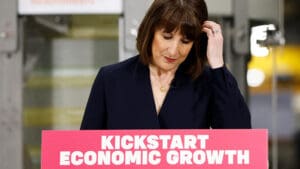
Small businesses are bracing for a major shake-up after it emerged the Treasury is considering slashing the VAT registration threshold from £90,000 to just £30,000.
The move, reportedly under review ahead of the November 26 Budget, would pull tens of thousands of sole traders and small firms into the VAT system for the first time, forcing them to charge customers more and deal with additional red tape.
The change is being examined as part of Chancellor Rachel Reeves’s hunt for up to £30bn in extra revenue following warnings from the Office for Budget Responsibility that Britain’s productivity outlook will be downgraded. The cut could deliver billions to the Exchequer by widening the tax net, but critics warn it risks hammering independent businesses already squeezed by high inflation, weak consumer demand and rising borrowing costs.
Analysts said the measure would be felt most sharply by small traders such as electricians, builders, hairdressers and consultants, many of whom deliberately keep their turnover just under the current £90,000 threshold to avoid registration. Lowering the bar to £30,000 would leave far fewer with that option, raising prices for customers and adding to paperwork burdens.
Business groups have previously described such a move as a “tax on ambition” that discourages growth. The Federation of Small Businesses has long argued that a steep drop in the threshold would trap fledgling companies in “VAT limbo,” where they must pass on higher costs but struggle to compete with unregistered rivals.
While the Treasury has refused to comment on “speculation” ahead of the Budget, insiders say the option is being modelled alongside other tax-raising ideas – including an extension of the freeze on income tax thresholds, levies on pensions, and even new duties on sugary snacks.
If Reeves proceeds, it would represent one of the most significant overhauls of VAT in decades, potentially reshaping the landscape for Britain’s 5.5 million small businesses.
Read more:
Reeves VAT bombshell: Small firms face £30,000 registration threshold in Budget shake-up
Gold hits record high as analysts predict $4,000 milestone by Christma …

Gold has surged to a fresh all-time high, fuelling predictions it could break through the $4,000 mark before the end of the year.
The precious metal climbed to $3,778 per ounce this week, up 42% since January, while silver reached $42 per ounce – a gain of 45%. The rally has been underpinned by a combination of central bank buying, sticky inflation, geopolitical instability and concerns about equity market valuations.
JPMorgan forecasts gold could top $4,000 by the second quarter of 2026, but several analysts believe the landmark may be reached sooner.
Anita Wright, Chartered Financial Planner at Ribble Wealth Management, said momentum was strong: “There’s every chance the gold and silver momentum could carry further. Silver could climb toward the $50s per ounce by year-end, with gold testing the $3,800–$3,900 range. Investors are restructuring portfolios to include a higher weighting in gold and silver. For many, these metals are no longer simply ‘insurance policies’ but strategic allocations.”
Paul Williams, Managing Director at Solomon Global, added: “Gold has scaled yet another all-time high today and is in touching distance of $3,800, having hit dozens of records this year. In the past month alone, the price has risen by $400. With inflation fears, Fed rate cut expectations, a softening dollar and central bank accumulation, $4,000 by Christmas is a strong possibility.”
The rally has also sparked a rise in retail activity, with more households selling or borrowing against jewellery. Jim Tannahill, Managing Director at pawnbroker Suttons and Robertsons, said: “Now is an ideal time to cash in on old or unwanted items. Right now you’d receive almost 80% more than in September 2023. We’ve seen a sharp rise in people selling jewellery and using gold as collateral for loans.”
However, others warned of overheating. Samuel Mather-Holgate of Mather and Murray Financial said: “Precious metals are already at record highs and could be ripe for a correction. If geopolitical tensions flare, capital will flow into gold – but if stability returns, money could quickly move in reverse. It might be time to take profits rather than dive in.”
Eamonn Prendergast, Chartered Financial Adviser at Palantir Financial Planning, cautioned against “fear of missing out”, saying: “Gold glitters as uncertainty bites, but it should only ever be part of a diversified portfolio. It pays no dividends, so returns rely solely on price moves.”
Despite mixed views, market momentum remains firmly upward, leaving investors to weigh whether the rally is a bubble – or just the start of a new era for precious metals.
Read more:
Gold hits record high as analysts predict $4,000 milestone by Christmas
Boohoo warns suppliers of late payments as cash crisis deepens

Boohoo has warned suppliers that payments could be delayed as the fast-fashion group grapples with growing financial pressures.
The retailer, which also trades as Debenhams, wrote to some suppliers saying it was “running behind on payments” and asked how much stock they could deliver in September without receiving further payment, according to an email seen by Business Matters.
The warning comes just months after Business Matters revealed customers were waiting up to a month for refunds. Boohoo admitted at the time that refunds were taking longer to process than usual, without explaining the cause of the delays.
Last month the group secured a £175m borrowing facility, designed to stabilise its finances. However, Mike Ashley’s Frasers Group, Boohoo’s largest shareholder, criticised the deal, claiming the high interest rate of 7.3 percentage points above the Bank of England base rate meant cash was being “sucked out” of the business.
The company’s financial difficulties have intensified after annual losses nearly doubled to £348m, while sales dropped almost 20% to £790m. The group’s net assets have also collapsed to £3.9m, down from £280m a year earlier. Analysts at Shore Capital recently described Boohoo as “very constrained” amid the squeeze.
Relations between Boohoo and its suppliers have long been fraught. In 2020, the company faced criticism over poor working conditions at some factories. More recently, suppliers have accused the group of pushing down prices and withholding payments over quality disputes. Boohoo has denied wrongdoing but admitted it has sought price reductions in the past when inflationary pressures eased.
Asked to comment on the latest email, Boohoo said: “A junior colleague, in one of our smaller brands, emailed a small number of suppliers to work on capacity planning.”
Read more:
Boohoo warns suppliers of late payments as cash crisis deepens

