

Pizza Hut’s UK dine-in business has entered administration, placing hundreds of jobs at risk and marking another blow to the increasingly fragile casual dining sector.
The chain, owned by US-based Yum! Brands, has appointed FTI Consulting to oversee the process. While delivery and takeaway operations remain unaffected, the administration raises serious questions about the long-term viability of mid-market dining brands on the high street.
Industry commentators say the brand failed to position itself clearly in a market increasingly dominated by polarised consumer preferences.
“Being second-best at everything kills you faster than being excellent at one thing,” said Tony Redondo, Founder of Cosmos Currency Exchange. “Premium chains like Pizza Express offer craft quality and ambiance, while Domino’s dominates on affordability and convenience. Pizza Hut got stuck in the middle—neither premium enough nor cheap enough to compete.”
He added that the brand’s delivery infrastructure lagged behind rivals, reducing competitiveness at a time when ordering in has become a dominant revenue driver.
Dariusz Karpowicz, Director at Albion Financial Advice, said the collapse reflects “a bitter slice of reality” for the wider high street: “Soaring energy costs, rising employment expenses, and families treating restaurant meals as luxuries rather than regular treats have left margins painfully thin,” he said. “Delivery apps have eaten into traditional dine-in profits, while post-pandemic consumer habits have fundamentally shifted.”
He warned that the fallout extends far beyond one brand failure: “It’s hundreds of local jobs vanishing and more empty shopfronts joining Britain’s hollowed-out high streets. The government needs a genuine long-term strategy, not election-winning soundbites.”
Kate Underwood, Managing Director at Kate Underwood HR and Training, said the administration process will create lasting uncertainty for employees.
“When we read that ‘thousands of jobs have been saved’, it sounds like the story has a happy ending,” she said. “But those of us in HR know it is rarely that simple. Many Pizza Hut employees have now lived through two rounds of uncertainty in less than a year.”
While TUPE regulations may protect contracts, she said this does little to restore morale: “A pre-pack deal might stop the headlines getting worse, but it does not rebuild trust overnight. It takes time to restore belief, culture and calm.”
Omer Mehmet, Managing Director at Trinity Finance, described the administration as “another reminder that the casual dining model hasn’t recovered from the pandemic hangover.”
“Rising costs, tighter consumer budgets and competition from delivery apps have squeezed margins to breaking point. Eating out has become a luxury for many families. Even household names aren’t immune.”
Analysts say Pizza Hut’s situation is symptomatic of a broader trend affecting chains that cannot deliver either premium experience or ultra-convenience at scale. With consumers trading either up for experiences or down for value, mid-market operators are increasingly exposed.
As hospitality businesses brace for ongoing cost pressures and softer discretionary spending, further restructuring across the casual dining sector is expected in 2025.
Read more:
Pizza Hut ‘stuck in the middle’ as UK dine-in arm collapses into administration
Month: October 2025
Ed Miliband signals potential VAT cut on energy bills as affordability …
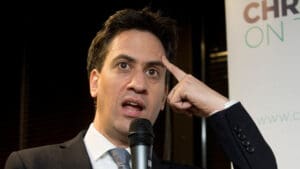
Energy Secretary Ed Miliband has suggested the government is considering cutting the 5% rate of VAT on household energy bills, as ministers prepare measures to tackle the deepening cost-of-living crisis ahead of next month’s Budget.
Speaking on the BBC’s Sunday with Laura Kuenssberg, Mr Miliband refused to confirm whether a VAT cut was being actively pursued but acknowledged that households were struggling under high energy costs and that “all of these issues” were under review.
“We face a longstanding cost-of-living crisis that we need to address as a government,” he said. “We also face difficult fiscal circumstances… so obviously we’re looking at all of these issues.”
Labour pledged ahead of the last general election to cut average energy bills by £300 a year by 2030, a commitment Mr Miliband insisted still stands. However, he argued that long-term price stability depends on accelerating the shift away from fossil fuels towards clean, domestically generated energy.
“There is only one route to get bills down — clean, home-grown energy that we control, so we’re not at the behest of petrol states and dictators,” he said.
Scrapping the current 5% VAT rate on domestic energy bills would save the average household around £86 a year, according to Nesta, and cost the Treasury an estimated £2.5bn annually.
Energy prices soared in 2021 following Russia’s invasion of Ukraine and, despite falling from peak levels, remain historically high. Earlier this month, Ofgem increased its price cap by 2%, pushing a typical annual bill to £1,755, up £35 on the previous quarter.
A Treasury spokesperson declined to comment on potential tax changes, stating only: “We do not comment on speculation.”
Chancellor Rachel Reeves has already indicated that “targeted action” on energy bills is being considered ahead of the 26 November Budget. Business Matters understands this could include reducing so-called “policy costs” — regulatory levies that currently account for around 16% of electricity bills and 6% of gas bills, funding green subsidies and social schemes.
The Climate Change Committee has long recommended shifting these charges away from bills and into general taxation to ensure households can feel the financial benefits of the net-zero transition more directly.
Mr Miliband acknowledged the debate, saying: “That’s always a judgement for the chancellor… but we know we’ve inherited difficult fiscal circumstances.” He added that infrastructure upgrades require ongoing investment, meaning a “balance” must be struck between public expenditure and consumer levies.
The issue of energy affordability has become a major political battleground, with the Conservatives and Reform UK arguing that net-zero policies have inflated costs.
The Conservatives have pledged to scrap the Climate Change Act and remove carbon taxes on electricity generation, while Reform has proposed rolling back renewables incentives. Shadow energy secretary Claire Coutinho claimed such measures could reduce bills by 20%.
By contrast, the Liberal Democrats accused both parties of promoting fossil fuel dependency, arguing that energy security depends on cleaner domestic generation. Pippa Heylings, the party’s energy spokeswoman, called for the decoupling of electricity prices from gas markets, saying: “People aren’t seeing the benefit of cheap renewable power.”
Green Party leader Zack Polanski reiterated his party’s call to nationalise energy companies and introduce a tax on carbon emissions to drive investment into green infrastructure. He rejected claims that businesses would pass on the costs, insisting the policy would target large corporations rather than SMEs.
With household energy bills still elevated and winter approaching, expectations are mounting for a significant intervention in the November Budget. Whether the government opts for a VAT cut, levy reform, targeted subsidies or accelerated clean energy investment, the political stakes are high as affordability and energy security continue to dominate public concern.
Read more:
Ed Miliband signals potential VAT cut on energy bills as affordability pressures grow
Government unveils new ‘V-level’ qualifications to replace BTecs a …

The Government has announced plans to introduce a new suite of vocational qualifications — known as V-levels — for students aged 16 and over, in a bid to simplify what ministers describe as a “confusing” post-GCSE landscape and strengthen the UK’s skills pipeline.
The new qualifications are set to replace Level 3 BTecs and other post-16 technical courses currently available in England. A consultation has now been launched as part of the Government’s wider post-16 education and skills white paper, amid long-running calls to create clearer and more coherent routes into work, apprenticeships and higher education.
Alongside the launch of V-levels, ministers also plan to introduce a “stepping stone” qualification to reduce the number of students repeatedly resitting English and maths GCSEs — a process that has faced growing criticism due to low pass rates and its impact on learner confidence.
Unlike highly specialised T-levels, which were launched in 2020 and are aimed at students who are already certain about a specific career path, V-levels are expected to provide a more flexible route for students exploring a wider range of vocational options. A-levels and apprenticeships will continue to be available.
Skills minister Baroness Jacqui Smith said: “There are over 900 courses at the moment that young people have the choice of, and it’s confusing. V-levels will build on what’s good about BTecs — practical learning with a clear line of sight to employment — while offering a simpler and more recognisable framework.”
The Department for Education has suggested early subject areas may include craft and design and media, broadcast and production.
Education Secretary Bridget Phillipson added that the reforms aim to create a “vocational route into great careers” by simplifying a fragmented system and ensuring there are enough teachers and resources in further education to support delivery.
However, education leaders have expressed caution about removing BTecs before the new qualifications are fully established.
Bill Watkin, chief executive of the Sixth Form Colleges Association, warned: “There is a risk that the new V-levels will not come close to filling the gap left by the removal of applied general qualifications.”
Others, including David Hughes, CEO of the Association of Colleges, suggested the reforms could bring greater “clarity and certainty” to technical education but stressed that success would depend on careful design and long-term investment.
Myles McGinley, managing director of exam board Cambridge OCR, described V-levels as a “tremendous opportunity” but said schools, colleges and industry partners would need sufficient time to co-develop courses that reflect real-world demand.
For many young people, the changes may provide new opportunities to explore vocational routes without committing to a highly defined occupation at 16.
T-level student Simba Ncube said access to V-levels would have made him consider different pathways after his GCSEs: “It leaves you with so many options you can narrow down without being limited.”
Seventeen-year-old Lola Marshall, who hopes to start an apprenticeship after completing a health and social care diploma, said vocational pathways were still rarely emphasised at school: “Everyone always talked about university.”
The Government also plans to introduce a new “stepping stone” qualification for students who have to continue studying English and maths after failing to achieve a grade 4 at GCSE. While many will still be expected to resit, the new course aims to prevent students from becoming trapped in what ministers called a “demoralising roundabout” of repeated failures — especially among disadvantaged pupils, who are twice as likely to resit.
The reform package comes as ministers prepare to set out new proposals for higher education funding, including revisions to university tuition fees in England. Many universities are currently operating under financial strain after years of frozen fee caps and a drop in international student recruitment.
Prof Shearer West, vice chancellor of the University of Leeds, said while the slight increase in fees to £9,535 this year was welcome, the sector continues to face mounting cost pressures. “We’re being asked to do more research with less money and teach more students with fewer resources,” she said.
The Government will now consult on the structure, timeline and subject scope of V-levels, as well as the rollout of the stepping stone qualification. Full implementation timelines have not yet been confirmed.
The reforms support Prime Minister Sir Keir Starmer’s goal for two-thirds of young people to either attend university or gain a high-quality technical qualification.
With employers facing ongoing skills shortages and the economy demanding more applied technical capabilities, business leaders will be watching closely to see whether V-levels deliver a more workforce-ready generation — or risk leaving a gap where BTecs once stood.
Read more:
Government unveils new ‘V-level’ qualifications to replace BTecs and simplify post-16 education
Osborne warns Reform UK ‘not fiscally fit to run the economy’
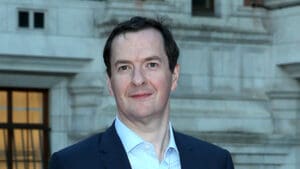
Former Chancellor George Osborne has warned that Reform UK “cannot be trusted to run the economy”, accusing Nigel Farage’s party of lacking fiscal credibility at a time when economic stewardship is likely to define the next general election.
Speaking amid growing scrutiny of Reform’s costed plans, Mr Osborne dismissed the party as economically unreliable, pointing to its proposals to lift the two-child benefit cap and nationalise water companies — policies that have already been branded “socialist” by Conservative critics.
“I don’t think people are going to pick Reform to fix the economy,” he said. “I would just be: economy, economy, economy, economy, economy as much as you possibly can.”
His intervention comes as the Conservatives, led by Kemi Badenoch, fall further behind in the polls. A recent MRP survey from Electoral Calculus puts Reform at 36 per cent, with the Tories trailing on just 15 per cent — leaving the Conservatives projected to win only 24 seats, behind the SNP.
Reform UK recently dropped its pledge for £90bn of tax cuts amid increasing concern over the party’s fiscal realism. Nonetheless, Mr Osborne questioned whether Mr Farage has the resolve to make “tough decisions on the economy”, noting that electoral success hinges on managing growth, spending and taxation with credibility.
The former Chancellor, who presided over austerity measures during the Cameron-led coalition government, argued that the Conservatives’ best hope of clawing back support lies in reasserting their reputation for economic discipline.
“Fundamentally, people vote for the Conservatives when they want the grown-ups to be in charge of the economy,” he said. “That is the history of Conservative oppositions – they have succeeded when they have won over the confidence of the country on the economy.”
He added that Labour remains vulnerable on economic competence, citing Chancellor Rachel Reeves’s struggle to boost growth while maintaining fiscal discipline. In particular, he claimed Labour “lost some of its reputation with business” following last year’s £25bn National Insurance increase.
Osborne made the comments during an interview with The Telegraph at Coinbase’s London Crypto Forum, where he also called on the Conservatives to seize ground in the digital finance sector to neutralise Reform’s appeal.
Mr Farage has positioned himself as a crypto champion, pledging to establish a UK-backed Bitcoin reserve — a policy echoing moves in the US where Donald Trump has positioned America as a prospective “Bitcoin superpower”.
But Mr Osborne argued that the Conservatives should take the lead in positioning the UK as a pro-innovation financial hub. “We don’t have to worry too much about what Reform is saying, but just say some good things ourselves,” he noted.
Despite recent volatility — with crypto markets losing around $400bn after Mr Trump threatened China with 100 per cent tariffs — Osborne called on the UK to accelerate regulatory clarity, warning that Britain risks falling behind as the US, EU and UAE race ahead in fintech policy.
“One of Britain’s biggest strengths is financial services,” he said. “You don’t want major financial services activity to be happening in other jurisdictions because we are not allowing it here.”
With the Budget looming in November, Osborne also urged Ms Reeves to curb public spending rather than rely on tax rises alone to manage a £30bn shortfall in the public finances, claiming an over-reliance on revenue-raising measures would be “very damaging for the economic performance of the country”.
Despite internal Conservative divisions and a bruising electoral outlook, Osborne insists the Tories retain a pathway back to economic credibility if they focus relentlessly on fiscal responsibility, investment, productivity and pro-business growth strategies.
“We are the fiscally responsible, pro-business people – and we are prepared to take difficult decisions on public expenditure,” he said.
A spokesperson for Reform responded: “At the next election, we will present a rigorous and fully costed manifesto. Reform will never borrow to spend, as Labour and the Tories have done for so long; instead we will ensure savings are made before implementing tax cuts.”
Read more:
Osborne warns Reform UK ‘not fiscally fit to run the economy’
Non-dom exodus ‘far worse than forecast’, new report warns Chancel …

The Chancellor has been warned she is “flying blind” into November’s Budget after fresh analysis suggested far more non-domiciled residents have left the UK than the Government anticipated, with billions in expected tax revenues now at risk.
In a report published today, economics consultancy ChamberlainWalker says early evidence points to a significantly larger exodus of non-doms following the abolition of non-dom status in April 2025. The firm argues that Treasury assurances—based on HMRC payroll returns—that departures are broadly in line with forecasts understate the scale of outflows because many of the wealthiest non-doms are investors rather than salaried employees and therefore fall outside PAYE data.
ChamberlainWalker cautions that the Government’s projected £34bn haul from the reforms rests on “optimistic and incomplete” assumptions about behaviour, including that only 1,200 people would leave and that a small group—“in the mid-thousands”—would remain and pay substantially more under the new foreign income and gains (FIG) regime.
Chris Walker, founding partner at ChamberlainWalker and a former government economist, said: “It is worrying that the Chancellor is heading into the Budget with so little understanding of the fiscal impact of the reform of non-dom status. The Treasury is effectively flying blind about the behaviour of the most responsive group of non-doms.”
The report argues that who leaves matters more than how many. If departures are skewed towards the richest non-doms—particularly former RBC payers—the impact could be a “triple whammy” for revenues:
A larger-than-expected hit to the UK income tax base as top contributors exit.
A smaller-than-modelled FIG tax base as high-earning individuals take foreign income and gains offshore.
Lower proceeds from the Temporary Repatriation Facility (TRF) if fewer assets are onshored.
The consultancy also notes that official reassurance from real-time payroll data is inherently limited at this stage. Behavioural responses to tax changes tend to play out over multiple years; ChamberlainWalker expects much of the adjustment to occur within two years of implementation, i.e. by April 2027.
HMRC’s forthcoming review of the reforms is expected to publish more granular data, but the report contends current sources cannot “meaningfully capture” the true impact—particularly among investor-type non-doms. On that basis, the authors urge ministers to exercise caution and consider interim adjustments to shore up revenue certainty and competitiveness while the evidence base improves.
Pre-reform modelling envisaged 25% of non-doms with trusts and 12% without trusts leaving, equating to about 1,200 leavers in 2025/26. It also assumed 7,700 non-doms and deemed-doms would be worse off (and therefore generate most of the extra FIG tax), with 14,200 eligible for a four-year FIG tax break and thus no worse off initially. ChamberlainWalker’s estimate that 1,800 have already departed implies the official scorecard could be materially off course if the composition of leavers is tilted to the top end.
With the Budget weeks away, the political and fiscal stakes are clear. If the exodus accelerates—and continues to be weighted towards the wealthiest—the Treasury’s £34bn headline could prove significantly overstated, forcing either policy refinement or compensating measures elsewhere in the fiscal plan.
Read more:
Non-dom exodus ‘far worse than forecast’, new report warns Chancellor ahead of Budget
Government targets 400,000 new green energy jobs in major national ski …

The Government has unveiled a national plan to create 400,000 green energy jobs within the next five years, in what ministers say will be one of the most significant workforce transitions in modern British history.
Energy Secretary Ed Miliband said the programme aims to double the number of people working in the UK’s low-carbon sector by 2030, with a sharp focus on equipping tradespeople, school leavers, ex-service personnel and workers leaving fossil fuel industries with the skills needed to support the transition to net zero.
At the core of the initiative is a commitment to prioritise 31 skilled trades, including plumbers, carpenters, electricians and welders. An estimated 8,000 to 10,000 additional plumbers and heating engineers will be required by 2030, while between 4,000 and 8,500 extra electricians, welders and carpenters will also be needed to meet growing demand from renewable energy projects.
The Government has pledged that firms receiving public contracts or green energy grants will be expected to create “good quality, secure jobs” and support trade union recognition and collective bargaining across the sector, including in offshore roles.
“The national plan answers a key question about where the good jobs of the future will come from,” Miliband said, adding that it provides a clear signal to regional mayors, industry and education providers about future employment needs. He argued that the blueprint would help underpin local industrial strategies and ensure further education institutions realign course provision with high-growth green sectors.
Trade unions, including Unite and the GMB, which have long pushed for a detailed plan for a “just transition” away from fossil fuels, welcomed the move. Unite general secretary Sharon Graham said: “Well paid, secure work must be at the heart of any green transition. Unite members will welcome the commitment to 400,000 green jobs with strong collective bargaining rights.”
Charlotte Brumpton-Childs, national officer at the GMB, described the plan as a “jobs-first transition” and praised ministers for listening to workers.
To support the expansion of the green economy, five new technical excellence colleges will be established to train young people for specialist roles in sectors such as wind power, hydrogen, nuclear and electrical networks. Pilot programmes in Cheshire, Lincolnshire and Pembrokeshire will receive £2.5 million for new training centres, courses and careers support.
Additional schemes will focus on transitioning experienced oil and gas workers, supported by up to £20 million in joint funding from the UK and Scottish governments. Veterans will be matched with new roles in solar, wind turbine and nuclear facilities, while tailored initiatives will support ex-offenders, school leavers and the long-term unemployed.
Government analysis suggests that more than 13,700 unemployed individuals already possess transferable engineering and skilled trade capabilities relevant to clean energy roles. Miliband highlighted that salaries in wind, nuclear and electrical network roles typically exceed £50,000 — substantially higher than the national average of £37,000 — and are often located in coastal and post-industrial regions in need of economic regeneration.
Miliband positioned the plan as a central pillar in the Government’s industrial strategy and a direct response to opposition parties questioning the value and pace of the net zero transition. He accused Reform UK of “waging war on clean energy” and argued that public backing for renewable job creation remains strong.
“This is a massive fight,” he said. “People want the jobs, they want the lower bills, and they understand that clean energy is part of our economic future. I’m confident we can win this argument.”
The initiative marks one of the clearest attempts yet by the Government to link environmental policy with economic opportunity, with Business Matters understanding further investment incentives for green manufacturing and infrastructure may follow in the coming months.
Read more:
Government targets 400,000 new green energy jobs in major national skills drive
Sir David Attenborough, 99, becomes oldest daytime Emmy winner

Sir David Attenborough has become the oldest person ever to win a Daytime Emmy, marking another extraordinary milestone in a broadcasting career that has spanned more than seven decades.
The 99-year-old naturalist and filmmaker took home the award for Outstanding Daytime Personality – Nondaily for his narration of Netflix’s Secret Lives of Orangutans, beating fellow nominees including Martha Stewart and Anthony Mackie.
Attenborough’s win, announced at the 52nd Annual Daytime Emmy Awards in Pasadena, California, breaks the record set only last year by Dick Van Dyke, who won at 98 for his guest appearance on Days of Our Lives.
Although Attenborough did not attend the ceremony, his win was greeted with a standing ovation. The award also extended the remarkable legacy of the broadcaster often described as “the voice of the natural world”.
Secret Lives of Orangutans follows a multigenerational family of apes through the dense rainforests of Sumatra, tracing their behaviour, communication and resilience in a landscape under threat. The film also won Daytime Emmys for Outstanding Directing Team for a Single-Camera Daytime Nonfiction Program and Outstanding Music Direction and Composition.
The documentary’s quiet intimacy — blending long-form observation with Attenborough’s warm narration — reflects a hallmark of his style: to reveal the emotional depth of nature without sentimentality.
Since joining the BBC in 1952, Attenborough has defined the modern nature documentary. From Zoo Quest in the 1950s to Life on Earth (1979) and The Living Planet (1984), his work reimagined wildlife television as a global, cinematic experience. More recent collaborations, such as Planet Earth II and Netflix’s Our Planet, have reached hundreds of millions of viewers and brought environmental storytelling into the streaming era.
Knighted by Queen Elizabeth in 1985, he has won three Primetime Emmys and numerous BAFTAs, and holds the rare distinction of having received the award across black-and-white, colour, HD and 4K formats — effectively spanning every major technological era of television.
At 99, Attenborough shows no sign of slowing down. He will turn 100 in May 2026 and has said he will continue to work “as long as people still want to hear from me.”
In a 2021 interview with Signature Luxury Travel & Style ahead of his 95th birthday, he reflected: “I have the greatest job in the world. What a privileged time I’ve had. People provide me with wonderful pictures of things we’ve never seen before and ask me to write a sentence or two on it. Better than sitting in the corner knitting.”
His enduring curiosity has earned him admiration far beyond broadcasting. Over recent years, his advocacy on climate change has made him a moral voice for the planet, speaking at the UN Climate Summit and COP26 conference.
The Emmy win underscores how Attenborough continues to bridge generations — inspiring both filmmakers and scientists while reminding audiences of the delicate relationship between humans and the natural world.
Critics have long credited him with transforming public understanding of ecology. “There are few people alive who have done more to shape the world’s empathy for nature,” noted The New York Times in its coverage of the award.
For Attenborough, the recognition is less about personal legacy and more about attention to the planet’s future. As he said during the release of Our Planet II:
“What happens next is up to us all.”
At an age when most public figures would have long retired, the broadcaster remains one of the most trusted and beloved voices in television. His record-breaking Daytime Emmy — the first of his career — stands as a fitting tribute to that rare blend of authority, curiosity and compassion that has made him the face, and conscience, of nature itself.
Read more:
Sir David Attenborough, 99, becomes oldest daytime Emmy winner
Blow to Chancellor’s tax take as 1,800 non-doms quit the UK
Rachel Reeves’s flagship plan to overhaul the UK’s non-dom tax regime is facing an early blow after new analysis suggested far more wealthy residents have left the country than the Treasury forecast.
According to consultancy Chamberlain Walker, around 1,800 non-domiciled individuals — 50 per cent more than expected — have exited Britain since the chancellor scrapped the system in April 2025.
The analysis raises questions over whether the policy, designed to bring in £34 billion over five years, will deliver the expected boost to the public finances.
Non-domiciled residents — or non-doms — are people who live in the UK but claim their permanent home is abroad. Under the old system, they could avoid paying UK tax on overseas income and wealth by paying a fixed annual charge.
Reeves replaced that system in April with a new regime that she said would make taxation “fairer” and ensure “those who make their lives in Britain pay their fair share”.
But Chris Walker, founding partner of Chamberlain Walker and a former Treasury and DWP economist, said official data understates the true scale of departures.
“The Treasury is effectively flying blind about the behaviour of the most responsive group of non-doms,” he said. “The wealthiest are investors rather than salaried workers, so they do not always appear in HMRC’s datasets. The tax-revenue implications of their departures are significant.”
Walker’s analysis suggests many of those leaving are among the UK’s highest-earning residents — individuals who typically contribute tens of millions annually in income and capital gains tax.
The Treasury dismissed the figures, saying they were “based on anecdotal evidence we don’t recognise.”
A spokesperson said: “If you make your home in Britain, you should pay your taxes here. That is why we abolished the non-dom tax status — to invest in our public services, including the NHS.”
Despite the official line, the consultancy’s findings have fuelled fears among business groups that a growing number of high-net-worth individuals are moving assets — and tax residency — abroad to avoid the tighter regime.
The UK’s non-dom population peaked at nearly 80,000 in the mid-2010s but has been steadily declining since a series of reforms under George Osborne and Rishi Sunak.
The latest exodus coincides with reports from luxury brands and wealth managers that affluent clients are leaving Britain.
Last week, Ferrari’s chief executive told the Financial Times the company had “limited supplies of cars to the UK” amid concern that “some people are getting out for tax reasons.”
Private wealth advisers in London have reported a surge in relocation inquiries to Dubai, Milan, Monaco, and Singapore since the spring.
Critics of the reforms warn that the Treasury risks losing more revenue than it gains if large numbers of wealthy residents relocate.
Reeves has dismissed warnings of an exodus, telling The Guardian last week: “This is a brilliant country and people want to live here.”
Supporters of the reform argue that abolishing the preferential non-dom system was long overdue and that fears of mass departures are overstated.
However, economists say even small changes in high-earner residency can dent the exchequer’s returns. The top 1 per cent of earners account for nearly 30 per cent of UK income-tax receipts, meaning any shift in domicile can have outsized effects on revenue.
The controversy lands as the chancellor faces mounting fiscal pressure ahead of the 26 November budget, where she must find up to £30 billion in savings and tax rises to meet her fiscal rules.
If the number of non-doms leaving continues to rise, Reeves may struggle to deliver the revenue she has promised from her “fair tax” agenda — and could face fresh questions over whether the reform has cost the Treasury money rather than raised it.
Read more:
Blow to Chancellor’s tax take as 1,800 non-doms quit the UK
Betfred warns of 1,300 betting shop closures and 7,000 job losses if g …

Britain’s second-largest bookmaker has warned it will close all its 1,300 betting shops and cut 7,000 jobs if the government presses ahead with plans to double gambling taxes in next month’s budget.
Joanne Whittaker, chief executive of Betfred, said the measures being considered by chancellor Rachel Reeves would “wipe out the high-street betting shop”, threatening the future of Britain’s traditional gaming sector.
“The most frightening element is we’re going to lose the whole retail business,” Whittaker told The Sunday Times. “I’m not scaremongering — I’m not being alarmist. If these rises happen, that’s the reality.”
The Warrington-based company, owned by brothers Fred and Peter Done, is warning of what it calls an “existential threat” to the industry if Treasury proposals to increase sports-betting duty from 15% to 30% and machine and online-gaming duty from 20% to 50% are enacted.
The changes — strongly supported by former prime minister Gordon Brown and more than 100 Labour backbenchers — are forecast to raise £3.2 billion a year, enough to fund the abolition of the two-child benefit cap.
The UK currently has around 5,900 licensed betting shops, employing roughly 46,000 people. Whittaker said if Betfred shutters its estate, rivals would likely follow suit.
“If the impact to us is that we lose the whole estate, that’s the same for all our counterparts,” she said.
In a letter to Reeves and Lisa Nandy, the culture secretary, Whittaker warned that the policy could reduce, not increase, Treasury revenue by driving punters to unregulated offshore operators.
“These proposed changes would produce the opposite of their intended effect — reducing tax revenue and accelerating black-market growth,” she wrote.
Whittaker admitted she had been “stupid and naïve” to assume the government would exclude high-street shops from the new regime, adding that Treasury officials “don’t understand our business.”
Whittaker’s candid public stance marks a departure for the usually secretive Done empire. A self-described “accidental bookmaker”, she began working for Betfred after meeting Fred Done’s daughter during a part-time degree at Bolton College.
She helped launch the firm’s first online business in the early 2000s, left to found a childcare-voucher company, then returned in 2021 as chief executive when Fred Done became chairman. The Done family was ranked Britain’s second-largest taxpayer in 2025, contributing £273.4 million.
Betfred’s warning follows news that rival Evoke (owner of William Hill) is preparing to shut 200 shops, while Paddy Power has announced 57 closures. Entain, the FTSE 100 group behind Ladbrokes and Coral, has also said its retail arm would be “at risk” under steeper tax rates.
Campaigners argue that higher taxes are overdue after years of lax regulation under Labour governments in the 2000s. A 2023 study by Gamble Aware found 20% of adults are directly or indirectly harmed by gambling, while the NHS estimates 0.4% of the adult population suffers from problem gambling.
Whittaker insists most Betfred customers wager modestly: “The average bet is £9. People come in, sit, have a coffee and a chat. We’re part of local communities. We’re not the scourge of society.”
She warned that forcing mainstream operators out of business would only empower illegal betting websites, which took 71% of Europe’s online wagers last year, according to data analyst Yield Sec.
“The safest place for anyone to have a bet is with a UK-regulated bookmaker,” she said. “We haven’t always got it right, but we’ve invested heavily in player protection. If someone wants to bet, they should do it safely.”
Behind the scenes, industry sources believe Gordon Brown remains the driving force behind the expected tax overhaul. Asked what she would tell him if given the chance, Whittaker said: “Come and look at our numbers. Look at the modelling. See what those tax rates would do to UK jobs.”
The November 26 budget could therefore prove defining for both Reeves and Britain’s embattled betting industry — determining whether high-street bookmakers survive, or whether the era of the local betting shop finally draws to a close.
Read more:
Betfred warns of 1,300 betting shop closures and 7,000 job losses if gambling taxes rise

