

Piers Morgan’s production company has reported turnover of £17.1 million in 2024, as the broadcaster concluded his lucrative three-year deal with Rupert Murdoch’s News UK and began taking Piers Morgan Uncensored global.
Newly filed accounts for Wake Up Productions, incorporated in July 2021, show cumulative revenues of £50.3 million over the three-year period — matching reports of Morgan’s £50 million contract with Murdoch’s UK media group, which included TV, print and book projects.
Wake Up Productions recorded turnover of £17.5 million in 2022, £15.7 million in 2023, and £17.1 million in 2024, with profit before tax of £7 million, slightly down from £7.2 million the previous year. The company paid £5 million in dividends in 2024.
Morgan owns 94 per cent of the business, alongside company secretary Martin Cruddace (5 per cent) and Dolly Strategic Holdings Ltd (1 per cent).
The company’s revenue is divided between co-production services (£9.7m), licensing and distribution (£5.1m), and branding agreements and other income (£804,880).
The accounts describe Wake Up Productions as focusing on “publishing, television production and broadcasting, generating income primarily through digital channels such as YouTube, Facebook and sponsorships.”
Its flagship show, Piers Morgan Uncensored, launched on TalkTV in April 2022 before transitioning to a digital-only format on YouTube in February 2024 — months before TalkTV’s linear broadcast closure.
Since going fully digital, the show has more than 4.2 million YouTube subscribers, up from two million in late 2023, with clips regularly drawing millions of views globally.
Global ambitions after News UK partnership
Following the end of his News UK contract, Morgan has bought the rights to Piers Morgan Uncensored and is working with US-based Red Seat Ventures to expand the brand internationally.
The partnership will focus on growing sponsorship, advertising and digital revenues, while News UK retains commercial rights through an advertising partnership running until 2029.
Morgan’s previous agreement with News UK also included columns in The Sun and The New York Post, a documentary series, and a book deal. His new book, Woke Is Dead, will be published this month by HarperCollins, part of Murdoch’s News Corp.
Profitable model built on YouTube and sponsorship
Wake Up Productions reported £10.6 million cash reserves at the end of 2024, up from £10.2 million the previous year, with total staff costs of £7.2 million covering Morgan’s remuneration and that of one other employee.
The company’s business model centres on four pillars:
• Content monetisation via YouTube and digital platforms
• Brand partnerships and sponsorships
• Audience engagement through topical and personality-led programming
• Operational efficiency via outsourced finance and audit services
Wake Up said it plans to expand onto additional digital platforms, form strategic partnerships with media agencies, and invest in production quality and analytics to sustain growth.
Morgan’s pivot from traditional broadcasting to digital-first content mirrors a wider trend among media personalities building direct audiences online.
With Piers Morgan Uncensored continuing to perform strongly on YouTube and Facebook, the presenter appears to be positioning his brand as an independent global media business — combining journalistic personality with commercial agility in a fast-evolving content landscape.
Read more:
Piers Morgan’s production company hits £17.1m turnover as TalkTV deal ends
Month: October 2025
UK electric car sales surge to record high as government subsidies spa …

Electric vehicle (EV) sales in the UK hit a record high in September, boosted by new government subsidies that helped lure more buyers back into the market during the industry’s most crucial month of the year.
According to preliminary data from the Society of Motor Manufacturers and Traders (SMMT), sales of battery-powered cars rose by nearly a third compared with a year earlier, reaching 72,800 units.
September’s strong performance follows the government’s reintroduction of an electric car grant in July, after pressure from manufacturers struggling to meet zero emission vehicle (ZEV) mandate targets.
Plug-in hybrids and electrified vehicles lead the charge
The renewed incentive also fuelled a sharp increase in plug-in hybrid sales, which surged 56% to 38,300, as carmakers pivoted toward models combining electric and petrol power to boost profitability amid fierce global competition — particularly from new Chinese entrants.
Overall, pure electric and hybrid vehicles accounted for more than half of all UK car sales in September, helping total registrations climb 14% year-on-year to 312,900 — the strongest September since 2020.
“Our discounts have sparked a surge in electric car sales, making them cheaper and within reach of more households than ever before,” said Transport Secretary Heidi Alexander.
The revived electric car grant, offering up to £3,750 per vehicle, applies to roughly one-quarter of battery models on sale in the UK. Eligible vehicles include those from Citroën, Renault, Nissan and Vauxhall, capped at £37,000 and subject to emissions-related production criteria that exclude many Chinese-made brands.
Analysts say the subsidy has proved particularly effective for mainstream models, helping to offset higher borrowing costs and the squeeze on household budgets.
However, David Farrar, policy manager at New AutoMotive, warned that the £1.5 billion scheme — designed to support the first 400,000 buyers — could end sooner than planned.
“Early evidence suggests the grant might close earlier than intended, given the pace of take-up,” he said.
Mike Hawes, chief executive of the SMMT, said September’s figures showed that “electrified vehicles are powering market growth after a sluggish summer”, but cautioned that demand still lags behind government targets.
Under the ZEV mandate, carmakers must ensure 28% of their new car sales are fully electric in 2025, though “flexibility” clauses mean the effective target is closer to 22%, according to New AutoMotive’s analysis.
Those flexibilities, expanded in April, allow manufacturers to earn credits for cutting emissions in petrol and diesel models — a move the Climate Change Committee has warned could undermine the UK’s net zero goals.
With battery EVs currently representing 22.1% of total sales for 2025 to date, automakers are accelerating end-of-year promotions to hit compliance thresholds and avoid fines.
While September’s spike has eased pressure, industry leaders say stable policy support will be essential to maintain momentum as cost-of-living pressures and patchy charging infrastructure continue to deter potential buyers.
“Massive industry investment is paying off, despite demand still trailing ambition,” Hawes said.
The reintroduction of subsidies has clearly reignited consumer interest in electric vehicles, yet the market’s underlying affordability and infrastructure issues remain unresolved.
Analysts warn that once the grants are exhausted, sales could slow again unless the government provides a clear long-term strategy on incentives, charging networks and fleet decarbonisation.
For now, September’s surge offers a welcome reprieve — signalling that, with the right support, Britain’s shift to electric motoring may be back on track.
Read more:
UK electric car sales surge to record high as government subsidies spark demand
Morrisons to track shop floor staff with new app in drive to boost per …
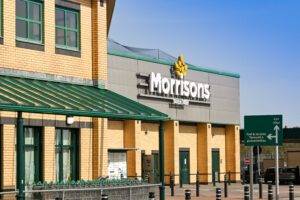
Morrisons is introducing a new tracking system to monitor how quickly its shop floor staff stack shelves, as the supermarket embarks on a major operational overhaul to improve efficiency and win back shoppers.
The new performance monitoring app, which is being rolled out across hundreds of stores, allows managers to see real-time data on staff productivity — including how fast employees unload and restock items.
The tool highlights workers performing below the pace of their peers, a system that some employees have dubbed “stopwatching”. Managers will be able to target underperforming staff for coaching, retraining or further supervision.
Morrisons says tracking aims to ‘support and coach’ colleagues
The supermarket, owned by US private equity group Clayton, Dubilier & Rice (CD&R), said the initiative was designed to “identify opportunities to coach colleagues and understand where additional support or training may be required.”
A spokesperson said: “This will allow us to be fair and consistent in recognising colleagues. The new system will help teams understand their own performance.”
Morrisons confirmed it has long collected productivity data to ensure staffing levels are appropriate, but previously this information was shared only periodically with managers. The new app gives immediate visibility, enabling store leaders to respond faster to inefficiencies.
Morrisons chief executive Rami Baitiéh
The changes are part of a broader push by chief executive Rami Baitiéh, who took over in 2023, to raise in-store standards and customer service after years of underperformance against rivals.
Earlier this year, Morrisons told “idling” staff they would lose access to stockrooms, limiting backroom entry to approved workers as part of a customer-facing initiative aimed at keeping more staff on the shop floor.
The company said the move ensures “the right colleagues are in the right place to deliver the best service to customers at all times.”
Morrisons’ efforts come after a difficult financial year. Sales fell by more than £1 billion to £17 billion, its lowest level since CD&R’s 2021 takeover. The decline has raised fears that the retailer could soon fall behind Lidl in market share, having already been overtaken by Aldi in 2022.
According to Kantar data, Lidl now holds 8.2% of the UK grocery market, compared with 8.4% for Morrisons, a gap analysts expect to close before the end of the year.
Adding to the pressure, the company suffered a reputational setback in August, when dozens of stores failed food hygiene inspections, with some scoring as low as zero. Morrisons said it was taking “immediate action to address and resolve all the issues raised.”
Morrisons continues to trail major rivals including Tesco, Sainsbury’s, Aldi, M&S, and Ocado, according to the latest UK Customer Satisfaction Index.
Analysts say the new monitoring technology is part of Baitiéh’s strategy to drive accountability and improve in-store execution, though it risks stirring employee unease over surveillance and workload expectations.
One retail analyst noted: “This is a classic private-equity-style efficiency drive — Morrisons is trying to squeeze more performance from existing resources as it fights to stay in the top four.”
The coming months will be critical for Morrisons as it seeks to regain momentum in a highly competitive grocery market dominated by price wars, supply chain inflation and discount disruption.
With customer trust fragile and margins tight, the supermarket’s shift toward data-led management and stricter performance tracking could determine whether Baitiéh’s turnaround plan succeeds — or alienates the very workforce he depends on to deliver it.
Read more:
Morrisons to track shop floor staff with new app in drive to boost performance
Budget jitters slow UK business growth as firms delay spending

Business activity across the UK slowed sharply in September as mounting anxiety over the government’s delayed autumn budget led companies and households to postpone investment and spending decisions.
The S&P Global composite purchasing managers’ index (PMI) — a closely watched measure of private-sector health — fell to 50.1 from 53.5 in August, marking its weakest reading since early spring.
While still marginally above the 50-point threshold separating growth from contraction, the latest data underline how political and fiscal uncertainty has dampened confidence across the economy.
The services sector PMI, which dominates UK output, dropped from 54.2 in August to 50.8 in September — a sharp loss of momentum from its 16-month high. The manufacturing index slipped further into contraction, at 46.2, down from 47.0 the previous month.
“September’s acceleration in output growth now looks like a flash in the pan,” said Tim Moore, economics director at S&P Global. “Many survey respondents suggested that corporate clients had deferred spending decisions until after the autumn budget, while households were also hesitant about major purchases.”
Chancellor Rachel Reeves is due to deliver her second annual budget on 26 November, amid growing expectations that she will announce tens of billions in tax increases to rebuild fiscal headroom.
Economists said speculation over the scale and scope of the tax measures had already chilled confidence.
“The economy is doing little more than muddling through in the second half of the year,” said Thomas Pugh, economist at RSM UK. “The risk is that intense speculation about potential tax rises weighs heavily on consumer confidence and business sentiment, leading to another bout of stagnation.”
Rob Wood, chief UK economist at Pantheon Macroeconomics, said: “The PMI’s sharp drop in September shows the chilling impact on business sentiment that speculation about tax hikes in the November budget can have.”
Weak pipeline of new work points to soft finish to the year
Matt Swannell, chief economic adviser at the EY Item Club, said the survey data showed “activity growth ground to a halt in September” and warned that “the pipeline of incoming work looks soft, with weak demand and continued uncertainty seeing some spending decisions being postponed.”
However, Swannell cautioned that PMI surveys often “reflect sentiment rather than real output changes”, meaning the downturn may look worse on paper than in reality.
Martin Beck, chief economist at WPI Economics, agreed that media coverage of “surging government borrowing costs, looming tax rises and even talk of an IMF bailout” had likely fuelled pessimism. “The surveys have a track record of painting an unduly gloomy picture when uncertainty is high,” he said.
Easing inflation could open door for rate cuts
Despite the slowdown, analysts said there was one silver lining: inflation in the services sector fell to its lowest level since June, easing pressure on the Bank of England to maintain high interest rates.
Wood said the softer price data could “encourage some members of the Monetary Policy Committee to consider lowering borrowing costs sooner than previously expected.”
Economists warn that unless the budget provides clear signals on fiscal stability and business investment incentives, the UK risks slipping back into stagnation in the final quarter of the year.
With firms and consumers sitting on their hands, and sentiment bruised by policy uncertainty, the next two months could prove pivotal for the new government’s credibility on growth.
Read more:
Budget jitters slow UK business growth as firms delay spending
Jamie Oliver and wife take £2.5m dividend despite profits slump at ch …

Jamie Oliver and his wife, Jools, have paid themselves £2.5 million in dividends for the second consecutive year, even as pre-tax profits at their core business fell by more than 30%.
Accounts for Jamie Oliver Holdings (JOH) show pre-tax profits dropped from £3.4 million to £2.4 million in 2024, despite a 6% rise in sales to £28.6 million. The results reflect a mixed year for the celebrity chef’s media and restaurant group, which saw strong growth in hospitality offset by lower income from media and brand deals.
JOH encompasses Oliver’s television and publishing ventures, endorsements, cookery school, and restaurant operations, as well as licensing and franchise income from international Jamie’s Italian and Jamie’s Deli outlets. The company also manages his long-running partnership with Tesco, which ended last year, and royalties from branded products.
Restaurant income rebounded sharply, rising to £3.6 million from just £336,000 the year before, following the launch of Oliver’s first directly operated restaurant since the collapse of his UK Jamie’s Italian chain in 2019. Franchise income from overseas restaurants also increased modestly to £3.8 million. However, royalties, endorsements and TV production revenues fell 10% to £19.8 million, reflecting the end of major deals in 2023.
The group, which achieved B Corp certification in 2019, was led by chief executive Kevin Styles until December 2024. No successor has been appointed, and the business is now overseen by its operating board.
A spokesperson said the group plans to open 12 new restaurants internationally this year, including its first sites in Oman and Greece. It has also tripled the capacity of its cookery school through a new partnership with John Lewis, opening its first in-store site on Oxford Street earlier this year.
Sales at the cookery school remained stable at around £1 million before the expansion. Oliver’s Ministry of Food foundation, meanwhile, continues to teach cookery skills in more than 1,150 UK secondary schools.
The company said trading had improved in the second half of the year despite “challenging” conditions for hospitality. The family’s dividend reflects their broader portfolio of licensing and intellectual property ventures, for which separate financial details are not disclosed.
Read more:
Jamie Oliver and wife take £2.5m dividend despite profits slump at chef’s restaurant and media empire
Rick Stein shutters Marlborough restaurant as group struggles with los …

Celebrity chef Rick Stein will close his Marlborough restaurant this weekend, the second outlet to shut in a week as his family-run hospitality empire battles mounting financial pressure.
The High Street site, which opened almost a decade ago, will serve its last meals on Sunday, October 5. The closure follows the permanent shutdown of Stein’s Coffee Shop in Padstow, Cornwall, where three staff were redeployed.
In a statement signed by Stein, his wife Jill and sons Ed, Jack and Charlie, the family said the Marlborough branch was “no longer viable” and thanked staff for their “passion, hard work and dedication”. Customers with gift cards will still be able to redeem them across the wider group.
The business, which spans restaurants, hotels, shops, a cookery school and an online retail arm, has been hit by falling sales and rising costs. Last year, group revenues declined 5.4 per cent to £30.4 million, while losses deepened. At the Seafood Restaurant in Padstow, Stein’s flagship, pre-tax losses widened to £459,000.
Stein has been vocal in blaming government tax policy for worsening the strain on hospitality. He has criticised Chancellor Rachel Reeves’s rise in employer national insurance contributions and other levies, arguing that they have added costs to an industry already squeezed by weak demand. “Because the economy is not looking too good, people aren’t going out as much, so the one thing you don’t want to do is impose a heavy tax on the sorts of industries that are actually producing stuff,” he said in a recent interview.
Stein’s dominance in Padstow — where he operates 13 venues — has transformed the town into a major tourist destination over the past five decades. His presence has been credited with driving visitor numbers and employment but has also sparked criticism. Locals argue that the “Padstein” brand has sent property prices soaring, squeezed independent traders and made the town heavily reliant on tourism. Average house prices in Padstow now top £750,000, above London levels, while the town’s 2,500 population often doubles in summer as holidaymakers and second-home owners flood in.
The closures highlight the wider fragility of Britain’s restaurant and leisure sector, which is contending with sluggish consumer spending and higher operating costs. Industry groups have warned that Labour’s planned reforms to business rates and further tax rises could accelerate closures unless relief measures are introduced.
For Stein, whose brand has become synonymous with Cornish seafood, the retrenchment underlines the challenge of keeping an extensive portfolio profitable in an unforgiving trading environment. The family said they had “loved being part of the Marlborough community” but insisted that difficult decisions were needed to secure the future of the wider group.
Read more:
Rick Stein shutters Marlborough restaurant as group struggles with losses
HMRC has stepped up its campaign to expand the scope of ‘confectione …

What began as isolated disputes over niche items is now reshaping how cakes, baked goods and sweet snacks are treated for tax purposes. The result is that products previously considered zero-rated are increasingly being reclassified as standard-rated confectionery, subject to 20% VAT.
The change centres on a single phrase in VAT legislation, which defines confectionery as: “Chocolates, sweets and biscuits; drained, glace or crystallised fruits; and any item of sweetened prepared food which is normally eaten with the fingers.”
HMRC and the courts are treating this final clause as decisive. If a product is sweetened and typically finger-eaten, it is now likely to be deemed confectionery.
That logic has already been applied to cases ranging from mega marshmallows to M&S’s viral Strawberry and Crème ‘sandwich’, raising industry-wide questions about how far the category could extend.
HMRC has gone beyond case-by-case challenges and is now issuing ‘One to Many’ letters to producers, wholesalers and retailers. These urge businesses to file error correction notices for potential underpayments dating back four years.
The language of the letters suggests HMRC assumes errors have already been made. Voluntary disclosure may soften penalties, but businesses risk significant retrospective liabilities if they fail to act.
What food businesses should do now
Experts advise companies to take a proactive stance:
• Track case law timelines – understanding when products were ruled taxable is key to assessing backdated exposure.
• Review past HMRC correspondence – previous clearance or reliance on HMRC behaviour may provide a defence.
• Audit product ranges broadly – don’t just review the items HMRC highlights; a full audit may reduce risk.
• Explore legal challenges – not all HMRC interpretations are unassailable, and viable counterarguments remain.
For many businesses, the issue is not just future liability but historic exposure. Margins across food production and retail are already squeezed by inflation, wages and regulation. Unexpected backdated VAT bills could be devastating for smaller producers and costly even for established players.
The expansion of the confectionery definition signals a fundamental shift in HMRC’s approach. The courts’ willingness to support that shift suggests that zero-rating sweet products will become increasingly rare.
The takeaway is clear: the days of relying on historic VAT treatments are over. Businesses that move quickly to review and adapt their VAT positions will be best placed to limit financial and reputational damage.
Read more:
HMRC has stepped up its campaign to expand the scope of ‘confectionery’ under VAT law – and the courts are backing them
Trump’s crypto wallet rebounds 36% in Q3, but remains 70% down in 20 …

Donald Trump’s cryptocurrency portfolio posted a rare rebound in Q3 2025, climbing 36.6% in value to $3.1 million, according to new analysis from Finbold.
On-chain data tracked by Arkham Intelligence shows the former US president’s holdings rose from $2.27 million on July 1 to $3.10 million by September 30 – a paper gain of around $823,000.
The recovery comes after a brutal start to the year, when Trump’s wallet value collapsed 80.7% in Q1 (from $10.16 million to $1.96 million). By the end of H1, the portfolio had stabilised near $2.2 million, but overall it remains 69.5% below January levels, underscoring the volatility of Trump-linked crypto assets.
What drove the rebound?
Finbold’s report cites two main drivers behind the uptick:
• Unsolicited airdrops from meme-token projects, keen to associate themselves with Trump’s brand.
• Trump-themed token frenzies, where retail promotions drive short-lived spikes in on-chain valuations.
“Much of the value reflects inflows rather than traditional investment activity,” said Diana Paluteder, co-author of the report. “It’s more a snapshot of speculative flows than evidence of an active trading strategy.”
Off-chain moves and NFT royalties
Arkham has linked the wallet to Trump via past financial disclosures and royalties from his NFT collections. However, large Coinbase-linked withdrawals suggest that funds are frequently moved or converted off-chain, leaving little to no balance behind after major inflows.
WLFI’s explosive growth
Beyond Trump’s personal holdings, his influence extends to World Liberty Financial (WLFI), a DeFi project billed as a “patriotic alternative” to Wall Street. WLFI’s reported asset value skyrocketed from $179.3m to $10.81bn in Q3 – a staggering 5,931% increase. Analysts attribute this to aggressive token issuance, thin liquidity, and politically driven enthusiasm.
While eye-catching, such figures raise sustainability questions. WLFI’s surge illustrates how Trump’s brand continues to fuel speculative narratives across crypto markets, even as risks of volatility remain high.
Read more:
Trump’s crypto wallet rebounds 36% in Q3, but remains 70% down in 2025
Baroness Mone demands Prime Minister investigate Rachel Reeves for ‘ …

Baroness Michelle Mone has accused Chancellor Rachel Reeves of using “dangerous and inflammatory” language, days after a High Court judge ruled that PPE Medpro — a firm linked to Mone and her husband, Doug Barrowman — must repay £122 million for breaching a Covid-era PPE contract.
In an open letter to Prime Minister Sir Keir Starmer, seen by Business Matters, Baroness Mone claims that a comment reportedly made by Reeves at a Labour Party Conference fringe event has directly endangered her personal safety. When asked about the government’s approach to the PPE Medpro case, Reeves is reported to have replied: “Too right we do”, in reference to whether the government had a “vendetta” against Mone.
“Your Chancellor’s statement is incendiary and has directly increased the risks to my personal safety,” wrote Baroness Mone. “Since her remarks, my social media has gone into meltdown with threats and abuse.”
The backlash follows Wednesday’s High Court ruling, in which Mrs Justice Cockerill found that PPE Medpro breached its contractual obligation to supply sterile surgical gowns during the pandemic. The judge concluded that the company had failed to demonstrate the gowns underwent a validated sterilisation process, as required by the contract.
The company — set up by a consortium led by Doug Barrowman — was awarded the contract in 2020 after being recommended through a VIP procurement route by Baroness Mone herself.
PPE Medpro denies wrongdoing and maintains the gowns were sterile at the point of delivery. The company had previously offered to remake all 25 million gowns or pay £23 million in settlement — proposals the DHSC rejected .
Mone: “Vendetta” claim puts family at risk
Baroness Mone is now demanding a formal retraction from Rachel Reeves, as well as an independent investigationinto whether ministers or civil servants have improperly influenced the National Crime Agency (NCA), Crown Prosecution Service (CPS), or the ongoing civil litigation process.
“The word ‘vendetta’ refers to vengeance, feud, and blood feud,” she wrote. “It has made me and my family feel unsafe… We need only look at the tragedies of Jo Cox and Sir David Amess to understand the dangers of such reckless language.”
She added that if no action is taken, she will explore legal remedies, including potential claims for defamation, harassment, and misfeasance in public office.
Baroness Mone, who was appointed to the House of Lords by David Cameron in 2015, remains on a leave of absence from the Lords and lost the Conservative whip following media investigations into her links to PPE Medpro.
Following the court ruling, there have been cross-party calls for her to be stripped of her peerage. While such a move would require an Act of Parliament, prominent voices — including Chancellor Reeves and Conservative frontbencher Kemi Badenoch — have now publicly stated that Mone should not return to the Lords.
In response to Mone’s letter, a Treasury source told the press: “When both the Labour Chancellor and Conservative leader agree with each other, you’ve lost the argument.”
With public and political scrutiny intensifying, and £122 million due by 15 October, PPE Medpro and the couple behind it now face mounting legal, financial and reputational pressure.
Meanwhile, Baroness Mone’s allegation of political bias — combined with the claim that Reeves’ remarks have provoked real-world threats — raises questions about how ministers communicate during ongoing legal matters, and the safeguards in place to protect public figures from harm.
The Prime Minister has yet to respond publicly to Baroness Mone’s letter.
Read more:
Baroness Mone demands Prime Minister investigate Rachel Reeves for ‘inflammatory’ language after £122m PPE Medpro court defeat

