

OpenAI, the creator of ChatGPT, has overtaken Elon Musk’s SpaceX to become the world’s most valuable startup, after a share sale pushed its valuation to $500 billion.
The deal saw current and former OpenAI employees sell about $6.6 billion worth of shares to a group of high-profile investors, including Thrive Capital, SoftBank, Dragoneer Investment Group, Abu Dhabi’s MGX, and T Rowe Price, according to Reuters.
SpaceX, Musk’s rocket and satellite company, is currently valued at $400 billion, placing it behind OpenAI for the first time.
The latest secondary sale cements OpenAI’s position as the most highly valued startup in the world, underscoring investor confidence in the transformative potential of generative AI.
OpenAI has grown rapidly since launching ChatGPT in late 2022, which became the fastest-growing consumer app in history and has since been integrated into Microsoft products, enterprise software, and countless business processes worldwide.
In the first half of this year, OpenAI reported revenue of around $4.3 billion, already exceeding its entire 2024 performance by 16%. The company is now on track to hit a full-year revenue target of $13 billion.
However, the scale of OpenAI’s ambition comes with significant costs. The company booked an operating loss of $7.8 billion due to heavy spending on research, development, and infrastructure to support its advanced AI models.
Despite the losses, investors remain bullish on OpenAI’s long-term prospects. The company is seen as central to the global AI race, with applications in everything from productivity software and search to healthcare, education and customer service.
The $500bn milestone also reflects the appetite for AI-driven disruption across industries, even as regulators in the US, UK and EU weigh how best to oversee the sector.
With OpenAI now ranked above SpaceX, Stripe and other decacorns, the company’s valuation places it in rarefied air, comparable to some of the world’s biggest publicly listed technology firms.
Read more:
OpenAI surpasses SpaceX with $500bn valuation after $6.6bn share sale
Month: October 2025
Treasury weighs stamp duty holiday for new London share listings in au …
The Treasury is weighing plans to grant newly listed companies a stamp duty exemption in November’s autumn budget, as ministers look to revive London’s competitiveness as a global IPO hub.
Officials are considering a two- or three-year holiday on the 0.5% tax levied on UK share transactions, according to reports. The move would form part of chancellor Rachel Reeves’s wider capital markets reforms designed to encourage more businesses to list in the UK.
Investors currently pay stamp duty when purchasing UK-listed shares, a system that many in the City argue discourages investment at a time when London is trying to regain ground lost to New York, Frankfurt and Asian markets.
The US, China and Germany impose no such tax, while Ireland’s 1% levy is the only higher rate in a major developed market. London’s Alternative Investment Market (AIM) is already exempt.
City figures have long called for the complete abolition of stamp duty on shares, suggesting the boost to market activity could ultimately increase tax revenues. But with stamp duty raising £3.3 billion in 2023, or around 0.3% of total tax take, a full removal may be difficult to justify against a tight fiscal backdrop.
Reeves has already acknowledged that Labour’s manifesto pledge not to raise taxes is under strain due to global conflicts, higher borrowing costs and new US tariffs. Against that backdrop, a tax cut for City investors may prove politically sensitive.
Still, targeted relief for IPOs could align with the government’s strategy to attract high-profile listings back to London. Three companies — Beauty Tech, Princes, and Fermi America — have announced listing plans this month, while lender Shawbrook is expected to press ahead with a long-awaited IPO.
Jonathan Parry, partner at White & Case, said: “A stamp duty holiday on LSE listings would send another powerful signal that London is open and actively competing for IPO business. Removing this additional tax for investors in newly listed companies would help stimulate demand, attract global capital and support valuations.”
A Treasury spokesperson added: “We’re making the UK the best place in the world for businesses to start, scale, list and stay. We’ve already exempted PISCES transfers from stamp duty and taken forward ambitious reforms to strengthen public markets, with three more companies announcing plans to float in London this month.”
While no final decision has been made, Treasury officials are under pressure to send a strong message that London remains an attractive listing venue. Any stamp duty holiday would also test whether targeted relief can meaningfully shift global IPO flows back to the UK without creating a long-term hole in tax receipts.
Read more:
Treasury weighs stamp duty holiday for new London share listings in autumn budget
Reshaping Confidentiality: The Changing Landscape of Non-Disclosure Ag …

There have been long-standing concerns about the use of Non-disclosure agreements (NDAs), particularly relating to sexual harassment allegations. Those concerns have grown with the momentum of the MeToo movement.
The use of NDAs stands at a critical crossroads. Imminent and future legal reforms are poised to fundamentally alter their scope and enforceability in the context of discrimination and harassment.
NDAs have historically been used as a crucial way of maintaining corporate confidentiality and protecting intellectual property and trade secrets. They are routinely used throughout the entire employment lifecycle, from hiring through ongoing employment and extending to an employee’s exit. Nonetheless, substantial legislative changes are set to limit their scope significantly.
How are legislative changes reshaping NDAs?
The Government is set to ban the use of controversial NDAs where workers have complained about workplace harassment or discrimination. This proposal is part of the Employment Rights Bill. If enacted, new rules will make confidentiality clauses in settlement agreements (or other agreements) void, to the extent that they attempt to prevent individuals from discussing allegations of or disclosing information about harassment or discrimination. The rules also extend to the employer’s response to the allegations.
There will be limited circumstances where NDAs can still be used in relation to harassment and discrimination complaints, known as “excepted agreements”. Future regulations are expected to define an “excepted agreement” narrowly, allowing such NDAs only under specific conditions -most notably, when a worker actively requests one.
There is currently no information about when these NDA proposals will be implemented. Although the Government published a roadmap in July 2025 outlining the phased implementation of the Employment Rights Bill, the NDA proposals were made after the roadmap’s publication.
The Victims and Prisoners Act 2024
By contrast, under section 17 of the Victims and Prisoners Act 2024 (“the Act”), any NDAs entered into on or after 1 October 2025 will be unenforceable against individuals who are, or who reasonably believe themselves to be, victims of crime – specifically when they disclose information about relevant conduct to certain parties and for clearly defined purposes.
The Act protects “permitted disclosures” made by victims to:
Law enforcement agencies and investigative authorities
Qualified legal professionals
Regulated professionals, including members of the healthcare sector
Registered victim support organisations
Regulatory or supervisory bodies
Authorised representatives
Immediate family members, specifically being a victim’s child, parent, or partner.
The Act adopts an inclusive definition of “victim.” Under section 1, a victim is anyone who has suffered harm as a direct result of criminal conduct in England and Wales, or who reasonably believes they are a victim. Notably, this definition extends to individuals who have witnessed criminal conduct and experienced harm as a result.
“Harm” is defined broadly to include physical, mental, or emotional suffering, as well as economic loss. Importantly, there is no requirement for the offence to have been officially reported, nor must there be a charge or conviction for someone to be recognised as a victim under the Act.
What steps should organisations take?
· Implement a clear anti-harassment policy if you don’t already have one, and ensure this includes an effective complaints procedure.
· Provide training to workers and managers on harassment and discrimination.
· Foster an inclusive culture in the workplace.
· Review contract templates, especially NDAs, but also contracts of employment and settlement agreements to ensure they align with the latest legal standards.
· As well as the above, and in relation to the new Act, set out clearly the circumstances when disclosures are permitted in NDAs. This will eliminate potential ambiguities regarding parties’ rights and obligations. By doing so, businesses can safeguard transparency and compliance in a rapidly evolving environment.
Conclusion
The introduction of these legislative reforms is another step toward prioritising individual rights over the broad use of confidentiality clauses. For employers, this means taking a proactive approach to ensure alignment with new transparency-focused standards.
While NDAs still serve a valid purpose in protecting legitimate business interests, their use in cases of harassment or discrimination is now subject to stricter scrutiny. That scrutiny will be even greater when the NDA provisions in the Employment Rights Bill come into force.
Read more:
Reshaping Confidentiality: The Changing Landscape of Non-Disclosure Agreements
Labour accelerates UK fracking ban as Ed Miliband counters Reform push

The government will fast-track legislation to permanently ban fracking in the UK, in a move designed to block Reform UK’s pledge to revive the controversial practice.
Ed Miliband, energy secretary, confirmed the ban will be introduced as part of the North Sea transition plan, due this autumn. Any future attempt to restart fracking would require a parliamentary repeal, forcing MPs — many representing constituencies above shale gas deposits — to vote in favour of drilling.
Addressing Labour’s party conference, Miliband said campaigners would be sent to nearly 200 constituencies affected by shale gas reserves to mobilise opposition.
“We will legislate at the earliest opportunity to protect communities from fracking,” he said.
A permanent ban was already a Labour manifesto commitment, but Wednesday’s announcement set out the legislative route, underscoring Labour’s strategy to neutralise Reform’s energy platform.
The UK currently operates under a moratorium on fracking, which involves blasting a mixture of sand, water and chemicals into shale rock to release gas. The method has been widely criticised for its environmental risks, particularly the risk of earthquakes.
The last UK fracking project, at Preston New Road in Lancashire, triggered nearly 200 tremors in under a year before being halted.
Reform UK leaders Nigel Farage and Richard Tice have argued that fracking could reduce energy bills, but experts have repeatedly rejected the claim, citing geological challenges and limited resource potential in the UK compared to the US.
Fracking remains unpopular with the public, and divisions have already emerged within Reform. Lancashire council, under Reform control, has stated it would not welcome drilling in the county.
The issue has a history of destabilising governments. In 2022, Liz Truss’s premiership faltered after she attempted to push through fracking support, only for her MPs to rebel during a Labour-led vote on the issue — a moment of chaos that hastened her downfall.
While Reform has sought to draw parallels with the American shale boom, experts note that the UK’s higher population density and faulted geology make extraction more disruptive, less efficient and far riskier.
By legislating now, Labour aims to lock in its pledge, protect communities overlying shale gas, and draw a sharp dividing line with Reform ahead of key local and national contests.
Read more:
Labour accelerates UK fracking ban as Ed Miliband counters Reform push
Greggs lifts prices to offset rising wage costs as investors rally beh …
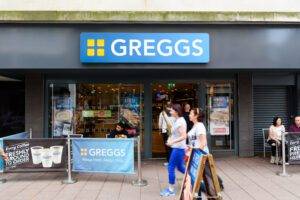
Greggs is increasing prices on some of its best-known menu items as the bakery chain seeks to offset rising employment costs while managing softer sales growth.
From Thursday, customers will pay 5p more for certain baked goods such as the empire biscuit, while breakfast deals will also rise in price. The two-part breakfast deal, which includes a roll and a drink, will increase from £2.95 to £3.15, while the three-part version, adding a side like a yoghurt pot or hash browns, will rise from £3.95 to £4.15.
Chief executive Roisin Currie said the group remained committed to keeping prices as low as possible but added: “We are operating in an inflationary environment.”
The price hikes were announced alongside third-quarter results showing like-for-like sales up 1.5% in the 13 weeks to 27 September, slowing from 2.6% growth in the first half of the year.
Greggs had previously warned that summer heatwaves dampened demand for hot baked goods in July, forcing it to cut annual earnings guidance. The company now expects full-year operating profit to be “modestly” below the £195.3m recorded in 2024, with analysts forecasting around £176m.
Encouragingly, trading conditions improved in August and September, allowing Greggs to hold its revised guidance. That reassurance triggered a 7.2% share price rally, lifting the stock to £17.20 and squeezing hedge funds who had shorted the shares. Greggs remains one of the most shorted companies in London, with 5.1% of its stock on loan to investors betting against it.
Greggs, which operates 2,675 shops, opened a net 57 new outlets this year but now expects to add around 120 net stores in 2025 — down from earlier guidance of 140–150, citing “timing of opportunities.” The chain continues to expand in supermarkets including Tesco and Sainsbury’s, while targeting new transport, roadside and retail park locations.
Currie dismissed talk of “peak Greggs,” insisting the company could grow its estate to more than 3,000 shops long term. She pointed to evolving customer tastes, with the bakery introducing high-protein options such as egg pots and protein shakes alongside its traditional sausage rolls and steak bakes.
Analysts remain cautious. Panmure Liberum noted that while slower store openings were a concern, an improving cost outlook supported confidence in Greggs’ guidance. Clive Black at Shore Capital warned that falling like-for-like volumes posed longer-term questions about whether Greggs has reached its growth ceiling, commenting:
“Like-for-like volume is not the be-all and end-all, but it is going to be a key concern of existing and prospective investors.”
Despite lingering doubts, the market rally suggests investors see Greggs’ cost discipline and resilience as positives — at least for now.
Read more:
Greggs lifts prices to offset rising wage costs as investors rally behind stock
Reeves’ Budget: is Larry’s cat food the last refuge?
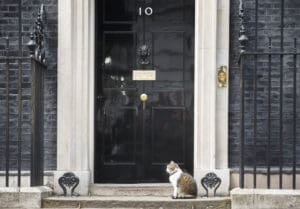
Rumour has it that Rachel Reeves is limbering up for November with a Budget that will make the taxman’s quill squeak like a stuck pig. Property, pensions, profits, pasties — all grist to the Exchequer’s mill.
The Treasury is leaving no stone unturned, no pocket unpicked, no cupboard unopened. The only thing, one suspects, that remains miraculously safe from her fiscal scythe is Larry the Cat’s supper.
Cat food, so far, has escaped. But give it time. If Reeves wakes up one morning and thinks Felix is a luxury good, then Larry may be forced to reacquaint himself with the vermin of Whitehall.
Which would be, let’s face it, the first proper day’s work he’s done in a decade.
The mood music is grimly familiar. Reeves is billed as Britain’s most hawk-eyed chancellor since Gladstone, scrutinising every allowance and relief with the intensity of a headmistress checking pockets for contraband. She talks of “closing loopholes” and “fiscal responsibility”, which translates as: if you earn it, spend it, save it or feed it to your cat, I want a slice. There is a whiff of the Victorian workhouse about the whole thing — the sense that leisure, comfort, and small mercies are indulgences for which the State must extract a fee.
The thought of Larry’s pouch of Sheba being clobbered with 20% VAT is only half a joke. Reeves hasn’t said it. But given the way she’s nosing through the nation’s shopping basket like a customs officer at Dover, it might only be the fact that she’s scared of the animal-loving electorate that keeps Purina safe from the Chancellor’s paw.
Larry, then, becomes the perfect stand-in for the rest of us. He lives in the lap of political luxury, adored, photographed, never held accountable for his failure to deliver on the “mouser” part of his job title. And yet even he is only one Treasury brainstorm away from being told to pull his weight. The day the food bill doubles is the day Larry starts catching mice again.
And so it is with us. Once pampered, now fleeced, the British taxpayer is being nudged towards self-sufficiency by stealth. First you taxed our booze, then our cars, then our pensions, and now our every side-hustle. Tomorrow it will be our pets, the next day our plants, and eventually our patience.
The truly comic element is not that Reeves might be tempted to tax pet food, but that it has come to feel plausible. When a government makes you believe even the moggy’s supper is at risk, you know you’re in the realm of fiscal parody. It’s like imagining air being metered. Please insert £1 to continue breathing.
If Reeves could work out how to slap a duty on belly rubs or a surcharge on purring, you sense she’d do it before breakfast. The only thing stopping her is the optics of being seen to shake down a cat who has a bigger fanbase than most cabinet ministers.
And yet, strip away the feline froth, and the point is clear: this scattergun approach to taxation is not sustainable. You cannot tax your way to prosperity any more than you can slim by raiding the fridge at midnight. What Reeves needs — but seems reluctant to risk — is growth, investment, something genuinely bold. Instead we get a Budget that looks like the frantic contents of a handbag tipped out on the kitchen table: receipts, half-chewed mints, and a few coins scavenged from the lining.
Larry’s food may survive unscathed this time, but the message is unmistakeable: the Treasury has its nose in our cupboards, its paws on our wallets, and its eye on the cat’s dish. Heaven help us when they start eyeing the litter tray.
Read more:
Reeves’ Budget: is Larry’s cat food the last refuge?
A ‘taxi tax’ would hit vulnerable passengers and struggling busine …

Rumours that the Chancellor is preparing to add VAT to all taxi journeys in the autumn Budget have sparked concern across multiple industries, with hospitality leaders warning the move could deepen an already fragile economic environment.
Charlie Gilkes, co-founder of the Inception Group, which operates restaurants and bars across London, said: “Policies like the taxi tax destroy the ecosystem in which the hospitality sector functions.”
The sector is still reeling from last year’s Budget, which raised employer National Insurance contributions. A 1.2 percentage point NIC increase lowered the threshold at which employers must pay contributions from £9,100 to £5,000 a year. That change has already forced nearly 89,000 job losses in hospitality, almost half of the cuts seen across the wider economy, according to trade body UKHospitality.
With pubs, restaurants and bars struggling to absorb higher staffing and energy costs, any additional burden from VAT on taxis could deter customers from travelling and make commuting harder for staff, particularly women relying on taxis after late shifts.
The effects would extend beyond hospitality. Layla Barke-Jones, partner at Aaron and Partners Solicitors, pointed out that many taxi passengers are elderly, disabled or otherwise unable to use public transport: “These are the people who would be disproportionately hit.”
While local authorities would be able to reclaim VAT under their own regime, higher overall fares are expected as operators adjust pricing to cover administration and compliance costs. That would see passengers across the country paying significantly more for essential journeys.
Taxi operators warn that drivers themselves would be among the hardest hit. A spokesperson for Bolt said: “Drivers are self-employed entrepreneurs, and around 70% work outside London. A flat 20% VAT would inevitably raise costs for consumers and reduce demand, leading to a drop in driver earnings.”
Bolt argues VAT should be applied only to operators’ margins, as under the current system, rather than on full fares — a change that risks pushing up passenger costs while cutting into drivers’ take-home pay.
With speculation mounting ahead of November’s Budget, business leaders fear the so-called “taxi tax” would further erode consumer demand, increase costs for vulnerable passengers, and undermine sectors still fighting to recover from previous policy shifts.
As Gilkes and others warn, what may appear a modest change to the Treasury could prove ruinous for the ecosystem of drivers, passengers and businesses that depend on affordable, reliable taxi services.
Read more:
A ‘taxi tax’ would hit vulnerable passengers and struggling businesses hardest
Mone accuses Rachel Reeves of fuelling ‘government vendetta’ after …
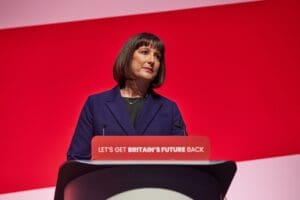
Baroness Michelle Mone has accused Chancellor Rachel Reeves of fuelling a “government vendetta” against her and her husband Doug Barrowman, following remarks reportedly made by Reeves at a Labour Party Conference fringe event this week.
In a strongly worded statement posted on LinkedIn, Mone said Reeves “openly confirmed” that the government is pursuing a personal and political campaign against her, after responding “Too right we do” when asked about allegations of bias towards Mone and PPE Medpro — the company at the centre of the £122 million sterile gowns dispute with the Department of Health and Social Care (DHSC).
“Rachel, thank you for confirming what Doug and I have long believed,” wrote Mone. “Your comment will now be passed to our legal team, who will find it highly useful in establishing the Government’s bias and position against us.”
Political tension spills into legal battle
The public fallout adds further fuel to the already explosive PPE Medpro case, which concluded its High Court hearings in July. The case has seen the government pursue PPE Medpro for alleged breach of contract during the Covid pandemic — claims the company vigorously denies.
As Business Matters exclusively revealed yesterday, the DHSC rejected two substantial no-fault settlement offers from PPE Medpro, including a complete remake of 25 million gowns or a £23 million cash settlement.
Now, Mone argues that Reeves’ reported comment provides clear evidence of political interference in what should be a neutral legal process.
“Such reckless words have consequences,” she added. “Do you really understand the implications of your actions and the hatred they incite? Shame on you.”
Mone also claims that following Reeves’ remarks, her social media has been flooded with threats and abuse, and is calling on both the Prime Minister to issue a formal apology, and Reeves herself to refer the matter to the Parliamentary Commissioner for Standards.
Taking direct aim at Reeves, Mone accused the Chancellor of presiding over “economic failure,” and claimed that Labour’s leadership was misleading the public on its tax plans.
“Your first 15 months in office have been a disgrace… Perhaps keep the IMF’s number on speed dial,” she wrote.
While the Labour Party has not issued a formal response to the accusations, the remarks attributed to Reeves are likely to add political complexity to a legal case that already sits at the intersection of procurement, accountability and high-profile reputations.
Legal observers say that if Reeves did make the remark as reported, it could complicate the government’s narrative that the DHSC’s civil claim against PPE Medpro is purely contractual and not politically motivated.
Mone and Barrowman’s legal team have long argued that the case is an attempt to scapegoat PPE Medpro for the DHSC’s wider PPE procurement failures, and shield senior government officials — past and present — from deeper scrutiny.
Justice Cockerill is expected to hand down her ruling on the DHSC’s claim in the next few weeks. The question now is whether this latest political intervention will cast a shadow over the judgment — or open the door to a fresh round of legal challenges from Mone and her legal team.
Read more:
Mone accuses Rachel Reeves of fuelling ‘government vendetta’ after Labour fringe remark

