

The proportion of women studying computing degrees in the UK has risen to 25 per cent for the first time, according to new analysis of Higher Education Statistics Agency (HESA) data by online lab-hosting platform Go Deploy.
The study, which examined gender representation across five years of IT, engineering and technology degrees, highlights slow but steady progress in efforts to diversify the UK’s tech talent pipeline. Yet the figures also underline how far the sector still has to go: men continue to dominate both education pathways and the workforce, with 70.4 per cent of Information and Communication roles currently held by male employees.
Women’s representation in computing degrees rises from 20% to 25% in five years
The research shows a consistent upward trend:
• In 2019/20, women made up 19.9% of all computing students
• By 2023/24, that figure had climbed to 25.3%, with 48,415 women enrolled
Total student numbers increased across the period, but the growth in female participation outpaced that of male students.
Progress is also visible at undergraduate level. Women now make up:
• 19.8% of engineering and technology undergraduates (up from 18.2% in 2019/20)
• 21.1% of computing undergraduates (up from 17.1% over the same period)
These changes remain small but encouraging indicators of cultural and structural shifts within university programmes.
Workforce still heavily male-dominated
Despite educational improvements, the UK’s tech workforce remains far from gender-balanced. ONS data shows that over 70% of jobs in Information and Communication are held by men — a ratio largely unchanged over the past five years.
Go Deploy warns that without accelerating progress in early education, the industry risks perpetuating an entrenched talent divide.
‘Start early, show role models, build community’: insights from a female Computer Science student
Go Deploy spoke to Aurelia Brzezowska, a BSc Computer Science student at Staffordshire University, who said that despite improvements, female students still feel heavily outnumbered.
“I’d estimate the female-to-male split on my course is around 1:9,” she said. “That can make you feel like a minority.”
Brzezowska believes change needs to begin much earlier than university.
“To increase female uptake, we need to start early. Show more female role models and teachers in primary and secondary school. Build clubs and communities that support minorities. Higher education can’t make up for everything.”
She added that targeted programmes, scholarships and partnerships with Women in Tech organisations could make a substantial difference.
“I wouldn’t have stayed in my pathway if certain lecturers hadn’t encouraged me to be the change I want to see.”
Go Deploy’s analysis reveals that representation is improving, but slowly. The organisation says more systemic intervention is needed across schools, universities and employers, especially as the UK continues to face critical digital skills shortages.
Read more:
One in four computing students is now female, new research shows – but gender gap remains wide across the UK tech pipeline
Month: November 2025
Christmas crisp shortage feared as Hula Hoops and McCoy’s workers vo …

Britain could face a Christmas crisp shortage after workers at KP Snacks’ Billingham factory — home to Hula Hoops, McCoy’s, Pom-Bears and Discos — voted overwhelmingly to take strike action.
Eighty-five per cent of GMB union members employed as process operatives backed industrial action after KP allegedly imposed additional duties and responsibilities without any corresponding increase in pay.
In response, KP Snacks has suspended all staff holiday requests while the company assesses the potential impact of a strike — a move the union says looks punitive. GMB has confirmed it is seeking legal advice on whether the decision breaches employment law. Members will now meet to confirm strike dates.
Paul Clark, GMB organiser, said KP workers were being pushed too far.
“These are skilled workers who keep production running and supermarket shelves stocked,” he said. “Yet they’re being asked to take on extra duties for the same pay. If they’ve been asked to do extra work, they should get more pay.”
Clark warned that the dispute could hit national supply during one of the busiest retail periods of the year.
“It’s crunch time for KP bosses. Unless they want to see shelves empty this Christmas, it’s time to get back round the table and sort this out.”
KP Snacks is one of the UK’s biggest savoury snack producers. The Billingham site plays a major role in the production of core brands that dominate festive snack sales. Any strike action in the coming weeks risks disruption across supermarkets, wholesalers and convenience retailers.
KP Snacks has been contacted for comment.
Read more:
Christmas crisp shortage feared as Hula Hoops and McCoy’s workers vote to strike
Employers want to hire disabled staff – but many don’t know where …

With the UN’s International Day of Persons with Disabilities approaching on 3 December, new findings suggest that while UK employers overwhelmingly want to hire more disabled staff, many lack the confidence, tools or understanding to do so.
Almost one in four working-age adults in the UK has a disability – a figure that continues to rise. Yet disabled people still face stark inequalities in the labour market. The recent Keep Britain Working review, led by Sir Charlie Mayfield, found that disabled people remain locked out of work at twice the rate of non-disabled people, leaving an employment gap of almost 30 percentage points. For those with learning disabilities, paid employment stands at just 4.8 per cent.
To mark the global awareness day, Mayfield has joined forces with the Disability Charities Consortium, a coalition of nine leading charities, to galvanise HR leaders and major employers into building truly inclusive workplaces.
“Lots of employers want to do more to recruit and retain disabled employees, but don’t know where to begin,” said Diane Lightfoot, chief executive of the Business Disability Forum and co-chair of the consortium.
Their concerns are backed by data. A 2022 analysis of FTSE 100 companies found that although 99 per cent had inclusive mission statements, only 37 per cent had disability inclusion initiatives in place. A 2024 survey by the Department for Work and Pensions revealed that just 35 per cent of employers felt confident recruiting disabled candidates.
Despite widespread hesitation, several major businesses are demonstrating how to make meaningful progress.
Whitbread – owner of Premier Inn – operates its Thrive programme, which offers immersive, hands-on training for young people with special educational needs and disabilities. Trainees learn in fully functioning “mini-Premier Inn” training facilities that mirror real hotel environments. Two new sites opened this year in Liverpool and Lincoln, and the company aims to support 100 interns annually.
“Thrive shows how the private sector can meet the moment,” said Simon Ewins, Whitbread’s managing director. “It’s not just a corporate initiative – it’s a blueprint for inclusive employment at scale.”
Asda works with DFN Project Search to provide supported internships for young people with autism and learning disabilities. The scheme, launched in 2023, has already expanded to 22 stores, with nearly half of interns securing jobs.
“When businesses see the talent these young people bring, perceptions change,” said James Goodman, Asda’s chief people officer.
At Marks & Spencer, 30 per cent of participants in its long-running Marks & Start programme have a disability. Since launch, 12,000 young people have taken part and half have secured jobs with the retailer.
Disability inclusion is not just a moral imperative – it is also a business opportunity. Disabled households have a combined spending power of £446 billion, up 30 per cent in the past year – a market often referred to as the “purple pound”.
“These employees are loyal, highly motivated and have lower absenteeism,” said Alex Margolies, CEO of Toucan Employment. “Inclusive employers not only attract socially-minded customers – they also build more productive and compassionate workplaces.”
Becoming a disability-confident employer does not need to be complex.
Katharine Weston of Mission EmployAble said employing people with learning disabilities is often far less daunting than employers assume – and the benefits can be transformative.
Practical measures include rethinking recruitment language, offering accessible materials, guaranteeing interviews for disabled applicants who meet minimum criteria, and making simple workplace adjustments such as visual schedules, colour-coded instructions or flexible assessment formats.
Many companies also establish disability staff networks and sign up to the government’s Disability Confident programme.
“Helping people grow big careers is special”
Rachel Howarth, Whitbread’s chief people officer, said the company’s commitment is grounded in both values and business sense.
“With a workforce of 35,000, many of our people have visible and non-visible disabilities,” she said. “Our workforce should reflect our guests. Fewer than 5 per cent of people with learning disabilities are in paid employment — that’s not just a statistic; it’s a call to action.”
“There’s something special about creating opportunities for people who never thought they’d have a career like this. A diverse workforce isn’t just good ethics — it’s a source of strength for individuals, teams, customers and investors.”
Read more:
Employers want to hire disabled staff – but many don’t know where to start
HMRC to scrap homeworking tax relief from 2026, hitting 300,000 employ …

A long-standing tax relief that helps home-based workers cover household expenses will be scrapped from April 2026, in a move that will affect an estimated 300,000 employees and raise tens of millions for the Treasury.
The relief — originally introduced more than a decade ago and widely used during the pandemic — allows employees who are required to work from home and receive no reimbursement from their employer to claim either their actual additional costs or a standard rate of £6 per week without providing receipts.
From 6 April 2026, this entitlement will be abolished, removing a benefit worth £62 a year for basic-rate taxpayers and £124 a year for higher-rate taxpayers. The Treasury says the decision is aimed at tackling widespread non-compliance, arguing that more than half of claims fail verification checks.
HMRC said claims surged during and after the pandemic, with many employees continuing to claim the allowance even when no longer formally required to work from home. Ministers argue the move is about restoring “fairness” to the system.
While employers will still be allowed to reimburse home-working costs tax-free, the government acknowledges that the change may create pressure on businesses to cover expenses themselves — effectively shifting the burden from HMRC onto firms already facing tight margins.
The relief was first introduced in 2011–12 as a £4-per-week allowance, increased to £6 during the pandemic. At that time, eligibility rules were loosened so millions forced to work remotely could claim without meeting the traditional requirement of being contractually obliged to work from home.
Budget documents show the Treasury expects to raise £10 million in 2026–27, rising to £30 million in 2027–28, and stabilising at £25 million per year thereafter.
Civil servants insist the measure will have “no significant macroeconomic impact”, though it represents yet another incremental cost rise for working households.
HMRC says the policy has “no direct impact” on employers because it targets individual taxpayers, but officials concede some businesses may face increased expectations to provide tax-free reimbursements in the absence of the relief.
The decision comes amid a broader tightening of tax reliefs and deductions as the government seeks to close revenue gaps while claiming to protect “fairness” in the tax system.
Read more:
HMRC to scrap homeworking tax relief from 2026, hitting 300,000 employees
Betting chief warns thousands of UK jobs at risk as online gaming tax …

The head of William Hill’s parent company has warned that thousands of UK jobs are now at risk, after the Chancellor announced a sharp rise in gambling taxes that will almost double the levy paid on online gaming.
Shares in Evoke, which owns William Hill, fell by up to 8% to a record low following Rachel Reeves’s decision to increase the online gaming duty from 21% to 40%, in one of the steepest tax hikes of the Budget. At the same time, the levy on online sports betting will rise from 15% to 25%, while the rate for betting shops remains unchanged at 15%.
Per Widerström, chief executive of Evoke, said the company would have no choice but to make deep cuts to investment and staffing in its UK operations, which include around 1,300 high-street betting shops.
“We will begin immediately on executing our mitigation plans, which involve a significant reduction in investment into the UK,” he said. “And, very regrettably, the likely need for thousands of jobs to be cut up and down the country.”
The warning reflects growing alarm across the gambling industry, where operators say the scale of the tax increase threatens profitability, investment and the viability of large segments of the market.
Evoke had already faced pressure from higher regulatory costs and reduced consumer spending, but the Chancellor’s move — designed to raise billions in additional revenue — has intensified concerns about job security across retail betting and online gaming divisions.
Analysts said other operators may now follow Evoke in slashing UK expenditure or shifting future investment overseas, particularly as the online gaming sector accounts for a large share of total industry tax receipts.
The Treasury has defended the tax rise as a move to ensure “fairer contribution” from digital betting platforms, but industry leaders argue the sudden jump risks accelerating shop closures and job losses across the UK’s high streets.
Read more:
Betting chief warns thousands of UK jobs at risk as online gaming tax doubles
Budget ‘tone deaf’ and ‘a bit pathetic’, says AO World boss as …

Rachel Reeves is facing fresh criticism from senior business leaders after John Roberts, chief executive of online electricals retailer AO World, described her Budget as “tone deaf” and “a bit pathetic”, accusing the Chancellor of lacking any real understanding of business or entrepreneurship.
Speaking to Times Radio, Roberts said he was left “pretty speechless” by Reeves’ comments about the importance of supporting entrepreneurs.
“She has absolutely no appreciation of business and doesn’t seem interested in finding any,” he said. “All the rhetoric that I hear is to demonise those that succeed. The wealth creators need to keep paying so she can fritter it away on welfare.”
Roberts added that the only meaningful reform he noticed was the decision to remove premium cars from the Motability scheme. “So for me, from a business perspective, it was tone deaf and a bit pathetic.”
His remarks reflect growing frustration among some business leaders who believe the Budget prioritised welfare expansion and tax rises over growth, investment and private-sector confidence.
Reeves refuses to rule out further tax rises next year
The Chancellor has also triggered fresh alarm among businesses after declining to rule out further major tax increases in 2026.
Asked on LBC whether she could reassure voters — as she did after the 2024 Autumn Budget — that no further large tax rises were planned, Reeves said: “No chancellor can predict the future or write next year’s budget. Chancellors, governments have to respond to events.”
Reeves said she had doubled her fiscal headroom to £22 billion, providing a buffer against future shocks, but warned: “I’m sure these will continue to come our way.”
The Chancellor repeated the same line on BBC Radio 4’s Today programme, indicating that the refusal was intentional. “I’m not going to write future budgets,” she said.
Her comments are likely to intensify concerns among entrepreneurs, investors and business owners — many of whom are already unsettled by £30 billion in new tax rises announced this week.
Read more:
Budget ‘tone deaf’ and ‘a bit pathetic’, says AO World boss as Reeves refuses to rule out further tax rises
Budget’s new VAT relief set to boost business donations and cut land …

A major VAT reform unveiled in the Budget is expected to unlock millions of pounds’ worth of surplus goods for charity and significantly reduce the volume of usable products sent to landfill.
From 1 April 2026, businesses will be able to donate goods to registered charities without incurring a VAT charge, removing a long-criticised tax barrier that has deterred companies from giving away unsold, returned or surplus items.
Under current rules, gifting goods — even to a charity — can trigger VAT on a “deemed supply” basis, meaning many firms choose to destroy stock rather than shoulder a tax liability. The government says the new relief will eliminate that cost entirely for donations made to HMRC-registered charities.
The decision follows a comprehensive consultation that drew strong support from charities, retailers, manufacturers and waste-reduction bodies. The Treasury said respondents “universally” highlighted the existing VAT charge as a key factor behind unnecessary waste.
HMRC explored extending the relief to social enterprises and unregistered community groups, but ultimately restricted eligibility to registered charities because of their governance and reporting requirements, helping to minimise fraud risk. Importantly, the relief will be open to charities of all types, not just those involved in poverty alleviation.
The scheme will use a simple two-tier valuation system:
• A £100 per-item limit for most donated goods.
• A £200 per-item limit for essential items including white goods, furniture, computers, phones and tablets — targeting support for households experiencing digital or material poverty.
Goods subject to excise duty, such as alcohol and tobacco, are excluded.
The relief covers donations used directly in charitable activities — for example, hygiene products supplied to a shelter — as well as goods redistributed to individuals and families in need.
To keep administration light, valuation will default to cost price, with businesses allowed to apply a lower figure for older or depreciated stock. Documentation requirements are minimal: proof of delivery to a qualifying charity and a simple certification confirming charitable use. Charities will not be faced with new compliance burdens, as record-keeping responsibilities sit entirely with the donating business.
HMRC will publish full technical guidance ahead of the 2026 launch, but the Treasury believes the policy could release a significant volume of items that currently end up discarded, supporting the circular economy, easing pressure on landfill, and strengthening UK charities’ supply of essential goods.
Greg McNally, founding partner of VAT consultancy VITA, welcomed the change, calling it “a long-overdue correction to a flawed system” that will help businesses reduce waste while supporting grassroots organisations across the country.
Read more:
Budget’s new VAT relief set to boost business donations and cut landfill waste
Reeves unveils £30bn tax rise as Budget leaves millions worse off and …
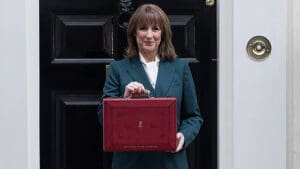
Chancellor Rachel Reeves has delivered a bruising second Budget, confirming more than £30 billion in tax rises and abandoning earlier assurances that “working people” would be shielded from higher taxes.
Instead, she told MPs she was asking “everyone to contribute”, with most households now set to be worse off and middle-income families bearing the brunt.
While welfare payments, pensions and minimum wages will rise, a broad package of tax increases — combined with frozen thresholds — means millions will see their disposable income fall further. Business owners have criticised the plans, with some dubbing it a “Budget for benefits”.
If you want to see how the budget affects you use your Budget calculator produced in partnership with accountants Blick Rothenberg – Click Here
Below, a breakdown of how different groups will be affected.
Who loses out
Workers using salary sacrifice
One of the most significant changes is the cap on National Insurance relief for salary-sacrificed pension contributions. From April 2029, only the first £2,000 of annual contributions will be exempt — a sharp shift from the current unlimited allowance.
For someone earning £50,000 and contributing 5%, this equates to an estimated £75 a year in additional tax; for a £100,000 earner, around £450. Employers, who also lose NI relief, face even greater costs and may respond by lowering their own pension contributions.
Pension specialists warn of long-term consequences. Hargreaves Lansdown calculates that a 22-year-old earning £25,000 could retire with £57,000 less if employer contributions stagnate as a result of the change.
Earners hit by frozen thresholds
Reeves has extended the freeze on income tax thresholds until 2031, pulling more workers into higher tax bands as wages rise. This also drags more estates into inheritance tax and more gains into capital gains tax.
According to analysis, a worker on £50,000 this year will pay £8,165 more in tax between 2020 and 2031 due to the frozen bands.
Owners of high-value property
Homes in England worth over £2 million will face a new surcharge of between £2,500 and £7,500 a year. The charge, uprated annually with inflation, affects around 100,000 homeowners but is expected to have wider effects.
To administer the levy, the Chancellor is ordering a revaluation of Bands F–H, raising concerns that many homes last valued in 1991 will be pushed into higher council tax bands. Property analysts warn it may destabilise a market already under pressure while the government attempts to build 1.5 million new homes.
Drinkers, smokers and gamblers
Alcohol duties will rise in February in line with the RPI measure of inflation — adding 13p to a bottle of wine, 11p to Prosecco and 38p to gin. Tobacco duty will rise above inflation, and a new vape duty remains scheduled.
The gambling sector faces one of the steepest hits. Tax on online gaming profits rises from 21% to 40%, and online betting duty jumps from 15% to 25%, though bingo duty is abolished.
Savers and investors
The cash ISA allowance will be capped at £12,000 for under-65s from April 2027, with £8,000 of the £20,000 allowance ring-fenced for investments. The Chancellor has also raised tax on dividends, savings income and property income by two percentage points, saying it is “not fair” for investment income to attract lower rates than earnings.
Industry leaders called the ISA change a blow to financial confidence at a time when households are trying to build savings buffers.
Motorists — especially EV drivers
Electric vehicle owners will face a new 3p-per-mile road charge from 2028 to replace lost fuel-duty revenue.
Meanwhile, petrol and diesel drivers gain a temporary reprieve: the 5p fuel duty cut is extended until September 2026, before being phased out gradually.
Holidaymakers
Mayors in England will be given powers to introduce a tourist tax on overnight stays. The levy is expected to be around £1 per night, though councils will have flexibility over the final design.
Who gains
Large low-income families
Reeves has scrapped the two-child benefit cap, handing substantial increases to larger low-income families. The OBR estimates 560,000 families will benefit, with around 18,000 households gaining more than £14,000 per year.
Universal Credit, PIP, child benefit and other working-age benefits will rise by 3.8% in April. Free school meals will expand to all households on Universal Credit in 2026, and the Help to Save scheme will become permanent.
Low-paid workers
The National Living Wage rises to £12.72 an hour, delivering an annual boost of around £700 for a full-time employee. The rise forms part of a longer-term plan to introduce a single adult wage rate from age 18.
Train passengers
Regulated rail fares have been frozen for 2025, the first across-the-board freeze since 1996. Labour claims that commuters on certain routes will save more than £300 a year.
State pensioners
The state pension rises by 4.8% under the triple lock, adding £550 a year to the full new state pension. Some retirees under the old scheme will gain £440. However, further increases could push pensioners paying no tax today over the £12,570 personal allowance, creating new tax liabilities.
Households facing high energy bills
Reeves says an average household will save £150 a year after she scrapped a Conservative-era eco levy she claims added £1.7 billion annually to bills.
Read more:
Reeves unveils £30bn tax rise as Budget leaves millions worse off and middle earners hit hardest
Budget 2025: Key announcements at a glance
Chancellor Rachel Reeves has delivered her second Budget, unveiling a wide-ranging package of tax, spending and regulatory measures shaped by weeks of leaks — and an accidental early publication of the OBR’s official forecasts.
Here is a comprehensive overview of the main changes affecting households, businesses and the wider economy.
Personal taxation
Reeves confirmed that income tax and National Insurance thresholds will be frozen until 2031, extending the existing freeze by an additional three years. The move will gradually pull more earners into higher tax bands as wages rise.
The annual cash ISA allowance for under-65s will be capped at £12,000, with the remaining portion of the £20,000 limit available only for investment ISAs. Dividend tax rates will rise by two percentage points from April, while all tax rates on savings income will increase from 2027.
Wages, benefits and pensions
Reeves announced that the controversial two-child benefit cap will be scrapped from April, allowing families on Universal Credit and tax credits to receive payments for all children.
The National Living Wage will rise by 4.1% to £12.71 for over-21s. Rates for 18–20-year-olds will jump 8.5% to £10.85, part of a longer-term plan for a single adult wage rate.
State pensions will increase by 4.8% in April under the triple lock, outpacing current inflation. Meanwhile, from 2029, the amount employees can contribute via salary sacrifice without paying National Insurance will be capped at £2,000 a year. The Help to Save scheme for low-income households will be extended beyond 2027.
Housing and property
Properties in England valued at over £2 million will face a new council tax surcharge of £2,500 to £7,500, following a revaluation focusing on bands F, G and H. Taxation on rental income will rise by 2 percentage points from April 2027.
Transport
The temporary 5p fuel duty cut will be extended yet again, running until September 2026 before phasing out over six months.
A new mileage-based tax for electric and plug-in hybrid vehicles will be introduced from 2028, marking the first major restructuring of motoring taxes in the EV era.
Regulated rail fares in England will be frozen next year, the first such freeze since 1996. Premium cars will be excluded from the Motability scheme.
Business taxes
The £135 tax exemption on small imports from overseas retailers will be scrapped from 2029 to address concerns about unfair competition for UK businesses.
A major overhaul of gambling taxation will see the tax on profits from online bets rise from 21% to 40%. The longstanding 10% bingo tax will be abolished.
Drinking and smoking
The sugary drinks levy will be expanded from 2028 to include pre-packaged milkshakes and lattes, reversing exemptions granted in 2018.
Taxes on tobacco will rise by 2% above RPI, while alcohol duty — including on draught drinks — will also increase in line with the higher RPI measure in February.
The economic outlook
The OBR now expects UK GDP to grow 1.5% in 2025, an upgrade from its 1% forecast in March. However, growth between 2026 and 2029 is forecast to average just 1.5%, down from earlier expectations of 1.8%.
Inflation is predicted to average 3.5% this year, falling to 2.5% next year and returning to the 2% target in 2027.
Other measures
English regional mayors will gain new devolved powers to tax overnight hotel stays, mirroring existing or planned powers in Scotland and Wales.
Finally, the cost of a single NHS prescription will remain frozen at £9.90 for another year in England.script for broadcast, I can produce that too.
Read more:
Budget 2025: Key announcements at a glance

