

Britain’s late-night economy is at risk of losing up to 10,000 more venues and 150,000 jobs by 2028 unless the Chancellor delivers urgent support in the Autumn Budget, industry leaders have warned.
The Night Time Industries Association (NTIA) said rising costs, fragile consumer confidence and the threat of further tax increases have pushed the sector to the brink, with many operators poised to close in the New Year if measures go against them.
The crisis is most acute among grassroots and independent venues — the clubs, bars, festivals and cultural spaces that underpin the UK’s nightlife and creative industries. These sites, the NTIA said, are part of the “cultural and social fabric” of towns and cities, providing essential platforms for electronic music, counterculture businesses and emerging creative talent.
The latest Night Time Economy Market Monitor, produced by CGA by NIQ and the NTIA, shows the scale of the problem. Late-night venues have fallen 28% since March 2020, with nearly 5% of that decline occurring in the past 12 months alone. Independent operators have been hit hardest, down more than 30%, double the rate of larger chains.
Industry leaders say soaring operating costs — from energy and supply chains to staffing and National Insurance increases — are eroding margins, while potential increases in alcohol duty, fuel costs, taxi fares and gambling levies could further squeeze both operators and consumers. Many venues warn they may “hand back keys” shortly after the Budget if conditions worsen.
If no intervention comes on 26 November, the NTIA estimates the UK could lose up to 20% more late-night venues on top of those already shuttered since the pandemic. The consequences would ripple across hospitality, events, security, live music, supply chains and local economies.
Michael Kill, CEO of the NTIA and Vice President of the International Nightlife Association, said the sector has been “suppressed for too long” by rising costs and inconsistent government policy.
“The late-night economy is an engine for jobs, tourism and community vibrancy,” he said. “Grassroots venues sit at the very heart of this ecosystem. These pressures are punishing young people, limiting job opportunities, damaging independent businesses and eroding the UK’s cultural identity. The Chancellor must act before it is too late.”
NTIA Chair Sacha Lord warned that the sector has reached a “tipping point”, with National Insurance hikes, inflation and tax uncertainty pushing operators and consumers to breaking point. He said many venues have contingency plans to shut immediately after the Budget if support is not forthcoming.
Despite the pressures on nightclubs and late-night hospitality, the evening economy — covering earlier-operating licensed premises — is performing more robustly, growing 0.9% year-on-year and now only 7.4% below pre-pandemic levels. The NTIA argues this shows demand for hospitality remains strong, but that late-night venues face structural challenges beyond consumer behaviour.
The association is calling on the Chancellor to rule out new taxes that impact the sector, introduce targeted relief for grassroots operators, invest in safe late-night transport and recognise nightlife as critical national infrastructure.
With the Budget days away, industry leaders say the decisions made on 26 November will be decisive. Without intervention, they warn, the UK could face shuttered venues, quieter streets and long-lasting damage to its cultural and creative economy.
Read more:
Late-night economy faces loss of 10,000 businesses and 150,000 jobs by 2028 unless Budget intervenes, industry warns
Month: November 2025
Retail sales fall as shoppers delay spending ahead of Budget and Black …

Retail sales slipped in October as wary consumers delayed purchases ahead of the Chancellor’s Budget and the start of the Black Friday discount period. Sales volumes fell by 1.1%, the first contraction in three months and significantly worse than the flat reading economists had expected.
The Office for National Statistics (ONS) said the drop was partly driven by shoppers intentionally holding off on spending until this month’s major discount events. Grant Fitzner, ONS chief economist, said many consumers reported waiting for Black Friday deals, which begin next week. October also marks the opening of retail’s critical “golden quarter” in the run-up to Christmas.
The fall reverses a 0.7% rise in retail volumes recorded in September — a figure revised up from 0.5%. Although sales rose 1.1% on a rolling three-month basis and were 0.4% higher than a year earlier, spending fell across almost every major category last month. Department stores were hit hardest, with sales down 4.5%, while clothing and footwear dropped 1.5%. Household goods fell 0.4%, and online sales declined 0.4%. Technology sales were the exception, boosted by the launch of the latest Apple iPhone.
Economists warned that shoppers’ caution reflects growing anxiety over the forthcoming Budget, amid speculation about higher taxes and the impact on disposable incomes. Rob Wood, chief UK economist at Pantheon Macroeconomics, said the “increasingly chaotic run-up to the Budget” had dented confidence. He argued that speculation over income tax rises likely weighed on households throughout October, with political turbulence in November expected to depress sentiment further.
Capital Economics’ Ruth Gregory said retailers may not enjoy the strong final quarter they had been hoping for. “Higher taxes in the Budget could restrain retail spending over the crucial festive period and going into next year,” she said.
Despite the softer October figures, some analysts believe retailers still have opportunities to capture demand. Sagar Shah, associate partner at McKinsey & Company, said brands were preparing more personalised and creative Black Friday campaigns to offset consumer hesitancy. He noted a shift towards immersive experiences, anti-advertising formats and shoppable content designed to cut through “ad fatigue” and drive engagement.
Retail sales remain a key early indicator of wider economic momentum, and October’s figures provide fresh evidence of consumers bracing for fiscal tightening ahead of what is expected to be a tax-heavy Budget.
Read more:
Retail sales fall as shoppers delay spending ahead of Budget and Black Friday
Government borrowing overshoots forecast by £9.9bn, piling pressure o …

The government has borrowed £9.9 billion more than expected so far this fiscal year, intensifying the economic pressure on Chancellor Rachel Reeves as she prepares to deliver next week’s Budget.
New figures from the Office for National Statistics (ONS) show that public sector borrowing hit £17.4 billion in October, down £1.8 billion on the same month last year but still the third-highest October total on record. Since April, borrowing has reached £116.8 billion, the second-highest level for the period since records began and almost £10 billion above the Office for Budget Responsibility’s forecast from the March Spring Statement.
The data comes at a crucial moment for Reeves, who is expected to announce tens of billions of pounds of tax rises next week. A planned rise in income tax was scrapped after revised OBR forecasts suggested the fiscal outlook had improved slightly, but the overall picture remains challenging.
James Murray, chief secretary to the Treasury, said rising debt-servicing costs were limiting resources for frontline public services.
“Currently we spend £1 in every £10 of taxpayer money on the interest of our national debt,” he said. “That money should be going to our schools, hospitals, police and armed forces.”
Murray said the Budget would set out “fair choices” to cut NHS waiting lists, reduce debt and tackle the cost of living.
The ONS said the government spent £8.4 billion servicing its debt in October, slightly down from £9.3 billion a year earlier. Grant Fitzner, the ONS’s chief economist, noted that tax and National Insurance receipts were higher than last year, helping offset increased spending on benefits and public services.
Economists warned the borrowing figures underline the tough backdrop Reeves faces. Pantheon Macroeconomics said the numbers would not affect the Budget itself, because the OBR forecasts are already finalised, but they “illustrate the difficult backdrop” confronting the Chancellor.
Capital Economics highlighted high local authority borrowing and surprisingly slow growth in tax receipts despite inflation-driven consumption rises.
The Institute for Fiscal Studies said the latest data “highlights uncertainty around tax revenues, pressures on public spending, and stubbornly high costs of servicing government debt”.
Following the announcement, yields on ten-year UK government bonds fell to 4.5 per cent, while sterling held steady at $1.30.
Read more:
Government borrowing overshoots forecast by £9.9bn, piling pressure on Reeves before Budget
Government unveils major AI investment package to drive UK growth and …

The government has announced a sweeping package of artificial intelligence investments and reforms designed to accelerate economic growth, support national renewal and strengthen the UK’s position as a global leader in AI.
Placing AI at the heart of the UK’s Modern Industrial Strategy, ministers said the programme would unlock billions of pounds in private investment while enabling new opportunities for businesses, researchers and local communities. Central to the announcement is the creation of a major AI Growth Zone in South Wales, developed in partnership with Vantage Data Centers and Microsoft.
The zone — which spans multiple sites along the M4 corridor, including the former Ford Bridgend Engine Plant — will attract £10 billion in private investment and create more than 5,000 jobs over the next decade. It will serve as a hub for AI infrastructure, research and advanced digital industries, with further zones expected to launch in other regions.
Each Growth Zone will receive £5 million in government funding to help local firms adopt AI technologies and develop specialised skills in their workforce.
Sachin Agrawal, Managing Director for Zoho UK, said the government’s commitment to AI was both “timely and visionary”, and essential to ensuring innovation benefits are distributed fairly across the country. He warned, however, that businesses must complement adoption with the right culture, skills and governance.
“For businesses, the real opportunity lies not only in adopting AI tools, but in developing the skills, readiness and governance to apply them responsibly at scale,” he said. “AI literacy and strong data protection standards will be essential to ensure initiatives are credible and built for long-term impact.”
Agrawal said structured implementation — with clear pilot programmes supported by automation, security and strong oversight — would help organisations move “beyond experimentation” and generate sustainable competitive advantage.
To keep UK researchers and startups at the forefront of global AI development, the government is also launching a programme to expand free and low-cost compute access, with up to £250 million earmarked to help train advanced models and accelerate scientific breakthroughs.
Alongside this, ministers announced a £100 million advance market commitment that will allow the government to act as an early customer for UK AI hardware startups. The scheme is designed to support domestic chip innovation and ensure British-designed hardware is incorporated into the next generation of data centres.
Read more:
Government unveils major AI investment package to drive UK growth and create thousands of jobs
Six in ten founders say Labour is ‘anti-business’, new survey find …

Nearly two-thirds of fast-growth business founders believe the Labour government is “anti-business”, according to a new survey from Helm, one of the UK’s largest networks of scale-up entrepreneurs.
In a poll of 400 Helm members, 63% said the government is anti-business, compared with just 23% who disagreed. A further 14% said they were unsure.
Even more striking was the response to whether the government “rewards people for working hard”: 95% said it does not.
The findings highlight growing unease among high-growth founders ahead of the Autumn Budget, amid ongoing concerns about tax rises and the direction of the government’s economic strategy.
Founders feeling “betrayed and ignored”
Helm members — whose companies generate an average £21 million in annual revenue and collectively produce more than £8 billion — expressed deep frustration with the government’s approach to business and growth.
Helm CEO Andreas Adamides said members felt “betrayed, ignored and genuinely let down”.
“These aren’t faceless corporates — they’re founders who’ve risked everything to build businesses, create jobs and drive the economy forward,” he said. “They wanted to believe Labour understood them. Instead, they’ve read endless speculation about punishing tax rises and listened to ministerial rhetoric that dismisses their concerns. The sense of betrayal is palpable.”
Adamides said Chancellor Rachel Reeves “still has a chance to turn this around”, urging her to deliver “a Budget that backs growth, not one that punishes success.”
Investment and hiring frozen until after the Budget
A previous Helm survey in October found that three-quarters of members had frozen investment and hiring plans until after the Budget due to uncertainty over potential tax measures and the broader economic climate.
Labour support collapses among founders
The poll underscores a dramatic shift in political sentiment across the scale-up community:
• 20% of respondents voted Labour at the last election
• 0% now plan to vote Labour
• Only 6% plan to vote Conservative
• 15% plan to vote Reform
• A striking 58% remain undecided
Helm members also showed scepticism about political pledges more broadly: 70% said it is acceptable for a government to break a manifesto promise.
Helm’s membership base contributes more than £1 billion in annual taxes through corporation tax, employer National Insurance and other business levies — meaning the founders’ views provide a significant barometer of sentiment among the UK’s high-growth businesses.
Read more:
Six in ten founders say Labour is ‘anti-business’, new survey finds
Tories demand answers from OBR over Reeves’s income tax backtrack
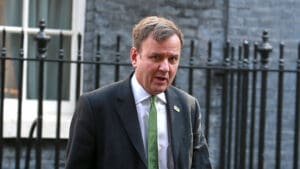
The Conservatives have accused Chancellor Rachel Reeves of undermining the Budget process and dragging the Office for Budget Responsibility (OBR) into political controversy after Labour briefed that improved economic forecasts prompted her to abandon plans for an income tax rise.
Shadow chancellor Sir Mel Stride has written to Richard Hughes, chairman of the OBR, demanding clarity on when the Chancellor received the watchdog’s forecasts and whether they played any role in last week’s surprise U-turn. Reeves had been expected to announce a 2p rise in the basic rate of income tax but reversed course amid intense speculation over Sir Keir Starmer’s leadership difficulties.
Reeves dropped the plans two weeks after the OBR handed over its final pre-Budget forecast on 31 October. The timing has fuelled suspicions among Conservatives that the Chancellor’s decision was politically driven rather than dictated by the numbers. In his letter, Stride said the government’s explanations “simply don’t stack up,” adding that the Chancellor had “sullied the Budget process” by briefing details to the press and “drawing the independent OBR into the crossfire.”
Government sources claimed that Reeves acted on updated Treasury analysis of the OBR’s long-term growth projections received on 10 November, which reportedly showed a £10 billion improvement in the public finances. However, the OBR’s own published timetable says its final economic forecast—produced before any policy decisions—was delivered on 31 October and should provide the “stable base” for the Chancellor’s choices.
Stride has asked Hughes to confirm whether the Chancellor received the forecasts on that date, and whether any changes have been made to the projections since then other than those arising from measures submitted by the Treasury for scoring. He also questioned whether Reeves had breached confidentiality by confirming publicly that the OBR had downgraded the UK’s long-term productivity outlook.
Former Treasury permanent secretary Lord Burns said it was a “huge mistake” for the Chancellor to trail an income tax rise and then abandon it, particularly given the reaction in financial markets. UK gilt yields spiked after reports of the reversal, forcing ministers to reassure investors that the decision was based on the OBR’s forecasts rather than political turmoil.
The Chancellor’s retreat from increasing income tax now leaves her needing to raise as much as £25 billion through a patchwork of smaller levies to meet her fiscal rules. Freezing income tax thresholds and higher duties on property, banks, gambling companies and electric vehicles are expected to form part of next week’s Budget.
Treasury insiders said the late-stage change of course has left officials scrambling to finalise the numbers, with several measures still undecided. One source suggested Reeves had previously ruled out higher taxes on banks “when the sun was shining,” but now faced pressure from Labour backbenchers to revisit bank profits.
The political turmoil comes as new data from the British Retail Consortium pointed to a sharp fall in consumer confidence heading into the crucial pre-Christmas season, following what it described as a “tumultuous” month of Budget speculation.
The Treasury said Reeves would set out full details in the Budget. The OBR declined to comment.
Read more:
Tories demand answers from OBR over Reeves’s income tax backtrack
Barclays accused of shutting entrepreneur’s bank account over her On …

Barclays has been accused of closing the bank account of a tech entrepreneur because she earns part of her income through the adult content platform OnlyFans.
Madelaine Thomas, who runs a start-up called Image Angel while also generating income through adult content platforms, said the bank refused to open a business account for her company and had shut down an account linked to her work on OnlyFans and similar websites.
Thomas applied for a business account with Barclays for Image Angel, a company she founded after private images of her were shared without her consent. The company’s technology applies digital watermarks to online images, allowing creators to track how their content is distributed and identify when it is shared without permission.
She said she initially received a positive response from the bank when submitting her application, but this was followed by a string of questions about a separate account that received income from her adult content work. She also said Barclays asked about a joint account she holds with her husband, which she uses to pay nursery fees.
“It’s crazy that I’m trying to get a business bank account for technology that is going to change the landscape in terms of violence against women and girls, and yet I’m now being investigated for…I don’t even know what,” she said. “The technology I’m creating is just protecting people. It’s a benefit to society.”
Writing on LinkedIn, she claimed: “Barclays don’t like that I earn via platforms like OnlyFans.”
OnlyFans, which has nearly five million creators and more than 350 million users, has faced similar complaints before. In 2021, the model Jessica Alves said Barclays deleted her account, citing concerns about transactions linked to adult content.
Last year, the Financial Conduct Authority warned banks not to block or shut down the accounts of adult workers without valid reason, saying such actions could cause “significant harm” to the individuals affected.
A Barclays spokesperson said the bank has a responsibility to understand the source of funds associated with any business account.
“Where it is not possible to do so, we will examine each business on a case-by-case basis and only close a customer’s account after careful thought,” the spokesperson said. “We do not take this decision lightly and understand the difficulties this can cause.”
Thomas said she has since opened a business account with another bank.
Read more:
Barclays accused of shutting entrepreneur’s bank account over her OnlyFans work
Reeves urged to set out how £2bn AI investment will be spent in Autum …

Chancellor Rachel Reeves should use the Autumn Budget to spell out how the government plans to deploy the £2 billion earmarked for the UK’s AI Opportunities Action Plan, according to leading audit, tax and advisory firm Blick Rothenberg.
Evelina Panchal, a director at the firm, said businesses urgently needed clarity on how the funding would be allocated, arguing that proper investment planning could unlock transformative gains for the economy.
“Research from Microsoft suggests AI represents a £550 billion opportunity for the UK over the next decade,” she said. “To support the tech sector, Rachel Reeves should confirm how the £2bn commitment will be used.”
The AI Opportunities Action Plan, announced in the 2025 Spending Review, aims to strengthen the UK’s national AI infrastructure and includes proposals for AI Growth Zones, where planning rules would be relaxed to speed up the development of data centres and compute facilities. Panchal said tech firms needed specifics around timelines, locations and access if they were to benefit from the programme.
The tech sector contributed £71bn to the UK economy in 2023 and employed 1.77 million people in 2024. Panchal said the potential impact of the £2bn investment depended heavily on how fast the money was released and whether the government delivered a detailed roadmap.
“Infrastructure gaps, skills shortages and slow business adoption remain the biggest challenges,” she warned. “Reeves must set clear timelines and implementation plans.”
Panchal also urged the Chancellor not to introduce changes in the Budget that could undermine the UK’s attractiveness as a hub for digital entrepreneurship.
She said share-based incentive schemes such as Enterprise Management Incentives (EMIs) — widely used in the tech and AI sectors — must not be restricted, as they are critical to attracting specialist talent in a competitive global market.
“Rachel Reeves should not introduce any further changes to Capital Gains Tax, exit taxes or wealth taxes,” she added. “If she does, it risks killing off the remaining entrepreneurial spirit in the tech sector, with negative consequences for innovation and economic growth.”
She said the UK needed to remain “a supportive and fair environment for tech companies and their founders” to ensure they continue to operate in Britain, bringing essential investment, jobs and revenue.
Read more:
Reeves urged to set out how £2bn AI investment will be spent in Autumn Budget
Bond markets could force Rachel Reeves into a ‘secondary budget’, …

Bond markets may force Rachel Reeves to deliver a second budget if investors react negatively to next week’s fiscal plans, a senior City investor has warned, underscoring the fragile backdrop the chancellor faces ahead of 26 November.
David Zahn, head of European fixed income at the $1.69 trillion asset manager Franklin Templeton, said the biggest risk to Reeves was that markets “disappoint” rather than celebrate the Budget — a scenario that could push up gilt yields sharply.
“If the bond market reacts very badly, the government will have to react if bond yields start to go up too much,” Zahn said. “It could force her hand to do a secondary budget.” He added that yields on 10-year or 30-year UK government bonds reaching 6% would be “unsustainable”, warning of a potential “death spiral” if borrowing costs rose too far.
UK 30-year gilt yields currently stand at 5.35%, down from a 27-year high of almost 5.75% in early September. Ten-year yields are trading at 4.53%.
Zahn said bond investors are unlikely to welcome the Budget because the Labour government appears unable or unwilling to push through spending cuts. That reduces the scope to bring borrowing down and limits the chance that gilt yields will fall.
“If she’s not going to tackle any of the big taxes, I don’t see what she can do that the market will go ‘fantastic, you fixed it’,” he said. “She’s not doing any spending cuts.”
The warning follows reports that Reeves has abandoned a plan to raise income tax — a move Zahn argued “markets would have taken very well” as a sign of serious fiscal tightening. Instead, Reeves is expected to freeze tax thresholds, which ING estimates will raise £10 billion a year as more workers are pulled into higher tax bands through fiscal drag.
The chancellor may also raise a range of smaller taxes to generate extra revenue.
Markets will be watching closely to see whether Reeves creates enough fiscal space to meet Labour’s rule of having debt falling in five years. She had previously left herself only £10 billion of headroom — a buffer now thought to have been eroded by a downgrade in the UK’s long-term productivity outlook.
Zahn suggested the markets would prefer to see at least £20 billion of headroom in the Budget. He also predicted further tax rises were likely next year: “I don’t think this is a one-off. She probably won’t be back next year, but somebody will be.”
Analysts at ING warned that any spike in borrowing costs after the Budget could be driven by politics, not economics.
James Smith, ING’s developed markets economist, said falling Labour poll ratings and pressure on Keir Starmer could fuel market speculation about leadership instability: “If a challenge looked imminent, markets might assume a new PM would appoint a new, potentially more left-leaning chancellor — one more likely to change fiscal rules and increase borrowing.”
Michael Browne, global investment strategist at the Franklin Templeton Institute, said the shock of the 2022 Liz Truss mini-budget crisis is still shaping investor behaviour.
“The markets aren’t forgetting that either,” he said. “Get it right, and the UK is exciting from a bond and equity point of view. But at this point, what’s the evidence we’ll do anything other than muddle through? And muddling through comes with risks.”
Read more:
Bond markets could force Rachel Reeves into a ‘secondary budget’, warns leading City investor

