
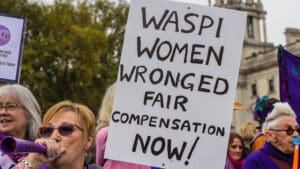
The government has agreed to reconsider its decision not to compensate millions of women affected by state pension age rises, after new evidence emerged during ongoing legal proceedings.
Work and Pensions Secretary Pat McFadden told MPs that ministers will withdraw from a forthcoming judicial review brought by the Women Against State Pension Inequality (Waspi) campaign, while the newly uncovered material is examined.
The decision marks a significant shift in the long-running dispute over how women born in the 1950s were informed of changes to the state pension age. Campaigners argue they were not given sufficient notice of the increases that brought their retirement age in line with men, leaving many financially unprepared.
McFadden said the new evidence relates to previously unseen Department for Work and Pensions (DWP) documents from 2007, which had not been made available to his predecessor Liz Kendall when she ruled out compensation last December.
“As part of the legal proceedings challenging the government’s decision, evidence has been cited about research findings from a 2007 report,” McFadden told the Commons. “In light of this, and in the interest of fairness and transparency, I have concluded that the government should now consider this evidence. This means we will retake the decision made last December.”
He added that had Kendall been provided with the report, she would have “considered it alongside all other relevant evidence and material.”
In March 2024, the Parliamentary and Health Service Ombudsman recommended that affected women should receive compensation of up to £2,950 each, which could have cost the Treasury around £10.5 billion. Kendall rejected that advice at the time, saying most people had been aware of the state pension changes.
McFadden, who was appointed Work and Pensions Secretary earlier this year, stressed that the new review “should not be taken as an indication” that compensation will necessarily be awarded. However, he said the government wanted to ensure that all relevant evidence was considered before any final decision is made.
Waspi campaigners, who have spent nearly a decade fighting for redress, welcomed the announcement but urged ministers to act swiftly.
Angela Madden, chair of the Waspi campaign, said: “For 10 years we have been fighting for compensation. The Government has fought us tooth and nail every step of the way. The only correct thing to do is to immediately compensate the 3.6 million Waspi women who have already waited too long for justice.”
The issue stems from the 1995 Pensions Act, which set out plans to raise the state pension age for women from 60 to 65, and later from the 2011 coalition government legislation that pushed the age to 66 for both men and women. Campaigners say communication failures by the DWP meant many women were unaware of the changes until they were close to retirement.
It is estimated that around 300,000 women affected by the policy have died since compensation was first demanded in 2015.
While McFadden has hinted at the possibility of modest welfare reforms to help balance the public finances, his decision to revisit the Waspi ruling signals a more conciliatory approach from the new Labour government — one that may seek to rebuild trust after years of contention.
Read more:
Government to review Waspi women compensation decision after new evidence emerges
Month: November 2025
Six million small firms urge COP leaders to unlock finance and incenti …

More than six million small and medium-sized enterprises (SMEs) across the globe are calling on world leaders to take urgent and coordinated action to support business-led climate progress, warning that the path to net zero will stall without their inclusion.
In an open letter released ahead of the UN Climate Change Conference (COP30) in Brazil, the SME Climate Hub and its global partners urged governments to adopt a unified set of policies that unlock green finance, simplify climate guidance, and create meaningful incentives for smaller firms to take action.
SMEs account for 90 per cent of global businesses and generate over half of the world’s GDP, yet they are among the least supported when it comes to decarbonisation. Despite their crucial role in local economies and international supply chains, most small businesses still face significant barriers to climate action. A recent SME Climate Hub survey found that 80 per cent of respondents reported either minimal government support or no awareness of existing climate-related incentives.
“The global climate transition cannot succeed if SMEs are left behind,” said Pamela Jouven, Director of the SME Climate Hub. “Governments have the power to turn climate risk into business opportunity. We’re urging Heads of Delegations at COP30 to adopt a practical policy framework that empowers SMEs and recognises them as vital contributors to the net zero transition.”
The open letter calls for governments to strengthen national frameworks so that SMEs are formally recognised within climate and biodiversity strategies and included in consultation processes. It also advocates for the integration of small firms into public procurement systems, ensuring they can compete fairly for green contracts and become part of sustainable value chains.
Jouven and her fellow signatories argue that governments must do more to demonstrate the business case for decarbonisation, including funding research that quantifies the commercial benefits of net zero strategies — from energy efficiency savings and improved resilience to risk, to access to new markets and customers.
Another key priority is clarity. Many SMEs are held back not by reluctance, but by confusion. The letter urges policymakers to develop consistent, centralised guidance to help small firms navigate reporting requirements and access credible resources for climate adaptation and emissions reduction.
Above all, the group stresses that progress depends on unlocking finance. It calls on financial institutions and governments to design funding models that meet the needs of smaller enterprises, including tailored green loans, grants, tax incentives and government-backed guarantees.
“Small businesses are the backbone of economies and global supply chains,” Jouven added. “Empowering them to take climate action will accelerate the delivery of national net zero targets and build resilience across the global economy.”
The letter’s release comes as climate financing is expected to dominate the agenda at COP30 in Belém, Brazil. With SMEs employing two billion people worldwide, the SME Climate Hub warns that failing to equip them for the green transition would not only jeopardise climate goals but risk leaving vast sections of the economy unprepared for the low-carbon future.
Read more:
Six million small firms urge COP leaders to unlock finance and incentives for green growth
Andrew Mountbatten-Windsor winds up Pitch@Palace and remaining busines …
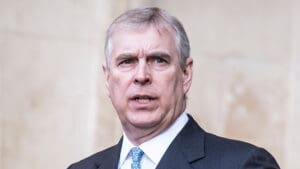
Andrew Mountbatten-Windsor is shutting down some of his final remaining business ventures, including Pitch@Palace Global Ltd, once seen as a potential source of private income after the King withdrew financial support.
Pitch@Palace began as a Dragon’s Den-style initiative allowing entrepreneurs to pitch start-up ideas to investors, backed by the then Duke of York. It attracted global attention and corporate sponsors before collapsing under the weight of scandal following Mountbatten-Windsor’s association with convicted sex offender Jeffrey Epstein.
A document filed with Companies House on Tuesday confirmed that Pitch@Palace Global has applied to be struck off the register and dissolved. The application, signed by the firm’s sole director, accountant Arthur Lancaster, declared that there were no outstanding debts or other obstacles to closure.
Lancaster, who has long acted as a business associate of Doug Barrowman and Baroness Michelle Mone — both embroiled in a high-profile dispute over a pandemic PPE deal — is understood to hold the company’s shares on behalf of Mountbatten-Windsor. The former prince remains listed as a person with significant control, under his previous title.
Pitch@Palace’s UK arm was wound up in 2021 after the Newsnight interview that prompted Mountbatten-Windsor’s withdrawal from royal duties and the removal of his official titles. However, its international division, Pitch@Palace Global, had remained open until now.
The company’s most recent accounts show cash reserves dwindling from £220,990 to just £10,965 by the end of March, suggesting that most of the remaining funds have been withdrawn in recent years.
The venture had continued to generate controversy abroad. The Chinese arm’s founder, Yang Tengbo, was accused of espionage — allegations he denied — while a Dutch accelerator, Startup Bootcamp, briefly explored a deal to acquire the business in 2024, citing “immense value” in its international network. That agreement later fell through.
On the same day, a second company linked to Mountbatten-Windsor — Innovate Global Ltd — also filed for closure. Lancaster is again listed as the sole director. The firm, which has no employees and minimal assets, was reportedly intended to serve as a reboot of Pitch@Palace’s international operations under a new brand.
The closures further mark Mountbatten-Windsor’s continued retreat from public and commercial life. Once billed as a champion for innovation and entrepreneurship and the self styled royal entrepreneur-in-residence at the palace , his flagship initiative has now quietly come to an end.
It was also confirmed this week that his surname will formally be rendered with a hyphen — Mountbatten-Windsor — aligning with the spelling first approved by the Privy Council in 1960.
Read more:
Andrew Mountbatten-Windsor winds up Pitch@Palace and remaining business interests
Employee ownership boom cools as tax clampdown slows sales to staff

After a decade of rapid growth, Britain’s employee ownership movement is hitting the brakes. New tax rules introduced in last year’s Budget have curbed the number of business owners selling to their staff, following a clampdown on offshore trusts used to sidestep capital gains tax (CGT).
The Employee Ownership Association (EOA) reports that company sales to employee ownership trusts (EOTs) fell from 550 in 2024 to just 200 in the first eight months of this year. The total is now expected to reach around 350 for 2025 — a drop of more than a third.
Fresh figures from HM Revenue & Customs, obtained by accountancy firm Price Bailey, back up the trend. Only 104 EOTs were cleared by HMRC in the three months to June, the lowest level since early 2022.
Experts say the decline follows reforms designed to close tax loopholes exploited by some sellers. Previously, company owners could transfer their businesses to offshore EOTs, whose trustees would quickly resell the company to another buyer, allowing the original owners to pocket the proceeds tax-free.
The government’s new rules now ban offshore structures and introduce a tougher four-year “clawback” clause, meaning sellers could lose their CGT exemption if the company is sold on within four full tax years — up from just one.
James de le Vingne, chief executive of the EOA, said the slowdown “serves as a reminder that despite a decade of learning, education and insights driving growth, greater alignment of employee ownership succession with business support and regional growth plans is still needed to unlock the full opportunity of people-powered growth.”
EOTs were first introduced in 2014 to promote the John Lewis model of shared ownership, offering 100 per cent CGT relief to sellers who pass control to their employees. Since then, the number of such trusts has soared from a few hundred to around 2,500, including well-known firms such as The Entertainer, Go Ape and Richer Sounds.
Robert Postlethwaite, founder of Postlethwaite Solicitors and a leading expert on employee ownership, said that while the new rules had cooled activity, the long-term picture remained positive.
“Some owners used EOTs purely as a tax-efficient exit — that’s no longer the case,” he said. “Those now pursuing employee ownership tend to be genuinely committed to it as part of their company’s future, rather than simply looking for a tax-free escape route.”
He expects the pace to pick up again as more business owners approach retirement: “There are so many companies needing a succession solution, and EOTs will remain an important option.”
Simon Blake, a partner at Price Bailey, described the latest reforms as “the most consequential change to the EOT regime since its introduction,” adding that the four-year rule “fundamentally alters the risk calculus — transforming what was once a frictionless exit into a compliance marathon.”
Despite the slowdown in conversions, the EOA has continued to expand, adding 210 new members in the year to September. The professional, scientific and technical sectors accounted for the largest share of new entrants, followed by IT, manufacturing and construction — evidence that, while the tax breaks may be less generous, interest in shared ownership remains strong.
Read more:
Employee ownership boom cools as tax clampdown slows sales to staff
Business leaders warn Budget tax hikes could trigger higher prices

UK business leaders have urged the government not to increase employment costs in the upcoming Autumn Budget, warning that higher taxes could force small firms to raise prices and worsen inflation.
A new survey by Employment Hero found that 86 per cent of 1,000 business leaders are worried about what the Budget will mean for their companies, with 59 per cent saying they believe the government does not take the needs of small businesses into account when setting fiscal policy.
The concern comes after employer National Insurance contributions (NICs) rose from 13.8 per cent to 15.05 per cent in April — a move that many SMEs say has already strained their finances.
If Chancellor Rachel Reeves raises employment-related taxes again, business groups say it could “damage the government’s mission to drive economic growth and control inflation.”
Almost half of small and medium-sized businesses (49 per cent) said they would raise prices if employment costs increase, while 33 per cent said they would delay hiring and 24 per cent would consider redundancies, according to Employment Hero’s findings.
The report also noted that many small firms are still recovering from the effects of Reeves’s first Budget last year, which 72 per cent of leaders said negatively impacted their business.
Despite these concerns, Employment Hero’s data showed signs of resilience in the UK labour market, with employment rising 2.3 per cent month-on-month in October and up 1.9 per cent year-on-year.
Kevin Fitzgerald, UK managing director at Employment Hero, said the government must learn from past mistakes.
“When you tax small businesses, you tax everyone,” he said. “Higher costs lead to higher prices, fewer jobs, and less money in people’s pockets.”
Fitzgerald argued that SMEs — which employ the majority of the UK workforce — are key to reviving growth and tackling inflation.
“The Autumn Budget is an opportunity to show small firms that the government understands their role in the economy,” he said. “If ministers want to keep Britain working, they need to back small businesses — not burden them.”
Business leaders across the UK are pressing the Treasury to avoid further tax increases on employment and investment when Reeves delivers her Budget later this month.
Many fear that another round of tax hikes could fuel inflation, stunt job creation, and undermine confidence among smaller firms that are already contending with higher wage costs, energy prices, and borrowing rates.
With the Budget expected to focus heavily on fiscal tightening to fill a multi-billion-pound deficit, industry figures warn that punishing small firms could prove counterproductive — dampening growth at the very moment the government is seeking to reignite it.
Read more:
Business leaders warn Budget tax hikes could trigger higher prices
More than 100 Aston Martin jobs at risk in Wales amid global slowdown

More than 100 jobs are at risk at Aston Martin’s St Athan plant in the Vale of Glamorgan, as the luxury carmaker grapples with US trade tariffs and falling demand from China.
The company, which began production at its Welsh site in 2019, confirmed that staff consultations are under way but said no final decision on redundancies has yet been made.
Aston Martin said the planned measures were part of efforts to “strengthen the business in response to continued challenges in the global macroeconomic environment.” The firm added that the proposals could affect “contractor, fixed-term and permanent roles.”
Union leaders described the situation as “devastating”. Andrew Pearson, regional officer for Unite, said the union would begin consultation talks with the company in an effort to mitigate job losses.
The company’s shares have tumbled over the past year as it struggles with weaker demand across key international markets. Aston Martin recently warned that it could lose £110 million this year due to the “global macroeconomic environment.”
The St Athan site has already seen job cuts this year. In February, Aston Martin confirmed that 170 roles were being axed as part of a broader cost-saving drive.
Production jobs are expected to be most affected in the latest round of potential cuts, along with a number of contractor positions, according to BBC Wales.
The Welsh government said it was in contact with Aston Martin and stood ready to support affected employees.
“We are prepared to work with the company to offer support to workers following the outcome of the consultation,” a spokesperson said.
The St Athan plant, built on the site of a former RAF base, was seen as a key pillar of Aston Martin’s expansion when it opened in 2019. It employs several hundred staff and was originally intended to produce the company’s first SUV, the DBX, and future electric models.
Now, as economic pressures mount and global trade tensions bite, the future of that investment — and the jobs it brought to south Wales — hangs in the balance.
Read more:
More than 100 Aston Martin jobs at risk in Wales amid global slowdown
Alan Milburn to lead review into mental health’s role in youth unemp …

The government has launched a major review into youth unemployment, tasking former Labour health secretary Alan Milburn with investigating the growing role of mental health and disability in the rise of economically inactive young people.
Nearly one million people aged 16 to 24 in the UK are currently not in education, employment or training (Neets) — a figure that has alarmed ministers and policymakers. Milburn’s review will explore how to prevent young people from becoming trapped outside work or education, with findings expected to be published next summer.
The announcement comes just days after the Mayfield Review, led by former John Lewis chairman Sir Charlie Mayfield, warned that “young adults” aged 16 to 34 were at the heart of Britain’s “economic inactivity crisis”. His report found that the number of 16- to 34-year-olds who are long-term sick and inactive due to mental health conditions has risen by 190,000 since 2019, a jump of 75 per cent.
Launching the review, Pat McFadden, the work and pensions secretary, said the UK faced a “crisis of opportunity” among its younger generation.
“We cannot afford to lose a generation of young people to a life on benefits, with no work prospects and not enough hope,” he said. “This demands more action to give them the chance to learn or earn.”
The government is expected to unveil a “youth guarantee” in this month’s Budget — a policy that would promise paid work to young people who have been on universal credit for 18 months or more without finding employment or education.
The Department for Work and Pensions said Milburn’s review would make “practical recommendations” to help young people with health conditions access training, education or jobs, “ensuring they are supported to thrive, not sidelined.”
The initiative comes amid a series of government efforts to tackle long-term sickness and economic inactivity. It follows the Timms Review, which is currently examining personal independence payments (PIP) — the benefit covering the extra costs of physical and mental disabilities.
Milburn, who served as health secretary from 1999 to 2003 under Tony Blair and now acts as the lead non-executive director at the Department of Health and Social Care, said his review would be “uncompromising in exposing failures” across employment, education and welfare systems.
“I will produce far-reaching recommendations for change to enhance opportunities for young people to learn and earn,” he said.
The surge in young people unable to work due to mental health problems has become one of the most pressing challenges facing the government. Economists warn that rising inactivity is eroding productivity and weighing on growth.
While successive governments have published reports diagnosing the problem, few have managed to reverse the trend. Critics say underfunded mental health services, combined with the pressures of insecure work and high living costs, have created a generation increasingly detached from the labour market.
Milburn’s findings are expected to feed directly into Rachel Reeves’s forthcoming Budget, which will include new spending pledges aimed at reducing inactivity and boosting youth employment.
The hope in Whitehall is that this review — combining insight from both the health and work sectors — will finally produce a joined-up plan to bring Britain’s lost young workers back into the economy.
Read more:
Alan Milburn to lead review into mental health’s role in youth unemployment
Jobs and kebabs on the line as UK steel sector turns on itself over im …

When Jonathan Reynolds announced sweeping tariffs this summer to shield Britain’s steelmakers from a flood of cheap imports, the reaction seemed almost universally positive.
“This government is unapologetic in our support for the UK steel sector,” declared Reynolds, then business secretary, promising to defend a “vital industry that underpins Britain’s industrial strength and national security.”
Gareth Stace, director-general of the industry body UK Steel, hailed it as “a tremendous outcome” that would stop foreign producers from “swamping the UK and driving our steel manufacturers out of business.”
But behind the scenes, the glow of unity quickly dimmed. Letters, emails and board minutes seen by The Sunday Times reveal an industry at war with itself — with primary steelmakers and smaller manufacturers accusing one another of self-interest as tariffs reshape Britain’s metal economy.
On one side stand the primary steel producers: heavyweights such as Tata Steel, British Steel, Celsa and Speciality Steel, which collectively employ about 10,000 workers and produce semi-finished materials like billets, slabs and blooms. They argue that protection is essential to defend British manufacturing from state-subsidised steel from Asia, particularly China.
On the other side are the “downstream” steel users — the firms that take these semi-finished products and turn them into everything from metal washers and car parts to construction mesh and polished kitchen counters. Together they support more than 300,000 jobs, and they say the new tariffs are pushing them to the brink.
Their case is simple: by making imported steel more expensive, the government is driving up their costs — in some cases to the point where manufacturing in Britain no longer makes economic sense.
“British steelmakers are deliberately and consciously seeking to damage downstream businesses, even though some are their customers,” said Stephen Morley, president of the Confederation of British Metalforming (CBM), which represents 200 firms employing 70,000 people.
Morley and a coalition of downstream trade bodies — including the British Constructional Steelwork Association, British Stainless Steel Association, and International Steel Trade Association (Ista) — claim the government’s decision was heavily influenced by Tata Steel, the Indian conglomerate that owns the Port Talbot steelworks in south Wales.
In a letter to trade minister Chris McDonald, Morley alleged that former business secretary Reynolds had acted after Tata “held a gun to the government’s head,” threatening to withdraw from its £1.25 billion plan to switch from coal-fired blast furnaces to cleaner electric arc furnaces unless stronger import protections were introduced.
Tata declined to comment, but UK Steel insists that protectionism is necessary given the “existential threat” posed by Chinese overproduction and the re-routing of exports through Vietnam and South Korea to avoid anti-dumping rules.
“We have to implement broader import controls,” said Peter Brennan, UK Steel’s director of trade and economic policy. “That’s what the US has done. That’s what the EU is doing. If we don’t, we’ll lose our steel industry.”
Downstream companies warn the consequences could ripple through construction, manufacturing and infrastructure. Britain simply doesn’t make enough steel to meet demand, forcing firms to import — now at inflated prices.
Richard Webster, chair of the British Independent Reinforcement Fabricators Association, said the UK produces only about 600,000 tonnes of steel reinforcement bars a year, far short of the 1.1 million tonnes needed for projects like housing and rail.
“Imports play a crucial role in keeping supply flowing to the construction industry,” he wrote to trade secretary Peter Kyle. “Tariffs could slow projects and undermine Labour’s growth ambitions.”
Simone Draper of Ista added that the changes had already caused “disruption and unexpected costs across the supply chain.”
There is growing fear that further tariff hikes — such as the EU’s planned 50 per cent levy and halving of tariff-free quotas due next year — could “strangle the metal manufacturing supply chain”, in Morley’s words.
Many companies sit uneasily between the two sides. Philip Jackson, managing director of Bright Steels in North Yorkshire, said his business both suffers from cheap imports and depends on them.
“A one-dimensional approach on safeguarding will penalise us,” he said. “We need a balanced policy that supports domestic producers without crippling the rest of the chain.”
To find that balance, Kyle has commissioned engineering consultancy Hatch to map Britain’s steel production capacity and demand over the next 25 years — an attempt to identify which products could be tariff-free without undermining UK mills.
For some in the industry, the stakes are more tangible than trade statistics. Kirsty Davies-Chinnock, a stainless steel specialist in the West Midlands, says tariffs threaten the invisible infrastructure that underpins daily life.
“Everyone in the UK comes into contact with my products at least 30 times a day,” she said. “From turning on a light switch to taking a vitamin, having a cup of coffee — right through to falling out of a nightclub at 3am and being handed a kebab over a polished stainless steel counter. You take that away, and you can’t have your coffee, your vitamins — or your kebab.”
It’s a vivid reminder that in the civil war tearing through British steel, it isn’t just furnaces and factories at stake — it’s the thousands of small businesses, builders, and manufacturers that rely on them every day.
Read more:
Jobs and kebabs on the line as UK steel sector turns on itself over import tariffs
Tories vow to ‘take a chainsaw’ to ESG rules to boost London listi …

The Conservative Party has pledged to scrap mandatory climate and sustainability reporting requirements and rein in regulators “with a tendency to go woke” in a dramatic effort to boost the number of companies listing on the London Stock Exchange.
Andrew Griffith, the shadow business and trade secretary, said that if the Tories win the next general election, they will “take a chainsaw” to the layers of green and social disclosure rules that have, in his words, “made British businesses less competitive and less agile.”
“If you care about the competitiveness of the UK, someone has to take a proper chainsaw to the volume of these extra reports. And that someone is going to be us,” Griffith said.
The plans mark one of the most radical proposed rollbacks of corporate regulation in recent years — and signal a sharp shift from the Labour government’s focus on green finance and ESG transparency.
Under the Conservatives’ proposals, mandatory ESG disclosures, including a company’s carbon footprint, diversity metrics and social governance data, would be made voluntary once again.
ESG rules were initially introduced as a voluntary standard, allowing firms to demonstrate transparency around sustainability, workplace culture and board governance. Over the past decade, however, the measures have evolved into complex mandatory frameworks administered by regulators such as the Financial Conduct Authority (FCA), HMRC, and Companies House.
According to government figures, compliance costs have spiralled, with businesses spending around £202 million annually on climate-related financial disclosures, plus an additional £100 million on energy savings and carbon reporting.
A KPMG study found the average sustainability report now runs to 83 pages, up from 70 pages in 2021, with some reports exceeding 200 pages.
“Some of our best firms are hamstrung by having to report against a dense thicket of ESG metrics, to be judged by self-appointed activists or regulators,” Griffith said.
Griffith said the Conservatives would also move to curb the powers of regulators, particularly where ESG requirements are seen as political or subjective.
He argued that excessive reporting and regulation had driven businesses away from London, citing rival financial centres such as New York and Singapore as jurisdictions with fewer disclosure burdens.
“The countries we’re losing listings to don’t have anything like this kind of onerous reporting,” Griffith said. “There’s no point in us being an outlier.”
In the US, Donald Trump’s administration previously scrapped federal ESG reporting mandates, a move that the Conservatives see as a precedent for deregulation in the UK.
The policy forms part of a wider Conservative strategy to revive London’s global competitiveness as a listings destination and signal a more pro-business, low-regulation environment.
Alongside the ESG rollback, Griffith said a future Tory government would also scrap stamp duty on home purchases, reverse Labour’s inheritance tax changes for family businesses, and review regulations that have contributed to so-called “de-banking” — where business or personal accounts are closed due to reputational or ESG-related concerns.
“Our proposals will defend freedom of expression and ensure that businesses can access banking facilities without running the gauntlet of woke middle managers trying to second-guess subjective ESG rules,” he said.
While the Conservatives argue the plans would cut red tape and encourage growth, critics warn that scrapping ESG requirements could damage Britain’s reputation among international investors and sustainability-focused funds.
Large institutional investors — including BlackRock, Aviva, and Legal & General — have said ESG disclosure remains a “core component of modern corporate accountability”, with transparency on environmental and social risk now seen as standard by global markets.
However, Griffith dismissed concerns that deregulation would allow companies to “dodge” climate commitments.
“I don’t think so,” he said. “Companies are still on the hook to shareholders for whatever they say. They will continue to act responsibly without the state micromanaging every report.”
The remarks come amid growing unease in the City about London’s ability to attract large listings, following high-profile defections such as Arm Holdings’ US float last year.
With business investment lagging and the UK’s regulatory environment seen as increasingly complex, the Conservatives are attempting to position themselves as the party of deregulation and growth, contrasting Labour’s emphasis on climate accountability and corporate transparency.
Whether the proposed ESG rollback would materially boost listings remains uncertain. Analysts warn that investor sentiment, market liquidity and geopolitical stability remain far greater influences than disclosure rules alone.
Read more:
Tories vow to ‘take a chainsaw’ to ESG rules to boost London listings

